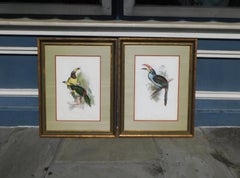
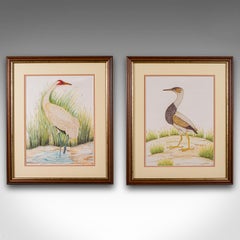
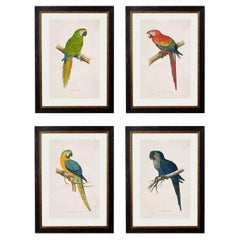
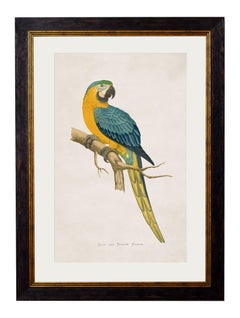
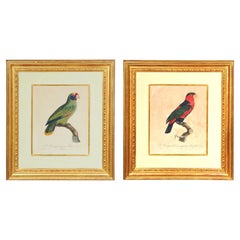
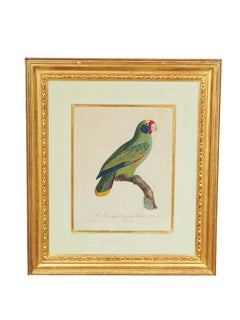
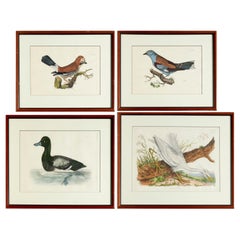
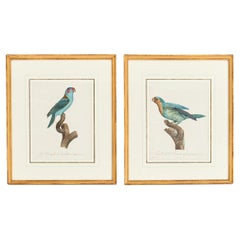
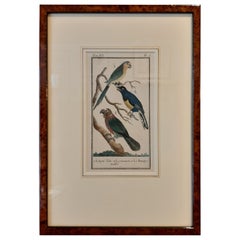
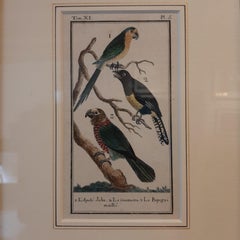
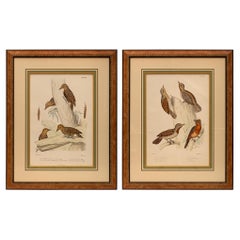
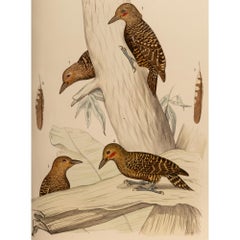
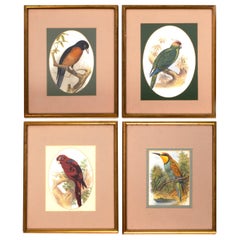
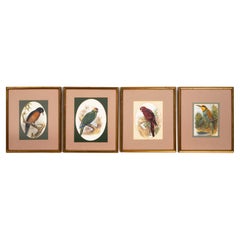
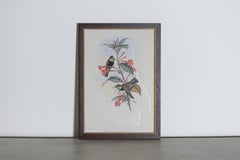
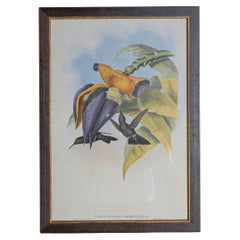
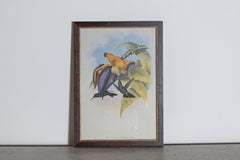
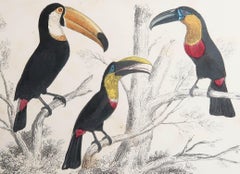
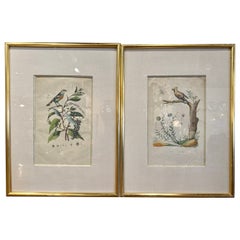
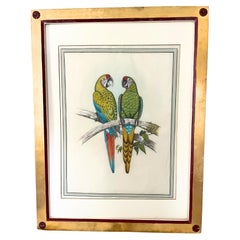
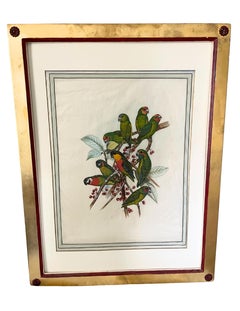
Pair of John Gould Hand Colored Framed Lithographs Family of Toucans, Circa 1840
Located in Charleston, SC
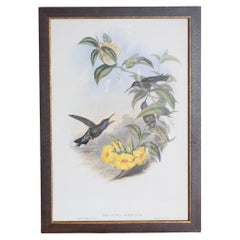
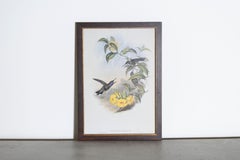
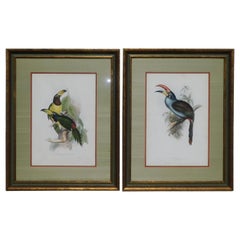
Pair of John Gould hand colored framed lithographs family of toucans.
Antique 1840s English William IV Prints
Glass, Giltwood, Paper
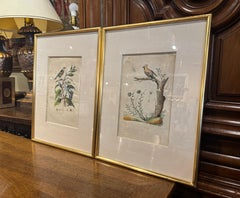
Pair of John Gould Hand Colored Framed Lithographs Family of Toucans, Circa 1840
Located in Charleston, SC
Pair of John Gould hand colored framed lithographs family of toucans.
Glass, Giltwood, Paper
Sold
H 20 in W 14 in D 1.5 in
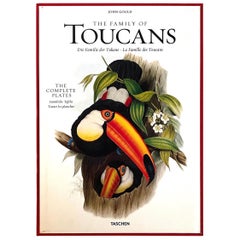
The Family of Toucans: The Complete Plates by John Gould, Pub. by Taschen, 2011
By TASCHEN, John Gould
Located in Chicago, IL
The 51 ready-to-frame art print reproductions from 2011 depict John Gould’s toucans, which are arguably the most striking and dramatic bird illustrations ever published.
Paper
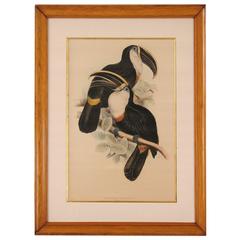
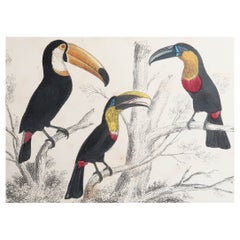
Colored Lithograph of Toucans Published by Gould
By John Gould
Located in San Francisco, CA
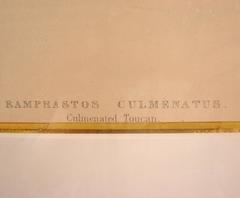
A lovely hand colored lithograph depicting a pair of culminated toucans titled Ramphastos Culmenatus signed in the plate, E.Lear. Published by J and E Gould, 1833. Framed and Glazed....
Paper
$1,034
H 9.85 in W 7.49 in D 0.4 in
Birds of Europe by John and Elisabeth Goult, 1832
By John Gould and Elizabeth Gould
Located in Paris, FR
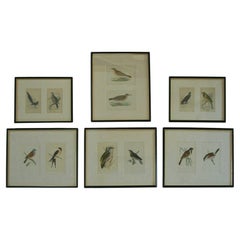
Rare Set of 6 beautiful Naturalistic hand-colored lithograph prints by John Gould from his work Birds of Europe, embelished with gum arabic in vibrant colors. Published 1832 - 1837 ...
Lithograph
18 Antique Bird Hand-Coloured Engravings
Located in New York, NY
Antique Bird Prints Natural History Studies of Parrots and Tropical Birds Hand-colored engravings 23.5 x 30.5 inches each including frame Imagine all 18 on one wall in your study.
Paper
$3,175
H 22 in W 28.25 in D 1 in
Three Gould Hand-colored Lithographs from Birds of Australia and New Zealand
By John Gould
Located in Alamo, CA
Three hand-colored lithographs from John Gould's seven volume book "The Birds of Australia", which included New Zealand, depicting: pairs of "Eudyptes Chrysocome" (New Zealand Rock-h...
Lithograph
$3,275
H 33 in W 25.5 in
Blue-eyed Cockatoo: A Framed Original 19th C. Hand-colored Lithograph by Gould
By John Gould and Henry Constantine Richter
Located in Alamo, CA
This is a framed original 19th century hand-colored folio-sized lithograph entitled “Cacatua Ophthalimica” (Blue-eyed Cockatoo) by John Gould, from the supplement to his "Birds of Au...
Lithograph
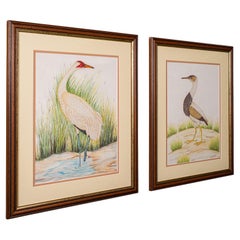
John Gould - Herons set of four, framed
By John Gould
Located in Folkestone, GB
JOHN GOULD - Herons - Set of Four A set of four original hand-colored lithographs engraved by J. Gould and H C Richter from the original first edition of Birds of Great Britain, pub...
Paper
$2,375
H 32 in W 25.5 in D 1.25 in
Thorn-Bill Hummingbirds: A Framed 19th C. Hand-colored Lithograph by Gould
By John Gould and Henry Constantine Richter
Located in Alamo, CA
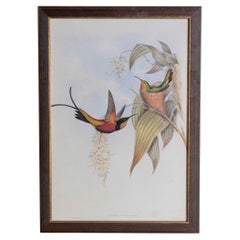
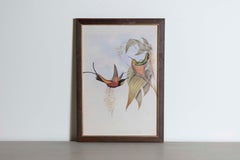
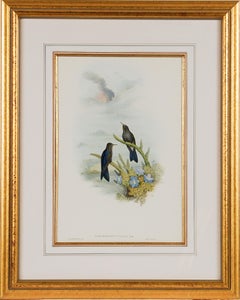
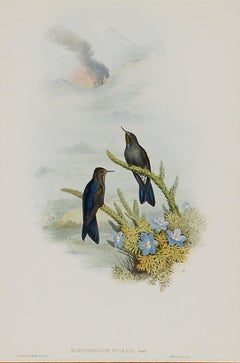
This is an original framed 19th century hand-colored folio-sized lithograph entitled "Ramphomicron vulcani" (Southern Thorn-Bill Hummingbirds) by John Gould, Pl. 186 from his "Monogr...
Lithograph
Prints are works of art produced in multiple editions. Though several copies of a specific artwork can exist, collectors consider antique and vintage prints originals when they have been manually created by the artist or are “impressions” that are part of the artist’s intent for the work.
Modern artists use a range of printmaking techniques to produce different types of prints such as relief, intaglio and planographic. Relief prints are created by cutting away a printing surface to leave only a design. Ink or paint is applied to the raised parts of the surface, and it is used to stamp or press the design onto paper or another surface. Relief prints include woodcuts, linocuts and engravings.
Intaglio prints are the opposite of relief prints in that they are incised into the printing surface. The artist cuts the design into a block, plate or other material and then coats it with ink before wiping off the surface and transferring the design to paper through tremendous pressure. Intaglio prints have plate marks showing the impression of the original block or plate as it was pressed onto the paper.
Artists create planographic prints by drawing a design on a stone or metal plate using a grease crayon. The plate is washed with water, then ink is spread over the plate and it adheres to the grease markings. The image is then stamped on paper to make prints.
All of these printmaking methods have an intricate process, although each can usually transfer only one color of ink. Artists use separate plates or blocks for multiple colors, and together these create one finished work of art.
Find prints ranging from the 18th- and 19th-century bird illustrations by J.C. Sepp to mid-century modern prints, as well as numerous other antique and vintage prints at 1stDibs. Browse the collection today and read about how to arrange wall art in your space.
The exhibition includes his portraits of wide-eyed kids with mayhem on their minds, as well as some of the artist’s personal belongings.
The ancient practice of covering walls in artistic scenery is back.
Despite the obstacles, the piece’s protagonist navigates the chaos without losing his humanity.
Who needs a flower garden? Just use your imagination — and some beautifully patterned wallpaper or fabric — to bring the outdoors in.
A longtime admirer of Kahn’s work, 1stDibs editorial director Anthony Barzilay Freund explores why it’s relevant now more than ever.
The streets of fin-de-siècle Paris were set aglow with colorful poster ads, thanks to the printing techniques invented by Jules Chéret. Now, the Milwaukee Art Museum is celebrating this undersung talent in America's first solo show dedicated his exuberant works.
From her historic Manhattan townhouse, the talented creator and curator of 1stDibs' latest NFT exhibition tells us about the art in her home and how she got involved with cryptoart.
The former football player is as serious about becoming a great contemporary-art patron as he once was about making tackles. Here, Rivers tells us how he got the collecting bug and how his tastes have evolved over the years.