Kano Tanyu

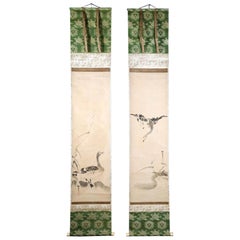
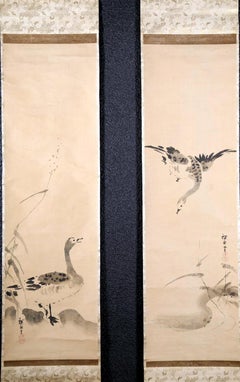
Pair of Japanese Ink Hanging Scrolls Kano Tanyu

Pair of Japanese Ink Hanging Scrolls Kano Tanyu

By Kano Tan'yu 1

Located in Atlanta, GA

The storage box is also present and was inscribed with the title Painting of Geese and Reeds and Kano Tanyu. Kano Tan'yu (original name Kano Morinobu; 1602–1674) was a famous Japan...

Category

Antique Late 17th Century Japanese Japonisme Paintings and Screens

Materials

Wood, Paper

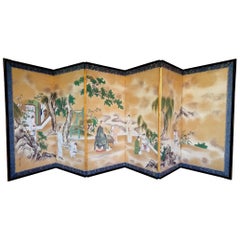
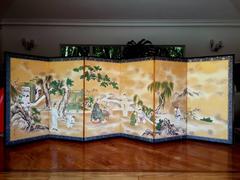
Rare Antique Japanese Folding Screen by Kano Tanshin

Rare Antique Japanese Folding Screen by Kano Tanshin

By Kano Tanshin

Located in Atlanta, GA

An important member of the Kano painter family, the son of Kano Tanyu by his second wife, Kano Tanshin led the Kajibashi branch of the Kano school after 1674.

Category

Antique 17th Century Japanese Japonisme Paintings and Screens

Materials

Brass

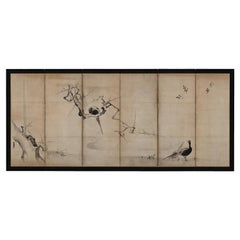
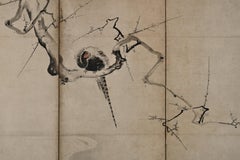
17th Century Japanese Screen. Ink Plum Tree & Birds by Kano Naonobu.

17th Century Japanese Screen. Ink Plum Tree & Birds by Kano Naonobu.

Located in Kyoto, JP

In this evocative ink work spread over a six-panel folding screen, we see the consummation of the elegance and refinement of the Edo Kano school. This 17th century screen is a rare s...

Category

Antique 17th Century Japanese Edo Paintings and Screens

Materials

Wood, Paper

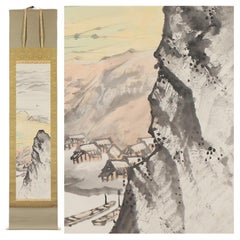
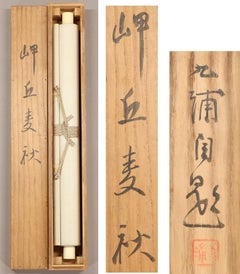
Japanese PAinting Taisho Period Scroll Kyuho Noda Nihonga Island landscape

Japanese PAinting Taisho Period Scroll Kyuho Noda Nihonga Island landscape

Located in Amsterdam, Noord Holland

Despite leaving the Tokyo School of Fine Arts, he continued his artistic pursuit under the guidance of Koyo Terasaki, specializing in historical portraits and gaining recognition as ...

Category

Vintage 1930s Taisho Paintings

Materials

Silk

Recent Sales

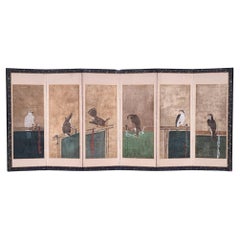
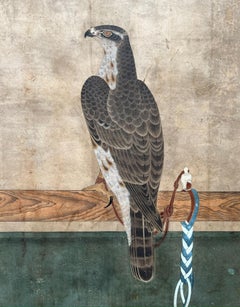
Rare Japanese Folding Screen, Kayo Zu, Falcons on a Perch, Soga School, Edo

Rare Japanese Folding Screen, Kayo Zu, Falcons on a Perch, Soga School, Edo

Located in PARIS, FR

Many artists, such as Hashimoto Senkei, a pupil of Kano Tanyu, distinguished themselves in this genre by working for the Obama clan of Wakasa in the Echizen province, now known as Fu...

Category

Antique Mid-18th Century Asian Edo Paintings and Screens

Materials

Wood, Lacquer, Paper

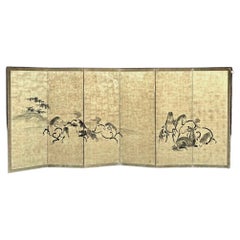
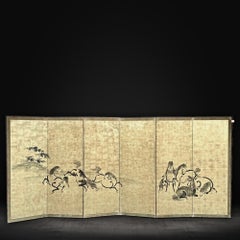
Elegant Horse Screen by Kano Tanshin, Gold Leaf, Edo, Japan

Elegant Horse Screen by Kano Tanshin, Gold Leaf, Edo, Japan

By Kano Tanshin

Located in Fukuoka, JP

Being unsigned, this screen echoing the style of Kano Tanshin. Kano Tanshin Morimasa (1653-1718) was the son of Kano Tanyu (1602-1674) by his second wife.

Category

Antique Late 18th Century Japanese Edo Paintings and Screens

Materials

Gold Leaf

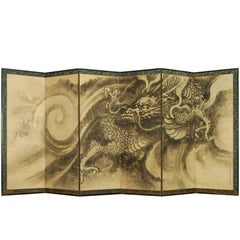
Antique Japanese Dragon Screen Attributed to Kano Tanyu, circa 17th Century

Antique Japanese Dragon Screen Attributed to Kano Tanyu, circa 17th Century

By Kano Tan'yu 1

Located in Prahran, Victoria

Attributed to Kano Tanyu (1602-1674), 17th century signed and sealed.

Category

Antique Mid-17th Century Japanese Edo Paintings and Screens

Materials

Paper

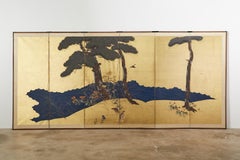
Pair of Japanese Meiji Six Panel Screens of Seasonal Landscapes

Pair of Japanese Meiji Six Panel Screens of Seasonal Landscapes

Located in Rio Vista, CA

The umbrella pines appear to be in the manner of Kano Tanyu who was influenced by the Rimpa School.

Category

Antique 19th Century Japanese Meiji Paintings and Screens

Materials

Brass, Gold Leaf

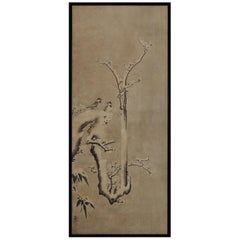
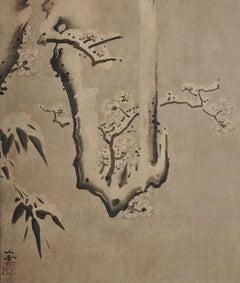
17th Century Japanese Framed Painting by Kano Sansetsu, Plum Blossoms in Snow

17th Century Japanese Framed Painting by Kano Sansetsu, Plum Blossoms in Snow

Located in Kyoto, JP

At that time the majority of the Kano school, along with Kano Tanyu, moved to Tokyo and began working for the Edo Shogunate.

Category

Antique 17th Century Japanese Edo Paintings and Screens

Materials

Paper

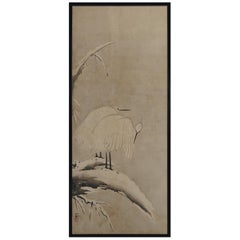
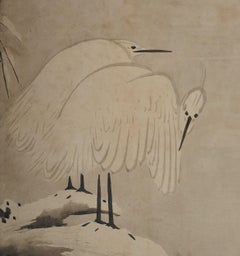
17th Century Japanese Framed Panel by Kano Sansetsu, White Herons in Snow

17th Century Japanese Framed Panel by Kano Sansetsu, White Herons in Snow

Located in Kyoto, JP

At that time the majority of the Kano school, along with Kano Tanyu, moved to Tokyo and began working for the Edo Shogunate.

Category

Antique 17th Century Japanese Edo Paintings and Screens

Materials

Paper

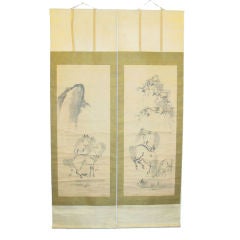
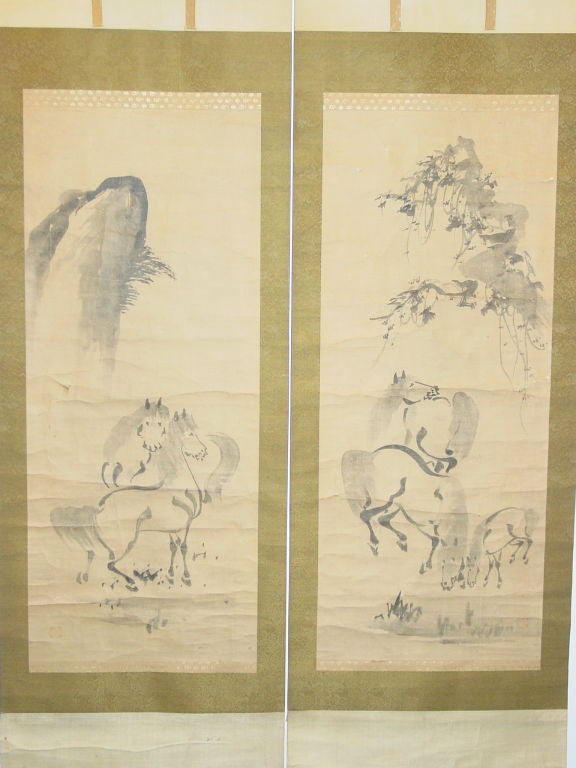
A Pair of Japanese Scroll Paintings, by Kano Tanyu

A Pair of Japanese Scroll Paintings, by Kano Tanyu

Located in Riverdale, NY

each rectangular panel depicting wild horses in landscapes

Category

Antique 18th Century and Earlier Japanese Paintings

Materials

Ink, Paper

Get Updated with New Arrivals
Save "Kano Tanyu", and we’ll notify you when there are new listings in this category.

Kano Tanyu For Sale on 1stDibs

Choose from an assortment of styles, material and more with respect to the kano tanyu you’re looking for at 1stDibs. A kano tanyu — often made from paper, wood and metal — can elevate any home. Your living room may not be complete without a kano tanyu — find older editions for sale from the 18th Century and newer versions made as recently as the 20th Century. You’ll likely find more than one kano tanyu that is appealing in its simplicity, but Kano Tanshin produced versions that are worth a look.

How Much is a Kano Tanyu?

Prices for a kano tanyu start at $1,634 and top out at $68,000 with the average selling for $14,500.

Finding the Right Paintings-screens for You

Traditional Asian paintings were often created on scrolls and folding screens. Artisans made screens that could be folded up or spread out by connecting several panels using hinges. Today, antique Asian folding screens and paintings are sophisticated decorative accents that can serve as makeshift partitions to ensure privacy.

The original folding screens were created by Chinese artists. The earliest record of screens comes from the 2nd century B.C., and surviving examples date back to the Ming dynasty. Chinese painting utilizes many of the same tools as calligraphy — these screens were crafted from wood with painted panels featuring striking art or calligraphy that told cultural stories or represented nature and life in the area.

The practice was introduced to Japan, where paintings for screens were made on paper and silk, in the 8th century. These paintings frequently feature subjects such as landscapes, animals, flowers and Buddhist religious themes. Along with screens for tea ceremonies and dance backgrounds, there were screens for use in Shinto and Buddhist temples.

In the 17th century, screens began to be imported to Europe where their popularity grew. Coco Chanel famously collected Coromandel folding screens.

Traditional Asian paintings can make a tasteful addition to any wall, and screens can be used as decoration or, in the case of larger iterations, as an aesthetic way to divide a large room. Browse the selection of antique Asian paintings and screens from a variety of styles and eras on 1stDibs.