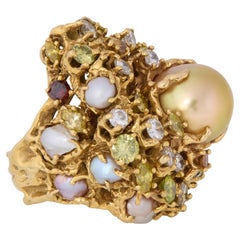
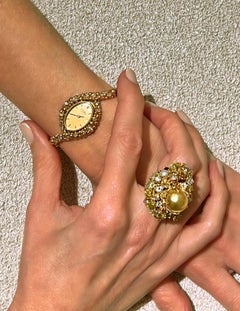
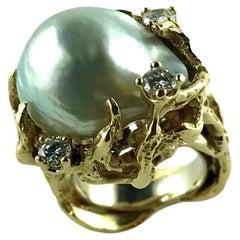
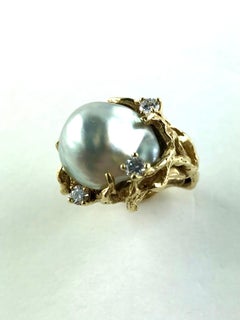
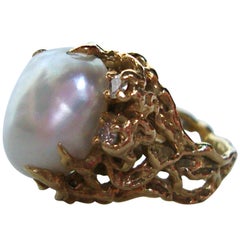
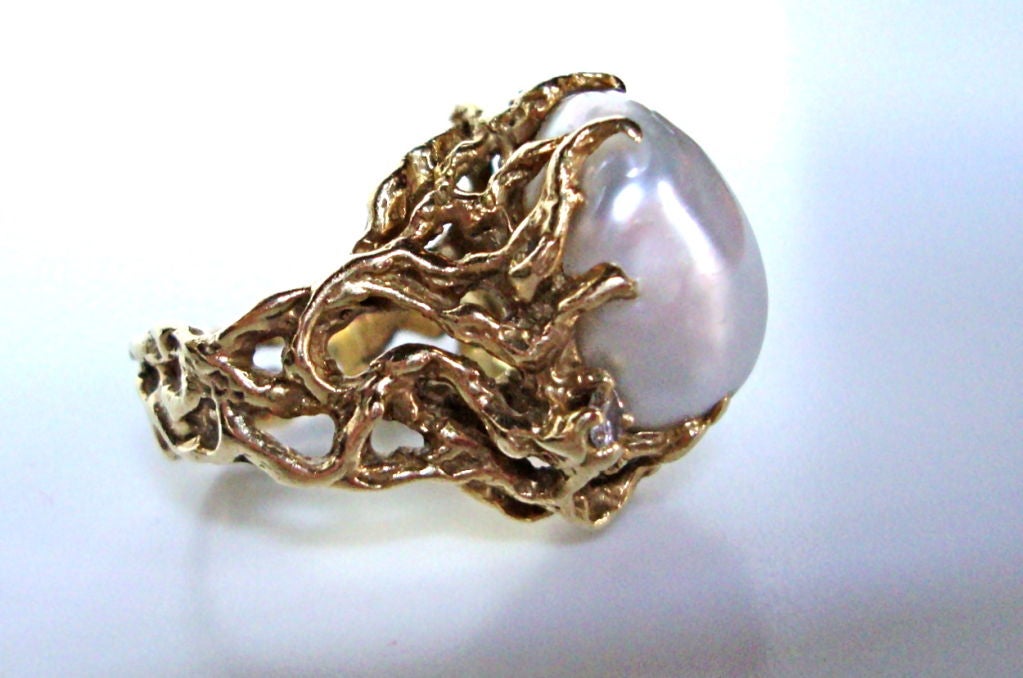
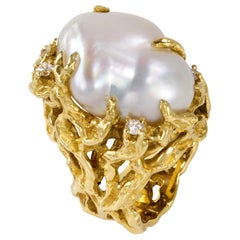
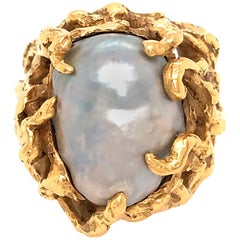
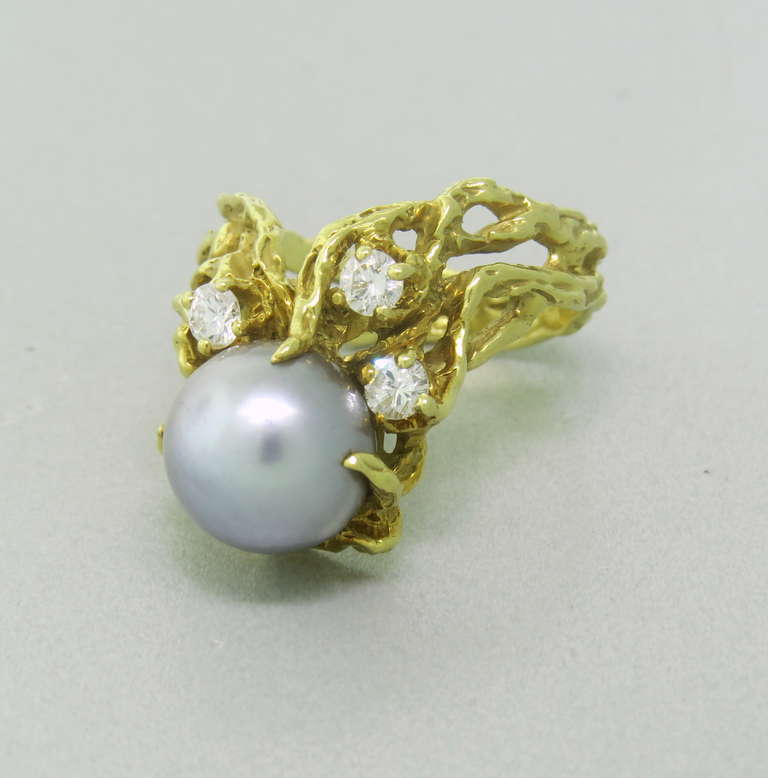
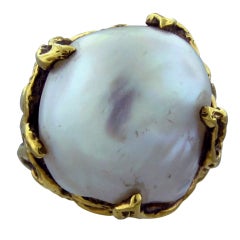
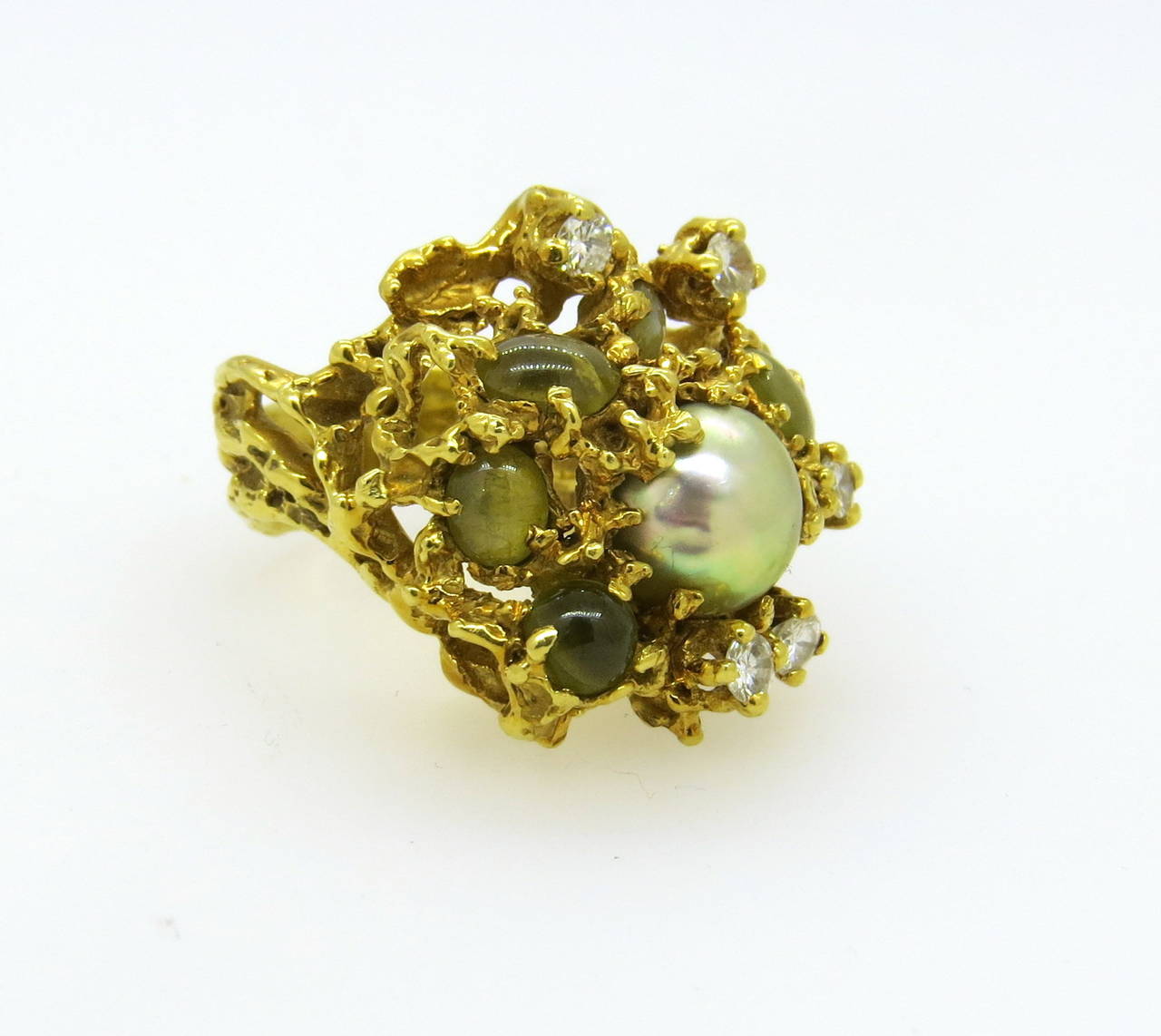
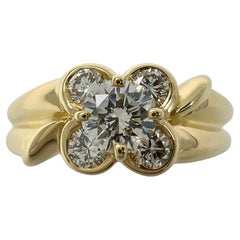
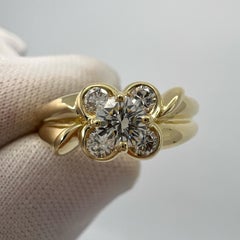
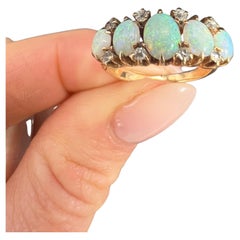
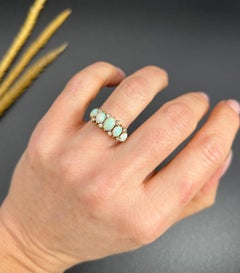
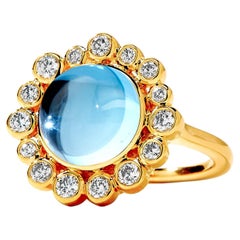
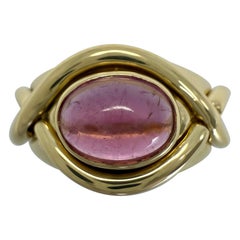
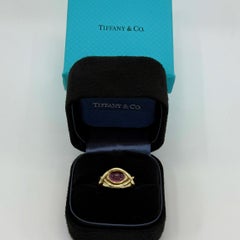
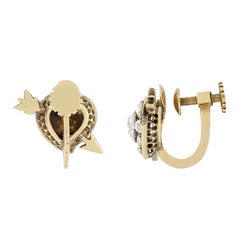
You are likely to find exactly the king arthur pearl ring you’re looking for on 1stDibs, as there is a broad range for sale. Every item for sale was constructed with extraordinary care, often using
18k Gold,
Gold and
Yellow Gold. Making the right choice when shopping for a king arthur pearl ring may mean carefully reviewing examples of this item dating from different eras — you can find an early iteration of this piece from the 19th Century and a newer version made as recently as the 20th Century, both of which have proven very popular over the years. While most can agree that any king arthur pearl ring from our collection can easily elevate most outfits, but the choice of a
Pearl version from the 5 available is guaranteed to add a special touch to your ensemble. Today, if you’re looking for a
pear cut version of this piece and are unable to find the perfect match, our selection also includes alternatives. Most of our king arthur pearl ring for sale are for
women, but there are 2 pieces available to browse for
men.
Prices for a king arthur pearl ring can differ depending upon size, time period and other attributes — at 1stDibs, these accessories begin at $1,985 and can go as high as $29,000, while this accessory, on average, fetches $3,148.
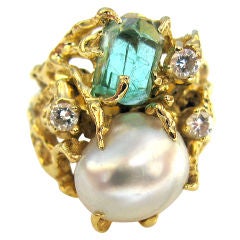
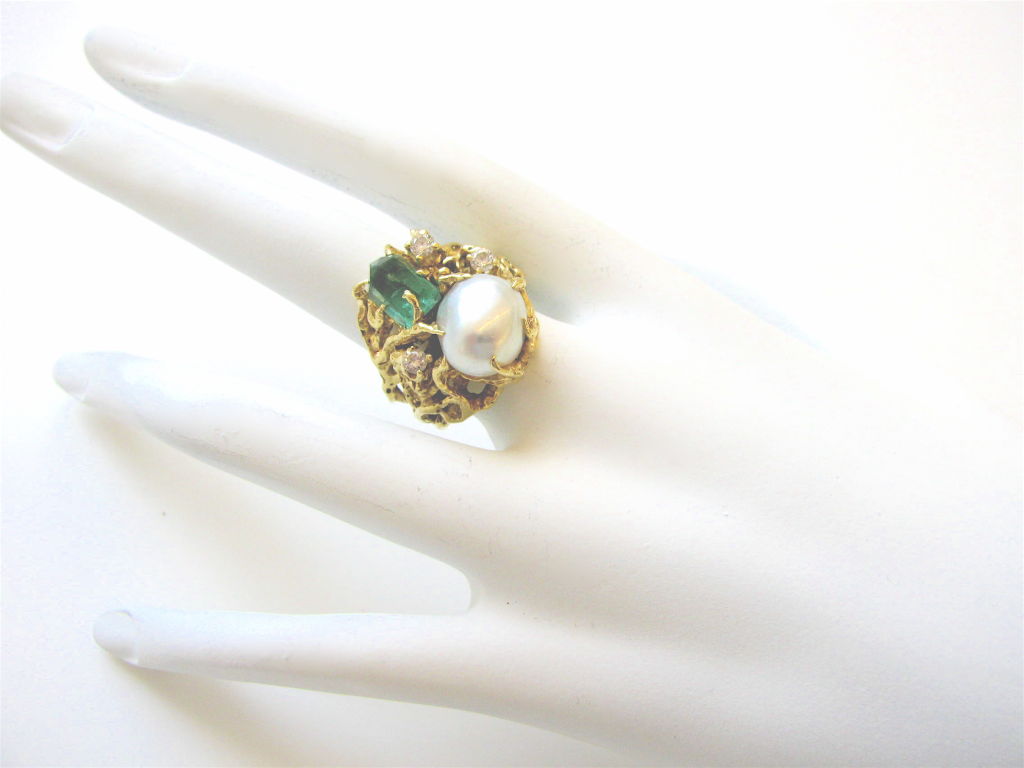
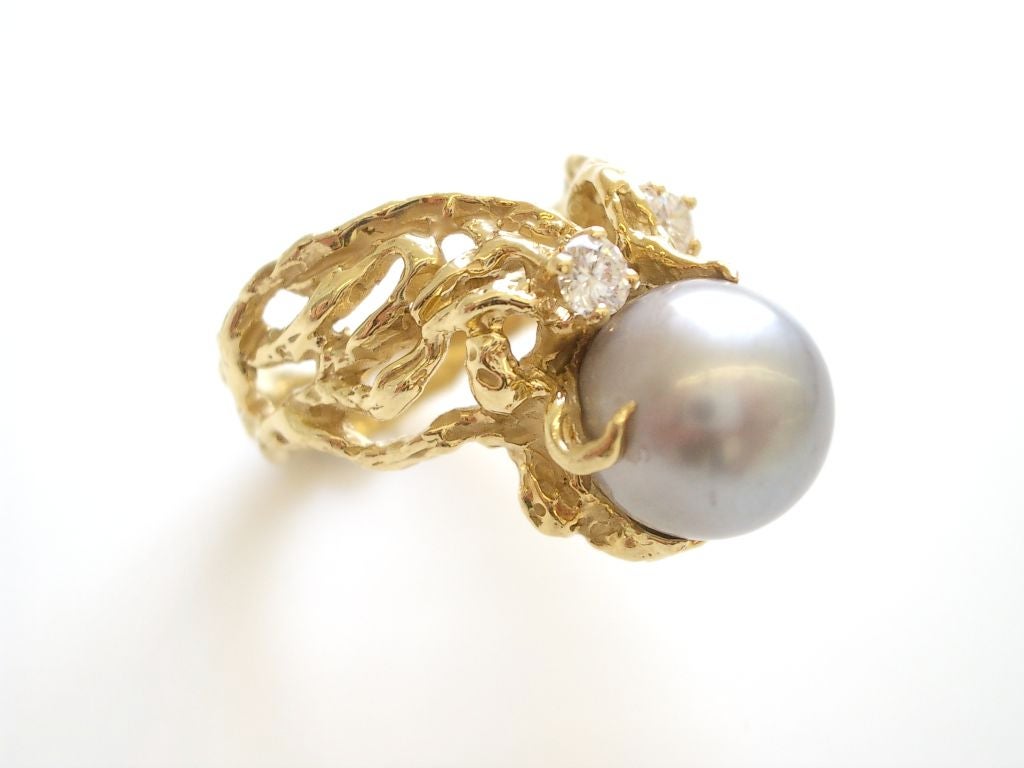
Self-taught American jeweler Arthur King worked with baroque pearls, geodes, and raw semi-precious gemstones to create distinctive modernist jewelry during the mid-20th century.
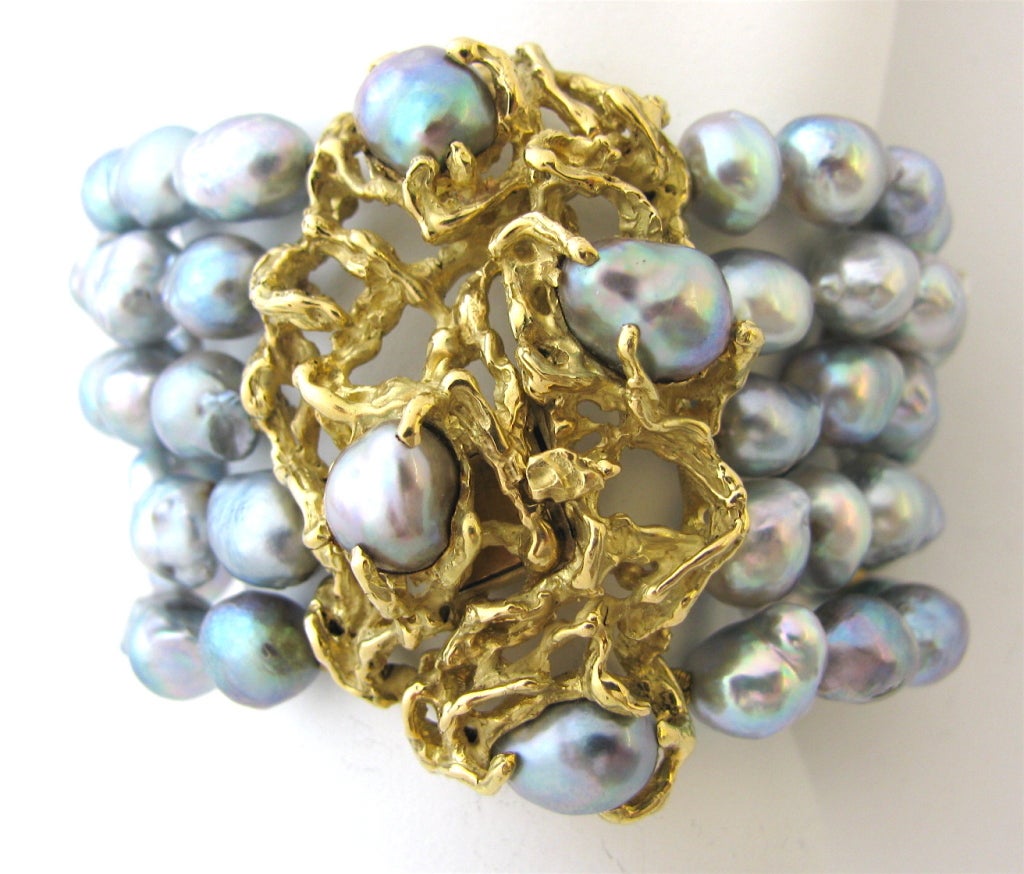
Like many of the accessories that populate our jewelry boxes, the forms of King’s provocative vintage brooches, necklaces, rings and other jewels were inspired by the natural world, but the pieces’ metalwork is sculptural and shapely, resembling gnarled tree branches or the surface of an elm’s aging trunk.
King was born in New Jersey in 1921. He became interested in art at a young age and was fascinated with the lost-wax casting technique practiced by some sculptors. King taught himself the process using scrap metals, and his jewelry and objets d’art would come to share common ground with abstract art in the years to come.
While stationed overseas in the Merchant Marines in World War II, King began to work with metal and dabble in jewelry making, integrating sharks’ teeth, white scrap metal and whatever else he could find into his modest “art jewelry,” a term that has been used to describe adornments created by Alexander Calder, pioneering African American studio jeweler Art Smith, Andrew Grima and others over the years. Upon returning from the war, King continued to develop his skills — eventually opening his first shop in New York City's Greenwich Village neighborhood.
King truly distinguished himself from other jewelers of the time — at his workbench, he shaped the brass and silver settings for his often unpolished, chunky stones that featured asymmetrical cuts and employed the age-old technique of lost-wax casting, which sees objects cast from wax models. His early pieces mainly featured silver settings, but his popularity soared once he began to craft jewelry in gold.
In 1961, King's work was exhibited at Goldsmiths’ Hall in London as part of the “International Exhibition of Modern Jewellery” and a year later, he opened his flagship store on Madison Avenue. His success allowed him to open more locations in London, Cape Cod, Havana, Miami and elsewhere.
King used a dizzying array of gems and other materials in his unconventional pieces. And as much as the jewelry of the 1960s featured eye-catching candy-colored stones, it was also an era of new textures and freeform gold settings, and King was at the forefront, creating audacious designs that contrasted sharply with the work of the world’s leading luxury houses.
King’s work has been celebrated at a range of institutions over the years including the Museum of Contemporary Crafts (now the Museum of Arts and Design), the Cultured Pearl Association of Japan, the Victoria and Albert Museum and more. His jewelry was exhibited at the Cincinnati Art Museum’s “Simply Brilliant: Artist-Jewelers of the 1960s and 1970s,” which opened in 2021.
On 1stDibs, find vintage Arthur King brooches, rings, necklaces and more.
Antique and vintage rings have long held a special place in the hearts of fine jewelry lovers all over the world.
No matter their origin or specific characteristics, rings are timeless, versatile accessories. They’ve carried deep meaning since at least the Middle Ages, when diamond rings symbolized strength and other kinds of rings were worn to signify romantic feelings or to denote an affiliation with a religious order. Rings have also forever been emblematic of eternity.
Over time, rings have frequently taken the form of serpents, which have long been associated with eternal life, health and renewal. Italian luxury jewelry house Bulgari has become famous for its widely loved Serpenti motif, for example, and its Serpenti ring, like the other accessories in the collection, began as an homage to jewelry of the Roman and Hellenistic eras. The serpent is now a popular motif in fine jewelry. Jewelry devotees have long pined for rings adorned with reptiles, thanks to antique Victorian rings — well, specifically, Queen Victoria’s illustrious engagement ring, which took the form of a gold snake set with rubies, diamonds and an emerald (her birthstone). Designs for Victorian-era engagement rings often featured repoussé work and chasing, in which patterns are hammered into the metal.
Engagement rings, which are reliably intimidating to shop for, are still widely recognized as symbols of love and commitment. On 1stDibs, a range of buying guides can be found for those in the market for antique engagement rings, vintage engagement rings or Art Deco engagement rings.
The most collectible antique engagement rings and vintage engagement rings are those from the Victorian, Edwardian and Art Deco eras. Named for the monarchies of the four King Georges, who in succession ruled England starting in 1714 (plus King William’s reign), antique Georgian rings, be they engagement rings or otherwise, are also coveted by collectors. Pearls, along with colored gemstones like garnets, rubies and sapphires, were widely used in Georgian jewelry. The late-1700s paste jewelry was a predecessor to what we now call fashion or costume jewelry.
The Art Nouveau movement (1880–1910) brought with it rings inspired by the natural world. Antique Art Nouveau rings might feature depictions of winged insects and fauna as well as women, who were simultaneously eroticized and romanticized, frequently with long flowing hair. Art Deco jewelry, on the other hand, which originated during the 1920s and ’30s, is by and large “white jewelry.” White metals, primarily platinum, were favored over yellow gold in the design of antique Art Deco rings and other accessories as well as geometric motifs, with women drawn to the era’s dazzling cocktail rings in particular.
Whether you’re hunting down a chunky classic for a Prohibition-themed cocktail party or seeking a clean contemporary design to complement your casual ensemble, find an exquisite collection of antique, new and vintage rings on 1stDibs.