Lithograph Print Wine

to
24
73
28
81
44
21
21
12
12
12
8
8
7
7
7
7
6
4
4
3
2
1
1
1
1
5
4
3
2
2
Sort By
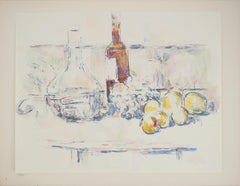
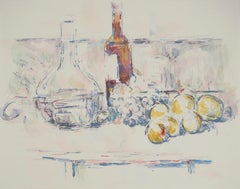
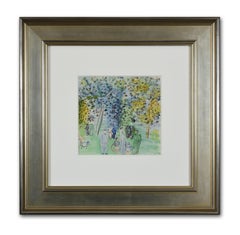
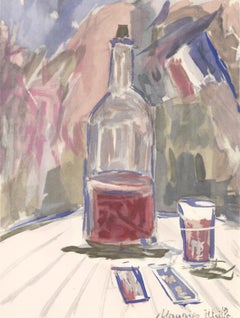
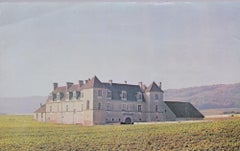
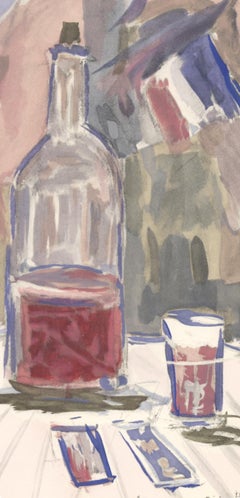
Still life, Fruits and wine - Lithograph, 1971

Still life, Fruits and wine - Lithograph, 1971

By Paul Cézanne

Located in Paris, IDF

Paul Cezanne Still life, Fruits and wine, 1971 Lithograph and stencil (Jacomet workshop) Unsigned

Category

1970s Modern Still-life Prints

Materials

Lithograph, Stencil

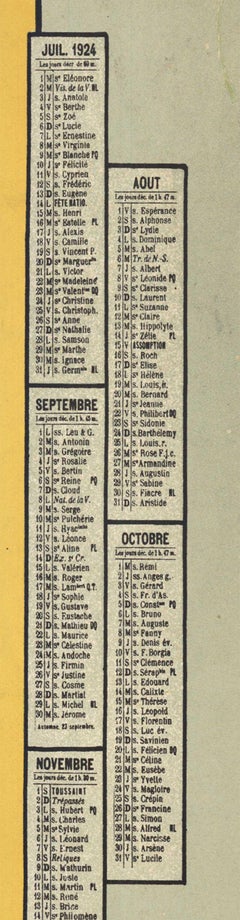
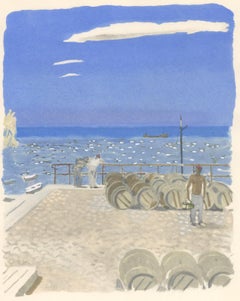
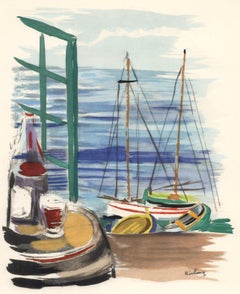
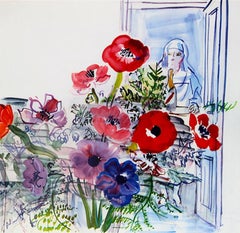
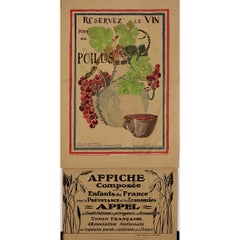
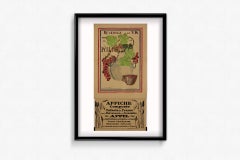
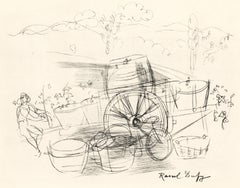
Wine and Childhood Aliments

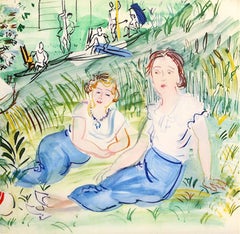
Wine and Childhood Aliments

By Raoul Dufy

Located in Laguna Beach, CA

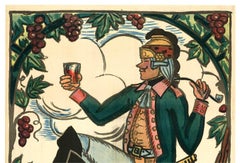
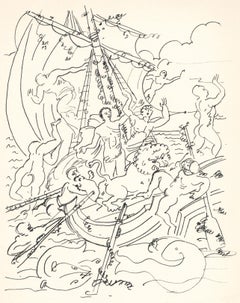
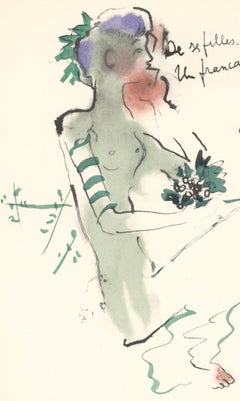
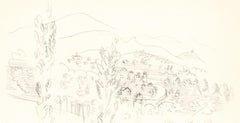
charmer of a "medical book" illustrates the myriad benefits of wine, while being splashed by accompanying

Category

1930s Post-Impressionist Landscape Prints

Materials

Lithograph

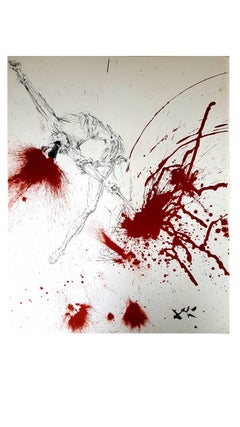
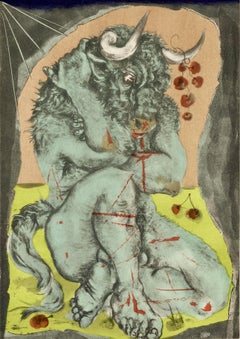
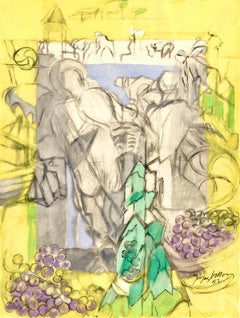
Salvador Dali - The Wine Casks

Salvador Dali - The Wine Casks

By Salvador Dalí­

Located in Collonge Bellerive, Geneve, CH

Salvador Dali - The Wine Casks - Original Lithograph Joseph FORET, Paris, 1957 PRINTER : Delorme

Category

1950s Surrealist Figurative Prints

Materials

Lithograph

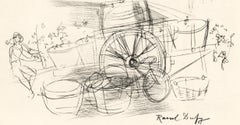
Wine and Childhood Aliments

Wine and Childhood Aliments

By Raoul Dufy

Located in Laguna Beach, CA

charmer of a "medical book" illustrates the myriad benefits of wine, while being splashed by accompanying

Category

1930s Post-Impressionist Landscape Prints

Materials

Lithograph

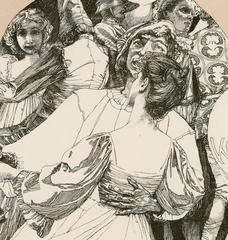
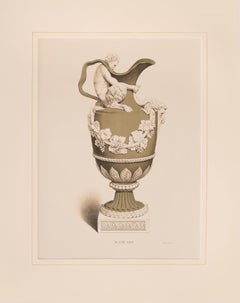
The Wine Vase. Jasper. Pl. XXVI

The Wine Vase. Jasper. Pl. XXVI

Located in London, London

RATHBONE, Frederick The Wine Vase. Jasper. Pl. XXVI Published by Bernard Quartich, London 1898

Category

1890s Naturalistic Figurative Prints

Materials

Paper, Lithograph

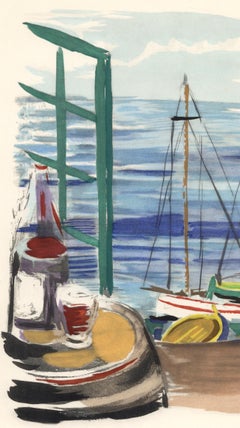
Wine as a Remedy for Convalescents

Wine as a Remedy for Convalescents

By Raoul Dufy

Located in Laguna Beach, CA

charmer of a "medical book" illustrates the myriad benefits of wine, while being splashed by accompanying

Category

1930s Post-Impressionist Landscape Prints

Materials

Lithograph

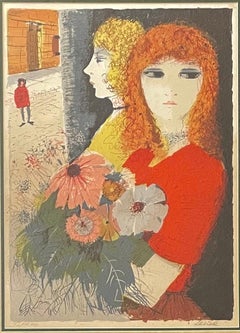
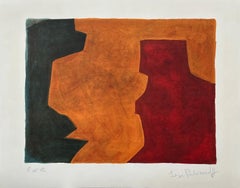
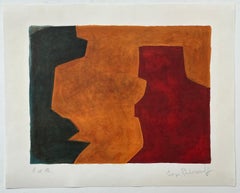
Green, orange and wine-red composition L58

Green, orange and wine-red composition L58

By Serge Poliakoff

Located in Paris, FR

Lithograph, 1963 Handsigned by the artist in pencil and annotated EdA Artist proof Edition : /75

Category

1960s Abstract Abstract Prints

Materials

Lithograph

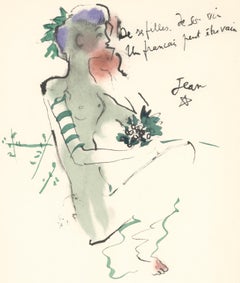
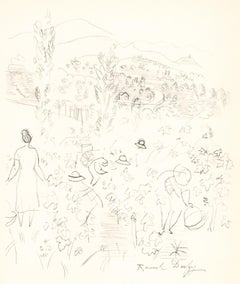
Action de Vin sur Le Moral (How Wine Affects the Morale)

Action de Vin sur Le Moral (How Wine Affects the Morale)

By Raoul Dufy

Located in Laguna Beach, CA

charmer of a "medical book" illustrates the myriad benefits of wine, while being splashed by accompanying

Category

1930s Post-Impressionist Landscape Prints

Materials

Lithograph

  • 1
Get Updated with New Arrivals
Save "Lithograph Print Wine", and we’ll notify you when there are new listings in this category.

Lithograph Print Wine For Sale on 1stDibs

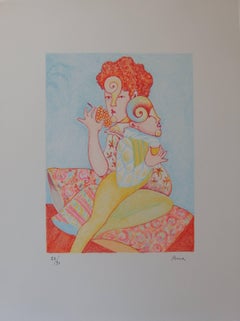
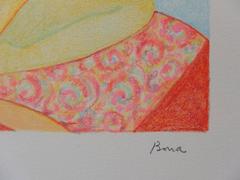
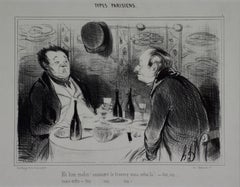
You are likely to find exactly the lithograph print wine you’re looking for on 1stDibs, as there is a broad range for sale. There are many Surrealist, Art Deco and Contemporary versions of these works for sale. If you’re looking for a lithograph print wine from a specific time period, our collection is diverse and broad-ranging, and you’ll find at least one that dates back to the 19th Century while another version may have been produced as recently as the 21st Century. On 1stDibs, the right lithograph print wine is waiting for you and the choices span a range of colors that includes beige, gray, black and white. Creating a lithograph print wine has been a part of the legacy of many artists, but those crafted by Salvador Dalí, Honoré Daumier, Bona de MANDIARGUES, Marc Chagall and Carl Otto Czeschka are consistently popular. Artworks like these — often created in lithograph, canvas and fabric — can elevate any room of your home.

How Much is a Lithograph Print Wine?

A lithograph print wine can differ in price owing to various characteristics — the average selling price for items in our inventory is $1,162, while the lowest priced sells for $105 and the highest can go for as much as $11,995.

Finding the Right Prints-works-on-paper for You

Decorating with fine art prints — whether they’re figurative prints, abstract prints or another variety — has always been a practical way of bringing a space to life as well as bringing works by an artist you love into your home.

Pursued in the 1960s and ’70s, largely by Pop artists drawn to its associations with mass production, advertising, packaging and seriality, as well as those challenging the primacy of the Abstract Expressionist brushstroke, printmaking was embraced in the 1980s by painters and conceptual artists ranging from David Salle and Elizabeth Murray to Adrian Piper and Sherrie Levine.

Printmaking is the transfer of an image from one surface to another. An artist takes a material like stone, metal, wood or wax, carves, incises, draws or otherwise marks it with an image, inks or paints it and then transfers the image to a piece of paper or other material.

Fine art prints are frequently confused with their more commercial counterparts. After all, our closest connection to the printed image is through mass-produced newspapers, magazines and books, and many people don’t realize that even though prints are editions, they start with an original image created by an artist with the intent of reproducing it in a small batch. Fine art prints are created in strictly limited editions — 20 or 30 or maybe 50 — and are always based on an image created specifically to be made into an edition.

Many people think of revered Dutch artist Rembrandt as a painter but may not know that he was a printmaker as well. His prints have been preserved in time along with the work of other celebrated printmakers such as Pablo Picasso, Salvador Dalí and Andy Warhol. These fine art prints are still highly sought after by collectors.

“It’s another tool in the artist’s toolbox, just like painting or sculpture or anything else that an artist uses in the service of mark making or expressing him- or herself,” says International Fine Print Dealers Association (IFPDA) vice president Betsy Senior, of New York’s Betsy Senior Fine Art, Inc.

Because artist’s editions tend to be more affordable and available than his or her unique works, they’re more accessible and can be a great opportunity to bring a variety of colors, textures and shapes into a space.

For tight corners, select small fine art prints as opposed to the oversized bold piece you’ll hang as a focal point in the dining area. But be careful not to choose something that is too big for your space. And feel free to lean into it if need be — not every work needs picture-hanging hooks. Leaning a larger fine art print against the wall behind a bookcase can add a stylish installation-type dynamic to your living room. (Read more about how to arrange wall art here.)

Find fine art prints for sale on 1stDibs today.
Questions About Lithograph Print Wine
  • 1stDibs ExpertNovember 20, 2024
    The difference between a lithograph and a lithograph print depends on the context. By the strictest definition, the terms are actually synonyms. A lithograph is the term for a print produced through a specific process. It begins with an artist drawing or painting on a stone surface with an oil-based substance, such as a greasy crayon or tusche. The stone is then covered with water, which is repelled by the oily areas. Oil-based ink is then applied to the wet stone, adhering only to the oily image. The stone is then covered with a sheet of paper and run through a press. You can call a print produced with this printmaking method a lithograph, a lithograph print or a lithographic print. However, some people may use the term lithograph to describe a traditional lithograph and lithograph print to denote an offset lithograph. Offset lithography is a method of mass-producing prints where the image from the stone gets transferred to a rubber blanket, which is then pressed against the paper to produce a final image. Find a wide variety of lithographs on 1stDibs.
  • 1stDibs ExpertJune 13, 2024
    The difference between a print and a lithograph is that “print” is a general term and “lithograph” is a specific printing method (one of the most commonly used in the 20th and 21st centuries). This means that a lithograph is always a print, but not all prints are lithographs. A print is a work of art made by imprinting a design from a matrix made of one of the following media: stone, wood or metal. The artist creates the design on the matrix which is then inked and transferred onto the support. The support is usually made of paper. With respect to lithography, the process begins by drawing on or painting on a stone surface with an oil-based substance, such as a greasy crayon or tusche (an oily wash). The stone is then covered with water, which is repelled by the oily areas. Oil-based ink is then applied to the wet stone, adhering only to the oily image. The stone is then covered with a sheet of paper and run through a press.

    Find lithographs and other types of art prints for sale on 1stDibs.
  • 1stDibs ExpertAugust 15, 2024
    To tell the difference between a lithograph and a print, touch the surface of the piece. Lithographs will usually have a slightly raised texture, whereas reproductions of lithographs produced with other techniques are more likely to be smooth. Then, examine the surface closely with a magnifying glass.

    On a lithograph, you will typically see irregularities in the dot pattern. Printed reproductions normally don't display such irregularities due to the mechanical processes used to produce them. If you're still uncertain, a certified appraiser or knowledgeable art dealer can help you determine whether a piece is a lithograph or a reproduction print.

    On 1stDibs, explore a large selection of lithographs and prints.
  • 1stDibs ExpertNovember 26, 2024
    To identify a lithograph print, begin by conducting a reverse image search. By taking a photo with your mobile device and performing a reverse image search, you may quickly find a match and learn the artist, title and other characteristics of your lithograph. Should this method of identification yield no results, look for an artist's signature or publisher's information on the front or back of the piece. Researching the maker or publisher via trusted online resources can help you learn more about your print. For help with the process, consult a certified appraiser or experienced art dealer. On 1stDibs, shop a wide range of lithograph prints.
  • 1stDibs ExpertFebruary 13, 2023
    Whether lithograph prints are worth anything depends on a number of factors. Some things that may help determine the value of a given print include who the printmaker was, what the subject matter is / what the specific print is and how many lithographs were made in the series. The condition of the print as well as the market for the artist will also play a role in determining how much it's worth. Experts recommend that you consult a certified appraiser or experienced art dealer for assistance. On 1stDibs, shop a range of lithograph prints from some of the world's top galleries.
  • 1stDibs ExpertOctober 7, 2024
    The difference between a lithograph and a limited edition print is the specificity of the terms. A limited edition print is any artwork that an artist produces in a limited number for sale to collectors. A lithograph is one type of print that may be made available as a limited edition. To make a lithograph, the artist draws or paints on a stone surface with an oil-based substance, such as a greasy crayon or oily wash known as a tusche. The stone is then covered with water, which is repelled by the oily areas. Oil-based ink is then applied to the wet stone, adhering only to the oily image. The stone is then covered with a sheet of paper and run through a press. Beyond lithographs, limited edition prints can be woodblock prints, engravings, screenprints, monoprints and other types of prints. Find a diverse assortment of lithographs and other prints on 1stDibs.