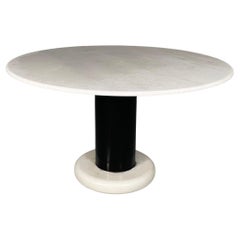
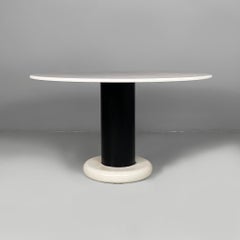
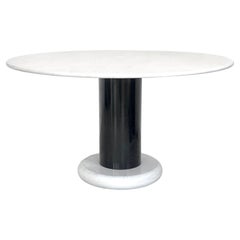
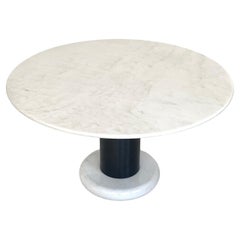
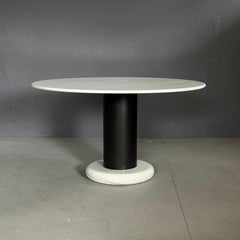
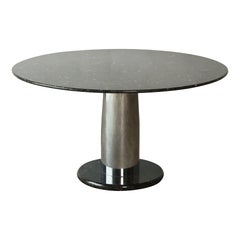
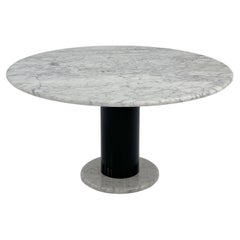
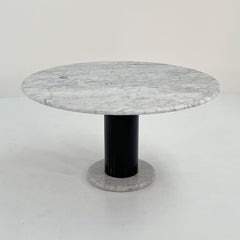
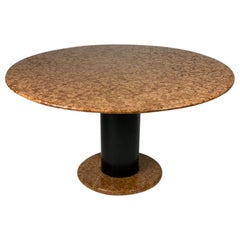
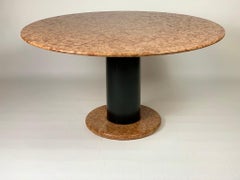
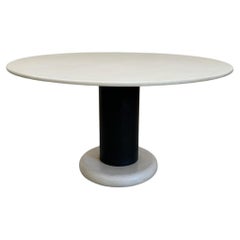
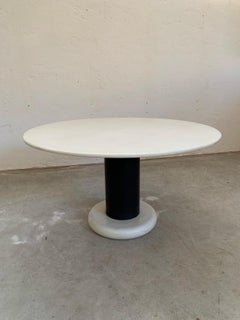
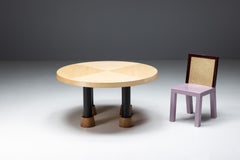
An architect, industrial designer, philosopher and provocateur, Ettore Sottsass led a revolution in the aesthetics and technology of modern design in the late 20th century. He was a wild man of the Radical Design movement that swept Italy in the late 1960s and ’70s, rejecting rationalism and modernism in favor of ever-more outrageous imaginings in lighting and furniture such as mirrors, lamps, chairs and tables.
Sottsass was the oldest member of the Memphis Group — a design collective, formed in Milan in 1980, whose irreverent, spirited members included Alessandro Mendini, Michele de Lucchi, Michael Graves and Shiro Kuramata. All had grown disillusioned by the staid, black-and-brown “corporatized” modernism that had become endemic in the 1970s. Memphis (the name stemmed from the title of a Bob Dylan song) countered with bold, brash, colorful, yet quirkily minimal designs for furniture, glassware, ceramics and metalwork.
The Memphis Group mocked high-status by building furniture with inexpensive materials such as plastic laminates, decorated to resemble exotic finishes such as animal skins. Their work was both functional and — as intended — shocking.
Even as it preceded the Memphis Group's formal launch, Sottsass's iconic Ultrafragola mirror — in its conspicuously curved plastic shell and radical pops of pink neon — embodies many of the collective's postmodern ideals.
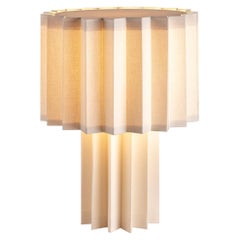
Sottsass created innovative furnishings for the likes of Artemide, Knoll, Zanotta and Poltronova, where he reigned as artistic director for nearly two decades beginning in 1958. His most-recognized designs appeared in the first Memphis collection, issued in 1981 — notably the multihued, angular Carlton room divider and Casablanca bookcase. As pieces on 1stDibs demonstrate, however, Sottsass is at his most inspired and expressive in smaller, secondary furnishings such as lamps and chandeliers, and in table pieces and glassware that have playful and sculptural qualities.
Sottsass left the Memphis Group in 1985 in order to concentrate on the growth of Sottsass Associati, a design and architecture consultancy he cofounded in 1980.
It was as an artist that Sottsass was celebrated in his life, in exhibitions at the Los Angeles County Museum of Art, in 2006, and the Philadelphia Museum of Art a year later. Even then Sottsass’s work prompted critical debate. And for a man whose greatest pleasure was in astonishing, delighting and ruffling feathers, perhaps there was no greater accolade. That the work remains so revolutionary and bold — that it breaks with convention so sharply it will never be considered mainstream — is a testament to his genius.
Find Ettore Sottsass lighting, decorative objects and furniture for sale on 1stDibs.
No matter your furniture style of choice, a shared meal is one of life’s true rewards. Why not treat your family and friends to a luxurious dining experience? Browse our top picks to find the perfect antique, new or vintage dining room table for this important occasion.
Modern furniture design borrows significantly from the trends of yore, and this is especially apparent in dining tables. Ancient Egyptians made practical use of the earliest four-legged tables of wood and rock — their models bear striking similarity to the dining tables of today — while common large medieval dining room tables in England were made of oak or elm. Romans and Greeks, renowned for big banquets that involved entertainment as well as good food, used early dining room tables made of marble or wood and metals such as bronze for meals.
On 1stDibs, find a range of dining room tables that offers no shortage of options to accommodate modest interiors, midsize family homes and even lavish banquets (entertainment not included).
Beginning in the mid-19th century, more American homes featured dining rooms, where families could gather specifically for a meal together. In the States, upper-class families were the first to enjoy dining room tables, which were the centerpiece of the dining room.
Dining room tables of the Victorian era were created in a range of revivalist styles inspired by neoclassical, Renaissance, Gothic and other traditions. Furnishings of the period were made of various woods, including oak, rosewood and mahogany, and referenced a variety of decorative arts and architectural motifs. Some dining room tables finished in the Rococo style feature gorgeous inlaid marble tabletops or other ornamental flourishes handcrafted by Parisian furniture makers of the 18th century.
In many modern spaces, there often isn’t a dining room separate from the kitchen — instead, they frequently share real estate in a single area. Mid-century modern dining room tables, specifically those created by designers such as Osvaldo Borsani, Edward Wormley and Alvar Aalto, are typically clean and uncomplicated designs for a dining area that’s adjacent to where the cooking is done. Furniture of this era hasn’t lost its allure for those who opt for a casual and contemporary aesthetic.
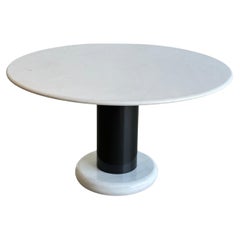
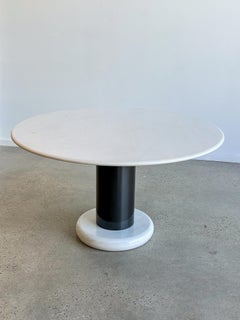
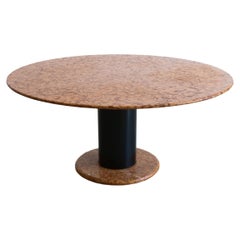
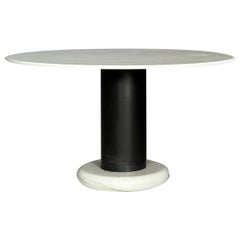
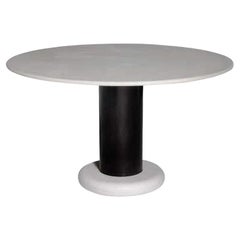
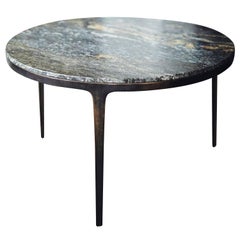
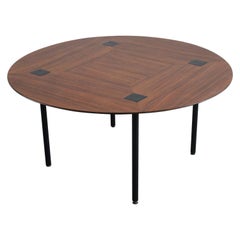
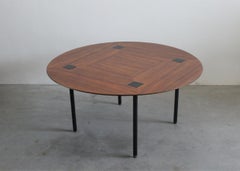
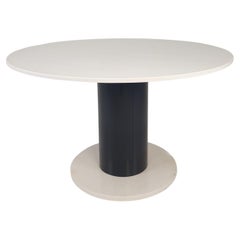
If you’re of the modern mindset that making and sharing meals should be one in the same — and perhaps large antique dining tables don’t mesh well with your style — consider a popular alternative. Working with a tighter space may mean that a round or oval dining room table, a design that references the festive meals of the medieval era, may be a better fit. Round dining room tables, particularly those that originated in the Art Deco period, still endure as a popular contemporary substitute for traditional rectangular dining tables. Giovanni Offredi’s Paracarro table for Saporiti Italia is a striking round table option that showcases the magnificent Italian industrial design of the 1970s.
Find a collection of antique, new and vintage dining tables on 1stDibs.