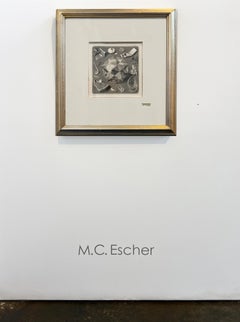
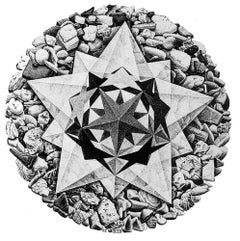
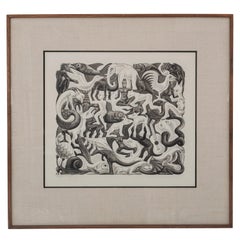
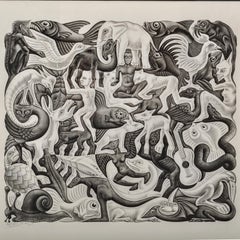
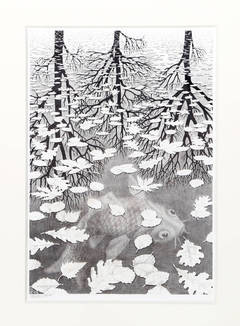
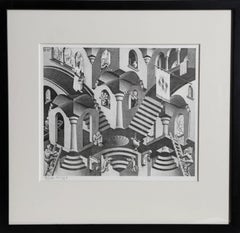
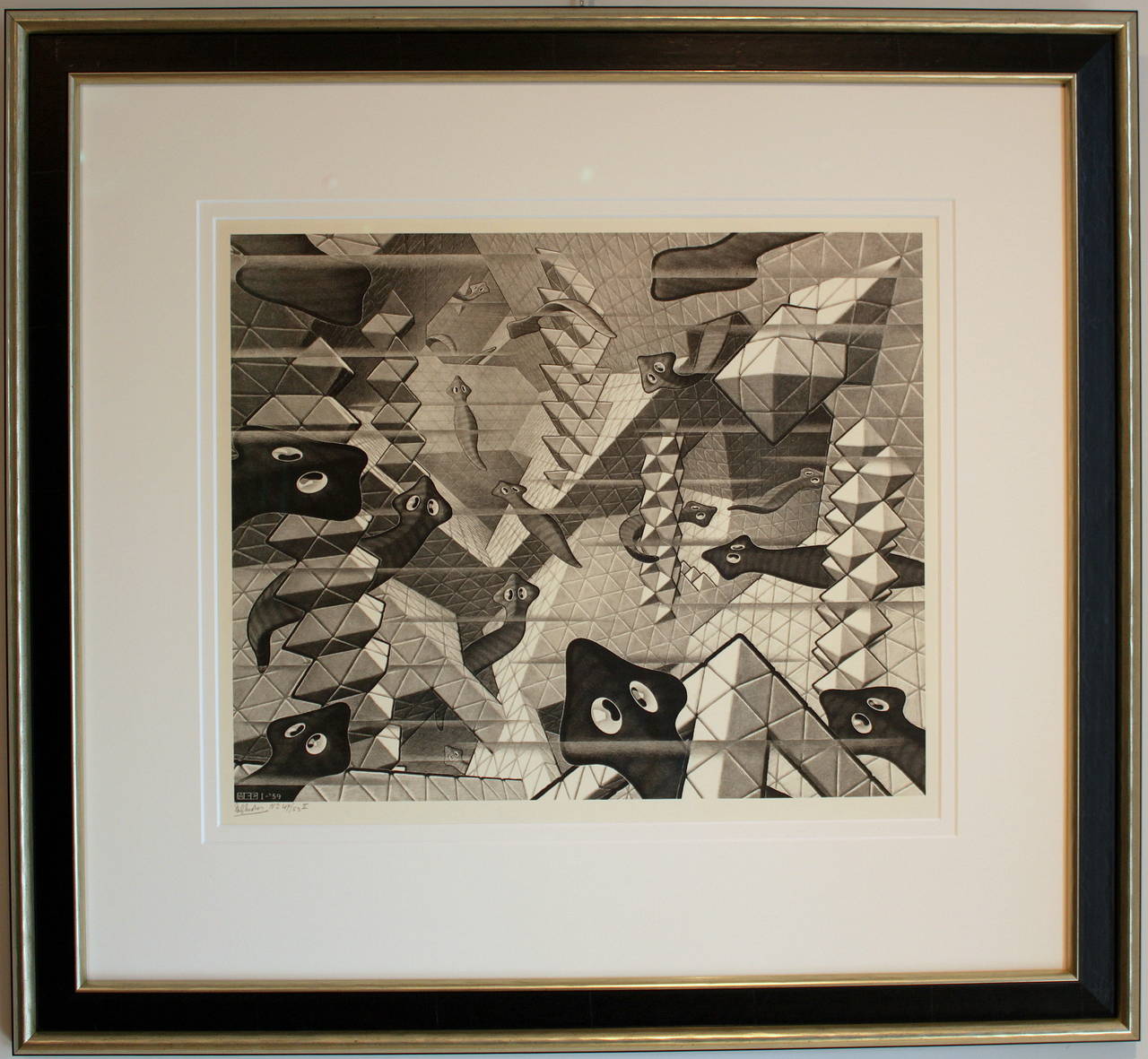
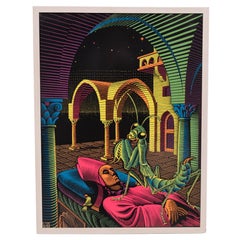
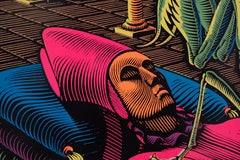
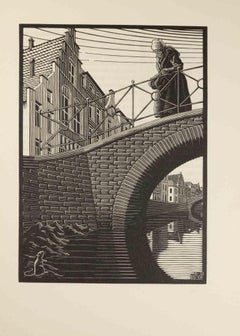
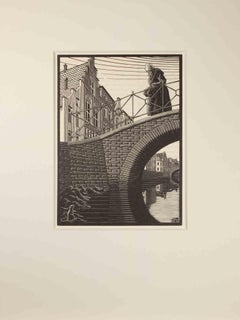
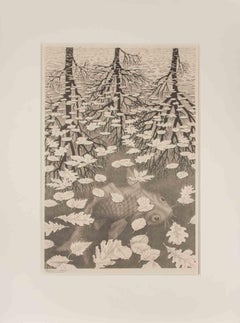
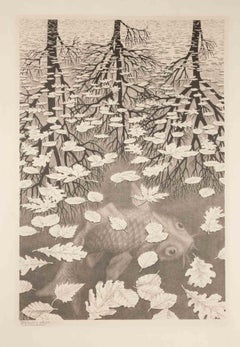
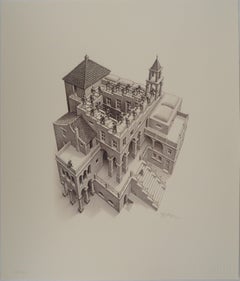
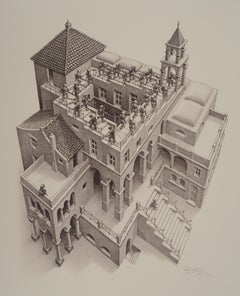
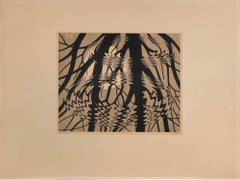
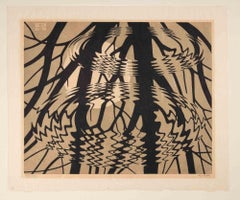
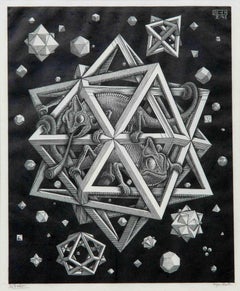
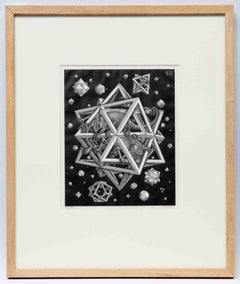
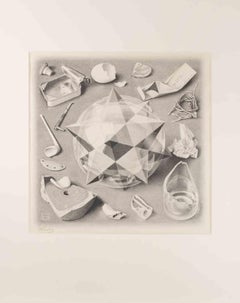
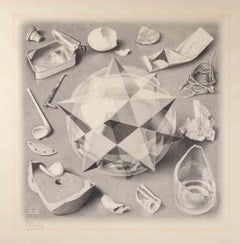
You are likely to find exactly the m c escher lithograph you’re looking for on 1stDibs, as there is a broad range for sale. Find
Surrealist versions now, or shop for
Surrealist creations for a more modern example of these cherished works. On 1stDibs, the right m c escher lithograph is waiting for you and the choices span a range of colors that includes
gray,
black,
brown and
beige. Finding an appealing m c escher lithograph — no matter the origin — is easy, but
M.C. Escher and
Earl Winston Escher each produced popular versions that are worth a look. Frequently made by artists working in
lithograph and
paper, these artworks are unique and have attracted attention over the years. A large m c escher lithograph can be an attractive addition to some spaces, while smaller examples are available — approximately spanning 10.75 high and 11 wide — and may be better suited to a more modest living area.
A m c escher lithograph can differ in price owing to various characteristics — the average selling price for items in our inventory is $18,656, while the lowest priced sells for $395 and the highest can go for as much as $60,404.
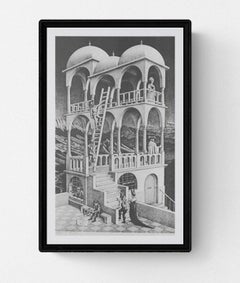
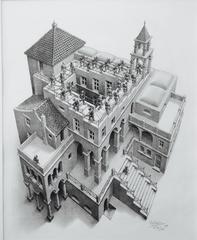
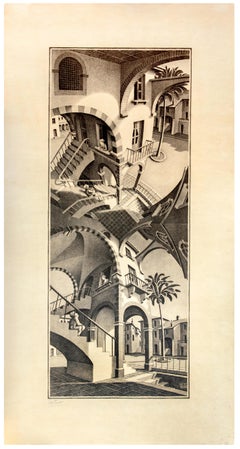
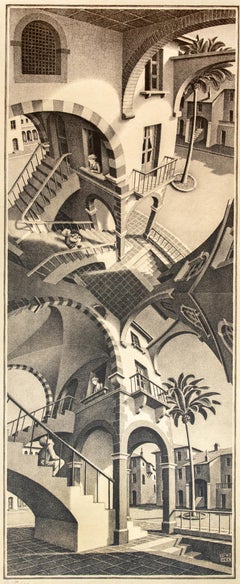
Nothing is quite what it seems in the universe of Maurits Cornelis Escher (widely known as M.C. Escher). The Dutch artist, famed for his graphic prints featuring infinite staircases, twisted perspectives and self-replicating animals, was a master of illusion in more ways than one.
Escher's pictures aren’t simply puzzles designed to play tricks on the brain; they were born of a desire to stretch our powers of perception, to encourage us to cultivate a natural curiosity and playfulness about the world around us. According to New York gallerist Skot Foreman, the artist had a rare gift. “He combined the structure and analytics of the left brain with the artistic creativity of the right brain,” Foreman explains. “Somehow, he turned images into mind-bending universes that were able to stretch the boundaries of our imagination, urging us to rethink the realms of possibility within nature’s laws of order.”
But creating illusionistic illustrations was not Escher’s only talent. He was also a passionate diarist, recording his thoughts and frustrations in written form throughout his life. He often lamented that his pictures could never fully convey his cerebral imaginings. At the same time, he expressed impatience with those who couldn’t see beyond the surface appeal of his shape-shifting patterns. Escher was an artist who sought perfection and felt misunderstood by the mainstream art world.
“The most important thing about Escher is that he was always curious, always researching and exploring. Most people lose this quality as they get older, but Escher maintained a childlike enthusiasm for the world,” says Dutch filmmaker Robin Lutz, whose thoughtful feature-length film, M.C. Escher: Journey to Infinity, marries documentary footage with animation and unfolds at an unhurried pace, allowing Escher’s witty and intelligent prose to gently guide us through his creative evolution.
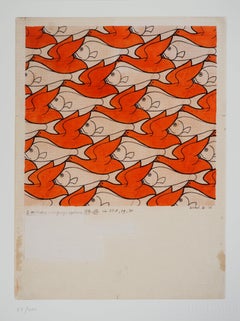
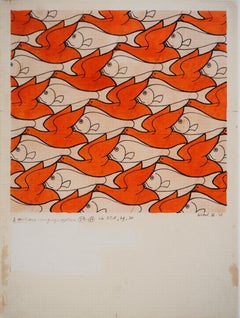
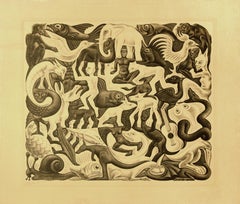
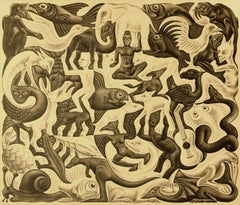
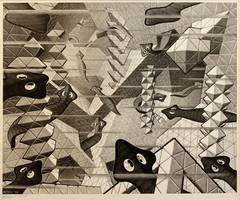
Escher always carried a magnifying glass in his pocket to “enjoy the tiniest details” at his feet, be it a plant climbing a rock, a butterfly or a grasshopper. He had a real passion for travel and spent more than a decade in Rome with his wife, Jetta, and young family. It was there that he first played with multiple perspectives, sketching the city’s architecture at night to avoid the “excessive baroque frills” he deemed too distracting in the daylight. Another big development was sparked by a 1936 visit to the Alhambra palace in Granada, Spain. Inspired by the Moorish tiles of the 14th-century landmark, Escher started to experiment with repeating patterns, or tessellations, creating his first woodcuts and lithographs of metamorphosing birds, lizards and fish interlocking and filling the entire surface of the paper in jigsaw fashion.
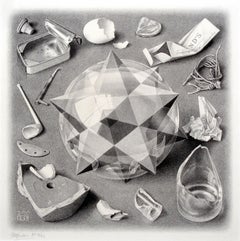
During and directly after World War II, Escher produced many of his most famous works, emotional reactions to a world plunged into chaos. This period marked the start of his fascination with impossible staircases, never-ending waterfalls and cyclical still lifes featuring figures and creatures seemingly caught in a loop, a paradox of entrapment and renewal.
Indeed, the concept of infinity was a major inspiration for him. It informs his fish-eye studies and curvilinear perspectives, which cram in so much dizzying detail it’s impossible to know where one thing ends and another begins. It’s no wonder, then, that Escher’s probing, mind-expanding prints have such enduring appeal.
Find original M.C. Escher art on 1stDibs.
Decorating with fine art prints — whether they’re figurative prints, abstract prints or another variety — has always been a practical way of bringing a space to life as well as bringing works by an artist you love into your home.
Pursued in the 1960s and ’70s, largely by Pop artists drawn to its associations with mass production, advertising, packaging and seriality, as well as those challenging the primacy of the Abstract Expressionist brushstroke, printmaking was embraced in the 1980s by painters and conceptual artists ranging from David Salle and Elizabeth Murray to Adrian Piper and Sherrie Levine.
Printmaking is the transfer of an image from one surface to another. An artist takes a material like stone, metal, wood or wax, carves, incises, draws or otherwise marks it with an image, inks or paints it and then transfers the image to a piece of paper or other material.
Fine art prints are frequently confused with their more commercial counterparts. After all, our closest connection to the printed image is through mass-produced newspapers, magazines and books, and many people don’t realize that even though prints are editions, they start with an original image created by an artist with the intent of reproducing it in a small batch. Fine art prints are created in strictly limited editions — 20 or 30 or maybe 50 — and are always based on an image created specifically to be made into an edition.
Many people think of revered Dutch artist Rembrandt as a painter but may not know that he was a printmaker as well. His prints have been preserved in time along with the work of other celebrated printmakers such as Pablo Picasso, Salvador Dalí and Andy Warhol. These fine art prints are still highly sought after by collectors.
“It’s another tool in the artist’s toolbox, just like painting or sculpture or anything else that an artist uses in the service of mark making or expressing him- or herself,” says International Fine Print Dealers Association (IFPDA) vice president Betsy Senior, of New York’s Betsy Senior Fine Art, Inc.
Because artist’s editions tend to be more affordable and available than his or her unique works, they’re more accessible and can be a great opportunity to bring a variety of colors, textures and shapes into a space.
For tight corners, select small fine art prints as opposed to the oversized bold piece you’ll hang as a focal point in the dining area. But be careful not to choose something that is too big for your space. And feel free to lean into it if need be — not every work needs picture-hanging hooks. Leaning a larger fine art print against the wall behind a bookcase can add a stylish installation-type dynamic to your living room. (Read more about how to arrange wall art here.)
Find fine art prints for sale on 1stDibs today.