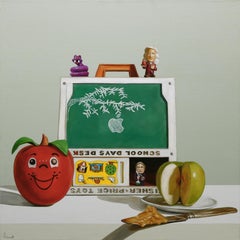
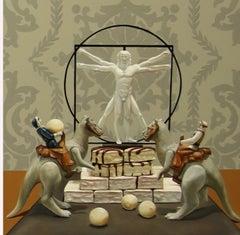
Pat Hobaugh grew up on a small farm in rural Indiana. He never took an art class or touched a paintbrush until his senior year in college when he took an Art History course that changed his life. He fell in love with the Old Masters and started to teach himself to paint. After several years of self-education, he went back to school to earn a Bachelors and Masters in painting from the Uni- versity of Iowa and the University of Wisconsin-Madison, respectively. Now he is represented in galleries across the country and has work in collections around the world. He currently resides in Atlanta, Georgia, USA.
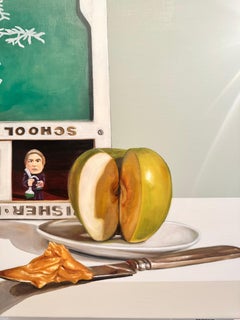
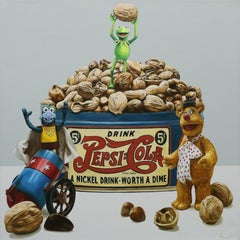
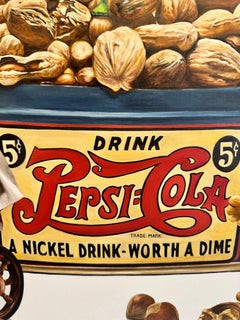
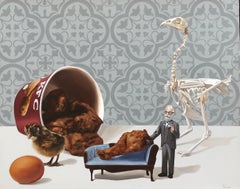
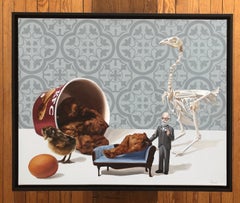
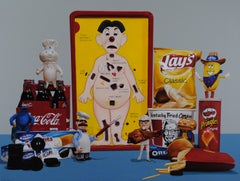
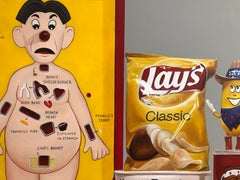
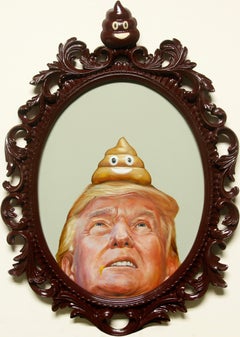
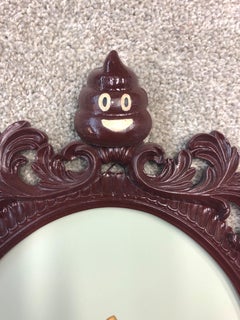
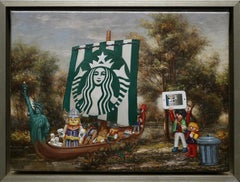
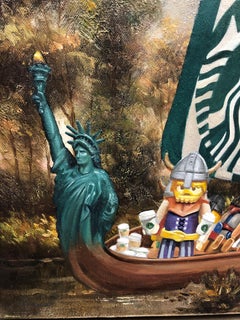
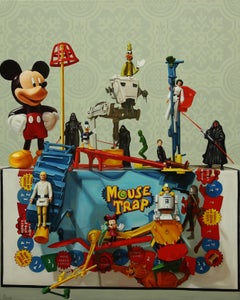
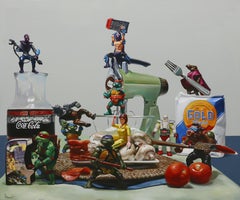
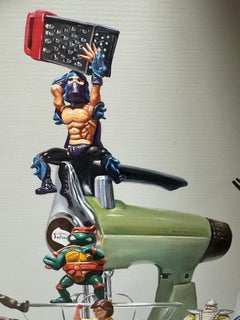
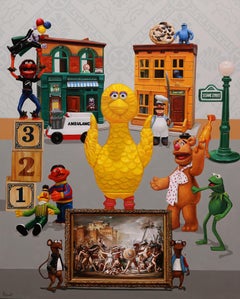
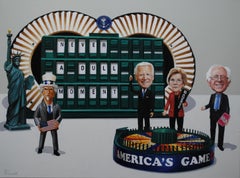
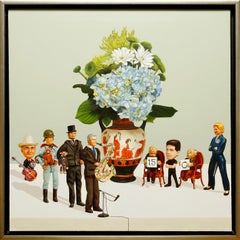
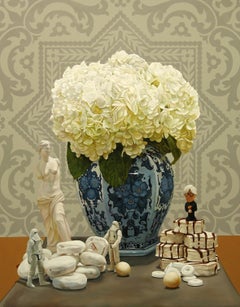
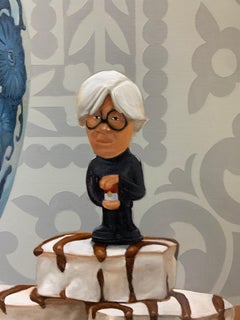
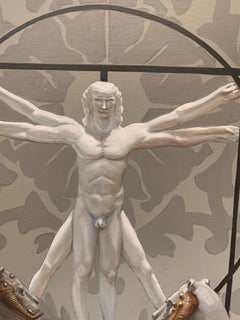
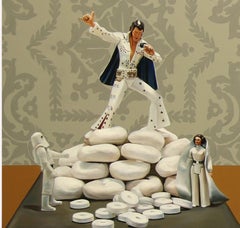
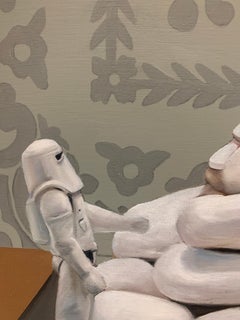
Pat Hobaugh works in a style that reflects the examination of pop culture fused with the tradition of Dutch still life painting. His fascination with objects (action figures, toys, miscellaneous foods) comes from his anthropological mindset that questions what these objects say about us as a cul- ture. Having dubbed his particular practice of painting our pop culture icons in object form “Stuf- fology,” Hobaugh explores the significance of materiality and “playtime” in the modern world and infuses it with matured satirical wit and a childlike playfulness.
Hobaugh also considers the effects from one generation to the next in his paintings, since he uses icons that may be removed from the current pop culture context. In doing this, he alludes to a shift in understanding of young and old. These objects are still toys, a tribute to our youth, though they might not be considered “current.” Though the acknowledgement of lost youth can be overwhelm- ing, Hobaugh conveys gratitude and hopefulness of his youth and of today’s youth by mixing the pop culture figures.
Hobaugh says of his works, “My still life work is a quest in exploring and exploding the traditional idea of the representational still life. These paintings began as an examination of the cultural indoc- trination and development of early adolescent children via toy action figures... Overall, they serve as a window into the world where a child’s mythos of heroes and villains are formed. Recently, the still lifes have expanded to include an examination and comparison of themes from past and pres- ent popular culture, such as sugary snacks and breakfast cereals.”
Perhaps one of the most influential contemporary art movements, Pop art emerged in the 1950s. In stark contrast to traditional artistic practice, its practitioners drew on imagery from popular culture — comic books, advertising, product packaging and other commercial media — to create original Pop art paintings, prints and sculptures that celebrated ordinary life in the most literal way.
ORIGINS OF POP ART
CHARACTERISTICS OF POP ART
- Bold imagery
- Bright, vivid colors
- Straightforward concepts
- Engagement with popular culture
- Incorporation of everyday objects from advertisements, cartoons, comic books and other popular mass media
POP ARTISTS TO KNOW
ORIGINAL POP ART ON 1STDIBS
The Pop art movement started in the United Kingdom as a reaction, both positive and critical, to the period’s consumerism. Its goal was to put popular culture on the same level as so-called high culture.
Richard Hamilton’s 1956 collage Just what is it that makes today’s homes so different, so appealing? is widely believed to have kickstarted this unconventional new style.
Pop art works are distinguished by their bold imagery, bright colors and seemingly commonplace subject matter. Practitioners sought to challenge the status quo, breaking with the perceived elitism of the previously dominant Abstract Expressionism and making statements about current events. Other key characteristics of Pop art include appropriation of imagery and techniques from popular and commercial culture; use of different media and formats; repetition in imagery and iconography; incorporation of mundane objects from advertisements, cartoons and other popular media; hard edges; and ironic and witty treatment of subject matter.
Although British artists launched the movement, they were soon overshadowed by their American counterparts. Pop art is perhaps most closely identified with American Pop artist Andy Warhol, whose clever appropriation of motifs and images helped to transform the artistic style into a lifestyle. Most of the best-known American artists associated with Pop art started in commercial art (Warhol made whimsical drawings as a hobby during his early years as a commercial illustrator), a background that helped them in merging high and popular culture.
Roy Lichtenstein was another prominent Pop artist that was active in the United States. Much like Warhol, Lichtenstein drew his subjects from print media, particularly comic strips, producing paintings and sculptures characterized by primary colors, bold outlines and halftone dots, elements appropriated from commercial printing. Recontextualizing a lowbrow image by importing it into a fine-art context was a trademark of his style. Neo-Pop artists like Jeff Koons and Takashi Murakami further blurred the line between art and popular culture.
Pop art rose to prominence largely through the work of a handful of men creating works that were unemotional and distanced — in other words, stereotypically masculine. However, there were many important female Pop artists, such as Rosalyn Drexler, whose significant contributions to the movement are recognized today. Best known for her work as a playwright and novelist, Drexler also created paintings and collages embodying Pop art themes and stylistic features.
Read more about the history of Pop art and the style’s famous artists, and browse the collection of original Pop art paintings, prints, photography and other works for sale on 1stDibs.
Still-life paintings work as part of the decor in nearly every type of space.
Still-life art, which includes work produced in media such as painting, photography, video and more, is a popular genre in Western art. However, the depiction of still life in color goes back to Ancient Egypt, where paintings on the interior walls of tombs portrayed the objects — such as food — that a person would take into the afterlife. Ancient Greek and Roman mosaics and pottery also often depicted food. Indeed, still-life paintings frequently feature food, flowers or man-made objects. By definition, still-life art represents anything that is considered inanimate.
During the Middle Ages, the still life genre was adapted by artists who illustrated religious manuscripts. A common theme of these paintings is the reminder that life is fleeting. This is especially true of vanitas, a kind of still life with roots in the Netherlands during the 17th century, which was built on themes such as death and decay and featured skulls and objects such as rotten fruit. In northern Europe during the 1600s, painters consulted botanical texts to accurately depict the flowers and plants that were the subject of their work.
Leonardo da Vinci’s penchant for observing phenomena in nature and filling notebooks with drawings and notes helped him improve as an artist of still-life paintings. Vincent van Gogh, an artist who made a couple of the most expensive paintings ever sold, carried out rich experiments with color over the course of painting hundreds of still lifes, and we can argue that Campbell’s Soup Cans (1961–62) by Andy Warhol counts as still-life art.
While early examples were primarily figurative, you can find still lifes that belong to different schools and styles of painting, such as Cubism, Impressionism and contemporary art.
As part of the wall decor in your living room, dining room or elsewhere, a still-life painting can look sophisticated alongside your well-curated decorative objects and can help set the mood in a space.
When shopping for a still-life painting, think about how it makes you feel and how the artist chose to represent its subject. When buying any art for your home, choose pieces that you connect with. If you’re shopping online, read the description of the work to learn about the artist and check the price and shipping information. Make sure that the works you choose complement or relate to your overall theme and furniture style. Artwork can either fit into your room’s color scheme or serve as an accent piece. Introduce new textures to a space by choosing an oil still-life painting.
On 1stDibs, find a collection of still-life paintings in a wide range of styles and subject matter.