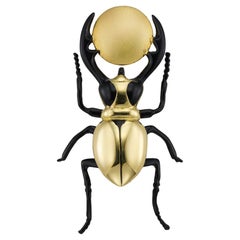
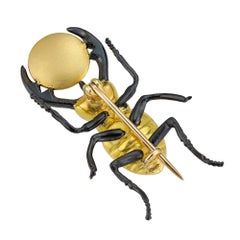
A gold and black enamel scarab beetle/Ra-Khepri brooch
Located in London, GB
A gold and black enamel scarab beetle/Ra-Khepri brooch, the gold body of the beetle embellished
Category
2010s English Egyptian Revival Brooches
Materials
Gold, Enamel
A gold and black enamel scarab beetle/Ra-Khepri brooch
Located in London, GB
A gold and black enamel scarab beetle/Ra-Khepri brooch, the gold body of the beetle embellished
Gold, Enamel
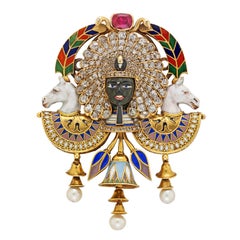
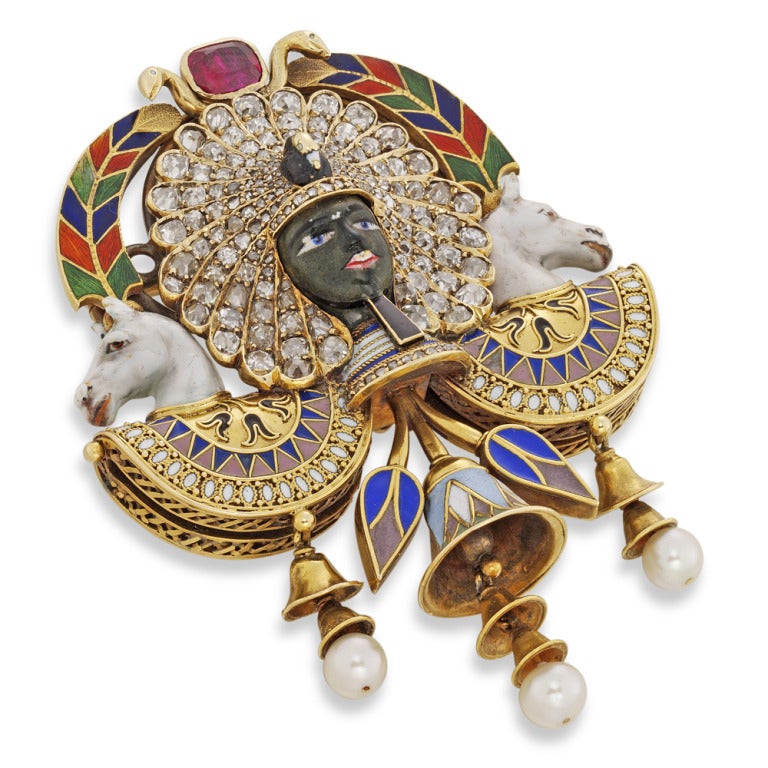
Egyptian Revival Pharaoh Diamond Pearl Ruby Enamel Gold Brooch by Carlo Giuliano
By Carlo Giuliano
Located in London, GB
Highly Important Egyptian Revival Pharaoh Portrait Brooch by Carlo Giuliano recognized to be arguably the most significant 19th century Egyptian Revival jewel. An important Egyptian...
Diamond, Natural Pearl, Ruby, Yellow Gold
$650 / item
W 0.56 in L 0.99 in
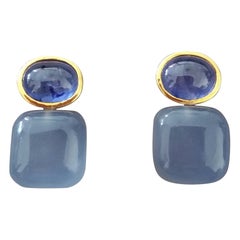
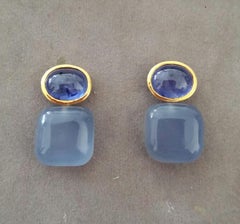
Blue Sapphire Cabs 14kt Solid Gold Blue Chalcedony Cushion Shape Stud Earrings
By Tutti Frutti Jewellery
Located in Bangkok, TH
These simple but elegant and handmade earrings have 2 Oval Blue Sapphire cabs measuring 8 x 10 mm set in a 14 Kt yellow gold bezel at the top to which are suspended 2 Cushion Shap...
Chalcedony, Blue Sapphire, Gold, 14k Gold, Yellow Gold
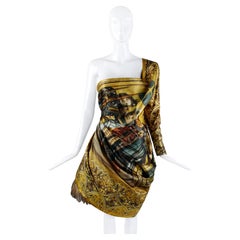
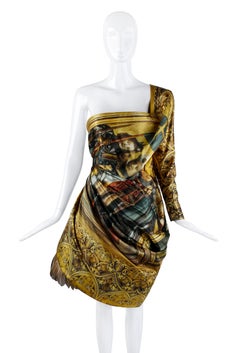
Alexander McQueen F/W 2010 “Angels & Demons” Medieval Art Royalty Gown Dress
By Alexander McQueen
Located in Chicago, IL
From Alexander McQueen’s final collection, this spectacular piece features digitally printed imagery depicting Medieval religious artwork from German painter Stefan Lochner. The artw...
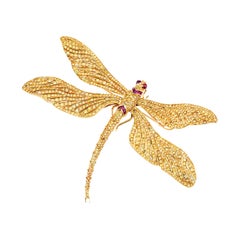
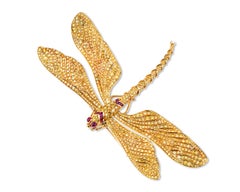
Fancy Vivid Yellow Diamond Dragonfly Brooch
By Fred Leighton
Located in New Orleans, LA
Enveloped in a sea of 60.26 carats of fancy vivid yellow diamonds is this tour de force of jewelry craftsmanship from the collaboration of jewelry legends Fred Leighton and Carvin Fr...
Yellow Diamond, Ruby, 18k Gold, Yellow Gold
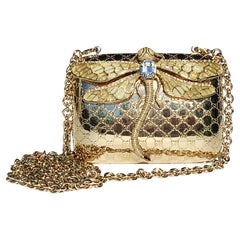
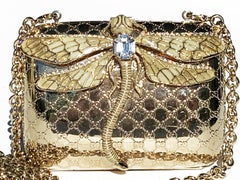
Tom Ford for Gucci Dragonfly Gold Metal MicroGuccissima Enamel Minaudiere Clutch
By Gucci, Tom Ford for Gucci
Located in Montgomery, TX
Tom Ford for Gucci Gold Dragonfly Minaudiere in Micro Guccissima Embossed Gold tone Metal and Enamel Clutch 2000"s Collection This striking Gucci Minaudiere is rendered in Micro Gucc...
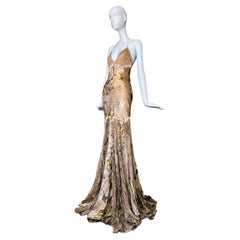
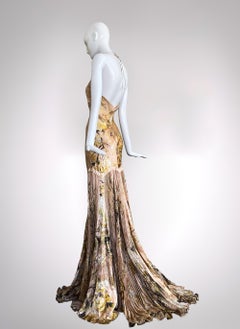
Iconic Roberto Cavalli FW 2006 Silk Evening Gown Showstopper
By Roberto Cavalli
Located in Berlin, BE
A Roberto Cavalli Masterpiece from 2006 Drenched in the opulence of gilded romance, this Roberto Cavalli silk evening gown is a red-carpet reverie. A symphony of delicate florals, li...
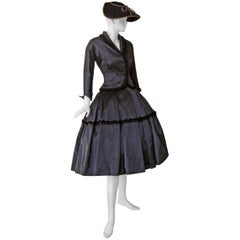
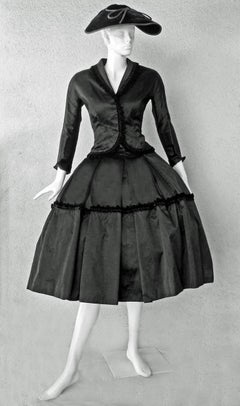
1954 Christian Dior Haute Couture 'Lily of the Valley' Satin Evening Dress Suit
By Christian Dior
Located in Los Angeles, CA
Two piece suit consisting of a jacket and mid length skirt of butter black satin trimmed with a velvet and jet fringe. The fitted jacket is constructed on princess lines with raglan ...
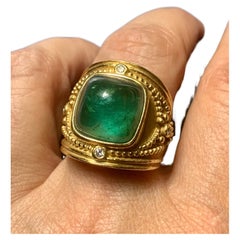
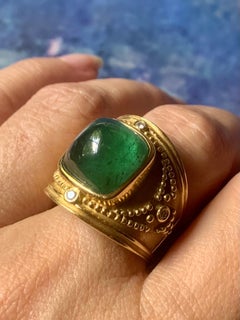
Byzantine Style Emerald Green Cabochon Tourmaline, Diamond 18K Yellow Gold Ring
Located in New York, NY
Large, ornate Byzantine style cushion shaped emerald green tourmaline, diamond and 18K yellow gold statement ring. High quality, impressive ring very similar to the Elizabeth Gage T...
Diamond, Tourmaline, 18k Gold, Yellow Gold
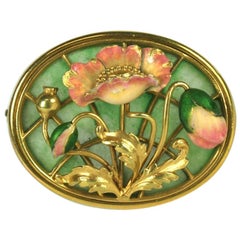
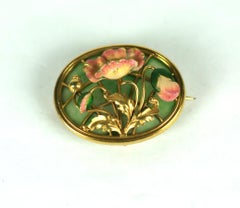
American Art Nouveau Plique a Jour Brooch
Located in Riverdale, NY
Wonderful American Art Nouveau 14k Plique a Jour Brooch of enameled poppies on a pale green plique a jour ground. Flowers modeled in high relief with pink and green translucent ename...
14k Gold
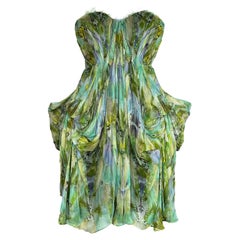

Alexander McQueen Plato's Atlantis "Praying Mantis" Silk Dress, SS 2010
By Alexander McQueen
Located in Berlin, BE
Alexander McQueen Rare and Extremely Collectible Sculptural Silk Dress. From his legendary SS 2010 Collection 'Plato's Atlantis'. Breathtaking Draped Mantis Wing Print Silk Fabric ...
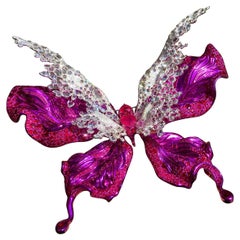
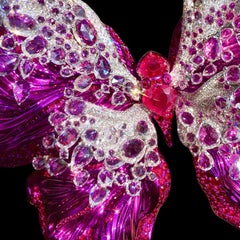
X Pink Morpho
Located in Stockholm, SE
Exclusive original design by AtelierX . Burmese old roasted pigeon blood ruby 4.46 carats. Sweet and super positive, two carats or more with Gilder, AIGS certificate. Overall 141...
Diamond, Pink Sapphire, 18k Gold, Titanium
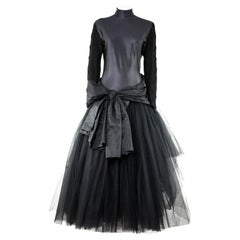
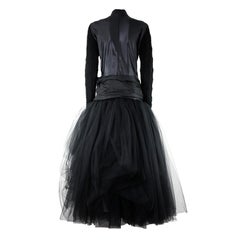
Museum Worthy 1980s Jean Paul Gaultier Pour Equator Dress
By Jean Paul Gaultier
Located in Bressanone, Trentino-Alto Adige
Museum-Worthy 1980s Jean Paul Gaultier Pour Equator Maxi black Dress in lycra, with silk bow, knitted sleeves and tulle skirt. Size 44 IT. Condition: Overall really good, some imper...
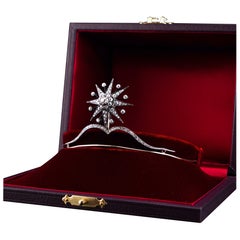
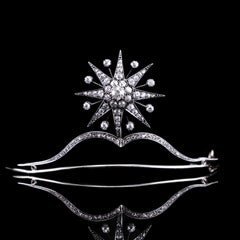
Antique Victorian Tiara with Diamond Star - c.1890
Located in London, GB
We are exceptionally delighted to offer this spectacular Victorian diamond star tiara made c.1890. The tiara will come in a fully fitted presentation case as photographed. Upon pond...
Diamond, Gold
$7,800Sale Price|20% Off
Size: 40
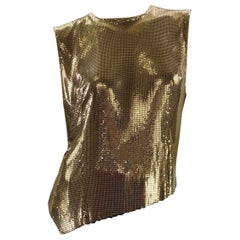
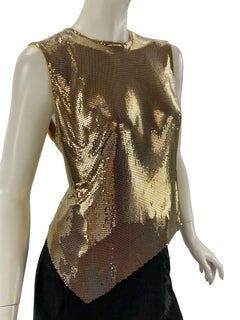
F/W 1994 Vintage Gianni Versace Couture Gold Metal Mesh Oroton Chainmail Top
By Gianni Versace Couture
Located in Montgomery, TX
F/W 1994 Gianni Versace Couture Gold Metal Mesh Oroton Top Size: Italian - 40, US - 4 Zipper on the back, Fully lined. Measurements: length - 18 inches ( highest part ), 22" ( lower ...
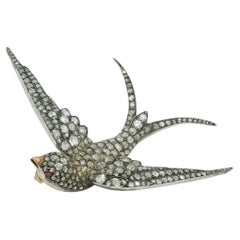
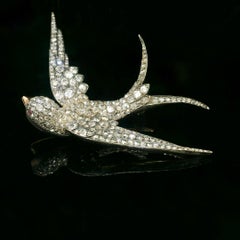
Diamond bird brooch, gold and silver
Located in Uccle, BE
Antique brooch end 19th, begin 20th century made of yellow gold 18n Karat and Silver. Gold and silver brooch featuring a swallow with spread wings paved with old-cut (for a total o...
Diamond, Gold, 18k Gold, Yellow Gold, Silver
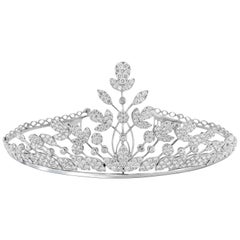
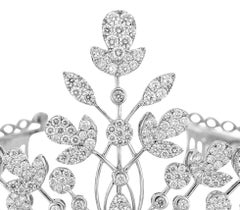
18 Karat Gold Diamond Tiara and Necklace
Located in Macau, MO
This fabulous diamond tiara is designed with floral and foliate pattern, decorated with brilliant cut diamonds together weighing approximately 22.47 carat, mounted in 18 Karat white ...
Diamond, 18k Gold, Gold, White Gold
From vibrant to subtle, elegant to cheeky, vintage and antique enamel jewelry and watches encompass a wide range of colors and styles, and there are almost as many techniques for creating these distinctive pieces.
Enameling is one of the oldest forms of surface decoration, used to add color to jewelry without having to rely on gemstones. Evidence of enameling goes back to ancient Greece. Throughout history, far-flung cultures favored different techniques. For example, cloisonné enamel was popular during the Byzantine Empire, while artisans living in France and Germany in the Middle Ages preferred champlevé. And Art Nouveau jewelry designers favored plique à jour.
At its core, enamel is the fusion of powdered glass to metal, and artists like enameling because it allows them to add a painterly or illustrative quality to their work.
Cloisonné (“cell” in French) is a technique in the creation of enamel jewelry that sees the use of thin wires of fine silver or gold to outline a design, which is then filled with enamel. The piece is subsequently placed in a kiln where the enamel is melted. Cloisonné is distinct because the individual wires remain visible, forming an outline of the motif.
Champlevé (“level field” in French) enamel is almost the opposite of cloisonné. In this technique, depressions in the metal are made by etching, engraving or chiseling, and then layers of enamel are built up until they rise slightly above the surface of the metal. The enamel is then fired and polished.
Guilloché is a technique in which translucent enamel is applied to a piece of metal that has had designs cut into it using a lathe. After the firing, the patterns on the metal become visible. Guilloché was made famous by Peter Carl Fabergé, whose jewelry house used the technique on many of its objets d’art as well as jewelry.
Find antique and vintage enamel rings, bracelets, necklaces and other accessories on 1stDibs.
Vintage brooches, which refer to decorative jewelry traditionally pinned to garments and used to fasten pieces of clothing together where needed, have seen increasing popularity in recent years.
While jewelry trends come and go, brooches are indeed back on the radar thanks to fashion houses like Gucci, Versace, Dior and Saint Laurent, all of which feature fun pinnable designs in their current collections. Whether a dazzlingly naturalistic Art Nouveau dragonfly, a whimsical David Webb animal, a gem-studded bloom or a streamlined abstract design, these jewels add color and sparkle to your look and a spring to your step.
Given their long history, brooches have expectedly taken on a variety of different shapes and forms over time, with jewelers turning to assorted methods of ornamentation for these accessories, including enameling and the integration of pearls and gemstones. Cameo brooches that originated during the Victorian age are characterized by a shell carved in raised relief that feature portraits of a woman’s profile, while 19th-century micromosaic brooches, comprising innumerable individually placed glass fragments, sometimes feature miniature depictions of a pastoral scene in daily Roman life.
At one time, brooches were symbols of wealth, made primarily from the finest metals and showcasing exquisite precious gemstones. Today, these jewels are inclusive and universal, and you don’t have to travel very far to find an admirer of brooches. They can be richly geometric in form, such as the ornate diamond pins dating from the Art Deco era, or designer-specific, such as the celebrated naturalistic works created by Tiffany & Co., the milk glass and gold confections crafted by Trifari or handmade vintage Chanel brooches of silk or laminated sheer fabric. Chanel, of course, has never abandoned this style, producing gorgeously baroque CC examples since the 1980s.
Brooches are versatile and adaptable. These decorative accessories can be worn in your hair, on hats, scarves and on the lower point of V-neck clothing. Pin a dazzling brooch to the lapel of your blazer-and-tee combo or add a cluster of smaller pins to your overcoat. And while brooches have their place in “mourning jewelry,” in that a mourning brooch is representative of your connection to a lost loved one, they’re widely seen as romantic and symbolic of love, so much so that a hardcore brooch enthusiast might advocate for brooches to be worn over the heart.
Today, find a wide variety of antique and vintage brooches for sale on 1stDibs, including gold brooches, sapphire brooches and more.