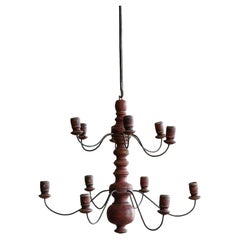
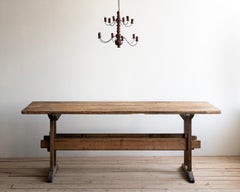
19th Century Swedish Folk Art Chandelier
Located in Allerum, SE
19th century Swedish folk art Chandelier in it's original condition.
Category
Antique 19th Century Swedish Folk Art Chandeliers and Pendants
Materials
Iron
19th Century Swedish Folk Art Chandelier
Located in Allerum, SE
19th century Swedish folk art Chandelier in it's original condition.
Iron
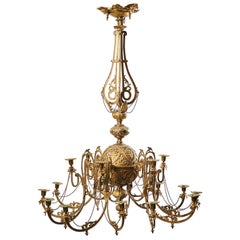
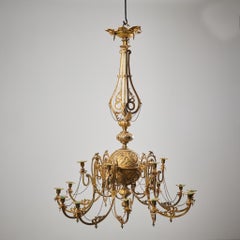
Antique Swedish Intricate Bronzed Chandelier
Located in Kramfors, SE
Antique Swedish bronzed chandelier made during the mid 1800s, around 1850 to 1860. The chandelier is made in bronzed metal with a richly decorated round frame. It has curved arms and...
Metal
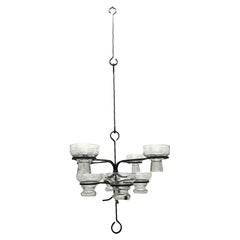

Vintage 70s Wrought Iron Chandelier Eight Candles Swedish Art Glass 2 Extenders
By Erik Höglund
Located in Nuernberg, DE
Add a touch of opulence to your home with this charming candle chandelier! This 60s Wrought Iron Chandelier with eight Swedish Art Glasses holds ball globe candles which are not incl...
Wrought Iron
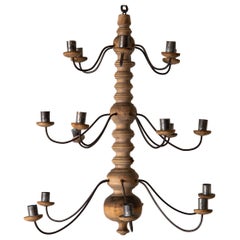
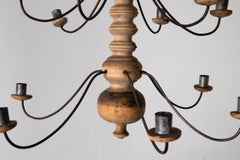
Chandelier Wood Rustic Swedish 18th Century, Sweden
Located in New York, NY
Chandelier wood rustic Swedish 18th century, Sweden. A chandelier made in Sweden during the 18th century. Body in wood with candleholders in metal for 16 candles.
Metal
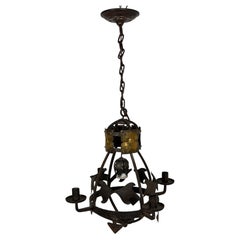
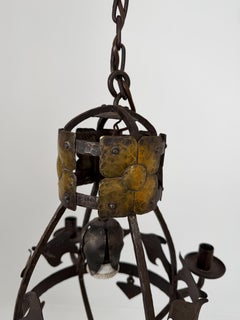
Swedish Hand-Forged Wrought Iron Chandelier, 1930s
Located in Hammarö, SE
A sculptural hand-forged wrought iron chandelier from Sweden, executed in a deeply atmospheric Nordic rustic style during the mid-20th century. The piece carries a strong architectur...
Wrought Iron
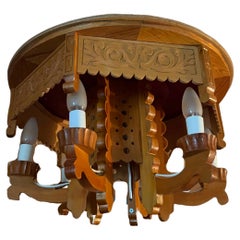
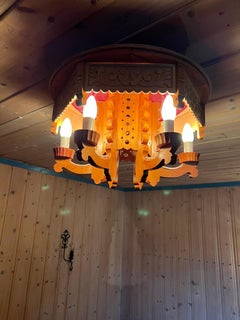
Unique Handcrafted Wooden Pendant Light – Pine, Scandinavian Folk Art (1979)
Located in Skien, NO
A rare find for collectors of Nordic folk art and vintage lighting. Details: --Material: Solid pine wood --Design: Six-arm chandelier with acanthus vine carvings --Origin: Handmade...
Wood, Pine
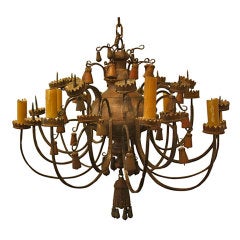
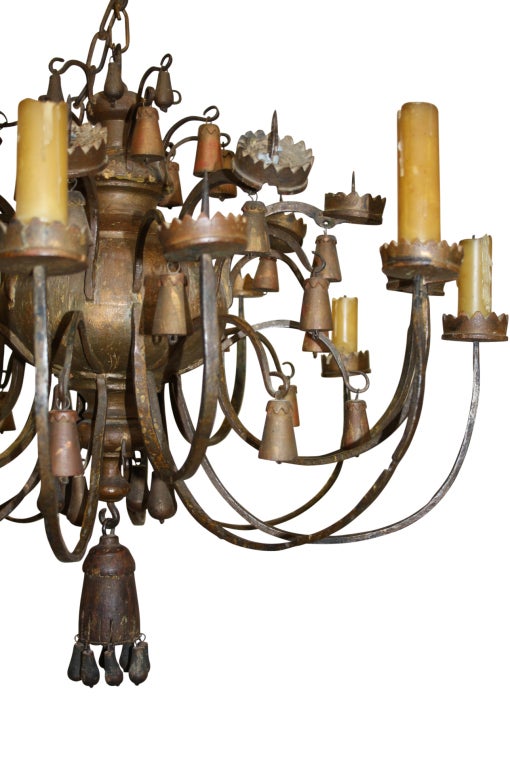
Early Swedish Folk Art Chandelier, 16th. Century
Located in Haddonfield, NJ
Extremely rare and early folk art chandelier from Gotland, Sweden. Each of the 25+ wooden "crown"-cups are loose and tightens when a candlestick is secured on the spear/candlestick a...
Iron
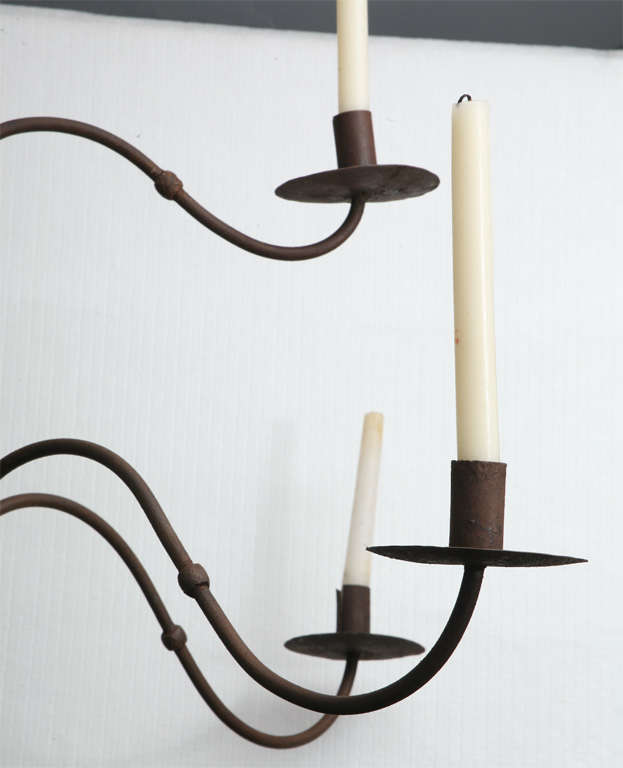
Rare 18th Century Folk Art Chandelier
Located in Greenwich, CT
Quite unusual 18th century folk art chandelier, the shaft turned and carved with painted flowers and rays , the two tiers of arms held by wrought iron sockets, eight arms in total.
Iron
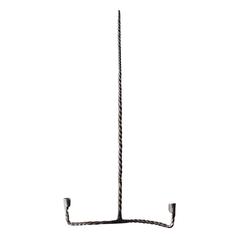
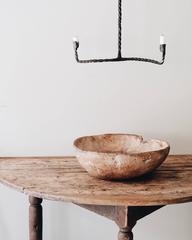
18th Century Swedish Wrought Iron Chandelier
Located in Allerum, SE
An unusual Primitive 18th century Swedish wrought iron spiral twist chandelier for two candles, circa 1750.
Wrought Iron
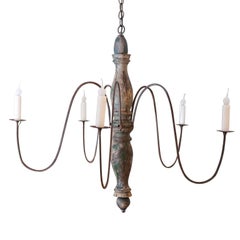
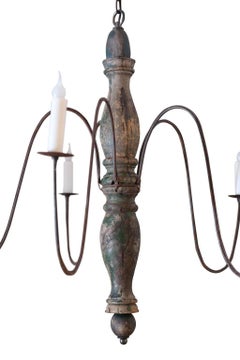
Vernacular Style Wooden Chandelier
Located in Chireno, TX
Vernacular style wooden chandelier from 18th century and later elements, newly-wired with five iron arms, chain and a canopy.
Wood
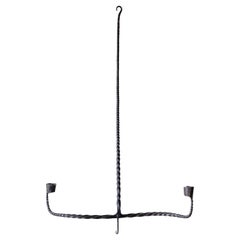
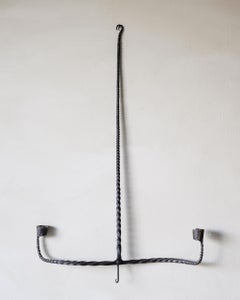
Wrought Iron Spiral Twist Chandelier
Located in Allerum, SE
An unusual primitive 18th century Swedish wrought iron spiral twist chandelier for two candles Incorporating a hanging hook, circa 1750.
Wrought Iron
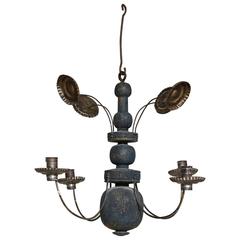

Painted Swedish Folk Art Chandelier
Located in Greenwich, CT
A diminutive Swedish painted wooden chandelier with four wire arms ending in crimped and fluted tin candle holders with matching reflectors, suspended on an original four link wire c...
Tin
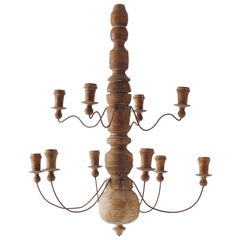

19th Century Swedish Folk Art Chandelier
Located in Allerum, SE
Swedish 19th century Folk Art chandelier in its original condition.
Wood
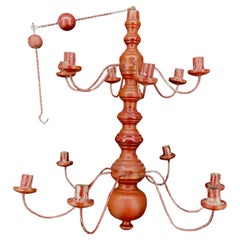

Sold
H 19 in W 18.13 in D 19.5 in
Small Swedish 12 Arm Red Wood and Wire Chandelier Light, 19th Century
Located in Haddonfield, NJ
A charming Swedish folk art candle chandelier in turned wood with a rusty red painted finish. 12 metal arms support the wood candle holders.
Metal, Wire
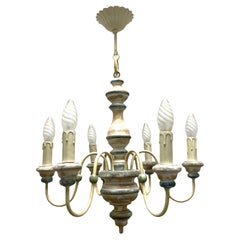
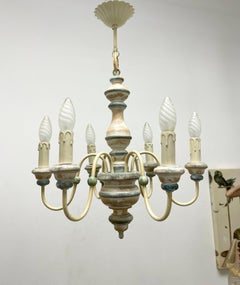
Chippy White & Blue Swedish Farmhouse Style Tole Pendant Chandelier, 1970s
By EGLO Leuchten
Located in Nuernberg, DE
Add a touch of opulence to your home with this charming chandelier! Perfect wood and metal chandelier to enhance any chic or eclectic home. The beautiful chippy white and blue colors...
Metal
Folk art is a genre of art that shares the creator’s traditions, offering not just an artistic display but an opportunity to learn about a culture. Antique, new and vintage folk art typically reflects a heritage or location. It can include utilitarian objects and handmade art as diverse as weather vanes, duck decoys, portraiture and paintings, carnival art and quilts.
Quilts are a quintessential part of American folk art but their roots are international, with quilting dating back to Ancient Egypt. The practice spread to Europe and was especially prominent in the Middle Ages, with one of the oldest surviving examples being the Tristan quilt made in Sicily in the 14th century. They were made as bedcovers and clothing, including as a layer for knights to wear beneath their armor. Native American folk art includes functional objects reflecting their heritage, such as baskets, textiles and wooden pieces.
Elsewhere, the vast range of work associated with Mexican folk art includes masks made by Mexican craftspeople for traditional celebrations and ceremonial dances. Mexican masks are part of the country’s folk-art traditions that go back thousands of years and play a role in festivals and theater.
Works in the folk art tradition are valuable because of the skills involved, like weaving, hand-carving wood and even stonework. Many folk artists are self-taught, while some train as apprentices within their community. By using available materials and taking a personal approach to their creations, artists ensure each piece is unique and conveys a story.
During the Great Depression, artistic materials in America were hard to come by, so artisans used discarded wood from cigar boxes and shipping crates to make highly stylized, notched pieces — most often picture frames and boxes — that are today sought after by collectors. This folk art style is called tramp art and was popular from roughly 1870 until the 1940s.
Folk art brings vibrant culture and traditions into your home. Browse an extensive collection of antique, new and vintage folk art on 1stDibs.
Chandeliers — simple in form, inspired by candelabras and originally made of wood or iron — first made an appearance in early churches. For those wealthy enough to afford them for their homes in the medieval period, a chandelier's suspended lights likely exuded imminent danger, as lit candles served as the light source for fixtures of the era. Things have thankfully changed since then, and antique chandeliers and pendant lights are popular in many interiors today.
While gas lighting during the late 18th century represented an upgrade for chandeliers — and gas lamps would long inspire Danish architect and pioneering modernist lighting designer Poul Henningsen — it would eventually be replaced with the familiar electric lighting of today.
The key difference between a pendant light and a chandelier is that a pendant incorporates only a single bulb into its design. Don’t mistake this for simplicity, however. An Art Deco–styled homage to Sputnik from Murano glass artisans Giovanni Dalla Fina, with handcrafted decorative elements supported by a chrome frame, is just one stunning example of the elaborate engineering that can be incorporated into every component of a chandelier. (Note: there is more than one lighting fixture that shares its name with the iconic mid-century-era satellite — see Gino Sarfatti’s design too.)
Chandeliers have evolved over time, but their classic elegance has remained unchanged.
Not only will the right chandelier prove impressive in a given room, but it can also offer a certain sense of practicality. These fixtures can easily illuminate an entire space, while their elevated position prevents them from creating glare or straining one’s eyes.
Certain materials, like glass, can complement naturally lit settings without stealing the show. Brass, on the other hand, can introduce an alluring, warm glow. While LEDs have earned a bad reputation for their perceived harsh bluish lights and a loss of brightness over their life span, the right design choices can help harness their lighting potential and create the perfect mood. A careful approach to lighting can transform your room into a peaceful and cozy nook, ideal for napping, reading or working.
For midsize spaces, a wall light or sconce can pull the room together and get the lighting job done. Perforated steel rings underneath five bands of handspun aluminum support a rich diffusion of light within Alvar Aalto's Beehive pendant light, but if you’re looking to brighten a more modest room, perhaps a minimalist solution is what you’re after. The mid-century modern furniture designer Charlotte Perriand devised her CP-1 wall lamps in the 1960s, in which a repositioning of sheet-metal plates can redirect light as needed.
The versatility and variability of these lighting staples mean that, when it comes to finding something like the perfect chandelier, you’ll never be left hanging. From the natural world-inspired designs of the Art Nouveau era to the classic beauty of Paul Ferrante's fixtures, there is a style for every room.
With designs for pendant lights and chandeliers across eras, colors and materials, you’ll never run out of options to explore on 1stDibs — shop a collection today that includes antique Art Deco chandeliers, Stilnovo chandeliers, Baccarat chandeliers and more.