By Hippolyte-Edme Pretot
Located in West Palm Beach, FL
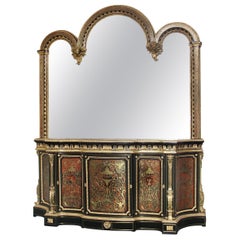
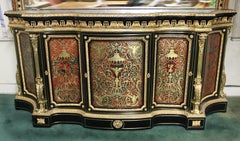
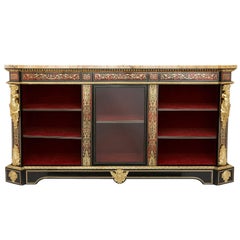
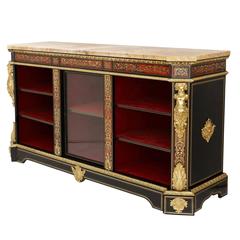
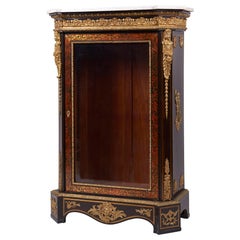
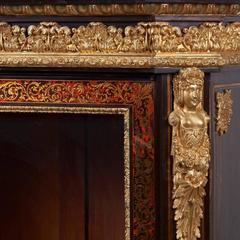
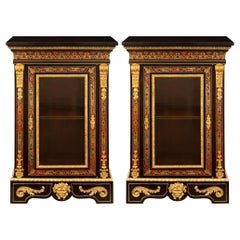
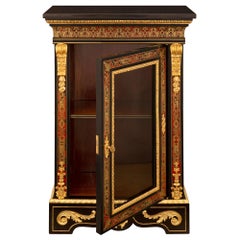
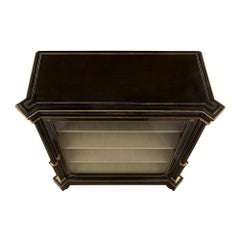
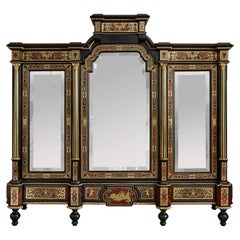
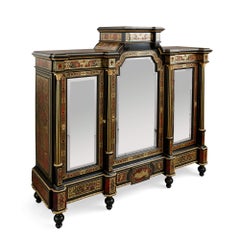
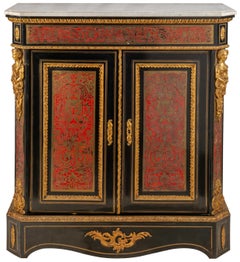
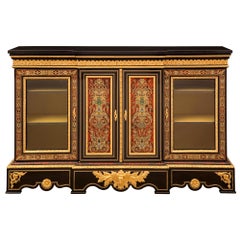
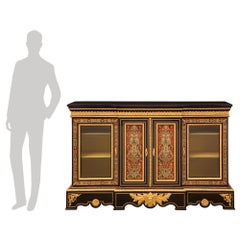
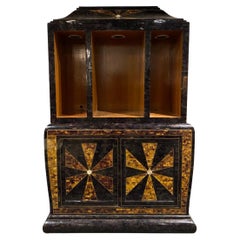
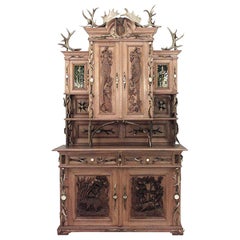
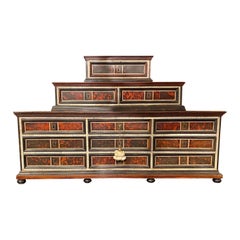
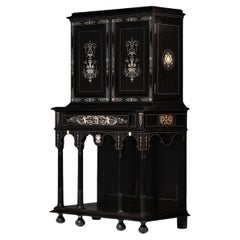
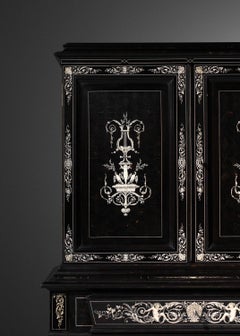
A stunning and most unique French 19th century Napoleon III Period ebony, ormolu, tortoiseshell, brass, pewter, Lapis Lazuli, mother of pearl, and black Belgian marble vitrine cabinet, signed Pretot. The four door buffet is raised by a beautiful scalloped shaped base with most elegant scrolled movements. The base is adorned with striking richly chased ormolu mounts of lovely rosettes, foliate Rinceaux designs, and a most impressive central mask of a bearded man amidst large acanthus leaves, all set on an ebony background with fine brass fillets. The two central doors are decorated with stunning masterfully executed scrolled foliate brass designs with intricately detailed maiden's faces, birds, and central pewter and colorful pietra dura urns above an exceptional lattice design with a Lapis Lazuli background and a bottom mother of pearl palmette all set on a superb tortoiseshell background. Each outer door retains its original glass pane set within a foliate ormolu band and a sensational inlaid frame with additional brass designs of interlocking geometric patterns, lovely scrolled foliate movements, finely detailed palmettes at each corner, and striking most charming pietra dura inlaid floral reserves. All four doors display foliate ormolu keyhole escutcheons and open to reveal two adjustable upholstered shelves...
Category
19th Century French Napoleon III Antique Bone Case Pieces and Storage Cabinets
MaterialsLapis Lazuli, Belgian Black Marble, Brass, Ormolu, Pewter