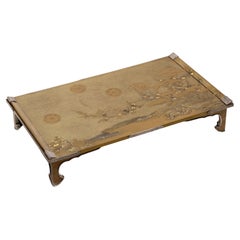
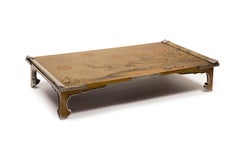
Edo Furniture

EDO STYLE

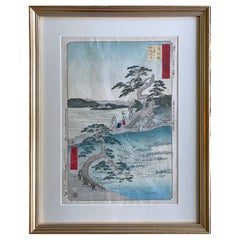
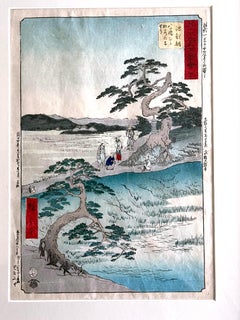
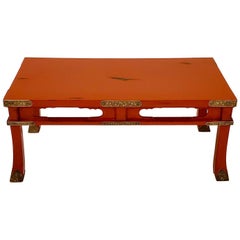
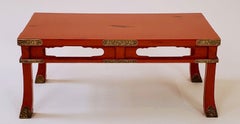
Edo furniture was created during a flourishing time for the decorative arts owing to the stability of the Tokugawa shogunate rule in Japan. Spanning from 1603 to 1867, this era of peace and economic growth supported artistic advancements in lacquer, woodblock printing, porcelain and other artisanal trades. Because the country was largely isolated, there was little outside influence, leading to centuries of exceptional attention to the design of its furnishings and the quality of its traditional arts.
Unlike during the Meiji period that followed, with an increase in domestic and international markets, furniture during the Edo period was predominately commissioned by the ruling class, although people from across social groups benefited from the burgeoning metropolitan hubs for artisanal trades. For instance, Kyoto became a major center for lacquer art. Most furniture pieces were made from wood such as cedar or ash, including the era’s sashimono cabinets, which involved fine joinery and were rooted in the Heian period.

Sashimono cabinets, which were built by master craftsmen in a range of different wood types owing to the various trees that populate Japan, occasionally featured a stack of slender drawers as well as sliding doors. They were popular with everyone from samurai to kabuki actors. Tansu storage chests crafted from wood with metal fittings were also common in Edo-period homes. Some were designed to be easily portable while others were made to double as staircases.

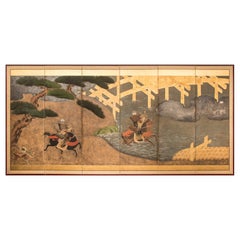
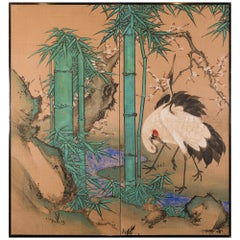
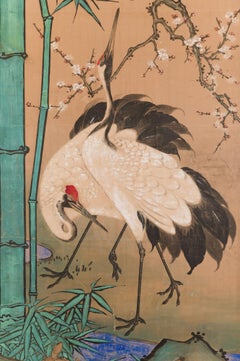
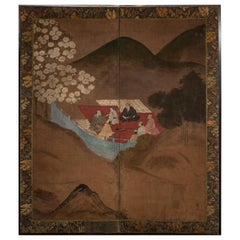
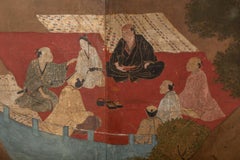
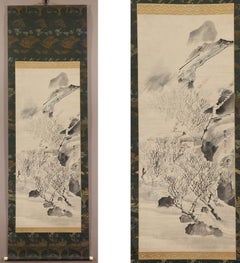
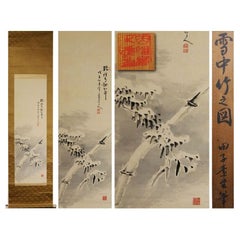
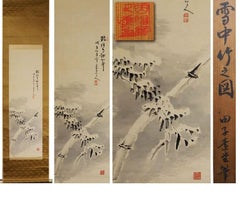
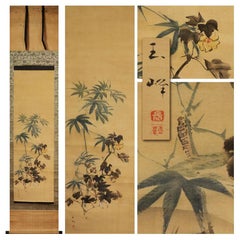
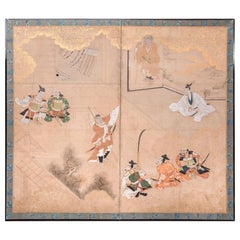
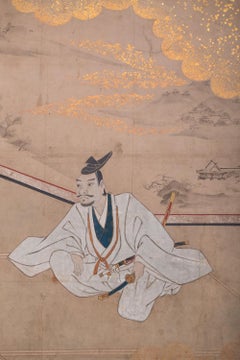
Painted folding screens, called byōbu, were also fashionable, with Japanese artists inspired by nature, literature and scenes of history and daily life to create vivid works. In Buddhist temples and the palatial homes of the aristocratic class, fusuma, or large sliding panels, would sometimes be adorned with gold or silver leaf. These dividers allowed interiors to change throughout the day, closing in small spaces for personal use or reflecting candlelight to illuminate communal spaces after dark.

Find a collection of Edo tables, lighting, decorative objects, wall decorations and more furniture on 1stDibs.

to
64
373
342
964
11
1
200,933
118,330
44,801
34,007
16,954
12,477
11,242
10,814
10,145
9,028
7,423
6,960
6,761
6,670
6,650
6,107
4,981
3,763
423
480
61
12
22
15
2
2
1
1
1
1
336
308
260
226
201
880
866
844
19
3
976
972
973
11
6
3
3
2
Style: Edo
Fine Japanese Namban Lacquer Jewelry Casket, 17th Century

Fine Japanese Namban Lacquer Jewelry Casket, 17th Century

Located in Amsterdam, NL

Japanese Namban lacquer transition-style coffer with two drawers Kyoto/Nagasaki, circa 1650 The cartouches with gilt and red decorations of leaves...

Category

17th Century Japanese Antique Edo Furniture

Materials

Cypress

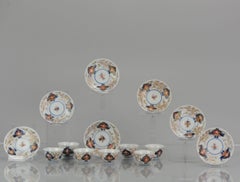
Japanese Porcelain Charger, Marked 'Tezuka' テツカ and 'Yamatoku', circa 1900

Japanese Porcelain Charger, Marked 'Tezuka' テツカ and 'Yamatoku', circa 1900

Located in Amsterdam, Noord Holland

Nice Japanese charger with decoration of Bamboo. Charger - Porcelain - Marked 'Tezuka' ??? and 'Yamatoku' ???? - Japan - circa 1900-1910 (Late Meiji Period) 4-11-19-3-1Nice Jap...

Category

18th Century Japanese Antique Edo Furniture

Materials

Porcelain

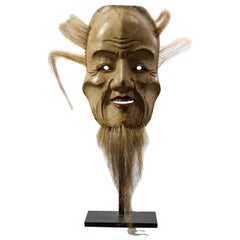
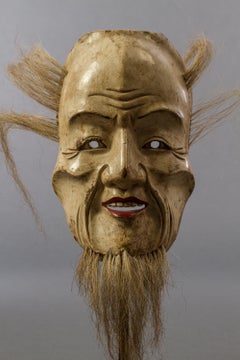
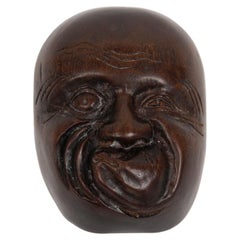
Early 19th Century Japanese Wood Noh Mask

Early 19th Century Japanese Wood Noh Mask

Located in Hudson, NY

Early 19th century Japanese wood noh mask, This mask comes in its original kiri wood storage box, which is signed and dated: Koran, 1811 (Edo period). The box...

Category

1810s Japanese Antique Edo Furniture

Materials

Gesso, Wood

Japanese Two Panel Screen: Genpei Warriors

Japanese Two Panel Screen: Genpei Warriors

Located in Hudson, NY

The Genpei War took place from 1180–1185, during which the Minamoto clan rebelled against the Taira clan for control of Japan. The two clans had a bitter rivalry for years, and the M...

Category

Early 19th Century Japanese Antique Edo Furniture

Materials

Gold Leaf

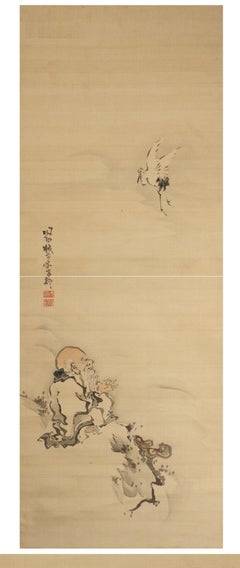
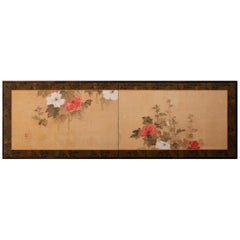
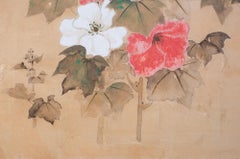
Japanese Two Panel Screen, Hollyhocks

Japanese Two Panel Screen, Hollyhocks

Located in Hudson, NY

Edo period (18th century) furosaki screen (tea screen), with seal of the artist: Jakyu. Korin School painting, employing Kenzan style of split image. (see "Morning Glories" Metropoli...

Category

18th Century Japanese Antique Edo Furniture

Materials

Silk, Paper, Wood

Japanese Lacquer Koro 'Incense Burner'

Japanese Lacquer Koro 'Incense Burner'

Located in Hudson, NY

Removable bronze top, with gold drip pattern at top. Cresting ocean waves on bottom with raised silver sea spray.

Category

Early 19th Century Japanese Antique Edo Furniture

Materials

Silver, Bronze

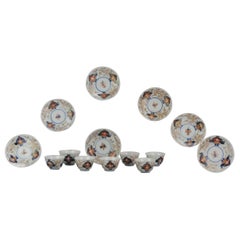
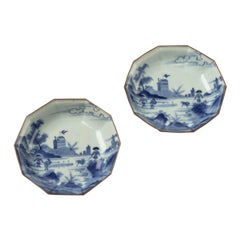
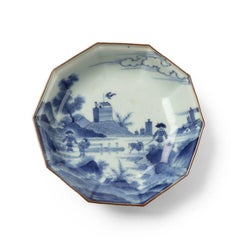
A pair of Edo period ‘Scheveningen’ design Arita export dishes

A pair of Edo period ‘Scheveningen’ design Arita export dishes

Located in Lymington, Hampshire

Each of these decagonal saucer-dishes is painted in underglaze-blue with a landscape of two Dutchmen and a boy warmly wrapped up and wearing large hats, two appear to be skating and ...

Category

Early 1700s Japanese Antique Edo Furniture

Materials

Ceramic

Woodblock Print Comical Views of Famous Places in Edo by Hiroshige Hirokage

Woodblock Print Comical Views of Famous Places in Edo by Hiroshige Hirokage

Located in Atlanta, GA

Artist: Utagawa Hirokage (active 1855-1865) Series: Comical Views of Famous Places in Edo Number: 21 "Cherry-blossom Viewing at the Middle Hall and the Double Hall in Ueno" Mediu...

Category

1850s Japanese Antique Edo Furniture

Materials

Paper

Dutch Colonial Japanese Scroll Painting of Chief Merchant Doeff

Dutch Colonial Japanese Scroll Painting of Chief Merchant Doeff

Located in Amsterdam, NL

Nagasaki School (EARLY 19TH CENTURY) Opperhoofd Hendrik Doeff with Javanese servant Kakemono, watercolor on paper, mounted on silk and textile covered paper scroll, not signed....

Category

Early 19th Century Japanese Antique Edo Furniture

Materials

Silk, Paper

Unpei Kameyama, 'a View of Black 'American' Ships in the Bay of Uraga Senminato'

Unpei Kameyama, 'a View of Black 'American' Ships in the Bay of Uraga Senminato'

Located in Amsterdam, NL

Unpei Kameyama (1821-1899) A view of black (American) ships in the bay of Uraga Senminato, Miura district, June 1853 The Japanese text reads: ‘The seventy-six old men for the Kitamura-clan, drawn in 1897 on request of Yoshisada Kitamura, Himeji, the black ships which so much changed the fate of Japan, enjoy please this masterpiece by Harima Shonin Bisei who brings back memories of his young days.’ Watercolour on paper, laid down on cardboard, H. 44.5 x W. 115.5 cm Provenance: Collection of Yoshisada Kitamura, Himeji Yoshisada Kitamura (1838-1899), the son of a farmer in the village of Ogawa, in the district of Harimakashikihigashi, studied under Matajiro Otaka and got heavily involved in the anti-Shogunate movement. He was active in several military incidents against the Shogunate. After the Meiji restoration, he served the Meiji government as a local official in the Himeji domain. Kameyama Unpei was a Confucian scholar, a Shinto priest...

Category

Mid-19th Century Japanese Antique Edo Furniture

Materials

Paper

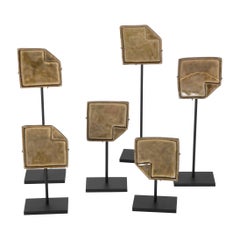
A Set of Six Takatori Ware Dishes Now Mounted

A Set of Six Takatori Ware Dishes Now Mounted

Located in Stamford, CT

A set of Six Takatori Ware plates. One employing the Japanese Kintsugi technique of using gold to repair cracked ceramics. As a philosophy, kintsugi is similar to the Japanese phi...

Category

Early 19th Century Japanese Antique Edo Furniture

Materials

Stoneware

Edo furniture for sale on 1stDibs.

Find a broad range of unique Edo furniture for sale on 1stDibs. Many of these items were first offered in the 21st Century and Contemporary, but contemporary artisans have continued to produce works inspired by this style. If you’re looking to add vintage furniture created in this style to your space, the works available on 1stDibs include asian art and furniture, wall decorations, decorative objects and other home furnishings, frequently crafted with wood, metal and other materials. If you’re shopping for used Edo furniture made in a specific country, there are Asia, East Asia, and Japan pieces for sale on 1stDibs. While there are many designers and brands associated with original furniture, popular names associated with this style include Utagawa Hiroshige (Ando Hiroshige), Arita, Ryosuke Harashima, and Kitagawa Utamaro. It’s true that these talented designers have at times inspired knockoffs, but our experienced specialists have partnered with only top vetted sellers to offer authentic pieces that come with a buyer protection guarantee. Prices for furniture differ depending upon multiple factors, including designer, materials, construction methods, condition and provenance. On 1stDibs, the price for these items starts at $55 and tops out at $1,386,932 while the average work can sell for $2,989.