By Tilgmans Keramik
Located in Copenhagen, DK
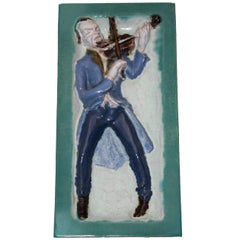
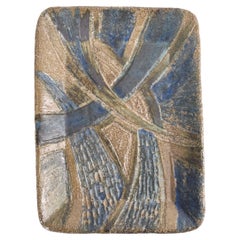
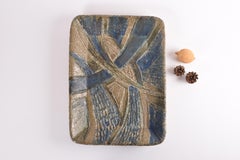
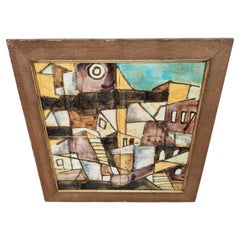
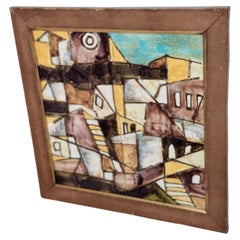
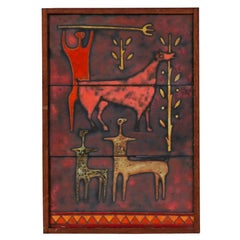
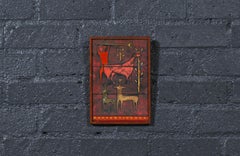
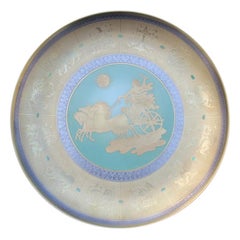
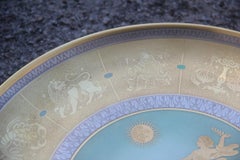
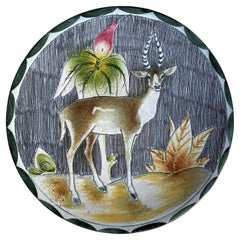
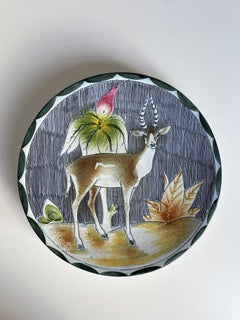
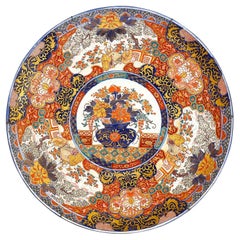
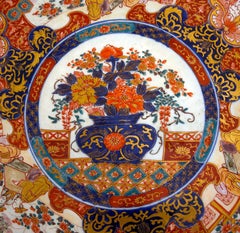
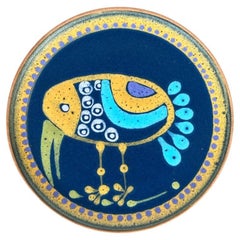
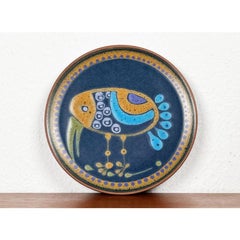
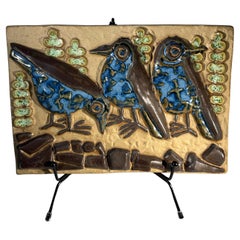
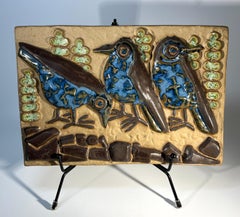
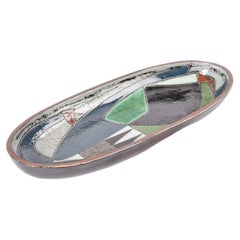
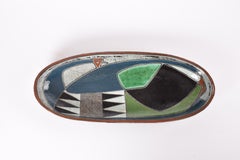
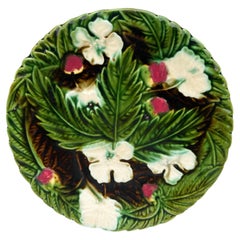
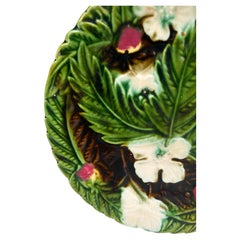
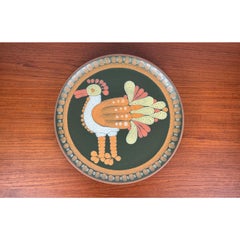
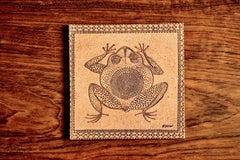
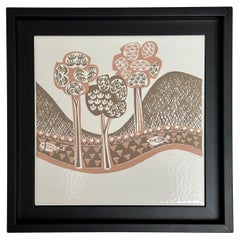
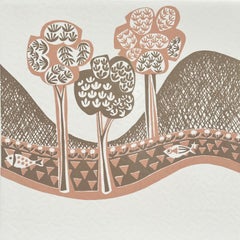
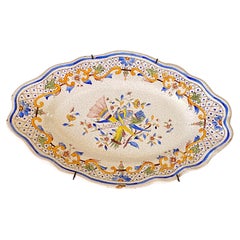
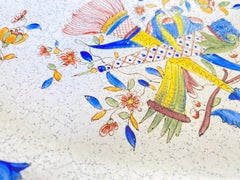
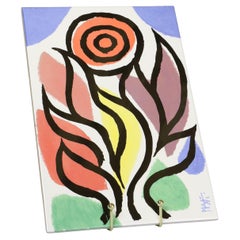
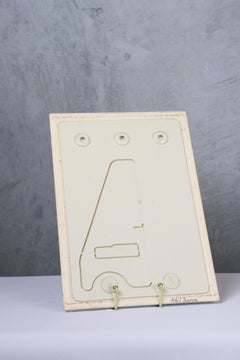
Vintage handmade fully glazed Swedish midcentury modern wall platter / centrepiece with organic, floral decor depicting a gazelle with a direct gaze surrounded by vegetation in brown, ochre, green, white and bright pink colors on a striped dark blue background created with the experimental sgraffito technique that Tilgmans became famous for. Designed and handpainted in the late 1950s by Eivor Lang and manufactured by German/Finnish Paul Harald Tilgman in his workshop in the small town of Kortedala close to Gothenburg, Sweden. Milky white glaze on the base and sides with curved, muted green decor framing the image along the edge. Three holes for hanging - two in use with metal wire. Signed under base.
A handpainted piece in beautiful condition.
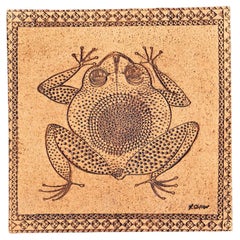
Paul Harald “Harry” Tilgmann was born in Dresden, Germany in 1904 and emigrated to Sweden during WWII where he started Tilgmans Keramik (= Ceramics) in 1948 in the small town of Utbynäs close to Gothenburg. Tilgman had 16 employees working for him and when he hired the Polish refugee Marian Zawadzki (1912-1978) as artistic director in 1953, Tilgman Keramik started experimenting with the distinct sgraffito technique. The sgraffito technique consists of carving fine lines into the background of a design through a light colored glaze down to a dark grey clay slip. This created a unique textured ground which has become a style associated with Tilgmans Keramik in particular. The decorative elements also appear to be outlined with a carved line and then hand painted with overglazes where birds, fish, flowers, butterflies and other animals were a common theme. This type of work was the most popular in midcentury Sweden alongside Tilgmans small animal figurines...
Category
1950s Swedish Scandinavian Modern Vintage Ceramic Wall Decorations
MaterialsCeramic, Stoneware, Pottery