Venetian Lagoon
Located in Padova, IT
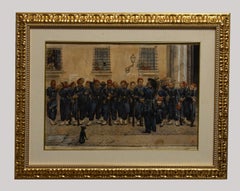
Amazing painting perfect condition. Venetian Lagoon made by Gavagnin 1886 original frame signed and dated 1886
Italian School 1870s Art
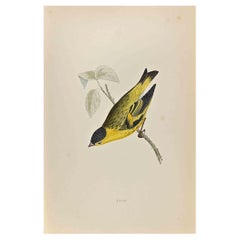
Oil, Canvas
Venetian Lagoon
Located in Padova, IT
Amazing painting perfect condition. Venetian Lagoon made by Gavagnin 1886 original frame signed and dated 1886
Oil, Canvas
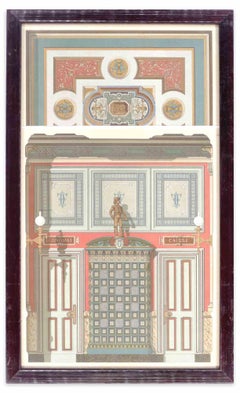
1878 Paris Universal Exhibition - Panorama des palais de l'exposition
Located in PARIS, FR
The 1878 exhibition, inaugurated on May 1 after nineteen months of work and preparation, was in line with the Universal Exhibitions of the 19th ce...
Paper, Color
Un Debarquement en Angleterre (A Disembarking in England)
Located in Fairlawn, OH
Un Debarquement en Angleterre (A Disembarking in England) etching, drypoint, aquatint, roulette and spirit ground, 1879 Signed with the artist’s red owl stamp, Lugt 977 (see photo) ...
Drypoint
Jupiter embrassant l'Amour, Heliogravure by Marcantonio Raimondi
By Marcantonio Raimondi
Located in Long Island City, NY
Marcantonio Raimondi, After by Amand Durand, Italian (1480 - 1534) - Jupiter embrassant l'Amour, Year: 1875, Medium: Heliogravure, Size: 13.5 x 8.5 in. (34.29 x 21.59 cm), Printer...
Etching
Le joueur de guitare, Heliogravure by Marcantonio Raimondi
By Marcantonio Raimondi
Located in Long Island City, NY
Marcantonio Raimondi, After by Amand Durand, Italian (1480 - 1534) - Le joueur de guitare, Year: 1875, Medium: Heliogravure, Size: 8 x 5.5 in. (20.32 x 13.97 cm), Printer: Amand D...
Etching
Set of Six Hand-Colored Lithograph Ornithological Prints from "The Ibis" Birds
Located in Saint Augustine, FL
Artist: Philip Lutley Sclater (English, 1829-1913) Titles: "Loria Mariae (MacGregor's Bowerbird)", "Cnemophilus Macgregorii (Crested Satinbird)", "Aegotheles Savesi (New Caledonian O...
Watercolor, Lithograph
Harmony, Framed Vintage Etching by Frank Dicksee
Located in Long Island City, NY
This is an etched rendition of a painting by Frank Dicksee. Harmony is one of the most well-known pictures by Dicksee, depicting a young man staring adoringly into the eyes of a girl...
Etching
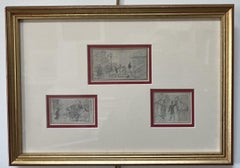
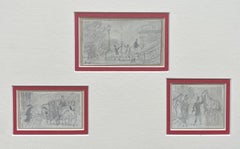
French School 19th Century, Scenes from parisian life, three drawings signed
Located in Paris, FR
French School of the 19th Century Scenes of the parisian life, three drawings each one signed with the initials LV Pencil on paper Sizes of the drawings : 4.8 x 8 cm 4 x 6.5 cm 4....
Carbon Pencil
La piece dite des cinq Saints, Heliogravure by Marcantonio Raimondi
By Marcantonio Raimondi
Located in Long Island City, NY
Marcantonio Raimondi, After by Amand Durand, Italian (1480 - 1534) - La piece dite des cinq Saints, Year: 1875, Medium: Heliogravure, Size: 17.5 x 11.75 in. (44.45 x 29.85 cm), Pr...
Etching
$864Sale Price|20% Off
Drawing pencil French school 19th Farm courtyard near Barbizon Fontainebleau
Located in PARIS, FR
French school of the 19th century Pencil drawing 40 x 28 cm Signed and dated "E.B. / 1869" Inscription "Elm struck by lightning in 1870 / Ferme de Samoreau"
Carbon Pencil
Sacrifice a Priape, Heliogravure by Jacopo de' Barbari
Located in Long Island City, NY
Jacopo de' Barbari, After by Amand Durand, Italian/Belgian (1450 - 1516) - Sacrifice a Priape, Medium: Heliogravure, Size: 9.25 x 6.75 in. (23.5 x 17.15 cm), Printer: Amand Durand...
Etching
Friedrich Wilhelm Pose: Garden Café, Oil on Canvas, German 1870
Located in Eltville am Rhein, DE
Friedrich Wilhelm Pose Berlin 1793 – 1878 Mannheim Garden Café Oil on canvas Monogrammed lower right Dimensions: 23.5 x 29.5 cm Frame: 37 x 31 cm Good condition, minor damage to th...
Oil
$3,002
"Pipe Smoker" Munich School, 19th. Century, Oil Painting on Canvas, Signed
Located in Eltville am Rhein, DE
Theodor Leopold Weller Mannheim 1802 - 1880 Pipe Smoker Oil on canvas Monogrammed lower right Size: 72.5 x 62.5 cm Frame: 83 x 75 cm Good original condition (slight age-related cr...
Oil
$845Sale Price|20% Off
Italian. 1871, paper, mixed media, 20.5x15 cm
Located in Riga, LV
Italian. 1871. paper, mixed media, 20.5x15 cm
Paper, Mixed Media
$384
Auguste Gardanne (1840-1890) Soldiers at rest, War of 1870, wartercolor
Located in Paris, FR
Auguste Gardanne (circa 1840- circa 1890) Soldiers at rest during the franco-prussian war of 1870 Watercolor on paper On the reverse Study of a battlefield (?) Pencil on paper Mark o...
Watercolor
Les trois docteurs, Heliogravure by Marcantonio Raimondi
By Marcantonio Raimondi
Located in Long Island City, NY
Marcantonio Raimondi, After by Amand Durand, Italian (1480 - 1534) - Les trois docteurs, Year: 1875, Medium: Heliogravure, Size: 3.25 x 4 in. (8.26 x 10.16 cm), Printer: Amand Dur...
Etching
La descente de croix, Heliogravure by Marcantonio Raimondi
By Marcantonio Raimondi
Located in Long Island City, NY
Marcantonio Raimondi, After by Amand Durand, Italian (1480 - 1534) - La descente de croix, Year: 1875, Medium: Heliogravure, Size: 16.75 x 11.5 in. (42.55 x 29.21 cm), Printer: Am...
Etching
$1,400
The Holy Family, 1509, Old Masters Etching by Jacopo de' Barbari
Located in Long Island City, NY
Jacopo de' Barbari, After by Amand Durand, French (1831 - 1905) - The Holy Family, 1509, Year: circa 1878, Medium: Heliogravure on laid paper, Size: 6.75 x 8 in. (17.15 x 20.32 cm...
Etching
La poesie, Heliogravure by Marcantonio Raimondi
By Marcantonio Raimondi
Located in Long Island City, NY
Marcantonio Raimondi, After by Amand Durand, Italian (1480 - 1534) - La poesie, Year: 1875, Medium: Heliogravure, Size: 7 x 6 in. (17.78 x 15.24 cm), Printer: Amand Durand, Descri...
Etching
$14,410
" Studio per Ritratto di Lady Anne Simms Reeve of Brancaster Hall " 1870 ca
Located in Torino, IT
Raro studio dell'artista Preraffaellita Frederick Sandys,Studio per l’opera Portrait of a Lady,( Anne Simms Reeve of Brancaster Hall, Norfolk) proprie...
Crayon, Graphite
Keying Up - The Court Jester
Located in Fairlawn, OH
Keying Up - The Court Jester Etching with drypoint, 1879 Signed in the plate lower left corner (see photos) Proof before engraved title and engraved names Printed on thin light golden Japanese tissue paper In the final state, with engraved titled and typeface engraved artist’s signature below the image Condition: excellent Plate size: 6-5/8 x 4-1/4" According to Pisano, this image was very popular during Chase’s life. It is based on his famous painting, Keying Up-The Court Jester, in the collection of the Pennsylvania Academy of Fine Arts. The painting was created in Munich during the artist’s studies there. It was exhibited in the 1876 Centennial Exhibition in Philadelphia where it won a Medal of Honor and helped establish the artist’s reputation as a leading American painter. Chase, always conscious of self promotion, created the etching and had numerous impressions printed. He sold them for a modest price to increase his fame. The etching was later published in Sylvester R. Koehler, American Art Review, September 1878. It was for this American Art Review printing that the engraved titled and type face signature below the image were added to the plate. This example was part of a group of impressions that came down in the Chase family via his daughter Dorothy Bremond Chase, his third daughter. They were acquired at auction in a single auction lot, housed in a paper board folder. The consignor was Associated American Artist’s as they were liquidating their stock prior to closing the gallery. Dorothy was the subject of Chase’s painting, My Little Daughter Dorothy. C. 1894, in the collection of the Detroit Institute of Arts as well as numerous other portraits of her. Reference: Pisano/Bake, Volume 1, Pr. 3, illustrates the rare 1st state, this being a 2nd state before any other the engraved title and Chase's name in the bottom margin which are found in the third state. Artist bio in file (Chase) In 1883 Chase was involved in the organization of an exhibition to help raise funds for a pedestal for the Statute of Liberty. The exhibition featured loans of three works by Manet and urban scenes by the Italian Impressionist Giuseppe de Nittis. Both artists influenced Chase's Impressionistic style that gave rise to a series of New York park scenes. It is also thought that he was influenced by John Singer Sargent's In the Luxembourg Gardens (1879) which was exhibited in New York at this time. Indeed, Chase had met Sargent in Europe in 1881, the two men becoming lifelong friends with Sargent painting Chase's portrait in 1902. On another European trip in 1885, Chase met James McNeill Whistler in London. While Whistler had a reputation for being difficult, the two artists got along famously and agreed to paint one another's portrait. Eventually, however, Whistler's moods began to grate with Chase who wrote home stating "I really begin to feel that I never will get away from here". For his part, Whistler criticized Chase's finished portrait and, according to Hirshler, "complained about Chase for the rest of his life". While no record exists of Whistler's portrait of Chase; Chase's portrait of Whistler remains a well-known piece in his oeuvre. In 1887 Chase married Alice Gerson, the daughter of the manager of a lithography company. Though some fifteen years his junior (Chase was 37), he had known Alice for some time through her family's devotion to the arts. The pair, who would enjoy a happy marriage with Alice in full support of her husband's career, settled initially in Brooklyn where their first child was born. The couple would parent six daughters and two sons and it was only his family that could rival his devotion to his art. Indeed, Chase often combined his two loves by painting several portraits of his wife and children in Brooklyn parks before the couple relocated to Manhattan. Later Period Between 1891 and 1902, Chase and his family spent their summers at a purpose-built home and studio in Shinnecock Hills, a close suburb of the upmarket town of Southampton on the south shore of Long Island (roughly 100 miles east of New York). Chase set up, and taught two days a week, at the nearby Shinnecock Hills Summer School of Art which benefitted from the financial backing of local art collectors. It was at Shinnecock that Chase, taken in by the region's striking natural surroundings, painted several Impressionistic landscapes. As Bettis put it, "There, among the dunes, in the bright sunlight and sea air his painterly impulse was given free sway, and he produced some of his freest and loveliest work". His passion for the area was so felt he even gave his daughter Hazel the middle name of Neamaug, in honor of the rich Native American history of Shinnecock. Chase was equally focused on the students that came to the School and who he encouraged to paint in the modern plein air style favored by the French Impressionists. Although Chase was making a name for himself as an Impressionist, he never abandoned his commitment to the sombre tones and academic tropes he had learned in Munich, though these he reserved for his portraits, and for his series of striking still lifes featuring dead fish. Chase was in fact a successful society portraitist - he painted fashionable women for a fee of $2,000 - and would paint his students as "samples" which he then donated to leading art institutions (such as Lady in Black (1888) which he donated to the Metropolitan Museum in 1891). In 1896, facing financial difficulties, Chase flirted with the idea of giving up his teaching in New York and traveled with his family to Madrid where he developed a passion for bullfighting. Chase returned however to Shinnecock in June to teach his yearly summer art class, and in the fall of that year, established his own art school in Manhattan: the Chase School which was modelled on the Académie Julian in Paris. Chase lacked business savvy, however, and the Chase School lasted only two years before it was placed under new management. It continued as the New York School of Art (changed to Parsons School of Design starting 1941) with Chase as head the School for eleven more years. Chase also taught during this period at the Pennsylvania Academy of Fine Arts. In 1902, following the premature death of his friend John Twachtman, Chase was invited to join the Ten American Painters group (who included amongst its members, Frank Weston Benson, Thomas Wilmer Dewing...
Etching
French Watercolor and Pencil Drawing - Family Countryside Scene
Located in Houston, TX
French watercolor and pencil drawing from 1873, likely depicting a father, his two young sons, and their goat relaxedly coexisting in a quiet buc...
Paper, Watercolor, Pencil
Portrait du Cardinal Guido, Heliogravure by Jean Morin
By Jean Morin
Located in Long Island City, NY
Jean Morin, After by Amand Durand, French (1590 - 1650) - Portrait du Cardinal Guido, Medium: Heliogravure, Size: 13 x 9.5 in. (33.02 x 24.13 cm), Printer: Amand Durand, Descripti...
Etching
Portrait de Nicolas Poussin, Heliogravure by Jean Pesne
Located in Long Island City, NY
Jean Pesne, After by Amand Durand, French (1623 - 1700) - Portrait de Nicolas Poussin, Medium: Heliogravure, Size: 12 x 9 in. (30.48 x 22.86 cm), Printer: Amand Durand, Descriptio...
Etching
Two Guinea Fowl
By Joseph Wolf
Located in London, London
WOLF, Joseph (artist). Two Guinea Fowl London For the author, Red Lion Court, Fleet Street 1871 Two original hand-coloured lithographic plates by Joseph Smit after Joseph Wolf. ...
Paper, Watercolor, Gouache, Lithograph
Dessin pour un Eventail, Heliogravure by Agostino Carracci
By Agostino Carracci
Located in Long Island City, NY
Agostino Carracci, After by Amand Durand, Italian (1557 - 1602) - Dessin pour un Eventail, Medium: Heliogravure, Size: 15.5 x 10.5 in. (39.37 x 26.67 cm), Printer: Amand Durand, D...
Etching
La Justice, Heliogravure by Marcantonio Raimondi
By Marcantonio Raimondi
Located in Long Island City, NY
Marcantonio Raimondi, After by Amand Durand, Italian (1480 - 1534) - La Justice, Year: 1875, Medium: Heliogravure, Size: 9.25 x 4.75 in. (23.5 x 12.07 cm), Printer: Amand Durand, ...
Etching
La Sainte Famille, Heliogravure by Marcantonio Raimondi
By Marcantonio Raimondi
Located in Long Island City, NY
Marcantonio Raimondi, After by Amand Durand, Italian (1480 - 1534) - La Sainte Famille, Year: 1875, Medium: Heliogravure, Size: 12 x 8.5 in. (30.48 x 21.59 cm), Printer: Amand Dur...
Etching
Portrait du Titien, Heliogravure by Agostino Carracci
By Agostino Carracci
Located in Long Island City, NY
Agostino Carracci, After by Amand Durand, Italian (1557 - 1602) - Portrait du Titien, Medium: Heliogravure, Size: 13.25 x 9.5 in. (33.66 x 24.13 cm), Printer: Amand Durand, Descri...
Etching
$2,500
Composant les dessins pour l'apocalypse de Saint Jean, Etching by Jean Duvet
Located in Long Island City, NY
Jean Duvet, After by Amand Durand, French (1485 - 1562) - Composant les dessins pour l'apocalypse de Saint Jean, Medium: Heliogravure, Size: 10.5 x 7 in. (26.67 x 17.78 cm), Printe...
Etching
Notre Dame a l'escalier, Heliogravure by Marcantonio Raimondi
By Marcantonio Raimondi
Located in Long Island City, NY
Marcantonio Raimondi, After by Amand Durand, Italian (1480 - 1534) - Notre Dame a l'escalier, Year: 1875, Medium: Heliogravure, Size: 9.75 x 13.75 in. (24.77 x 34.93 cm), Printer:...
Etching
Le Sauveur du Monde, Old Masters Heliogravure Etching by Maitre E.S.
Located in Long Island City, NY
Maitre E.S., After by Amand Durand, German (1420 - 1468) - Le Sauveur du Monde, Medium: Heliogravure, Size: 6.5 x 5 in. (16.51 x 12.7 cm), Printer: Amand Durand, Description: Fren...
Etching
$2,500
La Vierge assise sur les Nues I, Heliogravure by Marcantonio Raimondi
By Marcantonio Raimondi
Located in Long Island City, NY
Marcantonio Raimondi, After by Amand Durand, Italian (1480 - 1534) - La Vierge assise sur les Nues I, Year: 1875, Medium: Heliogravure, Size: 10 x 7 in. (25.4 x 17.78 cm), Printer...
Etching
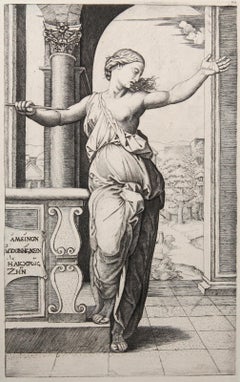
Lucrece, Heliogravure by Marcantonio Raimondi
By Marcantonio Raimondi
Located in Long Island City, NY
Marcantonio Raimondi, After by Amand Durand, Italian (1480 - 1534) - Lucrece, Year: 1875, Medium: Heliogravure, Size: 8.75 x 5.25 in. (22.23 x 13.34 cm), Printer: Amand Durand, De...
Etching
La Temperance, Heliogravure by Marcantonio Raimondi
By Marcantonio Raimondi
Located in Long Island City, NY
Marcantonio Raimondi, After by Amand Durand, Italian (1480 - 1534) - La Temperance, Year: 1875, Medium: Heliogravure, Size: 5.5 x 3 in. (13.97 x 7.62 cm), Printer: Amand Durand, D...
Etching
Mariko Station, a Mad Caricature (Mariko shukuba no kyoga)
By Kawanabe Kyosai
Located in Fairlawn, OH
Mariko Station, a Mad Caricature (Mariko shukuba no kyoga) Color woodcut, 1872 Signed in cartouche lower left corner (see photo) From the series: "53 Stations by Calligraphy and Pain...
Woodcut
Pair of 2 European cityscapes, each signed below the image, circa 1870
Located in Eltville am Rhein, DE
Pair of 2 European cityscapes, each signed below the image, circa 1870 Each signed illegibly at the bottom right Size each: 38.5 x 27 cm Frame each: 53 x 41.2 cm Presumably cityscap...
Watercolor
Antique Landscape Watercolor - Mill House Water Wheel
Located in Houston, TX
Vivid early 19th century French watercolor painting of mill house water wheel , 1876. Signed and dated lower left. Original artwork on paper displayed o...
Watercolor
" Studio per ritratto di Philip Bedingfeld" 1870 ca cm. 25 x 36
Located in Torino, IT
Studio a matita e pastelli per lo splendido ritratto di Philip Bedingfeld proprietà del Museo del Norfolk Frederick Sandys, (Norwich, 1º maggio1829 ...
Crayon, Graphite, Paper
The Fifer
Located in Fairlawn, OH
The Fifer Etching, c. 1875 Unsigned Provenance: Estate of the Artist Bt descent in the artist's family Edition: One of four known impressions With annotation on...
Etching
L’Angelus (The Bell Tower)
Located in Fairlawn, OH
L’Angelus (The Bell Tower) etching & drypoint, c. 1876 Signed in the plate with the artist's initials (see photo) Condition: Excellent Image/Plate size: 5 7/8 x 4 1/4 inches Sheet s...
Etching
John William North - 19th Century British Watercolour - Courtship
Located in London, GB
JOHN WILLIAM NORTH, ARA, RWS (1842-1924) Courtship - Bicknoller, Somerset Signed with initials l.r.: JWN Watercolour Framed 17.5 by 13.5 cm., 7 b...
Watercolor
"Ship Portrait, " William Edward Norton, Seascape Maritime Painting, New England
Located in New York, NY
William Edward Norton (1843 - 1916) Ship Portrait, 1876 Oil on canvas 10 x 16 inches Signed and dated lower left Born in Boston, William Norton became a noted marine painter, stirred by his youth when he sailed on family-owned ships. He studied at the Lowell Institute in Boston, and with George Inness, and then established a studio in Boston. In the early 1870s, he went to Paris and became a student with Chevreuse and A. Vollon, and then he settled in London where he exhibited throughout the last quarter of the 19th century. His reputation there was based on his scenes of the Thames River, and ocean and coastal views. In 1901, he and his wife returned to the United States and settled in New York City. He also painted at Monhegan Island, Maine, where a treacherous ledge on the southern side of the island is named "Norton's Ledge" for him. He was a member of the Boston Art Club with whom he exhibited from 1873 to 1909. He also exhibited with the Pennsylvania Academy, the Royal Academy in London, the Paris Salon, the 1893 Chicago Exposition...
Canvas, Oil
Bathing at Long Branch-“Oh, Ain’t it Cold”
Located in Fairlawn, OH
Bathing at Long Branch-“Oh, Ain’t it Cold” Wood engraving, 1871 Signed in the block with the artist's initials "WH", see photo Published in: Every Saturday, Aug. 16, 1871 Condition: ...
Woodcut
Auguste Gardanne (1840-1890) Carriages and horses, War of 1870, double sided
Located in Paris, FR
Auguste Gardanne (circa 1840- circa 1890) Carriages and horses during the franco-prussian war of 1870 Pencil and watercolor on paper On the reverse Studies of horses Pencil and water...
Watercolor
$1,200
"The Great Fire of Boston" Currier & Ives, Urban landscape late 19th century
Located in New York, NY
Currier & Ives The Great Fire of Boston , 1872 Hand-colored lithograph 7 5/16 x 12 11/16 inches After undertaking apprenticeships in Boston and Philadelphia, Currier set up a print...
Lithograph
Battersea Morn (also Battersea Dawn)
By James Abbott McNeill Whistler
Located in New York, NY
James Whistler (1830-1903), Battersea Morn (also Battersea Dawn), drypoint, 1875, Kennedy 155, signed in pencil with the butterfly and inscribed “imp”. Kennedy 155, first state (of ...
Drypoint
$2,500
19th century color lithograph seascape boat ship waves maritime landscape
Located in Milwaukee, WI
"The Celebrated Clipper Ship Dreadnought" is an original hand-colored lithograph by Currier & Ives. It depicts a sailing ship. 13 1/4" x 17 1/2" art 19" x 23 1/2" frame Nathaniel Currier was a tall introspective man with a melancholy nature. He could captivate people with his piercing stare or charm them with his sparkling blue eyes. Nathaniel was born in Roxbury, Massachusetts on March 27th, 1813, the second of four children. His parents, Nathaniel and Hannah Currier, were distant cousins who lived a humble yet spartan life. When Nathaniel was eight years old, tragedy struck. Nathaniel’s father unexpectedly passed away leaving Nathaniel and his eleven-year-old brother Lorenzo to provide for the family. In addition to their mother, Nathaniel and Lorenzo had to care for six-year-old sister Elizabeth and two-year-old brother Charles. Nathaniel worked a series of odd jobs to support the family, and at fifteen, he started what would become a life-long career when he apprenticed in the Boston lithography shop of William and John Pendleton. A Bavarian gentleman named Alois Senefelder invented lithography just 30 years prior to young Nat Currier’s apprenticeship. While under the employ of the brothers Pendleton, Nat was taught the art of lithography by the firm’s chief printer, a French national named Dubois, who brought the lithography trade to America. Lithography involves grinding a piece of limestone flat and smooth then drawing in mirror image on the stone with a special grease pencil. After the image is completed, the stone is etched with a solution of aqua fortis leaving the greased areas in slight relief. Water is then used to wet the stone and greased-ink is rolled onto the raised areas. Since grease and water do not mix, the greased-ink is repelled by the moisture on the stone and clings to the original grease pencil lines. The stone is then placed in a press and used as a printing block to impart black on white images to paper. In 1833, now twenty-years old and an accomplished lithographer, Nat Currier left Boston and moved to Philadelphia to do contract work for M.E.D. Brown, a noted engraver and printer. With the promise of good money, Currier hired on to help Brown prepare lithographic stones of scientific images for the American Journal of Sciences and Arts. When Nat completed the contract work in 1834, he traveled to New York City to work once again for his mentor John Pendleton, who was now operating his own shop located at 137 Broadway. Soon after the reunion, Pendleton expressed an interest in returning to Boston and offered to sell his print shop to Currier. Young Nat did not have the financial resources to buy the shop, but being the resourceful type he found another local printer by the name of Stodart. Together they bought Pendleton’s business. The firm ‘Currier & Stodart’ specialized in "job" printing. They produced many different types of printed items, most notably music manuscripts for local publishers. By 1835, Stodart was frustrated that the business was not making enough money and he ended the partnership, taking his investment with him. With little more than some lithographic stones, and a talent for his trade, twenty-two year old Nat Currier set up shop in a temporary office at 1 Wall Street in New York City. He named his new enterprise ‘N. Currier, Lithographer’ Nathaniel continued as a job printer and duplicated everything from music sheets to architectural plans. He experimented with portraits, disaster scenes and memorial prints, and any thing that he could sell to the public from tables in front of his shop. During 1835 he produced a disaster print Ruins of the Planter's Hotel, New Orleans, which fell at two O’clock on the Morning of the 15th of May 1835, burying 50 persons, 40 of whom Escaped with their Lives. The public had a thirst for newsworthy events, and newspapers of the day did not include pictures. By producing this print, Nat gave the public a new way to “see” the news. The print sold reasonably well, an important fact that was not lost on Currier. Nat met and married Eliza Farnsworth in 1840. He also produced a print that same year titled Awful Conflagration of the Steamboat Lexington in Long Island Sound on Monday Evening, January 18, 1840, by which melancholy occurrence over One Hundred Persons Perished. This print sold out very quickly, and Currier was approached by an enterprising publication who contracted him to print a single sheet addition of their paper, the New York Sun. This single page paper is presumed to be the first illustrated newspaper ever published. The success of the Lexington print launched his career nationally and put him in a position to finally lift his family up. In 1841, Nat and Eliza had their first child, a son they named Edward West Currier. That same year Nat hired his twenty-one year old brother Charles and taught him the lithography trade, he also hired his artistically inclined brother Lorenzo to travel out west and make sketches of the new frontier as material for future prints. Charles worked for the firm on and off over the years, and invented a new type of lithographic crayon which he patented and named the Crayola. Lorenzo continued selling sketches to Nat for the next few years. In 1843, Nat and Eliza had a daughter, Eliza West Currier, but tragedy struck in early 1847 when their young daughter died from a prolonged illness. Nat and Eliza were grief stricken, and Eliza, driven by despair, gave up on life and passed away just four months after her daughter’s death. The subject of Nat Currier’s artwork changed following the death of his wife and daughter, and he produced many memorial prints and sentimental prints during the late 1840s. The memorial prints generally depicted grief stricken families posed by gravestones (the stones were left blank so the purchasers could fill in the names of the dearly departed). The sentimental prints usually depicted idealized portraits of women and children, titled with popular Christian names of the day. Late in 1847, Nat Currier married Lura Ormsbee, a friend of the family. Lura was a self-sufficient woman, and she immediately set out to help Nat raise six-year-old Edward and get their house in order. In 1849, Lura delivered a son, Walter Black Currier, but fate dealt them a blow when young Walter died one year later. While Nat and Lura were grieving the loss of their new son, word came from San Francisco that Nat’s brother Lorenzo had also passed away from a brief illness. Nat sank deeper into his natural quiet melancholy. Friends stopped by to console the couple, and Lura began to set an extra place at their table for these unexpected guests. She continued this tradition throughout their lives. In 1852, Charles introduced a friend, James Merritt Ives, to Nat and suggested he hire him as a bookkeeper. Jim Ives was a native New Yorker born in 1824 and raised on the grounds of Bellevue Hospital where his father was employed as superintendent. Jim was a self-trained artist and professional bookkeeper. He was also a plump and jovial man, presenting the exact opposite image of his new boss. Jim Ives met Charles Currier through Caroline Clark, the object of Jim’s affection. Caroline’s sister Elizabeth was married to Charles, and Caroline was a close friend of the Currier family. Jim eventually proposed marriage to Caroline and solicited an introduction to Nat Currier, through Charles, in hopes of securing a more stable income to support his future wife. Ives quickly set out to improve and modernize his new employer’s bookkeeping methods. He reorganized the firm’s sizable inventory, and used his artistic skills to streamline the firm’s production methods. By 1857, Nathaniel had become so dependent on Jims’ skills and initiative that he offered him a full partnership in the firm and appointed him general manager. The two men chose the name ‘Currier & Ives’ for the new partnership, and became close friends. Currier & Ives produced their prints in a building at 33 Spruce Street where they occupied the third, fourth and fifth floors. The third floor was devoted to the hand operated printing presses that were built by Nat's cousin, Cyrus Currier, at his shop Cyrus Currier & Sons in Newark, NJ. The fourth floor found the artists, lithographers and the stone grinders at work. The fifth floor housed the coloring department, and was one of the earliest production lines in the country. The colorists were generally immigrant girls, mostly German, who came to America with some formal artistic training. Each colorist was responsible for adding a single color to a print. As a colorist finished applying their color, the print was passed down the line to the next colorist to add their color. The colorists worked from a master print displayed above their table, which showed where the proper colors were to be placed. At the end of the table was a touch up artist who checked the prints for quality, touching-in areas that may have been missed as it passed down the line. During the Civil War, demand for prints became so great that coloring stencils were developed to speed up production. Although most Currier & Ives prints were colored in house, some were sent out to contract artists. The rate Currier & Ives paid these artists for coloring work was one dollar per one hundred small folios (a penny a print) and one dollar per one dozen large folios. Currier & Ives also offered uncolored prints to dealers, with instructions (included on the price list) on how to 'prepare the prints for coloring.' In addition, schools could order uncolored prints from the firm’s catalogue to use in their painting classes. Nathaniel Currier and James Merritt Ives attracted a wide circle of friends during their years in business. Some of their more famous acquaintances included Horace Greeley, Phineas T. Barnum, and the outspoken abolitionists Rev. Henry Ward, and John Greenleaf Whittier (the latter being a cousin of Mr. Currier). Nat Currier and Jim Ives described their business as "Publishers of Cheap and Popular Pictures" and produced many categories of prints. These included Disaster Scenes, Sentimental Images, Sports, Humor, Hunting Scenes, Politics, Religion, City and Rural Scenes, Trains, Ships, Fire Fighters, Famous Race Horses, Historical Portraits, and just about any other topic that satisfied the general public's taste. In all, the firm produced in excess of 7500 different titles, totaling over one million prints produced from 1835 to 1907. Nat Currier retired in 1880, and signed over his share of the firm to his son Edward. Nat died eight years later at his summer home 'Lion’s Gate' in Amesbury, Massachusetts. Jim Ives remained active in the firm until his death in 1895, when his share of the firm passed to his eldest son, Chauncey. In 1902, faced will failing health from the ravages of Tuberculosis, Edward Currier sold his share of the firm to Chauncey Ives...
Lithograph
Léon Germain Pelouse (1838-1891), view of the Meuse in Dinant
Located in Berlin, DE
oil on canvas Signed to the lower left 55 x 71 cm Pelouse is considered an important representative of 19th-century French landscape painting. He influenced a younger generation of ...
Oil
Summer - Chalk Drawing Design for Minton charger by Herbert Wilson Foster
Located in London, GB
HERBERT WILSON FOSTER (1846-1929) Summer Inscribed with title beneath the mount Chalk on paper, circular Framed Diameter 42 cm., 16 ½ in. (frame size 61 by 58 cm., 24 by 22 ¾ in.) Herbert Wilson Foster was born in Endon, Staffordshire. He attended Hanley School of Art before continuing his studies in London, Belgium and France. His paintings of rural and domestic subjects were exhibited at the Royal Academy between 1873 and 1899. In 1893 he accepted a teaching position at the Nottingham School of Art, where his pupils included Laura Knight and Harold Knight. Works by him are in the collections of the Minton archives; the Wisbech & Fenland Museum; Leicester Art Gallery; Rushcliffe Council and Nottingham Castle Museum. In addition to his work as a painter he worked as a porcelain painter, working at one point on the tile panels in the Victoria & Albert Museum. He is known to have worked at Mintons from 1872 where he specialized in portraits of contemporary personalities, including members of the Royal Family. This head of a girl was probably intended for a painted ceramic wall charger...
Chalk, Pencil, Paper
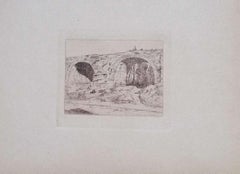
UNE JETEE EN ANGLETERRE
Located in Portland, ME
Buhot, Felix (French, 1847-1898). UNE JETEE EN ANGLETERRE. B & G 132, State two of eight. Etching with drypoint, aquatint and roulette, 1879. Signed in pencil, and with the red owl...
Drypoint, Etching, Aquatint
Nineteenth century silhouette of a gentleman: Duncan Davidson RN
Located in London, GB
To see more, scroll down to "More from this Seller" and below it click on "See all from this Seller." Silhouette (circa 1870) Duncan Davidson RN Gouache, pen, and ink 52 x 44 cm C...
Ink, Gouache, Pen
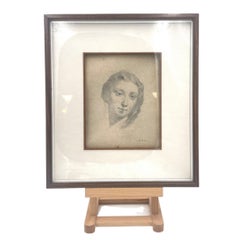
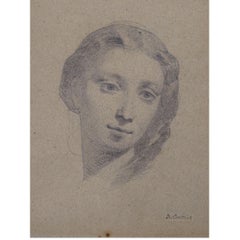
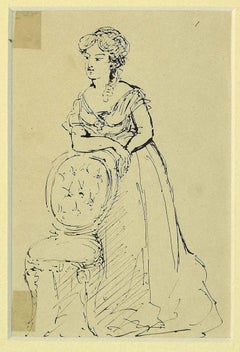
Pencil drawing on paper "Female portrait" by Alberto Pasini, ca. 1870
By Alberto Pasini
Located in Vicenza, VI
Drawing made in pencil on paper measuring 15 x 19 cm by artist Alberto Pasini (Busseto 1826 - Cavoretto 1899) depicting a female face datable to around 1870. The work bears the sign...
Pencil
19th century color lithograph horses figures dynamic landscape
Located in Milwaukee, WI
"The Race for the American Derby (Belmont Stakes)" is an original hand-colored lithograph published by Currier & Ives. It depicts three racehorses and their jockeys running in the Belmont Stakes. The caption for this lithograph says, "Spartan. Bramble. Duke of Magenta. Jerome Park, June 8th 1878. Mr. Geo. Lorillard's Duke of Magenta.....Hughes, 1....Messrs.Dwyer Bro's Bramble......Fisher, 2....Mr. P. Lorillard's Spartan.....Barrett, 3..... TIME 2:43 1/2." 12 7/8" x 16 7/8" art 21 7/8" x 25 7/8" frame Currier & Ives produced their prints in a building at 33 Spruce Street where they occupied the third, fourth and fifth floors. The third floor was devoted to the hand operated printing presses that were built by Nat's cousin, Cyrus Currier, at his shop Cyrus Currier & Sons in Newark, NJ. The fourth floor found the artists, lithographers and the stone grinders...
Lithograph
The Swimmers by the Cercle of Diaz
By Narcisse Virgilio Díaz de la Peña
Located in Pasadena, CA
After the Cercle of Narcisse Díaz ilisible signature .Oil on canvas Diaz de la Peña, born on August 20, 1807 in Bordeaux and died November 18, 1876 in Menton, is a French painter....
Oil
$605Sale Price|30% Off
Louis-Eugène Lambert (1825-1900) The Mountain and the mouse, drawing signed
Located in Paris, FR
Louis-Eugène Lambert (1825-1900) La Montagne qui accouche d'une souris (The Mountain and the mouse) Pen and black ink, ink wash on paper Signed lower ...
Ink
Wolf Bean - Lithograph by Vincenzo Tenore - 1870s
Located in Roma, IT
Lithograph hand watercolored. Belongs to the Series "Atlante di Botanica popolare ossia Illustrazione di Piante Notevoli di ogni famiglia" (Atlas of popular botany or illustration o...
Lithograph
Aniso of Sila - Lithograph by Vincenzo Tenore - 1870s
Located in Roma, IT
Lithograph hand watercolored. Belongs to the Series "Atlante di Botanica popolare ossia Illustrazione di Piante Notevoli di ogni famiglia" (Atlas of popular botany or illustration o...
Lithograph
Aloe Leaf Yucca - Lithograph by Vincenzo Tenore - 1870s
Located in Roma, IT
Lithograph hand watercolored. Belongs to the Series "Atlante di Botanica popolare ossia Illustrazione di Piante Notevoli di ogni famiglia" (Atlas of popular botany or illustration o...
Lithograph
Achillea Millefolium - Lithograph by Vincenzo Tenore - 1870s
Located in Roma, IT
Lithograph hand watercolored. Belongs to the Series "Atlante di Botanica popolare ossia Illustrazione di Piante Notevoli di ogni famiglia" (Atlas of popular botany or illustration o...
Lithograph