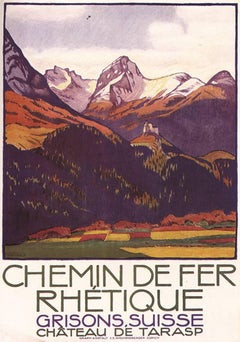
Chemin De Fer Rhetique
Located in New York, NY
Chemin De Fer Rhetique, Grisons, Suisse. Chateau De Tarasp. 1913. Color lithograph Cardinaux created an extensive work of different media, he illu...
Category
Art Deco 1910s Art
Materials
Lithograph
Chemin De Fer Rhetique
Located in New York, NY
Chemin De Fer Rhetique, Grisons, Suisse. Chateau De Tarasp. 1913. Color lithograph Cardinaux created an extensive work of different media, he illu...
Lithograph
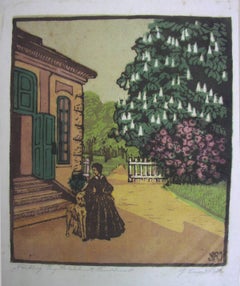
Fruhling
By Josef Siccard-Redl
Located in New York, NY
Siccard-Redl, Josef. Fruhling, Ca 1910. Color wood engraving, Signed and titled in pencil by the artist. Little is known of this artist other than he worked in Vienna during the ...
Engraving
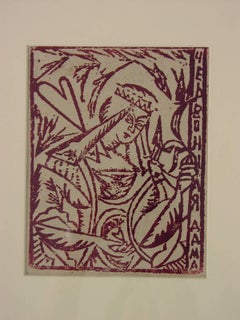
Transrational blog (The Queen of Hearts).
By Olga Rozanova
Located in New York, NY
Rozanova, Olga. Transrational blog (The Queen of Hearts).1915, Moscow Red Linocut, on thin wove paper, from Zaumnaya gniga [Transrational boog] by A. ...
Linocut
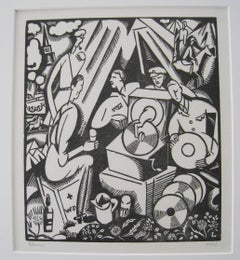
Le Gramophone
Located in New York, NY
LABOURER, Jean Emile. Le Gramophone. Woodcut on cream laid paper, 1918-21. full margins. Signed and numbered 41/45 in pencil, lower margin. A very goo...
Woodcut
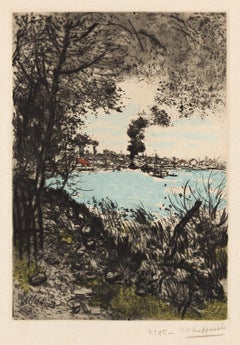
La Fumée du Bateau
Located in New York, NY
A very good impression of this color drypoint and aquatint. Third state (of 3). Edition of 150. Signed and inscribed "No. 25" in pencil, lower right.
Color, Drypoint, Aquatint
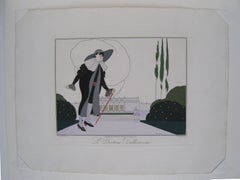
Le Docteur Ballanzone
Located in New York, NY
Pochoir Colored Plate for Journal Des Dames et Des Modes. Engraved by H. Reidel on wove paper. 15 x 19.5". 1914 Pochoir is a process where the plate is first stenciled and then ha...
Engraving, Color
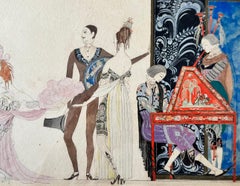
Kay Nielsen Costume designs for Scaramouche Dandy
Located in Miami, FL
Nielsen (Kay) Costume designs for Leilon, Blondelin, and others, for 'Scaramouche', pen and brown ink, pencil under-drawing, watercolour heightened with silver, inscribed in pencil t...
Silver
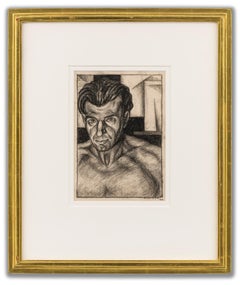
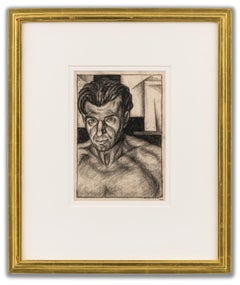
Self Portrait
Located in London, GB
Charcoal on paper, signed and dated (lower right), 33cm x 24cm, (66cm x 56cm framed). The work is framed behind UV glass and stepped gilded frame. Bortnyik was a painter and graphi...
Paper, Charcoal
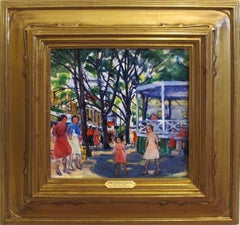
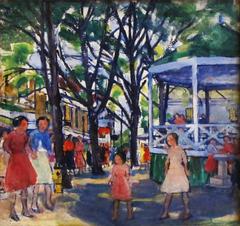
"Days of Pleasure"
Located in Lambertville, NJ
Jim’s of Lambertville is proud to offer this artwork. Signed on Verso. Complemented by a hand carved and gilt frame. Nancy Maybin Ferguson (1...
Oil, Board
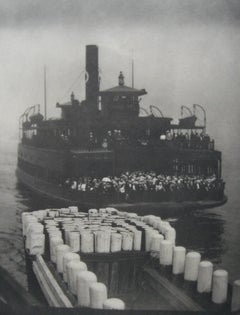
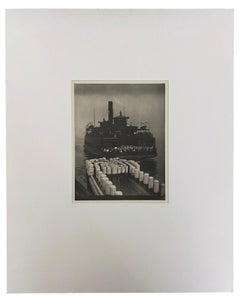
$1,900Sale Price|36% Off
The Ferry Boat by Alfred Stieglitz, 1910, Photogravure, Photography
Located in Denton, TX
The Ferry Boat by Alfred Stieglitz is a photogravure on tissue. The photograph depicts a ferry boat on the water with a crowd of people on the lower level o...
Photogravure
![A Street in China [After Baron Adolph de Meyer]](https://a.1stdibscdn.com/baron-adolf-de-meyer-photography-a-street-in-china-after-baron-adolph-de-meyer-for-sale/a_9323/1530218011643/Meyer_A_Street_in_China_1stdibs_master.jpg?width=240)
A Street in China [After Baron Adolph de Meyer]
By Baron Adolf de Meyer
Located in New York, NY
Photogravure #12 (from "Camera Work" #XL) 11 x 7.5 inches, sheet 9.5 x 6 inches, plate This artwork is offered by ClampArt, located in New York City.
Photogravure
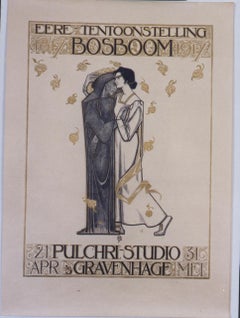
BOSBOOM. 1917.
Located in New York, NY
ROLAND HOLST, R.N. (Richard) (1868-1938). “Eere Tentoonstelling Bosboom/ 1817 1917/ Pulchri-Studio ‘s Gravenhage/ 21 Apr[il] 31 Mei”. Color lithograph (pa...
Lithograph
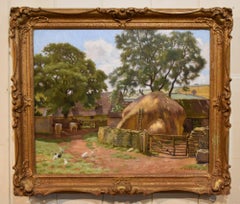
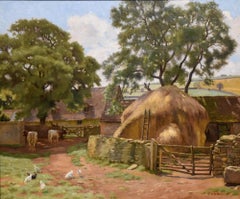
Oil Painting by Charles Henry Burleigh "The Farm"
Located in Mere, GB
Oil Painting by Charles Henry Burleigh "The Farmstead" R.B.A 1875- 1956 Brighton painter member of the Royal of Institute of painters. Also ex...
Oil
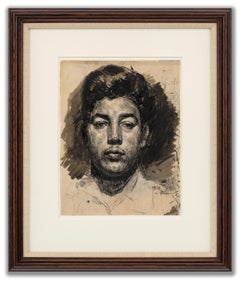
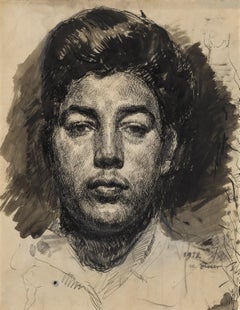
Self Portrait
Located in London, GB
Pen and ink, ink wash and pencil on paper, signed and dated (lower right), 38cm x 29cm (65cm x 55cm framed). This penetrating and wonderfully executed self-portrait, is all the mor...
Paper, Carbon Pencil, Ink
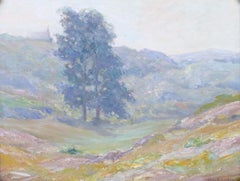
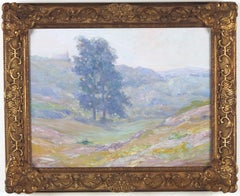
The Valley, York Maine
Located in Sheffield, MA
Alice R. Comins American, 1861-1943 The Valley, York Maine Oil on canvas 20 by 26 in. W/frame 27 by 33 in. Signed lower right and dated 1913 & titled on r...
Oil
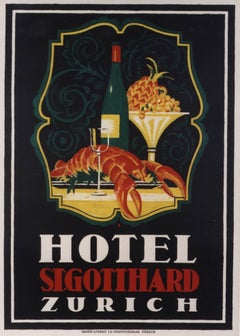
Hotel St. Gothard Zurich.
Located in New York, NY
Hotel St. Gothard Zurich. 1917. Color lithograph, On linen. 50 x 36" Otto Baumberger’s first posters were created in 1911. However, his most productive period for posters was from the 1920s to the mid-1930s. He created about 230 posters in all, many of which he lithographed himself. An important representative of Swiss Expressionism...
Lithograph
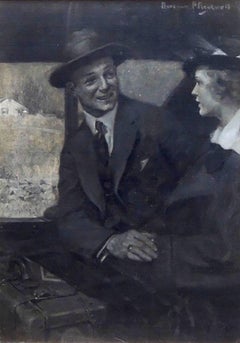
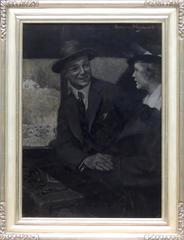
The End of the Road
Located in Fort Washington, PA
Medium: Oil on Canvas Dimensions: 28.00" x 20.00" Signature: Signed and Dated Upper Right The End of the Road "Don't tell me you're my sister, you plu...
Canvas, Oil
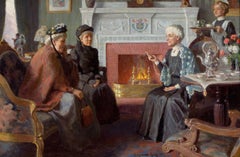
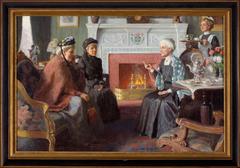
Parlor Scene
Located in Fort Washington, PA
Date: 1911 Medium: Oil on Canvas Dimensions: 20.00" x 30.00" Signature: Signed Lower Right
Canvas, Oil
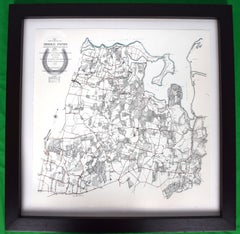
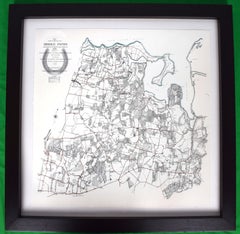
Map Showing Bridle Paths Maintained By The Country Lanes Commitee
Located in Bristol, CT
Map Sz: 22 3/4"H x 22 3/4"W Frame Sz: 29"H x 29"W Publisher: The Country Lanes Committee Map Showing Approximate Location & General Direction of Bridle Paths Maintained by the...
Lithograph
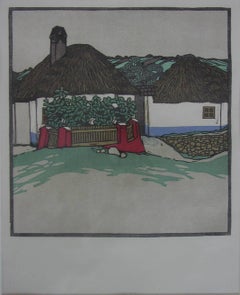
Slowakisches Bauernhaus,
By Karl Schwetz
Located in New York, NY
Schweiz, Karl. Slowakisches Bauernhaus, Ca 1911. Color linoleum cut. Framed. Provenance: Galerie Michael Pabst, Munich. Noted artist, painter, illustr...
Linocut
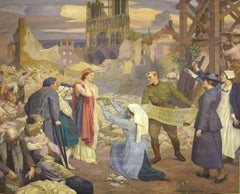
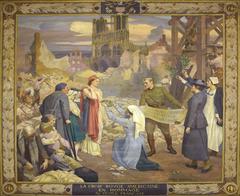
In Homage to the French People
By Cameron Burnside
Located in Fort Washington, PA
Date: 1919 Medium: Oil on Unstretched Canvas (shipped rolled) Dimensions: 156.00" x 168.00" Signature: Signed Lower Right In Homage to the French People, 1919 Titled lower center: La Croix Rouge Americaine en Hommage au Peuple Français. From the Collection of the American Red Cross
Canvas, Oil
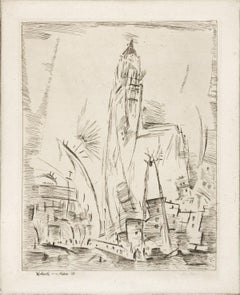
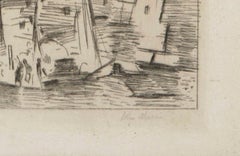
Woolworth Building, No. 2
By John Marin
Located in New York, NY
A superb, richly-inked impression of this extremely scarce etching and drypoint. Second state (of 2). Edition of approximately only 10. Signed in pencil by Marin in lower right margi...
Drypoint, Etching
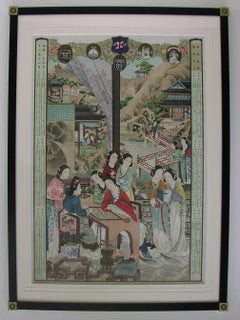
Chen Quian. Advertisement for B.S Insurance Co
Located in New York, NY
Artist: Chen Quian. [Advertisement for B.S Insurance Co.] 1912 Color lithograph, Rare. Very early Chinese advertising poster at the end of the Qu...
Lithograph
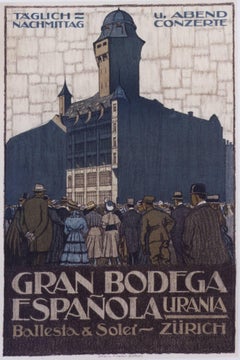
Gran Bodega Espanola Urania, Zurich
By Anton Trieb
Located in New York, NY
Trieb, Anton. Gran Bodega Espanola Urania, Zurich Ca 1910.Color lithograph. On Linen. Anton Trieb was a watercolor painter , draftsman , illustrat...
Lithograph
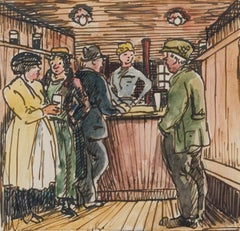
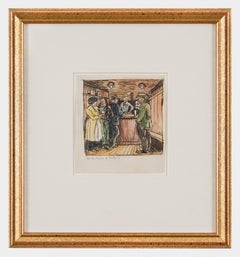
At the Prince of Wales’s by Ludovic-Rodo Pissarro - Watercolour, ink on paper
Located in London, GB
At the Prince of Wales’s by Ludovic-Rodo Pissarro (1878-1952) Watercolour and ink on paper 14 x 13 cm (5 ¹/₂ x 5 ¹/₈ inches) Signed with the Artist’s initials lower center Executed c...
Paper, Ink, Watercolor
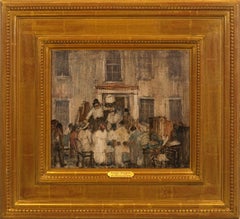
"The Auction"
Located in Lambertville, NJ
Jim’s of Lambertville is proud to offer this artwork by: Robert Spencer (1879 - 1931) One of the rarest and most important artists among the New Hope School, Robert Spencer was bor...
Canvas, Oil
$650
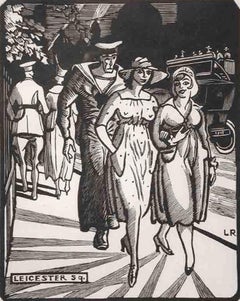
Leicester Square, London by Ludovic-Rodo Pissarro - Wood engraving
Located in London, GB
SOLD UNFRAMED *UK BUYERS WILL PAY AN ADDITIONAL 20% VAT ON TOP OF THE ABOVE PRICE Leicester Square, London by Ludovic-Rodo Pissarro (1878-1952) Wood engraving 14.2 x 11.5 cm (5 ⅝ x...
Engraving, Woodcut
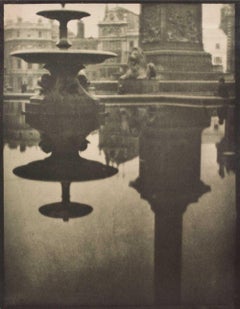
Trafalgar Square, London
By Alvin Langdon Coburn
Located in London, GB
Signed on mount Inscribed 'Christmas Greetings to members of the Academy of Osiris from Bro. Alvin & Sr. Edith, 1956' Photogravure, mounted on card 10 1/4 x 7 3/4 inches
Photogravure
$2,500
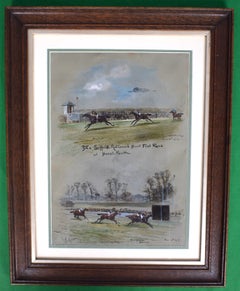
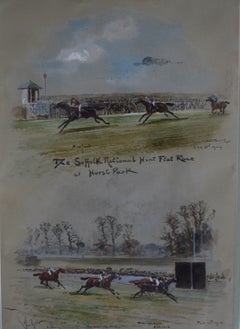
The Suffolk National Hunt Flat Race At Hurst Park c1910 Watercolour by John Beer
Located in Bristol, CT
Art Sz: 13 3/8"H x 9 1/2"W Frame Sz: 19 1/4"H x 15 1/4"W Dec 31st 1909 & Feb 10th 1910 Watercolour and mixed media on paper The Suffolk National Hunt Flat Race was an amateur hor...
Watercolor
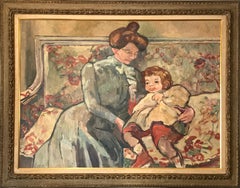
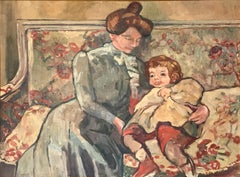
Louis Valtat Mere Et Enfant Monumental Oil Painting
By Louis Valtat
Located in Dallas, TX
Louis Valtat (French, 1869-1952) Fauvist Oil painting of a mother and child. A very large painting by Louis Valtat titled Mere et Enfant (Mother and C...
Canvas, Oil
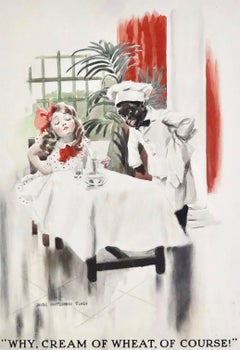
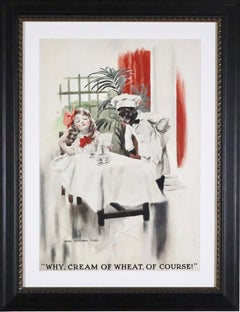
Cream of Wheat Ad
Located in Fort Washington, PA
Signed Lower Left
Watercolor, Board
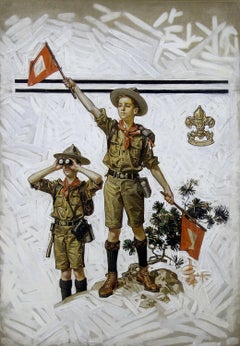
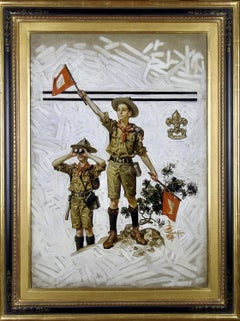
Boy Scouts Signaling with Flags, Original cover for The Post and Boys' Life
By Joseph Christian Leyendecker
Located in Fort Washington, PA
J.C. Leyendecker's "Boy Scouts Signaling with Flags," first published on the cover of The September 9, 1911 edition of The Saturday Evening Post, quickly became an iconic image of the Boy Scouts of America, which was founded the previous year. Embodying core values like leadership, teamwork, and preparedness, its widespread reproduction cemented its status as a defining visual representation of the organization. The painting depicts two scouts practicing flag signaling, a vital early 20th-century communication skill and a requirement for the Eagle Scout...
Canvas, Oil
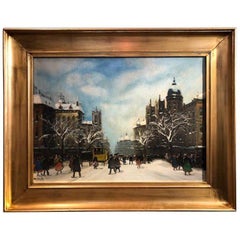
Yellow Tram
By Antal Berkes
Located in Houston, TX
Berkes, Antal ( 1874-1938) Antal Berkes was a Hungarian painter, born in Budapest, Hungary. He lived in Paris for some time and produced cityscapes there as well as similar str...
Oil
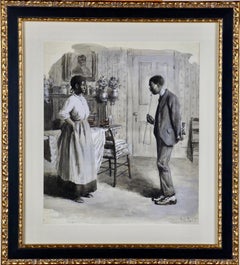
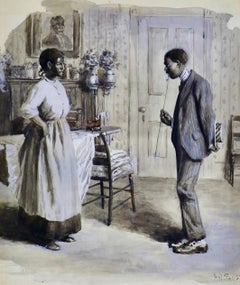
"As Long as You's Single Dere's Hope" Scribner's Magazine, 1915
Located in Fort Washington, PA
Signed "A. B. Frost" Lower Right by Artist "Jes tak' yo coat off, end dem collars end cuffs, end go out in de yard end cut de grass." Illustration for "As Long as You's Single Dere'...
Ink
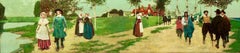
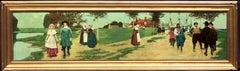
Mural Study for "The First Settlement on Manhattan Island"
By Howard Pyle
Located in Fort Washington, PA
Medium: Oil on Canvas Signature: Unsigned This is a study for the very large Howard Pyle mural now in the historic County Courthouse in Hudson County, New Jersey. It was commissione...
Canvas, Oil
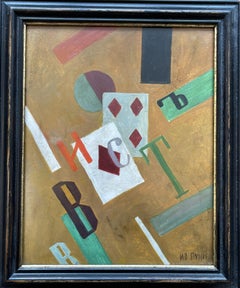
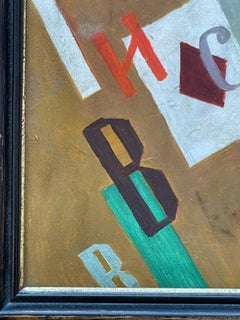
Jean POUGNY born Iwan Albertovich PUNI (1890–1956), "The Ace of Diamonds"
By Jean Pougny
Located in Paris, FR
Iwan Albertovich Puni (also known as Jean Pougny) was a Russian avant-garde artist (Suprematism, Cubo-Futurism) who later became French. His style evolved towards Lyric Primitivism...
Oil, Cardboard
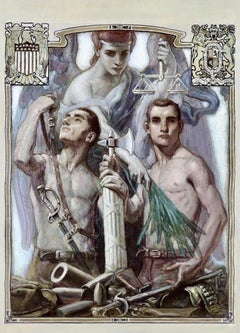
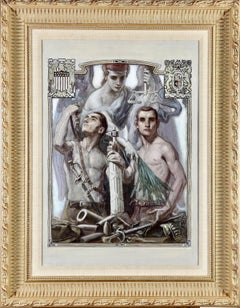
"Universal Peace, " Cosmopolitan Magazine, August 1911
Located in Fort Washington, PA
Medium: Oil on Canvas Signature: Unsigned Sight Size 24.00" x 16.50;" Framed 31.75" x 24.75" "Universal Peace" by Hamilton Holt, August 1911. Cosmopolitan Magazine...
Canvas, Oil
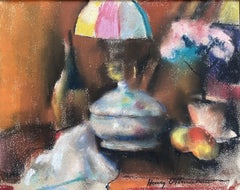
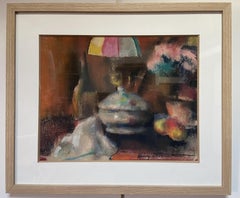
Henry Ottmann (1877-1927) A Still life with a lamp , pastel signed
Located in Paris, FR
Henry Ottmann (1877-1927) A Still life with a lamp signed lower right pastel on paper 30 x 38 cm Framed 45 x 53 cm We knew that Henry Ottmann was a great pastelist, and he demons...
Pastel
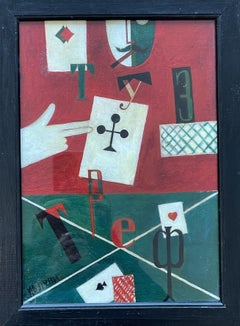
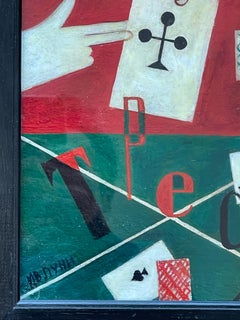
Jean POUGNY born Iwan Albertovich PUNI (1890–1956), "The Ace of Clubs"
By Jean Pougny
Located in Paris, FR
Iwan Albertovich Puni (also known as Jean Pougny) was a Russian avant-garde artist (Suprematism, Cubo-Futurism) who later became French. He evolved towards Lyric Primitivism, influen...
Oil, Cardboard
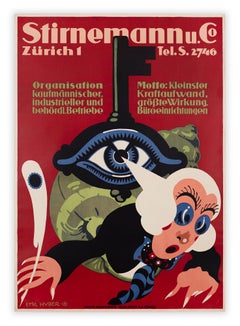
Stirnemann und Co. by Emil Huber, Swiss Surrealist color eyeball poster, 1918
Located in Chicago, IL
Emil Huber’s mesmerizing and surrealist eyeball design for Stirnemann u. Co. Zürich promotes an organization of commercial, industrial and administrative operations in Switzerland. ...
Lithograph
$400
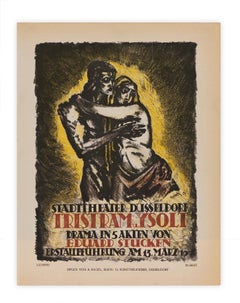
Tristram and Ysoli, Düsseldorf state-theatre, Expressionist stage lithograph
Located in Chicago, IL
Uzarski’s expressionist lithograph advertises a stage production of Tristram and Ysoli (Tristan and Isolde) at the Düsseldorf city-theatre in 1919. This example was published c. 1919...
Lithograph
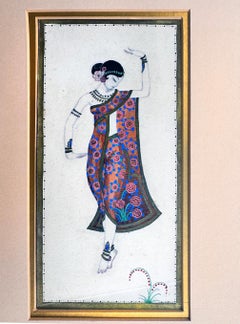
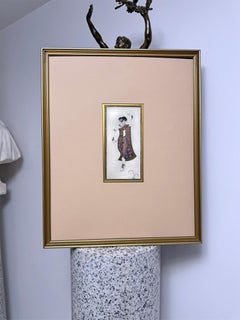
Kay Nielsen, Hindu Dancer Costume design Illustration for Aladdin
Located in Miami, FL
Nielsen (Kay) Costume design for Hindu Dancer, Aladdin, pencil, watercolour, heightened with gold, thick gold border, 205 x 103 mm (8 1/8 x 4 1/8 in), soft crease to lower right corn...
Gold
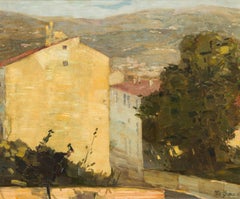
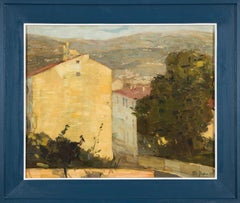
Suburban Houses on a Tree-Lined Street
Located in Wien, 9
The son of a teacher, Willi Geiger was born in Landshut in 1878. From 1898 to 1899, he attended the Munich School of Arts and Crafts, followed by the Technical University, where he c...
Oil
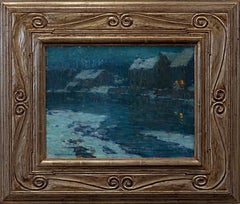
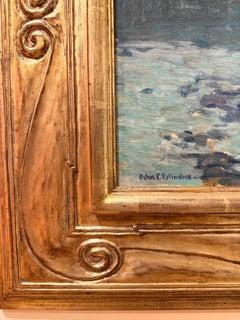
"The Shepaug"
Located in Lambertville, NJ
Jim's of Lambertville Fine Art Gallery is proud to present this piece by John Fulton Folinsbee (1892 - 1972). One of the finest painters to embark upon the New Hope Art Colony, John...
Canvas, Oil
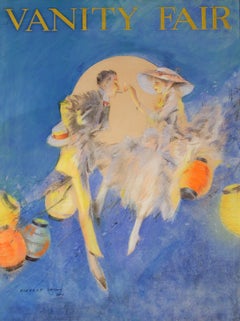
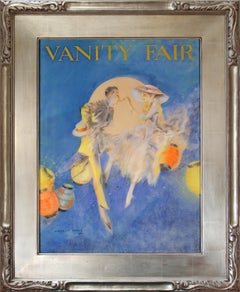
Couple Sitting Among Lanterns, Cover for Vanity Fair
Located in Fort Washington, PA
Medium: Pastel, Gouache, and Black Crayon on Paperboard Sight Size 22.88" x 17.50", Framed 31.75" x 26.50" Signature: Signed EVERETT SHINN and Dated Vanity Fair Cover...
Crayon, Pastel, Gouache, Board
$4,350
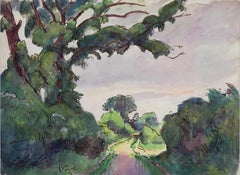
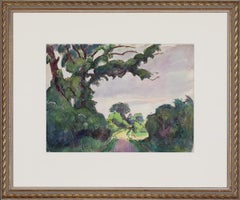
Grand Arbre dans la Sente by Ludovic-Rodo Pissarro - Watercolour
Located in London, GB
Grand Arbre dans la Sente by Ludovic-Rodo Pissarro (1878-1952) Watercolour and ink on paper 28 x 38 cm (11 x 15 inches) Signed lower right, Ludovic Rodo Inscribed lower left, Grand A...
Paper, Ink, Watercolor
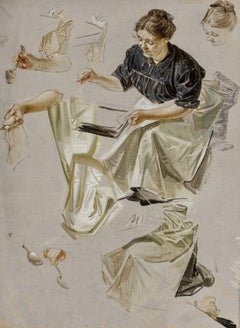
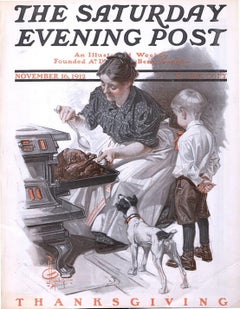
Basting the Turkey, Saturday Evening Post Cover Study
By Joseph Christian Leyendecker
Located in Fort Washington, PA
Medium: Oil on Canvas Laid on Board Signature: Unsigned The Saturday Evening Post, November 16, 1912 cover Study (Thanksgiving Edition)
Canvas, Oil, Board
$14,400Sale Price|30% Off
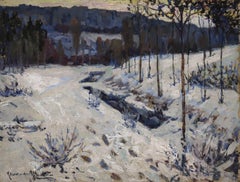
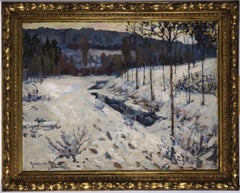
Snowy Landscape, 1915 Oil on Canvas, Post-Impressionist, Framed
Located in Paris, Île-de-France
Alexandre Altmann (1878-1932) Snowy Landscape, 1915 Oil on canvas, 50 x 65 cm Provenance: Private collection, France Captured in the winter tones of 1915 by Alexandre Altmann, 'Sn...
Oil
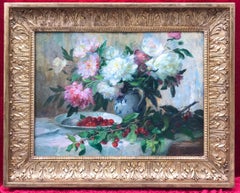
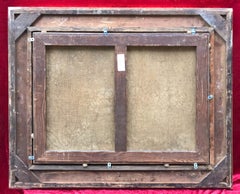
PEONIES AND CHERRIES
Located in Saint-Ouen, FR
Gabrielle MILLIOUD-MELAY (1875-1931) Peonies and Cherries Oil on canvas signed low right Old frame Dim canvas : 54 X 73 cm Dim frame : 76 X 95 cm French painter 19th century Lyon S...
Oil
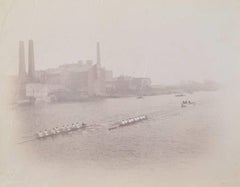
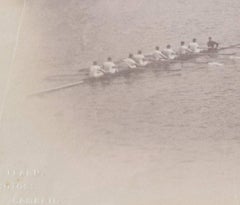
The Boat Race at Hammersmith, 1912, original vintage albumen print
Located in London, GB
Messrs Stearn The 69th Boat Race at Hammersmith, 1912 Albumen print 16 x 21 cm This photograph depicts Oxford and Cambridge neck and neck at Hammersmith in the 1912 Oxford-Cambridg...
Silver Gelatin
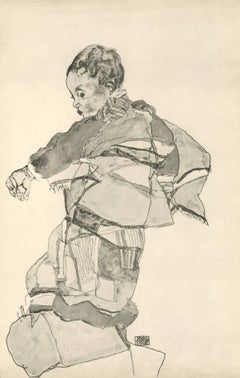
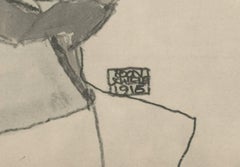
R. Layni, Zeichnungen folio, "Portrait of a Child" Collotype plate X
Located in Palm Beach, FL
Egon Schiele (1890 – 1918), AUSTRIA “ART CANNOT BE MODERN, ART IS PRIMORDIALLY ETERNAL.” -SCHIELE Defiantly iconoclastic in life and art, Egon Schiele is esteemed for his masterful draftsmanship and precocious insight into the human condition. Part of the first wave of Austrian Modernism, he was swept away by the Viennese fascination with the tension between Life and Death (known in the works of Freud and his later interpreters as Eros and Thanatos). Life, identified with attraction, love, sexuality, and reproduction, and Death, represented by distortion, disease, repulsion, and hysteria, often appeared in the same composition, thereby suggesting the frightening life cycle of the human mind and body. Young throughout his career, Schiele universalized his childhood traumas, thriving libido, insecurities, fears, and longings. His contorted line, jarring contrasts, and flat areas of color, demonstrate an early alliance with Expressionist philosophy and artists who were relentlessly frustrated by conventionality in all its forms. Schiele’s work embodied man’s disorientation and confusion in a seemingly absurd world, a world plagued by disease and war. It continues to be astonishingly relevant today, not just because it helped define Modernism but also because it revealed the dark and immutable aspects of the human condition. Zeichnungen is a fine art print portfolio published by Verlag der Buchhandlung Richard Lanyi, Vienna, 1917, printed by Max Jaffe...
Paper
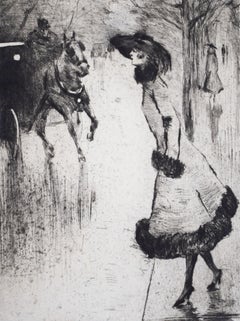
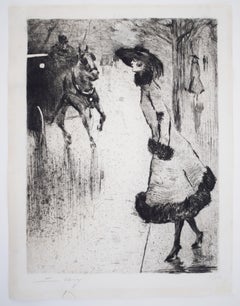
Lady Hailing a Carriage - German Impressionism Berlin
By Lesser Ury
Located in London, GB
This original etching and drypoint is hand signed in pencil by the artist "L. Ury" at the lower left margin. It is also hand numbered in pencil from the edition of 150, at the lower ...
Drypoint, Etching
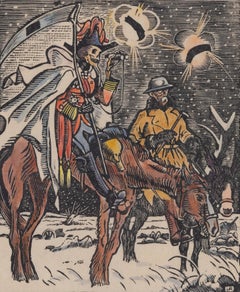
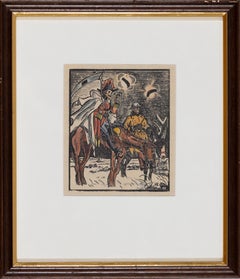
The Grim Reaper by Ludovic-Rodo Pissarro - Colour woodcut
Located in London, GB
The Grim Reaper by Ludovic-Rodo Pissarro (1878-1952) Colour woodcut 17 x 14.3 cm (6 ³/₄ x 5 ⁵/₈ inches) Initialled in the plate lower right, LR Exhibition: London, Stern Pissarro Ga...
Color, Woodcut
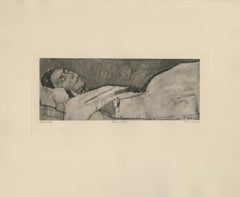
"Dying Woman" Copper Plate Heliogravure
By Ferdinand Hodler & R. Piper & Co.
Located in Palm Beach, FL
2018 marks the centenary anniversary of Ferdinand Hodler’s death. In that 100 years time, the art world’s esteem of this important artist has proved fickle. It has shifted from extol...
Paper
$15,000
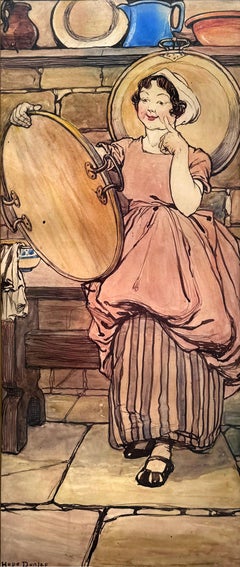
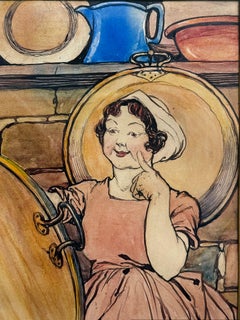
"The Poor Little Bridesmaid" - Female Illustrator - Golden Age of Illustration
Located in Miami, FL
"The poor little bridesmaid ... in her pink cotton gown ... though doubtless, there never was such a pretty girl." A kitchen scene is depicted with a young bridesmaid admiring her f...
India Ink, Watercolor, Pen, Paper
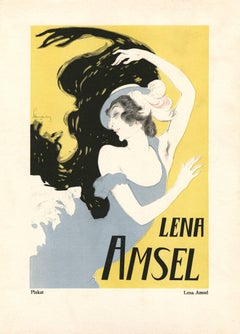
Kostume, Plakate, und Dekorationen, "Lena Amsel"
Located in Palm Beach, FL
Walter Schnackenberg’s style changed several times during his long and successful career. Having studied in Munich, the artist traveled often to Paris where he fell under the spell of the Henri de Toulouse-Lautrec’s colorful and sensuous posters depicting theatrical and decadent subjects. Schnackenberg became a regular contributor of similar compositions to the German magazines Jugend and Simplicissimus before devoting himself to the design of stage scenery and costumes. In the artist’s theatrical work, his mastery of form, ornamentation, and Orientalism became increasingly evident. He excelled at combining fluid Art Nouveau outlines, with spiky Expressionist passages, and the postures and patterns of the mysterious East. In his later years, Schnackenberg explored the unconscious, using surreal subject matter and paler colors that plainly portrayed dreams and visions, some imbued with political connotations. His drawings, illustrations, folio prints, and posters are highly sought today for their exceedingly imaginative qualities, enchanting subject matter, and arresting use of color. SCHNACKENBERG: KOSTUME, PLAKATE UND DEKORATIONEN, a cardboard bound art book consisting of 43 prints of work by Walter Schnackenberg, 30 of which are color lithographs that are signed and some are titled and dated in the plate, as well as black and white prints and photographs with accompanying text by Oskar Bie; lithographs printed at Kunstanstalt Oskar Consee in Munich, other images printed by Gesellschaft Pick & Co. in Munich, the text and cover with color images by Schnackenberg front and verso printed by R. Oldenbourg in Munich; published by Musarion Verlag, Munich, 1920. The majority of Walter Schnackenberg’s artistic output was destroyed by bomb attacks in Munich in 1944. The highly publicized 2013 auction in New York of the recovered pre-war poster collection once belonging to German poster aficionado, Hans Sachs has reintroduced the world to Walter Schnackenberg’s graphic genius and priceless ephemeral art from a lost era. Besides the museum world, designer Karl Lagerfeld is one of the most prodigious collectors of Schnackenberg. Flipping through the pages of Kostume, Plakate und Dekorationen, it becomes quite clear that Schnackenberg’s collection is ground zero at the crossroads of early modern fashion where the cult of celebrity meets up with dance, music, theater and cabaret, film and the graphic medium. Berlin and Munich under Germany’s Weimar Republic in the first quarter of the 20th century produced just the atmosphere to feed this burgeoning industry. Rising inflation sparked a recklessness to live large for the moment and heightened a desire for escapism. An influx of Indian and East Asian dancers and musicians added to the artsy bohemian cultural mix. A new decadence and tolerance resulted. Film boldly featured provocative subject matter. Cabarets became popular venues giving rise to the demi-monde in which people from all social stations mixed more freely in a thriving underground economy and culture where there was a blurring of boundaries and of social codes. Noted art historian and cultural doyen, Oskar Bie astutely observes in his introduction to Schnackenberg’s publication that what unites the images is fantasy and advertisement. Schnackenberg uses the eye as an instrument to brilliantly construct and convey this double message. His personages never directly confront the viewer. Their eyes gaze off in the distance like those of the screenplayer and film star Hedamaria Scholz in Schnackenberg’s “Die Rodelhexe” movie poster. Their eyes follow the path of a dance composition or become a transfixed and ogling male gaze such as the iconic 1911 Odeon Casino poster...
Lithograph
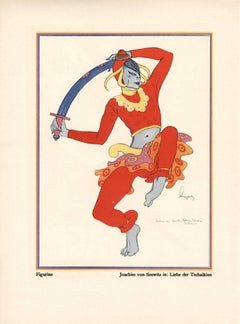
Kostume, Plakate, und Dekorationen, "Joachim von Seewitz"
Located in Palm Beach, FL
Walter Schnackenberg’s style changed several times during his long and successful career. Having studied in Munich, the artist traveled often to Paris where he fell under the spell of the Henri de Toulouse-Lautrec’s colorful and sensuous posters depicting theatrical and decadent subjects. Schnackenberg became a regular contributor of similar compositions to the German magazines Jugend and Simplicissimus before devoting himself to the design of stage scenery and costumes. In the artist’s theatrical work, his mastery of form, ornamentation, and Orientalism became increasingly evident. He excelled at combining fluid Art Nouveau outlines, with spiky Expressionist passages, and the postures and patterns of the mysterious East. In his later years, Schnackenberg explored the unconscious, using surreal subject matter and paler colors that plainly portrayed dreams and visions, some imbued with political connotations. His drawings, illustrations, folio prints, and posters are highly sought today for their exceedingly imaginative qualities, enchanting subject matter, and arresting use of color. SCHNACKENBERG: KOSTUME, PLAKATE UND DEKORATIONEN, a cardboard bound art book consisting of 43 prints of work by Walter Schnackenberg, 30 of which are color lithographs that are signed and some are titled and dated in the plate, as well as black and white prints and photographs with accompanying text by Oskar Bie; lithographs printed at Kunstanstalt Oskar Consee in Munich, other images printed by Gesellschaft Pick & Co. in Munich, the text and cover with color images by Schnackenberg front and verso printed by R. Oldenbourg in Munich; published by Musarion Verlag, Munich, 1920. The majority of Walter Schnackenberg’s artistic output was destroyed by bomb attacks in Munich in 1944. The highly publicized 2013 auction in New York of the recovered pre-war poster collection once belonging to German poster aficionado, Hans Sachs has reintroduced the world to Walter Schnackenberg’s graphic genius and priceless ephemeral art from a lost era. Besides the museum world, designer Karl Lagerfeld is one of the most prodigious collectors of Schnackenberg. Flipping through the pages of Kostume, Plakate und Dekorationen, it becomes quite clear that Schnackenberg’s collection is ground zero at the crossroads of early modern fashion where the cult of celebrity meets up with dance, music, theater and cabaret, film and the graphic medium. Berlin and Munich under Germany’s Weimar Republic in the first quarter of the 20th century produced just the atmosphere to feed this burgeoning industry. Rising inflation sparked a recklessness to live large for the moment and heightened a desire for escapism. An influx of Indian and East Asian dancers and musicians added to the artsy bohemian cultural mix. A new decadence and tolerance resulted. Film boldly featured provocative subject matter. Cabarets became popular venues giving rise to the demi-monde in which people from all social stations mixed more freely in a thriving underground economy and culture where there was a blurring of boundaries and of social codes. Noted art historian and cultural doyen, Oskar Bie astutely observes in his introduction to Schnackenberg’s publication that what unites the images is fantasy and advertisement. Schnackenberg uses the eye as an instrument to brilliantly construct and convey this double message. His personages never directly confront the viewer. Their eyes gaze off in the distance like those of the screenplayer and film star Hedamaria Scholz in Schnackenberg’s “Die Rodelhexe” movie poster. Their eyes follow the path of a dance composition or become a transfixed and ogling male gaze such as the iconic 1911 Odeon Casino...
Lithograph, Paper

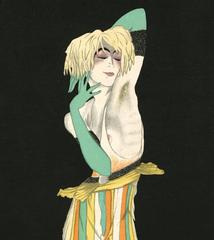
Kostume, Plakate, und Dekorationen, "Lo Hesse"
Located in Palm Beach, FL
Walter Schnackenberg’s style changed several times during his long and successful career. Having studied in Munich, the artist traveled often to Paris where he fell under the spell of the Henri de Toulouse-Lautrec’s colorful and sensuous posters depicting theatrical and decadent subjects. Schnackenberg became a regular contributor of similar compositions to the German magazines Jugend and Simplicissimus before devoting himself to the design of stage scenery and costumes. In the artist’s theatrical work, his mastery of form, ornamentation, and Orientalism became increasingly evident. He excelled at combining fluid Art Nouveau outlines, with spiky Expressionist passages, and the postures and patterns of the mysterious East. In his later years, Schnackenberg explored the unconscious, using surreal subject matter and paler colors that plainly portrayed dreams and visions, some imbued with political connotations. His drawings, illustrations, folio prints, and posters are highly sought today for their exceedingly imaginative qualities, enchanting subject matter, and arresting use of color. SCHNACKENBERG: KOSTUME, PLAKATE UND DEKORATIONEN, a cardboard bound art book consisting of 43 prints of work by Walter Schnackenberg, 30 of which are color lithographs that are signed and some are titled and dated in the plate, as well as black and white prints and photographs with accompanying text by Oskar Bie; lithographs printed at Kunstanstalt Oskar Consee in Munich, other images printed by Gesellschaft Pick & Co. in Munich, the text and cover with color images by Schnackenberg front and verso printed by R. Oldenbourg in Munich; published by Musarion Verlag, Munich, 1920. The majority of Walter Schnackenberg’s artistic output was destroyed by bomb attacks in Munich in 1944. The highly publicized 2013 auction in New York of the recovered pre-war poster collection once belonging to German poster aficionado, Hans Sachs...
Lithograph
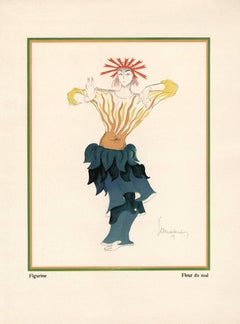
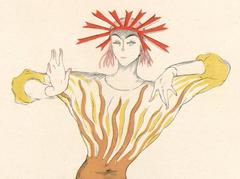
Kostume, Plakate, und Dekorationen, "Flower of Evil"
Located in Palm Beach, FL
Walter Schnackenberg’s style changed several times during his long and successful career. Having studied in Munich, the artist traveled often to Paris where he fell under the spell of the Henri de Toulouse-Lautrec’s colorful and sensuous posters depicting theatrical and decadent subjects. Schnackenberg became a regular contributor of similar compositions to the German magazines Jugend and Simplicissimus before devoting himself to the design of stage scenery and costumes. In the artist’s theatrical work, his mastery of form, ornamentation, and Orientalism became increasingly evident. He excelled at combining fluid Art Nouveau outlines, with spiky Expressionist passages, and the postures and patterns of the mysterious East. In his later years, Schnackenberg explored the unconscious, using surreal subject matter and paler colors that plainly portrayed dreams and visions, some imbued with political connotations. His drawings, illustrations, folio prints, and posters are highly sought today for their exceedingly imaginative qualities, enchanting subject matter, and arresting use of color. SCHNACKENBERG: KOSTUME, PLAKATE UND DEKORATIONEN, a cardboard bound art book consisting of 43 prints of work by Walter Schnackenberg, 30 of which are color lithographs that are signed and some are titled and dated in the plate, as well as black and white prints and photographs with accompanying text by Oskar Bie; lithographs printed at Kunstanstalt Oskar Consee in Munich, other images printed by Gesellschaft Pick & Co. in Munich, the text and cover with color images by Schnackenberg front and verso printed by R. Oldenbourg in Munich; published by Musarion Verlag, Munich, 1920. The majority of Walter Schnackenberg’s artistic output was destroyed by bomb attacks in Munich in 1944. The highly publicized 2013 auction in New York of the recovered pre-war poster collection once belonging to German poster aficionado, Hans Sachs...
Lithograph
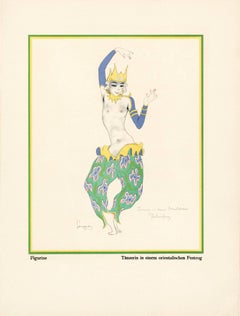
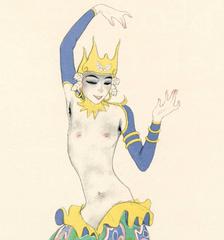
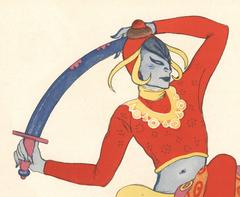
Kostume, Plakate, und Dekorationen, "Dancer in an Oriental Pageant"
Located in Palm Beach, FL
Walter Schnackenberg’s style changed several times during his long and successful career. Having studied in Munich, the artist traveled often to Paris where he fell under the spell o...
Paper