1950s Art

15,283 Results
to
2,236
6,966
3,428
2,272
2,019
1,171
Overall Width
to
Overall Height
to
7,669
21,557
166,493
236,901
2,161
2,346
4,732
6,581
6,014
15,887
21,222
26,533
19,338
14,180
5,479
6,979
1,003
677
606
531
457
190
131
79
64
58
15
6
9,339
4,226
2,114
8,871
4,838
3,277
2,246
1,812
1,684
1,657
1,645
1,012
933
806
789
773
703
569
567
527
512
509
507
3,537
3,254
2,892
2,468
1,809
2,627
1,764
435
268
202
2,411
4,648
9,708
6,089
Period: 1950s
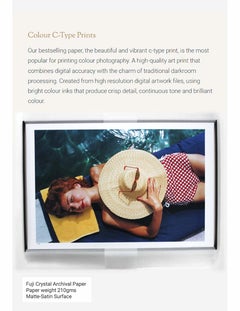
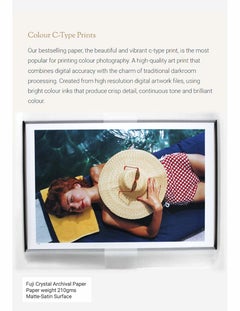
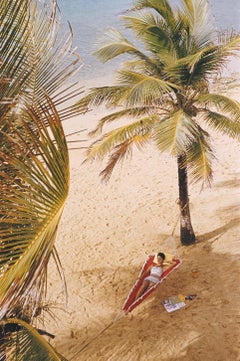
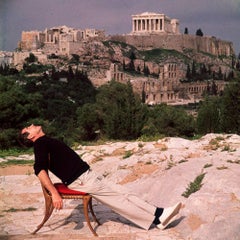
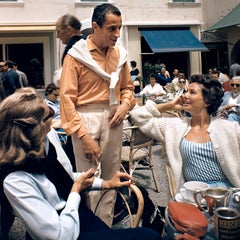
Civilized Snooze, Self Portrait in Athens

Civilized Snooze, Self Portrait in Athens

By Slim Aarons

Located in New York, NY

Self Portrait on Holiday in Athens, Greece, 1955 C-print 20 x 16 inches Slim Aarons (1916-2006) worked mainly for society publications photographing "attractive people doing attr...

Category

Modern 1950s Art

Materials

C Print

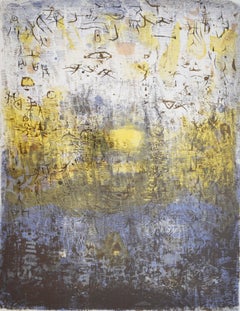
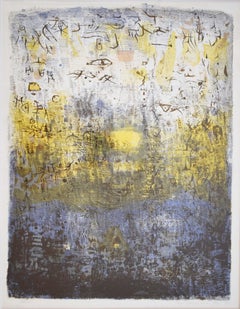
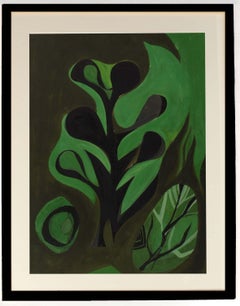
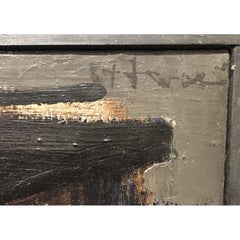
The Lost Forest - French Chinese Forest Abstract

The Lost Forest - French Chinese Forest Abstract

By Zao Wou-Ki

Located in London, GB

This original lithograph in colours is hand signed in pencil in Chinese and Pinyin at the lower right margin. It is also dated in pencil next to the signature '55 [1955]. It is hand ...

Category

Abstract 1950s Art

Materials

Lithograph

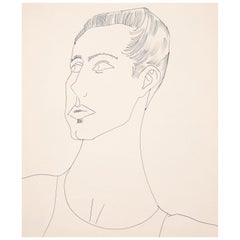
"Portrait of a Young Man (JT)"

"Portrait of a Young Man (JT)"

By Andy Warhol

Located in Toronto, Ontario

Andy Warhol (1928-1987) is arguably the most important American artist of the 20th century. He not only defined Pop Art but had an unrivaled influence on artists and image-making. ...

Category

Modern 1950s Art

Materials

Ballpoint Pen

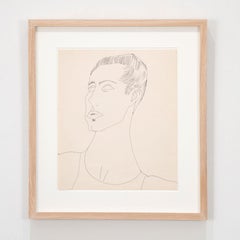
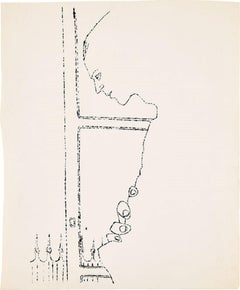
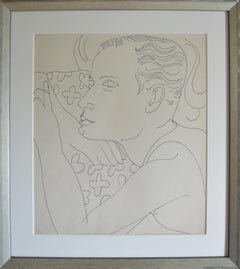
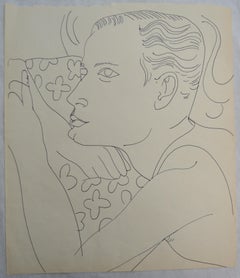
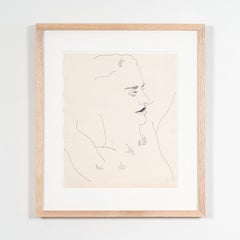
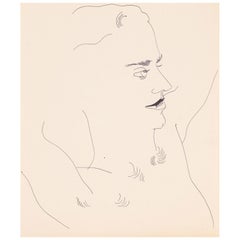
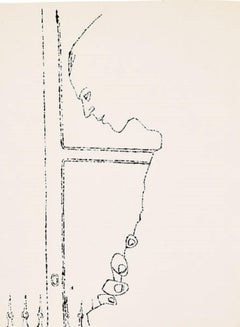
Profile Upper Torso (Portrait)

Profile Upper Torso (Portrait)

By Andy Warhol

Located in London, GB

1957 Unique blotted ink line drawing, on wove paper. 34.9 x 28.9 cm Initialed 'VF' by Vincent Fremont of the Andy Warhol With the Estate of Andy Warhol and the Andy Warhol Foundation...

Category

Contemporary 1950s Art

Materials

Paper, Ink

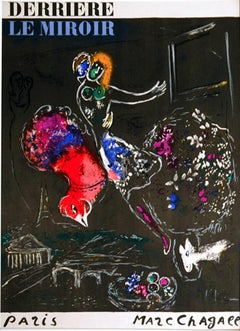
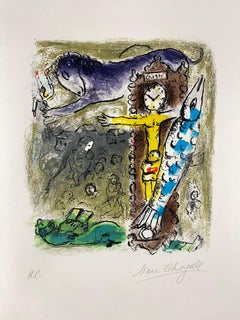
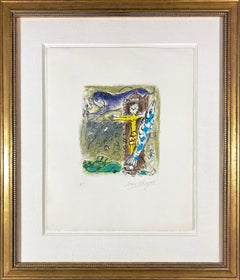
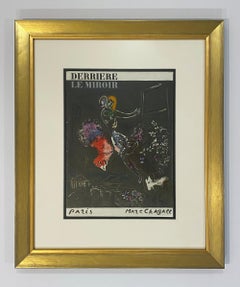
Le Christ a l'Horloge, Paris (Christ in the Clock)

Le Christ a l'Horloge, Paris (Christ in the Clock)

By Marc Chagall

Located in Missouri, MO

Marc Chagall "Le Christ a l'Horloge, Paris" (Christ in the Clock) 1957 (M. 196) Color Lithograph on Arches Wove Paper Signed in Pencil "Marc Chagall" Lower Right Initialed "H.C." (Hors Commerce) Lower Left, aside from numbered edition of 90 *Floated in Gold Frame with Linen Matting, UV Plexiglass Sheet Size: 18 3/4 x 14 3/4 inches (47.5 cm x 38 cm) Image Size: 9 3/4 x 8 1/2 inches Framed Size: 28.5 x 24.25 inches Marc Chagall was a man of keen intelligence, a shrewd observer of the contemporary scene, with a great sympathy for human suffering. He was born on July 7, 1887 in Vitebsk, Russia; his original name was Moishe Shagal (Segal), but when he became a foremost member of the Ecole de Paris, he adopted French citizenship and the French spelling of his name. Vitebsk was a good-sized Russian town of over 60,000, not a shtetl. His father supported a wife and eight children as a worker in a herring-pickling plant. Sheltered by the Jewish commandment against graven images, the young Chagall never saw so much as a drawing until, one day, he watched a schoolmate copying a magazine illustration. He was ridiculed for his astonishment, but he began copying and improvising from magazines. Both Chagall's parents reluctantly agreed to let him study with Yehuda Pen, a Jewish artist in Vitebsk. Later, in 1906, they allowed their son to study in St. Petersburg, where he was exposed to Russian Iconography and folk art. At that time, Jews could leave the Pale only for business and employment and were required to carry a permit. Chagall, who was in St. Petersburg without a permit, was imprisoned briefly. His first wife, Bella Rosenfeld, was a product of a rich cultivated and intellectual group of Jews in Vitebsk. Chagall was made commissar for the arts for the area, charged with directing its cultural life and establishing an art school. Russian folklore, peasant life and landscapes persisted in his work all his life. In 1910 a rich patron, a lawyer named Vinaver, staked him to a crucial trip to Paris, where young artists were revolutionizing art. He also sent him a handsome allowance of 125 francs (in those days about $24) each month. Chagall rejected cubism, fauvism and futurism, but remained in Paris. He found a studio near Montparnasse in a famous twelve-sided wooden structure divided into wedge-shaped rooms. Chaim Soutine, a fellow Russian Jew, and Modigliani lived on the same floor. To Chagall's astonishment, he found himself heralded as one of the fathers of surrealism. In 1923, a delegation of Max Ernst, Paul Eluard and Gala (later Salvador Dali's wife) actually knelt before Chagall, begging him to join their ranks. He refused. To understand Chagall's work, it is necessary to know that he was born a Hasidic Jew, heir to mysticism and a world of the spirit, steeped in Jewish lore and reared in the Yiddish language. The Hasidim had a special feeling for animals, which they tried not to overburden. In the mysterious world of Kabbala and fantastic ancient legends of Chagall's youth, the imaginary was as important as the real. His extraordinary use of color also grew out of his dream world; he did not use color realistically, but for emotional effect and to serve the needs of his design. Most of his favorite themes, though superficially light and trivial, mask dark and somber thoughts. The circus he views as a mirror of life; the crucifixion as a tragic theme, used as a parallel to the historic Jewish condition, but he is perhaps best known for the rapturous lovers he painted all his life. His love of music is a theme that runs through his paintings. After a brief period in Berlin, Chagall, Bella and their young daughter, Ida, moved to Paris and in 1937 they assumed French citizenship. When France fell, Chagall accepted an invitation from the Museum of Modern Art to immigrate to the United States. He was arrested and imprisoned in Marseilles for a short time, but was still able to immigrate with his family. The Nazi onslaught caught Chagall in Vichy, France, preoccupied with his work. He was loath to leave; his friend Varian Fry rescued him from a police roundup of Jews in Marseille, and packed him, his family and 3500 lbs. of his art works on board a transatlantic ship. The day before he arrived in New York City, June 23, 1941, the Nazis attacked Russia. The United States provided a wartime haven and a climate of liberty for Chagall. In America he spent the war years designing large backdrops for the Ballet. Bella died suddenly in the United States of a viral infection in September 1944 while summering in upstate New York. He rushed her to a hospital in the Adirondacks, where, hampered by his fragmentary English, they were turned away with the excuse that the hour was too late. The next day she died. He waited for three years after the war before returning to France. With him went a slender married English girl, Virginia Haggard MacNeil; Chagall fell in love with her and they had a son, David. After seven years she ran off with an indigent photographer. It was an immense blow to Chagall's ego, but soon after, he met Valentine Brodsky, a Russian divorcee designing millinery in London (he called her Fava). She cared for him during the days of his immense fame and glory. They returned to France, to a home and studio in rustic Vence. Chagall loved the country and every day walked through the orchards, terraces, etc. before he went to work. Chagall died on March 28, 1985 in the south of France. His heirs negotiated an arrangement with the French state allowing them to pay most of their inheritance taxes in works of art. The heirs owed about $30 million to the French government; roughly $23 million of that amount was deemed payable in artworks. Chagall's daughter, Ida and his widow approved the arrangement. Written and submitted by Jean Ershler Schatz, artist and researcher from Laguna Woods, California. Sources: Hannah Grad Goodman in Homage to Chagall in Hadassah Magazine, June 1985 Jack Kroll in Newsweek, April 8, 1985 Andrea Jolles in National Jewish Monthly Magazine, May 1985 Michael Gibson...

Category

Modern 1950s Art
Materials

Lithograph

Unidentified Male
Unidentified Male

Unidentified Male

By Andy Warhol

Located in Indianapolis, IN

Andy Warhol (1928-1987) Unidentified Male (circa 1956) Black ballpoint pen on paper Size: 16.5 x 14 in (41.9 x 35.6 cm) Frame size: 21.25 x 19 in (53.9 x 48.3 cm) Authenticated by ...

Category

Pop Art 1950s Art

Materials

Ballpoint Pen, Paper

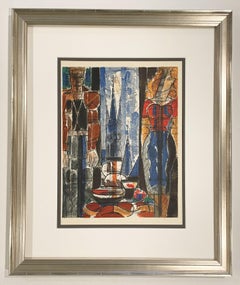
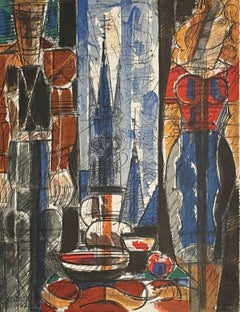
original lithograph

original lithograph

By Bertram Goodman

Located in Henderson, NV

Medium: original lithograph. This lithograph is from the rare 1953 "Improvisations" portfolio, published by the Artists Equity Association of New York on the occasion of the 1953 Spr...

Category

1950s Art

Materials

Lithograph

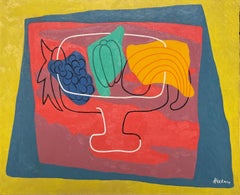
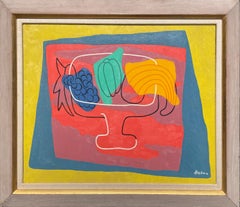
"Untitled" Albert Heckman, circa 1950 Modernist Colorful Still Life With Fruit

"Untitled" Albert Heckman, circa 1950 Modernist Colorful Still Life With Fruit

By Albert Heckman

Located in New York, NY

Albert Heckman Untitled, circa 1950 Signed lower right Oil on canvas 24 x 30 inches Albert Heckman was born in Meadville, Western Pennsylvania, 1893. He went to New York City to try his hand at the art world in 1915 after graduating from high school and landing a job at the Meadville Post Office. In 1917, at the age of 24, Heckman enrolled part-time in Teachers' College, Columbia University's Fine Arts Department to begin his formal art education. He worked as a freelance ceramic and textile designer and occasionally as a lecturer at the Metropolitan Museum of Art. In the early 1920s, at the age of almost 30, he graduated with a Bachelor of Arts degree from Columbia Teachers College. He was especially impacted by his instructor at Columbia, Arthur Wesley Dow. After graduating, he was hired by the Teachers' College as a Fine Arts instructor. He stayed with Columbia Teachers' College until 1929, when he left to attend the Leipzig Institute of Graphic Arts in Leipzig, Germany. Isami Doi (1903-1965), who was born in Hawaii, was arguably his most impressive student at Columbia. Doi is now regarded as one of the most prominent artists hailing from Hawaii. Heckman became an active member and officer of the Keramic Society and Design Guild of New York in the 1920s as part of his early commercial art career. The Society's mission was to share knowledge and showcase textile and ceramic design exhibits. In 1922, Heckman married Florence Hardman, a concert violinist. Mrs. Heckman's concert schedule during the 1920s kept Albert and Florence Heckman apart for a significant portion of the time, but they spent what little time they had together designing and building their Woodstock, New York, summer house and grounds. A small house and an acre of surrounding land on Overlook Mountain, just behind the village of Woodstock, were purchased by Albert and Florence Heckman at the time of their marriage. Their Woodstock home, with its connections, friendships, and memories, became a central part of their lives over the years, even though they had an apartment in New York City. Heckman's main artistic focus shifted to the house on Overlook Mountain and the nearby towns and villages, Kingston, Eddyville, and Glasco. After returning from the Leipzig Institute of Graphic Arts in 1930, Mr. Heckman joined Hunter College as an assistant professor of art. He worked there for almost thirty years, retiring in 1956. Throughout his tenure at Hunter, Mr. Heckman and his spouse spent the summers at their Woodstock residence and the winters in New York City. They were regular and well-known guests at the opera and art galleries in New York. Following his retirement in 1956, the Heckmans settled in Woodstock permanently, with occasional trips to Florida or Europe during the fall and winter. Mr. Heckman's close friends and artistic career were always connected to Woodstock or New York City. He joined the Woodstock art group early on and was greatly influenced by artists like Paul and Caroline Rohland, Emil Ganso, Yasuo Kuniyoshi, Andre Ruellan, and her husband, Jack...

Category

Modern 1950s Art
Materials

Canvas, Oil

Relaxed Conversation

Relaxed Conversation

By Milton Avery

Located in Toronto, Ontario

Milton Avery (1885-1965) whose lyrical command of colour and form positioned him as a pivotal figure in 20th-century art. Often described as the “American Fauve,” Avery produced pai...

Category

American Modern 1950s Art

Materials

Ink

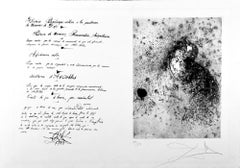
La Dentelliere
La Dentelliere

La Dentelliere

By Salvador Dalí­

Located in Hollywood, FL

ARTIST: Salvador Dali TITLE: La Dentelliere MEDIUM: Etching on a plate marred by nails shot at it SIGNED: Hand Signed PUBLISHER: Graft Verlag/Arztesammlerkreis EDITION NUMBER: ...

Category

Surrealist 1950s Art

Materials

Etching

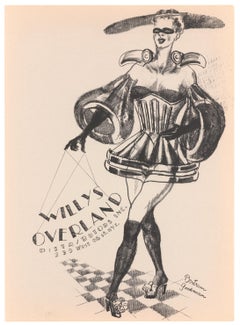
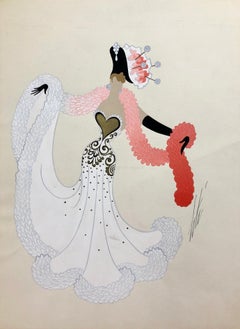
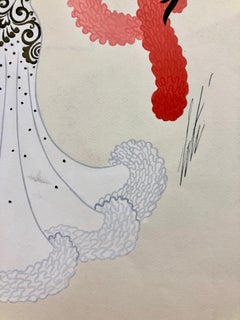
Franzosischer Walter quand l'amour meurt

Franzosischer Walter quand l'amour meurt

By Erté

Located in Chatsworth, CA

This piece is a unique, original gouache on paper by Erte, also known as Romain de Tirtoff. Erte was a vastly diverse artist who excelled in an array of fields including fashion, jew...

Category

Art Deco 1950s Art

Materials

Gouache

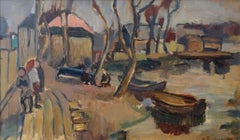
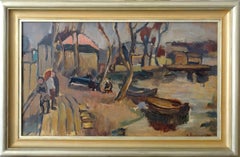
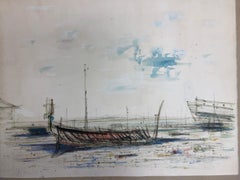
Boats by the river  Oil on cardboard, 47.5x80 cm

Boats by the river Oil on cardboard, 47.5x80 cm

By Biruta Baumane

Located in Riga, LV

Boats by the river Oil on cardboard, 47.5x80 cm The main focus of the artwork is a fauvistic stylized landscape featuring boats by the river. The artist's intention is to convey the landscape in bold and vivid earth tones, characteristic of the fauvist style. Biruta Baumane...

Category

Fauvist 1950s Art

Materials

Oil, Cardboard

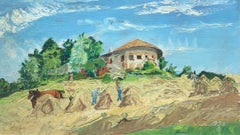
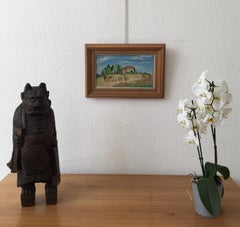
Farmers in the field

Farmers in the field

Located in Genève, GE

Monogrammed work Work on wood Brown wooden frame 33 x 48 x 4 cm

Category

1950s Art

Materials

Oil

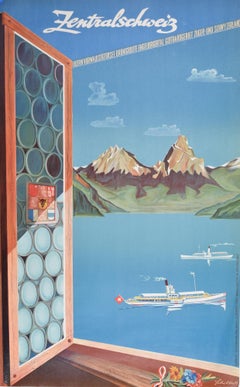
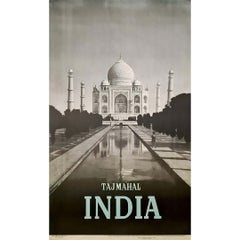
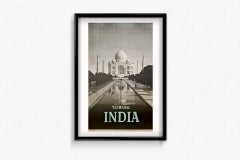
1957 Original Travel Poster Taj Mahal India Government Tourism Photogravure

1957 Original Travel Poster Taj Mahal India Government Tourism Photogravure

Located in PARIS, FR

Issued in February 1957, this original Indian travel poster entitled Tajmahal – India was produced by the Directorate of Advertising and Visual Publicity for the Ministry of Transpor...

Category

1950s Art

Materials

Paper, Lithograph

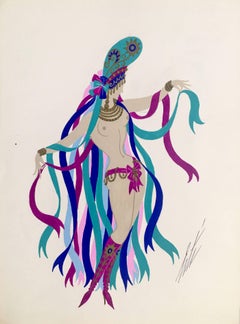
Erté, Raspoutine, troisieme mannequin, unique gouache, hand signed

Erté, Raspoutine, troisieme mannequin, unique gouache, hand signed

By Erté

Located in Chatsworth, CA

A unique, original gouache on paper by cabaret costume designer, Erté, also known as Romain de Tirtoff. Created in 1959 for the cabaret show, Folies Pigalle. From the private collect...

Category

Modern 1950s Art
Materials

Gouache

Havana
Havana

Havana

By Jean Carzou

Located in New York, NY

Jean Carzou traveled to Havana as an artist to explore the world and he captured a ship from a earlier era.

Category

Expressionist 1950s Art

Materials

Watercolor

Lover Boy
Lover Boy

Lover Boy

By Andy Warhol

Located in Toronto, Ontario

Andy Warhol (1928-1987) is arguably the most important American artist of the 20th century. He not only defined Pop Art but had an unrivaled influence on artists and image-making. ...

Category

American Modern 1950s Art

Materials

Ballpoint Pen

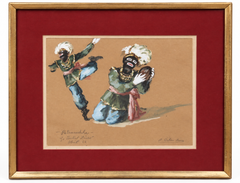
Ramón Ribas Rius – Petrushka at the Liceu, – Mixed Media

Ramón Ribas Rius – Petrushka at the Liceu, – Mixed Media

Located in Sant Celoni, ES

Ramón Ribas Rius – Petrushka at the Liceu, 1956 – Mixed Media on Paper – 62 × 45 cm Expressive mixed-media work on paper by Spanish artist Ramón Ribas Rius (1903–1983), depicting a ...

Category

Modern 1950s Art
Materials

Mixed Media

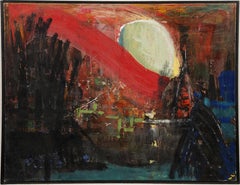
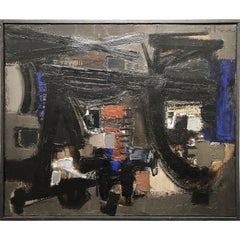
Abstract Composition

Abstract Composition

By John Harrison Levee

Located in Boca Raton, FL

John Levee (April 10, 1924 – January 18, 2017) was an American abstract expressionist painter who had worked in Paris since 1949. His father was M. C. Levee. John Harrison Levee rece...

Category

Abstract Expressionist 1950s Art

Materials

Oil, Canvas

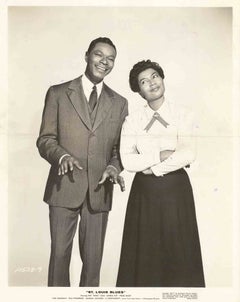
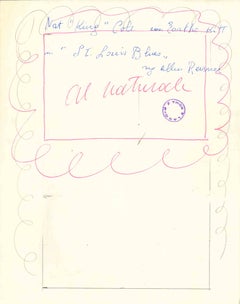
Nat "King" Cole and Eartha Kitt, 1958

Nat "King" Cole and Eartha Kitt, 1958

Located in Roma, IT

St. Louis Blues (1958) Original Paramount Pictures Publicity Photograph, realized in 1958. Original vintage gelatin silver publicity photograph issued by Paramount Pictures to promo...

Category

Contemporary 1950s Art

Materials

Photographic Paper

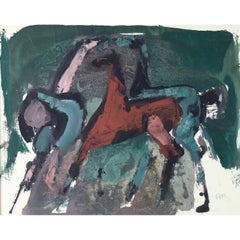
Modern art painting of a small band of horses

Modern art painting of a small band of horses

Located in Colfax, CA

A modern art painting of three horses by artist Theodore Polos, in the manner of Marino Marini. Theodore C. Polos, (1901-1976), was a painter, printmaker and educator, was born in Mytilene, Greece. In 1916 Polos immigrated to the United States, settling in Boston first before moving to San Francisco in 1922. He studied art at the San Francisco Institute of Art, and at the College of Arts and Crafts in Oakland with Xavier Martinez...

Category

American Modern 1950s Art
Materials

Mixed Media

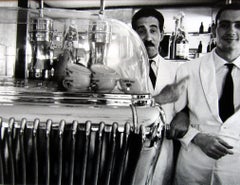
Coffee Baristas, Rome

Coffee Baristas, Rome

By William Klein

Located in Santa Monica, CA

William Klein 1928-2022 Coffee Baristas, Rome, 1956 Signed and dated on verso. Gelatin Silver Print Image - 13.75 x 19", Paper - 16" x 20"

Category

1950s Art
Materials

Silver Gelatin

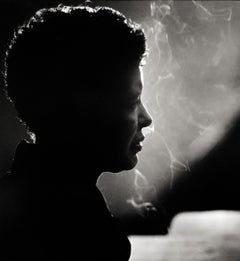
Billie Holiday, NYC, 1955

Billie Holiday, NYC, 1955

Located in Santa Monica, CA

Signed, titled, dated and numbered in ink on recto Gelatin Silver Print Paper - 11"x14", Matted - 16"x20

Category

1950s Art
Materials

Silver Gelatin

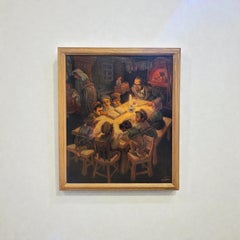
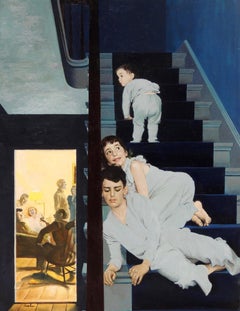
Eavesdropping on Grownups, Saturday Evening Post Cover

Eavesdropping on Grownups, Saturday Evening Post Cover

By George Hughes

Located in Fort Washington, PA

Signature: Signed Lower Left Original cover illustration for The Saturday Evening Post, December 2, 1950 The Post described, “One night Art Editor Stuart was having a party. His three boys came downstairs four times and were conducted back up by their mother. The next time they came down, Papa Stuart waxed excited, firmly conveyed them aloft himself, and they did not show up again. Stuart was warmly congratulated on his success as a father. When the party broke up, the youngest lad was found asleep on the stairs. Stuart claims that the older ones never did come down again, but this was probably because they merely went to sleep in their beds from natural causes. George Hugehes has painted some other people’s offspring, to get over the idea that children all over America are eager to improve their minds by listening to sophisticated conversation.” (The Saturday Evening Post, December 2, 1950, p. 3) Exhibited: Norman Rockwell Museum...

Category

1950s Art
Materials

Oil, Board