By Joan Miró
Located in Fairfield, CT
Artist: Joan Miro (1893–1983)
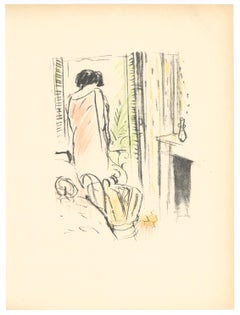
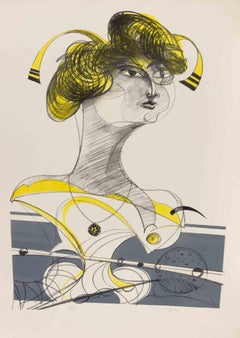
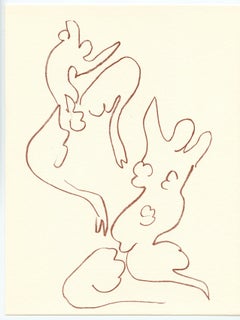
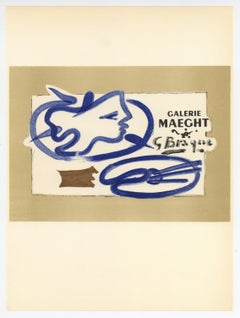
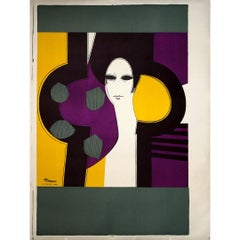
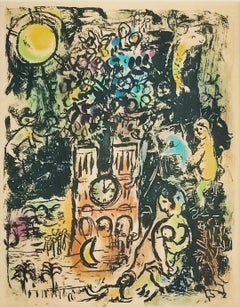
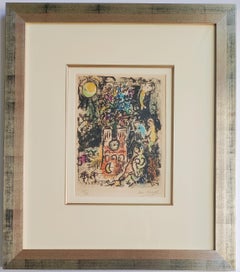
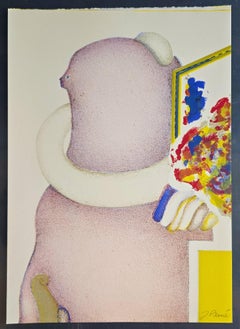
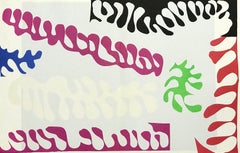
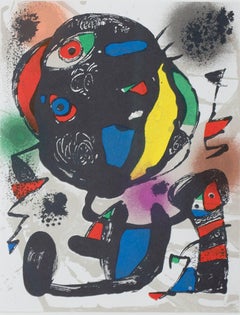
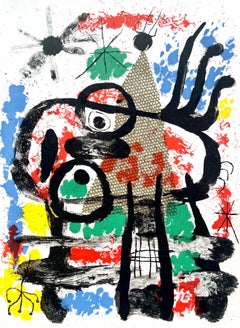
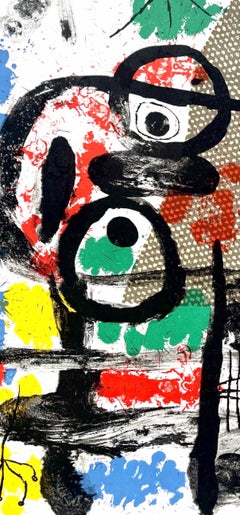
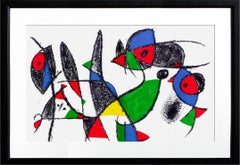
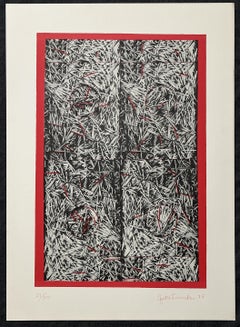
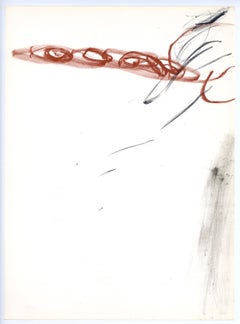
Title: Album 19, Plate 5 (Album 19, Plaque 5)
Year: 1960
Medium: Lithograph on velin paper
Paper Size: 15 x 11 inches (38.1 x 27.94 cm)
Condition: Well preserved, consistent with age and medium
Inscription: Unsigned and unnumbered, as issued
Publisher: Maeght Editeur, Paris
Printer: Imprimerie Arte, Paris
Catalogue raisonne reference: Miro, Joan, et al. Joan Miro Lithographe. Maeght, 1972–1992, illustration 316
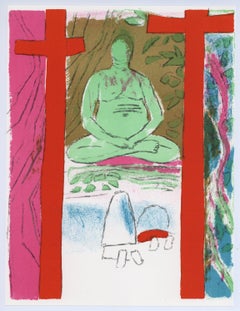
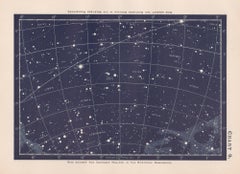
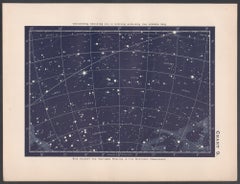
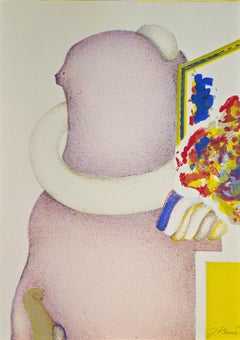
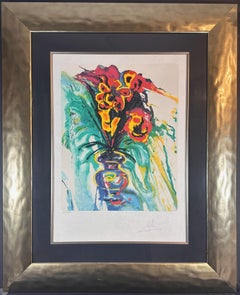
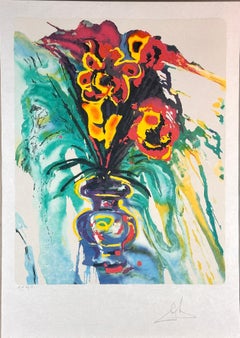
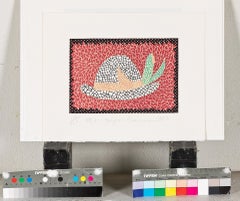
Notes: This exquisite lithograph by Joan Miro (1893–1983), titled Album 19, Plaque 5 (Album 19, Plate 5), originates from 1960 and was published by Maeght Editeur, Paris, under the direction of Aime Maeght, and printed by Imprimerie Arte, Paris. The composition exemplifies Miro’s lyrical abstraction and poetic engagement with gesture, symbolism, and the expressive possibilities of line and color. In Album 19, Plaque 5 (Album 19, Plate 5), the artist transforms spontaneous marks and biomorphic forms into a highly personal visual language, creating an enigmatic interplay between abstraction, movement, and dream imagery. The result is a poetic interpretation of imagination and subconscious experience seen through the lens of modern abstraction. Derriere le Miroir (translated as "Behind the Mirror") was an iconic French art periodical published from 1946 to 1982 by Maeght Editeur, one of the most influential art publishers of the twentieth century. Founded by Aime Maeght in Paris, the publication was conceived as a visual and literary collaboration between leading modern artists, poets, and critics. Each issue functioned simultaneously as an exhibition catalogue and as an autonomous work of art, featuring original lithographs printed directly from the artists stones or plates alongside essays, poems, and critical texts. Over more than three decades, Derriere le Miroir produced over 250 issues and presented an extraordinary range of artists including Henri Matisse, Marc Chagall, Georges Braque, Alexander Calder, Fernand Leger, Pierre Bonnard, Alberto Giacometti, Eduardo Chillida, Ellsworth Kelly, Francis Bacon, Antoni Tapies, Pierre Alechinsky, Pol Bury, Bram van Velde, and many others. Printed by master ateliers such as Mourlot and Arte, the series established new standards of excellence in modern lithography and graphic design. Closely linked to exhibitions at Galerie Maeght, each issue served as a lasting document of postwar modernism, uniting image, text, and philosophy into a uniquely influential publication that remains among the most important and collectible achievements in twentieth century art publishing.
JOAN MIRO (1893–1983) was a Catalan painter, sculptor, printmaker, and ceramicist whose visionary imagination and lyrical abstraction made him one of the most influential and beloved artists of the twentieth century. Born in Barcelona, Miro drew inspiration from Catalan folk art, Romanesque frescoes, and the luminous landscapes of Mont-roig del Camp, developing a deep connection to nature that infused his work with vitality and symbolism. After formal training at the Escola d’Art in Barcelona, he absorbed the lessons of Post-Impressionism and Cubism before moving to Paris in the early 1920s, where he became a leading figure in the Surrealist movement. There, Miro forged a personal visual language of biomorphic shapes, floating symbols, and radiant color harmonies that reflected both spontaneity and spiritual depth. In creative dialogue with peers such as Alexander Calder, Alberto Giacometti, Salvador Dali, Wassily Kandinsky, Marcel Duchamp, and Man Ray, he helped revolutionize modern art by dissolving the boundaries between abstraction and dream imagery. Miro’s inventive approach extended far beyond painting, embracing sculpture, ceramics, and monumental public commissions that redefined how art could interact with space and emotion. His expressive freedom and gestural abstraction profoundly influenced later artists including Jackson Pollock, Mark Rothko, Alexander Calder, Jean Dubuffet, Antoni Tapies, and Joan Mitchell, inspiring generations who sought to merge instinct, color, and imagination. Today, Miro’s work remains a cornerstone of modernism, prized by collectors and celebrated in major museums worldwide. His highest auction record was achieved by Peinture (Etoile Bleue) (Painting (Blue Star)) (1927), which sold for approximately 37 million USD at Sothebys, London, on June 19, 2012.
Joan Miro Album 19...
Category
1960s Surrealist Lithograph Prints and Multiples