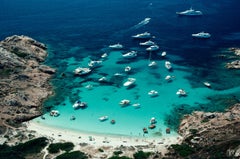
Modern Art

MODERN STYLE

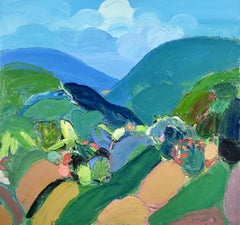
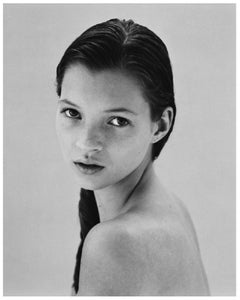
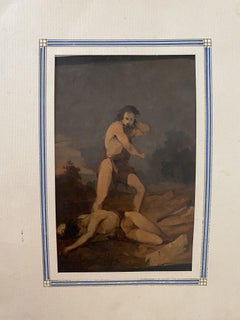
The first decades of the 20th century were a period of artistic upheaval, with modern art movements including Cubism, Surrealism, Futurism and Dadaism questioning centuries of traditional views of what art should be. Using abstraction, experimental forms and interdisciplinary techniques, painters, sculptors, photographers, printmakers and performance artists all pushed the boundaries of creative expression.

Major exhibitions, like the 1913 Armory Show in New York City — also known as the “International Exhibition of Modern Art,” in which works like the radically angular Nude Descending a Staircase by Marcel Duchamp caused a sensation — challenged the perspective of viewers and critics and heralded the arrival of modern art in the United States. But the movement’s revolutionary spirit took shape in the 19th century.

The Industrial Revolution, which ushered in new technology and cultural conditions across the world, transformed art from something mostly commissioned by the wealthy or the church to work that responded to personal experiences. The Impressionist style emerged in 1860s France with artists like Claude Monet, Paul Cézanne and Edgar Degas quickly painting works that captured moments of light and urban life. Around the same time in England, the Pre-Raphaelites, like Edward Burne-Jones and Dante Gabriel Rossetti, borrowed from late medieval and early Renaissance art to imbue their art with symbolism and modern ideas of beauty.

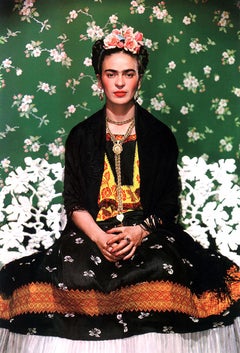
Emerging from this disruption of the artistic status quo, modern art went further in rejecting conventions and embracing innovation. The bold legacy of leading modern artists Georges Braque, Pablo Picasso, Frida Kahlo, Salvador Dalí, Henri Matisse, Joan Miró, Marc Chagall, Piet Mondrian and many others continues to inform visual culture today.

Find a collection of modern paintings, sculptures, prints and other fine art on 1stDibs.

to
5,610
27,540
10,919
7,351
5,648
4,833
Overall Width
to
Overall Height
to
1,273
6,401
42,327
6,312
283
463
1,037
2,400
2,088
6,707
7,345
5,780
3,084
1,078
1,143
119,339
64,384
56,316
28,597
14,509
9,585
6,673
6,027
4,210
3,170
2,536
2,319
2,122
580
29,685
20,476
4,382
32,072
16,320
11,895
8,672
8,225
6,296
4,742
4,018
3,724
3,600
3,382
3,219
2,603
2,340
2,124
2,000
1,731
1,693
1,676
1,607
10,712
9,767
9,516
6,006
5,932
6,891
2,494
1,243
432
269
6,028
26,853
35,788
19,683
Style: Modern
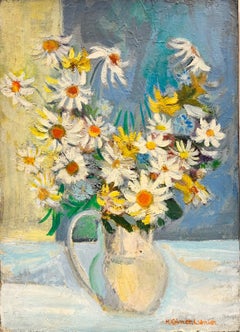
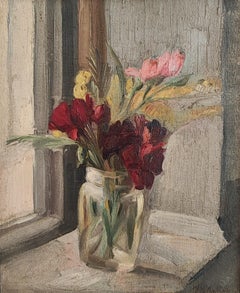
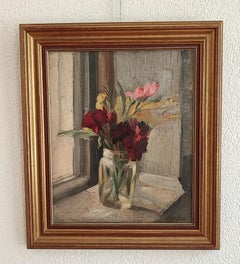
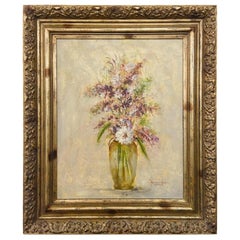
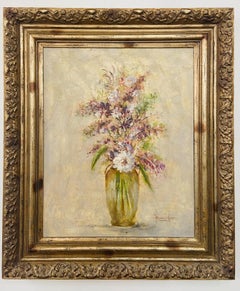
Bright & Cheerful French Modernist Signed Oil Still Life Flowers in Vase

Bright & Cheerful French Modernist Signed Oil Still Life Flowers in Vase

By Huguette Ginet-Lasnier

Located in Cirencester, Gloucestershire

Flowers in Vase Huguette Ginet-Lasnier (French 1927-2020) signed inscribed verso oil painting on canvas 18 x 13 inches. All the paintings we have for sale by this artist have come fr...

Category

21st Century and Contemporary Modern Art

Materials

Canvas, Oil

Soup
Soup

Soup

By Edmund Blampied

Located in Plano, TX

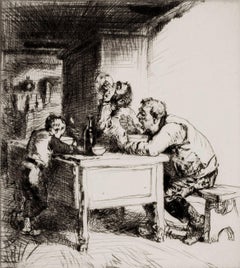
Soup. 1920. Drypoint. Appleby 65. 9 x 8 1/8 (sheet 15 x 11 9/16). Edition 100. Illlustrated: Print Collector's Quarterly 13 (1926): 85. Signed in pencil. Edmund Blampied was a painter, etcher, lithographer and sculptor. Born in 1886 to a family of three boys in St. Martin, Jersey, Blampied became interested in drawing at an early age. After visiting the studio of John Helier Lander in 1899, Blampied decided to make a career as an artist. In 1903 he went to London to attend Lambeth Art School, where he studied etching under Walter Seymour. In 1905, he joined the Daily Chronicle as an artist. In that year he was awarded a scholarship to Bolt Court Scool of Photo-engraving and Lithography. In 1912 he left the Chronicle and established his own studio. He earned a living by illustrating novels and short stories. In 1913, he had his first exhibition at the Leicester Gallery in London. The following year he married Marianne Van Abbé. During the 1920's, he became a member of the Royal Society of Painter-Etchers and Engravers. During the 1920s Blampied became a member of the Royal Society of Painters-Etchers and Engravers and exhibited in London to critical acclaim. He produced a folio of comic drawings in the 1930s which was published in New York in 1934 and another that was published in London in 1936. The Keeper of Prints and Drawings at the British Museum published a mongraph on his work. His London exhibitions were highly successful. In 1938, he moved to Bulwarks, St.Aubin in Jersey, but at the onset of the Occupation, had to relocate to Route Orange, St. Brelade. remained there throughout World War II during the German Occupation, despite the fact that his wife was Jewish. During the Occupation he designed bank...

Category

1920s Modern Art

Materials

Drypoint, Etching

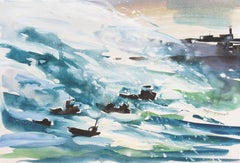
'Storm at Folkestone Harbor', Kent, English Seascape

'Storm at Folkestone Harbor', Kent, English Seascape

By Phyllis McDowell

Located in Santa Cruz, CA

Signed center right, 'Phyllis McDowell' (British, 20th/21st century) with artist business sticker and title, 'Storm-Folkestone Harbour' on backing. An art teacher and artist, Phylll...

Category

Mid-20th Century Modern Art

Materials

Gesso, Paper, Watercolor

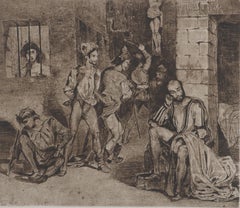
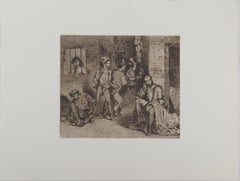
The Italian Poet Tasso in the Madhouse - Etching

The Italian Poet Tasso in the Madhouse - Etching

By Eugène Delacroix

Located in Paris, IDF

Eugène DELACROIX (1798-1863) Tasso in the Madhouse Engraving after a drawing Signed on the plate On vellum 38 x 50 cm INFORMATION: In 1839, Delacroix painted his famous painting "T...

Category

Early 20th Century Modern Art

Materials

Etching

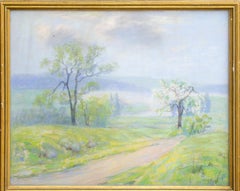
Beautiful large impressionist pastel by Francesco Spicuzza

Beautiful large impressionist pastel by Francesco Spicuzza

By Francesco Spicuzza

Located in New York, NY

Francesco Spicuzza (American, 1883-1962) Untitled Landscape, 20th century Pastel on paper Sight size: 24 x 30 in. Framed: 26 1/4 x 32 3/8 in. Signed lower right: Spicuzza Italian-born Francesco Spicuzza was primarily a Wisconsin painter who did portraits, still-lives and local landscapes. He spent the first part of his life in near-poverty to become a painter. An eternal optimist, in 1917, the artist reported: "I am happy and my only ambition now is to paint better and better until I shall have reached the measure of the best of which I am capable." (Spicuzza, 1917, p. 22). His predilection for beach scenes germinated early: reportedly, the five-year-old boy first drew the outlines of his father's fishing boat in the sand on the seashore near their home in Sicily. After setting himself up as a fruit peddler in Milwaukee, Spicuzza's father sent for his family when Francesco was eight years old. For the following six years the boy was unable to attend school because of his job in his father's fruit and vegetable business. The poor lad suffered a caved-in shoulder from carrying a heavy wooden crate. The young Spicuzza was aided by moral and financial support from a sympathetic Milwaukee businessman named John Cramer, publisher and editor of the Evening Wisconsin, who raised Spicuzza's salary as a newspaper assembler so that he could attend school. In 1899 or 1900, Spicuzza began studying drawing and anatomy under Robert Schade (1861-1912), a painter of panoramas who had been trained in Munich under Carl Theodor von Piloty. Spicuzza was also taught by Alexander Mueller (1872-1935), a product of the Weimar and Munich academies. Mueller realized Spicuzza was a colorist and encouraged that orientation (Madle, 1961). Spicuzza found it beneficial to accept an apprenticeship in a lithographic studio for $8 a week, which demanded most of his time. During the St. Louis Universal Exposition in 1904, still a struggling student, Spicuzza attended the fair, thanks to Cramer. It was not long before Spicuzza received a twenty-five dollar portrait commission, and this inaugural success led to new commissions and allowed him to continue as a painter. The earliest influences in his work appear to be from Edward H. Potthast and Maurice Prendergast, though Spicuzza never mentioned either artist. Already in August 1910, Spicuzza was described in a newspaper as "one of the most talented of Milwaukee's rising workers." He undoubtedly received lasting inspiration from his one summer study period in 1911 with John F. Carlson at the Art Students League's Summer School in Woodstock, New York. Certainly Spicuzza would have picked up spontaneity in handling the brush from Carlson. Although he executed numerous still-lives and an occasional religious work, Spicuzza is best known for his Milwaukee beach scenes populated with frolicking bathers in multi-colored attire, not unlike the images of Potthast, who used a similar technique. Many of these are small, preparatory works on canvas board executed between 1910 and 1915. Frequently with even greater animation than Potthast, Spicuzza produced moving images of youthful energy and uninhibited child's play. These beach genre scenes reflect the attitude of American impressionists who depicted the more pleasant side of life. Spicuzza manipulated a successful balance of rich pigment applied in varying degrees of impasto texture with subtle nuances of hue. Working all'aperto, he sought "the soft enticing shades of yellow, blue, green, pink and lavender . . . to get the effects of bright glistening summer air." (L.E.S., n.d.). As a painter whose color not only derived from direct observation but also from a personal theory of color symbolism, Spicuzza traded the linear approach of lithography for dynamic patches of brilliant color. Like Prendergast, he would often tilt the angle of the picture plane to bring the viewer's position above the scene. Spicuzza was unable to enter the 1913 Armory Show or the Panama-Pacific International Exposition two years later but he did submit work to the annual exhibitions of the Pennsylvania Academy of the Fine Arts and those of the Art Institute of Chicago. His first important award was the bronze medal presented by the St. Paul Institute in 1913, which was followed by the silver medal two years later. Before long, Spicuzza had acquired a greater sense of security in his profession and was described by a writer in International Studio (April 1917) as "an independent artist with an assured future. His pastels and water-colours are poetic and joyous bits of nature with a genuine out-of-door feeling." In 1918, his Spirit of Youth, exhibited at the National Academy of Design, sold for $112.50. Four years later, the artist achieved his greatest local recognition by winning the gold medal from the Milwaukee Art Institute. Spicuzza spent a great deal of time painting en plein air and by 1925 he began summering at Big Cedar Lake, near West Bend, Wisconsin to gather his subject matter. Easter Morning (1926) owes something to the Symbolist movement, with its figure of Christ appearing over a seascape. During the difficult era of the Depression, patrons came to Spicuzza's aid and during the 40s, he taught housewives, businessmen and students at the Milwaukee Art Institute, the Milwaukee Art Center, and in his private studio. In the following decade, although his kind of art was no longer popular in the "make-it-or-break-it" New York gallery world, Spicuzza enjoyed regular patronage and sales. His beach scenes became more static and he would experiment with modernist techniques. Spicuzza died at the age of seventy-eight. Sources: L.E.S., "Do Colors Change a Person's disposition? Experiments of a Milwaukee Artist...

Category

20th Century Modern Art

Materials

Paper, Pastel

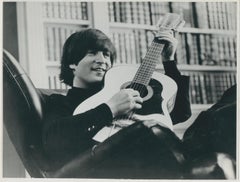
John Lennon, Guitar, Black and White Photography, 1970s, 18, 9 x 25, 1 cm

John Lennon, Guitar, Black and White Photography, 1970s, 18, 9 x 25, 1 cm

Located in Cologne, DE

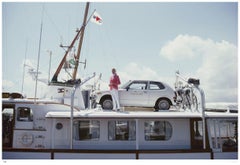
The Beatles were an English rock band formed in Liverpool in 1960. With a line-up comprising John Lennon, Paul McCartney, George Harrison and Ringo Starr, they are regarded as the mo...

Category

1970s Modern Art

Materials

Black and White, Silver Gelatin

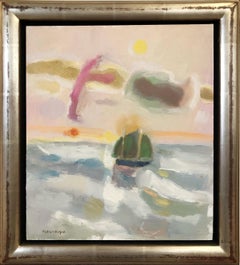
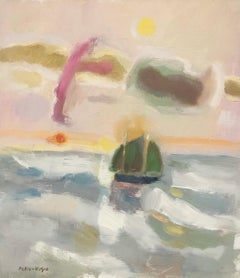
Head to Sea, Modernist sailing scene

Head to Sea, Modernist sailing scene

By Ralph Eugene Della-Volpe

Located in New York, NY

A vibrant and yet romantic sailing scene which was a favorite series by Della-Volpe. His compelling colorist approach has made his works desirable as he was one of the few artists post-war to be representative in style like Milton Avery and Wolf Kahn. Head to Sea has the hallmark intense and lovely coloration for which Della-Volpe is known. He came out of Abstract Expressionism in the New York school but then pivoted, like Milton Avery to representational, colorist work. The frame is a silvered gold leaf float frame of quality and has a rubbed, antiqued surface...

Category

Early 2000s Modern Art

Materials

Oil, Board

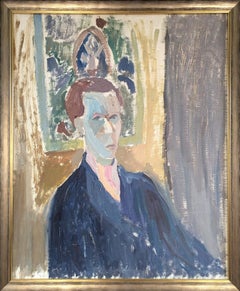
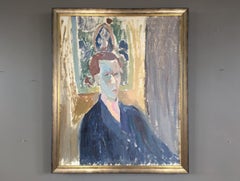
1944 Vintage Mid Century Modern Swedish Figurative Portrait Oil Painting - Oscar

1944 Vintage Mid Century Modern Swedish Figurative Portrait Oil Painting - Oscar

Located in Bristol, GB

OSCAR Oil on board Size: 65.5 x 54.5 cm (including frame) A striking and emotive mid-century figurative portrait composition that is characterised by expressive brushwork and a rich...

Category

Mid-20th Century Modern Art

Materials

Oil, Board

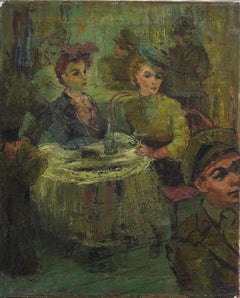
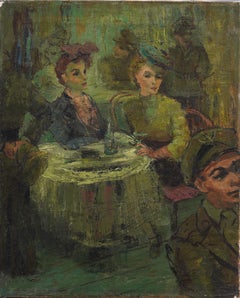
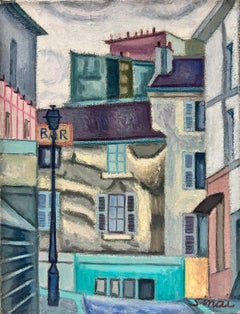
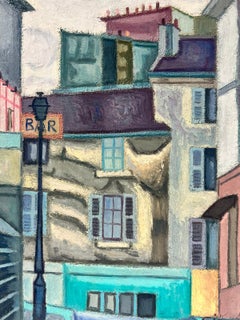
Back Streets of Paris Signed French Modernist Oil Painting 20th Century

Back Streets of Paris Signed French Modernist Oil Painting 20th Century

Located in Cirencester, Gloucestershire

French School, late 20th century signed oil painting on canvas, unframed canvas: 14 x 10.5 inches provenance: private collection, France condition: very good and sound condition

Category

Late 20th Century Modern Art

Materials

Canvas, Oil

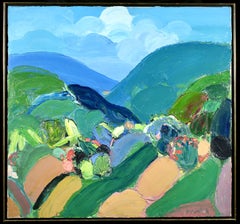
“Landscape”
“Landscape”

“Landscape”

By Karl Knaths

Located in Southampton, NY

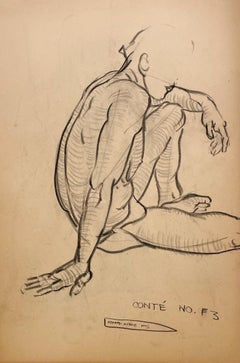
Original watercolor, gouache and conte landscape by the well known American artist, Karl Knaths. Circa 1950. Signed by the artist lower left. Condition is excellent. Strong, vibran...

Category

1950s Modern Art

Materials

Conté, Watercolor, Gouache, Archival Paper

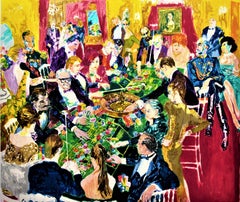
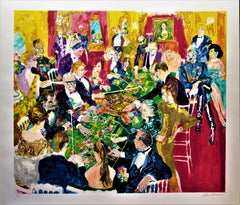
Baden Baden, Casino
Baden Baden, Casino

Baden Baden, Casino

By LeRoy Neiman

Located in San Francisco, CA

This artwork titled "Baden Baden, Casino" 1988 is an original color serigraph by noted American artist LeRoy Neiman, 1921-2012. It is hand signed and numbered 261/375 in pencil by the artist. The image size is 36 x 42 inches, sheet size is 42 x 48 inches. With the blind stamp of the printer Styria Studio at the lower left corner margin. It is in excellent condition, three small pieces of hanging tape remain on the back. About the artist: Mr. Neiman's kinetic, quickly executed paintings and drawings, many of them published in Playboy, offered his fans gaudily colored visual reports on heavyweight boxing matches, Super Bowl games and Olympic contests, as well as social panoramas like the horse races at Deauville, France, and the Cannes Film Festival. Quite consciously, he cast himself in the mold of French Impressionists like Toulouse-Lautrec, Renoir and Degas, chroniclers of public life who found rich social material at racetracks, dance halls and cafes. Mr. Neiman often painted or sketched on live television. With the camera recording his progress at the sketchpad or easel, he interpreted the drama of Olympic Games and Super Bowls for an audience of millions. When Bobby Fischer and Boris Spassky faced off in Reykjavik, Iceland, to decide the world chess championship, Mr. Neiman was there, sketching. He was on hand to capture Federico Fellini directing "8 ½" and the Kirov Ballet performing in the Soviet Union. In popularity, Mr. Neiman rivaled American favorites like Norman Rockwell, Grandma Moses and Andrew Wyeth. A prolific one-man industry, he generated hundreds of paintings, drawings, watercolors, limited-edition serigraph prints and coffee-table books yearly, earning gross annual revenue in the tens of millions of dollars. Although he exhibited constantly and his work was included in the collections of dozens of museums around the world, critical respect eluded him. Mainstream art critics either ignored him completely or, if forced to consider his work, dismissed it with contempt as garish and superficial — magazine illustration with pretensions. Mr. Neiman professed not to care. Maybe the critics are right," he told American Artist magazine in 1995. "But what am I supposed to do about it — stop painting, change my work completely? I go back into the studio, and there I am at the easel again. I enjoy what I'm doing and feel good working. Other thoughts are just crowded out." His image suggested an artist well beyond the reach of criticism. A dandy and bon vivant, he cut an arresting figure with his luxuriant ear-to-ear mustache, white suits, flashy hats and Cuban cigars. "He quite intentionally invented himself as a flamboyant artist not unlike Salvador Dalí, in much the same way that I became Mr. Playboy in the late '50s," Hugh Hefner told Cigar Aficionado magazine in 1995. LeRoy Runquist was born on June 8, 1921, in St. Paul. His father, a railroad worker, deserted the family when LeRoy was quite young, and the boy took the surname of his stepfather. He showed a flair for art at an early age. While attending a local Roman Catholic school, he impressed schoolmates by drawing ink tattoos on their arms during recess. As a teenager, he earned money doing illustrations for local grocery stores. "I'd sketch a turkey, a cow, a fish, with the prices," he told Cigar Aficionado. "And then I had the good sense to draw the guy who owned the store. This gave me tremendous power as a kid." After being drafted into the Army in 1942, he served as a cook in the European theater but in his spare time painted risqué murals on the walls of kitchens and mess halls. The Army's Special Services Division, recognizing his talent, put him to work painting stage sets for Red Cross shows when he was stationed in Germany after the war. On leaving the military, he studied briefly at the St. Paul School of Art (now the Minnesota Museum of American Art) before enrolling in the School of the Art Institute of Chicago, where, after four years of study, he taught figure drawing and fashion illustration throughout the 1950s. When the janitor of the apartment building next door to his threw out half-empty cans of enamel house paint, Mr. Neiman found his métier. Experimenting with the new medium, he embraced a rapid style of applying paint to canvas imposed by the free-flowing quality of the house paint. While doing freelance fashion illustration for the Carson Pirie Scott department store in Chicago in the early 1950s, he became friendly with Mr. Hefner, a copywriter there who was on the verge of publishing the first issue of a men's magazine. In 1954, after five issues of Playboy had appeared, Mr. Neiman ran into Mr. Hefner and invited him to his apartment to see his paintings of boxers, strip clubs and restaurants. Mr. Hefner, impressed, showed the work to Playboy's art director, Art Paul, who commissioned an illustration for "Black Country," a story by Charles Beaumont about a jazz musician. Thus began a relationship that endured for more than half a century and established Mr. Neiman's reputation. In 1955, when Mr. Hefner decided that the party-jokes page needed visual interest, Mr. Neiman came up with the Femlin, a curvaceous brunette who cavorted across the page in thigh-high stockings, high-heeled shoes, opera gloves and nothing else. She appeared in every issue of the magazine thereafter. Three years later, Mr. Neiman devised a running feature, "Man at His Leisure." For the next 15 years, he went on assignment to glamour spots around the world, sending back visual reports on subjects as varied as the races at Royal Ascot, the dining room of the Tour d'Argent in Paris, the nude beaches of the Dalmatian coast, the running of the bulls at Pamplona and Carnaby Street in swinging London. He later produced more than 100 paintings and 2 murals for 18 of the Playboy clubs that opened around the world. "Playboy made the good life a reality for me and made it the subject matter of my paintings — not affluence and luxury as such, but joie de vivre itself," Mr. Neiman told V.I.P. magazine in 1962. Working in the same copywriting department at Carson Pirie Scott as Mr. Hefner was Janet Byrne, a student at the Art Institute. She and Mr. Neiman married in 1957. She survives him. A prolific artist, he generated dozens of paintings each year that routinely commanded five-figure prices. When Christie's auctioned off the Playboy archives in 2003, his 1969 painting Man at His Leisure: Le Mans sold for $107,550. Sales of the signed, limited-edition print versions of his paintings, published in editions of 250 to 500, became a lucrative business in itself after Knoedler Publishing, a wholesale operation, was created in 1975 to publish and distribute his serigraphs, etchings, books and posters. Mr. Neiman's most famous images came from the world of sports. His long association with the Olympics began with the Winter Games in Squaw Valley in 1960, and he went on to cover the games, on live television, in Munich in 1972, Montreal in 1976, Lake Placid in 1980, and Sarajevo and Los Angeles in 1984, using watercolor, ink or felt-tip marker to produce images with the dispatch of a courtroom sketch artist. At the 1978 and 1979 Super Bowls, he used a computerized electronic pen to portray the action for CBS. Although he was best known for scenes filled with people and incident, he also painted many portraits. Athletes predominated, with Muhammad Ali and Joe Namath among his more famous subjects, but he also painted Leonard Bernstein, the ballet dancer Suzanne Farrell...

Category

21st Century and Contemporary Modern Art
Materials

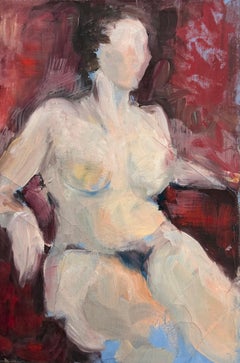
Screen

Vintage American Modernist Abstract Still Life Signed Framed Oil Painting

Vintage American Modernist Abstract Still Life Signed Framed Oil Painting

Located in Buffalo, NY

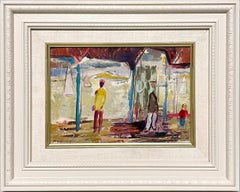
Vintage American modernist still life oil painting . Oil on board. Signed. Framed. Measuring: 23 by 29 inches overall, and 18 by 24 painting alone. Excellent condition, ready to han...

Category

1930s Modern Art
Materials

Oil

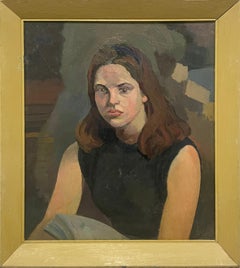
A Striking Mid-Century Modern Studio Portrait of a Seated Young Woman

A Striking Mid-Century Modern Studio Portrait of a Seated Young Woman

By Walter Burt Adams

Located in Chicago, IL

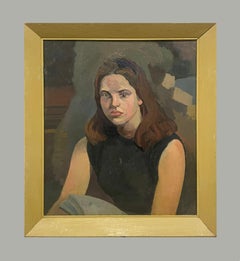
A Striking Mid-Century Modern Portrait of a Young Woman by Notable Chicago Artist, Walter Burt Adams (Am. 1903-1990). A well executed figurative work by the artist, depicting a young woman stylishly dressed in a black sleeveless top seated in a muted studio interior. The painting exemplifies the artist's adept and practiced skill at portraiture, and was likely completed at the artist's studio in Evanston, Illinois. Artwork size: 24 x 20 inches, oil on canvas, accompanied with the original painted Mid-Century frame (framed size: 27 3/4 x 23 3/4 inches). Provenance: Estate of the artist. Walter Burt Adams was a dedicated painter of the American Scene and a singular personality among his peers in the Chicago Modern Art community. His no-nonsense manner, devotion to his craft and sardonic sense of humor characterize a man whose paintings capture life in and around Chicago between the early 1920s and the late 1970s. Born in Kenosha, Wisconsin just after the turn of the last century, Walter Burt Adams spent his childhood in Fargo, North Dakota and began his artistic education there through a correspondence cartooning class as a boy. After finishing high school in Fargo, Adams moved to Chicago in 1922 in order to enroll at the school of the Art Institute of Chicago. Adams’ instruction at the school with artists such as George Oberteuffer, Frederick V. Poole, Charles Wilimovsky...
Category

1960s Modern Art
Materials

Canvas, Oil

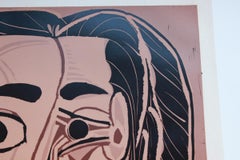
Night Watch – Minidoka (Social Commentary, Modern, Japanese American History)

Night Watch – Minidoka (Social Commentary, Modern, Japanese American History)

By Roger Shimomura

Located in Kansas City, MO

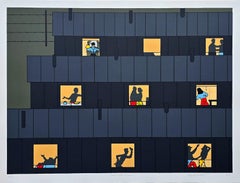
Roger Shimomura Night Watch – Minidoka Original 11 Color Lithograph on Rives BFK, White Year: 2014 Edition: 51 of 52 Paper Size: 30.75 × 40.5 inches (78.11 × 102.87 cm) Image Size: 27.75 × 38 inches (70.49 × 96.52 cm) Signed, dated, titled and numbered in pencil along lower margin Printer's Chop lower right Gallery-issued COA provided Print Sheet provided upon request Condition: Mint *Could come framed. Please inquire. Night Watch – Minidoka is a poignant work by Roger Shimomura that reflects his ongoing engagement with themes of identity, memory, and the Japanese American incarceration during World War II. Drawing from his own childhood experience—having been interned with his family at the Minidoka War Relocation Center in Idaho—Shimomura transforms historical trauma into a visually striking and psychologically resonant composition. The artist’s statement—“The grey and brown colors of Camp Minidoka by day turn into a lively theatre of lights at night as the incarcerates complete another day in isolation from the rest of the country.”—captures the duality at the heart of the work. While the daytime environment is marked by monotony and confinement, the nighttime scene introduces a sense of artificial vitality, where illuminated barracks create a theatrical, almost surreal atmosphere. This contrast underscores both the resilience of those incarcerated and the unsettling normalization of confinement. Stylistically, Shimomura blends elements of American Pop Art with traditional Japanese visual strategies, creating a hybrid aesthetic that is both accessible and layered with meaning. His use of bold outlines, flattened perspective, and narrative sequencing enhances the work’s immediacy while reinforcing its historical and cultural significance. Night Watch – Minidoka functions as both a personal recollection and a broader commentary on civil liberties, exclusion, and national identity. It stands as part of Shimomura’s sustained effort to confront overlooked histories and to ensure their continued relevance in contemporary discourse. Night Watch Minidoka, Japanese American internment art, Minidoka camp art...

Category

2010s Modern Art
Materials

Lithograph

Geo
Geo

Geo

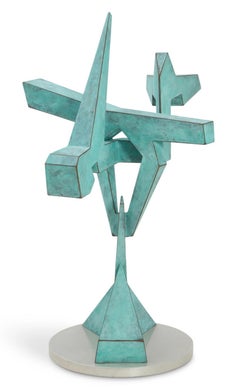
By Kevin Barrett

Located in Wiscasett, ME

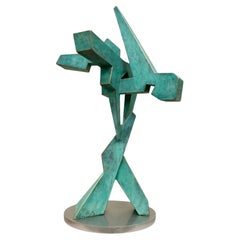
Abstract fabricated bronze sculpture by Kevin Barrett, signed and dated 2017. Kevin Barrett is currently the sculptor in residence at the Ann Norton Sculpture Gardens in Palm Beach....

Category

2010s Modern Art
Materials

Bronze

Modern art for sale on 1stDibs.
Find a wide variety of authentic Modern art available for sale on 1stDibs. Works in this style were very popular during the 21st Century and Contemporary, but contemporary artists have continued to produce works inspired by this movement. If you’re looking to add art created in this style to introduce contrast in an otherwise neutral space in your home, the works available on 1stDibs include elements of blue, red, orange, purple and other colors. Many Pop art paintings were created by popular artists on 1stDibs, including Kevin Westenberg, Stuart Möller, Destro, and Christel Haag. Frequently made by artists working with Paint, and Paper and other materials, all of these pieces for sale are unique and have attracted attention over the years. Not every interior allows for large Modern art, so small editions measuring 0.4 inches across are also available. Prices for art made by famous or emerging artists can differ depending on medium, time period and other attributes. On 1stDibs, the price for these items starts at $33 and tops out at $390,000, while the average work sells for $1,912.