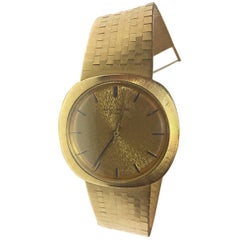
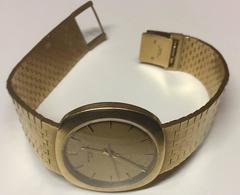
It shouldn’t be surprising that a Patek Philippe holds the world auction record for a watch ($31.2 million for a Patek Grandmaster Chime, sold at Christie’s). Known for impeccable craftsmanship and some of the most complicated timepieces ever created, the brand is considered by many to be the height of fine watchmaking. Collectors simply love Patek Philippe watches.
The house was founded in Geneva in 1839 by Polish expats Antoni Patek and Franciszek Czapek. Czapek left the firm, and in 1845, Patek partnered with French watchmaker Jean Adrien Philippe. It was the beginning of a beautiful friendship.
Catering to the glitterati of Europe, the pair counted among their clients Tolstoy, Pope Pius IX and Queen Victoria, as well as Countess Koscowicz of Hungary, for whom they created the first Swiss-made wristwatch in 1868. They also had their eye on the American market and in 1851 entered an arrangement with Tiffany & Co. still in effect today.
During the Great Depression, brothers Jean and Charles Stern, who had previously supplied Patek Philippe with watch dials, bought the company, and it continues to be run by the Stern family today.
Under the Sterns, the house has developed some of its most famous models, including the Calatrava, an elegantly minimal dress watch introduced in 1932 and named for the Calatrava Cross (the company’s logo since 1887), and the Nautilus, the brand’s first sports watch, conceived by legendary designer Gérald Genta in 1976.
Despite the house’s longevity, it’s rumored that it has manufactured fewer than a million Patek watches, making each one all the more coveted. (The brand's pieces are understandably attractive to counterfeiters — make sure you know how to spot a fake Patek Philippe watch.)
Find authentic Patek Philippe watches, cufflinks, bracelets and more on 1stDibs today.
Vintage Space Age furniture captured post–World War II optimism with swooping shapes, bowed lines and experimentation with new materials including plastic and fiberglass.
From the launch of the Sputnik 1 satellite in 1957 to the landing of Apollo 11 astronauts on the moon in 1969, the space race between the Soviet Union and the United States propelled advancements in technology that transformed culture. Space Age design encompassed fashion, architecture, cars, furniture and objects for the home, bringing wonder and hope for the future into everyday life.
Coinciding with Pop art, Space Age style featured bold colors and forms. Eero Aarnio’s Ball chair, which debuted in 1966, used molded fiberglass for a capsule-like space while Verner Panton’s 1959 Panton chair was a single piece of molded plastic for a gravity-defying S shape. Red versions of Olivier Mourgue’s 1964 Djinn chair were futuristic enough to appear on the space station in Stanley Kubrick’s 1968 film 2001: A Space Odyssey. Today, Joe Colombo is revered as a master of modern Italian design thanks to the provocative modular furniture pieces he created, such as the Tube chair and the Elda armchair, both of which embody the future-forward spirit of the Space Age.
The Space Age spirit extended to home building too. The futuristic Case Study Houses, which were designed by the likes of Pierre Koenig, Charles and Ray Eames, Richard Neutra and Whitney R. Smith, are considered a high point of modernism and the Southern California lifestyle.
Sometimes the nods to space exploration were more literal, like moon and star motifs or the 1965 Eclisse lamp by Vico Magistretti that saw the mid-century Italian designer integrating a movable inner shade to “eclipse” the light source. Alongside the pioneering moon missions, JVC manufactured the Videosphere portable television reminiscent of the Apollo 11 space helmets.
Although the style faded in the 1970s — with the 1975 joining of the Apollo and Soyuz spacecrafts signaling a new era of cooperation and the global oil crisis impacting the availability of plastics — the era’s innovations influenced designers into the 21st century such as Zaha Hadid and Djivan Schapira.
Find a collection of vintage Space Age seating, tables, lighting and other furniture on 1stDibs.
A sophisticated clock design, whether it’s a desk clock, mantel clock or large wall clock for your living room, is a decorative object to be admired in your home as much as it is a necessary functional element. This is part of the reason clocks make such superb collectibles. Given the versatility of these treasured fixtures — they’ve long been made in a range of shapes, sizes and styles — a clock can prove integral to your own particular interior decor.
Antique and vintage clocks can whisk us back to the 18th and 19th centuries. When most people think of antique clocks, they imagine an Art Deco Bakelite tabletop clock or wall clock, named for the revolutionary synthetic plastic, Bakelite, of which they’re made, or a stately antique grandfather clock. But the art of clock-making goes way back, transcending continents and encompassing an entire range of design styles and technologies. In short, there are many kinds of clocks depending on your needs.
A variety of wall clocks can be found on 1stDibs. A large antique hand-carved walnut wall clock is best suited to a big room and a flat background given what will likely be outwardly sculptural features, while Georgian grandfather clocks, or longcase clocks, will help welcome rainswept guests into your entryway or foyer. An interactive cuckoo clock, large or small, is guaranteed to bring outsize personality to your living room or dining room. For conversation pieces of a similar breed, mid-century modern enthusiasts go for the curious Ball clock, the first of more than 150 clock models conceived in the studio of legendary architect and designer George Nelson.
Minimalist contemporary clocks and books pair nicely on a shelf, but an eye-catching vintage mantel clock can add balance to your home library while drawing attention to your art and design books and other decorative objects. Ormolu clocks dating from the Louis XVI period, designed in the neoclassical style, are often profusely ornate, featuring architectural flourishes and rich naturalistic details. Rococo-style mantel clocks of Meissen porcelain or porcelain originating from manufacturers in cities such as Limoges, France, during the 18th and 19th centuries, exude an air of imperial elegance on your shelves or side tables and can help give your desk a 19th-century upgrade.
On 1stDibs, find a range of extraordinary antique and vintage clocks today.