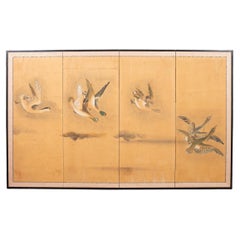
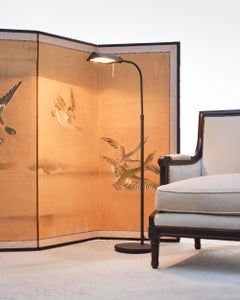
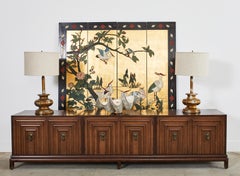
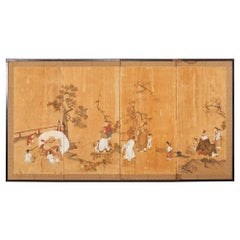
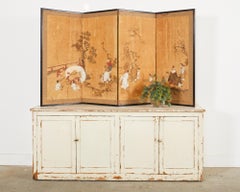
Japanese Meiji Four Panel Screen Ducks and Geese in Flight
Located in Rio Vista, CA
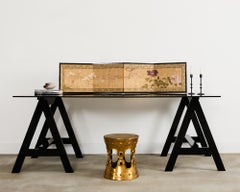
Serene late 19th century Japanese Meiji Period four-panel screen capturing ducks and geese mid
Antique Late 19th Century Japanese Meiji Paintings and Screens
Brass
Japanese Meiji Four Panel Screen Ducks and Geese in Flight
Located in Rio Vista, CA
Serene late 19th century Japanese Meiji Period four-panel screen capturing ducks and geese mid
Brass
Japanese Showa Two Panel Screen Pair of Tethered Hawks
Located in Rio Vista, CA
Captivating Japanese Showa period two-panel folding byobu screen featuring a pair of hawks or birds
Brass
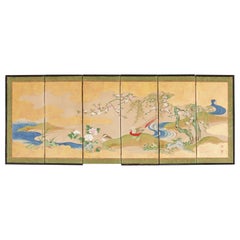
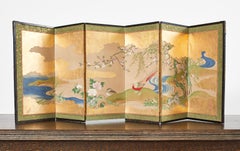
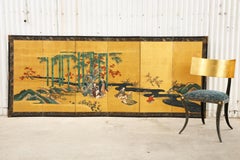
Japanese Meiji Six Panel Screen Kano School Bird Waterscape
Located in Rio Vista, CA
Stunning late 19th century Japanese Meiji period six panel byobu screen featuring a deep blue
Brass, Gold Leaf
Japanese Showa Four Panel Screen Flower Vases on Silk
Located in Rio Vista, CA
Charming Japanese four-panel Showa period byobu screen depicting colorful floral arrangements in
Brass
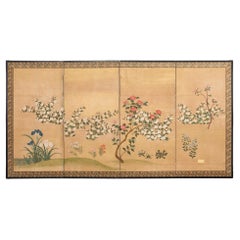
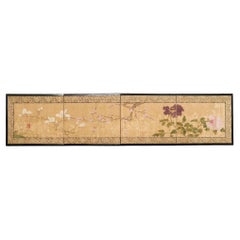
Japanese Edo Four Panel Screen Flowering Peony Prunus Magnolia
Located in Rio Vista, CA
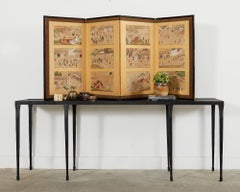
Early 19th century Japanese Edo/Tokugawa period four panel folding byobu table screen featuring
Brass
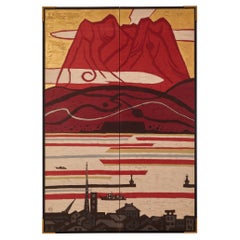
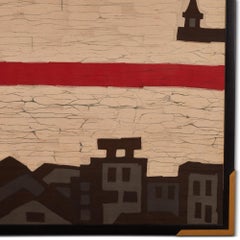
Japanese Two Panel Screen Harbor Scene in Abstract Form
Located in Hudson, NY
(1992). Japanese heavy pigments on paper frame mounted on thick panels. Metal frame with brass hardware
Metal, Brass
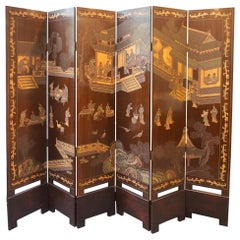
20th Century Chinese Export Six Panel Gold Leaf Coromandel Screen
Located in Rio Vista, CA
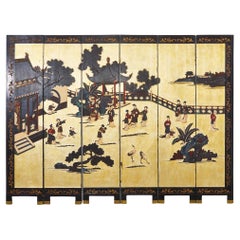
Late Qing, early republic period style Chinese export six-panel coromandel screen featuring a
Brass, Gold Leaf
Japanese Showa Four Panel Screen Spring Flowers on Gilt
Located in Rio Vista, CA
Charming mid-20th century Japanese Showa period four-panel folding byobu screen featuring
Brass
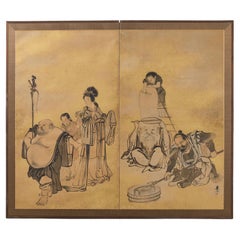
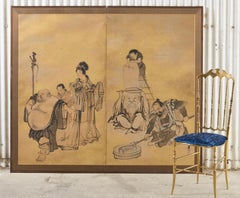
Japanese Edo Two Panel Screen Deities by Yokoyama Kazan
Located in Rio Vista, CA
Whimsical Japanese late Edo period two-panel screen circa 1800 by Yokoyama Kazan (Japanese 1784
Brass, Gold Leaf
$18,750Sale Price|25% Off
H 108 in W 232 in D 0.75 in
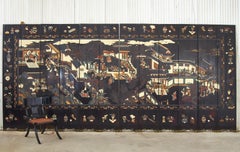
Chinese Export Twelve Panel Coromandel Screen Spring in Han Palace
Located in Rio Vista, CA
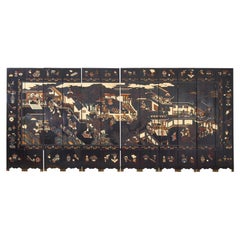
numerous scholars objects on each side. Each panel is supported by brass clad feet. Provenance
Brass
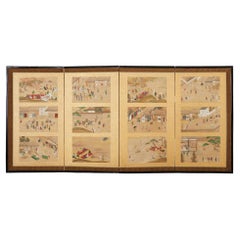
19th Century Japanese Meiji Four Panel Screen Festival Scenes
Located in Rio Vista, CA
Colorful late 19th century late Meiji period four-panel byobu screen featuring 12 scenes of a
Brass
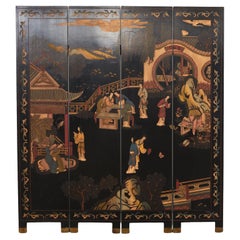
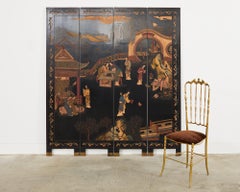
Chinese Export Four Panel Coromandel Dream of the Red Chamber
Located in Rio Vista, CA
Faded Chinese export narrative tale coromandel screen with four lacquered panels. The scene is from
Brass
Japanese Edo Six Panel Table Screen After Maruyama Okyo
Located in Rio Vista, CA
Fantastic diminutive Japanese Edo period table top screen depicting a lively water landscape with flora and fauna. The screen is beautifully painted on gold leaf with a pair of pheas...
Brass, Gold Leaf
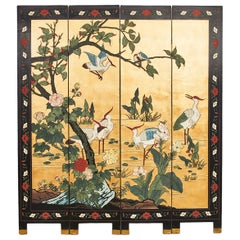
Chinese Export Four Panel Coromandel Screen Cranes on Gold Leaf
Located in Rio Vista, CA
Dazzling Chinese export lacquered four-panel coromandel screen featuring a flora and fauna
Brass, Gold Leaf
$8,800
H 67.75 in W 145 in D 0.75 in
Japanese Meiji Six Panel Screen Brushwood Gate with Chrysanthemums
Located in Rio Vista, CA
Gorgeous Japanese early 20th century Meiji period six-panel byobu screen featuring a brushwood gate
Brass, Gold Leaf, Silver Leaf
Japanese Two-Panel Screen, Harbor Scene in a Modernist View
Located in Hudson, NY
and gold on textured silk, black lacquer trim with brass mounts. Seal reads: Minagawa Taizo.
Gold, Brass
Pair of Japanese Edo Six Panel Screens the Seven Sages
Located in Rio Vista, CA
Fantastic pair of 19th century Japanese late Edo/early Meiji period six-panel screens titled The
Brass, Gold Leaf
$40,000 / set
H 66.5 in W 147.5 in D 0.75 in
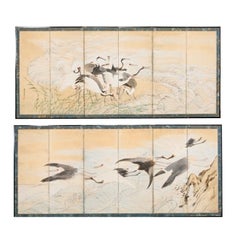
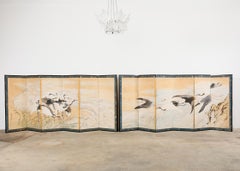
Pair of Japanese Meiji Six Panel Screen Cranes Above Cresting Waves
Located in Rio Vista, CA
Amazing 19th century pair of large Japanese Meiji period six panel screens each depicting a sedge
Brass
$4,000
H 43.5 in W 80.5 in D 0.75 in
17th Century Japanese Edo Four Panel Screen Hotei with Chinese Sages
Located in Rio Vista, CA
Beautifully weathered late 17th/early 18th century Japanese edo period four panel byobu screen
Brass
$16,000
H 68.5 in W 37 in D 1.5 in
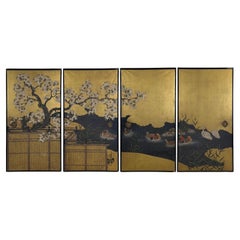
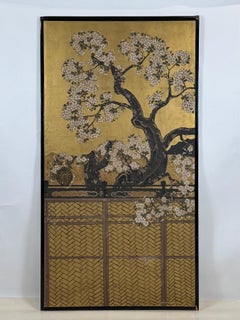
Stunning Set of Four 19th Century Edo Period Fusuma Door Decorative Panels
Located in Los Angeles, CA
A set of four fusuma (sliding door) panels from the 19th century, painted in ink and colors on gold
Gold Leaf, Brass
$4,800
H 48 in W 108 in D 1 in
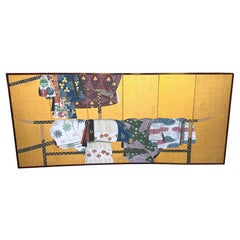
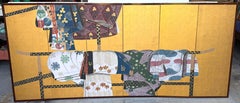
Japanese Six-Panel Byōbu/ Screen Depicting Kimonos and Obi Draped on an Ikō Rac
Located in West Palm Beach, FL
Mid-Century Japanese Six-Panel Byōbu/Screen Depicting Kimonos and Obi Draped on an Ikō Rack A
Brass
$3,000 / set
H 35 in W 17 in D 1 in
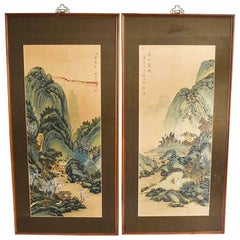
Asian Wood Panel Paintings Diptych Brass Hardware Flora and Fauna Scene Chinese
Located in Oklahoma City, OK
Vintage Han Palace Art Co. scroll framed oil painting wood diptych carved panels. The original tag
Wood, Paint, Paper
$3,850Sale Price|30% Off
H 82 in W 96 in D 0.5 in
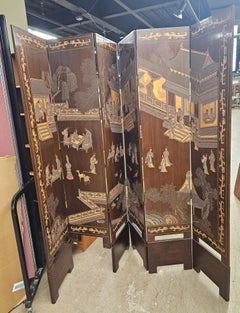
Six-Panel Double Sided Coromandel Asian Screen on Stand
Located in Germantown, MD
Six-panel double sided Coromandel Asian Screen on stand. Each panel seats in a removable custom
Brass
$3,371Sale Price|25% Off
H 83.25 in W 41 in D 9.25 in
Vintage Balinese Style Asian Hand Carved & Painted Sculptural Teak Door Panel
Located in Topeka, KS
Magnificent 20th Century Balinese style Asian hand carved & painted sculptural teak door panel with
Brass
$1,871Sale Price|25% Off
H 84 in W 64.5 in D 0.75 in
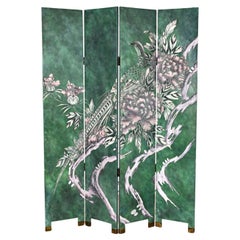
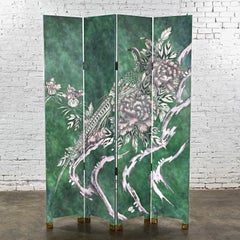
Four Panel Folding Screen Modern Asian Chinoiserie Tall Green Hand Carved
Located in Topeka, KS
Lovely vintage Modern Asian Chinoiserie extra tall green four panel hand carved & painted folding
Metal, Brass
Traditional Asian paintings were often created on scrolls and folding screens. Artisans made screens that could be folded up or spread out by connecting several panels using hinges. Today, antique Asian folding screens and paintings are sophisticated decorative accents that can serve as makeshift partitions to ensure privacy.
The original folding screens were created by Chinese artists. The earliest record of screens comes from the 2nd century B.C., and surviving examples date back to the Ming dynasty. Chinese painting utilizes many of the same tools as calligraphy — these screens were crafted from wood with painted panels featuring striking art or calligraphy that told cultural stories or represented nature and life in the area.
The practice was introduced to Japan, where paintings for screens were made on paper and silk, in the 8th century. These paintings frequently feature subjects such as landscapes, animals, flowers and Buddhist religious themes. Along with screens for tea ceremonies and dance backgrounds, there were screens for use in Shinto and Buddhist temples.
In the 17th century, screens began to be imported to Europe where their popularity grew. Coco Chanel famously collected Coromandel folding screens.
Traditional Asian paintings can make a tasteful addition to any wall, and screens can be used as decoration or, in the case of larger iterations, as an aesthetic way to divide a large room. Browse the selection of antique Asian paintings and screens from a variety of styles and eras on 1stDibs.
Decorated with white cranes and the sought-after thousand-butterflies motif, the Meiji-period vessel offers both a celebration of traditional aesthetics and a clear reflection of the era’s appetite for exquisite export pieces.
For 25 years, gallerist Betsy Nathan has leveraged her keen eye and key connections to bring a unique selection of rare finds to the market.
Now working alongside his daughter Bianca, dealer Joel Chen has presented a most covetable array of antiques, art and contemporary creations for more than 40 years.
From cherry-blossom-adorned walls paired with glamorous lighting to wood-paneled ceilings above checkerboard-patterned chairs, these 12 spaces seamlessly blend Eastern and Western aesthetics.
The dealer and curator has spent the past 50 years amassing a collection of exceptional art, furniture and architectural elements that trace the cultural influence of the Spanish empire from Europe to the Americas and beyond.
These spaces exemplify how Eastern elements elevate a home's decor.