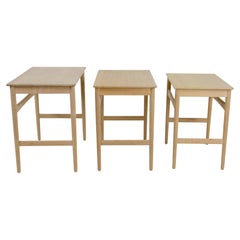
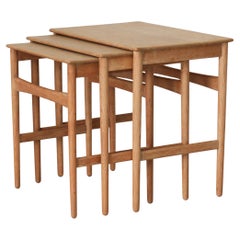
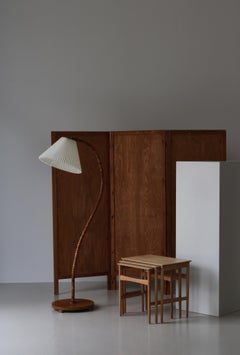
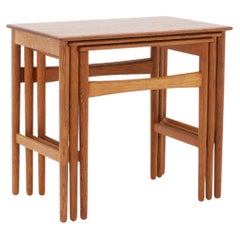
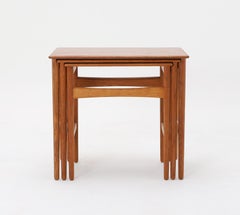
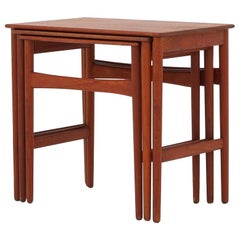
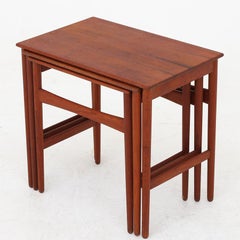
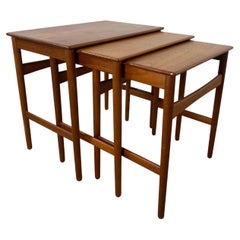
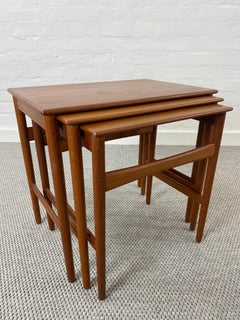
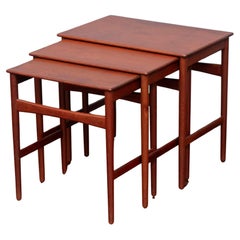
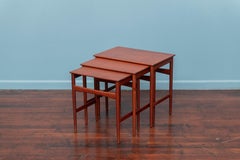
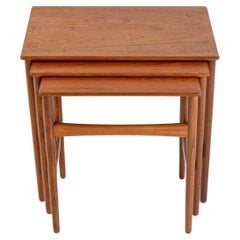
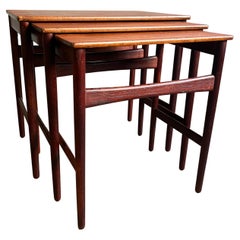
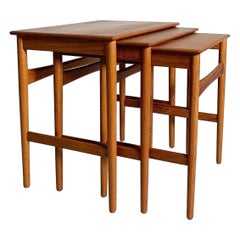
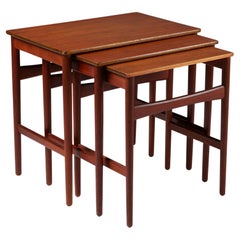
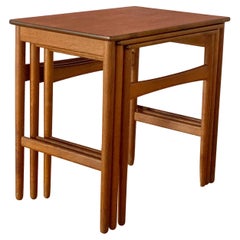
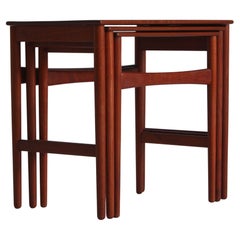
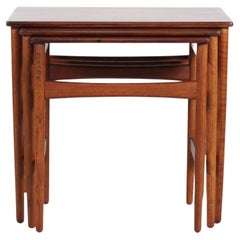
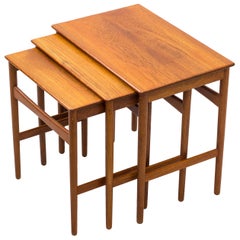
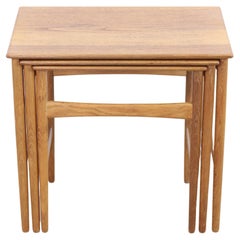
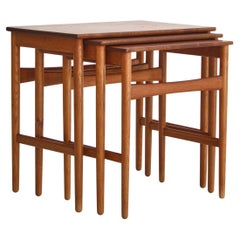
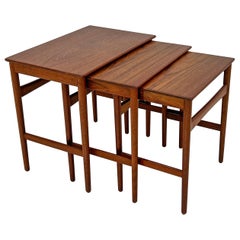
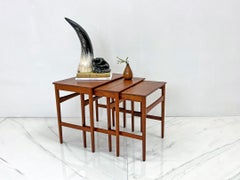
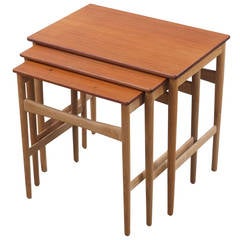
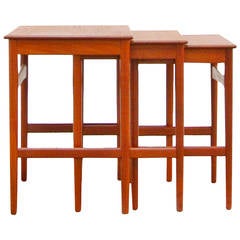
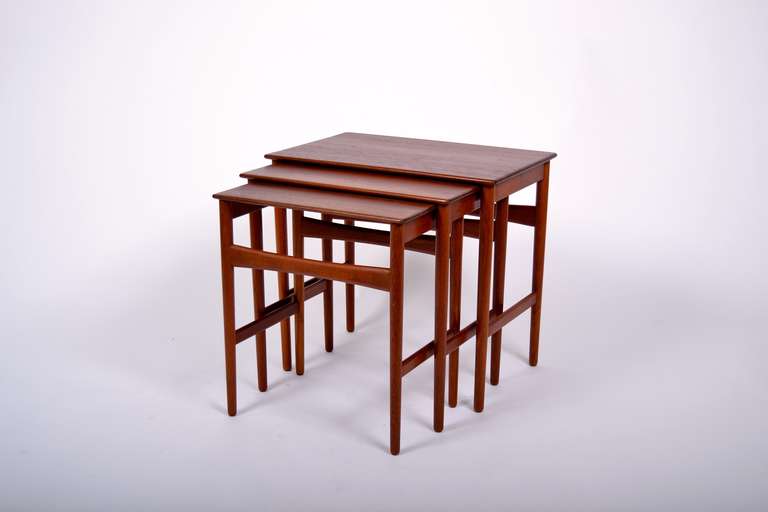
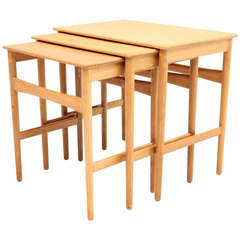
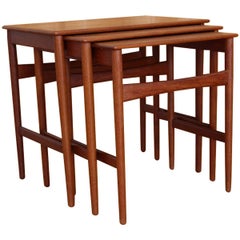
With a vast inventory of beautiful furniture at 1stDibs, we’ve got just the at40 wegner you’re looking for. Frequently made of
wood,
hardwood and
teak, every at40 wegner was constructed with great care. Find 27 options for an antique or vintage at40 wegner now, or shop our selection of 1 modern versions for a more contemporary example of this long-cherished piece. There are many kinds of the at40 wegner you’re looking for, from those produced as long ago as the 20th Century to those made as recently as the 21st Century. A at40 wegner made by
mid-century modern designers — as well as those associated with
Scandinavian Modern — is very popular. Many designers have produced at least one well-made at40 wegner over the years, but those crafted by
Hans J. Wegner,
Andreas Tuck Møbelfabrik and
Andreas Tuck are often thought to be among the most beautiful.
Best known for his chairs and other seating pieces — though a master of many furniture types like sofas and tables — Hans Wegner was a prolific designer whose elegant, often ebullient, forms and devotion to the finest methods in joinery made "Danish Modern" a popular byword for stylish, well-made furniture in the mid-20th century.
Wegner considered himself a carpenter first and a furniture designer second. Like his peers Arne Jacobsen and Finn Juhl, Wegner believed that striking aesthetics in furniture were based on a foundation of practicality: a chair must be comfortable and sturdy before it is chic.
In keeping with that tenet, several of Hans Wegner’s best chair designs have their roots in traditional seating forms. The Peacock chair (designed in 1947) is a throne-like adaptation of the Windsor chair; pieces from the China chair series (begun in 1944) as well as the 1949 Wishbone chair, with its distinctive Y-shaped back splat, are derived from 17th-century Ming seating pieces, as is the upholstered Ox chair (1960). Wegner’s comfy Papa Bear chair (1951) is an almost surreally re-scaled English wingback chair.
Wegner’s most representative piece, the Round chair (1949), gained a footnote in political history when it was used on the TV stage of the first Kennedy-Nixon debate of 1960. That chair, along with Wegner’s more bravura designs — for example, the 1963 Shell chair, with its curved surfboard-shaped seat — bring a quietly sculptural presence to a room.
Wegner was a designer who revered his primary material — wood — and it shows. His wood gathers patina and character with age; every Hans Wegner piece testifies to the life it has led.
Find vintage Hans Wegner lounge chairs, armchairs, daybeds and other furniture for sale on 1stDibs.
Antique and vintage nesting tables and stacking tables first became popular in the early 1800s. With individual tables being used for afternoon tea, needlework and other activities, nesting tables were a perfect solution to clear up clutter at the end of the day.
These tables remained a staple of interiors over the decades for their versatility. In the 1920s, German-born American artist Josef Albers designed a modern version with each table a different color. At the Bauhaus, the German art and design school and chief crucible of modernism founded by architect Walter Gropius, Albers wasn’t the only designer to reinterpret the nesting table. Hungarian-born architect Marcel Breuer also introduced a model with chrome-plated tubular steel legs and lacquered plywood surfaces.
One can now find a range of gorgeous, carefully crafted designs, such as a three-level set of solid oak nesting tables, naturally oiled and finished with Calacatta marble. A game-themed set of nesting tables is a must-have for a living room or lounge, while a small office can be accented with vintage Scandinavian nesting tables made of teakwood, a sought-after material among mid-century modern designers.
Browse the unique collection of antique and vintage stacking tables and nesting tables on 1stDibs to find hundreds of options to match your office or living space.