
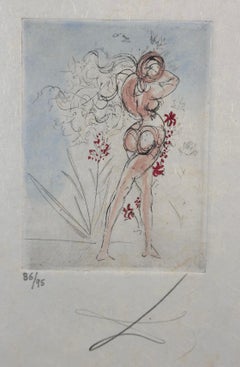
Petite Nus (From Apollinaire) J
By Salvador Dalí
Located in Hollywood, FL
ARTIST: Salvador Dali TITLE: Petite Nus (From Apollinaire) MEDIUM: Etching SIGNED: Hand Signed
Category
1970s Surrealist Figurative Prints
Materials
Etching
Petite Nus (From Apollinaire) J
By Salvador Dalí
Located in Hollywood, FL
ARTIST: Salvador Dali TITLE: Petite Nus (From Apollinaire) MEDIUM: Etching SIGNED: Hand Signed
Etching
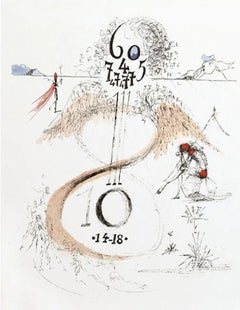
Apollinaire, The 1914-1918 War
By Salvador Dalí
Located in Woodmere, OH
Salvador Dalí's Hand-Colored Copper Etchings on Japon are distinguished artworks that blend the
Etching
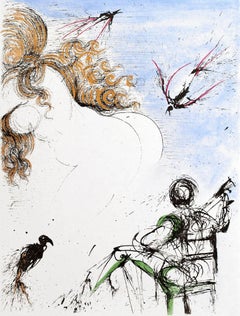
Apollinaire Suite: Woman with Parrot
By Salvador Dalí
Located in Woodmere, OH
Salvador Dalí's Hand-Colored Copper Etchings on Japon are distinguished artworks that blend the
Etching
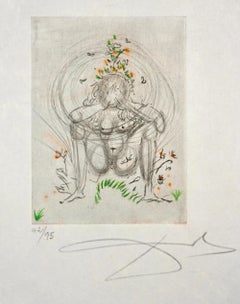
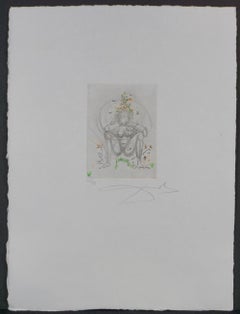
Petites Nus (From Apollinaire) I
By Salvador Dalí
Located in Hollywood, FL
ARTIST: Salvador Dali TITLE: Petites Nus (from Appolinaire) I MEDIUM: Etching SIGNED
Etching
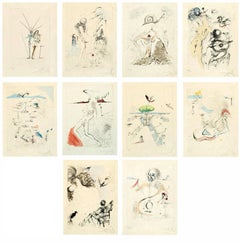
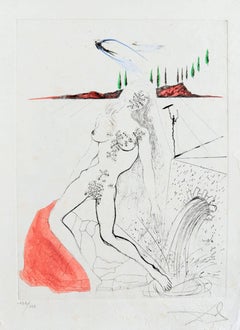
Portfolio. Poèmes secrets d'Apollinaire
By Salvador Dalí
Located in OPOLE, PL
Salvador Dalí (1904–1989, Spain) Portfolio: Poèmes secrets d'Apollinaire, 1967 Salvador Dalí
Etching
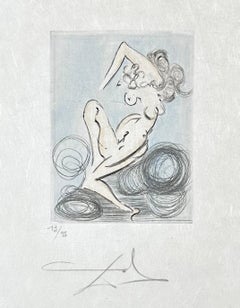
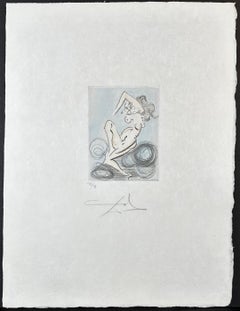
Petites Nus (From Apollinaire) C
By Salvador Dalí
Located in Hollywood, FL
ARTIST: Salvador Dali TITLE: Petites Nus (From Appollinaire) C MEDIUM: Etching SIGNED: Hand
Etching
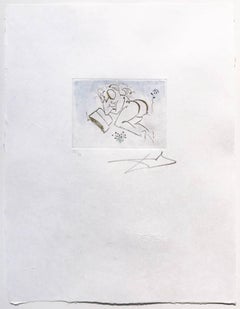
Petits Nus d'Apollinaire
By Salvador Dalí
Located in Hamburg, DE
Salvador Dalí (Spanish, 1904-1989) Petits Nus d'Apollinaire, 1967 Hand-coloured etching on Japan
Etching
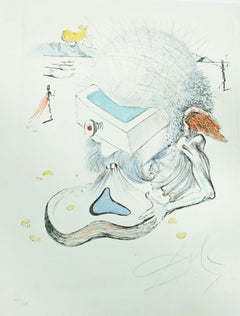
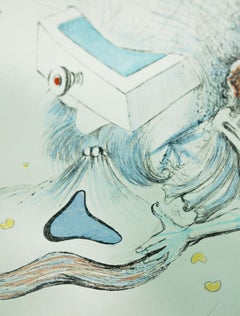
Apollinaire "Head with Drawer"
By Salvador Dalí
Located in Austin, TX
Chelsea Contemporary. Additional Info: the Apollinaire (Secret Poems) series Dali’s initial plan was to
Etching
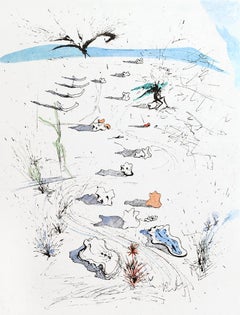
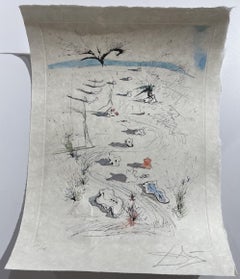
Apollinaire “The Trenches” (131/145)
By Salvador Dalí
Located in Austin, TX
/150 Series: Secret Poems By Apollinaire- A suite of 18 original etchings reworked in drypoint of which
Drypoint, Etching
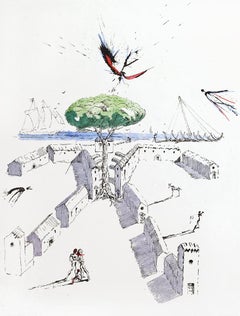
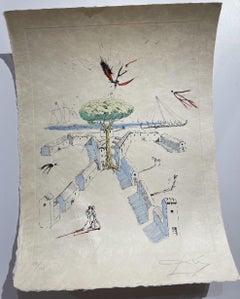
Apollinaire “Beach at Sete” (85/145)
By Salvador Dalí
Located in Austin, TX
: 85/145 Series: Secret Poems By Apollinaire- A suite of 18 original etchings reworked in drypoint of
Drypoint, Etching
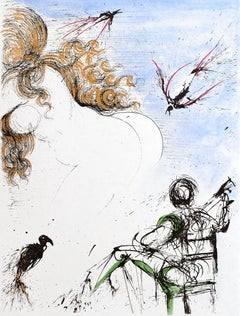
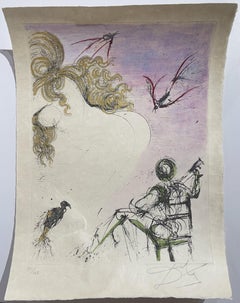
Apollinaire “Woman with Parrot” (91/145)
By Salvador Dalí
Located in Austin, TX
: 91/145 Series: Secret Poems By Apollinaire- A suite of 18 original etchings reworked in drypoint of
Drypoint, Etching
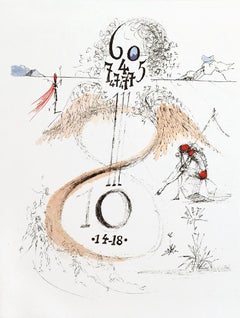
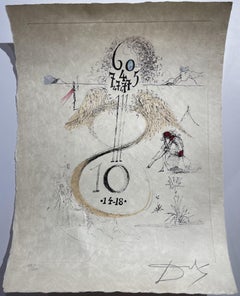
Apollinaire “The 1914-18 War” (125/145)
By Salvador Dalí
Located in Austin, TX
: 125/145 Series: Secret Poems By Apollinaire- A suite of 18 original etchings reworked in drypoint of
Drypoint, Etching
Sold
H 15 in W 11 in
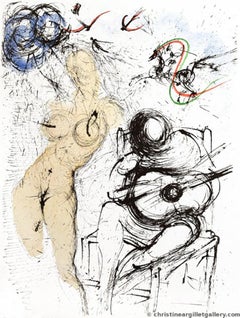
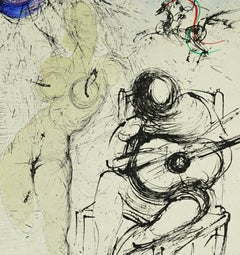
Apollinaire “Woman with Guitar”, Original Hand-colored Copper Etching
By Salvador Dalí
Located in Austin, TX
Apollinaire “Woman with Guitar”, Original Hand-colored Copper Etching 115/145 This work comes with
Copper
Instantly recognizable by his waxed, upturned mustache, the flamboyant Salvador Dalí is one of modern art’s most distinctive figures. He is also one of the icons of the 20th-century avant-garde Surrealist movement, whose dreamlike images, drawn from the depths of the unconscious, he deployed in paintings, sculptures, prints and fashion, as well as in film collaborations with Luis Buñuel and Alfred Hitchcock.
Dalí was born in Figueres, Catalonia, and even as a youngster, displayed the sensitivity, sharp perception and vivid imagination that would later define his artworks. In these, he conjured childhood memories and employed religious symbols and Freudian imagery like staircases, keys and dripping candles to create unexpected, often shocking pieces.
Dalí's use of hyperrealism in conveying Surrealist symbols and concepts that subvert accepted notions of reality is epitomized in what is perhaps his most recognizable painting, The Persistence of Memory (1931), in which he depicts the fluidity of time through melting clocks, their forms inspired by Camembert cheese melting in the sun. His artistic genius, eccentric personality and eternal quest for fame made him a global celebrity.
“Each morning when I awake, I experience again a supreme pleasure,” he once said. “That of being Salvador Dalí.”
Find original Salvador Dalí paintings, prints, sculptures and other works on 1stDibs.
In the wake of World War I’s ravaging of Europe, artists delved into the unconscious mind to confront and grapple with this reality. Poet and critic André Breton, a leader of the Surrealist movement who authored the 1924 Surrealist Manifesto, called this approach “a violent reaction against the impoverishment and sterility of thought processes that resulted from centuries of rationalism.” Surrealist art emerged in the 1920s with dreamlike and uncanny imagery guided by a variety of techniques such as automatic drawing, which can be likened to a stream of consciousness, to channel psychological experiences.
Although Surrealism was a groundbreaking approach for European art, its practitioners were inspired by Indigenous art and ancient mysticism for reenvisioning how sculptures, paintings, prints, performance art and more could respond to the unsettled world around them.
Surrealist artists were also informed by the Dada movement, which originated in 1916 Zurich and embraced absurdity over the logic that had propelled modernity into violence. Some of the Surrealists had witnessed this firsthand, such as Max Ernst, who served in the trenches during World War I, and Salvador Dalí, whose otherworldly paintings and other work responded to the dawning civil war in Spain.
Other key artists associated with the revolutionary art and literary movement included Man Ray, Joan Miró, René Magritte, Yves Tanguy, Frida Kahlo and Meret Oppenheim, all of whom had a distinct perspective on reimagining reality and freeing the unconscious mind from the conventions and restrictions of rational thought. Pablo Picasso showed some of his works in “La Peinture Surréaliste” — the first collective exhibition of Surrealist painting — which opened at Paris’s Galerie Pierre in November of 1925. (Although Magritte is best known as one of the visual Surrealist movement’s most talented practitioners, his famous 1943 painting, The Fifth Season, can be interpreted as a formal break from Surrealism.)
The outbreak of World War II led many in the movement to flee Europe for the Americas, further spreading Surrealism abroad. Generations of modern and contemporary artists were subsequently influenced by the richly symbolic and unearthly imagery of Surrealism, from Joseph Cornell to Arshile Gorky.
Find a collection of original Surrealist paintings, sculptures, prints and multiples and more art on 1stDibs.
Decorating with fine art prints — whether they’re figurative prints, abstract prints or another variety — has always been a practical way of bringing a space to life as well as bringing works by an artist you love into your home.
Pursued in the 1960s and ’70s, largely by Pop artists drawn to its associations with mass production, advertising, packaging and seriality, as well as those challenging the primacy of the Abstract Expressionist brushstroke, printmaking was embraced in the 1980s by painters and conceptual artists ranging from David Salle and Elizabeth Murray to Adrian Piper and Sherrie Levine.
Printmaking is the transfer of an image from one surface to another. An artist takes a material like stone, metal, wood or wax, carves, incises, draws or otherwise marks it with an image, inks or paints it and then transfers the image to a piece of paper or other material.
Fine art prints are frequently confused with their more commercial counterparts. After all, our closest connection to the printed image is through mass-produced newspapers, magazines and books, and many people don’t realize that even though prints are editions, they start with an original image created by an artist with the intent of reproducing it in a small batch. Fine art prints are created in strictly limited editions — 20 or 30 or maybe 50 — and are always based on an image created specifically to be made into an edition.
Many people think of revered Dutch artist Rembrandt as a painter but may not know that he was a printmaker as well. His prints have been preserved in time along with the work of other celebrated printmakers such as Pablo Picasso, Salvador Dalí and Andy Warhol. These fine art prints are still highly sought after by collectors.
“It’s another tool in the artist’s toolbox, just like painting or sculpture or anything else that an artist uses in the service of mark making or expressing him- or herself,” says International Fine Print Dealers Association (IFPDA) vice president Betsy Senior, of New York’s Betsy Senior Fine Art, Inc.
Because artist’s editions tend to be more affordable and available than his or her unique works, they’re more accessible and can be a great opportunity to bring a variety of colors, textures and shapes into a space.
For tight corners, select small fine art prints as opposed to the oversized bold piece you’ll hang as a focal point in the dining area. But be careful not to choose something that is too big for your space. And feel free to lean into it if need be — not every work needs picture-hanging hooks. Leaning a larger fine art print against the wall behind a bookcase can add a stylish installation-type dynamic to your living room. (Read more about how to arrange wall art here.)
Find fine art prints for sale on 1stDibs today.