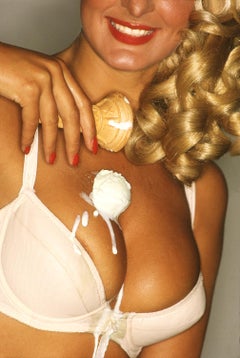
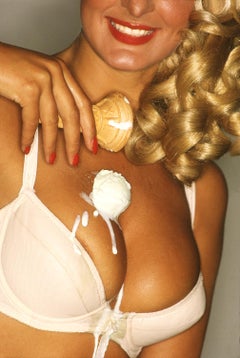
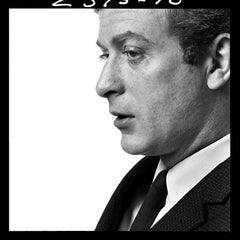
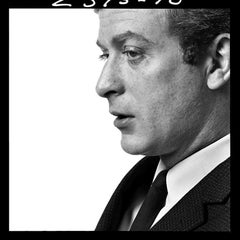
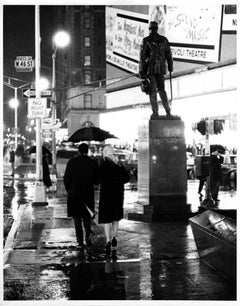
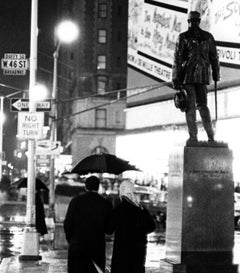
On 1stDibs, there are several options of duffy signed prints available for sale. There are many
modern,
contemporary and
Impressionist versions of these works for sale. These items have been made for many years, with versions that date back to the 20th Century alongside those produced as recently as the 21st Century. Duffy signed prints available on 1stDibs span a range of colors that includes
black,
gray,
beige,
blue and more.
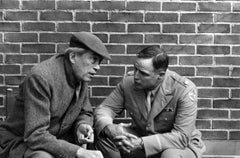
Brian Duffy,
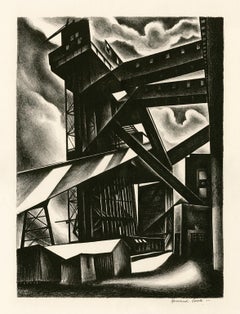
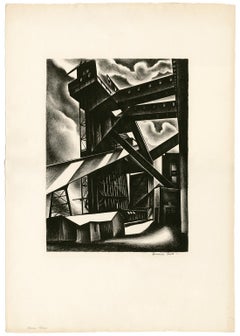
Howard Norton Cook,
Mavis Pusey,
Terry O'Neill and
David Bailey took a thoughtful approach to this subject that are worth considering. Each of these unique pieces was handmade with extraordinary care, with artists most often working in
silver gelatin print,
paper and
etching.
Prices for art of this kind can differ depending upon size, time period and other attributes — duffy signed prints in our inventory begin at $400 and can go as high as $134,256, while the average can fetch as much as $3,795.
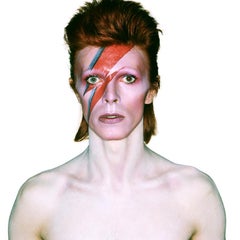
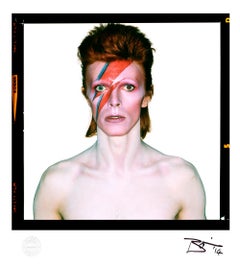
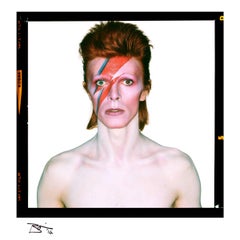
Photographer Brian Duffy had an eight-year working relationship with David Bowie shooting five key sessions over this period, providing the creative concept as well as the photographic image for three album covers. First came the iconic 1973 shoot for the cover of Aladdin Sane, often nicknamed 'the Mona Lisa of pop', when Duffy interpreted Bowie's original title of 'A Lad Insane’ as “Aladdin Sane”. Duffy the went on to shot the cover for 'Lodger' in 1979 and in 1980, the cover for Scary Monsters (and Super Creeps). Duffy's input had a significant influence on the creation of Bowie's chameleon-like public persona and his continual pioneering reinvention.
The first decades of the 20th century were a period of artistic upheaval, with modern art movements including Cubism, Surrealism, Futurism and Dadaism questioning centuries of traditional views of what art should be. Using abstraction, experimental forms and interdisciplinary techniques, painters, sculptors, photographers, printmakers and performance artists all pushed the boundaries of creative expression.
Major exhibitions, like the 1913 Armory Show in New York City — also known as the “International Exhibition of Modern Art,” in which works like the radically angular Nude Descending a Staircase by Marcel Duchamp caused a sensation — challenged the perspective of viewers and critics and heralded the arrival of modern art in the United States. But the movement’s revolutionary spirit took shape in the 19th century.
The Industrial Revolution, which ushered in new technology and cultural conditions across the world, transformed art from something mostly commissioned by the wealthy or the church to work that responded to personal experiences. The Impressionist style emerged in 1860s France with artists like Claude Monet, Paul Cézanne and Edgar Degas quickly painting works that captured moments of light and urban life. Around the same time in England, the Pre-Raphaelites, like Edward Burne-Jones and Dante Gabriel Rossetti, borrowed from late medieval and early Renaissance art to imbue their art with symbolism and modern ideas of beauty.
Emerging from this disruption of the artistic status quo, modern art went further in rejecting conventions and embracing innovation. The bold legacy of leading modern artists Georges Braque, Pablo Picasso, Frida Kahlo, Salvador Dalí, Henri Matisse, Joan Miró, Marc Chagall, Piet Mondrian and many others continues to inform visual culture today.
Find a collection of modern paintings, sculptures, prints and other fine art on 1stDibs.
Find a broad range of photography on 1stDibs today.
The first permanent image created by a camera — which materialized during the 1820s — is attributed to Joseph Nicéphore Niépce. The French inventor was on to something for sure. Kodak introduced roll film in the 1880s, allowing photography to become more democratic, although cameras wouldn’t be universally accessible until several decades later.
Digital photographic techniques, software, smartphone cameras and social-networking platforms such as Instagram have made it even easier in the modern era for budding photographers to capture the world around them as well as disseminate their images far and wide.
What might leading figures of visual art such as Andy Warhol have done with these tools at their disposal?
Today, when we aren’t looking at the digital photos that inundate us on our phones, we look to the past to celebrate the photographers who have broken rules as well as records — provocative and prolific artists like Horst P. Horst, Lillian Bassman and Helmut Newton, who altered the face of fashion and portrait photography; visionary documentary photographers such as Gordon Parks, whose best-known work was guided by social justice; and pioneers of street photography such as Henri Cartier-Bresson, who shot for revolutionary travel magazines like Holiday with the likes of globetrotting society lensman Slim Aarons.
Find photographers you may not know in Introspective and The Study — where you’ll read about Berenice Abbott, who positioned herself atop skyscrapers for the perfect shot, or “conceptual artist-adventurer” Charles Lindsay, whose work combines scientific rigor with artistic expression, or Massimo Listri, known for his epic interiors of opulent Old World libraries. Photographer Jeannette Montgomery Barron was given a Kodak camera as a child. Later, she shot on Polaroid film before buying her first 35mm camera in her teens. Barron's stunning portraits of Jean-Michel Basquiat, Warhol and other artists chronicle a crucial chapter of New York’s cultural history.
Throughout the past two centuries, photographers have used their medium to create expressive work that has resonated for generations. Shop a voluminous collection of this powerful fine photography on 1stDibs. Search by photographer to find the perfect piece for your living room wall, or spend some time with the work organized under various categories, such as landscape photography, nude photography and more.