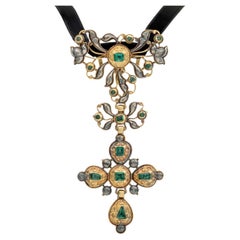
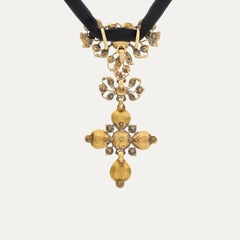
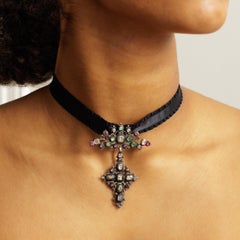
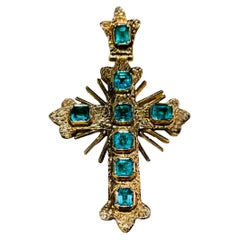
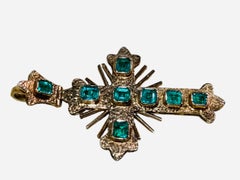
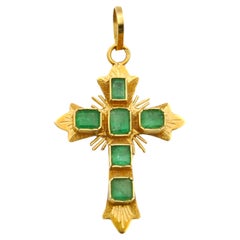
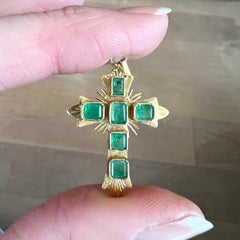
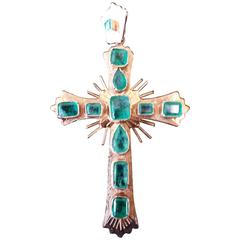
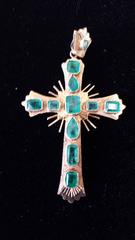
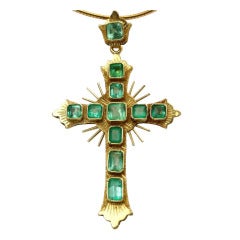
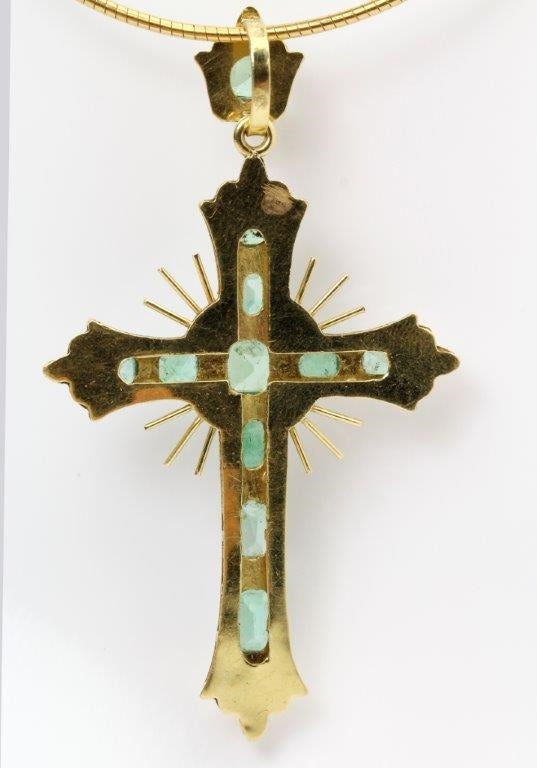
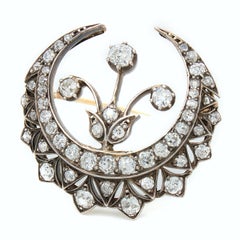
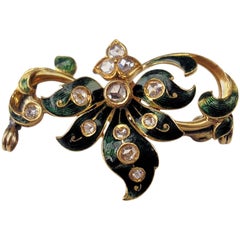
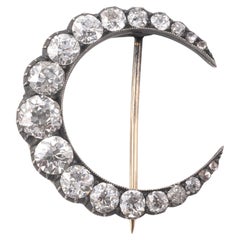
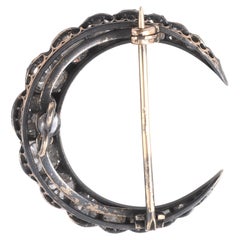
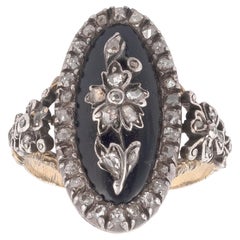
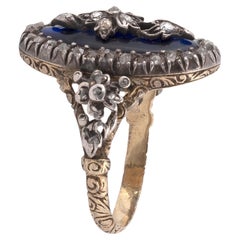
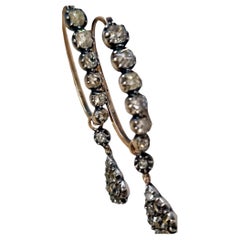
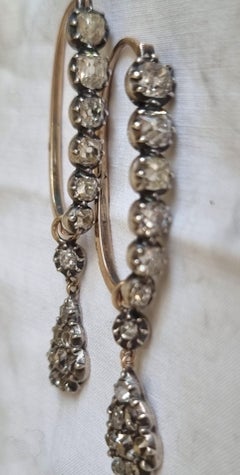
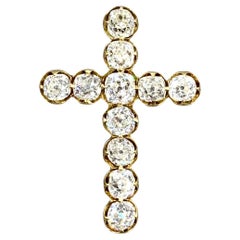
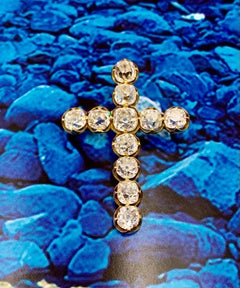
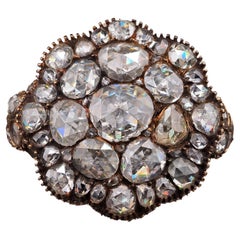
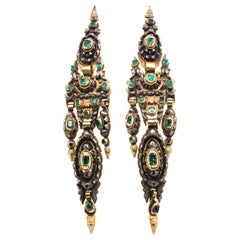
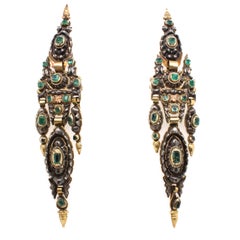
On 1stDibs, you can find the most appropriate emerald spanish cross for your needs in our varied inventory. Every item for sale was constructed with extraordinary care, often using
gold,
silver and
18k gold. If you’re looking for an emerald spanish cross from a specific time period, our collection is diverse and broad-ranging, and you’ll find at least one that dates back to the 18th Century while another version may have been produced as recently as the 20th Century. There have been many well-made iterations of the classic emerald spanish cross over the years, but those made by
Salvador Dalí are often thought to be among the most beautiful. An emerald spanish cross can make for a versatile accessory, but a selection from our variety of 4
emerald versions can add an especially stylish touch. See these pages for an
emerald cut iteration of this accessory, while there are also
antique cushion cut cut and
marquise cut cut versions available here, too. Finding an emerald spanish cross for sale for
women should be easy, but there are 11 pieces available to browse for unisex as well as
men, too.
Prices for an emerald spanish cross can differ depending upon size, time period and other attributes — at 1stDibs, these accessories begin at $1,800 and can go as high as $50,303, while this accessory, on average, fetches $5,000.
No one liked emeralds and emerald jewelry more than Elizabeth Taylor (or her alter ego, Cleopatra). Emeralds were first discovered in Egypt around 330 BC. The stone’s name originated from the ancient Greek word for green, “smaragdus.” According to the Gemological Institute of America, “Emeralds from what is now Colombia were part of the plunder when 16th-century Spanish explorers invaded the New World. The Incas had already been using emeralds in their jewelry and religious ceremonies for 500 years. The Spaniards, who treasured gold and silver far more than gems, traded emeralds for precious metals. Their trades opened the eyes of European and Asian royalty to emerald’s majesty.”
There are numerous myths attributed to the emerald’s spiritual powers, like placing an emerald under your tongue will allow you to see the future. But be careful not to swallow the birthstone for May, or that future won’t be so bright!
There are many important (read: large) emeralds in museum collections around the world. The Patricia Emerald, named after the miner’s daughter, is a 632-carat dihexagonal (or 12-sided) crystal that was discovered in Colombia in 1920 and now resides at the American Museum of Natural History in New York. The Smithsonian Museum of Natural History in Washington has in its possession the Hooker Emerald, a 75.47-carat Colombian stone. That emerald had been acquired in the 16th or 17th century by Spanish conquistadores and shipped to Europe. It later belonged to Abdul Hamid II, Sultan of the Ottoman Empire (1876–1909), who wore it on his belt buckle. Purchased at auction by Tiffany & Co. in 1911, the Hooker Emerald was set into a tiara and featured in the New York World’s Fair “House of Jewels” exhibit in 1940. Today, it is part of a brooch, also designed by the jewelry house.
On 1stDibs, find a range of antique and vintage emerald jewelry and watches that includes emerald rings, emerald necklaces and other accessories.
We are fortunate to know much of the world’s long and dazzling history of necklaces, as this type of jewelry was so treasured that it was frequently buried with its owners. Today, Van Cleef necklaces, Tiffany necklaces and Cartier necklaces are some of the most popularly searched designer necklaces on 1stDibs.
Lapis lazuli beads adorned necklaces unearthed from the royal graves at the ancient Iraqi civilization of Sumer, while the excavation of King Tut’s burial chamber revealed a sense of style that led to a frenzy of Art Deco designs, with artisans of the 1920s seeking to emulate the elegant work crafted by Ancient Egypt’s goldsmiths and jewelry makers.
In ancient times, pendant necklaces worn by royalty and nobles conferred wealth and prestige. Today, wearing jewelry is about personal expression: Luxury diamond necklaces exude confidence and can symbolize the celebratory nature of a deep romantic relationship, while paper-clip chain-link necklaces designed by the likes of goldsmith Faye Kim are firmly planted in the past as well as the present. Kim works exclusively with eco-friendly gold, and these fashionable, fun accessories owe to the design of 19th-century watch fobs.
For some, necklaces are thought of as being a solely feminine piece, but this widely loved accessory has been gender-neutral for eons. In fact, just as women rarely took to wearing a single necklace during the Renaissance, men of the era layered chains and valuable pendants atop their bejeweled clothing. In modern times, the free-spirited hippie and counterculture movements of the 1960s saw costume-jewelry designers celebrating self-expression through colorful multistrand necklaces and no shortage of beads, which were worn by anyone and everyone.
Even after all of these years, the necklace remains an irrefutable staple of any complete outfit. Although new trends in jewelry are constantly emerging, the glamour and beauty of the past continue to inform modern styles and designs. In a way, the cyclical history of the necklace differs little from its familiar looped form: The celebrated French jewelry house Van Cleef & Arpels found much inspiration in King Tut, and, now, their Alhambra collection is a go-to for modern royals. Vintage David Webb necklaces — whose work landed him on the cover of Vogue in 1950, two years after opening his Manhattan shop — were likely inspired by the ornamental styles of ancient Greece, Mesopotamia and Egypt.
On 1stDibs, browse top designers like Dior, Chanel and Bulgari, or shop by your favorite style, from eye-catching choker necklaces to understated links to pearl necklaces and more.