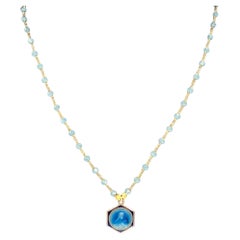
Vintage Blue Mary-3 Necklace
Located in Beverly Hills, CA
Product Features Pendant: An authentic vintage hexagonal medal showcasing a beautiful profile of the Virgin Mary, finished with a vibrant blue enamel inlay.
Category
Vintage Blue Mary-3 Necklace
Located in Beverly Hills, CA
Product Features Pendant: An authentic vintage hexagonal medal showcasing a beautiful profile of the Virgin Mary, finished with a vibrant blue enamel inlay.
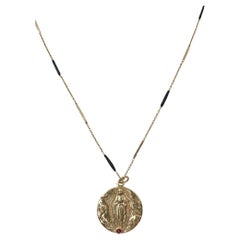
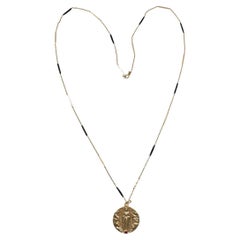
Virgin Mary Ruby Medal Necklace Gold Black Enamel Chain
By J DAUPHIN
Located in Los Angeles, CA
Virgin Mary Ruby Medal Necklace Gold Black Enamel Chain Designer: J DAUPHIN Description: Crafted in gold-plated brass, this round coin medal depicts the Virgin Mary in prayer with ...
Ruby, Gold Plate, Silver, Sterling Silver, Enamel
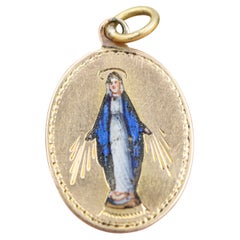
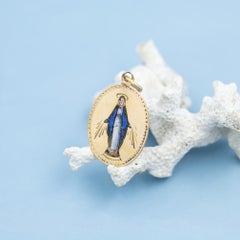
Antique 18K solid yellow Gold Virgin Mary Medal with enamel – Miraculous Medal
Located in Antwerp, BE
We are delighted to offer you this antique enamelled Virgin Mary pendant. This oval charm depicts a lovely hand painted Virgin Mary which is mainly enamelled with white, blue and lig...
Gold, 18k Gold, Yellow Gold, Enamel
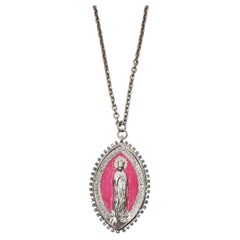
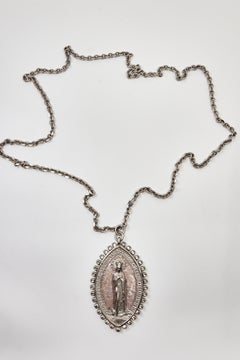
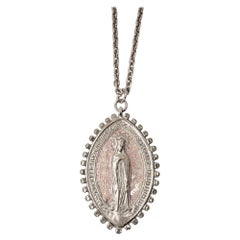
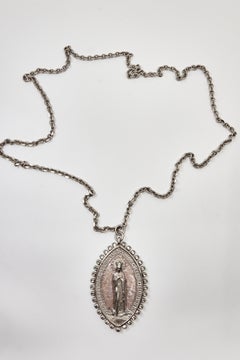
Virgin Mary Necklace Miraculous Medal Palladium Pink Enamel Vintage Crystal
By J DAUPHIN
Located in Los Angeles, CA
Virgin Mary Necklace Miraculous Medal Palladium Pink Enamel Vintage Crystal Designer: J DAUPHIN The Virgin Mary Necklace is a J Dauphin piece from 2008, a marquise medal handcrafte...
Crystal, Brass, Enamel, Palladium
Virgin Mary Necklace Sacred Medal Vintage Pink Enamel Crystal Devotional
By J DAUPHIN
Located in Los Angeles, CA
Virgin Mary Necklace Sacred Medal Vintage Pink Enamel Crystal Devotional Designer: J DAUPHIN The Virgin Mary Necklace is a J Dauphin piece from 2008, a marquise medal handcrafted i...
Crystal, Palladium, Brass, Enamel
French Dropsy Virgin Mary Blue Enamel 18K Yellow Gold Religious Pendant Medal
Located in London, GB
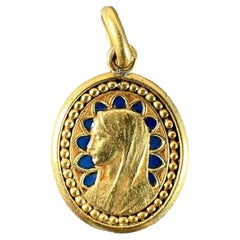
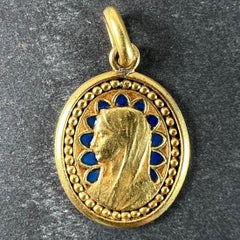
An antique French 18 karat (18K) yellow gold charm pendant designed as an oval medal depicting the Virgin Mary with blue enamel details.
Gold, 18k Gold, Yellow Gold, Enamel
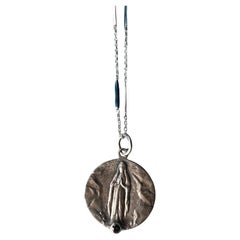
Virgin Mary Necklace Silver Black Diamond Blue Enamel Chain Medal J Dauphin
By J DAUPHIN
Located in Los Angeles, CA
Virgin Mary Necklace Silver Black Diamond Blue Enamel Chain Medal Madonna Devotional Designer: J DAUPHIN Virgin Mary medal necklace in solid silver by J Dauphin, a devotional medal...
Black Diamond, Silver, Enamel, Gold Plate, Sterling Silver
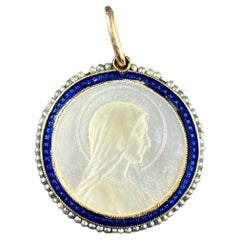
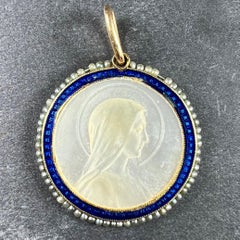
Virgin Mary Mother of Pearl Enamel 18K Yellow Gold Pearl Medal Pendant
Located in London, GB
An 18 karat (18K) yellow gold charm pendant designed as a mother-of-pearl medal depicting the Virgin Mary within a blue enamel frame surrounded by 64 natural seed pearls.
Pearl, Gold, 18k Gold, Yellow Gold, Enamel
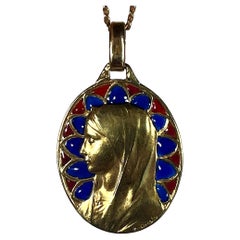
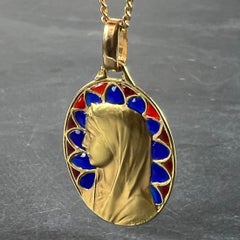
French Dropsy Virgin Mary Plique A Jour Enamel 18K Yellow Gold Pendant Medal
Located in London, GB
A French 18 karat (18K) yellow gold charm pendant designed as an oval medal depicting the Virgin Mary with plique-a-jour red and blue enamel surround designed as a radiant set of got...
Gold, 18k Gold, Yellow Gold, Enamel
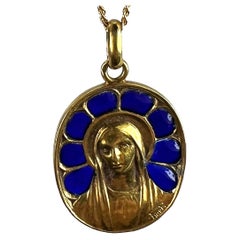
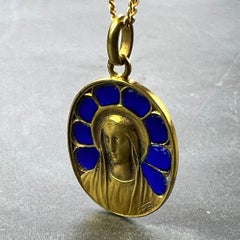
French Pierly Virgin Mary Plique A Jour Enamel 18K Yellow Gold Pendant Medal
Located in London, GB
A French 18 karat (18K) yellow gold charm pendant designed as an oval medal depicting the Virgin Mary with plique a jour blue enamel surround in a gothic arch stained window effect.
Gold, 18k Gold, Yellow Gold, Enamel
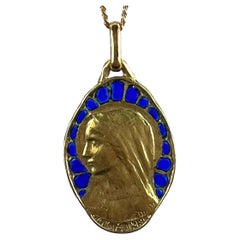
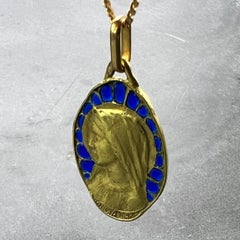
French Dropsy Virgin Mary Plique A Jour Enamel 18K Yellow Gold Pendant Medal
Located in London, GB
A French 18 karat (18K) yellow gold charm pendant designed as an oval medal depicting the Virgin Mary with plique a jour blue enamel surround, over the words 'SANCTA MARIA'.
Gold, 18k Gold, Yellow Gold, Enamel
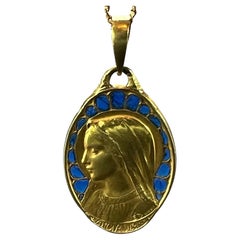
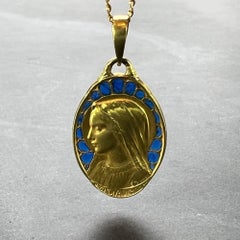
French Dropsy Virgin Mary Plique A Jour Enamel 18K Yellow Gold Pendant Medal
Located in London, GB
A French 18 karat (18K) yellow gold charm pendant designed as an oval medal depicting the Virgin Mary with plique a jour blue enamel surround, over the words 'SANCTA MARIA'.
Gold, 18k Gold, Yellow Gold, Enamel
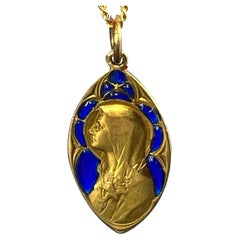
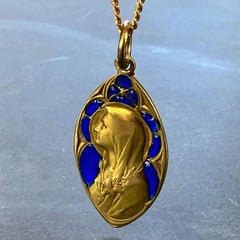
French Guilbert Virgin Mary Plique A Jour Enamel 18K Yellow Gold Pendant Medal
Located in London, GB
A French 18 karat (18K) yellow gold charm pendant designed as a navette shaped medal depicting the Virgin Mary with plique a jour blue enamel surround.
Gold, 18k Gold, Yellow Gold, Enamel
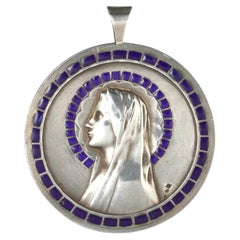
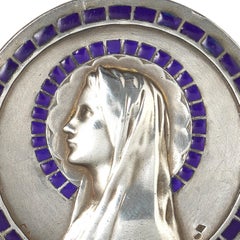
Vintage French Silver Virgin Mary Medal Pendant, Blue Plique-à-Jour Enamel
Located in Braintree, GB
Vintage French silver Virgin Mary medal pendant, the Madonna in veiled profile within a halo and outer border of deep blue plique-à-jour enamel.
Silver
French E Dropsy Virgin Mary Plique A Jour Enamel 18K Yellow Gold Pendant Medal
Located in London, GB
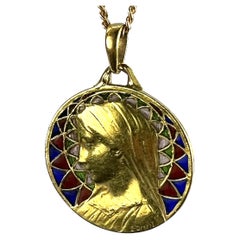
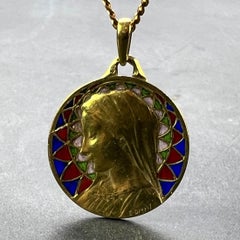
A French 18 karat (18K) yellow gold charm pendant designed as a round medal depicting the Virgin Mary with plique a jour red, blue, green and colourless enamel surround.
Gold, 18k Gold, Yellow Gold, Enamel
French G Bigard Virgin Mary Plique A Jour Enamel 18K Yellow Gold Pendant Medal
Located in London, GB
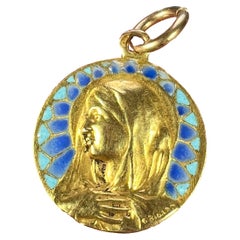
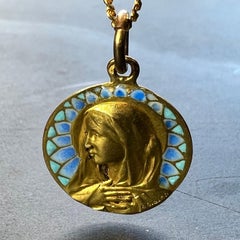
A French 18 karat (18K) yellow gold charm pendant designed as a round medal depicting the Virgin Mary with plique a jour turquoise and blue graduated enamel surround.
Gold, 18k Gold, Yellow Gold, Enamel
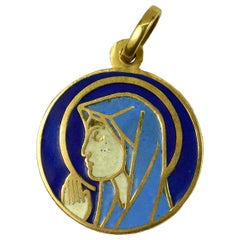
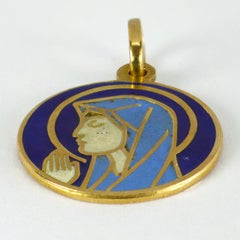
Italian 18K Yellow Gold Blue Enamel Virgin Mary Medal Pendant
Located in London, GB
An Italian 18 karat (18K) yellow gold charm pendant designed as a medal depicting the Virgin Mary with blue enamel detail.
Gold, 18k Gold, Yellow Gold, Enamel
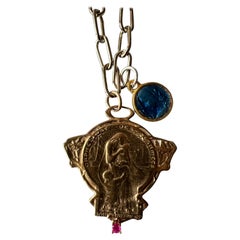
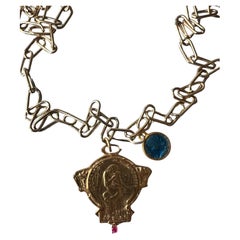
Ruby Medal Chain Necklace Blue Enamel Virgin Mary Vintage J Dauphin
By J DAUPHIN
Located in Los Angeles, CA
Ruby Medal Chain Necklace Virgin Mary Vintage Blue Enamel Designer J Dauphin Length: ~ 28 " ( 70 cm) Long Designer: J DAUPHIN Available for immediate delivery
Ruby, Gold Plate, Brass, Bronze, Enamel
Opal Heart Carmen Medal Chain Necklace Enamel Virgin Mary Pearl Rosario
By J DAUPHIN
Located in Los Angeles, CA
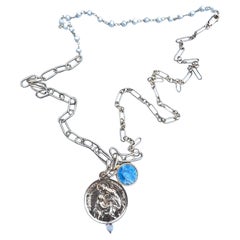
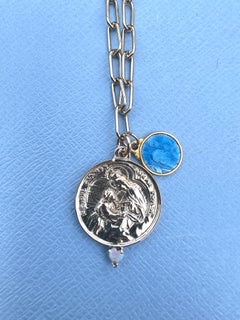
Opal Heart set in a silver prong on a Spanish Carmen Medal in Bronze, The Chain is Gold filled and has additionally a part of a Pearl Rosario, and has a small Vintage French Blue Ena...
Opal, Pearl, Gold-filled, Bronze, Enamel
Sold
H 0.04 in W 0.63 in L 0.87 in
Antique Plique-a-Jour Virgin Mary Madonna Medal Pendant 18k Yellow Gold
Located in Orlando, FL
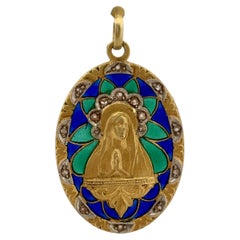
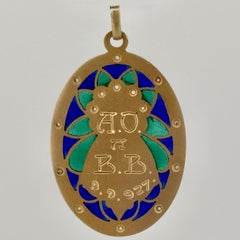
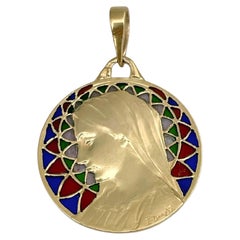
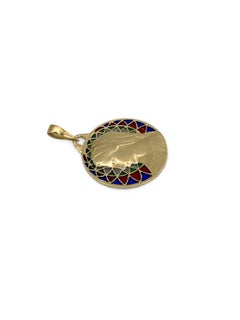
Art Nouveau Plique-à-Jour Madonna Pendant, 18K Gold with Rose Cut Diamonds (1927)... An exquisite early 20th-century devotional jewel depicting the Madonna in prayer, crafted in 18k...
Diamond, 18k Gold, Yellow Gold, Enamel
Sold
Dm 0.79 in L 1.15 in
Art Nouveau French Emile Dropsy 18 Karat Gold Enamel Virgin Mary Medal Pendant
Located in Vilnius, Vilniaus apskr.
This is an Art Nouveau pendant crafted in 18K yellow gold. Circa 1910. Religious piece is showing the Virgin Mary with a halo made of colourful translucent plique-à-jour enamel. Pe...
Gold, 18k Gold, Enamel
Virgin Mary Necklace Vintage Medal Paperclip Chain Blue Enamel Silver Plated
By J DAUPHIN
Located in Los Angeles, CA
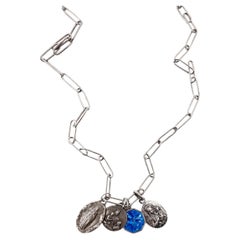
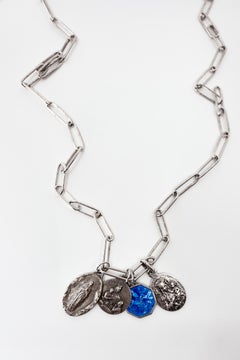
Virgin Mary Necklace Vintage Medal Paperclip Chain Blue Enamel Silver Plated Designer J DAUPHIN This vintage charm necklace features an assembly of mixed-material religious medals ...
Silver, Sterling Silver, Brass, Silver Plate, Enamel


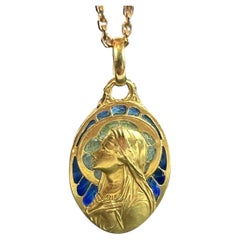
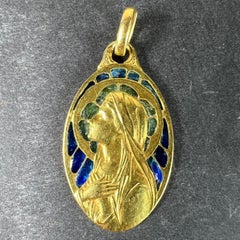
Antique French 18K solid yellow Gold Virgin Mary Medal with black enamel
Located in Antwerp, BE
For sale is this lovely mother Mary charm. This French charm depicts a lovely hand engraved Virgin Mary which is enamelled with black enamel. This protecting medallion is crafted in ...
Gold, 18k Gold, Yellow Gold, Enamel
Sold
W 0.67 in D 0.06 in L 1.15 in
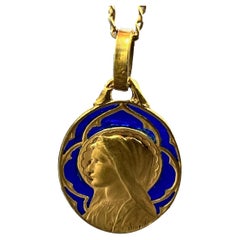
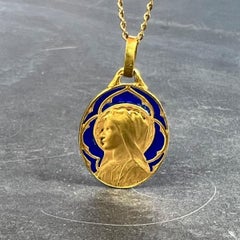
Antique French Virgin Mary Plique A Jour Enamel 18K Yellow Gold Pendant Medal
Located in London, GB
An antique French 18 karat (18K) yellow gold charm pendant designed as an oval medal depicting the Virgin Mary in profile with a halo, with plique a jour blue and green enamel surrou...
Gold, 18k Gold, Yellow Gold, Enamel
Sold
W 0.6 in D 0.04 in L 0.87 in
French Dropsy Virgin Mary Plique A Jour Enamel 18K Yellow Gold Pendant Medal
Located in London, GB
A French 18 karat (18K) yellow gold charm pendant designed as an oval medal depicting the Virgin Mary with plique a jour blue enamel surround.
Gold, 18k Gold, Yellow Gold, Enamel
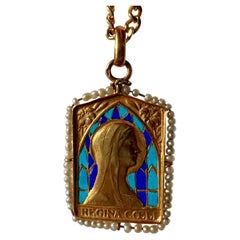

18K gold plique à jour enamel natural pearl Virgin Mary medal pendant
Located in Versailles, FR
For sale an antique 18K gold medal featuring Mary, backed on a beautiful plique à jour enamel.
Natural Pearl, 18k Gold, Enamel
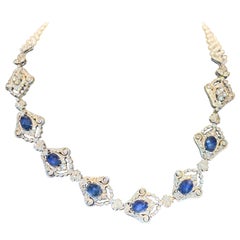
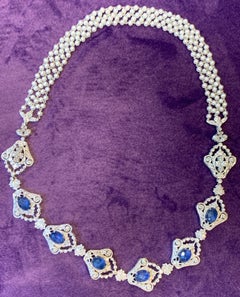
Sapphire, Diamond and Pearl Necklace
Located in New York, NY
Sapphire, Diamond & Pearl Necklace with 1 detachable link 18K White Gold & Platinum Length: 18" Faceted Oval Sapphire Weight: 12.88 Cts Diamond Weight: 9.58 Cts
Diamond, Pearl, Sapphire, 18k Gold
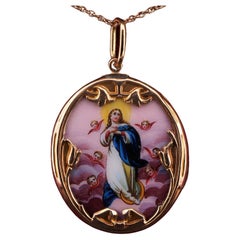
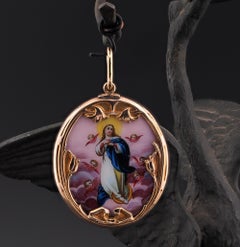
Art Nouveau 18K Gold Virgin Mary Pendant, Circa 1890, Austro-Hungarian
Located in Napoli, IT
This beautiful religious pendant is 1890 ca Rare find from the Art Nouveau period, having distinctive decoration of the era, it has been hand crafted of solid 18 KT gold, Austro Hung...
18k Gold, Enamel
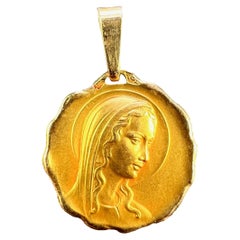
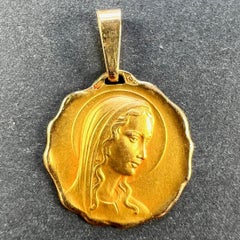
French Virgin Mary 18K Yellow Gold Religious Medal Pendant
Located in London, GB
A French 18 karat (18K) yellow gold pendant designed as a round medal depicting the Virgin Mary within a halo and a wavy frame. Stamped with the eagle’s head for French manufacture a...
Gold, 18k Gold, Yellow Gold
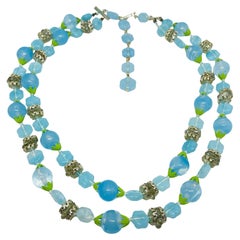
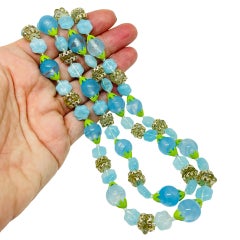
JAPAN vintage gold tone blue art glass designer necklace
Located in Palos Hills, IL
DETAILS • signed JAPAN • gold tone with glass beads • vintage designer necklace MEASUREMENTS • CONDITION • very good vintage condition with minimal signs of wear Sku 60 ...
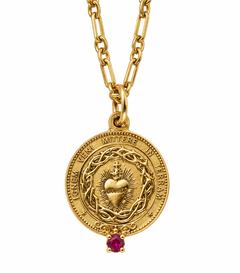
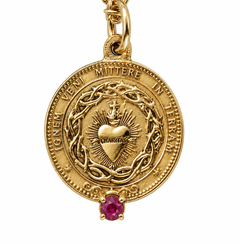
Sacred Heart Necklace Tourmaline Medal Coin Pendant Gold Silver Devotional
By J DAUPHIN
Located in Los Angeles, CA
Sacred Heart Necklace Tourmaline Medal Coin Pendant Gold Silver Devotional Designer: J DAUPHIN Sacred Heart medal necklace in gold plated silver, a round Sacred Heart medal set wit...
Tourmaline, 14k Gold, Gold Plate, Silver
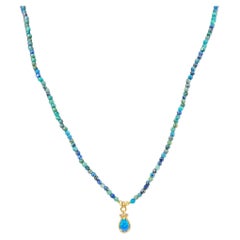
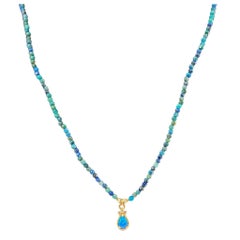
Choker-3 Necklace
Located in Beverly Hills, CA
Cool, oceanic, and effortlessly layerable — the Apatite-Style Teal Blue Beaded Necklace is a handmade costume jewelry piece that brings a wash of color to any look. Small faceted see...
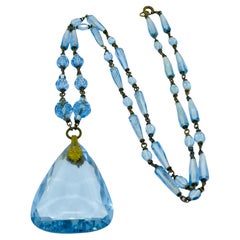
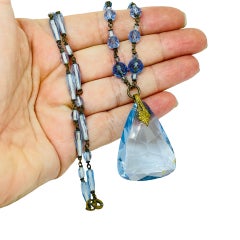
Vintage Czech blue glass gold tone designer necklace
Located in Palos Hills, IL
DETAILS • unsigned • gold tone with glass • vintage designer necklace MEASUREMENTS • CONDITION • very good vintage condition with minimal signs of wear Sku 61 ❤️❤️ VINTAGE...
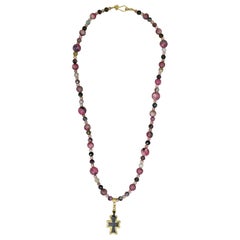
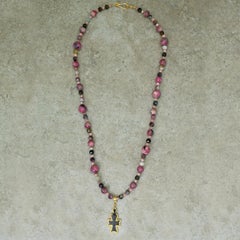
Ancient Bronze Cross, 22 Karat Gold and Pink Rhodonite Beaded Pendant Necklace
By Vicki Orr Designs
Located in Naples, FL
Ancient Byzantine bronze cross pendant contemporarily set with 22k yellow gold on a pink tone beaded necklace featuring Rhodonite, multi-color Tourmaline and Rhodochrosite beads. Bea...
Multi-gemstone, Tourmaline, Rhodocrosite, Gold, 22k Gold, Yellow Gold, B...
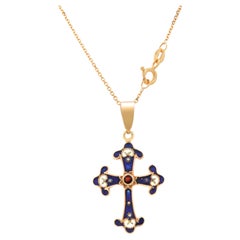

14K Yellow Gold Blue Enamel Cross Pendant with Garnet, 16" Chain
Located in New York, NY
Elevate your everyday layers with this timeless vintage 14K yellow gold cross pendant — a standout addition to the 2026 charm stacking trend. This delicate cross features striking bl...
Garnet, Gold, 14k Gold, Yellow Gold, Enamel

$1,825
H 45 in W 3 in D 0.25 in Dm 22 in L 45 in
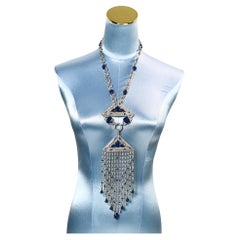
Vintage Carlo Zini Diamante and Blue Cabochon Dangling Necklace Circa 2000s
By Carlo Zini
Located in New York, NY
Vintage Carlo Zini Diamante and Blue Cabochon Dangling Necklace Sautoir Circa 2000s. This is one of those pieces for when you go out or want to make a statement. The photograph doesn...
Mixed Metal
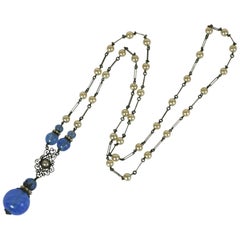
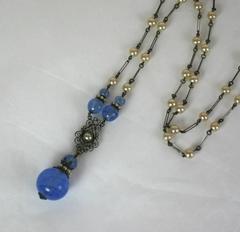
Louis Rousselet Opaline Blue Sautoir Necklace
By Louis Rousselet
Located in New York, NY
Louis Rousselet handmade opaline blue pate de verre, silver gilt pendant sautoir with faux pearl accents. 1920's France. Excellent Condition L 30" necklace, L 2.75" pendant drop
Gilt Metal
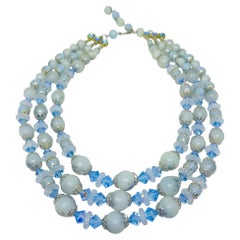
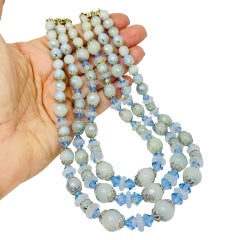
JAPAN signed vintage gold tone blue glass pearls beads designer necklace
Located in Palos Hills, IL
DETAILS • signed JAPAN • gold tone with glass beads • vintage designer necklace MEASUREMENTS • CONDITION • very good vintage condition with minimal signs of wear Sku A67...
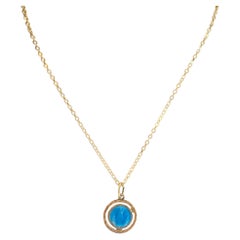
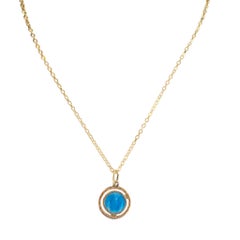
Vintage Virgin Mary Pendant Necklace
Located in Beverly Hills, CA
The necklace features an exquisitely detailed, round Virgin Mary medallion centerpiece finished in a vibrant, glossy blue enamel that beautifully highlights her iconic image. The col...
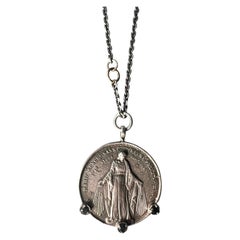
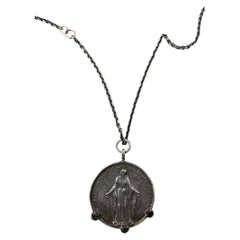
Black Diamond Miraculous Medal Necklace Virgin Mary Silver Oxidized J Dauphin
By J DAUPHIN
Located in Los Angeles, CA
Black Diamond Miraculous Medal Necklace Virgin Mary Silver Oxidized Designer: J DAUPHIN Black diamond Miraculous Medal necklace, a large solid silver medal bezel set with three bl...
Black Diamond, Silver, Sterling Silver
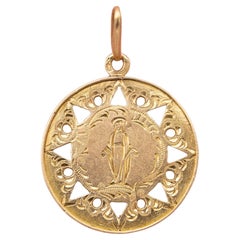
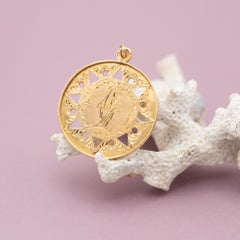
French Antique Virgin Mary - 18k Gold Medal - Rare Religious Catholic Charm
Located in Antwerp, BE
For sale is this marvellous mother Mary charm. This French charm depicts a lovely hand engraved Virgin Mary holding baby Jesus. This protecting medallion is crafted in 18 ct gold, ha...
Gold, 18k Gold, Rose Gold, Yellow Gold
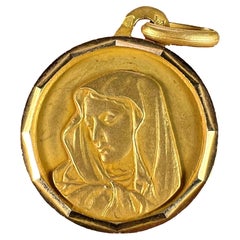
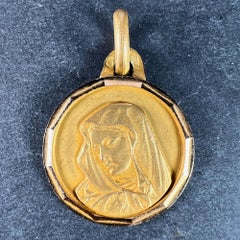
French Virgin Mary 18K Yellow Gold Medal Charm Pendant
Located in London, GB
An 18 karat (18K) yellow gold charm pendant designed as a round medal with faceted frame depicting the Virgin Mary. Stamped with the eagle’s head for French manufacture and 18 karat ...
Gold, 18k Gold, Yellow Gold
From vibrant to subtle, elegant to cheeky, vintage and antique enamel jewelry and watches encompass a wide range of colors and styles, and there are almost as many techniques for creating these distinctive pieces.
Enameling is one of the oldest forms of surface decoration, used to add color to jewelry without having to rely on gemstones. Evidence of enameling goes back to ancient Greece. Throughout history, far-flung cultures favored different techniques. For example, cloisonné enamel was popular during the Byzantine Empire, while artisans living in France and Germany in the Middle Ages preferred champlevé. And Art Nouveau jewelry designers favored plique à jour.
At its core, enamel is the fusion of powdered glass to metal, and artists like enameling because it allows them to add a painterly or illustrative quality to their work.
Cloisonné (“cell” in French) is a technique in the creation of enamel jewelry that sees the use of thin wires of fine silver or gold to outline a design, which is then filled with enamel. The piece is subsequently placed in a kiln where the enamel is melted. Cloisonné is distinct because the individual wires remain visible, forming an outline of the motif.
Champlevé (“level field” in French) enamel is almost the opposite of cloisonné. In this technique, depressions in the metal are made by etching, engraving or chiseling, and then layers of enamel are built up until they rise slightly above the surface of the metal. The enamel is then fired and polished.
Guilloché is a technique in which translucent enamel is applied to a piece of metal that has had designs cut into it using a lathe. After the firing, the patterns on the metal become visible. Guilloché was made famous by Peter Carl Fabergé, whose jewelry house used the technique on many of its objets d’art as well as jewelry.
Find antique and vintage enamel rings, bracelets, necklaces and other accessories on 1stDibs.
Whether you’re layering multiple jewelry pieces or opting for a single strand, vintage pendant necklaces are versatile accessories that can elevate your casual wear as easily as they can add a creative flourish to your formal attire.
The earliest jewelry was less about accessorizing than it was about wearers arming themselves with amulets. In Ancient Egypt, some amulets featured a loop so that they could be strung around one’s neck. While rubies have long been one of the few gemstones that can give diamonds a run for their money, members of some ancient civilizations valued the stones from the get-go, donning ruby pendants as well as other stones with the belief that these adornments would bring protection, healing powers or strength. Today, we still wear our charm bracelets and charm pendants around our necks for good luck.
Later, pendant necklaces, like most fine jewelry, were worn strictly by royalty or the upper class and conferred wealth and prestige. This changed over time, thankfully, as wearing jewelry became more widespread, a democratized means of personal expression.
During the 18th and 19th centuries, pendant necklaces evolved from their status as spiritual amulets, but the jewels still carried deep personal significance. Victorian pendants, in particular, were part of the “mourning jewelry” tradition. Wearers would embed their pendants with locks of hair from a deceased loved one as a way of grieving in the wake of a loss. In the case of cameo jewelry, some pendants were even decorated with miniature hand-carved portraits in a detailed raised relief. Today, portraiture is still a characteristic of many of the hand-carved pendant necklaces offered by Italian jewelry house Scala Gioielli.
Luxury fine jewelry brands such as Cartier, BVLGARI and David Yurman offer their own unique interpretations of the cherished accessory, embellishing platinum or gold pendant necklaces with diamonds, sapphires and other stones.
On 1stDibs, find an extraordinary range of vintage pendant necklaces and other necklaces today.
If jewelry could talk, we know this piece would have good stories.
Emblems of heartfelt emotion, elegant vessels for photos and keepsakes and perfect for layering, these special ornaments are an essential component of any thoughtfully curated jewelry collection.
With more than 100 carats of diamonds, this vintage stunner converts into different styles, making it as versatile as it is breathtaking.
Givers of fine gems enjoy surprise more than receivers, and women more than men. Find out what else our survey of 3,000 Americans revealed.
Organic shapes, surprising textures, shimmering colors and inventive embellishments take the new generation of pearl jewelry from classic to cutting-edge.
Soak up the pleasures of the season with a these bold gems.
Learn more about the stylish links that have passed the test of time.
After more than a decade creating the iconic Lanvin gems of the Alber Elbaz years, designer Elie Top dove into the world of fine jewelry, mixing silver and gold to create his own striking, timeless look.