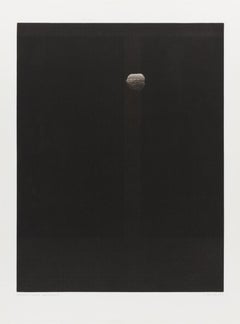
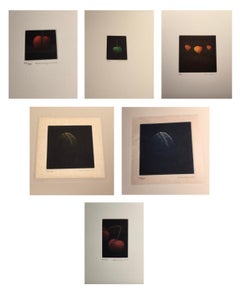
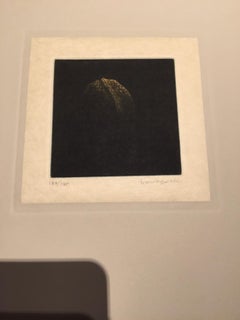
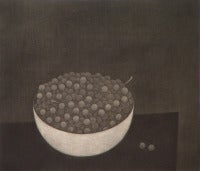
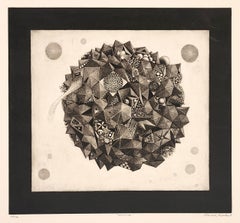
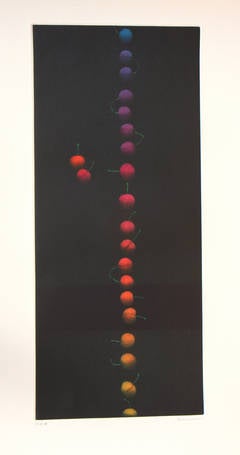
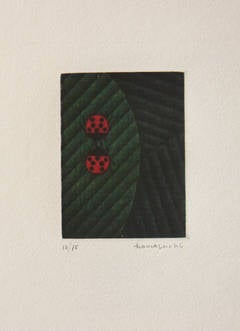
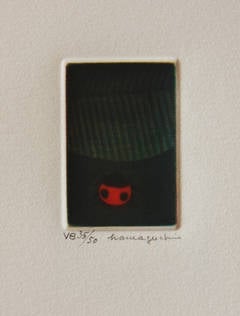
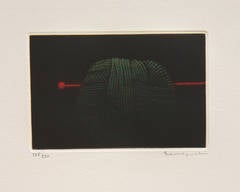
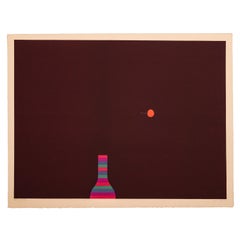
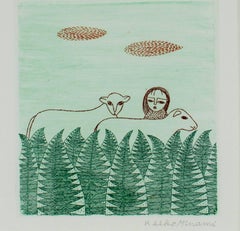
Hamaguchi Mezzotints For Sale on 1stDibs
Find a variety of hamaguchi mezzotints available on 1stDibs. Finding the ideal
contemporary,
abstract or
minimalist examples of these works for your living room, whether you’re looking for small- or large-size pieces, is no easy task — start by shopping our selection today. These items have long been popular, with older editions for sale from the 20th Century and newer versions made as recently as the 21st Century. Hamaguchi mezzotints available on 1stDibs span a range of colors that includes
black,
gray,
beige,
brown and more.
Mario Avati,
Yozo Hamaguchi,
Katsunori Hamanishi,
Udo Claassen and
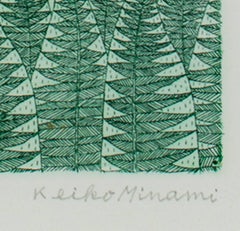
Keiko Minami took a thoughtful approach to this subject that are worth considering. Each of these unique pieces was handmade with extraordinary care, with artists most often working in
etching,
engraving and
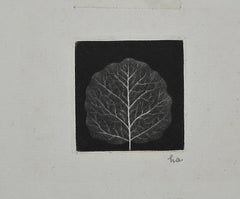
mezzotint. Not every interior allows for large iterations of these items, so small hamaguchi mezzotints measuring 1.58 inches across are available.
How Much are Hamaguchi Mezzotints?
Prices for pieces in our collection of hamaguchi mezzotints start at $100 and top out at $6,500 with the average selling for $266.
Yozo Hamaguchi for sale on 1stDibs
Yozo Hamaguchi, printmaker, was born in Wakayama, Japan in 1909, the son of Gihei, who was the tenth president of the soy sauce producer Yamasa Shoyu. Originally considered to be the next in line to take over the company, Hamaguchi was instead drawn to visual arts, inspired by the works that his father, a Nanga painting collector, kept throughout the house. In 1927 Hamaguchi left the family business to enroll in the Tokyo Art School, training in sculpture. He left the school in 1930 and moved to France on the advice of artist Umehara Ryuzaburo, opting to study modern Western art and the techniques of oil painting, printmaking, and watercolor. He lived there until 1939, becoming acquainted with leading international artists and luminaries, including the writer e.e. cummings who was instrumental in introducing him to mezzotint printmaking.
With the outbreak of World War II, Hamaguchi returned once more to Japan. There he met artist Keiko Minami, whom he would later marry. Throughout the 1940s he established himself as a pioneering mezzotint artist, often credited with introducing the medium to his birthplace. His style - graphic, subtle, and primarily in a monochromatic palette - gained widespread popularity throughout Europe and, in 1951, he held his first solo exhibition at the Formes Gallery in Tokyo. Around 1953 Hamaguchi and Minami returned to France, settling in Paris and, in 1954, he became a member of the Salon d'Automne. That same year he won the Best Art Piece prize at the Contemporary Art Exhibition of Japan. In 1955 he began experimenting with color as well as abstraction, retaining his refined tonality, to acclaim from critics, artists, and institutions. He won the Grand Prize of the International Printmaking Division at the San Paolo Biennial in 1957, and that same year he participated in the first International Biennial Print Exhibition in Tokyo, where he won the National Museum of Modern Art (Tokyo) Prize. In 1960 served as representative of the Japan Pavilion at the Venice Biennale.
Hamaguchi's compositions were usually the still life genre, simplifying the elements and suspending them against velvety grounds in a signature style that appealed strongly to western patrons. In 1961 Hamaguchi and Minami moved from Paris to San Francisco, California, where they lived until 1996. During this time, he was commissioned by the Olympic Committee to design the official poster for the 1984 Sarajevo Winter Olympics and the following year he was given his first major retrospective in Japan at the Toyo Yurakucho Art Forum. Hamaguchi continued to work and exhibit his mezzotints until his retirement in 1993, leaving the printing of his plates to his publisher. He and Minami returned to Tokyo in 1996, and in 1998 the Musée Hamaguchi Yozo was established in Tokyo. Hamaguchi is credited as being among the many 20th century artists to help revive the 17th century intaglio technique, promoting mezzotint as a viable modern art form appropriate for the expressive genres of the time. His work has been exhibited in prominent museums & galleries worldwide
Finding the Right Prints And Multiples for You
Decorating with fine art prints — whether they’re figurative prints, abstract prints or another variety — has always been a practical way of bringing a space to life as well as bringing works by an artist you love into your home.
Pursued in the 1960s and ’70s, largely by Pop artists drawn to its associations with mass production, advertising, packaging and seriality, as well as those challenging the primacy of the Abstract Expressionist brushstroke, printmaking was embraced in the 1980s by painters and conceptual artists ranging from David Salle and Elizabeth Murray to Adrian Piper and Sherrie Levine.
Printmaking is the transfer of an image from one surface to another. An artist takes a material like stone, metal, wood or wax, carves, incises, draws or otherwise marks it with an image, inks or paints it and then transfers the image to a piece of paper or other material.
Fine art prints are frequently confused with their more commercial counterparts. After all, our closest connection to the printed image is through mass-produced newspapers, magazines and books, and many people don’t realize that even though prints are editions, they start with an original image created by an artist with the intent of reproducing it in a small batch. Fine art prints are created in strictly limited editions — 20 or 30 or maybe 50 — and are always based on an image created specifically to be made into an edition.
Many people think of revered Dutch artist Rembrandt as a painter but may not know that he was a printmaker as well. His prints have been preserved in time along with the work of other celebrated printmakers such as Pablo Picasso, Salvador Dalí and Andy Warhol. These fine art prints are still highly sought after by collectors.
“It’s another tool in the artist’s toolbox, just like painting or sculpture or anything else that an artist uses in the service of mark making or expressing him- or herself,” says International Fine Print Dealers Association (IFPDA) vice president Betsy Senior, of New York’s Betsy Senior Fine Art, Inc.
Because artist’s editions tend to be more affordable and available than his or her unique works, they’re more accessible and can be a great opportunity to bring a variety of colors, textures and shapes into a space.
For tight corners, select small fine art prints as opposed to the oversized bold piece you’ll hang as a focal point in the dining area. But be careful not to choose something that is too big for your space. And feel free to lean into it if need be — not every work needs picture-hanging hooks. Leaning a larger fine art print against the wall behind a bookcase can add a stylish installation-type dynamic to your living room. (Read more about how to arrange wall art here.)
Find fine art prints for sale on 1stDibs today.