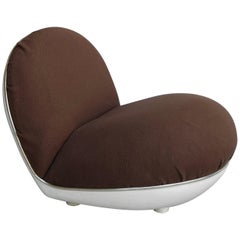
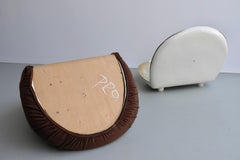
Prototype Pierre Paulin Blub Lounge Chair, Artifort, 1971
By Pierre Paulin
Located in Den Haag, NL
Pierre Paulin prototype Blub lounge chair, Artifort 1971.
Category
Mid-20th Century Dutch Mid-Century Modern Lounge Chairs
Materials
Wool, Fiberglass
Prototype Pierre Paulin Blub Lounge Chair, Artifort, 1971
By Pierre Paulin
Located in Den Haag, NL
Pierre Paulin prototype Blub lounge chair, Artifort 1971.
Wool, Fiberglass


Pierre Paulin Rare BLUB BLUB Seating Lounge 1972
By Artifort, Pierre Paulin
Located in Palm Springs, CA
Rare Blub Blub by Pierre Paulin in gradient original fabric.
Fabric, Fiberglass, Carbon Fiber
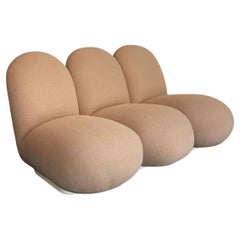
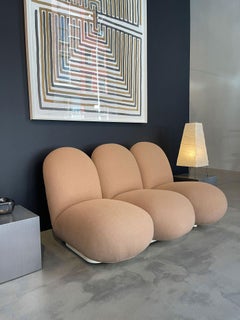
Pierre Paulin Three-Seater Sofa, ‘Blub Blub 275’
Located in New York, NY
Pierre Paulin (1927–2009) was a celebrated French furniture designer renowned for his innovative, sculptural approach to modern seating.
Fiberglass
Sold
H 24.41 in W 90.56 in D 29.93 in
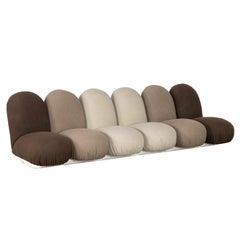
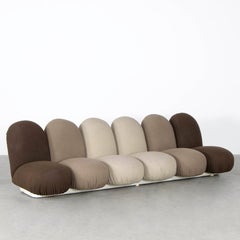
Pierre Paulin 'Blub Blub' Sofa in Tan / Brown Fabric for Artifort, Netherlands
By Pierre Paulin, Artifort
Located in Amsterdam, NL
Exceptional 'Blub Blub' sofa designed by Pierre Paulin and manufactured by Artifort, Netherlands in the 1970s.
Metal
Pierre Paulin Sofa Blub Blub, 1970's
By Pierre Paulin
Located in Paris, FR
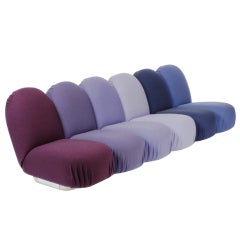
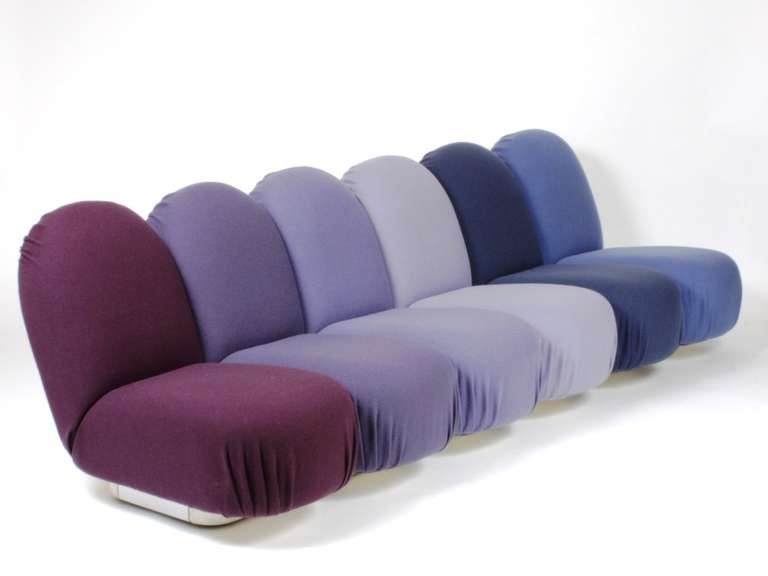
Lacquered metal, foam and fabric 'Tonus' by Maison Kvadrat in blue shades.
Metal
Pierre Paulin introduced a fresh breeze into French furniture design in the 1960s and ’70s, fostering a sleek new Space-Age aesthetic. Along with Olivier Mourgue, Paulin developed chairs, sofas, dining tables and other furnishings with flowing lines and almost surreal naturalistic forms. And his work became such a byword for chic, forward-looking design and emerging technologies that two French presidents commissioned him to create environments in the Élysée Palace in Paris.
Paulin was born in Paris to a family of artists and designers. He initially sought to become a ceramist and sculptor and was studying in the town of Vallauris near the Côte d'Azur — a center for pottery making, where Pablo Picasso spent his postwar summers crafting ceramics — but broke his hand in a fight. He enrolled at the École Camondo, the Paris interior design school. There, Paulin was strongly influenced by the work of Charles and Ray Eames, George Nelson and Arne Jacobsen, as was reflected in his early creations for the manufacturer Thonet-France.
It was at the Dutch firm Artifort, which he joined in 1958, where Paulin blossomed. In a few years, he produced several of his signature designs based on abstract organic shapes. These include the Butterfly chair (1963), which features a tubular steel frame and slung leather, and a group of striking seating pieces made with steel frames covered in polyurethane foam and tight jersey fabric: the Mushroom (1960), Ribbon (1966) and Tongue (1967) chairs. The revered designer not only introduced new construction techniques to Artifort furniture but contributed fresh materials, Pop art colors and dazzling shapes to the mid-century modern era as a whole.
In 1971, the Mobilier National — a department of France’s Ministry of Culture in charge of furnishing top-tier government offices and embassies — commissioned Paulin to redesign President Georges Pompidou’s private apartment in the Élysée Palace. In three years, Paulin transformed the staid rooms into futuristic environments with curved, fabric-clad walls and furnishings such as bookcases made from an arrangement of smoked-glass U shapes, flower-like pedestal chairs and pumpkin-esque loungers.
Ten years later, the Mobilier National called on Paulin again, this time to furnish the private office of President François Mitterand. Paulin responded with an angular, postmodern take on neoclassical furniture, pieces that looked surprisingly at home in the paneled, Savonnerie-carpeted Louis XVI rooms. As those two Élysée Palace projects show, Paulin furniture works well both in a total decor or when used as a counterpoint to traditional pieces. His creations have a unique personality: bright and playful yet sophisticated and suave.
Find vintage Pierre Paulin lounge chairs, armchairs, coffee tables and other furniture on 1stDibs.
Arguably the world’s most ubiquitous man-made material, plastic has impacted nearly every industry. In contemporary spaces, new and vintage plastic furniture is quite popular and its use pairs well with a range of design styles.
From the Italian lighting artisans at Fontana Arte to venturesome Scandinavian modernists such as Verner Panton, who created groundbreaking interiors as much as he did seating — see his revolutionary Panton chair — to contemporary multidisciplinary artists like Faye Toogood, furniture designers have been pushing the boundaries of plastic forever.
When The Graduate's Mr. McGuire proclaimed, “There’s a great future in plastics,” it was more than a laugh line. The iconic quote is an allusion both to society’s reliance on and its love affair with plastic. Before the material became an integral part of our lives — used in everything from clothing to storage to beauty and beyond — people relied on earthly elements for manufacturing, a process as time-consuming as it was costly.
Soon after American inventor John Wesley Hyatt created celluloid, which could mimic luxury products like tortoiseshell and ivory, production hit fever pitch, and the floodgates opened for others to explore plastic’s full potential. The material altered the history of design — mid-century modern legends Charles and Ray Eames, Joe Colombo and Eero Saarinen regularly experimented with plastics in the development of tables and chairs, and today plastic furnishings and decorative objects are seen as often indoors as they are outside.
Find vintage plastic lounge chairs, outdoor furniture, lighting and more on 1stDibs.
Vintage couches and antique sofas have anchored living rooms for generations. The pieces most sought after today carry the deep-buttoned tufting of a Chesterfield or the low, sculptural ease of mid-century modern and Hollywood Regency design.
Styles to Know
Rolled arms and tufted backs point to Mid-Century Modern or Hollywood Regency pieces, while tight backs and turned legs skew more traditional. Velvet is enjoying a renewed moment across most of these silhouettes; see our velvet chesterfield sofa trend report for examples. A mid-century modern coffee table within reach and a vintage mirror nearby round out the seating area.
How to Choose the Right Vintage Sofa
A sofa's frame and upholstery history can be difficult to judge from photographs alone. Ask a seller for more information when a listing doesn't show the fabric or joinery clearly, and confirm whether the upholstery is original or has been redone. Each piece comes from a vetted 1stDibs seller, with era, designer and condition detailed, and the 1stDibs Promise stands behind every purchase.