Tour De France Leroy Neiman
Late 20th Century American Modern Animal Prints
Screen
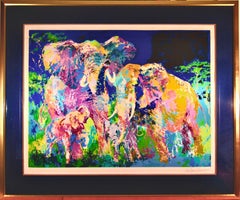

21st Century and Contemporary American Modern Animal Prints
Screen
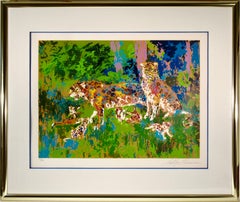
1980s American Modern Mixed Media
Chalk, Acrylic
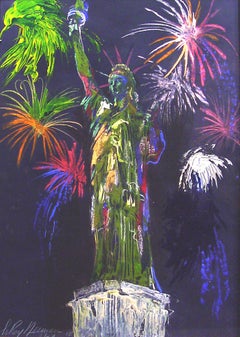
Late 20th Century American Modern Figurative Prints
Screen
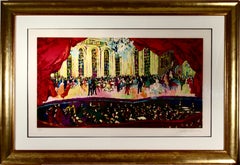
21st Century and Contemporary American Modern Figurative Prints
Screen
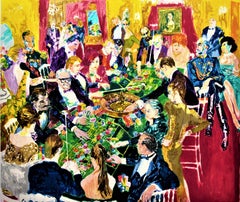
21st Century and Contemporary American Modern Figurative Prints
Screen
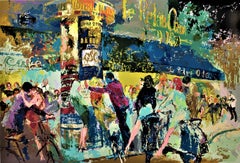
Recent Sales
21st Century and Contemporary Modern Portrait Prints
Lithograph
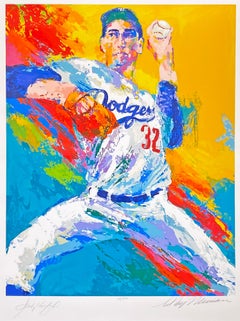
1970s American Modern Figurative Prints
Lithograph
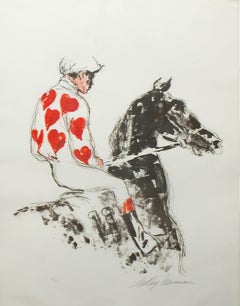
21st Century and Contemporary American Modern Figurative Prints
Screen
21st Century and Contemporary American Modern Animal Prints
Screen
Late 20th Century American Modern Figurative Prints
Screen
People Also Browsed
Early 20th Century European Gothic Revival Religious Items
Brass
Antique 19th Century Pacific Islands Natural Specimens
Shell
2010s Italian Other Wall Mirrors
Murano Glass, Mirror, Art Glass
2010s Pop Art Figurative Prints
Archival Paper
Antique Early 1900s American Louis XVI Table Lamps
Bronze
Vintage 1950s Paintings
Canvas
Early 20th Century German Platters and Serveware
Porcelain
20th Century Chinese Decorative Boxes
Mother-of-Pearl, Wood
20th Century American Native American Native American Objects
Wood, Paint
Antique 15th Century and Earlier German Decorative Art
Other
21st Century and Contemporary European Books
Paper
Early 20th Century English Georgian Sterling Silver
Sterling Silver
Antique Late 19th Century English Victorian Bathroom Fixtures
Marble
Antique Late 19th Century Tableware
Sterling Silver
Vintage 1950s Austrian Mid-Century Modern Table Lamps
Nickel
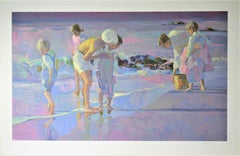
Late 20th Century American Impressionist Figurative Prints
Screen
LeRoy Neiman for sale on 1stDibs
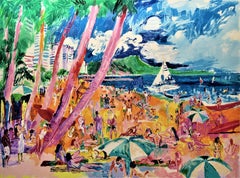
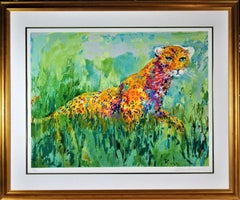
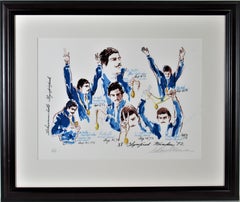
LeRoy Neiman, born LeRoy Runquist, is best known for his vibrantly colored paintings and screen prints, which draw on Impressionism and Pop Art and frequently feature portraits of athletes and musicians as well as depictions of sporting events. He is renowned for creating art during live coverage of the Olympics and other major American and international sports competitions. He once commented, “I use (bold) color to emphasize the scent, the spirit, and the feeling of the thing I’ve experienced.”
Born in Saint Paul, Minnesota, Neiman showed an early aptitude for drawing. After returning home from WWII, he studied at the Saint Paul School of Art and the School of the Art Institute of Chicago (SAIC), where his classmates included Robert Indiana and Leon Golub. Upon graduation in 1950, he began teaching at SAIC.
In 1953, his oil painting Idle Boats won first prize at the Twin City Show, where the Minneapolis Art Institute purchased it. Neiman’s reputation quickly grew, and museums such as the Carnegie Pittsburgh International Exhibition of Contemporary Painting, the Art Institute of Chicago and the Corcoran Gallery of Art in Washington purchased his works.
In 1954, Neiman’s famous association with Playboy magazine began to take shape. Hugh Hefner commissioned Neiman to create an illustration for this fledgling magazine, and his piece won the 1954 Chicago Art Directors Award. This led to a relationship with Playboy that lasted five decades and included Neiman writing and illustrating the “Man at His Leisure” section and the creation of the well-known “Femlin” — a female nymph wearing only opera gloves, stockings and high heels — which appeared on the “Party Jokes” page in every issue since 1955.
In 1970, the 5th Dimension commissioned Neiman to create a cover illustration for the pop group’s album Portrait. In 1994, he created the illustration used for the playbill and the immense Broadway mural for the musical Busker Alley. He was inducted as a Laureate of The Lincoln Academy of Illinois and awarded the highest honor of the state of Illinois, the Order of Lincoln, in 2009.
Today, you can find Neiman’s works in the collections of the Smithsonian American Art Museum in Washington, the Art Institute of Chicago, and the Indianapolis Museum of Art (Newfields), among others.
On 1stDibs, find LeRoy Neiman prints, drawings, paintings and more.
A Close Look at Modern Art
The first decades of the 20th century were a period of artistic upheaval, with modern art movements including Cubism, Surrealism, Futurism and Dadaism questioning centuries of traditional views of what art should be. Using abstraction, experimental forms and interdisciplinary techniques, painters, sculptors, photographers, printmakers and performance artists all pushed the boundaries of creative expression.
Major exhibitions, like the 1913 Armory Show in New York City — also known as the “International Exhibition of Modern Art,” in which works like the radically angular Nude Descending a Staircase by Marcel Duchamp caused a sensation — challenged the perspective of viewers and critics and heralded the arrival of modern art in the United States. But the movement’s revolutionary spirit took shape in the 19th century.
The Industrial Revolution, which ushered in new technology and cultural conditions across the world, transformed art from something mostly commissioned by the wealthy or the church to work that responded to personal experiences. The Impressionist style emerged in 1860s France with artists like Claude Monet, Paul Cézanne and Edgar Degas quickly painting works that captured moments of light and urban life. Around the same time in England, the Pre-Raphaelites, like Edward Burne-Jones and Dante Gabriel Rossetti, borrowed from late medieval and early Renaissance art to imbue their art with symbolism and modern ideas of beauty.
Emerging from this disruption of the artistic status quo, modern art went further in rejecting conventions and embracing innovation. The bold legacy of leading modern artists Georges Braque, Pablo Picasso, Frida Kahlo, Salvador Dalí, Henri Matisse, Joan Miró, Marc Chagall, Piet Mondrian and many others continues to inform visual culture today.
Find a collection of modern paintings, sculptures, prints and other fine art on 1stDibs.
Finding the Right Figurative-prints-works-on-paper for You
Bring energy and an array of welcome colors and textures into your space by decorating with figurative fine-art prints and works on paper.
Figurative art stands in contrast to abstract art, which is more expressive than representational. The oldest-known work of figurative art is a figurative painting — specifically, a rock painting of an animal made over 40,000 years ago in Borneo. This remnant of a remote past has long faded, but its depiction of a cattle-like creature in elegant ocher markings endures.
Since then, figurative art has evolved significantly as it continues to represent the world, including a breadth of works on paper, including printmaking. This includes woodcuts, which are a type of relief print with perennial popularity among collectors. The artist carves into a block and applies ink to the raised surface, which is then pressed onto paper. There are also planographic prints, which use metal plates, stones or other flat surfaces as their base. The artist will often draw on the surface with grease crayon and then apply ink to those markings. Lithographs are a common version of planographic prints.
Figurative art printmaking was especially popular during the height of the Pop art movement, and this kind of work can be seen in artist Andy Warhol’s extensive use of photographic silkscreen printing. Everyday objects, logos and scenes were given a unique twist, whether in the style of a comic strip or in the use of neon colors.
Explore an impressive collection of figurative art prints for sale on 1stDibs and read about how to arrange your wall art.