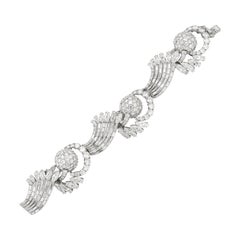
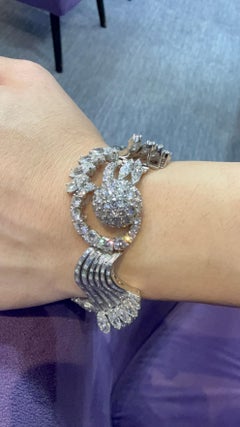
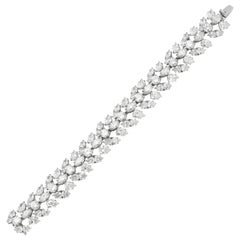
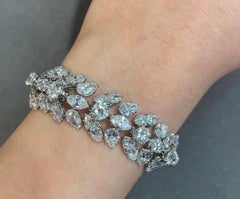
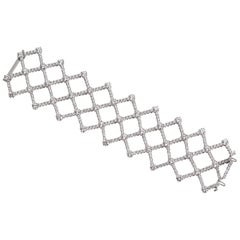
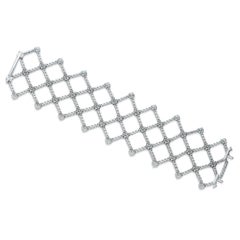
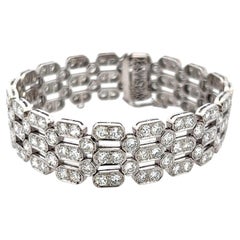
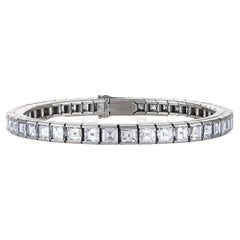
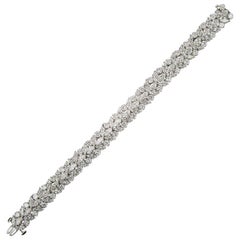
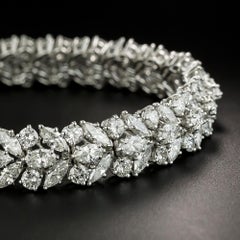
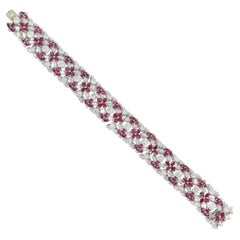
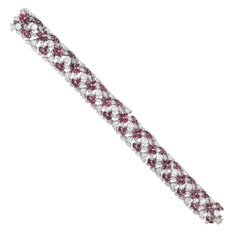
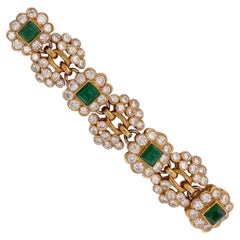
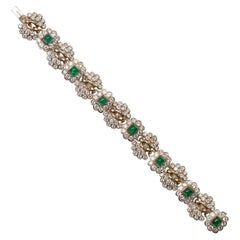
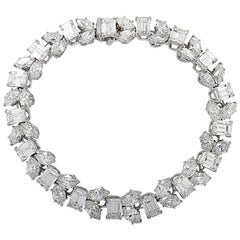
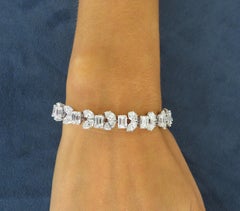
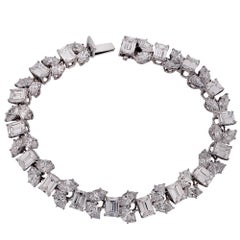
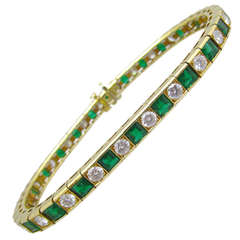
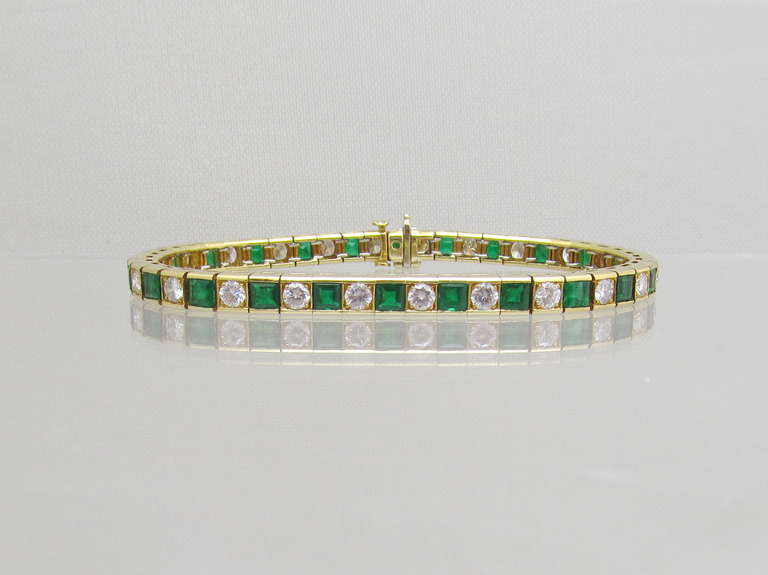
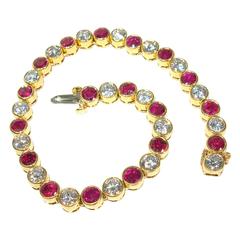
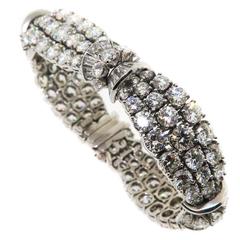
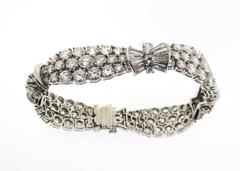
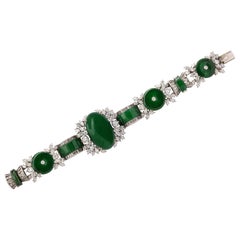
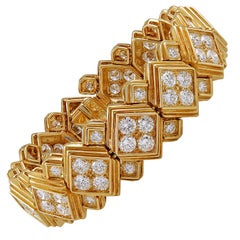
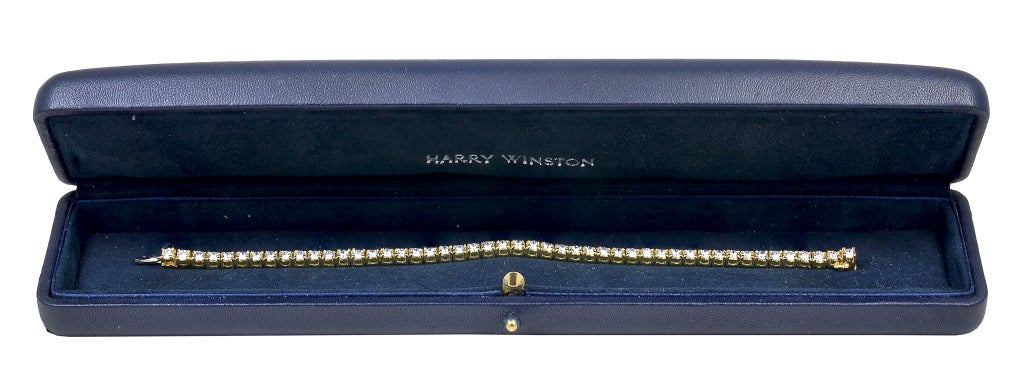
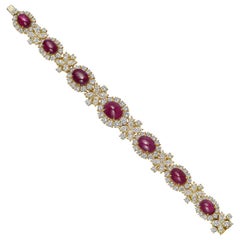
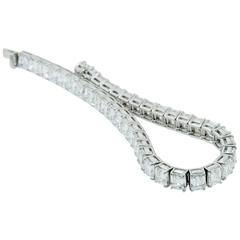
Vintage Harry Winston Diamond Bracelets For Sale on 1stDibs
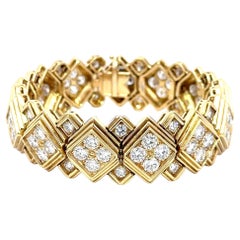
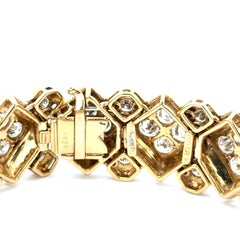
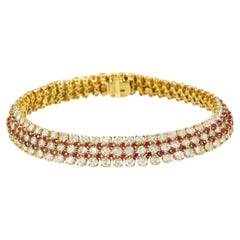
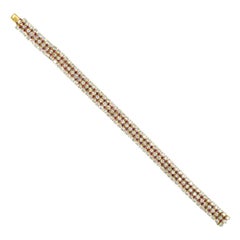
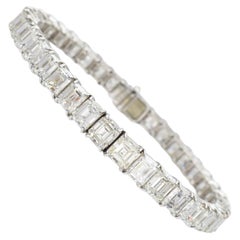
There is a broad range of vintage harry winston diamond bracelets for sale on 1stDibs. All of the items for sale were constructed with extraordinary care, often using
platinum,
18k gold and
gold. Our collection is diverse and broad-ranging, and pieces in stock date back to the 20th Century while others were produced as recently as the 20th Century. There are many different pieces in our collection of vintage harry winston diamond bracelets to choose from, but
Art Deco vintage harry winston diamond bracelets are of considerable interest. Versions of these items have been a part of the life’s work for many jewelers, but those produced by
Harry Winston and
Hamilton are consistently popular. While most can agree that any pick from our collection easily elevates most outfits, but the choice of
diamond versions from the 14 available is guaranteed to add a special touch to your ensemble. There are many
round cut,
mixed cut and
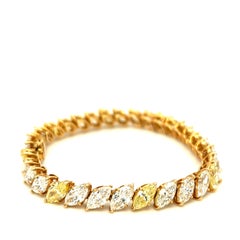
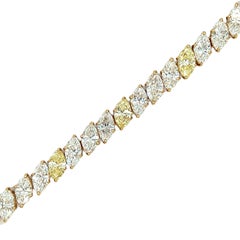
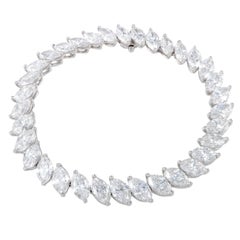
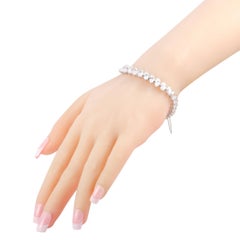
marquise cut vintage harry winston diamond bracelets for sale. If you’re browsing the variety of vintage harry winston diamond bracelets for sale, you’ll find that many are available today for
women, but there are still pieces to choose from for
men.
How Much are Vintage Harry Winston Diamond Bracelets?
Prices for vintage harry winston diamond bracelets start at $7,900 and top out at $350,000 with these bracelets, on average, selling for $130,000.
Harry Winston for sale on 1stDibs
Among the famed gemstones that Harry Winston (1896–1978) encountered over the course of his career was the Hope diamond, which he donated to the Smithsonian Institution in 1958. Today, Winston is regarded as the “King of Diamonds” and the “Jeweler to the Stars” as one of the first to recognize the branding power of lending glitzy earrings, necklaces and other fine jewelry for red-carpet events.
Winston’s father had immigrated to New York from Ukraine and ran a small jewelry shop where a young Harry learned about precious stones, enough, the story goes, to identify a real emerald in a heap of pawnshop jewelry at the age of 12. His early success involved turning that eye to estate sale collections that he transformed by freeing gemstones from dated ornamentation, giving them new cuts and modern settings. He opened Harry Winston Inc. in 1932, where he influenced 20th-century-jewelry trends by always elevating the stones rather than adding the lavish decorations that had pervaded jewelry in the 19th century.
The first of the celebrated diamonds to be purchased by Winston was the 726-carat uncut Jonker, acquired in 1935. Many others followed, including the 726.60-carat Vargas from Brazil which, in 1938, he tracked down across multiple continents after he read a brief newspaper notice about its discovery. The rarity and beauty of the gemstones he pursued and presented in his boutiques made the Winston brand synonymous with excellence.
Winston was also a pioneer of marketing as the first jeweler to dress an Academy Awards nominee when he loaned some diamond jewelry to Jennifer Jones for the 1944 Oscar ceremony. Winston was renowned for his eye for the finest of gemstones and the ability to design pieces in order to best flaunt their natural dazzle. He regularly showed off his collection in touring exhibitions, such as the 1949 “Court of Jewels,” which featured the Hope diamond. His storied past and long legacy is continued by the House of Harry Winston and its salons in Japan, the United Kingdom and elsewhere.
On 1stDibs, find a stunning collection of Harry Winston jewelry that includes bracelets, wedding rings, engagement rings and other accessories.
The Legacy of Diamond in Jewelry Design
Antique diamond rings, diamond tiaras and dazzling vintage diamond earrings are on the wish lists of every lover of fine jewelry. And diamonds and diamond jewelry are primarily associated with storybook engagements and red-carpet grand entrances — indeed, this ultra-cherished gemstone has a dramatic history on its hands.
From “A Diamond Is Forever” to “Diamonds Are a Girl’s Best Friend,” pop culture has ingrained in our minds that diamonds are the most desired, the most lasting and the most valuable gemstone. But what makes the diamond so special? Each stone — whether it’s rubies, sapphires or another stone — is unique and important in its own right. April babies might claim diamonds for themselves, but just about everyone wants this kind of sparkle in their lives!
There are several factors that set diamonds apart from other stones, and these points are important to our gem education.
Diamonds are minerals. They are made up of almost entirely of carbon (carbon comprises 99.95 percent; the remainder consists of various trace elements). Diamonds are the hardest gemstones, ranking number 10 on the Mohs Hardness Scale. Even its name, diamond, is rooted in the Greek adamas, or unconquerable. The only object that can scratch a diamond is another diamond. Diamonds are formed deep within the earth at very high temperatures (1,652–2,372 degrees Fahrenheit at depths between 90 and 120 miles beneath the earth’s surface) and are carried up by volcanic activity. Diamonds are quite rare, according to the Gemological Institute of America, and only 30 percent of all the diamonds mined in the world are gem quality.
In the 1950s, the Gemological Institute of America developed the 4Cs grading system to classify diamonds: clarity, color, cut and carat weight. Not all diamonds are created equal (there are diamonds, and then there are diamonds). The value of the diamond depends on the clarity (flawless diamonds are very rare but a diamond's value decreases if there are many blemishes or inclusions), color (the less color the higher the grade), cut (how the diamond’s facets catch the light, certain cuts of diamonds show off the stone better than others) and carat weight (the bigger, the better).
When you start shopping for a diamond engagement ring, always prioritize the cut, which plays the largest role in the diamond's beauty (taking the time to clean your diamond ring at least every six months or so plays a role in maintaining said beauty). And on 1stDibs, a range of buying guides can be found for those in the market for antique engagement rings, vintage engagement rings or Art Deco engagement rings.
Shop antique and vintage diamond rings, diamond necklaces and other extraordinary diamond jewelry on 1stDibs.
Finding the Right Bracelets for You
Today, antique and vintage bracelets are versatile and universally loved accessories that can add polish and pizzazz to any ensemble.
Bracelets were among the jewels discovered to have been buried with Pharaoh Tutankhamun when his tomb was unearthed in 1922, and wrist and arm bracelets were allegedly worn by Queen Puabi in Sumer, southern Mesopotamia. But preceding the adornments of Ancient Egypt and elsewhere, the people of prehistoric times likely wore the decorative accessory, fashioning it from shells and fish bones. When the Bronze Age allowed for more durable materials and semiprecious stones to be incorporated into jewelry, bracelets became a treasured symbol of wealth.
In the thousands of years following the debut of the world’s first bracelets, the artistry behind this common accessory has only broadened, with designers at popular jewelry houses growing more venturesome over time. David Webb looked to nature for his Animal Kingdom bracelets, and for her best-selling bracelets and more at Tiffany & Co., Elsa Peretti would frequently do the same. From bangles to tennis bracelets, the modern age offers plenty of options.
Internationally acclaimed bracelet designs have on occasion become powerful symbols of status, style and, in the case of Cartier's iconic design, love. The Cartier Love bracelet can be found on the wish list of most jewelry lovers and on the wrist of some of the world’s biggest stars. Its arrangement of mock screwheads and distinctive functionality — it was initially locked and unlocked with an accompanying vermeil screwdriver — is an enduring expression of loyalty, unity and romance. (Do you know how to spot a fake Cartier Love bracelet?)
While the Love bracelet has played a role in the skyrocketing popularity of cuff-style bracelets, they are far from the only glamorous option for collectors. Make a statement with an Art Deco design, a style that sees all kinds of iterations fitted with studded cuffs, one-of-a-kind shapes and dazzling insets. A chunky vintage gold bracelet in the Retro style will prove eye-catching and elevate any outfit.
One of the best things about bracelets, however, is that you never have to choose just one. Style icon Jacqueline Kennedy stacked her Croisillon bracelets — designed by Jean Schlumberger for Tiffany & Co. — with such frequency that the ornate bangles were eventually dubbed “Jackie bracelets” by reporters. Contemporary silver pieces can easily complement each other, rendering a layering of luxury almost a necessity.
Find a diverse collection of bracelets that you can sort by style, stone cut and more on 1stDibs.