Modern More Art

1,531 Results
MODERN STYLE

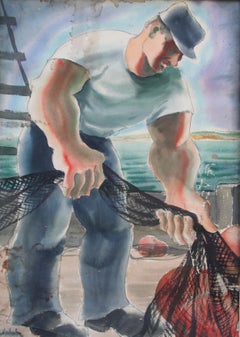
The first decades of the 20th century were a period of artistic upheaval, with modern art movements including Cubism, Surrealism, Futurism and Dadaism questioning centuries of traditional views of what art should be. Using abstraction, experimental forms and interdisciplinary techniques, painters, sculptors, photographers, printmakers and performance artists all pushed the boundaries of creative expression.

Major exhibitions, like the 1913 Armory Show in New York City — also known as the “International Exhibition of Modern Art,” in which works like the radically angular Nude Descending a Staircase by Marcel Duchamp caused a sensation — challenged the perspective of viewers and critics and heralded the arrival of modern art in the United States. But the movement’s revolutionary spirit took shape in the 19th century.

The Industrial Revolution, which ushered in new technology and cultural conditions across the world, transformed art from something mostly commissioned by the wealthy or the church to work that responded to personal experiences. The Impressionist style emerged in 1860s France with artists like Claude Monet, Paul Cézanne and Edgar Degas quickly painting works that captured moments of light and urban life. Around the same time in England, the Pre-Raphaelites, like Edward Burne-Jones and Dante Gabriel Rossetti, borrowed from late medieval and early Renaissance art to imbue their art with symbolism and modern ideas of beauty.

Emerging from this disruption of the artistic status quo, modern art went further in rejecting conventions and embracing innovation. The bold legacy of leading modern artists Georges Braque, Pablo Picasso, Frida Kahlo, Salvador Dalí, Henri Matisse, Joan Miró, Marc Chagall, Piet Mondrian and many others continues to inform visual culture today.

Find a collection of modern paintings, sculptures, prints and other fine art on 1stDibs.

to
107
1,142
141
82
66
116
Overall Width
to
Overall Height
to
7
133
1,018
392
32
22
86
134
53
126
119
107
40
20
3
3,181
2,555
2,207
1,986
1,550
398
397
255
142
75
62
56
40
3
970
337
105
14
9
6
6
5
5
4
4
3
2
1
1
1
1
1
1
1
1
1
1
867
265
207
187
172
68
64
33
26
19
1
57
1,116
283
Style: Modern
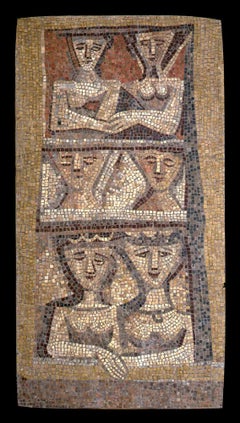
Women at the Window - Mosaic by Massimo Campigli - 1947

Women at the Window - Mosaic by Massimo Campigli - 1947

Located in Roma, IT

Mosaic on cement panel. Exhibitions: - "Massimo Campigli - Mediterraneità e Modernità", Darmstadt 2003, ed. Mazzotta, Klaus Wolbert, n. 218, p. 333 (full page).   - "Il Tempo dell...

Category

1940s Modern More Art

Materials

Mosaic

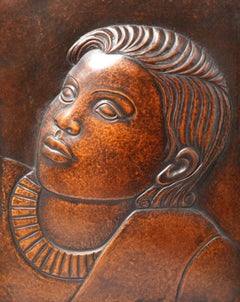
Portrait (Untitled)

Portrait (Untitled)

Located in Los Angeles, CA

Portrait (Untitled), c. mid 1930s, hammered copper, 11 1/2 x 8 1/2 inches Beryl McCarthy Wynnyk was a California-based painter, sculptor, and craftsperson. She studied at the Califo...

Category

1930s Modern More Art

Materials

Copper

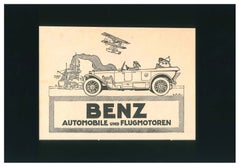
Benz Automobile Advertising - Original Vintage Advertising on Paper - 1910/20

Benz Automobile Advertising - Original Vintage Advertising on Paper - 1910/20

Located in Roma, IT

Benz Automobile Advertising is an original illustration realized at the beginning of the XX century. Good condition- Glued on black cardboard (21 x 29.5cm). This vintage illustration is advertising from a newspaper printed at the beginning of the XX century. It advertises Benz automobile and airplane...

Category

Early 20th Century Modern More Art

Materials

Illustration Board

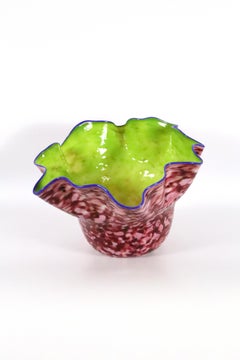
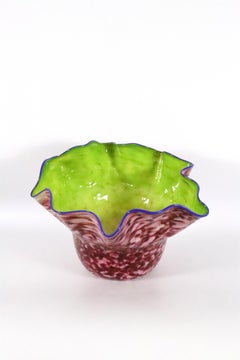
Zephyr Green Macchia with Blue Lip Wrap

Zephyr Green Macchia with Blue Lip Wrap

By Dale Chihuly

Located in Missouri, MO

Zephyr Green Macchia with Blue Lip Wrap, 1996 Dale Chihuly (American, b. 1941) 8 x 10 x 10 inches Signed and Dated on Bottom Born in Tacoma, Washington, Dale Chihuly became the most...

Category

1990s Modern More Art

Materials

Glass, Blown Glass

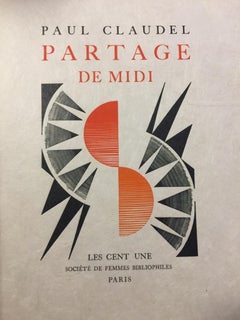
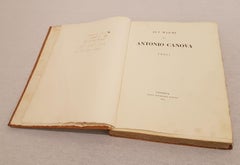
Partage de Midi - Rare Book by Paul Claudel - 1928

Partage de Midi - Rare Book by Paul Claudel - 1928

Located in Roma, IT

Edition of 101 copies plus 10 out of commerce on Japon Nacré including coloured illustrations by A. Latour. Copy in perfect conditions and uncut. Copy printed for the Countess Anna L...

Category

1920s Modern More Art

Materials

Paper

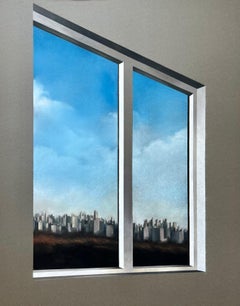
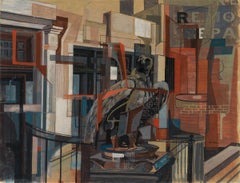
New York Window

New York Window

By Marina Stern

Located in Los Angeles, CA

New York Window, 1986, mixed media on illustration board, signed and dated lower right, 31 x 20 inches (image), 36 ½ x 28 inches (sheet) Marina Stern was a multifaceted New York-based artist whose works ranged from Expressionism and Pop Art to the Neo Immaculate paintings and pastels for which she is best known. A native of Venice, Stern and her family fled in 1939 to escape Italy’s repressive racial laws. After living in England for several years, the family arrived in the United States in 1941. A bright and capable student, Stern graduated from New York’s Julia Richman High School at age 15 and soon enrolled in the Pratt Institute to pursue an interdisciplinary education in the arts. Despite majoring in advertising design, Stern favored her fine art courses. She graduated from Pratt in 1946 at age 18 and began working for advertising agencies. After a brief marriage which ended in divorce, Stern married her second husband, who encouraged the artist to study at the Art Students League of New York, under the renowned Japanese American modernist, Yasuo Kuniyoshi. In Fall 1953, Stern gave birth to her first child, Michael, as she continued to study at the Arts Students League. Later in the Spring of 1957, Stern gave birth to her daughter Nina, as she continued to balance motherhood with her fine art practice and commercial art and design work. Stern’s first significant exhibitions were in 1962 at the Waverly Gallery and the Osgood Gallery, both in New York, followed by inclusion of her work in the Bertha Schaefer Traveling Collage Show from 1963 to 1964. Stern made a splash in the avant-garde art world in 1964 when Time magazine reviewed a show at Amel Gallery which featured three of her audio-visual paintings. Time’s critic noted that Stern created the “cleverest noisemakers” in the exhibition. Time dubbed this work “Talkie Pop,” a label which Stern rejected. Following this recognition, Stern was selected for inclusion in The New American Realism at the Worcester Art Museum—a major showcase of leading artists, including Andy Warhol, Robert Indiana, Roy Lichtenstein, and Jasper Johns. After the Worcester exhibition, Stern began to shift away from her “talking” Pop paintings to mysterious, interior scenes with orange, blue or black walls with windows or doors rising above black and white floors, often depopulated, but sometimes with figures. One of these works, Seven Minus Twenty-One Equals Seven, entered the permanent collection of New York’s Museum of Modern Art in 1966. By 1969, Stern began to incorporate industrial images into these scenes, and in the early 1970s, Stern created her first Neo-Immaculate works of rural, and urban landscapes, which she described as her most satisfying work. Stern often depicted locations that she held close -- New York, New Jersey, Iowa (where her son attended college), Sharon, Connecticut (where her family spent weekends and vacations) and her native Venice, Italy. Stern’s success as a Neo Immaculate painter led to consistent New York gallery representation for over two decades, first with Lee Ault & Co and James Yu Gallery, and then Forum Gallery, where she had six solo shows. In 1971, Stern completed a Neo-Immaculate mural commission for the Port Authority of New York, George Washington Bridge #1 and #2, followed by another commission from the NY Cityarts Public Art Program in 1976 for a mural on Mulberry Street. Stern also enjoyed solo exhibitions in Boston (Eleanor Rigelhaupt Gallery), Connecticut (Silo Gallery, the Hotchkiss School, J. Rosenthal Fine Arts Gallery, Tremaine Gallery, and Staib Gallery), Chicago (Michael Rosenfeld Gallery), and Santa Fe (Santa Fe East Gallery). Her work was included in group shows at over a dozen public institutions, including The National Academy of Design, The Staten Island Museum, Worcester Art Museum, the Oklahoma Art Center, and the Arkansas Art Center. The Southern Alleghenies Museum of Art hosted a retrospective of four decades of Stern’s work from January 19 to April 22, 2007, entitled Perception and the Cultural Environment: The Paintings of Marina...

Category

1980s Modern More Art

Materials

Oil Pastel, Pastel, Illustration Board, ABS

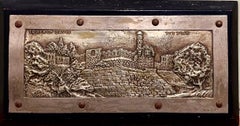
Vintage Jerusalem Sculpture Wall Plaque 1930's  Palestine Israeli Bezalel School

Vintage Jerusalem Sculpture Wall Plaque 1930's Palestine Israeli Bezalel School

Located in Surfside, FL

Repousse sculptural plaque from the original Bezalel Art School in Jerusalem. This is marked "Made in Palestine" as it is from the British Mandate period. It is in an Orientalist des...

Category

20th Century Modern More Art

Materials

Metal

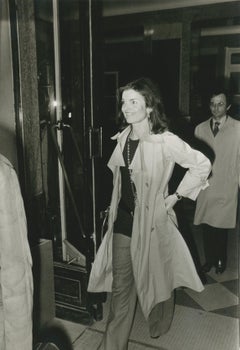
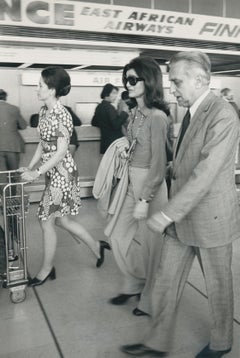
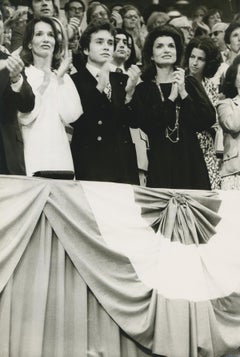
Jackie O. at the airport, Paris, France

Jackie O. at the airport, Paris, France

By Michel Giniès

Located in Cologne, DE

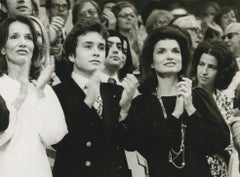
Jacqueline Lee "Jackie" Kennedy Onassis (July 28, 1929 – May 19, 1994) was an American socialite, writer, and photographer who became First Lady of the United States as the wife of P...

Category

1970s Modern More Art

Materials

Black and White, Silver Gelatin

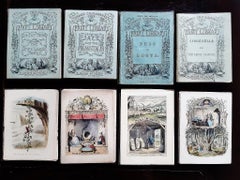
The Fairy Library - Rare Book Illustrated by George Cruikshank - 1850

The Fairy Library - Rare Book Illustrated by George Cruikshank - 1850

By George Cruikshank

Located in Roma, IT

The Fairy Library is a set of original modern rare books written by various authors and illustrated by George Cruikshank (London, 1792 - London, 1878) between 1853-1854. Published by David Bogue, London. Original First Edition. Format: in 8°. The book includes Four Volumes (they includes 30, 32, 31 and 40 pages with illustrated wrappers and 24 full page Etchings; there is also an extra suite of Twentyfour hand colored etchings). Mint conditions. George Cruikshank (London, 1792 - London, 1878) was a British caricaturist and book illustrator, praised as the "modern Hogarth" during his life. His book illustrations for his friend di lui Charles Dickens, and many other authors, reached an international audience. For Charles Dickens, Cruikshank illustrated Sketches by Boz...

Category

1850s Modern More Art

Materials

Paper, Etching

Jackie Onassis, Black and White Photography, ca. 1960

Jackie Onassis, Black and White Photography, ca. 1960

By Nik Wheeler

Located in Cologne, DE

Jacqueline Lee "Jackie" Kennedy Onassis (July 28, 1929 – May 19, 1994) was an American socialite, writer, and photographer who became First Lady of the United States as the wife of P...

Category

1960s Modern More Art

Materials

Silver Gelatin

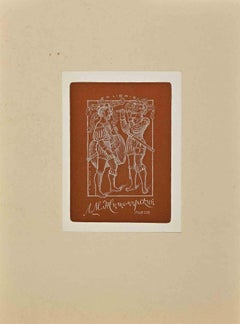
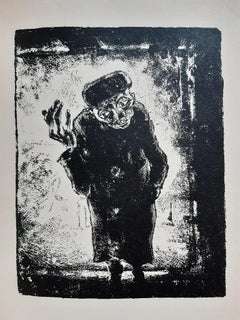
Ex Libris - Lithograph - Mid 20th Century

Ex Libris - Lithograph - Mid 20th Century

Located in Roma, IT

Ex Libris is a Modern Artwork realized in Mid 20th Century. Ex Libris. Lithograph on paper. The work is glued on ivory cardboard Total dimensions: 20x 15 cm. Good conditions. ...

Category

Mid-20th Century Modern More Art

Materials

Paper, Lithograph

Vintage Golden Age Syndicated Ink Drawing Cartoon Strip Susie Q Smith Comic Art

Vintage Golden Age Syndicated Ink Drawing Cartoon Strip Susie Q Smith Comic Art

By Jerry Walter & Linda Walter

Located in Surfside, FL

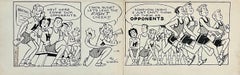
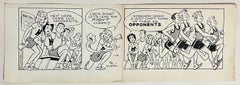
SUSIE Q. SMITH Medium: Newspaper comics Distributed by: King Features Syndicate First Appeared: 1945 Creators: Linda and Jerry Walter 6.5 X 19.5 Like her contemporaries, Aggie Mack, Candy and Patsy Walker (before her conversion to a superhero), Susie Q. Smith was a female Archie-type — not exactly an imitator, because Archie, who had started only four years earlier, hadn't yet become popular enough to spawn imitators, but part of his genre. She attended high school, where her teachers often seemed unreasonable to her, interacted with the opposite gender in a typically adolescent way, and her parents didn't completely understand her. And she was cute and perky as only a teenage girl can be. Susie was the star of a comic strip distributed by King Features, the biggest of the comic strip syndicates, whose other offerings have ranged from Jackys Diary to Prince Valiant. King launched the strip in both daily and Sunday form in 1945. Daily, she was only in a panel at first, but it expanded into a full, multi-panel strip on February 7, 1953. In a very odd turn of events, in 1953 the Walters chose to leave King Features behind and hitch their wagon at the McNaught Syndicate. The creators were Harold "Jerry" Walter and his wife, Linda. Jerry was also responsible for Jellybean Jones, who has nothing to do with Jughead Jones's young sister, a modern-day addition to the Archie cast of characters. Together, they did The Lively Ones during the 1960s. Though each was capable of doing both major jobs in comic strip production, their usual working method was for Jerry to dream up the ideas and write the dialog, while Linda did the artwork. The Walters also collaborated on a series of Susie Q. Smith comic books for Dell Comics. Instead of reprinting newspaper strips, these ran new stories by the Walters. Between 1951 and '54, four issues were published as part of the Four Color Comics series, where many minor comic strips, including Dotty Dripple, Timmy and Rusty Riley had found a home. It had no other media spin-offs. Susie Q. Smith had a respectable run in the newspapers, but it ended in 1959. Jerry Walter (1915 - 2007) was an abstract expressionist artist whose output of energetic and colorful paintings were the products of the rich artistic milieu of post-war New York City. He was born Harold Frank Walter in Mount Pleasant, Iowa on November 25, 1915. After graduating from Colgate University in 1937, Walter moved to New York City, where he studied drawing and painting at the New School and the Art Students’ League. Before concentrating seriously on his art, he spent several years as a successful copywriter and idea man for the advertising agencies of J. Walter Thompson, McCann Ericson, and BBDO. During this time, he also worked as a syndicated cartoonist. Collaborating with his wife, Linda, his best-known series was Susie Q. Smith, which first appeared in 1945 and described as a “female Archie type.” Very popular, the cartoon was later the subject of a series of comic books published from 1951 to 1954. After serving in the United States Army for three years during World War II, Walter began to paint seriously. He ascribed his earliest artistic influence to Joan Miró, whose Dog Barking at the Moon (1926) he viewed when he was twelve, the year he published his first cartoon. Walter later wrote that jazz, “the first native expression of so-called modernism” was a strong influence on his work. During the later 1940s, Walters spent time at the Research Studio in Maitland, Florida. Founded in 1937 by artist and architect J. André Smith and supported by the philanthropist Mary Curtis Bok, the Research Studio was a lively colony that hosted prominent artists, including Milton Avery, Ralston Crawford, and Doris Lee. While at the Studio, Walter’s work was purchased by Frank Crowninshield. A founding trustee of the Museum of Modern Art and editor of Vanity Fair, Crowinshield was a noted collector; his collection included important works by Pablo Picasso, Marc Chagall, Henri Matisse, Edgar Degas, George Bellows, and Pierre Bonnard. Returning to New York after his time at the Studio, Walter became an active member of the New York school of the abstract expressionist movement, and in the summer of 1956, Walter exhibited 13 paintings and a selection of drawings at New York’s Chase Gallery. The adroit manipulation of both color and composition evident in his work shows the influence of Abstract Expressionism, particularly Willem de Kooning, Arshile Gorky, and Hans Hofmann. illustrator and female cartoonist Linda Walter was the talented female mind behind the beloved "Susie Q. Smith" comic strip. She played an instrumental role in shaping the cultural landscape through her vibrant illustrations. Known for the timeless charm of the "Susie Q. Smith" comic strip, Linda's artistry brought joy and laughter to countless readers during the 1950s and continues to resonate with fans across generations. She was part of the Woodstock artists community. from Women in Comics: Linda Walter was the artist of newspaper strip Susie Q. Smith, which was written by her husband, Jerry. It was syndicated by King Features Syndicate and ran from 1945 to 1959. The Walters also contributed original Susie Q. Smith stories to Dell's Four Color comic books from 1951 to 1954. From 1964-1965, they created a singled panel comic called The Lively Ones. Vintage Golden Age of Comics era. The Golden Age of Comic Books describes an era in the history of American comic books from 1938 to 1956. During this time, modern comic books were first published and rapidly increased in popularity. The superhero archetype was created. Between 1939 and 1941 Detective Comics (DC) and its sister company, All-American Publications, introduced popular superheroes such as Batman and Robin, Wonder Woman, the Flash, Green Lantern, Doctor Fate, the Atom, Hawkman, Green Arrow and Aquaman. Timely Comics, the 1940s predecessor of Marvel Comics, had million-selling titles featuring the Human Torch, the Sub-Mariner, and Captain America. Another notable series was The Spirit by Will Eisner. Dell Comics' non-superhero characters (particularly the licensed Walt Disney animated-character comics) outsold the superhero comics of the day. The publisher featured licensed movie and literary characters such as Mickey Mouse, Donald Duck, Roy Rogers and Tarzan. Additionally, MLJ's introduction of Archie Andrews in Pep Comics #22 (December 1941) gave rise to teen humor comics, with the Archie Comics...

Category

1950s Modern More Art
Materials

Paper, Ink

Neel Tarang
Neel Tarang

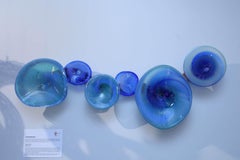
Neel Tarang

Located in Kolkata, West Bengal

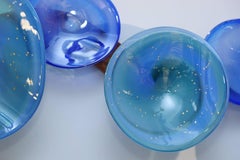
Neel Tarang Non Lead Coloured Crystal Glass W 36 x H 12 x D 6 in Neel Tarang is a wall-mounted installation composed of blown glass plates of a varying colour palette of blue. The ...

Category

2010s Modern More Art

Materials

Wood, Glass

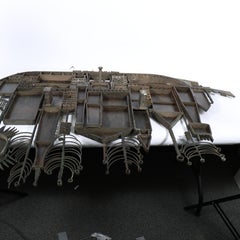
Vintage Gaetano Sciolari for Lightolier Round Chandelier Circa 1970s

Vintage Gaetano Sciolari for Lightolier Round Chandelier Circa 1970s

Located in Brooklyn, NY

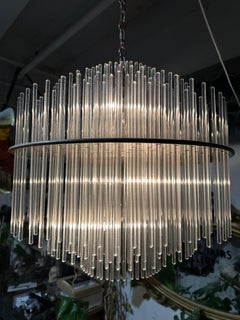
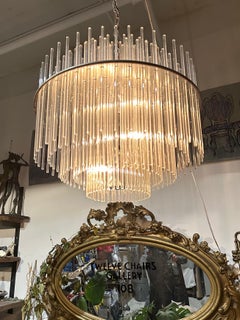
Original 1970s round chandelier designed by Gaetano Sciolari for Lightolier. A striking Mid-Century Modern statement piece featuring approximately 120 hand-blown glass rods cascading...

Category

Late 20th Century Modern More Art

Materials

Glass

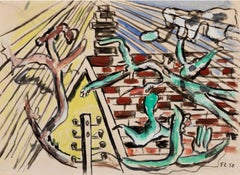
Le Toit
Le Toit

Le Toit

By Fernand Léger

Located in New York, NY

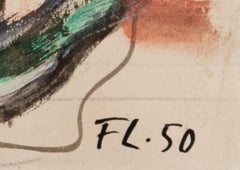
Gouache and watercolor on paper, 1950. Initialed by the artist "FL" and dated "50" lower right. Exhibition History: Blue Moon Gallery/Lerner-Heller Gallery, New York, "An intimate ...

Category

1950s Modern More Art
Materials

Gouache, Watercolor

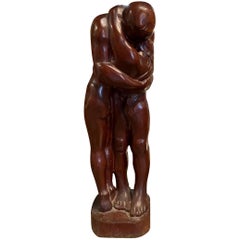
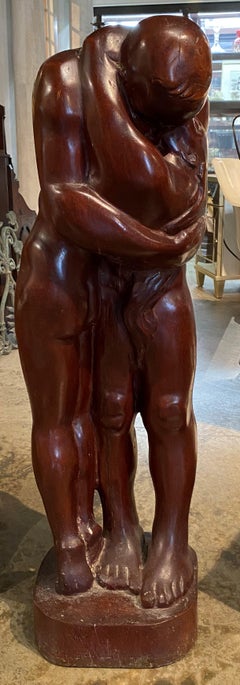
Nude Couple Embracing

Nude Couple Embracing

Located in Milford, NH

A fine modernist solid wooden sculpture of a nude couple embracing in the manner of Rodin by South African artist Herman Wald (1906-1970). Wald was born...

Category

Mid-20th Century Modern More Art

Materials

Wood, Paint

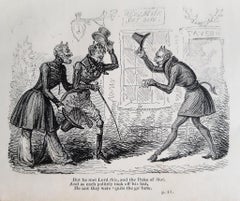
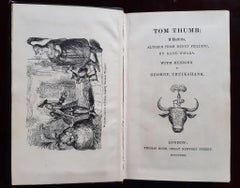
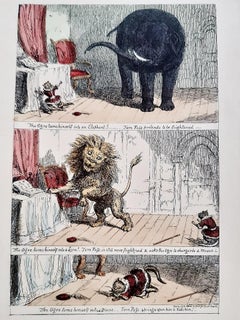
Comic Poems - Rare Book Illustrated by G. Cruikshank - 1830

Comic Poems - Rare Book Illustrated by G. Cruikshank - 1830

By George Cruikshank

Located in Roma, IT

Comic Poems ("Seven illustrated books in one volume") is an original modern rare book illustrated by George Cruikshank (London, 1792 - London, 1878) in 1829/1830. Published by Johnston, London. Original First Edition. Seven books bound in one volume (Tom Thumb, The real Devil’s Walk, Monsieur Tonson, The March of intellect, The Devil’s Walk, Steamers v. Stages and The Epping Hunt). Format: in 12°. The book includes Fortyfive etchings and woodcuts. Mint conditions. George Cruikshank (London, 1792 - London, 1878) was a British caricaturist and book illustrator, praised as the "modern Hogarth" during his life. His book illustrations for his friend di lui Charles Dickens, and many other authors, reached an international audience. For Charles Dickens, Cruikshank illustrated Sketches by Boz...

Category

1830s Modern More Art
Materials

Paper, Etching, Woodcut

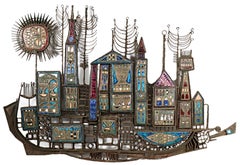
"Ship", from Life in Venice series

"Ship", from Life in Venice series

Located in Indianapolis, IN

This piece is unique in a series of only seven made. Wall-hanging sculpture, Torino, Italy, ca. 1965; Copper-washed ironwork and welded spill castings, metallic enameled copper; sign...

Category

Mid-20th Century Modern More Art

Materials

Metal, Copper, Enamel

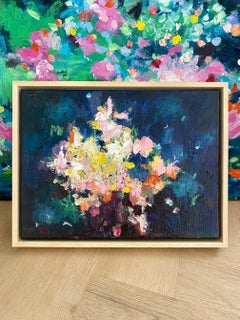
Travel notes  2007. Paper, pastel, 19x27 cm

Travel notes 2007. Paper, pastel, 19x27 cm

By Georgs Barkans

Located in Riga, LV

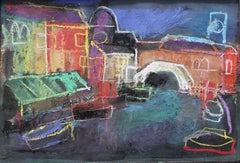
Travel notes 2007. Paper, pastel, 19x27 cm The focal point of the artwork is a colorful cityscape, reflecting the artist's impressions and experiences of a particular place during ...

Category

Early 2000s Modern More Art
Materials

Paper, Pastel

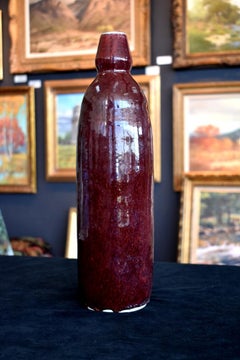
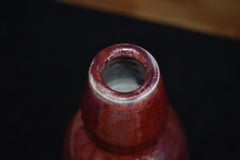
"Huge Oxblood Vase"  Beautiful from Texas Master Glazer Harding Black

"Huge Oxblood Vase" Beautiful from Texas Master Glazer Harding Black

By Harding Black

Located in San Antonio, TX

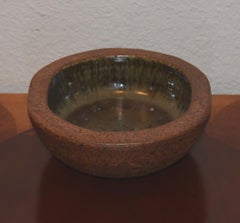
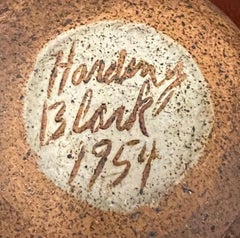
Harding Black San Antonio (1912 - 2004) Huge Heavy Oxblood Vase 1984 Height 17'' At widest 5'' Biography Harding Black San Antonio (1912 - 2004) Harding Black was born on a farm in Nueces County between Ingleside and Aransas Pass and moved with his family to San Antonio in 1916. There he graduated from Brackenridge High School and attended San Antonio Junior College (1929-30). In 1931 Black joined an archaeological expedition to the Big Bend area sponsored by the Witte Memorial Museum. Initially a painter, he was taught by Rudolph Staffel in 1933 to make wheel- thrown pottery and in the same year began to teach children's ceramic classes at the Witte. Between 1937 and 1939, Black directed ceramic installation in a San Antonio reconstruction project sponsored by the National Youth Administration and the Works Progress Administration art program. In 1955 he retired from teaching and devoted his time to ceramics. Black became a well-known ceramist from his research, innovations, and writings in the field. Exhibitions: San Antonio Local Artists Annual Exhibition (1939-42, 1945, 1947); Texas General Exhibition (1940 award, 1942, 1948 honorable mention); National Ceramic Annual Exhibition, Syracuse Museum of Art (1947-54); River Art Group, San Antonio (1948-49); National Collection of Fine Arts, Washington D.C. (1951, 1956); Dallas Museum of Fine Arts (1952 one-man); Martin Museum of Art, Baylor University (1991 one-man); San Antonio Museum of Art (1995 retrospective); National Museum of Art, Washington, D.C. (1995); University of Texas at Dallas, Irving (1998 retrospective). Collections: Dallas Museum of Art; Museum of Fine Arts, Houston; San Angelo Museum of Fine Arts; San Antonio Museum of Art; Martin Museum of Art, Baylor University, Waco; National Museum of American Art, Washington D.C.; New Orleans Museum of Art; Everson Museum of Art, Syracuse, new York; Alfred University (New York). Harding Black resided in San Antonio Texas where he worked as a potter for over 60 years and far as anyone knows he was completely self taught. I find it amazing that anyone could ever accomplish what he did with with no formal training in either ceramics or chemistry. It was a long and prolific journey from the early hand built earthenware pottery to become recognized as a master of glazes. While I feel that his forms often could be better this is more than compensated for by the spectacular glazes he developed. Constant experimentation and his acquired knowledge of chemistry were the foundations for the wonderful glazes that adorn his pottery. The following quote is from an interview with Rudolf Staffel His copper reds are unbelievably beautiful. Harding was a master of glazes and one of the most generous human beings in the ceramic field that I've known. He had literally a room full of beautifully organized test tiles of all his glazes, and he would just throw the room open to anybody who wanted to rummage through his tiles. All the recipes were there and he shared them with anyone who was interested. It was wonderful to go and visit him. Although accurate records of all test firings were kept for reference it I have been told that it would be difficult to reproduce many of these glazes because of the kiln he built and clays he used. This may not be the case because in a recent phone conversation (4/11/2007) with Peter Pinnell he told me that some of his students had success replicating some glazes using Harding's formulas By concentrating on the bowl and vessel forms Harding remained true to the historical traditions of pottery making. The magnificent Harding Black journey began in 1932. At that time he joined the Witte Museum Archaeological Society which provided him with access to their collections of Native American pottery. Harding became fascinated by these pollychromed vessels and he began attempting to create hand built pots. He had very little or no success but a life long of working in clay had begun. It was about this time that he met up with Rudolf Staffel and it was from him that Harding learned wheel throwing and developed ideas of how to operate a studio. Harding was given access to working space at the Witte where he built a wheel and in 1933 he was given a position as ceramic instructor. In this position it was his responsibility to establish a ceramics department. The first kiln Harding built was using plans that were obtained from Newcomb College. He scrounged parts from a junkyard which were used in its construction. This project was not totally successful because of problems reaching required temperatures. As usual this did not deter Harding. He seemed to have a wonderful ability to learn from failure and move on. In the early 1940's Harding began working with formulas for copper red glazes prepared by Arthur Baggs and Edgar Littlefield. This work only added to his interest in Oriental pottery and fostered a desire to rework many old glazes. Being greatly influenced by A Potters Book published in 1940 by Bernard Leach Harding was now on his way seeking to incorporate form, function and surface treatment into a single entity where the whole is greater than the sum of the parts. In the 1950's Harding left the Witte and built his own studio where he spent the rest of his life creating his wonderful art. The body of his work is a living tribute to the Harding Black lifelong love of ceramics. Along with being a researcher he was also a teacher always willing to share his knowledge with others. He spent his life producing pots and occasionally taking time off to do a bit if fishing. According to Harding Black - Harding Black 11/14/90 "I am one of the lucky ones. When I get up in the morning I can hardly wait to get to work." 1912 Born April 15 near Aransas Pass, Texas 1916 Family moved to San Antonio 1929 Graduated from Breckenridge High School 1929-30 Attended San Antonio Junior College 1931 Joined Archaeological Society of the Witte Museum, San Antonio, and participated in excavations of ancient Basket maker Indian mounds and caves in the Big Bend area of Texas 1933 Taught by Rudolf Staffel to make wheel-thrown pottery. Set tip studio in a streetcar behind Witte Museum and began teaching children’s ceramic classes 1937-39 Appointed Superintendent of Ceramic Installation for N Y A /W P A reconstruction project in San Antonio 1943 Moved from streetcar studio to new facilities in the reconstructed Ruiz House on the grounds of the Witte Museum Began firing to stoneware temperatures 1947-54 Exhibited each year in the annual National Ceramic Exhibition, Syracuse Museum of Art 1951 Exhibited at the National Museum of Art, Washington, DC 1952 Toured ceramic centers throughout the United States 1953 “Opening the Door to Copper-Reds” by Harding Black, published in January issue of Ceramics Monthly “Harding Black Profile” published in February issue of Ceramics Monthly 1954 “Iron Spotted Glazes” by Harding Black, published in February issue of Ceramics Monthly 1955 Built present studio at 8212 Broadway, San Antonio Retired from teaching at the Witte Museum 1956 Exhibited at the National Museum of Art, Washington, DC 1961 “Lava Glazes” by Harding Black, published in October issue of Ceramics Monthly 1964 “Harding Black Texas Potter” by Jean R Lange, published in November issue of Ceramics Monthly 1971 The Meyer Family Master Potters of Texas, co-authored by Harding Black and Georgeanna H Greet 1980 Harding Black’s biographical information entered into the archives of the Smithsonian Institution, Washington, D C 1983 Harding Black traveled throughout China 1984 Awarded Glaze Research Grant by Southwest Craft Center, San Antonio 1985 Solo exhibition at the Southwest Crafts Center 1987 Selected as Artist of the Year by the San Antonio Art League 1988 Incarnate Word College, San Antonio, establishes Harding Black Fund to aid ceramics students 1990 “Harding Black Pottery...

Category

1980s Modern More Art
Materials

Ceramic

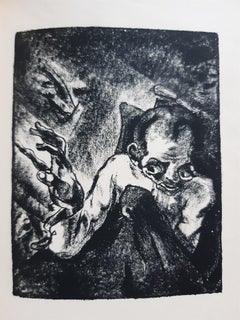
Untitled, Intaglio on Paper, Modern Indian Artist "In Stock"

Untitled, Intaglio on Paper, Modern Indian Artist "In Stock"

By Laxma Goud

Located in Kolkata, West Bengal

K. Laxma Goud - Untitled, Intaglio - 12.5 x 9.5 inches (unframed size) Etching on Paper, 2022 ( Unframed & Delivered ) Style : Goud displays versatility over a range of mediums, fro...

Category

2010s Modern More Art
Materials

Paper, Etching

Second Avenue, New York City

Second Avenue, New York City

Located in New York, NY

Oil on thick card stock, 1960. Signed by the artist in oil, lower right recto. Provenance: the artist, Montclair, NJ; Margaret Kelly, Bloomsburg, PA; private collection; Illinois, ...

Category

1960s Modern More Art
Materials

Oil

Artichoke, Large Tapestry by Charles Chamot

Artichoke, Large Tapestry by Charles Chamot

By Charles Chamot

Located in Long Island City, NY

Artist: Charles Chamot, Peruvian/American (1951) Title: Artichoke Year: 1979 Medium: Woven Wool Tapestry, signed and numbered on label, verso Edition: 1/6 Size: 84 x 72 inches

Category

1970s Modern More Art
Materials

Tapestry, Wool

"Etah" Rope work on canvas, by Axelle Gosse (40x 60 in), 2026

"Etah" Rope work on canvas, by Axelle Gosse (40x 60 in), 2026

Located in Paris, France

This artwork by Axelle Gosse explores the interplay of structure, rhythm, and color through a complex composition crafted from rope and textile. Meticulously arranged lines create a ...

Category

2010s Modern More Art
Materials

Textile

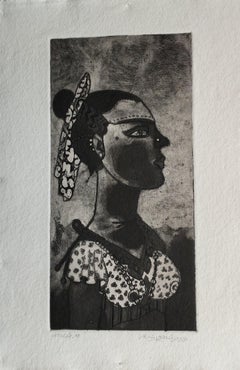
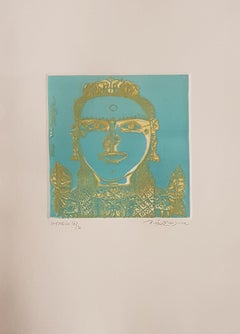
Unique South Indian Woman, Etching on paper, Green, Gold, Modern Artist"In Stock"

Unique South Indian Woman, Etching on paper, Green, Gold, Modern Artist"In Stock"

By Laxma Goud

Located in Kolkata, West Bengal

K. Laxma Goud - Untitled - 15 x 11 inches (unframed size) Etching on paper. Edition of work. Style : Goud displays versatility over a range of mediums, from printmaking, drawing, watercolour, gouache and pastels to glass painting and sculpture in bronze and terracotta. Over the many years of his artistic career, he is known to have moved from one medium to another with élan. Fellow artist T. Vaikuntam, in one of his interviews, reminisces that it was Laxma Goud who introduced him to the art of sketching and made him aware of the possibilities of this medium. When one looks at Goud’s work, rustic, raw, and potent might be the first words that come to mind. His portraits of men and women represent the dynamic Indian ethos rather than particular individual identities. A recurrent theme with the artist is that of the erotic, treated as an active and powerful aspect of male and female sexuality and existence. Goud’s work is dramatic; his protagonists are raw and vivacious in their appeal, imbibed with energy that reverberates through his strokes and textures. Most of Goud’s art is centered on the rural, recreating landscapes from his childhood as if they were frozen in time. In the artist’s later work, his figures turn softer, more introspective than brash in their outlook. About the Artist and his work : Born : 1940 in Nizampur, Andhra Pradesh...

Category

2010s Modern More Art
Materials

Paper, Etching

Modern more art for sale on 1stDibs.
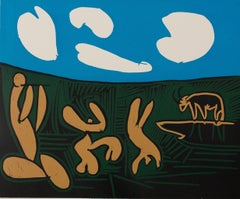
Find a wide variety of authentic Modern more art available for sale on 1stDibs. Works in this style were very popular during the 21st Century and Contemporary, but contemporary artists have continued to produce works inspired by this movement. If you’re looking to add more art created in this style to introduce contrast in an otherwise neutral space in your home, the works available on 1stDibs include elements of orange, red, blue, yellow and other colors. Many Pop art paintings were created by popular artists on 1stDibs, including Jean Jeacques Grandville, Mino Maccari, Mauro Oliveira, and Pablo Picasso. Frequently made by artists working with Paper, and Woodcut Print and other materials, all of these pieces for sale are unique and have attracted attention over the years. Not every interior allows for large Modern more art, so small editions measuring 0.5 inches across are also available. Prices for more art made by famous or emerging artists can differ depending on medium, time period and other attributes. On 1stDibs, the price for these items starts at $44 and tops out at $275,000, while the average work sells for $535.