Early 1900s Art

2,070 Results
to
289
966
502
331
187
158
Overall Width
to
Overall Height
to
7,660
21,522
166,433
236,923
2,346
4,720
6,589
6,010
15,877
21,212
26,520
19,350
14,129
5,469
325
285
118
99
10
8
5
5
5
4
1
1,106
869
45
1,218
678
442
376
347
197
126
123
100
97
96
95
92
91
84
83
77
75
74
63
947
658
567
395
393
100
45
27
24
17
908
288
1,092
1,043
Period: Early 1900s
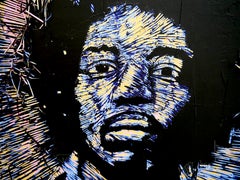
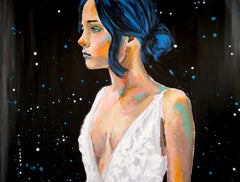
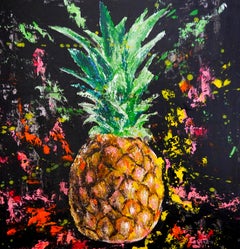
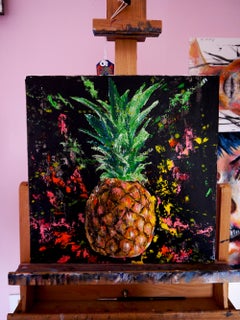
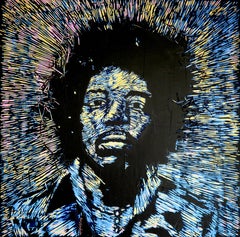
French school (Un) Classical Hendrix Chut les Barbizons

French school (Un) Classical Hendrix Chut les Barbizons

By Bazevian DelaCapuciniere

Located in Zofingen, AG

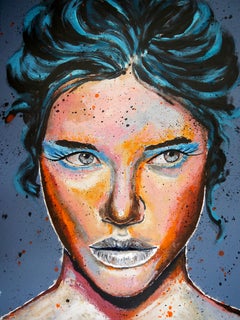
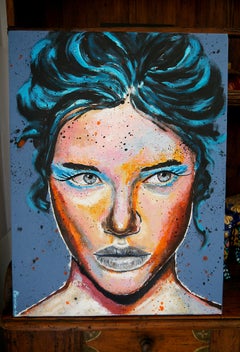
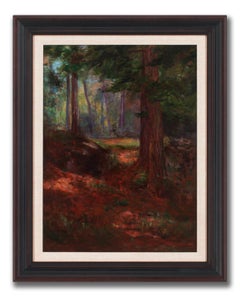
➡️ (Un) Classical Hendrix⬅️ New technique by carving the surface of several layout of paints. Thanks for supporting my new technique ⭐Technique: acrylic on wooden frame 55x55cm ■■ ...

Category

Tonalist Early 1900s Art

Materials

Gesso, Mixed Media, Oil, Stretcher Bars

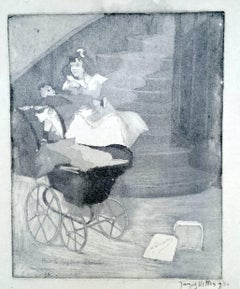
Pour le Bapteme de Madeleine

Pour le Bapteme de Madeleine

By Jacques Villon

Located in New York, NY

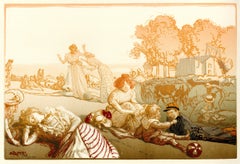
Jacques Villon (1875-1963), Pour le Bapteme de Madeleine, 1900, aquatint , etching, printed in soft blue ink, signed in pencil lower right and numbered 7/10. On laid paper. Reference...

Category

Impressionist Early 1900s Art

Materials

Etching, Aquatint

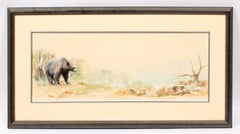
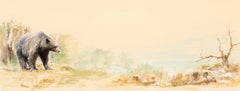
Portrait of a Bear
Portrait of a Bear

Portrait of a Bear

Located in Buffalo, NY

A fantastic original painting on paper by an unknown but highly talented artist. This work is signed lower right what appears to be Chappell, although the exact artist has not been ...

Category

Realist Early 1900s Art

Materials

Paper, Watercolor

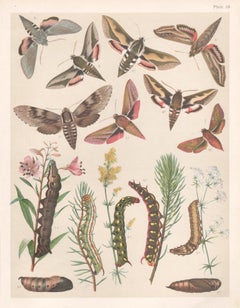
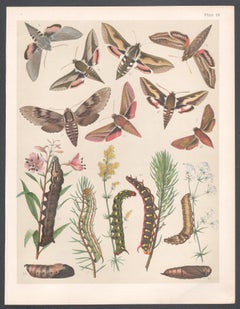
Hawk Moths, English antique natural history Lepidoptera chromolithograph print

Hawk Moths, English antique natural history Lepidoptera chromolithograph print

Located in Melbourne, Victoria

English hawk moth chromolithograph, circa 1900. Plate number top right. From an English series of illustrations of butterflies and moths. Butterflies / moths are numbered and there i...

Category

Art Nouveau Early 1900s Art

Materials

Lithograph

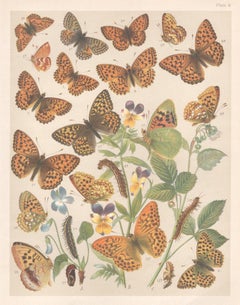
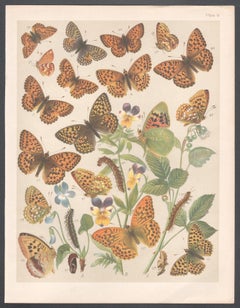
Butterflies, English antique natural history Lepidoptera chromolithograph print

Butterflies, English antique natural history Lepidoptera chromolithograph print

Located in Melbourne, Victoria

English butterfly chromolithograph, circa 1900. Plate number top right. From an English series of illustrations of butterflies and moths. Butterflies / moths are numbered and there i...

Category

Art Nouveau Early 1900s Art

Materials

Lithograph

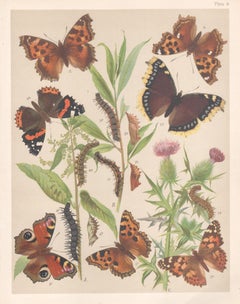
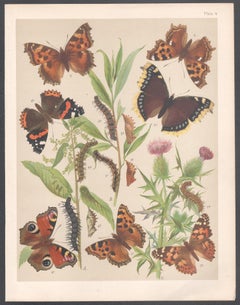
Butterflies, English antique natural history Lepidoptera chromolithograph print

Butterflies, English antique natural history Lepidoptera chromolithograph print

Located in Melbourne, Victoria

English butterfly chromolithograph, circa 1900. Plate number top right. From an English series of illustrations of butterflies and moths. Butterflies / moths are numbered and there i...

Category

Art Nouveau Early 1900s Art

Materials

Lithograph

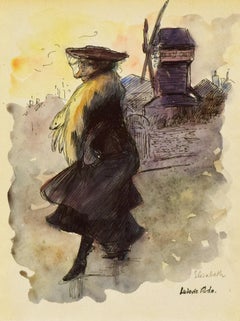
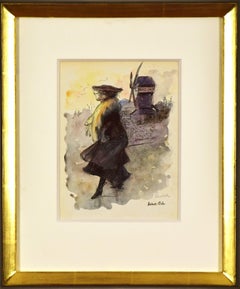
Watercolour artwork by Ludovic Rodo Pissarro titled 'Le Moulin de la Galette'

Watercolour artwork by Ludovic Rodo Pissarro titled 'Le Moulin de la Galette'

By Ludovic-Rodo Pissarro

Located in London, GB

Le Moulin de la Galette by Ludovic Rodo Pissarro (1878 - 1952) Watercolour and ink on paper 21 x 15.7 cm (8 ¼ x 6 ¼ inches) Signed with Estate stamp and inscribed Elisabeth lower ri...

Category

Post-Impressionist Early 1900s Art

Materials

Ink, Watercolor, Paper

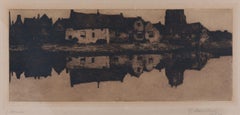
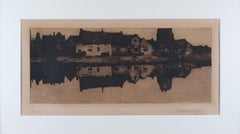
Evening - The depth of the visible -

Evening - The depth of the visible -

Located in Berlin, DE

Max Clarenbach (1880 Neuss - Cologne 1952), Evening. Etching, 18 x 41 cm (platemark), 33.5 x 57 cm (frame), inscribed "Abend" in pencil at lower left, signed and dated "M. Clarenbach. 28.III.[19]09". Framed and mounted under glass. - Somewhat browned and slightly foxed. About the artwork The horizontally elongated etching depicts the panoramic view of a small town as seen from the other side of the river. There are gabled houses on the left and a mighty church spire on the right. The bourgeois houses and the large religious building indicate the urban character. These buildings are rendered in dark tones to emphasise the lighter row of houses in the centre of the picture, closer to the water. The chiaroscuro contrast creates two parallel planes that open up a space for the imagination of what the city could be. The imagination is stimulated by the almost entirely dark, barely recognisable buildings, while the arm of the river leading into the city further stimulates the imagination. However, as the silhouette of the city as a whole is reflected in the water, the parallel planes are perceived as a band of houses that stretches across the entire horizontality of the etching and seems to continue beyond the borders of the picture. The reflection has almost the same intensity as the houses themselves, so that the band of buildings merges with their reflection to form the dominant formal unit of the picture. Only the parallel horizontal hatching creates the convincing impression of seeing water, demonstrating Max Clarenbach's mastery of the etching needle. The water is completely motionless, the reflection unclouded by the slightest movement of the waves, creating a symmetry within the formal unity of the cityscape and its reflection that goes beyond the motif of a mere cityscape. A pictorial order is established that integrates everything in the picture and has a metaphysical character as a structure of order that transcends the individual things. This pictorial order is not only relevant in the pictorial world, but the picture itself reveals the order of the reality it depicts. Revealing the metaphysical order of reality in the structures of its visibility is what drives Clarenbach as an artist and motivates him to return to the same circle of motifs. The symmetry described is at the same time inherent an asymmetry that is a reflection on art: While the real cityscape is cut off at the top of the picture, two chimneys and above all the church tower are not visible, the reflection illustrates reality in its entirety. The reflection occupies a much larger space in the picture than reality itself. Since antiquity, art has been understood primarily as a reflection of reality, but here Clarenbach makes it clear that art is not a mere appearance, which can at best be a reflection of reality, but that art has the potential to reveal reality itself. The revealed structure of order is by no means purely formalistic; it appears at the same time as the mood of the landscape. The picture is filled with an almost sacred silence. Nothing in the picture evokes a sound, and there is complete stillness. There are no people in Clarenbach's landscape paintings to bring action into the picture. Not even we ourselves are assigned a viewing position in the picture, so that we do not become thematic subjects of action. Clarenbach also refrains from depicting technical achievements. The absence of man and technology creates an atmosphere of timelessness. Even if the specific date proves that Clarenbach is depicting something that happened before his eyes, without the date we would not be able to say which decade, or even which century, we are in. The motionless stillness, then, does not result in time being frozen in the picture, but rather in a timeless eternity that is nevertheless, as the title "Abend" (evening), added by Clarenbach himself, makes clear, a phenomenon of transition. The landscape of the stalls is about to be completely plunged into darkness, the buildings behind it only faintly discernible. The slightly darkened state of the sheet is in keeping with this transitional quality, which also lends the scene a sepia quality that underlines its timelessness. And yet the depiction is tied to a very specific time. Clarenbach dates the picture to the evening of 28 March 1909, which does not refer to the making of the etching, but to the capture of the landscape's essence in the landscape itself. If the real landscape is thus in a state of transition, and therefore something ephemeral, art reveals its true nature in that reality, subject to the flow of phenomena, is transferred to an eternal moment, subject to a supra-temporal structure of order - revealed by art. Despite this supratemporality, the picture also shows the harbingers of night as the coming darkening of the world, which gives the picture a deeply melancholy quality, enhanced by the browning of the leaf. It is the philosophical content and the lyrical-melancholic effect of the graphic that give it its enchanting power. Once we are immersed in the image, it literally takes a jerk to disengage from it. This etching, so characteristic of Max Clarenbach's art, is - not least because of its dimensions - a major work in his graphic oeuvre. About the artist Born into poverty and orphaned at an early age, the artistically gifted young Max Clarenbach was discovered by Andreas Achenbach and admitted to the Düsseldorf Art Academy at the age of 13. "Completely penniless, I worked for an uncle in a cardboard factory in the evenings to pay for my studies.” - Max Clarenbach At the academy he studied under Arthur Kampf, among others, and in 1897 was accepted into Eugen Dücker...

Category

Realist Early 1900s Art
Materials

Etching

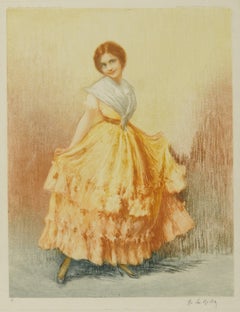
Merieanna
Merieanna

Merieanna

By Almery Lobel-Riche

Located in Fairlawn, OH

Merieanna Etching and aquatint, c. 1900 Signed by the artist in pencil lower right Titled in pencil lower right corner of sheet Annotated "4" lower left below image Publisher's dryst...

Category

Impressionist Early 1900s Art

Materials

Aquatint

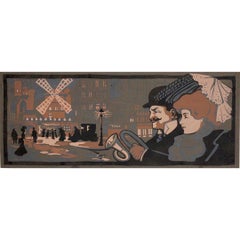
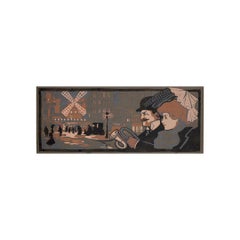
Circa 1900 original poster - Couple in front of the Moulin rouge in Paris

Circa 1900 original poster - Couple in front of the Moulin rouge in Paris

Located in PARIS, FR

This circa 1900 poster beautifully evokes the vibrant nightlife of Paris at the height of the Belle Époque. Set against the glowing façade of the Moulin Rouge, it captures a fashiona...

Category

Early 1900s Art

Materials

Paper, Lithograph, Linen

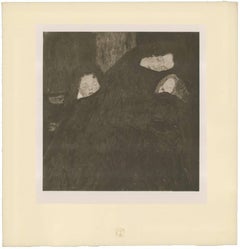
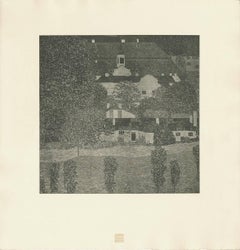
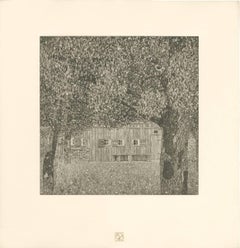
H.O. Miethke Das Werk folio "Farm House in Buchberg" collotype print

H.O. Miethke Das Werk folio "Farm House in Buchberg" collotype print

DAS WERK GUSTAV KLIMTS, a portfolio of 50 prints, ten of which are multicolor collotypes on chine colle paper laid down on hand-made heavy cream wove paper with deckled edges; under each of the 50 prints is a gold signet intaglio printed on the cream paper each of which Klimt designed for the publication as unique and relating to its corresponding image; H.O. Miethke, Editor-Publisher; k.k. Hof-und Staatsdruckerei, Printer; printed in a limited edition of 300 numbered plus several presentation copies; Vienna, 1908-1914. The idea of collaboration in the arts is anything but new; however it has so often been viewed and assessed as somehow devaluing the intrinsic worth of art. It’s as if it was a dirty secret to be hidden away. More so even than the eroticism explored by Klimt, which divided public opinion, the artistic avant-garde began to boldly flaunt artistic collaboration beginning in the 19th century- which gained steam in the first part of the 20th century- to become a driving vehicle of contemporary artistic creation. Viewed in this context, the folios of collotype prints published by H.O. Miethke in Vienna between 1908-1914 known as Das Werk Gustav Klimts, are important art documents worthy of as much consideration for their bold stand they take on established ways of thinking about artistic collaboration as they are for their breathtakingly striking images. 1908 is indeed a watershed moment in the history of art. To coincide with the 60th anniversary of the reign of Emperor Franz Joseph I, Kunstschau opened in Vienna in May of that year. It was there that Klimt delivered the inaugural speech. Speaking about the avant-garde group’s unifying philosophy of Gesamtkunstwerk, or the synthesis of the arts, Klimt shared his belief that the ideal means to bring artists and an audience together was via “work on major art projects.” It was at Kunstschau 1908 that Klimt first exhibited his most iconic painting, The Kiss, as well as The Sunflower, Water Snakes I and II and Danae. It was at Kunstschau 1908 that Das Werk Gustav Klimts was first available for purchase. Thanks to Galerie Miethke’s organization, Kunstschau 1908 was possible. Miethke’s pioneering art...

Category

Vienna Secession Early 1900s Art

Materials

Paper

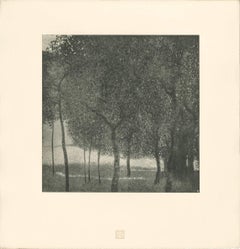
H.O. Miethke Das Werk folio "Fruit Trees" collotype print

H.O. Miethke Das Werk folio "Fruit Trees" collotype print

DAS WERK GUSTAV KLIMTS, a portfolio of 50 prints, ten of which are multicolor collotypes on chine colle paper laid down on hand-made heavy cream wove paper with deckled edges; under ...

Category

Vienna Secession Early 1900s Art

Materials

Paper

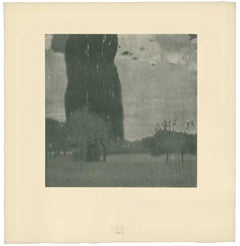
H.O. Miethke Das Werk folio "The Great Poplar I" collotype print

H.O. Miethke Das Werk folio "The Great Poplar I" collotype print

DAS WERK GUSTAV KLIMTS, a portfolio of 50 prints, ten of which are multicolor collotypes on chine colle paper laid down on hand-made heavy cream wove paper with deckled edges; under ...

Category

Vienna Secession Early 1900s Art

Materials

Paper

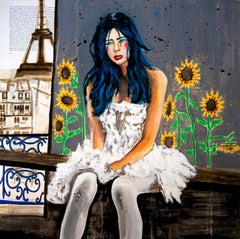
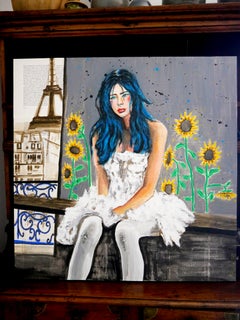
French School Portrait PS 252 La dernière danse des tournesols Chut les Barbizon

French School Portrait PS 252 La dernière danse des tournesols Chut les Barbizon

By Bazevian DelaCapuciniere

Located in Zofingen, AG

La dernière danse des tournesols - The last dance of Sunflowers In this evocative mixed-media composition, it brings to life a haunting yet tender portrayal of a solitary young woman...

Category

Tonalist Early 1900s Art
Materials

Oil, Acrylic, Mixed Media, Stretcher Bars

Bucolique Moderne
Bucolique Moderne

Bucolique Moderne

By Auguste Louis Lepère

Located in Fairlawn, OH

Bucolique Moderne Color woodcut, 1901 Edition of 550 impressions on Holland paper (as here) and an edition of 200 impressions printed on Japan paper signed in pencil by the artist. References And Exhibitions: Published in Di Gesellschaft fur vervielfältigende Kunst à Vienne Reference: Lotz Brissonneau 271 v/V Illustrated: Musee D'Orsay, Auguste Lepere ou lerenouveau de bois grave, No. 20 Vital, Auguste Lepere 1849-1918, No. 171. Illustrated: Musee de le Vendee, no. 171 (see photo) Musee D'Orsay, Auguste Lepere ou lerenouveau de bois grave, No. 20 Vital, Auguste Lepere 1849-1918, No. 171. Auguste Louis Lepère...

Category

Impressionist Early 1900s Art

Materials

Woodcut

Knaresborough
Knaresborough

Knaresborough

By Sir Frank Short

Located in Plano, TX

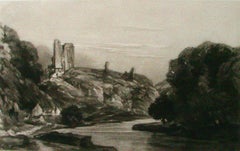
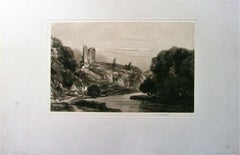
Knaresborough (after a watercolor by Peter De Wint, 1784-1849). c. 1904. Mezzotint. Hardie catalog 80 state ii. 7 7/16 x 11 3/8 (sheet 13 3/8 x 18). A very rich impression, printed o...

Category

Impressionist Early 1900s Art

Materials

Mezzotint

H.O. Miethke Das Werk folio "The Hope II" collotype print

H.O. Miethke Das Werk folio "The Hope II" collotype print

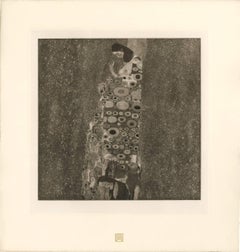
DAS WERK GUSTAV KLIMTS, a portfolio of 50 prints, ten of which are multicolor collotypes on chine colle paper laid down on hand-made heavy cream wove paper with deckled edges; under ...

Category

Vienna Secession Early 1900s Art

Materials

Paper

H.O. Miethke Das Werk folio "Death and Life" collotype print

H.O. Miethke Das Werk folio "Death and Life" collotype print

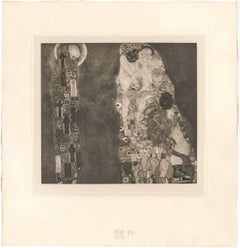
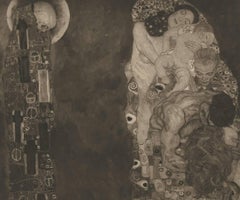
DAS WERK GUSTAV KLIMTS, a portfolio of 50 prints, ten of which are multicolor collotypes on chine colle paper laid down on hand-made heavy cream wove paper with deckled edges; under ...

Category

Vienna Secession Early 1900s Art

Materials

Paper

Avril
Avril

Avril

By Manuel Robbe

Located in Fairlawn, OH

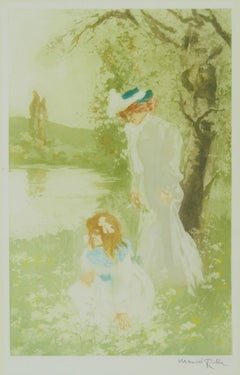
Avril (April) Color aquatint and etching, c. 1906 Signed in pencil lower right Edition: c. 100 Excellent impression, fresh colors Reference: Merrill Chase Volume 1, No. 9 Condition: ...

Category

Impressionist Early 1900s Art

Materials

Aquatint

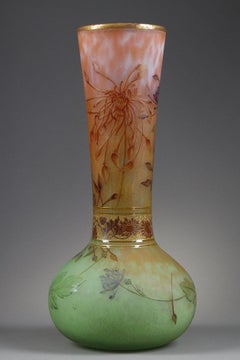
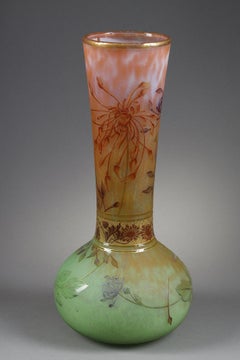
Vase with Chrysanthemums

Vase with Chrysanthemums

By Daum

Located in PARIS, FR

Vase with Chrysanthemums by DAUM Large vase decorated with Chrysanthemums flowers Multi-layer blown-molded glass Glass colored by vitrification of powders Decor in reserve acid-etch...

Category

Art Nouveau Early 1900s Art

Materials

Blown Glass

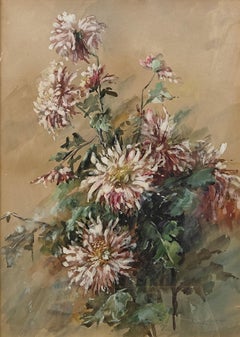
"Chrysanthemums" Anne Ramsdell Congdon, Pink Impressionist Flowers Still Life

"Chrysanthemums" Anne Ramsdell Congdon, Pink Impressionist Flowers Still Life

Located in New York, NY

Anne Ramsdell Congdon Chrysanthemums, 1900 Signed and dated lower right Watercolor on paper 26 x 19 inch Provenance Matthew O'Connell, Gloucester, Massachusetts Anne Ramsdell Congdon studied art at a young age in Worcester. Originally a watercolorist, she attended the Académie de Lécluse in Paris in 1891, and later with Rhoda Holmes Nichols (1854–1938), an assistant to William Merritt Chase (1849-1916), at a summer extension to Chase’s Shinnecock School of Art in Oguinquit, Maine. She also studied with Boston and Oguinquit marine painter and etcher Charles H. Woodbury (1864–1940), who taught his students to “paint in verbs, not nouns,” thus advocating the quick stroke of a brush. She was active in Nashua as a watercolorist until she married a New Hampshire surgeon and Nantucket native, Dr. Charles E. Congdon, in 1902. She reportedly suspended her art career to maintain an antiques shop in Nashua, her birthplace, while raising two sons. By the mid-1920s, she was attending the summer classes in oil painting with Frank Swift Chase (1886-1958) on Nantucket, and she rapidly became a plein air painter in the bold style of her new mentor. The Boston Herald observed, “Her work is direct, facile, and without mannerisms.” She painted a series of waterfront paintings...

Category

American Impressionist Early 1900s Art

Materials

Paper, Watercolor

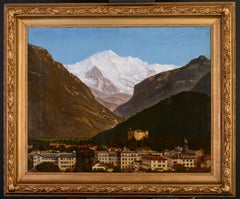
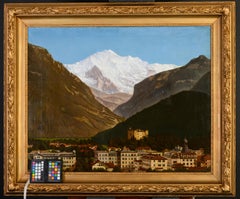
Interlaken Switzerland

Interlaken Switzerland

Located in Douglas, Isle of Man

George Hornemann, is an unknown painter of either Swiss, Austrian or German extraction. Our curators have so far been unable to trace this artist where we are wondering if the name a...

Category

Early 1900s Art

Materials

Canvas, Oil

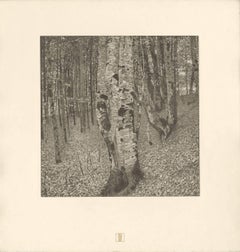
H.O. Miethke Das Werk folio "Beech Forest II" collotype print

H.O. Miethke Das Werk folio "Beech Forest II" collotype print

DAS WERK GUSTAV KLIMTS, a portfolio of 50 prints, ten of which are multicolor collotypes on chine colle paper laid down on hand-made heavy cream wove paper with deckled edges; under ...

Category

Vienna Secession Early 1900s Art

Materials

Paper

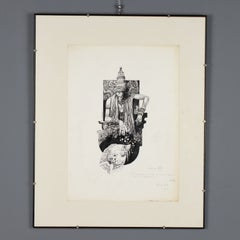
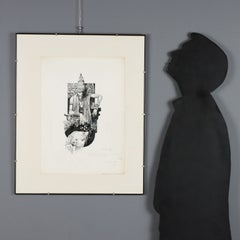
Comic Strip Panel by Sergio Toppi, 20th Century

Comic Strip Panel by Sergio Toppi, 20th Century

Located in Milan, IT

Mixed media (ink and pencil) on paper. Signed in the center on the left. The title of the illustration, "The little fish said to Manu: 'Save me, and I'll save you,'" is written in pe...

Category

Contemporary Early 1900s Art

Materials

Mixed Media

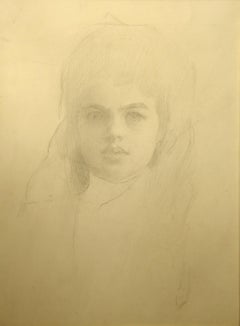
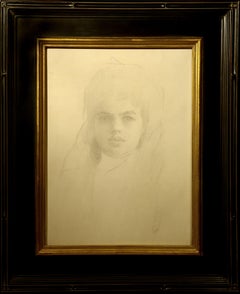
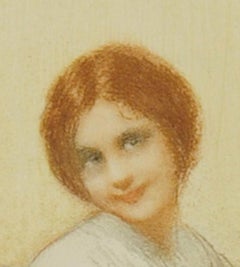
"Portrait of a Girl, " attrib. to Edmund Tarbell, graphite, portrait, 1900-1910

"Portrait of a Girl, " attrib. to Edmund Tarbell, graphite, portrait, 1900-1910

Located in Wiscasset, ME

Born in Groton, Massachusetts in 1862, impressionist painter Edmund Charles Tarbell studied with George H. Bartlett at the Massachusetts Normal Art School, under Otto Grundmann at the School of the Museum of Fine Arts in Boston and in 1883, entered the Académie Julian to study under Gustave Boulanger and Jules Joseph Lefebvre. In 1884, his education included a Grand Tour to Italy and the following year to Belgium, Germany and Brittany. Tarbell returned to Boston in 1886 where he began his career as an illustrator, private art instructor and portrait painter. He was a member of the Ten American Painters and was a leading member of a group of painters which came to be known as the Boston School. In 1889 Tarbell assumed the position of his former mentor, Otto Grundmann, at the Museum School. His students included Bertha Coolidge, Margaret Fitzhugh Browne...

Category

Impressionist Early 1900s Art

Materials

Graphite

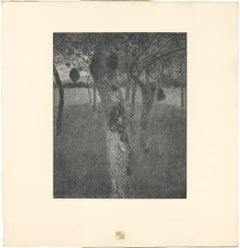
H.O. Miethke Das Werk folio "Orchard in the Evening" collotype print

H.O. Miethke Das Werk folio "Orchard in the Evening" collotype print

DAS WERK GUSTAV KLIMTS, a portfolio of 50 prints, ten of which are multicolor collotypes on chine colle paper laid down on hand-made heavy cream wove paper with deckled edges; under ...

Category

Vienna Secession Early 1900s Art

Materials

Paper

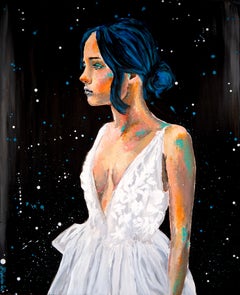
PS 250 The Night Bride Portrait -Chut les Barbizons! Ready to Hang French School

PS 250 The Night Bride Portrait -Chut les Barbizons! Ready to Hang French School

By bazevian 1

Located in Zofingen, AG

Portrait PS 250 The Night Bride Ophélia - Arthur Rimbaud I On the calm black water where the stars are sleeping White Ophelia floats like a great lily; Floats very slowly, lying in...

Category

Tonalist Early 1900s Art
Materials

Gesso, Canvas, Oil, Stretcher Bars

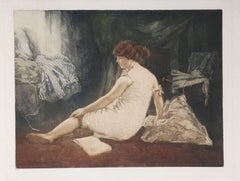
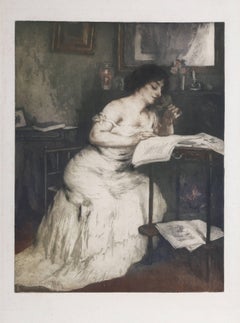
La Déshabille, Impressionist Etching with Aquatint by Manuel Robbe, circa 1907

La Déshabille, Impressionist Etching with Aquatint by Manuel Robbe, circa 1907

By Manuel Robbe

Located in Long Island City, NY

This etching with aquatint was created by French printmaker Manuel Robbe. Robbe’s innovative techniques, along with his sense of color harmony and his choice of subjects: stylish wom...

Category

Impressionist Early 1900s Art
Materials

Etching, Aquatint

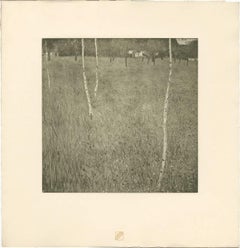
H.O. Miethke Das Werk folio "Farmhouse With Birch Trees" collotype print

H.O. Miethke Das Werk folio "Farmhouse With Birch Trees" collotype print

DAS WERK GUSTAV KLIMTS, a portfolio of 50 prints, ten of which are multicolor collotypes on chine colle paper laid down on hand-made heavy cream wove paper with deckled edges; under ...

Category

Vienna Secession Early 1900s Art

Materials

Paper

H.O. Miethke Das Werk folio "Schloss Kammer on Lake Attarsee II" collotype print

H.O. Miethke Das Werk folio "Schloss Kammer on Lake Attarsee II" collotype print

DAS WERK GUSTAV KLIMTS, a portfolio of 50 prints, ten of which are multicolor collotypes on chine colle paper laid down on hand-made heavy cream wove paper with deckled edges; under each of the 50 prints is a gold signet intaglio printed on the cream paper each of which Klimt designed for the publication as unique and relating to its corresponding image; H.O. Miethke, Editor-Publisher; k.k. Hof-und Staatsdruckerei, Printer; printed in a limited edition of 300 numbered plus several presentation copies; Vienna, 1908-1914. The idea of collaboration in the arts is anything but new; however it has so often been viewed and assessed as somehow devaluing the intrinsic worth of art. It’s as if it was a dirty secret to be hidden away. More so even than the eroticism explored by Klimt, which divided public opinion, the artistic avant-garde began to boldly flaunt artistic collaboration beginning in the 19th century- which gained steam in the first part of the 20th century- to become a driving vehicle of contemporary artistic creation. Viewed in this context, the folios of collotype prints published by H.O. Miethke in Vienna between 1908-1914 known as Das Werk Gustav Klimts, are important art documents worthy of as much consideration for their bold stand they take on established ways of thinking about artistic collaboration as they are for their breathtakingly striking images. 1908 is indeed a watershed moment in the history of art. To coincide with the 60th anniversary of the reign of Emperor Franz Joseph I, Kunstschau opened in Vienna in May of that year. It was there that Klimt delivered the inaugural speech. Speaking about the avant-garde group’s unifying philosophy of Gesamtkunstwerk, or the synthesis of the arts, Klimt shared his belief that the ideal means to bring artists and an audience together was via “work on major art projects.” It was at Kunstschau 1908 that Klimt first exhibited his most iconic painting, The Kiss, as well as The Sunflower, Water Snakes I and II and Danae. It was at Kunstschau 1908 that Das Werk Gustav Klimts was first available for purchase. Thanks to Galerie Miethke’s organization, Kunstschau 1908 was possible. Miethke’s pioneering art house had become Klimt’s exclusive art dealer and main promoter of his modernist vision. Paul Bacher and Carl Moll, a founding member with Klimt of the Vienna Secession, who all broke away during the rift in 1905, took stewardship of the gallery following the fallout with the Secession. Das Werk Gustav Klimts is a prime example of Miethke’s masterful and revolutionary approach to marketing art. Miethke’s innovative marketing strategy played to a penchant for exclusivity. The art gallery and publishing house utilized the press and art critics- such as Austria’s preeminent Art Historian, Hugo Haberfield, who became Director of the gallery in 1912- as a means of gaining publicity as well as maintaining effective public relations. Miethke used the grand exposition format to extend the art gallery’s market reach, cultivating their product’s prestige by stroking the egos of current art patrons while simultaneously creating accessibility for newcomers and others avid collectors to share a relative proximity to other wealthy and respected members of the art collecting community. Essentially, their approach paved the way for what is still the predominant means of marketing. Between 1908 and 1914, H.O. Miethke published a total of 5 installments of print folios of Klimt’s painted work, each comprising 10 prints. The series was limited in availability to 300 and purchase was arranged through subscription. Each issue was presented unbound in a gold embossed black paper folder. Included in the folio was a Title Page, a Justification page and a Table of Contents page itemizing each of the 10 printed works with details about their corresponding painted works as well as information about each work’s current owner. These folios were not comprehensive of Klimt’s work; but rather, they feature what he believed were his most important paintings from 1898-1913. Only 2 collotypes in each folio were multicolored. To punctuate the fact that Klimt, himself, was very much an active player in creating these printed works, he created square-shaped signets, unique to each collotype which were intaglio printed in gold ink at the bottom of the cream wove papers to which the chine collie papers were affixed.These signets relate thematically to their corresponding printed images and designate each of those images by their placement in the folio’s Table...

Category

Vienna Secession Early 1900s Art

Materials

Paper

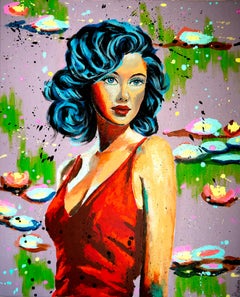
Portrait Drowned in Monet French School  241 READY TO HANG Chut les Barbizons!

Portrait Drowned in Monet French School 241 READY TO HANG Chut les Barbizons!

By bazevian 1

Located in Zofingen, AG

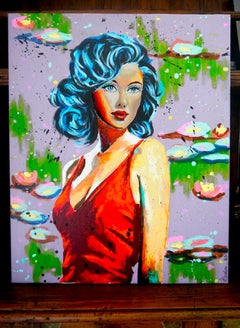
PS 241 Drowned in Monet Portrait of a woman with red dress. The background is the famous from Claude Monet Water lilies. ⭐Structural analysis:⭐ Such as Impressionist painting, the...

Category

Tonalist Early 1900s Art
Materials

Oil, Acrylic, Gesso, Canvas, Stretcher Bars

Portrait Le temps des jonquilles French School READY TO HANG Chut les Barbizons!

Portrait Le temps des jonquilles French School READY TO HANG Chut les Barbizons!

By bazevian 1

Located in Zofingen, AG

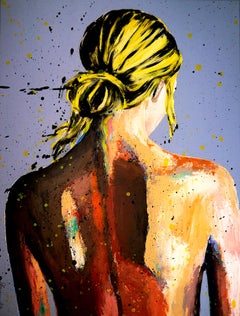
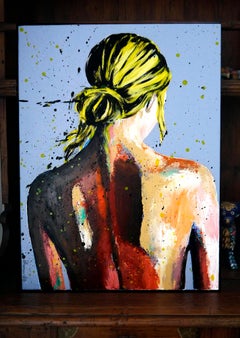
Portrait PS 238 Le temps des Jonquilles Portrait of a woman with back naked. ⭐Structural analysis:⭐ Such as Impressionist painting, the subject is firstly a study of light on human...

Category

Tonalist Early 1900s Art
Materials

Oil, Acrylic, Gesso, Canvas, Stretcher Bars

Portrait Elle(s) French School Impressionist Pop 248 READY TO HANG

Portrait Elle(s) French School Impressionist Pop 248 READY TO HANG

By bazevian 1

Located in Zofingen, AG

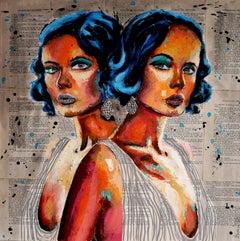
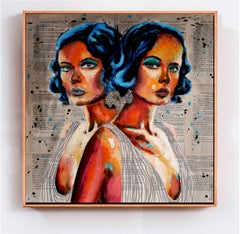
French School - PS 248 Elle(s) Portrait of two women, from La Belle époque. Technique: oil, acrylic, and ink on old book pages on wooden frame 55x55cm ■■ 21,6x21,6 inch ⭐Sustainab...

Category

Tonalist Early 1900s Art

Materials

Oil, Acrylic, Gesso, Mixed Media, Stretcher Bars

Portrait Les Quatres coins Artist French School READY TO HANG Chut les Barbizons

Portrait Les Quatres coins Artist French School READY TO HANG Chut les Barbizons

By bazevian 1

Located in Zofingen, AG

Portrait PS 168 Les Quatres coins du coeur. Closeup - portrait of a woman head ⭐Structural analysis:⭐ Such as Impressionist painting, the subject is firstly a study of light on hu...

Category

Tonalist Early 1900s Art

Materials

Oil, Acrylic, Gesso, Canvas, Stretcher Bars

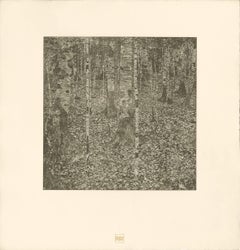
H.O. Miethke Das Werk folio "Birch Forest I" collotype print

H.O. Miethke Das Werk folio "Birch Forest I" collotype print

DAS WERK GUSTAV KLIMTS, a portfolio of 50 prints, ten of which are multicolor collotypes on chine colle paper laid down on hand-made heavy cream wove paper with deckled edges; under each of the 50 prints is a gold signet intaglio...

Category

Vienna Secession Early 1900s Art
Materials

Paper

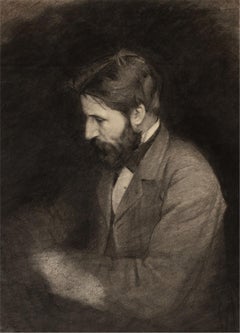
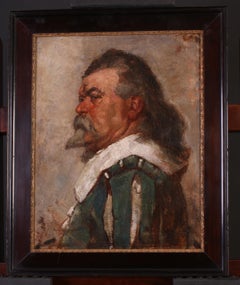
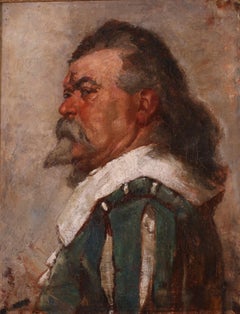
Portrait of Charles Mauras - Action Française chief

Portrait of Charles Mauras - Action Française chief

Located in BELEYMAS, FR

French School, early 20th century Portrait of Charles Maurras (1868–1952) Charcoal H. 37.5 cm; W. 27 cm Signed and dated lower left (19)09 It would serve little purpose to attempt, ...

Category

French School Early 1900s Art
Materials

Paper, Charcoal

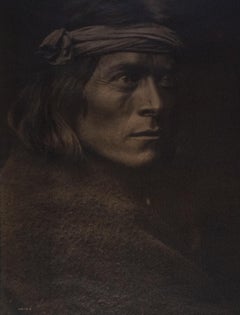
Zuni Governor, 1900

Zuni Governor, 1900

By Edward Curtis

Located in Santa Monica, CA

negative number "110-00" in plate lower left Platinum print Image 16" x 12", Matted 24" x 20"

Category

Early 1900s Art
Materials

Platinum

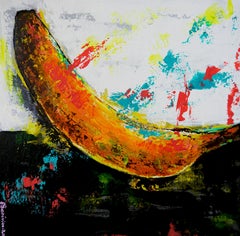
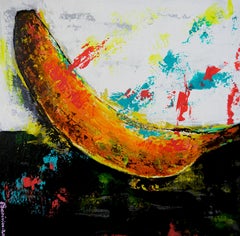
French School - Still Life Banana Starwars - Impressionist Pop

French School - Still Life Banana Starwars - Impressionist Pop

By Bazevian DelaCapuciniere

Located in Zofingen, AG

⭐Still life painting - Banana Starwars⭐ ⭐Structural analysis: Drippings creates movement. ⭐Technique: oil, acrylic, and ink on canvas 20 x 20cm (7,87x7,87 inch)⭐ ⏩》R E A D Y -...

Category

Tonalist Early 1900s Art
Materials

Oil, Gesso, Canvas, Mixed Media

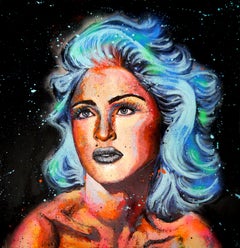
French School - Portrait Madonna - XL Impressionist th century  Original AUC

French School - Portrait Madonna - XL Impressionist th century Original AUC

By Bazevian DelaCapuciniere

Located in Zofingen, AG

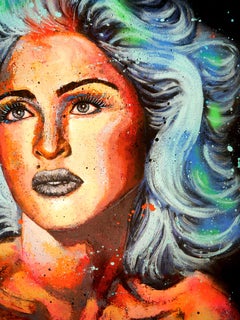
Madonna Structural analysis: Closeup portrait of the celebrity Madonna. The background is painted with a heavy and thick texture. Dripping of light blue and orange create movement t...

Category

Tonalist Early 1900s Art
Materials

Canvas, Oil, Mixed Media, Stretcher Bars