Sculptures

to
1,683
11,336
5,945
3,403
3,238
3,228
223
13,607
6,139
Sculptures For Sale
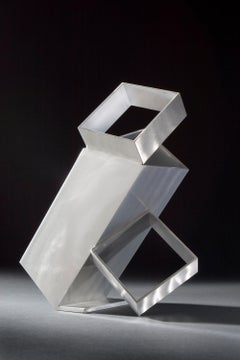
Ivory New Moon

Ivory New Moon

Located in Fort Lauderdale, FL

Alex Gabriel Bernstein (b. 1972) Ivory New Moon, 2024 Cast and cut glass, fused steel 21 x 21 x 4 in (53.34 x 53.34 x 10.16 cm)

Category

2010s Contemporary Sculptures

Materials

Glass

Post Modern Italian Passover Seder Plate Richard Ginori Art Porcelain Judaica

Post Modern Italian Passover Seder Plate Richard Ginori Art Porcelain Judaica

Located in Surfside, FL

Johanan Vitta, painter, born 1941, Jerusalem. Lives in Italy. Education Firenze, Florence, Italy He designed the famous La Sinagoga di Firenze poster. The poster features a painterly synagogue it was done for the “Comunita Israelitica" He has also designed Judaic ritual objects including a menorah that is in a famous museum collection. Arman, Elio Carmi, Eugenio Carmi, Lucio Del Pezzo, Guy De Rougemont, Maurizio Galimberti, David Gerstein, Claude Lalanne, Marino Marinelli, Mimmo Paladino, Arnaldo Pomodoro, Tobia Rava...

Category

1980s Post-Modern Sculptures

Materials

Porcelain

Italian Modernist Bronze Brutalist Sculpture (Manner of Pomodoro)

Italian Modernist Bronze Brutalist Sculpture (Manner of Pomodoro)

Located in Surfside, FL

Large Modern Brutalist bronze sculpture in Manner of Arnaldo or Gio Pomodoro. We cannot locate a signature or any markings. it has an abstract quality to it. heavily textured with or...

Category

1950s Modern Sculptures

Materials

Bronze

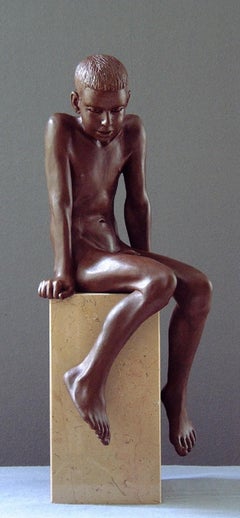
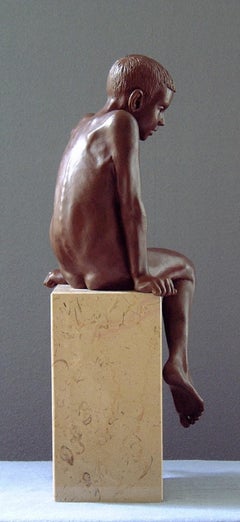
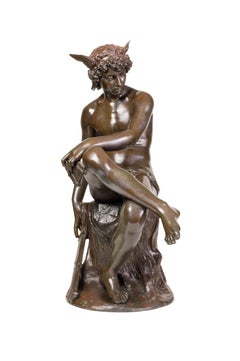
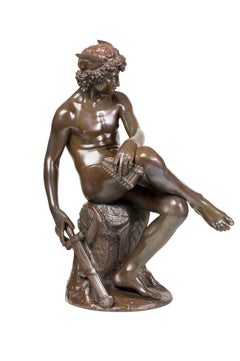
Demian Undressing
Demian Undressing

Demian Undressing

Located in London, GB

Bronze Numbered 1/10 66cm × 26cm × 36cm (incl. base) Ian Rank-Broadley is one of the foremost sculptors working today. His effigy of the late Queen Elizabeth II appears on all UK an...

Category

2010s English School Sculptures

Materials

Bronze

Girl Sitting on Panel-contemporary bronze sculpture, nude female on rustic panel

Girl Sitting on Panel-contemporary bronze sculpture, nude female on rustic panel

By Susanne Kraisser

Located in Hamburg, DE

"Sitting Girl on Panel" is a bronze sculpture of a nude sitting female on a rustic panel. Edition 30, signed, numbered and dated on the back. The rustic panel can be hung on a wall ...

Category

21st Century and Contemporary Contemporary Sculptures

Materials

Bronze

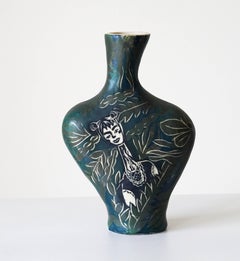
"Ash and Flame 2", Contemporary Vase, Green, Blue, Stoneware, Ceramic, Sculpture

"Ash and Flame 2", Contemporary Vase, Green, Blue, Stoneware, Ceramic, Sculpture

By Heather A. F. Binder

Located in Franklin, MA

Heather Binder's "Ash and Flame 2" is a contemporary wood-fired stoneware ceramic sculptural vase that expresses the artist's interpretation of fire - the elemental force that brings...

Category

2010s Contemporary Sculptures

Materials

Ceramic, Stoneware

Agnus dei - Puerta de sagrario - Siglo XVII

Agnus dei - Puerta de sagrario - Siglo XVII

Located in Sant Celoni, ES

Muy interesante puerta de sagrario de madera tallada y policromada del siglo xvii. Es de comienzos del barroco, hay la representación del agnus dei con...

Category

17th Century Baroque Sculptures

Materials

Wood Panel

Young girl from Bou-Saada

Young girl from Bou-Saada

Located in PARIS, FR

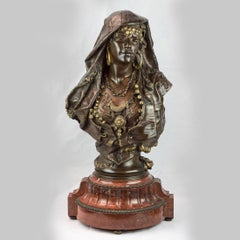
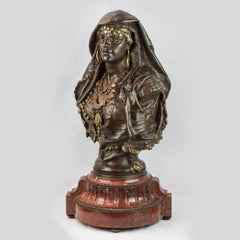
Young girl from Bou-Saada by Louis-Ernest BARRIAS (1841-1905) Bronze sculpture with a nuanced dark brown patina Signed on the base " E. Barrias " Cast by " Susse Fres Edrs à Paris "...

Category

Early 20th Century French School Sculptures

Materials

Bronze

Nightfall Red, Atelier

Nightfall Red, Atelier

By Richard MacDonald

Located in Laguna Beach, CA

Cloaked in mystery, the female form of “Nightfall” intrigues us. Concealed is a beautiful face, but like nightfall itself, all is not revealed. The globes in each hand suggest the ar...

Category

21st Century and Contemporary Contemporary Sculptures

Materials

Bronze

The Blacksmith of Solingen / - The Double-edged Sword -

The Blacksmith of Solingen / - The Double-edged Sword -

Located in Berlin, DE

Wilhelm Albermann (1835 Werden an der Ruhr - 1913 Cologne), The Blacksmith of Solingen, after 1895. Bronze-color patinated zinc cast on plinth, 47 cm (height) x 20 cm (width) x 16 cm (depth), weight 5.5 kg. Signed “Albermann.” on the plinth and identified as a cast by “AKT.[TIEN] GES.[ELLSCHAFT] GLADENBECK BERLIN”. Dedication on the front: “Mr. Ing. F. Kuhlmann to the wedding. Management and officials of the Hannoversche Waggonfabrik. Aircraft construction department". - The zinc showing through in spots, the patina somewhat stained, the right upper arm under the sleeve retouched in black. - The Double-edged Sword - The figure is a reduction of Wilhelm Albermann's 1895 fountain figure of the armourer of Solingen, who has always been identified with the historical blacksmith Peter Hahn. In 1839, Karl Simrock wrote the poem “The Blacksmith of Solingen" and thus coined the legendary figure. The first and penultimate verses read: A blacksmith spoke to Solingen With every bayonet, That came to his diligence: "Oh, that Fritz had it!" The war took its course, Many battles were fought, Which often made him fearful and anxious In his soul. The blacksmith had given up his trade to fight for Frederick the Great. Not least because of his strength and will to fight, the battles were won. With his fountain sculpture, Albermann has given the legendary blacksmith a figurative form and at the same time created a landmark for the city of Solingen, which was once famous for the art of sword forging and today still stands for the production of high-quality knives. During the bombing raid in November 1944, the fountain was destroyed along with the entire old town of Solingen. Only the head remained. The broad-shouldered blacksmith stands securely behind his anvil, his leather apron tied around him, and has just finished a sword blade with his own "weapon" - the blacksmith's hammer. His entire body shows the strength with which he wields the hammer, but also the strain of this activity, as evidenced by the wide open shirt, the somewhat 'untidy' apron, and especially the furrowed face. However, the blacksmith does not look at the finished work, but resolutely and at the same time thoughtfully into the distance, in line with the quoted verse from Simrock's poem that the battles "often made him fearful and anxious in his soul". There is certainly something melancholy in his gaze, fed by the knowledge of the necessity of forging swords and taking up arms and their deadly use - experiences Albermann had to make during his own war missions. The flowing full beard gives his gaze into the distance an almost prophetic character. In keeping with the craft of the perfectly formed art of blacksmithing, the detailed casting reproduces the respective materials depicted in perfect form: the leather apron convincingly conveys the impression of leather and lies - also in the back view - like a second formed layer over the body, while the shirt and trousers illustrate their own textile qualities. Due to its masterful execution and profound content, the “Blacksmith of Solingen”, which has survived in its cast reproductions, remains Albermann's most famous work to this day. About the artist The son of a carpenter, Wilhelm Albermann began an apprenticeship as a joiner, but then followed his artistic calling and trained as a sculptor in Elberfeld. In 1855, at the age of twenty, he was drafted into the army in Berlin, where he served until 1857. Albermann attended the Berlin Art Academy on the side and began regular studies after his service. While still a student, he completed commissioned works for his teachers August Fischer and Hugo Hagen. His first independent commissions followed, enabling him to establish a flourishing sculpture studio in Cologne in 1865. His artistic activities were repeatedly interrupted by military service, and he took part in the German-Danish War in 1864, the war against Austria in 1866, and the Franco-Prussian War in 1870/71. After his last war service, Albermann, already a respected artist, founded a commercial drawing school at the request of the city government, where he taught the modeling class and served as director until 1896. In 1890 he also worked for the "Society for the Promotion of Sculpture in the Rhineland and Westphalia". Albermann was one of the most prolific sculptors in Cologne in the second half of the 19th century. He created numerous monuments, fountains, tomb sculptures, architectural ornaments, and domestic statues. At its peak, his workshop employed up to thirty sculptors and stonemasons at a time. GERMAN VERSION Wilhelm Albermann (1835 Werden an der Ruhr - 1913 Köln), Der Schmied von Solingen, nach 1895. Bronzefarben patinierter Zinkguss auf gegossener Plinthe, 47 cm (Höhe) x 20 cm (Breite) x 16 cm (Tiefe), Gewicht 5,5 kg. Auf der Plinthe mit „Albermann.“ signiert und als Guss der „AKT.[TIEN] GES.[ELLSCHAFT] GLADENBECK BERLIN“ ausgewiesen. Schauseitige Widmung: „Herrn Ing. F. Kuhlmann zur Vermählung. Direktion und Beamte der Hannoverschen Waggonfabrik. Abt. Flugzeugbau“. - Punktuelles Durchscheinen des Zinks, Patina etwas fleckig, der rechte Oberarm unter dem Ärmel schwarz retuschiert. - Die Zweischneidigkeit des Schwertes - Die Figur ist eine Reduktion von Wilhelm Albermanns 1895 geschaffener Brunnenfigur des Waffenschmieds von Solingen, der seit jeher mit dem historischen Schmied Peter Hahn identifiziert wurde. 1839 hatte Karl Simrock das Gedicht „Der Schmied von Solingen“ verfasst und damit die legendäre Figur geprägt. Die erste und die vorletzte Strophe lauten: Zu Solingen sprach ein Schmied Bei jedem Bajonette, Das seinem Fleiß geriet: »Ach, daß der Fritz es hätte!« Der Krieg ging seinen Gang, Man schlug noch viele Schlachten, Die oft ihm angst und bang' In seiner Seele machten. Der Schmied hatte sein Handwerk ruhen lassen, um selbst für Friedrich den Großen zu kämpfen. Nicht zuletzt durch seine Kraft und seinen Kampfeswillen verliefen die Schlachten siegreich. Dem legendären Schmied verlieht Albermann mit seiner Brunnenskulptur eine bildliche Gestalt und schuf damit zugleich ein Wahrzeichen der Stadt Solingen, die einst für die Kunst des Schwerterschmiedens berühmt war und bis heute für die Herstellung qualitätvoller Messer einsteht. Beim Bombenangriff im November 1944 wurde mit der gesamten Solinger Altstadt auch der Brunnen zerstört. Einzig der Kopf blieb erhalten. Mit sicherem Stand und umgebundener Lederschürze steht der breitschultrige Schmied hinter seinem Amboss und hat gerade mit seiner eigenen ‚Waffe‘ – dem Schmiedehammer – eine Schwertklinge fertiggestellt. Seinem gesamten Körper ist die Kraft abzulesen, mit der er den Hammer führt, aber auch die Anstrengung dieser Tätigkeit, wovon das weit geöffnete Hemd, die etwas ‚unordentlich‘ arrangierte Schürze und vor allem das zerfurchte Gesicht zeugen. Der Schmied schaut aber nicht auf das vollendete Werk, sondern entschlossen und zugleich sinnierend in die Ferne, entsprechend der zitierten Zeile von Simrocks Gedicht, dass die Schlachten „oft ihm angst und bang‘ in seiner Seele machten“. Der Blick hat durchaus etwas Melancholisches, dass sich aus dem Wissen um die Notwendigkeit, Schwerter zu schmieden und zu den Waffen zu greifen und deren tödlichem Einsatz speist – Erfahrungen, die Albermann bei seinen eigenen Kriegseinsätze machen musste. Der wallende Vollbart verleiht dem in die Ferne schauenden Blick einen beinahe prophetischen Charakter. Dem Handwerk der formvollendenden Schmiedekunst entsprechend, gibt der detaillierte Guss die jeweils dargestellten Materialien in vollendeter Ausformung wieder: Die Lederschürze vermittelt überzeugend den Eindruck des Leders und liegt – auch in der Rückenansicht – wie eine zweite ausgeformte Schicht über dem Körper, während das Hemd und die Hose...

Category

1890s Realist Sculptures

Materials

Metal

A Monumental 16th Century Renaissance Carved Oak Bust of Jesus Christ

A Monumental 16th Century Renaissance Carved Oak Bust of Jesus Christ

Located in Queens, NY

Magnificent and Monumental 16th Century Renaissance Carved Oak Bust of Christ, Flemish Netherlandish, C. 1550 A powerful and deeply expressive Renaissance carved oak bust of Jesus C...

Category

16th Century Sculptures

Materials

Oak

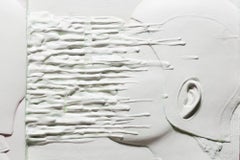
Organic Abstract Cast Paper Sculpture Relief Painting Suzanne Anker

Organic Abstract Cast Paper Sculpture Relief Painting Suzanne Anker

By Suzanne Anker

Located in Surfside, FL

"Cocoon (1990)" by Suzanne Anker Suzanne Anker (born August 6, 1946) is an American visual artist and theorist. Considered a pioneer in Bio Art. She has been working at the relationship of art and the biological sciences for more than twenty five years. Her practice investigates the ways in which nature is being altered in the 21st century. Concerned with genetics, climate change, species extinction and toxic degradation, she calls attention to the beauty of life and the "necessity for enlightened thinking about nature’s 'tangled bank'.” Anker frequently works with "pre-defined and found materials"botanical specimens, medical museum artifacts, laboratory apparatus, microscopic images and geological specimens. Suzanne Anker was born in Brooklyn, New York on August 6, 1946. She earned a B.A. in Art from Brooklyn College of the City of New York and an M.F.A. from the University of Colorado in Boulder (1976). She also completed independent Studies with Ad Reinhardt (1966-1967) and studied at the Brooklyn Museum Art School (1968). She lives with the artist Frank Gillette in Manhattan and East Hampton, NY. During the mid 70s to the mid 80s, Anker worked almost exclusively on sculptural handmade paper reliefs. She started papermaking in 1974 on the basis of reading Dard Hunter's and Claire Romano's books. In 1975 she worked with Garner Tullis at the Institute of Experimental Printmaking in Santa Cruz, California. The paper reliefs produced at his institute were exhibited at the Martha Jackson Gallery in New York City in 1976.[ The same year, she participated in the North American Hand Papermaking exhibition organized by Richard Minsky at the Center for Book Arts in New York City. From a background as a printmaker, Anker initially worked with cast paper, made in latex molds. Subsequently, she incorporated limestone and fossils in her experiment with combinations of paper and stone. For her 1979 solo exhibition at the Walker Art Center, Anker installed large limestone planks that extended from the interior to the exterior of the gallery. The same year, she presented an installation of limestone and its residual chalk dust at P.S. 1’s "A Great Big Drawing Show" curated by Alanna Heiss with artists Vito Acconci, Alice Aycock, Frank Gillette, Sol LeWitt, Robert Morris, Bruce Nauman, Dennis Oppenheim, Richard Serra, and others. Suzanne Anker is considered "one of the pioneers in the broader field of art, science, and technology", particularly in the burgeoning field of Bio Art. In 1994, Suzanne Anker curated Gene Culture: Molecular Metaphor in Visual Art – one of the first art exhibitions on the subject of art and genetics – at Fordham University’s Lincoln Center Campus in New York. The exhibition investigated "the ways in which genetic imaging operates as aesthetic signs". From 2004 to 2006, Suzanne Anker hosted twenty episodes of the Bio-Blurb Show, a 30-minute-long internet radio program originally broadcast on WPS1 Art Radio, in collaboration with MoMA. The show focused on the intersection of art and the biological sciences, and the ethical and aesthetic dimensions therein. It is currently archived on Alanna Heiss’ Clocktower Productions. In 2006, Anker co-curated the exhibition Neuroculture: Visual Art and the Brain, at the Westport Arts Center with Giovanni Frazzetto. The exhibition presented an investigation of aspects of the human brain, and its attendant representations. Suzanne Anker is the Chair of the School of Visual Arts (SVA)'s BFA Fine Arts Department in New York City (2005-present). She previously chaired the SVA BFA Art History Department (2000-2005). In 2011, Anker founded the SVA Bio Art Lab, the first Bio Art laboratory in a Fine Arts Department in the United States. The SVA Bio Art Lab is located in Chelsea, New York City and has been conceived as a place where "scientific tools and techniques become methodologies in art practice". Anker has participated in lectures and symposia in prominent institutions around the world, including Harvard University, Boston; University of Cambridge, Cambridge, UK; Yale University, New Haven; Art-Sci UCLA, Los Angeles; Maryland Institute College of Art (MICA), Baltimore; Rensselaer Polytechnic Institute, New York; Museum of Arts and Design, New York; Nanyang Technological University, Singapore; London School of Economics, London; European Molecular Biology Laboratory- EMBL, Monterotondo, Italy; Max Planck Institute of Molecular Cell Biology and Genetics, Dresden; Leiden University, NL; Hamburger Bahnhof, Berlin; Dundee Contemporary Arts, Dundee; Courtauld Institute of Art, London; Banff Art Center, Alberta; The National Academies of Sciences, Engineering, and Medicine, Washington, D.C.; Berlin-Brandenburg Academy of Sciences and Humanities, Berlin;[ University of Amsterdam, NL; New York Academy of Sciences, Institute for the Humanities, New York University; DLD, Munich. Selected artworks Gene Pool Anker’s interests in the natural world extended her investigation into the microscopic domain of chromosomes and genes. Appropriating scientific images, she created Gene Pool in 1991, a body of work that includes suspended pigment on large vellum sheets and expansive sculptural arrays employing metallic fibers of stainless steel, copper, aluminum and bronze. Other works that reflect scientific representations of chromosomes include Chromosome Chart of Suzanne Anker –a presentation of her own DNA sequence as a self-portrait– and Cellular Script, in which she displays chromosome patterns as a kind of calligraphy. Biota (2011) is a sculptural installation by Suzanne Anker composed of porcelain sculptures and silver-leaf figurines. The porcelain objects are fabricated by immersing natural sea sponges into a mixture of kaolin, feldspar, and quartz. "The organic material of the sponge burns away in the process, leaving behind only the perfect replica of nature". Exhibitions Selected one-person exhibitions "The Biosphere Blues Mending an Unhinged Earth", O'NewWall, Seoul, Korea (2017). “Culturing Life”, Sam Francis Gallery...

Category

1990s Sculptures

Materials

Mixed Media

An acrobat. Bronze figurative sculpture, Nude, Dynamic Composition, Polish art

An acrobat. Bronze figurative sculpture, Nude, Dynamic Composition, Polish art

By Ryszard Piotrowski

Located in Warsaw, PL

Contemporary bronze sculpture on a marble base made by Polish artist Ryszard Piotrowski. The artwork depicts human figure in an acrobatic pose. It is very dynamic. The surface is tex...

Category

21st Century and Contemporary Other Art Style Sculptures

Materials

Bronze

Artifact 3

Artifact 3

By Jennifer Nehrbass

Located in Bozeman, MT

Jennifer Nehrbass is a painter living and working in Albuquerque, New Mexico. She was born in West Bend, Wisconsin in 1970. She received her B.S. in Art and Textile Design from the U...

Category

2010s Contemporary Sculptures

Materials

Wood

"Mick's Inn" Miniature Irish Bar City Hanging Sign by Drew Leshko

"Mick's Inn" Miniature Irish Bar City Hanging Sign by Drew Leshko

By Drew Leshko

Located in Philadelphia, PA

This piece titled "Mick's Inn" is original artwork made from paper, acrylic, enamel, pastel, wire, chain, aluminum, inkjet prints, pvc by Drew Leshko. This piece measures 15”h x 1”w ...

Category

21st Century and Contemporary Contemporary Sculptures

Materials

Metal, Enamel, Wire

Liz Sweibel, Untitled (Scrapings #2), 2016, Wood, Paint, Found Objects

Liz Sweibel, Untitled (Scrapings #2), 2016, Wood, Paint, Found Objects

By Liz Sweibel

Located in Darien, CT

The freestanding sculptures in this portfolio are made from the “sticks”: a pile of found wood that Sweibel has been pulling from to make new works since about 2002. The pile consisted of more than a dozen four- to seven-foot lengths of hardwood, each an uneven inch in depth and width. The sticks were warped, with worn yellow paint on one side and raw wood on the other three. Over the years she has painted the raw sides of the sticks, cut the wood into shorter lengths, and sliced paint off – and kept the residue from these actions. Sweibel has also made sculptures ranging from full-length sticks to tiny stick splinters. She built these sculptures using sliced-off paint. Timeworn materials and objects have an intelligence that the artist looks for and listens to. Shaping and reshaping material to find new form and elicit new insights in the material itself is the territory she is mining. The limitations of the process are its strengths. Her work is concerned with fragility, precariousness, adaptability, and strength. It is a visual response to powerful yet unseen forces - like wind and thoughts - that threaten, propel, ruin, and protect. Liz Sweibel is a multidisciplinary artist working in drawing, sculpture, installation, and digital photography and video. Her spare, personal language of abstraction transforms ordinary materials into statements about connectedness and responsibility: every action has an impact, the effects persist in space and over time, and we are accountable. By drawing attention to simple, ordinary “stuff of life” and referencing both shared and personal history, Sweibel’s work explores and reflects back fundamental experiences in response to our world and relationships. Her intention is to reinvigorate viewers’ awareness of the everyday – in its raw beauty and precariousness – in hopes that they might bring heightened senses of sight and care to their daily lives. Sweibel has participated in solo, two-person, and group exhibits in New York, Massachusetts, Maine, Connecticut, Michigan, and Tennessee since 1998. In 2016, Sweibel’s work was in the group shows Lightly Structured at Sculpture Space NYC, Precarious Constructs at the Venus Knitting Art...

Category

2010s Abstract Expressionist Sculptures

Materials

Wood, Paint, Found Objects

Ballerina on a Cube Sculpture, Bronze and Stone, Realist, 1990s

Ballerina on a Cube Sculpture, Bronze and Stone, Realist, 1990s

Located in Zofingen, AG

"Classical ballet was my main source of inspiration. Grace and beauty of ballerinas combining with extremely hard work they do. This combination is shocking and inspiring in the same...

Category

1990s Realist Sculptures

Materials

Stone, Bronze

CRAP", "Text-i-monial" series, Wall-Hanging Sculpture, Signed Paper & Wood Panel

CRAP", "Text-i-monial" series, Wall-Hanging Sculpture, Signed Paper & Wood Panel

By Charles Clary

Located in Philadelphia, PA

"CRAP" is an original wall-hanging sculpture by Charles Clary as part of the artist's popular "Text-i-monial" series. To create the artwork, Clary hand cuts a series of individual sh...

Category

21st Century and Contemporary Contemporary Sculptures

Materials

Paper, Wood Panel

Steel Garden Wall - "Stainless Steel III" - modern outdoor ornament - 75×195 cm

Steel Garden Wall - "Stainless Steel III" - modern outdoor ornament - 75×195 cm

By Stefan Traloc

Located in Winterswijk, NL

Beautiful contemporary oxidized sheet steel Garden Wall or privacy screen. Customization possible. With this garden wall you'll conjure up an atmospheric ambience in your garden. Id...

Category

21st Century and Contemporary Art Deco Sculptures

Materials

Steel

Nureyev, Atelier
Nureyev, Atelier

Nureyev, Atelier

By Richard MacDonald

Located in Laguna Beach, CA

Considered one of Richard MacDonald’s greatest achievements, Nureyev reflects the artist’s deep sensitivity to the emotional and physical experience of the dancer. Capturing a moment...

Category

21st Century and Contemporary Contemporary Sculptures

Materials

Bronze

"百财 Bai Cai" hand-cut dimensional paper sculpture, white cabbage motif

"百财 Bai Cai" hand-cut dimensional paper sculpture, white cabbage motif

By Colette Fu

Located in Philadelphia, PA

This piece titled "百财 Bai Cai" is an original artwork made from manipulated paper by Colette Fu. This piece is shipped with the pictured white frame and measures 19"h x 15"w x 2.5"d ...

Category

21st Century and Contemporary Contemporary Sculptures

Materials

Paper

'Femme Assise'. Large Mixed-media Montage on Board.

'Femme Assise'. Large Mixed-media Montage on Board.

By Armand Avril

Located in Cotignac, FR

Imposing and very large scale mixed media 'assemblage' by French artist Armand Avril. The work includes the French tricolour flag colours, his symbolic cat sculptures and a highly colourful geometric image of the artist's mother sitting in a chair. The work is signed and dated to the reverse and comes with a certificate of authenticity from the gallery. This montage fully demonstrates Avril's geometric period whilst also expressing the humour and joy that he puts into all his work. A very strong sculptural image and a feast for the eyes in searching for and recognising the everyday objects used in making this piece come alive. This montage is made from wood pieces, plywood, oil paint, acrylic, bottle top and nails . The more sculpted areas of the piece stand out up to 3cm from the frame. Armand Avril was born in 1926 in Lyon. His father, Marcel Avril was a painter and collector of African art. At 16 Armand became an apprentice shepherd in Provence. Avril could always be seen equipped with a sketchbook and a book on the history of art whilst tending his flock. It was not until the age of 30, in 1956, that Armand embarked on painting as an autodidact, influenced by Raoul Dufy, Pierre Bonnard, Henri Matisse and the Lyonnaise School of Painting. He exhibited for the first time in 1957. In 1960, he left for a one-year trip to Africa. There he met the painter Jean Arène who introduced him to the village of Cotignac in the Var and to Louis Pons...

Category

Late 20th Century Abstract Expressionist Sculptures

Materials

Wood, Plywood, Acrylic, Board

"Omoplata 162 in Royal Blue", Hand-Folded Archival Paper, Abstract Patterns

"Omoplata 162 in Royal Blue", Hand-Folded Archival Paper, Abstract Patterns

By Matt Shlian

Located in Philadelphia, PA

This piece titled "Omoplata 162 in Royal Blue" is an original piece by Matt Shlian and is made from hand-folded archival paper. This piece measures 27.25”h x 21.5”w x 1.5”d unframed....

Category

21st Century and Contemporary Contemporary Sculptures

Materials

Archival Paper

Hebru Brantley Flyboy (Hebru Brantley art toy)

Hebru Brantley Flyboy (Hebru Brantley art toy)

By Hebru Brantley

Located in NEW YORK, NY

Hebru Brantley Flyboy Pop Art Sculpture / Hebru Brantley Beyond the Beyond, 2018. New in its original packaging. Medium: Painted cast vinyl. Dimensions: 9 x 8 x 4 inches (22.9 x 20...

Category

21st Century and Contemporary Street Art Sculptures

Materials

Resin, Vinyl

Untitled
Untitled

Untitled

By Victor Vasarely

Located in Palo Alto, CA

Victor Vasarely Untitled, c. 1970-79 is a glazed porcelain multiple that is hand-signed by Victor Vasarely (Hungary, 1906 – France, 1997) and is numbered from the edition of 50 on ve...

Category

1970s Op Art Sculptures

Materials

Porcelain

The Doves, Atelier
The Doves, Atelier

The Doves, Atelier

By Richard MacDonald

Located in Laguna Beach, CA

Richard MacDonald has always been intrigued by opposites and he has the range to be able to create both sculptures of delicate, archetypal femininity and powerful, athletic masculini...

Category

21st Century and Contemporary Contemporary Sculptures

Materials

Bronze

Ubik by Lesley Hilling - Contemporary salvaged wood Sculpture

Ubik by Lesley Hilling - Contemporary salvaged wood Sculpture

Located in DE

This piece gradually transitions in tone from white through grey into black, creating a delicate and intricate structure that houses small artifacts of memory. The found objects and ...

Category

2010s Contemporary Sculptures

Materials

Wood, Found Objects

Spalted Beech 643
Spalted Beech 643

Spalted Beech 643

By Philip Moulthrop

Located in Phoenix, AZ

turned wood "I think of my wood turning as a way to reveal the beauty and texture found in the wood. The wood I use comes from trees, which are native to the southeastern United Sta...

Category

Early 2000s Outsider Art Sculptures

Materials

Wood, Polyurethane

Moon Song II

Moon Song II

Located in Colorado Springs, CO

Edition #2/9 - Original bronze sculpture by Dan Chen. Signed on bronze sculpture.

Category

21st Century and Contemporary Realist Sculptures

Materials

Bronze

“Turso”
“Turso”

“Turso”

By Anthony Quinn

Located in Warren, NJ

This is an Anthony Quinn sculpture signed and numbered. In good condition. Only 8 made . Measures 13x15x6

Category

20th Century Sculptures

Materials

Bronze

Nude, Abstract and Figurative Sculptures for Sale

The history of sculpture as we know it is believed to have origins in Ancient Greece, while small sculptural carvings are among the most common examples of prehistoric art. In short, sculpture as a fine art has been with us forever. A powerful three-dimensional means of creative expression, sculpture has long been most frequently associated with religion — consider the limestone Great Sphinx in Giza, Egypt — while the tradition of collecting sculpture, which has also been traced back to Greece as well as to China, far precedes the emergence of museums.

Technique and materials in sculpture have changed over time. Stone sculpture, which essentially began as images carved into cave walls, is as old as human civilization itself. The majority of surviving sculpted works from ancient cultures are stone. Traditionally, this material and pottery as well as metalbronze in particular — were among the most common materials associated with this field of visual art. Artists have long sought new ways and materials in order to make sculptures and express their ideas. Material, after all, is the vehicle through which artists express themselves, or at least work out the problems knocking around in their heads. It also allows them to push the boundaries of form, subverting our expectations and upending convention. As an influential sculptor as much as he was a revolutionary painter and printmaker, Pablo Picasso worked with everything from wire to wood to bicycle seats.

If you are a lover of art and antiques or are thinking of bringing a work of sculpture into your home for the first time, there are several details to keep in mind. As with all other works of art, think about what you like. What speaks to you? Visit local galleries and museums. Take in works of public art and art fairs when you can and find out what kind of sculpture you like. When you’ve come to a decision about a specific work, try to find out all you can about the piece, and if you’re not buying from a sculptor directly, work with an art expert to confirm the work’s authenticity.

And when you bring your sculpture home, remember: No matter how big or small your new addition is, it will make a statement in your space. Large- and even medium-sized sculptures can be heavy, so hire some professional art handlers as necessary and find a good place in your home for your piece. Whether you’re installing a towering new figurative sculpture — a colorful character by KAWS or hyperreal work by Carole A. Feuerman, perhaps — or an abstract work by Won Lee, you’ll want the sculpture to be safe from being knocked over. (You’ll find that most sculptures should be displayed at eye level, while some large busts look best from below.)

On 1stDibs, find a broad range of exceptional sculptures for sale. Browse works by your favorite creator, style, period or other attribute.
Read More

At Hosfelt Gallery, Bertoia Masterworks Complement Dynamic Contemporary Art

For nearly three decades, San Francisco–based Todd Hosfelt has curated against the grain — with a show on the legendary modernist Harry Bertoia the latest case in point.
This Weathered-Steel Sculpture Distills a Form of Protest into a Minimalist Monument

Part of Alejandro Vega Beuvrin’s “Barricada” series, the work is a subversive tribute to the street smarts of citizen activists.
How the Chunky, Funky Ceramics of 5 Mid-Century American Artists Balanced Out Slick Modernism

Get to know the innovators behind the pottery countercultural revolution.

Art Brings the Drama in These Intriguing 1stDibs 50 Spaces

The world’s top designers explain how they display art to elicit the natural (and supernatural) energy of home interiors.

Chryssa’s 1962 Neon Sculpture Was Way ahead of the Art-World Curve

By working with lettering, neon and Pop imagery, Chryssa pioneered several postmodern themes at a time when most male artists detested commercial mediums.

How to Spot a Fake KAWS Figure

KAWS art toys have developed an avid audience in recent decades, and as in any robust collectible market, counterfeiters have followed the mania. Of course, you don’t have to worry about that on 1stDibs, where all our sellers are highly vetted.

A Giant Wedding Cake Has Us Looking at Portuguese Tiles in a New Light

At Waddesdon Manor, artist Joana Vasconcelos has installed a three-tiered patisserie inspired by the narrative tile work of her homeland. We take a look at the cake sculpture and how Portuguese tiles have been used in architecture from the 17th century to today.

These Soft Sculptures Are Childhood Imaginary Friends Come to Life

Miami artist and designer Gabriela Noelle’s fantastical creations appeal to the Peter Pan in all of us.