Sculptures

to
1,912
11,233
5,927
3,473
3,266
3,189
294
13,455
6,391
Sculptures For Sale
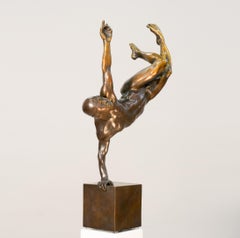
1960s Pop Art Unique Cast Bronze Sculpture Americana Folk Art William King

1960s Pop Art Unique Cast Bronze Sculpture Americana Folk Art William King

By William King (b.1925)

Located in Surfside, FL

Mid-Century Modern wrought iron sculpture a person with oversize top, shorts, and carrying a hat, signed, artist's monogram and cipher, further mounted on a plaster base. 28" H. This a unique piece. It is interesting in that it speaks of a transition, leading into the later aluminum public pieces that kind of defined his work in the 70's. According to his estate this is most probably cast bronze. It might possibly be wrought iron.. William Dickey King was born in 1925 in Jacksonville, Florida and grew up in the Coconut Grove neighborhood of Miami. As a boy, William King made model airplanes and helped his father and older brother build furniture and boats. “I was 19, 20, my mother gave me a hundred bucks, says, ʻGet out of this state and don’t come back until you’re 65; there is nothing here for you,’ ” Bill King recalled in a video interview for the Smithsonian museum. He came to New York, where he attended the Cooper Union and began selling his early sculptures even before he graduated. He later studied with the sculptor Milton Hebald and traveled to Italy on a Fulbright grant. He was a contemporary, at the Cooper Union, of Alex Katz and Lois Dodd, his first wife, and remained close in many ways to their common aesthetic grounding, shared also with younger sculptors such as Red Grooms and Marisol Escobar. The hallmark of King’s early work was radical experiment keeping company with social connection and hedonism. The mix of big, important, innovative ideas and immediate, sensory, in-the-moment experience was a kind of visual jazz. For this was not just the time of Franz Kline’s big open defiant brushstrokes and Jackson Pollock’s all-over mists of intricately drooling line, but of Charlie Parker and Dizzy Gillespie. If we look at the works that King made in the early 1950s when he got back from his Fulbright to Italy we see free, experimental, open forms that take their cue from jazz as much as art in their fusion of virtuosity and cool.American sculptor King is most noted for his long-limbed figurative public art sculptures depicting people engaged in everyday activities such as reading or conversing. He created his busts and figures in a variety of materials, including clay, wood, metal, and textiles. Mr. King worked in clay, wood, bronze, vinyl, burlap and aluminum. He worked both big and small, from busts and toylike figures to large public art pieces depicting familiar human poses — a seated, cross-legged man reading; a Western couple (he in a cowboy hat, she in a long dress) holding hands; a tall man reaching down to tug along a recalcitrant little boy; a crowd of robotic-looking men walking in lock step. Mr. King’s work often reflected the times, taking on fashions and occasional politics. In the 1960s and 1970s, his work featuring African-American figures (including the activist Angela Davis, with hands cuffed behind her back) evoked his interest in civil rights. But for all its variation, what unified his work was a wry observer’s arched eyebrow, the pointed humor and witty rue of a fatalist. His figurative sculptures, often with long, spidery legs and an outlandishly skewed ratio of torso to appendages, use gestures and posture to suggest attitude and illustrate his own amusement with the unwieldiness of human physical equipment. His subjects included tennis players and gymnasts, dancers and musicians, and he managed to show appreciation of their physical gifts and comic delight at their contortions and costumery. His suit-wearing businessmen often appeared haughty or pompous; his other men could seem timid or perplexed or awkward. Oddly, or perhaps tellingly, he tended to depict women more reverentially, though in his portrayals of couples the fragility and tender comedy inherent in couplehood settled equally on both partners. His first solo exhibit took place in 1954 at the Alan Gallery in New York City. William Dicky King was elected to the American Academy of Arts and Letters in 2003, and in 2007 the International Sculpture Center honored him with the Lifetime Achievement in Contemporary Sculpture Award. Mr. King’s work is in the collections of the Metropolitan Museum of Art, Guggenheim Museum, Whitney Museum and the Museum of Modern Art in New York and the Hirshhorn Museum at the Smithsonian American Art Museum in Washington, among other places, and he had dozens of solo gallery shows in New York and elsewhere. Reviews of his exhibitions frequently began with the caveat that even though the work was funny, it was also serious, displaying superior technical skills, imaginative vision and the bolstering weight of a range of influences, from the ancient Etruscans to American folk art to 20th-century artists including Giacometti, Calder and Elie Nadelman. The New York Times critic Holland Cotter once described Mr. King’s sculpture as “comical-tragical-maniacal,” and “like Giacometti conceived by John Cheever.” From an article by David Cohen "In a career that ran in tandem with the hegemony of formal abstraction in sculpture, Bill King inevitably struggled with the prejudice that sculpture full of humanity and humor can’t be quite as serious as sculpture devoid of them. But the tide has clearly turned in ways that ought to work in King’s favor, with an increasing number of sculptors, fêted internationally, who are producing work that looks remarkably close in spirit, if not quite as regal in sheer mastery of form, as his own. When art historians of the future connect the dots of modern sculpture then artists like Franz West, Stephan Balkenhol, Huma Bhabha...

Category

1960s Pop Art Sculptures

Materials

Bronze

“Sperm whale”
“Sperm whale”

“Sperm whale”

Located in Warren, NJ

Wayne Robbins Sperm Whale In Linden Made In 2006 Large. In good condition measures 42 inches long one of Wayne’s biggest pieces. Missing some teeth it appears very well done.

Category

21st Century and Contemporary Sculptures

Materials

Wood

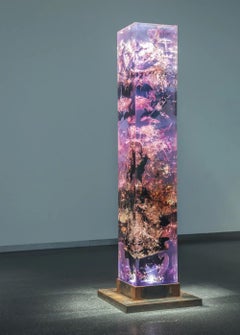
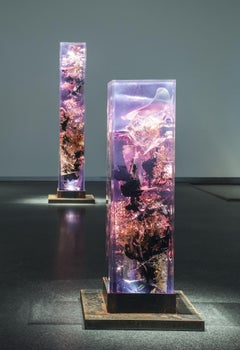
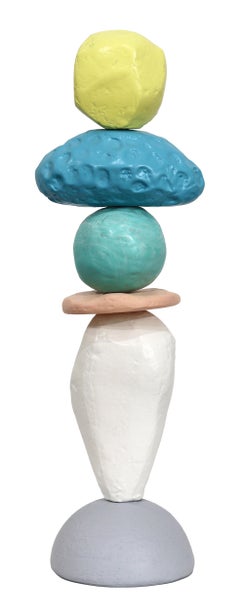
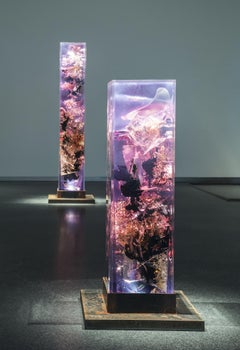
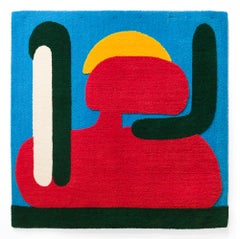
Palm Springs Totem 3 - Modern Unique Pastel Abstract Resin Artwork Sculpture

Palm Springs Totem 3 - Modern Unique Pastel Abstract Resin Artwork Sculpture

By Nayla Saroufim

Located in Los Angeles, CA

Nayla Saroufim creates installations that challenge the traditional notion of the passive viewer. Nayla’s art is a rich mix of media. She was always captivated by the dialogue betwee...

Category

21st Century and Contemporary Contemporary Sculptures

Materials

Resin, Mixed Media

Pair of 20th Century Giuliano Tincani Rock Crystal Obelisks

Pair of 20th Century Giuliano Tincani Rock Crystal Obelisks

Located in Beachwood, OH

Giuliano Tincani (Italian, 20th Century) Pair of Rock Crystal Obelisks Clear quartz crystal and sterling silver 13 x 4 x 2.5 inches, each These obelisks present as a matched pair of...

Category

20th Century Sculptures

Materials

Silver

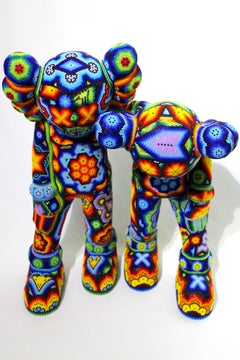
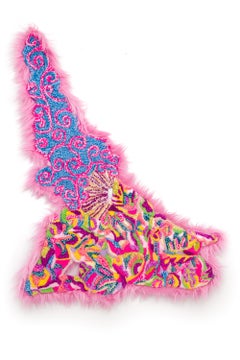
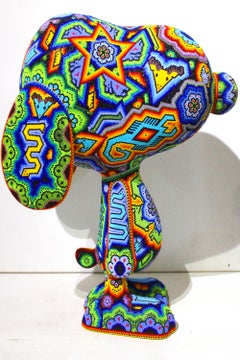
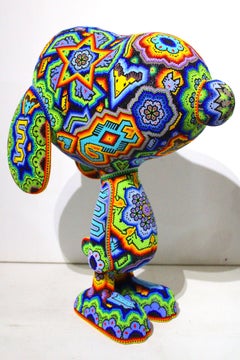
CHROMA aka Rick Wolfryd COMPANION WITH HEART SERIES 28.5 inches . . .

CHROMA aka Rick Wolfryd COMPANION WITH HEART SERIES 28.5 inches . . .

By CHROMA aka Rick Wolfryd

Located in Cuauhtemoc, Ciudad de México

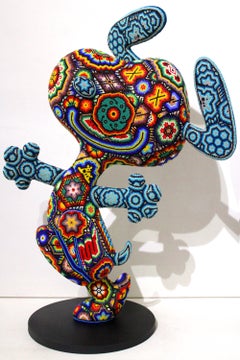
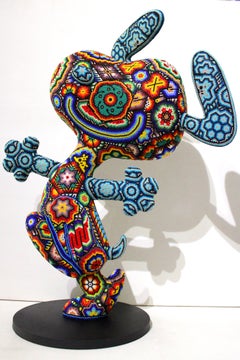
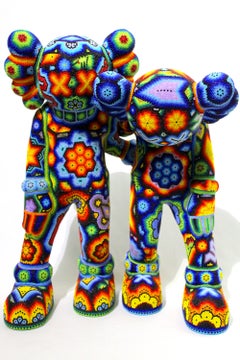
CHROMA “Companion With Heart” Sculpture — 28.5 Inches Mixed Media, Resin, Glass Beads, Acrylic Mexico City, Contemporary This striking 28.5-inch CHROMA “Companion With Heart” sculpt...

Category

2010s Pop Art Sculptures

Materials

Glass, Resin, Mixed Media

"Lateral II" by Brian Bosworth; Ceramic Wall Hanging, Lava Glaze, Geometric

"Lateral II" by Brian Bosworth; Ceramic Wall Hanging, Lava Glaze, Geometric

Located in Oklahoma City, OK

This blue, white, and gold striped, geometric ceramic wall hanging by sculptor Brian Bosworth uses simplistic color and pattern. Along side the three-dimension form, which create an ...

Category

21st Century and Contemporary Minimalist Sculptures

Materials

Ceramic, Underglaze

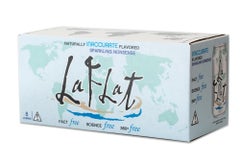
"LaFlat" Limited Edition Archival Pigment Print on Cardboard

"LaFlat" Limited Edition Archival Pigment Print on Cardboard

By Kid Hazo

Located in Philadelphia, PA

"LaFlat" is an original archival pigment print on cardboard box artwork by Kid Hazo measuring 5.5"h x 11"w x 5.25"d. This is an edition of 13. Hazo’s belief that art is for everyon...

Category

21st Century and Contemporary Contemporary Sculptures

Materials

Cardboard, Archival Pigment

Reni by Nando Kallweit.  Elegant bronze Sculpture.

Reni by Nando Kallweit. Elegant bronze Sculpture.

By Nando Kallweit

Located in Coltishall, GB

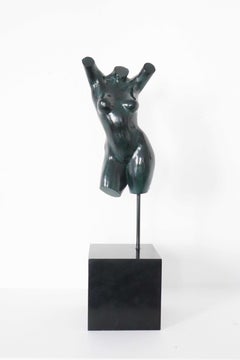
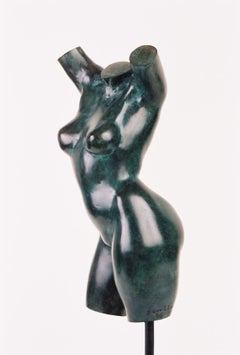
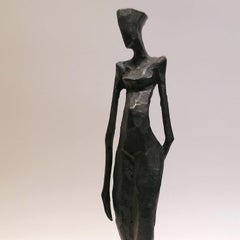
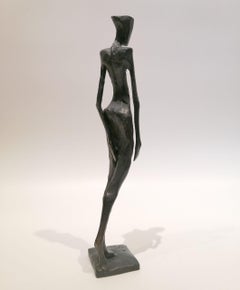
Standing tall and poised, Reni captures a sense of grace with her slender, angular silhouette. Her elongated limbs and subtle curvature of the body evoke a delicate balance between m...

Category

21st Century and Contemporary Other Art Style Sculptures

Materials

Bronze

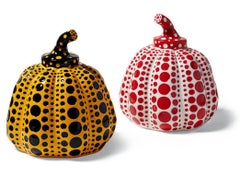
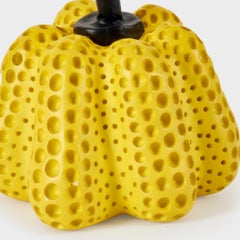
Pumpkin, Yellow/Black, Yayoi Kusama 草間 彌生

Pumpkin, Yellow/Black, Yayoi Kusama 草間 彌生

By Yayoi Kusama

Located in Fairfield, CT

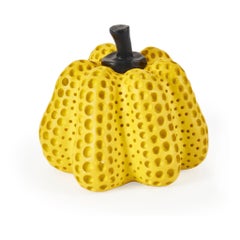
Artist: Yayoi Kusama (1929) Title: Pumpkin, Yellow/Black Year: 2016 Medium: Painted cast resin sculpture Sculpture Size: 4 × 3.5 x 3.5 inches Inscription: ©Yayoi Kusama, as issued No...

Category

2010s Abstract Expressionist Sculptures

Materials

Epoxy Resin

Minimalist Geometric Abstract Sculpture

Minimalist Geometric Abstract Sculpture

Located in Wilton Manors, FL

Stunning abstract stone sculpture, ca. 1990. Carved and polished black/grey granite. Measuring 21.75 inches diameter. 3.75 inches width. Weighs approx. 125 lbs. Will require a st...

Category

1990s Minimalist Sculptures

Materials

Granite

“Two elephants”
“Two elephants”

“Two elephants”

Located in Warren, NJ

Michael Ghaui (Tanzanian, b. 1950) Pair of Elephants, Patinated Bronze inscribed M. A. Ghaui C 97 AC with Pangolin Editions foundry mark Measurements 15 by 49 by 14 inches Condit...

Category

20th Century Sculptures

Materials

Bronze

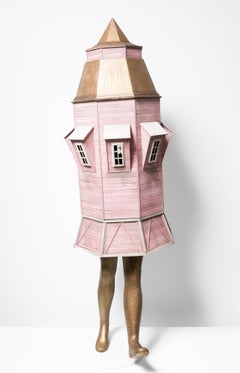
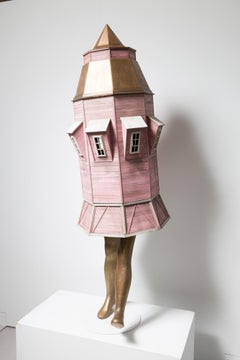
"The Meanderer" House Turret Tower in Wood, Acrylic and Paper Sculpture

"The Meanderer" House Turret Tower in Wood, Acrylic and Paper Sculpture

By Seth Clark

Located in Philadelphia, PA

This piece, titled "The Meanderer" is an original free-standing sculpture by Seth Clark as part of his newest solo exhibition, "Passing Through". Clark's deteriorating structures h...

Category

21st Century and Contemporary Contemporary Sculptures

Materials

Wood, Paper, Charcoal, Pastel, Acrylic, Graphite

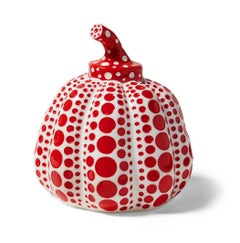
Yellow Pumpkin
Yellow Pumpkin

Yellow Pumpkin

By Yayoi Kusama

Located in Bristol, GB

Resin with original box Edition 17 of 30 8 × 9.2 × 9.7 cm (3 x 3.6 x 3.8 in) Signed and numbered on the bottom of sculpture. Signed, titled and numbered on the box Condition upon req...

Category

20th Century Contemporary Sculptures

Materials

Resin

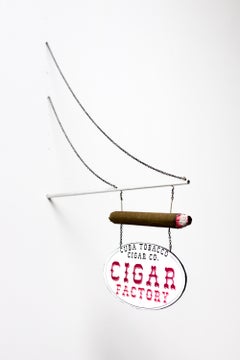
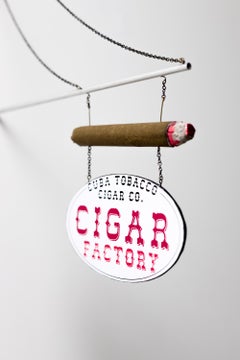
"Cigar Factory" Miniature Storefront Sign with Western Lettering and Object

"Cigar Factory" Miniature Storefront Sign with Western Lettering and Object

By Drew Leshko

Located in Philadelphia, PA

This piece titled "Cigar Factory" is original artwork made from paper, inkjet print, enamel, wire, chain, aluminum tube, pastel by Drew Leshko. This piece measures 15”h x 1”w x 8”d. ...

Category

21st Century and Contemporary Contemporary Sculptures

Materials

Metal, Enamel, Wire

Open the Right Mind by Johnson Tsang

Open the Right Mind by Johnson Tsang

By JOHNSON TSANG

Located in Manchester, GB

Open the Right Mind By Johnson Tsang 2023 Painted, dry cast and porcelain filled resin sculpture. 43 x 15.6 x 13cm (16.9 x 6.14 x 15.1 in) Artist's signature stamped on reverse....

Category

2010s Contemporary Sculptures

Materials

Porcelain, Resin, Paint

Chariot. Llimited edition: 1/5. Sculpture by Sergey Oganov. Bronze

Chariot. Llimited edition: 1/5. Sculpture by Sergey Oganov. Bronze

Located in Riga, LV

In Greek mythology, the chariot stands as a powerful, multifaceted symbol - representing heroic valor, destiny, and even cosmic order. One iconic image is Achilles charging into batt...

Category

2010s Contemporary Sculptures

Materials

Metal, Bronze

Noteworthy - Original Contemporary Expressive Geometric Abstract Metal Sculpture

Noteworthy - Original Contemporary Expressive Geometric Abstract Metal Sculpture

By Granville Beals

Located in Los Angeles, CA

Inspired by dance and weightlessness, Granville Beals' industrial metal sculptures are primarily about relationships. Concerned with form and abstraction, he does not merely manipula...

Category

21st Century and Contemporary Abstract Sculptures

Materials

Metal, Steel

Mosaic Female Head Atop Large Pedestal, 20th Century California Artist

Mosaic Female Head Atop Large Pedestal, 20th Century California Artist

Located in Beachwood, OH

Mary T. Bowling (American, 1917-1995) Female Head Mosaic ceramic sculpture Head: 13 x 7 x 9.5 inches Overall: 59 inches tall Provenance: Fred Schmidt (American 1936-2001) Mary T. ...

Category

20th Century Sculptures

Materials

Ceramic, Mosaic

Chevalier. Llimited edition: 2/4. Sculpture by Sergey Oganov. Bronze

Chevalier. Llimited edition: 2/4. Sculpture by Sergey Oganov. Bronze

Located in Riga, LV

This Gothic-inspired knight is a wry meditation on chivalry’s sacred trinity: love, combat, and blind faith – faith in God, in Love, and in the righteousness of conquest. The armor i...

Category

2010s Contemporary Sculptures

Materials

Metal, Bronze

Woman Sculpture, Terracotta Patinated Plaster, Signed, 1915

Woman Sculpture, Terracotta Patinated Plaster, Signed, 1915

Located in Stockholm, Stockholm

An art deco terracotta-painted plaster sculpture of a standing partly nude woman holding a tray, signed and dated "KA (19)15" by Swedish sculptor Knut Andersson (1884–1954). This pie...

Category

1910s Art Deco Sculptures

Materials

Plaster

Crusader. Llimited edition: 2/5. Sculpture by Sergey Oganov. Bronze

Crusader. Llimited edition: 2/5. Sculpture by Sergey Oganov. Bronze

Located in Riga, LV

"I wanted to explore the paradox of a warrior – a figure driven by lofty ideals, yet capable of dark, blood-soaked deeds. The result is this frozen idol: a hollow shell clad in armor...

Category

2010s Realist Sculptures

Materials

Bronze, Metal

When Lambs Become Lions. Llimited edition: 5/6. Bronze

When Lambs Become Lions. Llimited edition: 5/6. Bronze

Located in Riga, LV

Sergey Oganov was born in 1974 in the family of the famous Belarusian sculptor Lev Oganov. Sergey began his first steps in the world of art while still being a schoolboy, helping hi...

Category

2010s Contemporary Sculptures

Materials

Metal, Bronze

Late 19th Century Bronze Bust of Napoleon Sculpture, Italian Artist

Late 19th Century Bronze Bust of Napoleon Sculpture, Italian Artist

Located in Beachwood, OH

Raphaël Nannini (Italian, 1852-1925) Napoleon Bust, Late 19th Century Bronze on marble base Signed on back 17 x 11 x 8 inches Raphael Nannini was born in Florence. He exhibited at t...

Category

Late 19th Century Sculptures

Materials

Marble, Bronze

Figure of Crouching Venus/Naked Aphrodite, 19th Century Italian School Sculpture

Figure of Crouching Venus/Naked Aphrodite, 19th Century Italian School Sculpture

Located in Beachwood, OH

Bronze Figure of Crouching Venus, or The Naked Aphrodite, 19th Century Italian School Bronze raised on a marble base 21 in. h. x 10 in. w. x 7 in. d., overall 18 in. h. x 8.5 in. w....

Category

19th Century Sculptures

Materials

Marble, Bronze

Head of Woman
Head of Woman

Head of Woman

By Mark Morrison

Located in Wilton Manors, FL

Mark Morrison (1895-1964) Head of Woman , ca. 1950 Carved stone 7.75" wide, 9" deep, height is 20 7/8" Signed at base. Provenance: Estate of Mrs. Mark Morrison. Born: Kingf...

Category

Mid-20th Century Cubist Sculptures

Materials

Granite

Pink and Blue Dots II - Contemporary Abstract Figurative Sculptural Diptych Art

Pink and Blue Dots II - Contemporary Abstract Figurative Sculptural Diptych Art

By Jamie Burmeister

Located in Los Angeles, CA

Nebraka-based Jamie Burmeister is a sculptural artist known for his original artworks incorporating original small bronze figures, standing at just up to 4 inches tall. His unique fi...

Category

21st Century and Contemporary Contemporary Sculptures

Materials

Metal

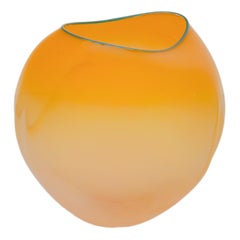
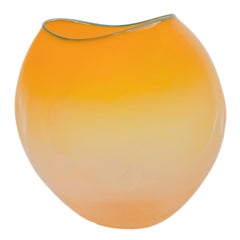
White Standing Pod Ceramic Vessel Sculpture

White Standing Pod Ceramic Vessel Sculpture

By Adrienne Fierman

Located in East Quogue, NY

"White Standing Pod", Ceramic Sculpture Dimensions: 5 H × 5.5 W × 5.5 D Medium: Hand-built ceramic, glazed stoneware Adrienne Fierman’s "White Standing Pod" embodies the meditative ...

Category

2010s Abstract Sculptures

Materials

Ceramic, Stoneware

Pair of Porphyry Marble Columns with Gilt Bronze Capitals, 19th Century

Pair of Porphyry Marble Columns with Gilt Bronze Capitals, 19th Century

Located in Beachwood, OH

Pair of Porphyry Marble Columns with Gilt Bronze Capitals, 19th Century Porphyry marble & gilt bronze 20 x 4.25 x 4.25 inches Porphyry is an igneous rock, not marble, known for its...

Category

19th Century Sculptures

Materials

Marble, Bronze

Art Nouveau Italian Signed Dated and Inscribed Original Bronze

Art Nouveau Italian Signed Dated and Inscribed Original Bronze

By Constantino Barbella

Located in Roma, IT

Wonderful Art Nouveau "Ebrezza" bronze sculpture of a woman lying on a bed of roses. It bears at the base the signature Barbella and the wording “Rome Palm Sunday 31 III 1912” Brand...

Category

Early 20th Century Art Nouveau Sculptures

Materials

Bronze

Relining Nude (WG6)
Relining Nude (WG6)

Relining Nude (WG6)

By Waylande Gregory

Located in Wilton Manors, FL

Waylande Gregory (1905-1971). Nude Reclining, ca. 1950's. Painted composite cast from original sculpted in 1930's. Casting sanctioned and approved by the artist during his lifetime in partnership with MPI, Museum Pieces Incorporated. Very few examples were produced and even fewer survive. Waylande Gregory was considered a major American sculptor during the 1930's, although he worked in ceramics, rather than in the more traditional bronze or marble. Exhibiting his ceramic works at such significant American venues for sculpture as the Whitney Museum of American Art in New York City and at the venerable Pennsylvania Academy of the Fine Arts in Philadelphia, he also showed his ceramic sculptures at leading New York City galleries. Gregory was the first modern ceramist to create large scale ceramic sculptures, some measuring more than 70 inches in height. Similar to the technique developed by the ancient Etruscans, he fired his monumental ceramic sculptures only once. Gregory was born in 1905 in Baxter Springs, Kansas and was something of a prodigy. Growing up on a ranch near a Cherokee reservation, Gregory first became interested in ceramics as a child during a native American burial that he had witnessed. He was also musically inclined. In fact, his mother had been a concert pianist and had given her son lessons. At eleven, he was enrolled as a student at the Kansas State Teacher's College, where he studied carpentry and crafts, including ceramics. Gregory's early development as a sculptor was shaped by the encouragement and instruction of Lorado Taft, who was considered both a major American sculptor as well as a leading American sculpture instructor. In fact, Taft's earlier students included such significant sculptors as Bessie Potter Vonnoh and Janet Scudder. But, Taft and his students had primarily worked in bronze or stone, not in clay; and, Gregory's earliest sculptural works were also not in ceramics. In 1924, Gregory moved to Chicago where he caught the attention of Taft. Gregory was invited by Taft to study with him privately for 18 months and to live and work with him at his famed "Midway Studios." The elegant studio was a complex of 13 rooms that overlooked a courtyard. Taft may have been responsible for getting the young man interested in creating large scale sculpture. However, by the 1920's, Taft's brand of academic sculpture was no longer considered progressive. Instead, Gregory was attracted to the latest trends appearing in the United States and Europe. In 1928 he visited Europe with Taft and other students. "Kid Gregory," as he was called, was soon hired by Guy Cowan, the founder of the Cowan Pottery in Cleveland, Ohio, to become the company's only full time employee. From 1928 to 1932, Gregory served as the chief designer and sculptor at the Cowan Pottery. Just as Gregory learned about the process of creating sculpture from Taft, he literally learned about ceramics from Cowan. Cowan was one of the first graduates of Alfred, the New York School of Clayworking and Ceramics. Alfred had one of the first programs in production pottery. Cowan may have known about pottery production, but he had limited sculptural skills, as he was lacking training in sculpture. The focus of the Cowan Pottery would be on limited edition, table top or mantle sculptures. Two of the most successful of these were Gregory's Nautch Dancer, and his Burlesque Dancer. He based both sculptures on the dancing of Gilda Gray, a Ziegfield Follies girl. Gilda Gray was of Polish origin and came to the United States as a child. By 1922, she would become one of the most popular stars in the Follies. After losing her assets in the stock market crash of 1929, she accepted other bookings outside of New York, including Cleveland, which was where Gregory first saw her onstage. She allowed Gregory to make sketches of her performances from the wings of the theatre. She explained to Gregory, "I'm too restless to pose." Gray became noted for her nautch dance, an East Indian folk dance. A nautch is a tight, fitted dress that would curl at the bottom and act like a hoop. This sculpture does not focus on Gray's face at all, but is more of a portrait of her nautch dance. It is very curvilinear, really made of a series of arches that connect in a most feminine way. Gregory created his Burlesque Dancer at about the same time as Nautch Dancer. As with the Nautch Dancer, he focused on the movements of the body rather than on a facial portrait of Gray. Although Gregory never revealed the identity of his model for Burlesque Dancer, a clue to her identity is revealed in the sculpture's earlier title, Shimmy Dance. The dancer who was credited for creating the shimmy dance was also Gilda Gray. According to dance legend, Gray introduced the shimmy when she sang the Star Spangled Banner and forgot some of the lyrics, so, in her embarrassment, started shaking her shoulders and hips but she did not move her legs. Such movement seems to relate to the Burlesque Dancer sculpture, where repeated triangular forms extend from the upper torso and hips. This rapid movement suggests the influence of Italian Futurism, as well as the planar motion of Alexander Archipenko, a sculptor whom Gregory much admired. The Cowan Pottery was a victim of the great depression, and in 1932, Gregory changed careers as a sculptor in the ceramics industry to that of an instructor at the Cranbrook Academy in Bloomfield Hills, Michigan. Cranbrook was perhaps the most prestigious place to study modern design in America. Its faculty included the architect Eliel Saarinen and sculptor Carl Milles. Although Gregory was only at Cranbrook for one and one half years, he created some of his finest works there, including his Kansas Madonna. But, after arriving at Cranbrook, the Gregory's had to face emerging financial pressures. Although Gregory and his wife were provided with complimentary lodgings, all other income had to stem from the sale of artworks and tuition from students that he, himself, had to solicit. Gregory had many people assisting him with production methods at the Cowan Pottery, but now worked largely by himself. And although he still used molds, especially in creating porcelain works, many of his major new sculptures would be unique and sculpted by hand, as is true of Kansas Madonna. The scale of Gregory's works were getting notably larger at Cranbrook than at Cowan. Gregory left the surface of Kansas Madonna totally unglazed. Although some might object to using a religious title to depict a horse nursing its colt, it was considered one of Gregory's most successful works. In fact, it had a whole color page illustration in an article about ceramic sculpture titled, "The Art with the Inferiority Complex," Fortune Magazine, December, 1937. The article notes the sculpture was romantic and expressive and the sculpture was priced at $1,500.00; the most expensive sculpture...

Category

1950s Art Deco Sculptures

Materials

Plaster

Nude, Abstract and Figurative Sculptures for Sale

The history of sculpture as we know it is believed to have origins in Ancient Greece, while small sculptural carvings are among the most common examples of prehistoric art. In short, sculpture as a fine art has been with us forever. A powerful three-dimensional means of creative expression, sculpture has long been most frequently associated with religion — consider the limestone Great Sphinx in Giza, Egypt — while the tradition of collecting sculpture, which has also been traced back to Greece as well as to China, far precedes the emergence of museums.

Technique and materials in sculpture have changed over time. Stone sculpture, which essentially began as images carved into cave walls, is as old as human civilization itself. The majority of surviving sculpted works from ancient cultures are stone. Traditionally, this material and pottery as well as metalbronze in particular — were among the most common materials associated with this field of visual art. Artists have long sought new ways and materials in order to make sculptures and express their ideas. Material, after all, is the vehicle through which artists express themselves, or at least work out the problems knocking around in their heads. It also allows them to push the boundaries of form, subverting our expectations and upending convention. As an influential sculptor as much as he was a revolutionary painter and printmaker, Pablo Picasso worked with everything from wire to wood to bicycle seats.

If you are a lover of art and antiques or are thinking of bringing a work of sculpture into your home for the first time, there are several details to keep in mind. As with all other works of art, think about what you like. What speaks to you? Visit local galleries and museums. Take in works of public art and art fairs when you can and find out what kind of sculpture you like. When you’ve come to a decision about a specific work, try to find out all you can about the piece, and if you’re not buying from a sculptor directly, work with an art expert to confirm the work’s authenticity.

And when you bring your sculpture home, remember: No matter how big or small your new addition is, it will make a statement in your space. Large- and even medium-sized sculptures can be heavy, so hire some professional art handlers as necessary and find a good place in your home for your piece. Whether you’re installing a towering new figurative sculpture — a colorful character by KAWS or hyperreal work by Carole A. Feuerman, perhaps — or an abstract work by Won Lee, you’ll want the sculpture to be safe from being knocked over. (You’ll find that most sculptures should be displayed at eye level, while some large busts look best from below.)

On 1stDibs, find a broad range of exceptional sculptures for sale. Browse works by your favorite creator, style, period or other attribute.
Read More

At Hosfelt Gallery, Bertoia Masterworks Complement Dynamic Contemporary Art

For nearly three decades, San Francisco–based Todd Hosfelt has curated against the grain — with a show on the legendary modernist Harry Bertoia the latest case in point.
This Weathered-Steel Sculpture Distills a Form of Protest into a Minimalist Monument

Part of Alejandro Vega Beuvrin’s “Barricada” series, the work is a subversive tribute to the street smarts of citizen activists.
How the Chunky, Funky Ceramics of 5 Mid-Century American Artists Balanced Out Slick Modernism

Get to know the innovators behind the pottery countercultural revolution.

Art Brings the Drama in These Intriguing 1stDibs 50 Spaces

The world’s top designers explain how they display art to elicit the natural (and supernatural) energy of home interiors.

Chryssa’s 1962 Neon Sculpture Was Way ahead of the Art-World Curve

By working with lettering, neon and Pop imagery, Chryssa pioneered several postmodern themes at a time when most male artists detested commercial mediums.

How to Spot a Fake KAWS Figure

KAWS art toys have developed an avid audience in recent decades, and as in any robust collectible market, counterfeiters have followed the mania. Of course, you don’t have to worry about that on 1stDibs, where all our sellers are highly vetted.

A Giant Wedding Cake Has Us Looking at Portuguese Tiles in a New Light

At Waddesdon Manor, artist Joana Vasconcelos has installed a three-tiered patisserie inspired by the narrative tile work of her homeland. We take a look at the cake sculpture and how Portuguese tiles have been used in architecture from the 17th century to today.

These Soft Sculptures Are Childhood Imaginary Friends Come to Life

Miami artist and designer Gabriela Noelle’s fantastical creations appeal to the Peter Pan in all of us.