Sculptures

to
1,681
11,333
5,960
3,444
3,235
3,214
161
13,619
6,189
Sculptures For Sale
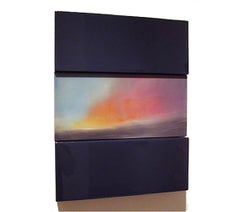
Minimalist Abstract Color Field Painting in Blues and Greys (C22-1)

Minimalist Abstract Color Field Painting in Blues and Greys (C22-1)

By Ginny Fox

Located in Hudson, NY

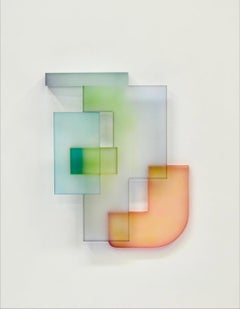
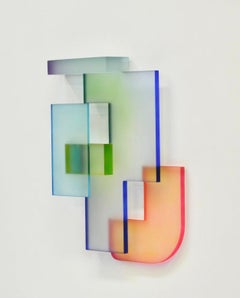
Nature-Inspired Minimalist Abstract Color Field painting on three wood panels in shades of cool blues and greys. Acrylic on 3 panels, Each panel is 8 x 24 x 2 inches Panels can be oriented or stacked horizontally or vertically, recommended spacing between panels is 1-2 inches Overall measurement for vertical install with 1 inch spacing: 28 x 24 x 2 inches We are amazed by this artist's ability to achieve multiple flawless layers of acrylic paint, wiping it on and off with cotton cloth, to create a subtle yet distinctive woven texture on a smooth surface. The artist's work is inspired by patterns found in nature such as tree rings, rock lines, ethereal horizons, or water ripples. It appears as though a light source is originating behind the panel, glowing softly in a pale, dreamy green palette. This unique surface spreads all the way to the very edge of each panel. The 2 inch deep sides are cleanly painted white for a seamless finish. These panels hang flush to the wall by resting on two nails on either side of the panel, and can be arranged in any number of ways, highlighting the work's sculptural element. Artist's Statement: My paintings merge the detailed textures and colors found in the natural world with the linear and geometric patterns visible in industrial and architectural structures. The interplay of these elements drives the work and provides a platform for constant change and narrative. By simultaneously layering and removing paint with rags instead of brushes, my hand is directly involved with the process. Each piece contains multiple panels that evoke a nuanced and evolving universe. Ginny Fox builds up each non-representational piece with overlapping streaks of paint that frequently span two or three panels. Working with rags instead of brushes, Fox’s hand moves along parallel paths, emergent colors cascading gently towards the edges of the composition's plane. There’s something vaporous to the outer layers of the work, the interwoven strands of color offering glimpses at the painting’s earthy base and hinting at the artist’s gradual process. Having received her education from New York University in the 1970s, Fox has since exhibited throughout the United States, especially in New York City and the northeastern U.S. RESUME Solo Exhibits 2019 Winterscape Soho20 Bushwick, New York 2017 Perpetual Earth Soho20 Bushwick, New York 2015 Intimate Universe Soho20 Chelsea New York...
Category

2010s Minimalist Sculptures

Materials

Acrylic, Panel

Hebru Brantley Flyboy Set of 3 (Hebru Brantley art toy)

Hebru Brantley Flyboy Set of 3 (Hebru Brantley art toy)

By Hebru Brantley

Located in NEW YORK, NY

Hebru Brantley Beyond the Beyond, 2018. Set of 3 Hebru Brantley Flyboy’s, each new in original packaging. Medium: Painted cast vinyl. Dimensions: 9 x 8 x 4 inches (22.9 x 20.3 x 10.2 cm). Each new in its original packaging. From a sold out edition of unknown; published by Hebru Brantley, Billionaire Boys Club & BAIT. Artist Statement: "Flyboy came out of characters of colour within popular culture. I hate saying “popular culture,” but it’s really popular culture. I mean you look at cartoons. You’ve got animated sponges and ducks and birds and whatever, and it’s very rare to see a popular character within any medium that is African-American, Latino, even Asian. What I wanted to do was create that, but in a space of high art and be able to have some historical context to that character. So I looked at the Tuskegee Airmen...

Category

21st Century and Contemporary Pop Art Sculptures

Materials

Resin, Vinyl

Black Dog

Black Dog

By Robin Whiteman

Located in Bozeman, MT

Robin has worked with clay since the age of eleven. Her sculptures have ranged in size from life sized sculptures to the diminutive porcelain pieces. She has been a resident artist a...

Category

2010s Contemporary Sculptures

Materials

Clay, Glaze

Wall 24-1- White porcelain abstract geometric organic style mural sculpture

Wall 24-1- White porcelain abstract geometric organic style mural sculpture

Located in New York, NY

Artists Statement: My interest is in exploring ways of building structural forms in ceramics. Many ideas for the forms come from architecture while the inherent organic quality of th...

Category

21st Century and Contemporary Contemporary Sculptures

Materials

Porcelain

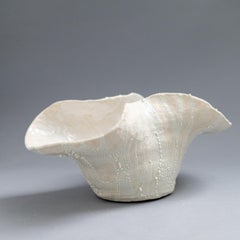
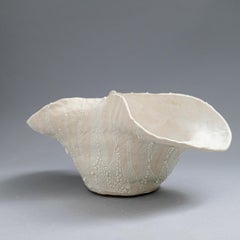
Small White Ceramic Sculpture with a Crackled Glazing, 2025 - 'Nest 1'

Small White Ceramic Sculpture with a Crackled Glazing, 2025 - 'Nest 1'

Located in Bruxelles, BE

Drawing inspiration from ancient ceramic traditions, including Korean pottery and the Japanese wabi-sabi aesthetic, Laura Pasquino (Grège Gallery) explores the beauty of imperfection...

Category

2010s Contemporary Sculptures

Materials

Ceramic, Glaze

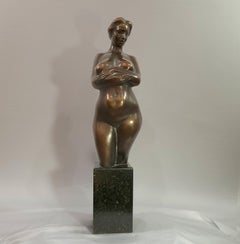
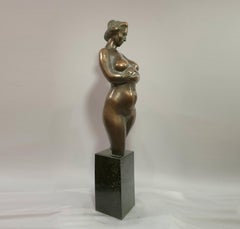
Bronze Female Nude Sculpture Modernist, WPA, New York Chelsea Hotel Artist

Bronze Female Nude Sculpture Modernist, WPA, New York Chelsea Hotel Artist

By Eugenie Gershoy

Located in Surfside, FL

Eugenie Gershoy (January 1, 1901 – May 8, 1986) was an American sculptor and watercolorist. Eugenie Gershoy was born in Krivoy Rog, Russia (Krivoi Rog, Ukraine) and emigrated to New York City in the United States as a child in 1903. Considered somewhat of a child prodigy, Gershoy was copying Old Master drawings at the age of 5. Her interest and talent in art was encouraged from a very young age. Aided by scholarships, she studied at the Art Students League under Alexander Stirling Calder, Leo Lentelli, Kenneth Hayes Miller, and Boardman Robinson. Around this time, she created a group of portrait figurines of her fellow artists, including Arnold Blanch, Lucile Blanch, Raphael Soyer, William Zorach, Concetta Scaravaglione, and Emil Ganso, which were exhibited as a group at the Whitney Museum of American Art. At age 17, she was awarded the Saint-Gaudens Medal for fine draughtsmanship. Early in her career she became an active member of the Woodstock art colony. In Woodstock she experimented by sculpting in the profusion of indigenous materials that she found. Working with fieldstone, oak and chestnut, Gershoy created works based on classic formulae. As she became more interested in the dynamism of everyday life, she found that these materials and her idiom were too restrictive. By the time Gershoy came to Woodstock in 1921 her own individual artistic style was already evident in her sculptures. Eugenie Gershoy worked in stone, bronze, terracotta, plaster and papier-mache. Gershoy’s sculptures were mainly figurative in nature and many of her artist peers such as Carl Walters, Raphael and Moses Soyer, William Zorach and Lucille Blanch, became her subjects. Eugenie Gershoy’s works on paper should not be overlooked. She was the winner of the Gaudens Medal for Fine Draughtsmanship at the tender age of 17. Gershoy married Jewish Romanian-born artist Harry Gottlieb. In the late 1920s and early 1930s, the pair kept a studio in Woodstock, New York. There, Gershoy was influenced by sculptor John Flanagan, who lived and worked nearby. From 1936 to 1939, Gershoy worked for the WPA Federal Art Project. She collaborated with Max Spivak on murals for the children's recreation room of the Queens Borough Public Library in Astoria, New York. She developed a mixture of wheat paste, plaster, and egg tempera, which she used in polychrome papier-mâché sculptures; she was the only New York sculptor to work in polychrome at this time. She also designed cement and mosaic sculptures of animals and figures to be placed in New York City playgrounds. Alongside others employed by the FAP, she participated in a sit-down strike in Washington, DC, to advocate for better pay and improved working conditions for the projects' artists. Gershoy's first solo exhibition was held at the Robinson Gallery in New York in 1940. She moved to San Francisco in 1942, and began teaching ceramics at the California School of Fine Arts in 1946. In 1950, she studied at the artists' colony at Yaddo. Gershoy traveled extensively throughout her life. She visited England and France in the early 1930s, and worked in Paris in 1951. She traveled to Mexico and Guatemala in the late 1940s, and also toured Africa, India, and the Orient in 1955. In 1977, Gershoy dedicated a sculpture to Audrey McMahon, who was actively involved in the creation of the Federal Art Project and served as its regional director in New York, in recognition of the work McMahon provided struggling artists in the 1930s. Gershoy's work is in the collections of the Whitney Museum of American Art, the Metropolitan Museum of Art, and the Smithsonian American Art Museum. Her papers are held at Syracuse University Grant Arnold introduced her to lithography in 1930 and Gershoy depicted many scenes of Woodstock artists and their daily activities through this medium. From 1942 to 1966 Gershoy lived and painted in San Francisco where she taught at the San Francisco Art Institute. She traveled extensively, filling sketchbooks with scenes of Mexico, France, Spain, Africa and India. During her later years Eugenie Gershoy returned to New York City and concentrated on numerous well received exhibitions. Her last exhibition in at Sid Deutsch Gallery included many of the sculptures that were later exhibited in the Fletcher Gallery. John Russell, former chief critic of fine arts for the New York Times, writes about the 1986 Sid Deutsch exhibition: “As Eugenie Gershoy won the Saint-Gaudens Medal for fine draftsmanship as long ago as 1914 and since 1967 has had 15 papier-mache portrait figures suspended from the ceiling of the lobby of the Hotel Chelsea, she must be ranked as a veteran of the New York scene. Her present exhibition includes not only the high-spirited papier-mache sculptures for which she is best known but a group of small portraits of artists, mostly dating from the 30’s, that is strongly evocative.” Eugenie Gershoy is an artist to take note of for several reasons. She was a woman who received great awards and recognition during a time when most female artists were struggling to hold their own against their male counterparts. As a young girl she won a scholarship to the Arts Student League where she met Hannah Small...

Category

Mid-20th Century American Modern Sculptures

Materials

Bronze

Basquiat Warhol Haring Bearbrick 400%: set of 6 works (Basquiat BE@RBRICK)

Basquiat Warhol Haring Bearbrick 400%: set of 6 works (Basquiat BE@RBRICK)

By Jean-Michel Basquiat

Located in NEW YORK, NY

Jean Michel Basquiat Andy Warhol Keith Haring Bearbrick 400%: set of 6 individual works: A set of 6 unique, timeless pop art collectibles trademarked & licensed by the estates of Jea...

Category

21st Century and Contemporary Pop Art Sculptures

Materials

Resin, Vinyl

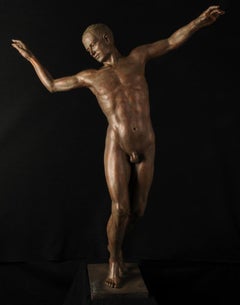
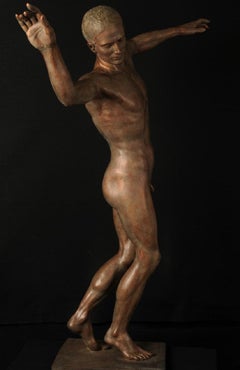
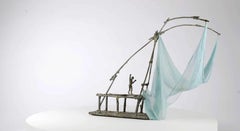
Man with Arms Raised

Man with Arms Raised

Located in London, GB

Bronze Numbered 1/10 32cm × 10cm × 10cm (incl. base) Ian Rank-Broadley is one of the foremost sculptors working today. His effigy of the late Queen Elizabeth II appears on all UK an...

Category

2010s Contemporary Sculptures

Materials

Bronze

Ragisména series Brown, Abstract Sculpture

Ragisména series Brown, Abstract Sculpture

Located in Miami Beach, FL

The Ragisména series, which in Greek means cracked, has its materiality manifested through the desire to recreate and make feelings, memories and mythology tangible in the physical w...

Category

2010s Abstract Sculptures

Materials

Canvas, Plaster, Acrylic

Big Grey Ceramic with Experimental Glaze, - 'Untitled 27'

Big Grey Ceramic with Experimental Glaze, - 'Untitled 27'

Located in Bruxelles, BE

Drawing inspiration from ancient ceramic traditions, including Korean pottery and the Japanese wabi-sabi aesthetic, Laura Pasquino explores the beauty of imperfection and the express...

Category

2010s Contemporary Sculptures

Materials

Ceramic

Nidium 1.5m - Interactive Outdoor Sculpture, LED, Nature-Inspired

Nidium 1.5m - Interactive Outdoor Sculpture, LED, Nature-Inspired

Located in Bloomfield, ON

This unique contemporary outdoor sculpture inspired by nature is interactive. Oeno Gallery is proud to host the North American debut of this extraordinary interactive sculpture, “wh...

Category

2010s Abstract Sculptures

Materials

Wood, LED Light

Woman - Sculpture - Mid-20th Century

Woman - Sculpture - Mid-20th Century

Located in Roma, IT

Balinese bronze sculpture of woman. Placed on a wooden pedestal. Excellent condition.

Category

Mid-20th Century Modern Sculptures

Materials

Bronze

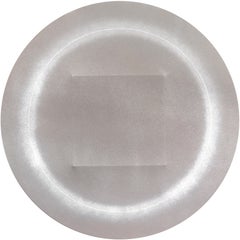
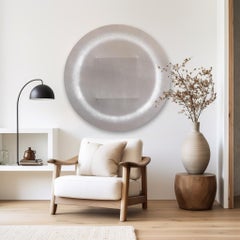
IRIS V - unique abstraction of colors in circular glass frame (45" diameter)

IRIS V - unique abstraction of colors in circular glass frame (45" diameter)

By Frank Schott

Located in San Francisco, CA

a mesmerizing sea of abstract grey blue and aqua water color tones, from an ongoing photography project since the late 1990s, capturing the details of the human iris and a pupil's un...

Category

21st Century and Contemporary Contemporary Sculptures

Materials

Plexiglass, Photographic Film, Archival Ink, Archival Paper, Photographi...

Metrix Large Marble Sculpture

Metrix Large Marble Sculpture

By Robert Russin

Located in Lake Worth Beach, FL

Matrix White Carrara Marble on marble base, singed and titled in plate. Created 1972 Solo exhibition in 1976 Le Galeria De Arte Moderno Dominican Republic. It will be shipped in tw...

Category

1970s Modern Sculptures

Materials

Marble

Clodine
Clodine

Clodine

By René Romero Schuler

Located in Westport, CT

This beautiful female figurative sculpture is by René Romero Schuler. This powerful female figure speaks to the complexities of the human condition and the spirit that connects all...

Category

2010s Contemporary Sculptures

Materials

Copper, Wire

Elegance
Elegance

Larry ScaturroElegance, 2021

$3,040Sale Price|44% Off

Elegance

By Larry Scaturro

Located in Brooklyn, NY

Inspired by Archipenko, this piece embodies the elegance and grace of the human figure in abstract form. Edition of 12. Custom sizes and pricing available upon request.

Category

2010s Contemporary Sculptures

Materials

Resin

Celestine - expressive, textured, female, figurative, paper mache sculpture

Celestine - expressive, textured, female, figurative, paper mache sculpture

By Paul Duval

Located in Bloomfield, ON

This lithe, elegant female figure was sculpted by Quebec artist Paul Duval. One of a series of paper mache, wire and metal table top pieces, each one imbued with a distinct personality. Duval uses simple gestures, posture, and colour to convey each character’s individuality. Celestine is clothed in a royal blue gown...

Category

2010s Contemporary Sculptures

Materials

Wire

Abstract Cast Glass Sculpture, 'Waka Tupapku', 1996 by David Ruth

Abstract Cast Glass Sculpture, 'Waka Tupapku', 1996 by David Ruth

By David Ruth

Located in Oakland, CA

'Waka Tupapaku' is a contemporary abstract cast glass sculpture by David Ruth from his Internal Space series. About the Internal Space Series: David’s experiments with sheet glass and fusing led him to try to make the glass thicker to see more interior space. It was during this time a professor pointed out that he was working with a metaphor, for which the internal space of the glass was the equivalent to the internal life of the mind. This became his operating mantra but also forced him to come to terms with the casting of thick sections. “Creating those internal spaces came with some problems. Other than telescope mirrors, I did not know that anyone annealed glass in a kiln for more than a day or two. When pieces cracked after five days of cooling, I could not believe they would need even more time. The tragedy...

Category

1990s Abstract Expressionist Sculptures

Materials

Glass

Seguso Murano Italian Art Glass Cobalt Gold Aventurine Footed Vase Sculpture

Seguso Murano Italian Art Glass Cobalt Gold Aventurine Footed Vase Sculpture

By Livio Seguso

Located in Surfside, FL

Seguso Viro Murano Hand signed underneath. Dimensions: vase measures approximately 16" tall and 8.75" across the widest area. Good-quality Seguso Murano (probably 1980's or 1990s,...

Category

20th Century Abstract Sculptures

Materials

Glass

Near Miss

Near Miss

By Don Reitz

Located in Phoenix, AZ

white stoneware, with slip decoration b. 1929 – d. 2014 Don Reitz referred to his medium of choice as “dirt.” Simply put, clay is dirt or earth, and “burnt earth” is pottery. He ...

Category

2010s Abstract Sculptures

Materials

Ceramic, Stoneware, Slip

Mutation 10 - small, white, geometrical, 3D, felt, fabric, biomorphic, wall art

Mutation 10 - small, white, geometrical, 3D, felt, fabric, biomorphic, wall art

By Chung-Im Kim

Located in Bloomfield, ON

Fabric artist Chung-Im King’s series of felt tapestries called “Mutation” consist of striking geometrical shapes that mimic designs found in nature. The artist has cut pure white fel...

Category

2010s Contemporary Sculptures

Materials

Felt, Thread, Mixed Media

Gymnast, Eighth Life

Gymnast, Eighth Life

By Richard MacDonald

Located in Laguna Beach, CA

Created by artist Richard MacDonald for the 1996 Atlanta Summer Olympics, Flair Across America celebrates the triumph of the human spirit and the idealization of the human form. Wh...

Category

1990s Sculptures

Materials

Bronze

Graft E10 - Abstract Figurative Wall Sculpture - Tree Branch with Bronze Figures

Graft E10 - Abstract Figurative Wall Sculpture - Tree Branch with Bronze Figures

By Jennyfer Stratman

Located in Los Angeles, CA

There is a metaphorical interplay between the natural imagery international artist, Jennyfer Stratman, uses and its multiple meanings. While the human figure features strongly, it is the essence of the body that is important to her, not the representation. Particularly, the artist imagines trees and branches as a figurative link between the natural environment and our physical presence. The implied internal landscape of the body can also be reflected in how our surroundings from birth affect our sense of identity. By exploring landscapes of the body and mind, she also hopes to comment on the larger picture of our impact on the natural world. In the Graft series, the human figure is grafted onto a tree limb, juxtaposing an inherent interconnection and a renewed awareness of our place in nature. This exquisite bronze sculpture is meant to be installed as a wall hanging that sits 2 inches away from the wall. As displayed, this sculpture measures 6 inches high and 19 inches wide. It is signed by Stratman on the front and back. Free local Los Angeles delivery. Affordable Continental U.S. and International shipping available. A certificate of authenticity issued by the art gallery is included. Stratman grew up in Phoenix, Arizona. In 1992 she commenced her studies at Arizona State University majoring in visual arts and art education. Stratman entered academia as a ceramicist. With each passing semester, the scale of her creations expanded and the material limitations of working with clay ultimately led her to the university foundry. This opened a door into another world of creative possibilities, profoundly changing her artistic direction. She replaced fired clay with larger-scale bronze, steel, and mixed media sculptures yet retained a delicacy, intimacy, and intricacy imbued from the ceramic process. Today she is a full-time established artist with studios operating in Phoenix, Arizona, and Melbourne, Australia. Her time is divided between the two countries with each location informing and influencing the creative process. She has exhibited in 31 solo exhibitions and over 100 group exhibitions nationally and internationally. Her indoor and outdoor sculptures are held in public and private collections in countries including the United States, Australia, Canada, Hong Kong, Singapore, Taiwan, Israel, England, and Europe. Artplex Gallery has been representing and exhibiting Jennyfer Stratman's original artworks in Los Angeles since 2021, presenting her impressive works to an international collector base around the globe. The gallery has been a 1stdibs partner since 2014 with consistently excellent reviews from clients worldwide. The gallery exhibits a well-curated selection of original artworks beyond the ordinary from established and emerging international artists with diverse backgrounds at high standards. Artplex Gallery is known to provide accurate descriptions, images, reliable services, communication, and delivery. The gallery's commitment to customer satisfaction means that clients can invest in art with confidence, knowing they have a reputable and established art gallery backing their acquisition. Artplex Gallery prioritizes our clients' peace of mind by ensuring a seamless and worry-free art-buying experience. REPRESENTATION Artplex Gallery, Los Angeles, USA SOLO EXHIBITIONS 2023 Solo Exhibition, Grace Renee Gallery, Carefree, Arizona 2021 “Natural Connections”, Manyung Gallery, Melbourne, Australia 2020 “Celestial Forms”, Manyung Gallery, Melbourne, Australia 2019 “Solo Exhibition”, Grace Renee Gallery, Carefree, AZ 2018 “The Etheral Garden”, Manyung Gallery, Melbourne, Australia “The Gravity Between Us”, Calvin Charles Gallery, Scottsdale, AZ 2017 “Tree Within Me”, Avran Fine Art, Laguna, CA 2016 “Constellation”, Manyung Gallery, Melbourne, Australia “Cultivating The Wild”, Calvin Charles Gallery, Scottsdale, AZ 2015 “Connection”, Mirada Fine Art, Denver, CO “Transformation”, Contemporary Fine Arts Gallery, La Jolla, CA 2014 “Cultivating Memory”, Michele Mariaud Gallery, NYC “Connected Elements”, Calvin Charles Gallery, Scottsdale AZ 2013 “Interconnection”, Contemporary Fine Arts Gallery, La Jolla, CA 2012 “Internal Landscapes”, Mirada Fine Art, Denver, CO 2011 “Reflective Landscapes”, Stockroom, Kyneton, Australia “Propagated Reflections”, Calvin Charles Gallery, Scottsdale,AZ 2010 “Hybrid”, GF Contemporary, Santa Fe, NM GROUP EXHIBITIONS 2023 Nature Art Soiree, Manyung Gallery, Melbourne Australia Affordable Art Fair Sydney, Manyung Gallery, Sydney Australia 2022 Affordable Art Fair Melbourne, Manyung Gallery, Melbourne, Australia CHAOS Theory 22, Legend City Studios, Pheonix, Arizona Endings And Beginnings, Modified Arts, Pheonix, Arizona Skies of Fruitful Nights, Artplex Gallery, Los Angeles, California 2021 Every Artist Ever Ten Year Anniversary Show, Stockroom Gallery, Melbourne, Australia CHAOS Theory 21, Legend City Studios, Pheonix, Arizona 2020 Affordable Online Art Fair, Manyung Gallery, Worldwide 2019 Portland on the Park Collection Exhibition, Phoenix, Arizona CHAOS Theory 20, Legend City Studios, Phoenix, Arizona Loreto Spring Art, Marryatville, South Australia Toorak Village Festival of Sculpture, Melbourne, Australia 2018 Carmody Foundation Grant Recipient, Phoenix, Arizona CHAOS Theory 19, Legend City Studios, Phoenix, Arizona Affordable Art Fair Hong Kong, with TAG Fine Arts, Hong Kong Toorak Village Festival of Sculpture 2018, Toorak, Victoria Affordable Art Fair New York, with TAG Fine Arts, New York Battersea Art Fair, TAG Fine Arts, London, England 2017 Affordable Art Fair Singapore, TAG Fine Arts, Singapore Choice Cuts, The Lodge Art...

Category

21st Century and Contemporary Contemporary Sculptures

Materials

Metal, Bronze

White Path - 3D small contemporary abstract round mural sculpture

White Path - 3D small contemporary abstract round mural sculpture

Located in New York, NY

Erin Vincent is a Toronto based-artist whose work draws on a variety of repetitive and labor intensive processes and materials. Things and common objects have always fascinated Vinc...

Category

2010s Abstract Geometric Sculptures

Materials

Acrylic, Wood Panel, Archival Paper

Sing - bright, dynamic, narrative, painted stainless steel outdoor sculpture

Sing - bright, dynamic, narrative, painted stainless steel outdoor sculpture

By Marlene Hilton Moore

Located in Bloomfield, ON

In this series of outdoor ‘singing’ bowl sculptures, Marlene Hilton Moore continues to explore the theme of ‘listening.’ This stainless-steel bowl is laser cut with the word “Sing” i...

Category

2010s Contemporary Sculptures

Materials

Stainless Steel

Flower Fairy, Bronze Sculpture by Volodymyr Mykytenko, 2009

Flower Fairy, Bronze Sculpture by Volodymyr Mykytenko, 2009

Located in Zofingen, AG

Volodymyr Mykytenko - flower Fairy (2009) flower Fairy-Flower fairies are graceful creatures that wield the magic of nature to promote the growth of flowers. Fairies live in the for...

Category

21st Century and Contemporary Sculptures

Materials

Bronze

Please Leave Us Alone (Abstract Minimalist Light Grey 3-D Wall Sculpture)

Please Leave Us Alone (Abstract Minimalist Light Grey 3-D Wall Sculpture)

By Dai Ban

Located in Hudson, NY

Abstract minimalist three-dimensional wall sculpture in light grey and black "Please Leave Us Alone" by Dai Ban, 2020 29 x 24 x 10 inches Precision board, Venetian Plaster, Beeswax, Pigment Lightweight sculpture (weighs about 5 lbs.) and hangs on the wall with a French cleat Excellent condition and ready to hang as is Signed, verso This contemporary, abstract horizontal wall sculpture...

Category

2010s Abstract Sculptures

Materials

Plaster, Foam Board, Pigment

Getting at the Heart of the Matter, Hand built sculpture plate with sgraffito

Getting at the Heart of the Matter, Hand built sculpture plate with sgraffito

Located in Miami Beach, FL

In this new series of wall plaques, titled "Behind Closed Doors," the artist reimagines original images from a book titled In Praise of the Backside. The book's collection features w...

Category

2010s Other Art Style Sculptures

Materials

Porcelain, Dye Transfer

Early 20th Century Ceramic Sculpture of a Polo Player and Horse

Early 20th Century Ceramic Sculpture of a Polo Player and Horse

By Waylande Gregory

Located in Beachwood, OH

Waylande Gregory (American, 1905-1971) Polo Player, c. 1930s Ceramic Inscribed signature on bottom 11 x 8.5 inches Waylande Gregory was considered a major American sculptor during the 1930's, although he worked in ceramics, rather than in the more traditional bronze or marble. Exhibiting his ceramic works at such significant American venues for sculpture as the Whitney Museum of American Art in New York City and at the venerable Pennsylvania Academy of the Fine Arts in Philadelphia, he also showed his ceramic sculptures at leading New York City galleries. Gregory was the first modern ceramist to create large scale ceramic sculptures, some measuring more than 70 inches in height. Similar to the technique developed by the ancient Etruscans, he fired his monumental ceramic sculptures only once. Gregory was born in 1905 in Baxter Springs, Kansas and was something of a prodigy. Growing up on a ranch near a Cherokee reservation, Gregory first became interested in ceramics as a child during a native American burial that he had witnessed. He was also musically inclined. In fact, his mother had been a concert pianist and had given her son lessons. At eleven, he was enrolled as a student at the Kansas State Teacher's College, where he studied carpentry and crafts, including ceramics. Gregory's early development as a sculptor was shaped by the encouragement and instruction of Lorado Taft, who was considered both a major American sculptor as well as a leading American sculpture instructor. In fact, Taft's earlier students included such significant sculptors as Bessie Potter Vonnoh and Janet Scudder. But, Taft and his students had primarily worked in bronze or stone, not in clay; and, Gregory's earliest sculptural works were also not in ceramics. In 1924, Gregory moved to Chicago where he caught the attention of Taft. Gregory was invited by Taft to study with him privately for 18 months and to live and work with him at his famed "Midway Studios." The elegant studio was a complex of 13 rooms that overlooked a courtyard. Taft may have been responsible for getting the young man interested in creating large scale sculpture. However, by the 1920's, Taft's brand of academic sculpture was no longer considered progressive. Instead, Gregory was attracted to the latest trends appearing in the United States and Europe. In 1928 he visited Europe with Taft and other students. "Kid Gregory," as he was called, was soon hired by Guy Cowan, the founder of the Cowan Pottery in Cleveland, Ohio, to become the company's only full time employee. From 1928 to 1932, Gregory served as the chief designer and sculptor at the Cowan Pottery. Just as Gregory learned about the process of creating sculpture from Taft, he literally learned about ceramics from Cowan. Cowan was one of the first graduates of Alfred, the New York School of Clayworking and Ceramics. Alfred had one of the first programs in production pottery. Cowan may have known about pottery production, but he had limited sculptural skills, as he was lacking training in sculpture. The focus of the Cowan Pottery would be on limited edition, table top or mantle sculptures. Two of the most successful of these were Gregory's "Nautch Dancer," (fig. 1) and his "Burlesque Dancer," (fig. 2). He based both sculptures on the dancing of Gilda Gray, a Ziegfield Follies girl. Gilda Gray was of Polish origin and came to the United States as a child. By 1922, she would become one of the most popular stars in the Follies. After losing her assets in the stock market crash of 1929, she accepted other bookings outside of New York, including Cleveland, which was where Gregory first saw her onstage. She allowed Gregory to make sketches of her performances from the wings of the theatre. She explained to Gregory, "I'm too restless to pose." Gray became noted for her nautch dance, an East Indian folk dance. A nautch is a tight, fitted dress that would curl at the bottom and act like a hoop. This sculpture does not focus on Gray's face at all, but is more of a portrait of her nautch dance. It is very curvilinear, really made of a series of arches that connect in a most feminine way. Gregory created his "Burlesque Dancer" at about the same time as "Nautch Dancer." As with the "Nautch Dancer," he focused on the movements of the body rather than on a facial portrait of Gray. Although Gregory never revealed the identity of his model for "Burlesque Dancer," a clue to her identity is revealed in the sculpture's earlier title, "Shimmy Dance." The dancer who was credited for creating the shimmy dance was also Gilda Gray. According to dance legend, Gray introduced the shimmy when she sang the "Star Spangled Banner" and forgot some of the lyrics, so, in her embarrassment, started shaking her shoulders and hips but she did not move her legs. Such movement seems to relate to the "Burlesque Dancer" sculpture, where repeated triangular forms extend from the upper torso and hips. This rapid movement suggests the influence of Italian Futurism, as well as the planar motion of Alexander Archipenko, a sculptor whom Gregory much admired. The Cowan Pottery was a victim of the great depression, and in 1932, Gregory changed careers as a sculptor in the ceramics industry to that of an instructor at the Cranbrook Academy in Bloomfield Hills, Michigan. Cranbrook was perhaps the most prestigious place to study modern design in America. Its faculty included the architect Eliel Saarinen and sculptor Carl Milles. Although Gregory was only at Cranbrook for one and one half years, he created some of his finest works there, including his "Kansas Madonna" (fig. 3). But, after arriving at Cranbrook, the Gregory's had to face emerging financial pressures. Although Gregory and his wife were provided with complimentary lodgings, all other income had to stem from the sale of artworks and tuition from students that he, himself, had to solicit. Gregory had many people assisting him with production methods at the Cowan Pottery, but now worked largely by himself. And although he still used molds, especially in creating porcelain works, many of his major new sculptures would be unique and sculpted by hand, as is true of "Kansas Madonna." The scale of Gregory's works were getting notably larger at Cranbrook than at Cowan. Gregory left the surface of "Kansas Madonna" totally unglazed. Although some might object to using a religious title to depict a horse nursing its colt, it was considered one of Gregory's most successful works. In fact, it had a whole color page illustration in an article about ceramic sculpture titled, "The Art with the Inferiority Complex," Fortune Magazine, December, 1937. The article notes the sculpture was romantic and expressive and the sculpture was priced at $1,500.00; the most expensive sculpture in the article. Gregory was from Kansas, and "Kansas Madonna" should be considered a major sculptural document of Regionalism. Gregory and his wife Yolande moved to New Jersey in the summer of 1933. And the artist began construction on his new home in the Watchung Mountains of Bound Brook (Warren today) in 1938. His enormous, custom kiln was probably constructed at the start of 1938. Gregory's new sculptures were the largest ceramic sculptures in western art, in modern times. To create these works of ceramic virtuosity, the artist developed a "honeycomb" technique, in which an infrastructure of compartments was covered by a ceramic "skin." Science and atomic energy were a theme in Gregory's most significant work, the "Fountain of the Atom" (fig. 4), at the 1939 New York's World Fair. This major work included twelve monumental ceramic figures at the fairground entrance from the newly constructed railway entrance, giving the work great visibility and prominence. The framework of the fountain itself was of steel and glass bricks. It consisted of a bluish green pool which was sixty five feet in diameter. Above it were two concentric circular tiers, or terraces, as Gregory called them; the first wider than the second. On the first terrace were eight "Electrons," comprised of four male and four female terra cotta figures, each approximately 48 inches high. These relate to the valance shell of the atom. Above them on a narrower terrace, were the much larger and heavier terra cotta figures depicting the four elements, each averaging about 78 inches in height and weighing about a ton and a half. Of the four, "Water" and "Air" were male, while "Earth" and "Fire" were female. This terrace represents the nucleus of the atom. In the center of the fountain, above the "Elements," was a central shaft comprised of sixteen glass tubes from which water tumbled down from tier to tier. At the top, a colorful flame burned constantly. The glass block tiers were lit from within, the whole creating a glowing and gurgling effect. Since the fair was temporary, the figures could be removed after its closing. But the credit for the design of the structure of the fountain belongs to collaborator Nembhard Culin, who was responsible for several other structures on the fair grounds as well. Although Gregory created a figure of "Fire" for the "Fountain of the Atom," he also executed a second, slightly smaller but more defined version which he exhibited at various locations (including Cranbrook, Baltimore Museum, etc.) in 1940-1941, during the second year of the fair (fig.5). Measuring 61 inches in height, "Fire" may be a metaphor for sexual energy, as well as atomic energy. Gregory stated, "Fire is represented by an aquiline female figure being consumed in endless arabesques of flame." Portraiture was also a significant focus of Gregory's sculpture. Gregory produced many commissioned portraits of local people as well as celebrities. He created Albert Einstein's portrait from life (fig. 6, ca. 1940) after Einstein had seen Gregory's "Fountain of the Atom." He also sculpted some of the leading figures in entertainment, including 2 sculptures of Henry Fonda, who became a personal friend. Gregory also sculpted a series of idealized female heads, both in terra cotta and in porcelain. These include "Girl with Olive" (ca. 1932) and "Cretan Girl;"(ca. 1937) both are very reductive and almost abstract works that call to mind Constantine Brancusi's "Mademoiselle Pogany" (1912, Philadelphia Museum of Art). But perhaps one of his most original female heads is "Head of a Child" (fig. 7, ca. 1933), a sensitive white glazed terra cotta portrayal with elaborately crafted braded hair, was originally created as one of a pair. Gregory also produced sculptural works for the Works Progress Administration. The WPA was a work relief project that greatly helped artists during the great depression. Founded by the Federal Government in 1935, an estimated 2500 murals were produced. Among these public works were the iconic post office murals. But, among the painted murals were also sculptural relief murals including Gregory's "R.F.D.," 1938, for the Columbus, Kansas Post Office. But, Gregory's largest WPA relief...

Category

1930s Sculptures

Materials

Ceramic

Burled Maple Sculpture Nude Woman with Arms Over Head and Stone

Burled Maple Sculpture Nude Woman with Arms Over Head and Stone

Located in Soquel, CA

Burled Maple Sculpture Nude Woman with Arms Over Head Beautiful burled walnut sculpture of a nude woman. The woman stands with her arms stretched over her head. Behind her a dark st...

Category

Mid-20th Century Post-War Sculptures

Materials

Stone

"Santiago in Nicho, " Mexican Folk Art, Carved & Painted Retablo from circa 1900

"Santiago in Nicho, " Mexican Folk Art, Carved & Painted Retablo from circa 1900

Located in Milwaukee, WI

"Santiago in Nicho" is a carved and painted wooden retablo by an unknown Mexican folk artist. This piece features a man on a white horse inside a niche. The doors, which feature flow...

Category

Early 1900s Folk Art Sculptures

Materials

Wood, Paint

Plains Indian Medallion, bronze, Nambe, Allan Houser, small life-time casting

Plains Indian Medallion, bronze, Nambe, Allan Houser, small life-time casting

By Allan Houser

Located in Santa Fe, NM

Plains Indian Medallion, bronze, Nambe, Allan Houser, small life-time casting Allan Houser (Haozous), Chiricahua Apache 1914-1994 recipient of the National Medal of Arts in 1992. Allan Houser's father Sam, was part of the small band of Apaches who traveled with Geronimo and surrendered in southern Arizona in 1886. Allan's parents were imprisoned with that group in Ft. Sill, Oklahoma. He was the first child to be born in freedom to those Apaches and a fluent speaker of the Chiricahua language. Allan Houser is an important artist in that he is of the culture he depicts in his artwork. Allan's parents would tell stories and sing songs recalling the experiences on the war path. This bronze edition is a life-time casting. Our gallery represented Allan Houser from 1974 until his passing in 1994 and were investors and provided quality control in the foundry process. Allan Houser's work is many international collections including the Georges Pomidou Centre, The Smithsonian National Portrait Gallery, The Dahlem Museum among others. Allan’s first bronze sculptures were started in the late 1960’s and were cast at Nambe Foundry. At the time the foundry was producing both Nambeware and was doing some sculptural foundry work. There was a fire at Nambe and they lost many of the molds for sculpture as well as their records. We acquired these works directly from Allan Houser. Allan Houser (Haozous), Chiricahua Apache (1914-1994) Selected Collections Centre Georges Pompidou, Paris, France * “They’re Coming”, bronze Dahlem Museum, Berlin, Germany Japanese Royal Collection, Tokyo, Japan “The Eagle”, black marble commissioned by President William J. Clinton United States Mission to the United Nations, New York City, NY *"Offering of the Sacred Pipe”, monumental bronze by Allan Houser © 1979 Presented to the United States Mission to the United Nations as a symbol of World Peace honoring the native people of all tribes in these United States of America on February 27, 1985 by the families of Allan and Anna Marie Houser, George and Thelma Green and Glenn and Sandy Green in New York City. National Portrait Gallery, Smithsonian, Washington, DC * Portrait of Geronimo, bronze National Museum of American Art, Smithsonian, Washington, D.C. * “Buffalo Dance Relief”, Indiana limestone National Museum of the American Indian, Smithsonian, Washington, D.C. *Sacred Rain Arrow, (Originally dedicated at the US Senate Committee on Indian Affairs, US Senate Building) “Goat”, “To The Great Spirit” - dedicated in 1994 at the Vice President’s Residence in Washington, D.C.. Ceremony officiated by Hillary Rodham Clinton and Tipper Gore. Oklahoma State Capitol, Oklahoma City, Ok * “As Long As the Waters Flow”, bronze Gilcrease Museum, Tulsa, OK *Sacred Rain Arrow, bronze Fort Sill, Oklahoma *”Chiricahua Apache Family”, bronze Donated and dedicated to Allan Houser’s parents Sam and Blossom Haozous by Allan Houser and Glenn and Sandy Green The Heard Museum, Phoenix, Arizona *Earth Song, marble donated by Glenn and Sandy Green   The Clinton Presidential Library, Arkansas * “May We Have Peace”, bronze The George H.W. Bush Presidential Library, College Station, Texas *"Offering to the Great Spirit", bronze The British Royal Collection, London, England *Princess Anne received "Proud Mother", bronze in Santa Fe Allan Houser’s father Sam Haozous, surrendered at the age of 14 with Geronimo and his band of Warm Springs Chiricahua Apache people in 1886 in Southern Arizona. This was the last active war party in the United States. This group of Apache people was imprisoned for 27 years starting in Fort Marion, Florida and finally living in captivity in Fort Sill, Oklahoma. Allan Houser was born in 1914. His artwork is an ongoing testimony to Native life in America – its beauty, strength and poignancy. Allan Houser is from the culture and portrayed his people in an insightful and authentic way. Because of the era in which he lived, he had a rare understanding of American Indian life. Allan was the first child born after the Chiricahua Apaches were released from 27 years of captivity. Allan grew up speaking the Chiricahua dialect. Allan heard his father’s stories of being on the warpath with Geronimo and almost nightly heard his parents singing traditional Apache music. Allan’s father knew all of Geronimo’s medicine songs. Allan had an early inclination to be artistic. He was exposed to many Apache ceremonial art forms: music, musical instruments, special dress, beadwork, body painting and dynamic dance that are integral aspects of his culture. His neighbors were members of many different tribes who lived in Oklahoma. Allan eagerly gained information about them and their cultures. Allan gathered this information and mentally stored images until he brought them back to life, years later, as a mature artist. Allan Houser was represented by Glenn Green Galleries (formerly known as The Gallery Wall, Inc.) from 1973 until his death in 1994. The gallery served as agents, advocates, and investors during this time. In 1973 the Greens responded enthusiastically to the abstraction and creativity in Houser’s work. They were impressed, not only with his versatility and talent but with the number of mediums he employed. His subject matter was portrayed in styles ranging from realism, stylized form to abstraction. With encouragement from the Greens, Houser at the age of 61, retired from his post as the head of the sculpture department at the Institute of American Indian Arts in Santa Fe, New Mexico in 1975 to begin working full-time creating his art. The next 20-year period was an exciting time for Allan, the gallery, and for the Green family. He created a large body of sculpture in stone, wood and bronze. For many years Glenn Green Galleries co-sponsored many editions of his bronzes and acted as quality control for the bronze sculptures according to Houser’s wishes. As both agents and gallery representatives, the Greens promoted and sold his art in their galleries in Phoenix and Scottsdale, Arizona and in Santa Fe, New Mexico. They had bi-annual exhibits in their galleries to feature Houser’s newest work and sponsored and arranged international museum shows in America, Europe and Asia. They travelled for these events including a trip to Carrara, Italy to the famed quarries of Michelangelo and together co-financed and arranged the purchase of 20 tons of marble. A watershed event for Allan Houser’s career occurred in the early 1980’s when Glenn Green Galleries arranged with the US Information Agency a touring exhibit of his sculpture through Europe. This series of exhibits drew record attendance for these museums and exposed Houser’s work to an enthusiastic art audience. This resulted in changing the perception of contemporary Native art in the United States where Houser and Glenn Green Galleries initially faced resistance from institutions who wanted to categorize him in a regional way. The credits from the European exhibits helped open doors and minds of the mainstream art community in the United States and beyond. Senator Daniel Inouye of Hawaii was a supporter of Allan Houser’s artwork. We worked with Senator Inouye on many occasions hosting events at our gallery and in Washington D.C in support of the formation of the Smithsonian’s National Museum of the American Indian in Washington, D.C. and other causes supporting Native Americans. Allan Houser is shown below presenting his sculpture “Swift Messenger” to Senator Inouye in Washington, D.C.. This sculpture was eventually given to the National Museum of the American Indian, Smithsonian’s permanent collection. It is now currently on loan and on display in the Oval Office. President Biden’s selection of artwork continues our gallery’s and Allan’s connection to the White House from our time working with Allan Houser from 1974 until his passing in 1994. “It was important for President Biden to walk into an Oval that looked like America and started to show the landscape of who he is going to be as president,” Ashley Williams...

Category

1970s Contemporary Sculptures

Materials

Bronze

"Modus Volito 8, " Found object abstract sculpture, mixed media, wood, geometric

"Modus Volito 8, " Found object abstract sculpture, mixed media, wood, geometric

By Hyland Mather (X-O)

Located in Philadelphia, PA

The small-scale wooden and found object, abstract, free-standing sculpture titled, "Modus Volito 8" is an original artwork by Hyland Mather made from aerosol and laser engraving on f...

Category

21st Century and Contemporary Contemporary Sculptures

Materials

Wood, Acrylic, Mixed Media, Spray Paint

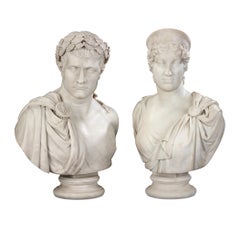
Marie de'  Medici
Marie de'  Medici

Marie de' Medici

By Mathurin Moreau

Located in Douglas, Isle of Man

Mathurin Moreau 1822-1912, was a French sculptor in the classic academic style. His father was also a sculptor and his siblings. Mathurin first received a medal at the Salon in 1848,...

Category

Late 19th Century Sculptures

Materials

Bronze

Linda Stein, Knight of the Lock 554 - Contemporary Mixed Media Metal Sculpture

Linda Stein, Knight of the Lock 554 - Contemporary Mixed Media Metal Sculpture

Located in New York, NY

Knight of the Lock 554 from Linda Stein’s Knights of Protection series functions both as a defender in battle and a symbol of pacifism. This sculpture is made of wood, metal, stone ...

Category

Early 2000s Contemporary Sculptures

Materials

Stone, Metal

Nude, Abstract and Figurative Sculptures for Sale

The history of sculpture as we know it is believed to have origins in Ancient Greece, while small sculptural carvings are among the most common examples of prehistoric art. In short, sculpture as a fine art has been with us forever. A powerful three-dimensional means of creative expression, sculpture has long been most frequently associated with religion — consider the limestone Great Sphinx in Giza, Egypt — while the tradition of collecting sculpture, which has also been traced back to Greece as well as to China, far precedes the emergence of museums.

Technique and materials in sculpture have changed over time. Stone sculpture, which essentially began as images carved into cave walls, is as old as human civilization itself. The majority of surviving sculpted works from ancient cultures are stone. Traditionally, this material and pottery as well as metalbronze in particular — were among the most common materials associated with this field of visual art. Artists have long sought new ways and materials in order to make sculptures and express their ideas. Material, after all, is the vehicle through which artists express themselves, or at least work out the problems knocking around in their heads. It also allows them to push the boundaries of form, subverting our expectations and upending convention. As an influential sculptor as much as he was a revolutionary painter and printmaker, Pablo Picasso worked with everything from wire to wood to bicycle seats.

If you are a lover of art and antiques or are thinking of bringing a work of sculpture into your home for the first time, there are several details to keep in mind. As with all other works of art, think about what you like. What speaks to you? Visit local galleries and museums. Take in works of public art and art fairs when you can and find out what kind of sculpture you like. When you’ve come to a decision about a specific work, try to find out all you can about the piece, and if you’re not buying from a sculptor directly, work with an art expert to confirm the work’s authenticity.

And when you bring your sculpture home, remember: No matter how big or small your new addition is, it will make a statement in your space. Large- and even medium-sized sculptures can be heavy, so hire some professional art handlers as necessary and find a good place in your home for your piece. Whether you’re installing a towering new figurative sculpture — a colorful character by KAWS or hyperreal work by Carole A. Feuerman, perhaps — or an abstract work by Won Lee, you’ll want the sculpture to be safe from being knocked over. (You’ll find that most sculptures should be displayed at eye level, while some large busts look best from below.)

On 1stDibs, find a broad range of exceptional sculptures for sale. Browse works by your favorite creator, style, period or other attribute.

Read More

At Hosfelt Gallery, Bertoia Masterworks Complement Dynamic Contemporary Art

For nearly three decades, San Francisco–based Todd Hosfelt has curated against the grain — with a show on the legendary modernist Harry Bertoia the latest case in point.

This Weathered-Steel Sculpture Distills a Form of Protest into a Minimalist Monument

Part of Alejandro Vega Beuvrin’s “Barricada” series, the work is a subversive tribute to the street smarts of citizen activists.

How the Chunky, Funky Ceramics of 5 Mid-Century American Artists Balanced Out Slick Modernism

Get to know the innovators behind the pottery countercultural revolution.

Art Brings the Drama in These Intriguing 1stDibs 50 Spaces

The world’s top designers explain how they display art to elicit the natural (and supernatural) energy of home interiors.

Chryssa’s 1962 Neon Sculpture Was Way ahead of the Art-World Curve

By working with lettering, neon and Pop imagery, Chryssa pioneered several postmodern themes at a time when most male artists detested commercial mediums.

How to Spot a Fake KAWS Figure

KAWS art toys have developed an avid audience in recent decades, and as in any robust collectible market, counterfeiters have followed the mania. Of course, you don’t have to worry about that on 1stDibs, where all our sellers are highly vetted.

A Giant Wedding Cake Has Us Looking at Portuguese Tiles in a New Light

At Waddesdon Manor, artist Joana Vasconcelos has installed a three-tiered patisserie inspired by the narrative tile work of her homeland. We take a look at the cake sculpture and how Portuguese tiles have been used in architecture from the 17th century to today.

These Soft Sculptures Are Childhood Imaginary Friends Come to Life

Miami artist and designer Gabriela Noelle’s fantastical creations appeal to the Peter Pan in all of us.