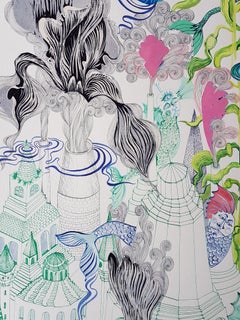
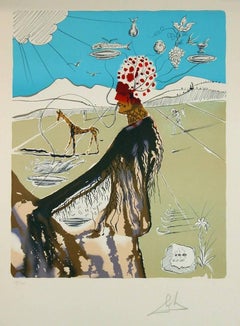
Surrealist Art

SURREALIST STYLE

In the wake of World War I’s ravaging of Europe, artists delved into the unconscious mind to confront and grapple with this reality. Poet and critic André Breton, a leader of the Surrealist movement who authored the 1924 Surrealist Manifesto, called this approach “a violent reaction against the impoverishment and sterility of thought processes that resulted from centuries of rationalism.” Surrealist art emerged in the 1920s with dreamlike and uncanny imagery guided by a variety of techniques such as automatic drawing, which can be likened to a stream of consciousness, to channel psychological experiences.

Although Surrealism was a groundbreaking approach for European art, its practitioners were inspired by Indigenous art and ancient mysticism for reenvisioning how sculptures, paintings, prints, performance art and more could respond to the unsettled world around them.

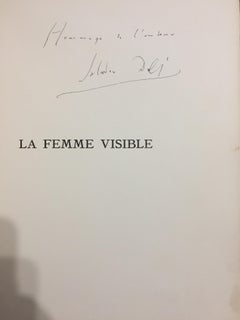
Surrealist artists were also informed by the Dada movement, which originated in 1916 Zurich and embraced absurdity over the logic that had propelled modernity into violence. Some of the Surrealists had witnessed this firsthand, such as Max Ernst, who served in the trenches during World War I, and Salvador Dalí, whose otherworldly paintings and other work responded to the dawning civil war in Spain.

Other key artists associated with the revolutionary art and literary movement included Man Ray, Joan Miró, René Magritte, Yves Tanguy, Frida Kahlo and Meret Oppenheim, all of whom had a distinct perspective on reimagining reality and freeing the unconscious mind from the conventions and restrictions of rational thought. Pablo Picasso showed some of his works in “La Peinture Surréaliste” — the first collective exhibition of Surrealist painting — which opened at Paris’s Galerie Pierre in November of 1925. (Although Magritte is best known as one of the visual Surrealist movement’s most talented practitioners, his famous 1943 painting, The Fifth Season, can be interpreted as a formal break from Surrealism.)

The outbreak of World War II led many in the movement to flee Europe for the Americas, further spreading Surrealism abroad. Generations of modern and contemporary artists were subsequently influenced by the richly symbolic and unearthly imagery of Surrealism, from Joseph Cornell to Arshile Gorky.

Find a collection of original Surrealist paintings, sculptures, prints and multiples and more art on 1stDibs.

to
1,754
3,683
1,676
2,119
974
1,036
Overall Width
to
Overall Height
to
17
25
6,118
3,330
4
19
124
109
156
494
1,543
1,965
522
302
15
116,607
63,785
56,631
28,249
14,628
6,634
5,849
4,158
3,128
2,527
2,358
2,134
607
5,785
2,602
915
3,931
2,493
1,464
1,212
1,209
1,037
1,012
534
329
325
312
311
268
255
245
242
171
136
127
110
2,746
2,515
1,691
1,591
1,578
810
390
339
261
196
1,643
2,606
5,600
3,271
Style: Surrealist
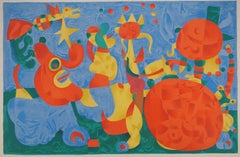
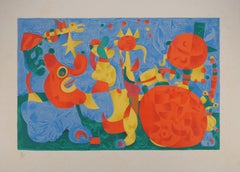
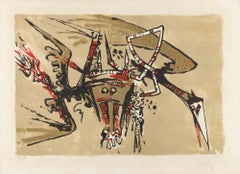
Capitulo XXI, Surrealist Lithograph by Rufino Tamayo

Capitulo XXI, Surrealist Lithograph by Rufino Tamayo

By Rufino Tamayo

Located in Long Island City, NY

Rufino Tamayo, Mexican (1899 - 1991) - Capitulo XXI, Portfolio: Apocalypse de Saint Jean, Year: 1959, Medium: Lithograph on BFK Rives, Edition: 93/255, Size: 13 x 10 in. (33.02 x 25....

Category

1960s Surrealist Art

Materials

Lithograph

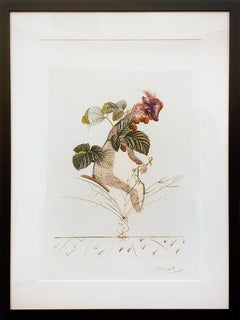
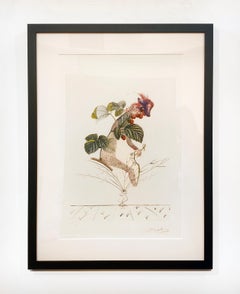
Salvador Dali "Apricot Knight"

Salvador Dali "Apricot Knight"

By Salvador Dalí­

Located in Boston, MA

Artist: Dali, Salvador Title: Apricot knight Series: Flors Dali (The Fruits) Date: 1969 Medium: Lithograph with original drypoint remarques Unframed Dimensions: 29.92" x 22.05" ...

Category

1960s Surrealist Art

Materials

Lithograph, Drypoint

The Death of Carmen - Lithograph - 1970

The Death of Carmen - Lithograph - 1970

By Salvador Dalí­

Located in Roma, IT

Color lithograph on Arches paper. Hand signed and numbered in pencil. Edition of LXVII/CCXXV (67/125). Ref. Michler-Lopsinger 1328b. Carmen's Death  is the last original colored l...

Category

1970s Surrealist Art

Materials

Lithograph

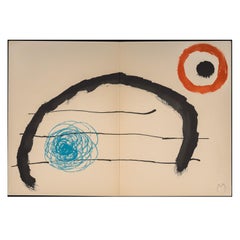
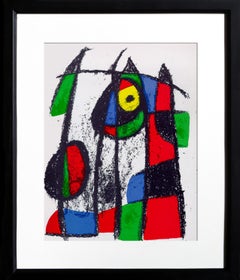
Joan Miro, Lithograph II, from Lithographs III, 1977

Joan Miro, Lithograph II, from Lithographs III, 1977

By Joan Miró

Located in Southampton, NY

This exquisite lithograph by Joan Miro (1893–1983), titled Lithograph II, from the album Joan Miro Lithographs, Volume III 1964–1969, originates from the 1977 edition published by Maeght Editeur, Paris, and printed by Mourlot Freres, Paris, April 15, 1977. Lithograph II reflects Miros poetic mastery of line, movement, and color, capturing his lifelong pursuit of visual rhythm and lyrical abstraction. Combining spontaneity and control, this composition embodies Miros signature balance of playful geometry and poetic energy—translating instinct and imagination into a harmonious field of motion and light. Executed as a lithograph on velin paper, this work measures 12.5 x 9.625 inches. Unsigned and unnumbered as issued. The edition exemplifies the refined craftsmanship and technical mastery of Mourlot Freres, Paris, one of the foremost printmaking ateliers of the 20th century. Artwork Details: Artist: Joan Miro (1893–1983) Title: Lithograph II, from the album Joan Miro Lithographs, Volume III 1964–1969, 1977 Medium: Lithograph on velin paper Dimensions: 12.5 x 9.625 inches (31.8 x 24.4 cm) Inscription: Unsigned and unnumbered as issued Date: 1977 Publisher: Maeght Editeur, Paris Printer: Mourlot Freres, Paris Catalogue raisonne references: Cramer, Patrick, and Joan Miro. Joan Miro, Catalogue Raisonne Des Livres Illustres. P. Cramer, 1989, illustration 230. Miro, Joan, and Patrick Cramer: Volume VI 1976–1981. Maeght, 1992, illustration 1114. Condition: Well preserved, consistent with age and medium Provenance: From the album Joan Miro Lithographs, Volume III 1964–1969, published by Maeght Editeur, Paris; printed by Mourlot Freres, Paris, April 15, 1977 Notes: Excerpted from the album, Final printing in Paris on 15th April 1977 at Arte Adrien Maeght press. The wide margin lithographs as well as the supplementary lithographs were printed by the Mourlot press. V̅ examples of this English language edition, numbered I-V̅, have been printed. A deluxe edition of CL examples, numbered 1-CL, with II additional original lithographs signed by Joan Miro, and LXXX suites, numbered I-LXXX, containing the VIII original lithographs on velin with wide margins and with each lithograph signed by the artist, have also been printed. About the Publication: Joan Miro Lithographs, Volume III 1964–1969, published in 1977 by Maeght Editeur, Paris, represents the third installment in the definitive four-volume series documenting Miros original lithographic oeuvre. Printed by Mourlot Freres and completed on April 15, 1977, the album chronicles a pivotal decade in Miros artistic evolution—one marked by the synthesis of lyrical abstraction, calligraphic gesture, and radiant color that defined his mature style. The volume includes eight original lithographs, each printed under Miros supervision, demonstrating the technical excellence and chromatic brilliance characteristic of his late work. With essays, documentation, and scholarly commentary, the album stands as both a visual and historical testament to the collaboration between Miro, Maeght Editeur, and Mourlot Freres, whose joint contributions elevated fine art lithography to an unparalleled standard of creativity and craftsmanship. As part of the celebrated Maeght archive of artist albums, Volume III captures the enduring vitality of Miros vision and the timeless spirit of his contribution to modern art. About the Artist: Joan Miro (1893–1983) was a Catalan painter, sculptor, printmaker, and ceramicist whose visionary imagination and lyrical abstraction made him one of the most influential and beloved artists of the 20th century. Born in Barcelona, Miro drew inspiration from Catalan folk art, Romanesque frescoes, and the luminous landscapes of Mont-roig del Camp, developing a deep connection to nature that infused his work with vitality and symbolism. After formal training at the Escola d'Art in Barcelona, he absorbed the lessons of Post-Impressionism and Cubism before moving to Paris in the early 1920s, where he became a leading figure in the Surrealist movement. There, Miro forged a personal visual language of biomorphic shapes, floating symbols, and radiant color harmonies that reflected both spontaneity and spiritual depth. In creative dialogue with peers such as Alexander Calder, Alberto Giacometti, Salvador Dali, Wassily Kandinsky, Marcel Duchamp, and Man Ray, he helped revolutionize modern art by dissolving the boundaries between abstraction and dream imagery. Miros inventive approach extended far beyond painting, embracing sculpture, ceramics, and monumental public commissions that redefined how art could interact with space and emotion. His expressive freedom and gestural abstraction profoundly influenced later artists including Jackson Pollock, Mark Rothko, Alexander Calder, Jean Dubuffet, Antoni Tapies, and Joan Mitchell, inspiring generations who sought to merge instinct, color, and imagination. Today, Miros work remains a cornerstone of modernism, prized by collectors and celebrated in major museums worldwide. His highest auction record was achieved by Peinture (Etoile Bleue) (1927), which sold for 23,561,250 GBP (approximately 37 million USD) at Sotheby's, London, on June 19, 2012. Joan Miro Lithograph II...

Category

1970s Surrealist Art

Materials

Lithograph

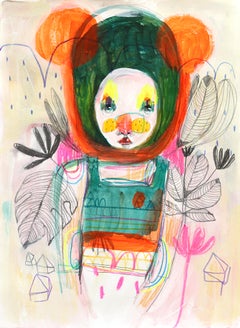
Autumn - Original Surrealist Hyperrealist Figurative Sunglass Painting on Canvas

Autumn - Original Surrealist Hyperrealist Figurative Sunglass Painting on Canvas

By Carlos Gamez de Francisco

Located in Los Angeles, CA

The figurative surrealistic paintings of Carlos Gamez de Francisco are heavily influenced by his Cuban upbringing in a Russian governed academia setting. This presence exposed Franci...

Category

21st Century and Contemporary Surrealist Art

Materials

Canvas, Acrylic

Pablo Picasso, "Face Turned Pitcher, " ceramic

Pablo Picasso, "Face Turned Pitcher, " ceramic

By Pablo Picasso

Located in Chatsworth, CA

This piece is an A.R. turned pitcher created by Pablo Picasso in 1955. It is made with white earthenware clay, decoration in engobes in red and black with glaze inside. It bears the ...

Category

1950s Surrealist Art

Materials

Clay

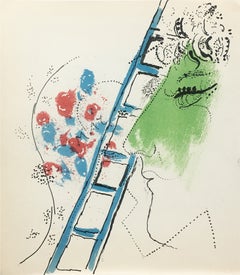
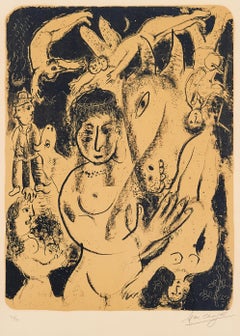
LE CHEVALET AUX FLEURS (MOURLOT 838)

LE CHEVALET AUX FLEURS (MOURLOT 838)

By Marc Chagall

Located in Aventura, FL

Hand signed and numbered by the artist. Lithograph in colors on wove paper. Mourlot 838. Sheet size 30.25 x 20 inches. Image size 22.5 x 14.75 inches. Frame size approx 36.5 x 26.5 inches. Edition 34/50. Artwork is in excellent condition. All reasonable offers will be considered. About the Artist: Marc Chagall (French/Russian, 1887–1985) was an artist whose work anticipated the dream-like imagery of Surrealism. Over the course of his career, Chagall developed the poetic, amorphous, and deeply personal visual language evident in paintings like I and the Village...

Category

1970s Surrealist Art

Materials

Paper, Lithograph

Space Time - Original handsigned lithograph

Space Time - Original handsigned lithograph

By Jean Allemand

Located in Paris, IDF

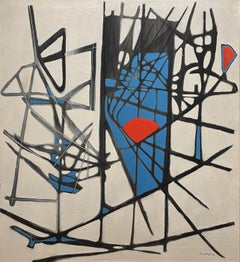
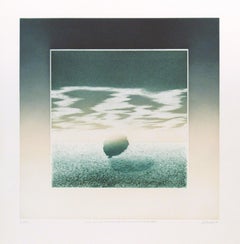
Jean Allemand Space Time Original lithograph Handsigned in pencil Limited /275 copies On vellum 76 x 56 cm (c. 29.9 x 22 in) Excellent condition

Category

Late 20th Century Surrealist Art

Materials

Lithograph

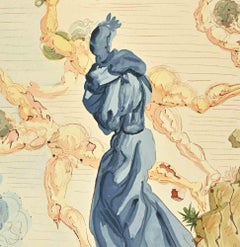
Sedet Sola Civitas - Lithograph - 1964

Sedet Sola Civitas - Lithograph - 1964

By Salvador Dalí­

Located in Roma, IT

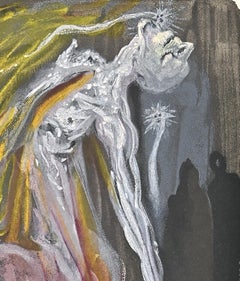
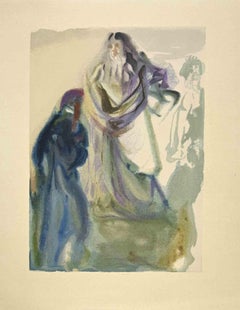
Holy Bible -  Sedet sola civitas is Color lithograph on heavy rag paper realized in 1964. It is part of Biblia Sacra vulgatæ edition is published by Rizzoli-Mediolani between 1967 an...

Category

1960s Surrealist Art

Materials

Lithograph

Mirage (ex Reader's Digest Art Collection) Op Art Surreal renowned female artist

Mirage (ex Reader's Digest Art Collection) Op Art Surreal renowned female artist

Located in New York, NY

Edna Andrade Mirage (de-accessioned from the Reader's Digest Art Collection), 1988 Original Collage painting on board Signed, titled & dated on the front; the back bears labels from Marian Locks Gallery & Readers Digest Association with inventory (RDA) number Original frame included with collection and gallery labels verso This is a unique work Exquisite 1980s collage on board painting (framed) titled "Mirage" by renowned female Op artist Edna Andrade...

Category

1980s Surrealist Art

Materials

Mixed Media, Acrylic, Board

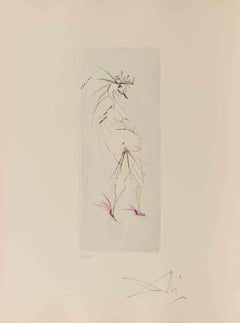
Gala, mon seul desir

Gala, mon seul desir

By Salvador Dalí­

Located in Hollywood, FL

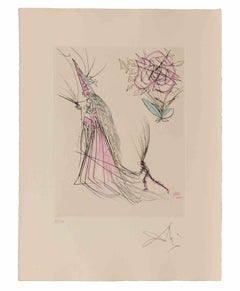
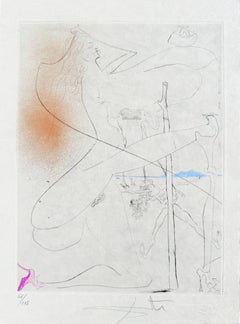
ARTIST: Salvador Dali TITLE: Gala, mon seul desir MEDIUM: Etching SIGNED: Hand Signed by Salvador Dali PUBLISHER: Jean Schneider, Basel EDITION NUMBER: EA MEASUREMENTS: 20.9" ...

Category

1960s Surrealist Art

Materials

Etching

Salvador dali 'Passiflora lauigera - 1968' Lithograph/Etching, Signed & numbered

Salvador dali 'Passiflora lauigera - 1968' Lithograph/Etching, Signed & numbered

By Salvador Dalí­

Located in Pembroke Pines, FL

Artist: Salvador Dali Title: Passiflora laurigera (Le vine, Passionflower) Portfolio: 1968 Flora Dalinae Medium: Photolithograph, etching, and pochoir in colors on BFK Rives Date: 19...

Category

1960s Surrealist Art

Materials

Etching, Photographic Film, Lithograph

Mention, Portrait Surrealism Original oil Painting, Ready to Hang

Mention, Portrait Surrealism Original oil Painting, Ready to Hang

Located in Granada Hills, CA

Figurative Surrealism, Portrait Work: Original Oil Painting, Handmade Artwork, One of a Kind Medium: Oil on Canvas Year: 2019 Style: Portrait Art, Title: Mention, Size: 31.5" x 47" x...

Category

2010s Surrealist Art

Materials

Canvas, Oil

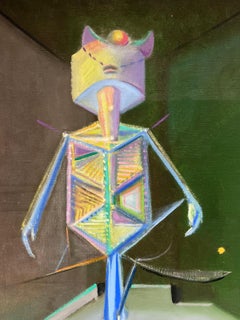
1970’s French Surrealist Signed Oil Painting Abstract Robotic Figure

1970’s French Surrealist Signed Oil Painting Abstract Robotic Figure

Located in Cirencester, Gloucestershire

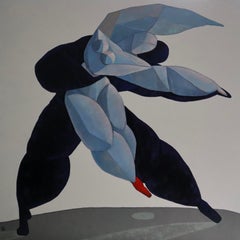
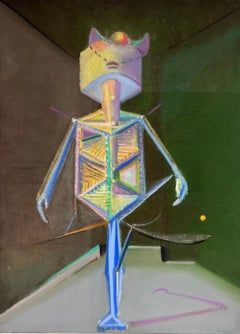
Tristan Fabris 1970's, French Surrealist artist Abstract Surrealist Figurative study oil on canvas, unframed inscribed verso canvas: 32 x 24 inches private collection, France The pai...

Category

1970s Surrealist Art

Materials

Canvas, Oil

Woman In The Chair
Woman In The Chair

Woman In The Chair

By Elisabeth Sabala

Located in Lake Worth Beach, FL

Woman in the chair, heavy oil impasto on canvas framed. Elisabeth Sabala Abelló (Barcelona, 1956). She studied industrial design at the School of Arts and Crafts in Barcelona ​​and has a degree in Fine Arts, a specialty in painting, from the Central University of the same city. Sabala is a convinced figurative who has given all the prominence of her work to the representation of the human being in its most trivial aspects. At a time when the artistic landscape extols abstract and conceptual art focused on the great universal themes, Sabala continues to focus on the small defects that bring us closer to the collective and the human. The artistic progression of Sabala takes place, at first, from a bleak period to another vitalist and, later, from the representation of isolated characters (In the super, Reading the stories of the paintings) to the recreation of great concentrations of its peculiar individuals characterized in an endless number of situations (The Great Dance, The Girls of the Choir). Sabala's work is vital and touching, as well as scathing and satirical: it confronts its characters in the most varied situations, capturing, at the same time, the viewer's attention with an unusual juxtaposition of colors that do not seek chromatic harmony, but expression and movement through matter. In 1980 he won the first prize of a painting of the City of Castelldefels, and the following year he debuted individually in the Caixa Catalunya room, in Barcelona. In 1984, she was selected for the XXIII Joan Miró Drawing Prize, taking part in a traveling exhibition in Japan. Sabala won the first prize in the International Painting Competition of Pollença (Mallorca) in 1985, and the following year she took part in a collective held at the Martano gallery in Turin. That same year of 1986 she obtained the Scholarship of Plastic Arts of the Generalitat de Catalunya. He continues to hold personal shows in Barcelona, ​​Mallorca, Madrid, and Italy, and in 1989 he debuted in New York with an individual exhibition held at the Scott Alan Gallery. Since then she will reiterate his presence both in that city and in Paris, Berlin, Monaco, Amsterdam, Los Angeles, Mexico City, Hong Kong, etc. His works have been present at Interactive, ARCO, Art Forum, Art Jonction and New Art, as well as in various Spanish museums. • Studies: Fine Arts, University of Barcelona • Industrial Design, School of Arts and Crafts, Barcelona Main exhibitions Spain: • Barcelona: ◦ Arcs & Cracks, 1990, 1992, Anna Benach 1993, Helena Ramos 1993 ◦ Maria Jose Castellvi 1996, 1997, 1999, 2001 “a wedding is a wedding” + Performance “Ella” ◦ 2004, 2006 “Fashion satisfaction” + Performance ◦ 2008 “Women's weapons” • Girona: ◦ Helena Ramos 1990, 1991, 1993, 1995 ◦ Cyprus Art...

Category

1980s Surrealist Art

Materials

Cotton Canvas, Oil
Phantom
Phantom

Phantom

By Roman Sustov

Located in Palm Springs, CA

An ex libris print featuring the fantasy figures and musicians in surreal M.C. Escher style building. Roman Sustov's prints often provide a fantastic blend of classic technique combined with images from the vast worlds of surrealism, eroticism, fantasy and fairy tales. Signed in pencil artists proof from the edition of 100. Roman Sustov was born in 1977 in Minsk, Belarus. In 1995 he graduated from Minsk Art College and six years later he graduated from the Belarusian Academy of Arts (Department of Graphic). Through this long training he has become a master in etching, lithography and linocut prints. His works can be found in collections in the USA, Germany, Netherlands, Poland, Ukraine, Japan, Russia and Belarus, and in the Contemporary Fine Art Museum (Minsk, Belarus). Roman notes...
Category

Early 2000s Surrealist Art

Materials

Etching, Aquatint

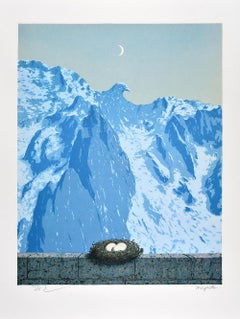
Rene Magritte, The Difficult Crossing, 1968 (after)

Rene Magritte, The Difficult Crossing, 1968 (after)

By René Magritte

Located in Southampton, NY

This exquisite lithograph after Rene Magritte (1898–1967), titled La Traversee Difficile (The Difficult Crossing), from the folio Les Enfants Trouves de Magritte (The Found Children ...

Category

1960s Surrealist Art

Materials

Lithograph

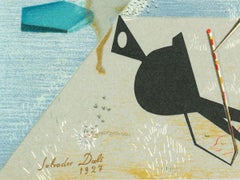
Woodpecker's Joy, Abstraction

Woodpecker's Joy, Abstraction

Located in New York, NY

Long before astronauts ventured into space Michael Forster captured the shifting face of the universe. Inspired by the radiant patterns and incandescen...
Category

1980s Surrealist Art

Materials

Canvas, Acrylic

Man Ray, Rayograph, from Electa Editrice, 1980 (after)

Man Ray, Rayograph, from Electa Editrice, 1980 (after)

By Man Ray

Located in Southampton, NY

This exquisite heliogravure after Man Ray (1890–1976), titled Rayograph, originates from the 1980 folio Man Ray, Electa Editrice Portfolios. Published by Gruppo Editoriale Electra, Milano, and printed by Gruppo Editoriale Electra, Milano, 1980. This image exemplifies Man Ray’s pioneering “rayograph” technique—a cameraless photographic process in which objects were placed directly onto photosensitive paper and exposed to light, creating luminous abstract compositions that fused chance, intuition, and surrealist invention. Through this groundbreaking process, Man Ray transformed photography into pure visual poetry, redefining its potential as a form of modern art. Executed as a heliogravure on velin paper, this work measures 15.75 x 11.75 inches. Unsigned and unnumbered as issued. The edition exemplifies the refined craftsmanship of Gruppo Editoriale Electra, Milano. Artwork Details: Artist: After Man Ray (1890–1976) Title: Rayograph Medium: Heliogravure on velin paper Dimensions: 15.75 x 11.75 inches (40.01 x 29.84 cm) Inscription: Unsigned and unnumbered as issued Date: 1980 Publisher: Gruppo Editoriale Electra, Milano Printer: Gruppo Editoriale Electra, Milano Condition: Well preserved, consistent with age and medium Provenance: From the folio Man Ray, Electa Editrice Portfolios, published and printed by Gruppo Editoriale Electra, Milano, 1980 Notes: Excerpted from the folio (translated from Italian), Limited edition of M examples, drawn in heliogravure on special paper, designed specifically for the Portfolios Electa. Gruppo Editoriale Electra/Milan. Printed in Italy. About the Publication: The Man Ray, Electa Editrice Portfolio (1980) was published by Gruppo Editoriale Electra in Milan as part of the distinguished Electa Portfolios series, which celebrated the masters of 20th-century photography through the artisanal process of heliogravure printing. This edition was dedicated to Man Ray’s seminal body of photographic work from 1920 to 1934—an era in which he redefined modern image-making through technical invention, surrealist experimentation, and intellectual daring. Produced in collaboration with leading photographic historians and Italian master printers, the portfolio was printed on specially manufactured velin paper designed exclusively for the Electa Portfolios, ensuring tonal precision and textural depth true to the artist’s originals. The publication represents one of the most refined posthumous tributes to Man Ray’s legacy, combining Italian craftsmanship with avant-garde vision to preserve the luminous complexity of his photographs. Created with the same devotion to innovation and elegance that characterized Man Ray’s own practice, this edition remains an important intersection of fine art publishing and modernist history. About the Artist: Man Ray (1890–1976) was an American-born painter, sculptor, photographer, filmmaker, and conceptual visionary whose radical imagination and technical innovation transformed modern art and established him as one of the leading figures of the 20th century. Born Emmanuel Radnitzky in Philadelphia, he became a central force in both the Dada and Surrealist movements, defying artistic boundaries and redefining the relationship between art, technology, and the unconscious. After early involvement in New York’s avant-garde with Francis Picabia and Marcel Duchamp, Man Ray moved to Paris in 1921, where he joined a revolutionary circle of artists including Pablo Picasso, Alexander Calder, Alberto Giacometti, Salvador Dali, Joan Miro, Wassily Kandinsky, and Marcel Duchamp. There, he pioneered the “rayograph,” or photogram—a cameraless photographic technique that used light and shadow to create ethereal abstract compositions—and produced some of the most iconic images in art history, including Le Violon d’Ingres (1924) and Noire et Blanche (1926). His photography, distinguished by its fusion of elegance, surrealism, and psychological depth, captured the essence of modernist Paris and immortalized creative icons such as Kiki de Montparnasse, Gertrude Stein, and James Joyce. At the same time, Man Ray’s experimental films, including Le Retour a la Raison (1923) and L’Etoile de mer (1928), and his sculptural works like The Gift (1921) and Object to Be Destroyed (1923), expanded the possibilities of art itself, transforming ordinary objects into symbols of mystery and desire. His conceptual approach—viewing art as an idea rather than an object—anticipated later movements such as Pop Art, Minimalism, and Conceptual Art, profoundly influencing artists like Andy Warhol, Robert Rauschenberg, Jasper Johns, and Joseph Beuys, as well as photographers Helmut Newton, Guy Bourdin, Cindy Sherman, and Richard Avedon. Even in exile during World War II, while working in Los Angeles, he continued to innovate, blending Surrealist fantasy with the luminosity of the California landscape before returning to Paris, where he spent his final decades refining his poetic, intellectual, and sensuous vision. Exhibited in major institutions such as the Museum of Modern Art, the Tate Modern, and the Centre Pompidou, Man Ray’s work remains foundational to modern art history—bridging painting, photography, film, and sculpture in a body of work that continues to shape the language of visual culture. Standing alongside Pablo Picasso, Alexander Calder, Alberto Giacometti, Salvador Dali, Joan Miro, Wassily Kandinsky, and Marcel Duchamp, Man Ray endures as one of the most original and influential artists of the modern era. His highest auction record was achieved by Noire et Blanche (1926), which sold for 3.13 million USD at Christie’s, Paris, on November 9, 2017, confirming his status as a timeless innovator whose genius continues to inspire artists, collectors, and dreamers worldwide. Man Ray Rayograph...

Category

1980s Surrealist Art

Materials

Lithograph

Alexander Calder, Untitled, from XXe Siecle, 1952

Alexander Calder, Untitled, from XXe Siecle, 1952

By Alexander Calder

Located in Southampton, NY

This exquisite lithograph by Alexander Calder (1898–1976), titled Sans titre (Untitled), from the album XXe Siecle, Nouvelle serie No. 3 (double), Juin 1952, originates from the 1952...

Category

1950s Surrealist Art

Materials

Lithograph

Sobreteixims
Sobreteixims

Sobreteixims

By Joan Miró

Located in Austin, TX

Artist: Joan Miro Title: Sobreteixims Galerie Maeght Exhibition Poster Year: 1973 Printer: Arte Paris Publisher: Maeght Medium: Lithographic poster From a limited edition of 7000 Dim...

Category

1970s Surrealist Art

Materials

Lithograph

Poet's house.

Poet's house.

By Maggie Taylor

Located in Carmel-by-the-Sea, CA

In 1981 Maggie Taylor (b. 1961) began to photograph while she was a student at Yale University majoring in philosophy. She primarily took photographs of suburban landscapes and stran...

Category

21st Century and Contemporary Surrealist Art

Materials

Digital Pigment

L'Illusioniste - Etching - 1960s

L'Illusioniste - Etching - 1960s

By Salvador Dalí­

Located in Roma, IT

Etching on chamois-colored laid paper, realized by Dalì in 1968/69. Plate from "Faust (La Nuit de Walpurgis), published by Argillet, Paris. Edition of 49/150, hand colored. Hand s...

Category

1960s Surrealist Art

Materials

Etching

The Top Songbirds - Original Surrealist Figurative Portrait Painting on Canvas

The Top Songbirds - Original Surrealist Figurative Portrait Painting on Canvas

By Carlos Gamez de Francisco

Located in Los Angeles, CA

The figurative surrealistic paintings of Carlos Gamez de Francisco are heavily influenced by his Cuban upbringing in a Russian governed academia setting. This presence exposed Franci...

Category

21st Century and Contemporary Surrealist Art

Materials

Canvas, Acrylic

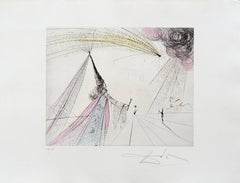
Faust Cavalier et la Mort

Faust Cavalier et la Mort

By Salvador Dalí­

Located in Hollywood, FL

ARTIST: Salvador Dali TITLE: Faust Cavalier et la Mort MEDIUM: Etching SIGNED: Hand Signed EDITION NUMBER: 44/95 MEASUREMENTS: 11.4" x 15.3" YEAR: 1969 FRAMED: Yes CONDITION...

Category

1960s Surrealist Art

Materials

Etching

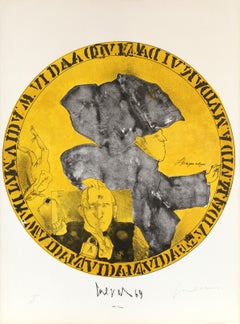
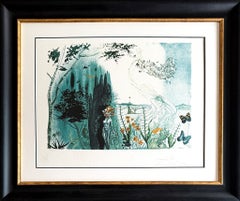
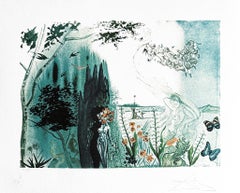
Max Ernst Dada Surrealist Hand Signed Lithograph Poster for a Jewish Museum

Max Ernst Dada Surrealist Hand Signed Lithograph Poster for a Jewish Museum

By Max Ernst

Located in Surfside, FL

Max Ernst (German, American, 1891-1976) Color lithograph Titled, "Poster For The Jewish Museum" 1966 Hand signed lower right Hand numbered HC I/XVII Dimensions: 34.75 x 28.5 sight 25 X 19.25 Max Ernst (German 1891 – 1976) was a German-born painter, sculptor, printmaker, graphic artist, and poet. A prolific artist, Ernst was a primary pioneer of the Dada movement and surrealism in Europe. He had no formal artistic training, but his experimental attitude toward the making of art resulted in his invention of frottage—a technique that uses pencil rubbings of textured objects and relief surfaces to create images—and grattage, an analogous technique in which paint is scraped across canvas to reveal the imprints of the objects placed beneath. Max Ernst showed for the first time in 1912 at the Galerie Feldman in Cologne. At the Sonderbund exhibition of that year in Cologne he saw the work of Paul Cezanne, Edvard Munch, Pablo Picasso, Paul Gauguin and Vincent van Gogh. In 1913 he met Guillaume Apollinaire and Robert Delaunay and traveled to Paris. Ernst participated that same year in the Erste deutsche Herbstsalon. In 1914 he met Jean Arp in Cologne who was to become a lifelong friend. In 1921 Ernst exhibited at the Galerie au Sans Pareil in Paris. He was involved in Surrealist activities in the early 1920s with Paul Eluard and André Breton. His work was exhibited that year together with that of the Das Junge Rheinland group, at Galerie Feldman in Cologne, and then in several group exhibitions in 1913. In his paintings of this period, Ernst adopted an ironic style that juxtaposed grotesque elements alongside Cubist and Expressionist motifs. Ernst fought in world war I. Several German Expressionist painters died in action during the war, among them August Macke and Franz Marc. In 1918, Ernst was demobilised and returned to Cologne. He soon married art history student Luise Straus, of Jewish ancestry, whom he had met in 1914. In 1919, he visited Paul Klee in Munich and studied paintings by Giorgio de Chirico. In the same year, inspired by de Chirico and mail-order catalogues, teaching-aide manuals and similar sources, he produced his first collage works (notably Fiat modes, a portfolio of lithographs), a technique which later dominated his artistic pursuits. Also in 1919, Ernst, social activist Johannes Theodor Baargeld and several colleagues founded the Cologne Dada group. In 1919–20, Ernst and Baargeld published various short-lived magazines such as Der Strom, die Schammade and organised Dada exhibitions. Ernst and Luise's son Ulrich Jimmy Ernst was born on 24 June 1920; he later would also become a painter. In 1921, he met Paul Éluard, who became a lifelong friend. Éluard bought two of Ernst's paintings (Celebes and Oedipus Rex) and selected six collages to illustrate his poetry collection Répétitions. A year later the two collaborated on Les malheurs des immortels and then with André Breton, whom Ernst met in 1921, on the magazine Littérature. Ernst developed a fascination with birds which was prevalent in his work. His alter ego in paintings, which he called Loplop, was a bird. He suggested that this alter-ego was an extension of himself stemming from an early confusion of birds and humans. In 1927, he married Marie-Berthe Aurenche and it is thought his relationship with her may have inspired the erotic subject matter of The Kiss and other works of that year. He collaborated with Joan Miro on designs for Sergei Diaghilev Ballet that same year. The following year the artist collaborated with Salvador Dali and the Surrealist Luis Bunuel on the film L'Age d'or. His first American show was held at the Julien Levy Gallery, New York, in 1932. In 1936 Ernst was represented in Fantastic Art, Dada, Surrealism at the Museum of Modern Art in New York. Ernst began to sculpt in 1934 and spent time with Alberto Giacometti. In 1938, the American heiress and artistic patron Peggy Guggenheim acquired a number of Max Ernst's works, which she displayed in her new gallery in London. Ernst and Guggenheim were married from 1942 to 1946. In September 1939, the outbreak of World War II caused Ernst, being German, to be interned as an "undesirable foreigner" in Camp des Milles, near Aix-en-Provence, along with fellow surrealist, Hans Bellmer, who had recently emigrated to Paris. He had been living with his lover and fellow surrealist painter, Leonora Carrington who, not knowing whether he would return, saw no option but to sell their house to repay their debts and leave for Spain. Thanks to the intercession of Paul Éluard and other friends, including the journalist Varian Fry, he was released a few weeks later. Soon after the German occupation of France, he was arrested again, this time by the Gestapo, but managed to escape to America with the help of Fry and Peggy Guggenheim, a member of a wealthy American art collecting family. Ernst and Peggy Guggenheim arrived in the United States in 1941 and were married at the end of the year. Along with other artists and friends (Marcel Duchamp and Marc Chagall) who had fled from the war and lived in New York City, Ernst helped inspire the development of abstract expressionism. His marriage to Guggenheim did not last. In October 1946 he married American surrealist painter Dorothea Tanning in a double ceremony with Man Ray and Juliet P. Browner in Beverly Hills, California. The couple made their home in Sedona, Arizona from 1946 to 1953. He and Tanning hosted intellectuals and European artists such as Henri Cartier-Bresson and Yves Tanguy. Sedona proved an inspiration for the artists and for Ernst, who compiled his book Beyond Painting and completed his sculptural masterpiece Capricorn while living in Sedona. As a result of the book and its publicity, Ernst began to achieve financial success. From the 1950s he lived mainly in France. In 1954 he was awarded the Grand Prize for painting at the Venice Biennale. In 2005, "Max Ernst: A Retrospective" opened at the Metropolitan Museum of Art. Contemporary artist tapestries have had their true believers. He produced a tapestry for Gloria Ross...
Category

1960s Surrealist Art

Materials

Lithograph

Sator - Etching - 1960s

Sator - Etching - 1960s

By Salvador Dalí­

Located in Roma, IT

Etching on chamois-colored laid paper, realized in 1968/69. Plate from "Faust (La Nuit de Walpurgis), published by Argillet, Paris. Edition of 49/150, hand colored. Hand signed an...

Category

1960s Surrealist Art

Materials

Etching

Surrealist art for sale on 1stDibs.

Find a wide variety of authentic Surrealist art available for sale on 1stDibs. Works in this style were very popular during the 21st Century and Contemporary, but contemporary artists have continued to produce works inspired by this movement. If you’re looking to add art created in this style to introduce contrast in an otherwise neutral space in your home, the works available on 1stDibs include elements of blue, orange, purple, red and other colors. Many Pop art paintings were created by popular artists on 1stDibs, including Salvador Dalí, Marc Chagall, Joan Miró, and Leonor Fini. Frequently made by artists working with Paint, and Lithograph and other materials, all of these pieces for sale are unique and have attracted attention over the years. Not every interior allows for large Surrealist art, so small editions measuring 1 inches across are also available. Prices for art made by famous or emerging artists can differ depending on medium, time period and other attributes. On 1stDibs, the price for these items starts at $1 and tops out at $1,450,000, while the average work sells for $1,426.