1800s Apothecary Cabinet

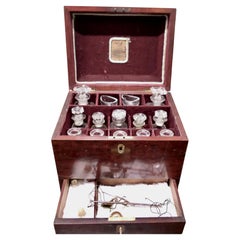
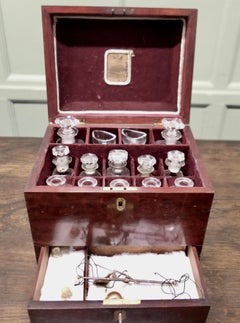
Antique Georgian Apothecary Cabinet, Walnut, Fitted Interior, 1800s

Antique Georgian Apothecary Cabinet, Walnut, Fitted Interior, 1800s

$1,627Sale Price|20% Off

H 9 in W 11 in D 8 in

Antique Georgian Apothecary Cabinet, Walnut, Fitted Interior, 1800s

Located in Godshill, Isle of Wight

A Good Example of an Early Apothecary Cabinet This is a rare piece from the 1st half of the 19th

Category

Antique Early 1800s Georgian Cabinets

Materials

Walnut

Recent Sales

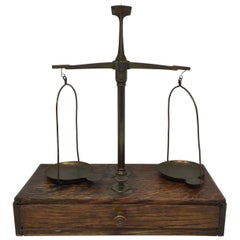
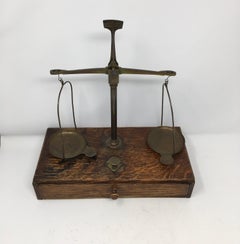
French Apothecary Brass Scales, circa 1800s

French Apothecary Brass Scales, circa 1800s

Sold

H 13 in W 12 in D 7.75 in

French Apothecary Brass Scales, circa 1800s

Located in Houston, TX

Found in Southern France, these brass and wood apothecary scales where used in French pharmacies

Category

Antique 19th Century French Apothecary Cabinets

Materials

Brass

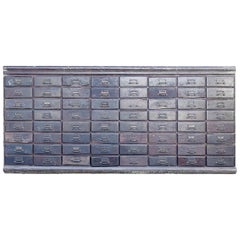
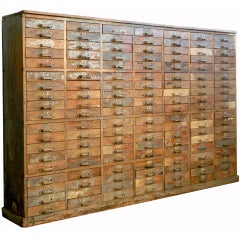
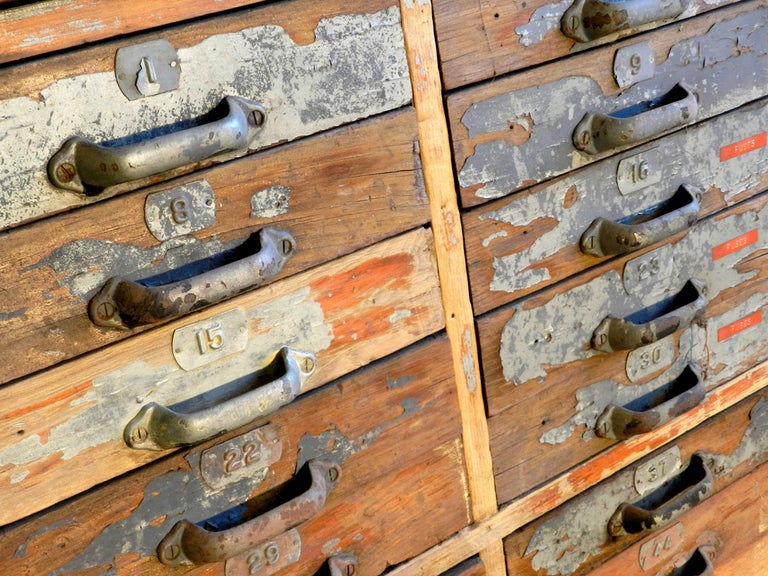
1800s 64-Draw Hardware Store Cabinet Counter

1800s 64-Draw Hardware Store Cabinet Counter

Located in Peekskill, NY

I love these cabinets and have had one in my living room for years. They hold tons of stuff and

Category

Antique Mid-19th Century American Industrial Apothecary Cabinets

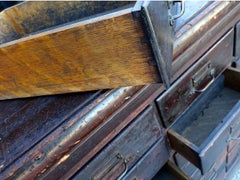
1800s Wall of Draws
1800s Wall of Draws

1800s Wall of Draws

Sold

H 54 in W 80 in D 12 in

1800s Wall of Draws

Located in Peekskill, NY

This is an early full draw cabinet from the mid to late 1800s. We pulled this right out of the old

Category

Antique 19th Century American Industrial Apothecary Cabinets

Materials

Pine

Pharmacy from the Mid 1800's, Coming from Northern Italy 'Piedmont'

Pharmacy from the Mid 1800's, Coming from Northern Italy 'Piedmont'

Located in Cesena, FC

Pair of walnut pharmacy furniture of 1800 Pharmacy from the mid 1800's, coming from northern

Category

Antique 1850s Italian Apothecary Cabinets

Materials

Walnut

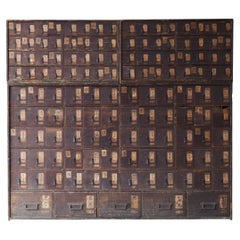
Japanese Antique Huge Medicine Tansu 1800s-1860s / Chest of Drawer Wabi Sabi

Japanese Antique Huge Medicine Tansu 1800s-1860s / Chest of Drawer Wabi Sabi

Located in Sammu-shi, Chiba

is a very old huge medicine tansu made in Japan. This furniture is from the Edo period (1800s-1860s

Category

Antique Late 19th Century Japanese Edo Apothecary Cabinets

Materials

Cedar

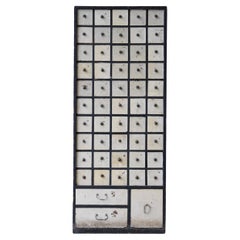
Japanese Antique Apothecary Drawers 1800s-1860s / Tansu Storage Wabi Sabi

Japanese Antique Apothecary Drawers 1800s-1860s / Tansu Storage Wabi Sabi

Located in Sammu-shi, Chiba

This is a very old Japanese apothecary drawer storage. The furniture is from the Edo period (1800s

Category

Antique Late 19th Century Japanese Edo Commodes and Chests of Drawers

Materials

Cedar

Get Updated with New Arrivals
Save "1800s Apothecary Cabinet", and we’ll notify you when there are new listings in this category.

1800s Apothecary Cabinet For Sale on 1stDibs

With a vast inventory of beautiful furniture at 1stDibs, we’ve got just the 1800s apothecary cabinet you’re looking for. A 1800s apothecary cabinet — often made from wood, metal and oak — can elevate any home. Your living room may not be complete without a 1800s apothecary cabinet — find older editions for sale from the 18th Century and newer versions made as recently as the 19th Century. A 1800s apothecary cabinet made by Georgian designers — as well as those associated with Industrial — is very popular.

How Much is a 1800s Apothecary Cabinet?

Prices for a 1800s apothecary cabinet can differ depending upon size, time period and other attributes — at 1stDibs, they begin at $150 and can go as high as $66,211, while the average can fetch as much as $4,450.

Finding the Right Storage-case-pieces for You

Of all the vintage storage cabinets and antique case pieces that have become popular in modern interiors over the years, dressers, credenzas and cabinets have long been home staples, perfect for routine storage or protection of personal items. 

In the mid-19th century, cabinetmakers would mimic styles originating in the Louis XIV, Louis XV and Louis XVI eras for their dressers, bookshelves and other structures, and, later, simpler, streamlined wood designs allowed these “case pieces” or “case goods” — any furnishing that is unupholstered and has some semblance of a storage component — to blend into the background of any interior. 

Mid-century modern furniture enthusiasts will cite the tall modular wall units crafted in teak and other sought-after woods of the era by the likes of George Nelson, Poul Cadovius and Finn Juhl. For these highly customizable furnishings, designers of the day delivered an alternative to big, heavy bookcases by considering the use of space — and, in particular, walls — in new and innovative ways. Mid-century modern credenzas, which, long and low, evolved from tables that were built as early as the 14th century in Italy, typically have no legs or very short legs and have grown in popularity as an alluring storage option over time. 

Although the name immediately invokes images of clothing, dressers were initially created in Europe for a much different purpose. This furnishing was initially a flat-surfaced, low-profile side table equipped with a few drawers — a common fixture used to dress and prepare meats in English kitchens throughout the Tudor period. The drawers served as perfect utensil storage. It wasn’t until the design made its way to North America that it became enlarged and equipped with enough space to hold clothing and cosmetics. The very history of case pieces is a testament to their versatility and well-earned place in any room. 

In the spirit of positioning your case goods center stage, decluttering can now be design-minded.

A contemporary case piece with open shelving and painted wood details can prove functional as a storage unit as easily as it can a room divider. Alternatively, apothecary cabinets are charming case goods similar in size to early dressers or commodes but with uniquely sized shelving and (often numerous) drawers.

Whether you’re seeking a playful sideboard that features colored glass and metal details, an antique Italian hand-carved storage cabinet or a glass-door vitrine to store and show off your collectibles, there are options for you on 1stDibs.
Questions About 1800s Apothecary Cabinet
  • 1stDibs ExpertAugust 15, 2019

    An apothecary cabinet is a type of cupboard formerly used by pharmacists and physicians to store medicines and tools in the many small compartments drawers. Today, apothecary cabinets are popular in homes as antique or rustic-looking decor.

  • 1stDibs ExpertApril 5, 2022
    You may still find some apothecary cabinets being used today in small pharmacies but they were a commonplace element in the 1800s, and a very efficient way for physicians and pharmacists to store and categorize their medications. Shop a collection of vintage and antique apothecary cabinets from some of the world’s top sellers on 1stDibs.
  • 1stDibs ExpertMarch 31, 2023
    Yes, there were safes in the 1800s. Historical records indicate that by 1820, some companies used safes to protect goods from fire. Following market campaigns in the 1840s, more companies and individuals began to purchase safes as an anti-theft measure. Shop a variety of safes on 1stDibs.
  • 1stDibs ExpertMarch 22, 2022
    In the 1800s, miniatures were small portraits. People commissioned them to give as gifts to their loved ones to carry with them. In this way, miniatures were similar to modern wallet photographs. On 1stDibs, find a range of miniature portraits.
  • 1stDibs ExpertApril 5, 2022
    Yes, pocket watches peaked in popularity in the 1800s. The first pocket watch was created in Germany in 1510, but was originally too large for a pocket. In the 1600s, the design began to get more compact, but for a long time pocket watches were a rarity and a symbol of wealth. Shop an array of antique pocket watches on 1stDibs.
  • 1stDibs ExpertJune 30, 2023
    In the 1800s, nightstands were often called commodes. Prior to the advent of indoor plumbing, early nightstands contained a porcelain chamber pot in a cabinet that provided a convenient and private alternative to visiting the outhouse. Today, antique, new and vintage nightstands, which are pieces of bedroom furniture that are often called bedside tables, are typically low-profile tables that are positioned alongside one’s bed or elsewhere in a bedroom. Shop a selection of nightstands on 1stDibs.
  • 1stDibs ExpertNovember 26, 2024
    What 1800s art is called depends on its age and style, as the century saw multiple movements. Most art historians refer to art that broke from traditional norms, produced in the 1860s and later, as modern art, and everything that preceded it as pre-modern art. Some of the art styles that were popular during the 19th century include Impressionism, Realism, Romanticism, Neoclassicism, Expressionism and Fauvism. Shop a wide range of 19th-century art on 1stDibs.
  • 1stDibs ExpertNovember 4, 2024
    To identify 1800s furniture, first check to see if your piece bears any maker's marks. Should you locate any, researching them using trusted online resources can help you determine the maker and age of your furniture. To determine if unmarked pieces date back to the 19th century, look for tool marks and variations in their carvings and ornamentation. Since 19th-century furniture was handmade, you should expect to find these signs of hand craftsmanship. A piece that shows no marks or inconsistencies in details is likely a contemporary machine-made reproduction. Familiarizing yourself with the characteristics of Rococo, Chippendale, Gothic Revival, neoclassical and other 19th-century styles can also be helpful. If you struggle to make an identification, consider consulting a certified appraiser or knowledgeable antique dealer. On 1stDibs, find a range of 19th-century furniture.
  • 1stDibs ExpertNovember 2, 2023
    During the 1800s, necklaces, earrings, brooches and hair accessories were popular jewelry pieces in styles ranging from Georgian with enamel details to Victorian with floral flourishes. The commonly used gemstones of the 19th century included diamonds, emeralds, rubies, sapphires, garnets and amethysts. Gold was the dominant metal for jewelry, but silver became sought-after during the 1880s and 1890s. Explore an assortment of antique jewelry on 1stDibs.
  • 1stDibs ExpertFebruary 13, 2023
    In the 1800s, safes were usually made of metal like tin plating or sheet iron. Fireproofing the safes proved difficult, and during the 1820s, specific mixtures of materials such as mica, potash lye and alum were used to line a safe’s interior in order to prevent its contents from succumbing to fire damage. Shop a collection of safes on 1stDibs.
  • 1stDibs ExpertDecember 4, 2023
    What wedding rings looked like in the 1800s was similar to other Victorian jewelry. The Victorian era spanned from 1837 to 1901, coinciding with the reign of Queen Victoria in the United Kingdom. At the beginning of this period, rings were made of gold and affordable only to the wealthy. Designs for Victorian-era rings often featured repoussé work and chasing, in which patterns are hammered into the metal. Some featured stones secured by collets, settings similar to bezels, with prongs and a closed back. On 1stDibs, find a selection of Victorian wedding rings.
  • 1stDibs ExpertJanuary 10, 2025
    The artist George Catlin's paintings from the 1800s are considered a form of artistic documentation because he depicted what he saw during his travels across North America. Catlin produced many images of Native Americans living their daily lives. In so doing, he provided a glimpse of what life was like for Indigenous people before the rapid westward expansion of settlers forcibly disrupted their traditions and culture. On 1stDibs, shop a variety of George Catlin art.

Read More

37 Cheerful Home Bars, Where Everybody (Literally) Knows Your Name

Simple or sophisticated, equipped with console, cart or custom cabinetry, these stylish bar areas deserve a toast.

The Ultimate Guide to Types of Tables for the Home

Whether you’re just moving in or ready to give your home a makeover, our guide will give you pointers on tables that are fitting for every room, nook and hallway.

What Exactly Is a Secretary Desk, and What Is It Used For?

The furniture equivalent of a Swiss Army knife, it's the multifunctional piece you didn't know you needed.

This Shelving System with Oxidized Brass Tubes Is Retro and Futuristic at Once

Italian studio DimoreMilano mustered great ingenuity when crafting these sculptural shelves, which are built without any screws.

Ask an Interior Designer: Work-from-Home Edition

Leaping into a design project, whether it's refreshing the bedroom or redoing the whole house, can be overwhelming. Luckily, we know more than a few interior designers. You asked questions on Instagram, and now they're answering.

Collected and Eclectic, ‘Wunderkammern’ Are Back in a Big Way

Introduced nearly 500 years ago, curiosity cabinets are finding new fans among today's collectors and designers.

Meet the Incredible Woman Transforming Fallen Trees into Sleek Furniture

In the hands of New York Heartwoods cofounder Megan Offner, unwanted local trees become works of design art.

These New York Architects Love a Complicated Project

From Brooklyn townhouses to Maine campgrounds, Trattie Davies and Jonathan Toews relish a challenge, like transforming a former warehouse space into the new 1stdibs Gallery.