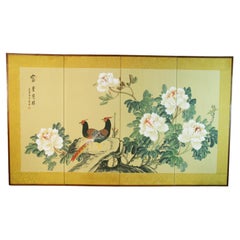
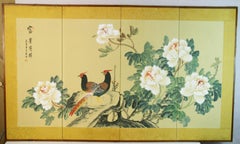
Japanese/Asian Flower and Birds Four Panel Screen
Located in Douglas Manor, NY
1963 Asian /Japanes four panel folding screen with birds and flowers Foldede size 15x36"
Category
Vintage 1960s Paintings and Screens
Materials
Fabric, Hardwood, Paint
Japanese/Asian Flower and Birds Four Panel Screen
Located in Douglas Manor, NY
1963 Asian /Japanes four panel folding screen with birds and flowers Foldede size 15x36"
Fabric, Hardwood, Paint
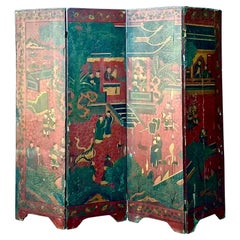
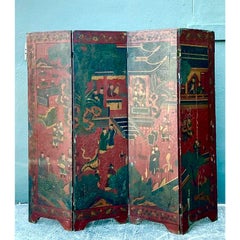
Vintage Asian Chinoiserie Four Panel Screen
Located in West Palm Beach, FL
This exquisite miniature four-panel folding screen is a captivating example of mid-century Chinoiserie decor, designed to bring architectural interest to smaller spaces.
Brass
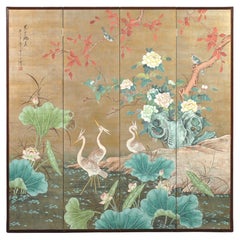
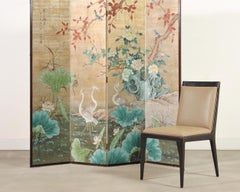
Asian Showa Four-Panel Screen Herons Amid Lotus and Peonies
Located in Rio Vista, CA
A dramatic large 20th century Asian four-panel folding screen measuring 6 feet high and wide.
Brass, Gold Leaf
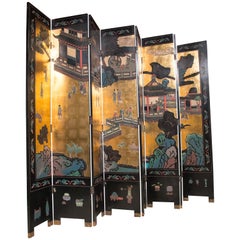
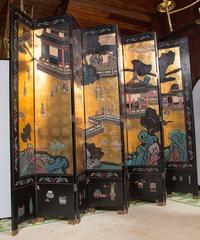
Antique Eight-Panel Coromandel Screen, Gilt Wood, Asian Origin, 1950s
Located in Stamford, CT
A grand eight panel Coromandel screen. The screen has mostly a gilt background with a few architectural structures and figures. A very good looking screen.
Wood
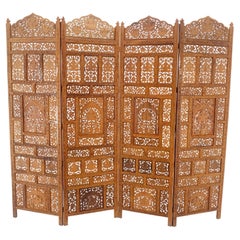
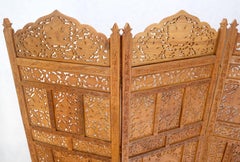
Fine Asian Carved Teak 4 Panels Screen Room Divider Mint!
Located in Rockaway, NJ
Fine Asian Carved Teak 4 Panels Screen Room Divider Mint!
Teak
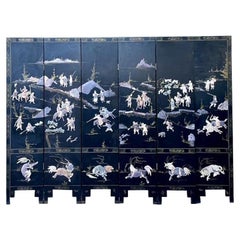
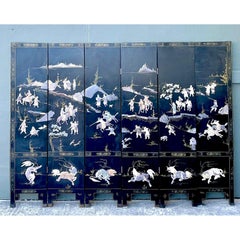
Vintage Asian Carved Soapstone Figurative 6 Panel Screen
Located in West Palm Beach, FL
This monumental six-panel room divider is a breathtaking example of Mid-Century Chinoiserie artistry, offering both architectural scale and intricate decorative detail.
Soapstone, Brass
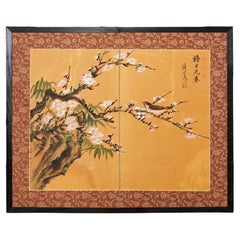
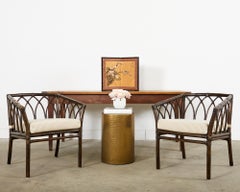
Asian Two Panel Table Screen Flowering Prunus with Songbird
Located in Rio Vista, CA
Colorful Asian two panel byobu screen featuring a blossoming prunus tree with a songbird perched on its branch.
Brass
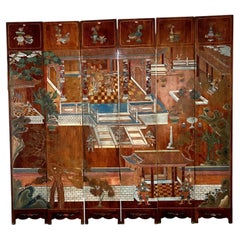
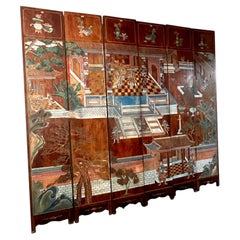
108 Inch Asian Hand Carved Wooden Folding Six Panel Screen
Located in Los Angeles, CA
**Chinese Coromandel Lacquer Six-Panel Screen, Qing Dynasty Style, Palace Scene** A stunning and richly detailed **Chinese Coromandel lacquer folding screen**, likely dating to the ...
Wood, Paint
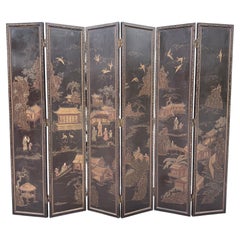
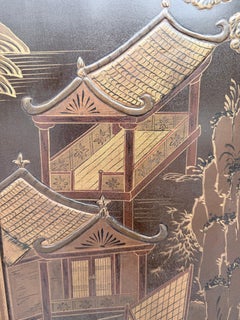
Asian Chinoiserie Coromandel Screen Six-Panel Bronze Relief Pagoda Room Divider
Located in Lambertville, NJ
Its scale, artistry, and coloration make it an outstanding decorative statement ready to be showcased in any refined space. Chinoiserie screen, coromandel screen, Chinese folding sc...
Brass
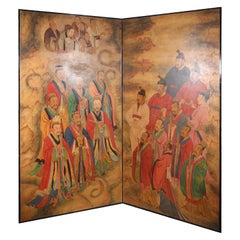
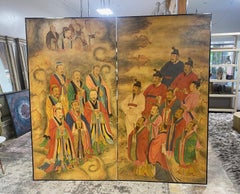
Japanese Chinese Asian Two-Panel Byobu Folding Screen Ancestral Immortal Figures
Located in Studio City, CA
A gorgeous, quite large, boldly colored, and alluring hand-painted two-panel Chinese/Japanese/Asian Byobu folding screen depicting 18 exquisitely clad male ancestral or immortal figu...
Gold Leaf
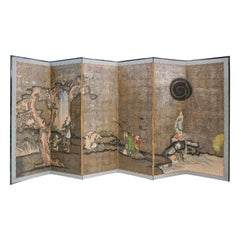
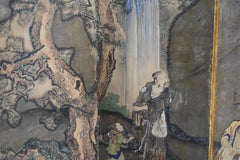
Japanese Chinese Asian Large Six-Panel Folding Byobu Screen Mythical Landscape
Located in Studio City, CA
A gorgeous, strangely beautiful, unusually engaging, and alluring hand-painted large six-panel Japanese/Asian Byobu folding screen depicting an almost magical/ mythical nature scene ...
Gold Leaf
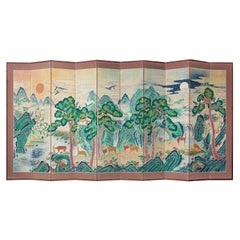
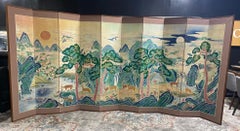
Korean Asian Large Long Life Byobu Byeongpung Shipjangsaengdo Ten Panel Screen
Located in Studio City, CA
An absolutely gorgeous, monumental, exceptionally large Korean ten-panel Sipjangsaengdo Byobu folding screen depicting the ten symbols of longevity—sun, mountain, water, rock, cloud,...
Fabric, Wood, Paint, Paper
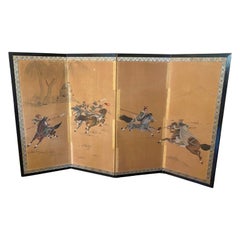
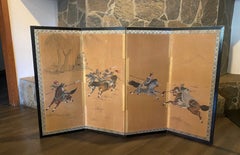
Japanese Chinese Asian Four Panel Folding Byobu Screen Samurai Warriors Battle
Located in Studio City, CA
A wonderful four-panel Japanese (or Chinese) Byobu folding screen featuring a battlefield landscape with warring samurai warriors engaged in a fierce fight.
Wood, Paint, Paper
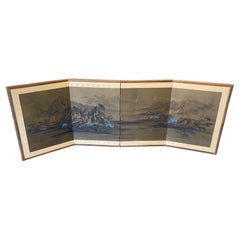
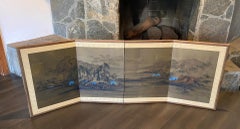
Japanese Asian Signed Four Panel Folding Byobu Screen Eternal Spring Landscape
Located in Studio City, CA
Would be a great addition to any Japanese or Asian art/screen collection or make for an eye catching stand alone accent artwork in almost any setting whether used as a room divider o...
Gold Leaf
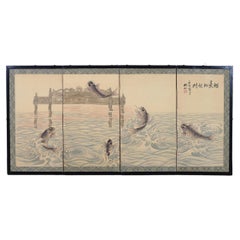
Asian Showa Four Panel Screen Jumping Koi at the Dragon Gate
Located in Rio Vista, CA
An intricately painted Asian four-panel screen depicting koi/carp leaping at the Nine Dragon Gate—an enduring symbol of perseverance and transformation, captured across a serene, unf...
Brass
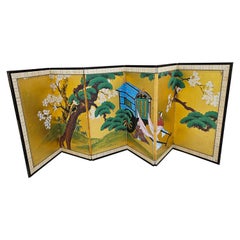
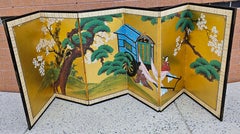
East Asian Extra Wide Folding Low Six Panel Landscape Divider Screen
Located in Germantown, MD
A 95 inches East Asian Extra Wide Folding Low Six Panel Landscape Divider Screen with beautiful landscape scenes.
Metal
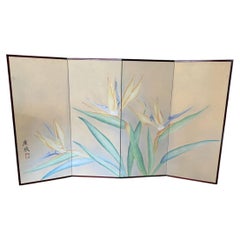
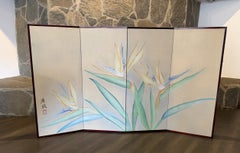
Japanese Chinese Asian Signed Four Panel Folding Byobu Bird of Paradise Screen
Located in Studio City, CA
A gorgeous four-panel Japanese/Chinese/Asian Byobu folding screen depicting a landscape nature scene featuring a beautifully colored flowering/blooming Bird of Paradise plant.
Wood, Paint, Paper
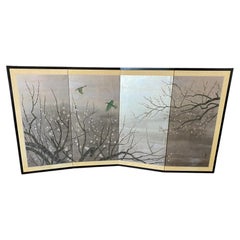
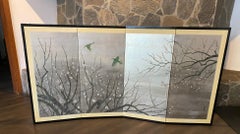
Japanese Asian Four Panel Folding Byobu Screen Cherry Blossom Tree Playful Birds
Located in Studio City, CA
A gorgeous four-panel Japanese Byobu folding screen depicting a natural landscape cherry blossom tree branch scene with a two of playful flying birds.
Silver Leaf
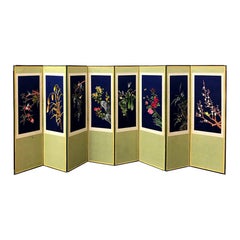
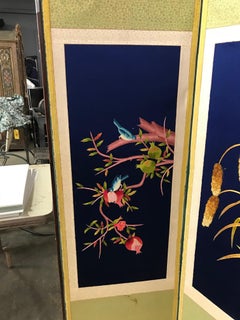
Korean Asian Large 8-Panel Silk Embroidered Byobu Bird Butterfly Screen, 1900s
Located in Studio City, CA
A gorgeous early to midcentury Korean embroidered eight-panel screen depicting scenic nature motifs of flowering trees, playful birds, and floating butterflies.
Silk, Paper
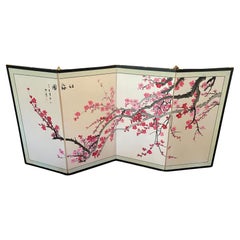
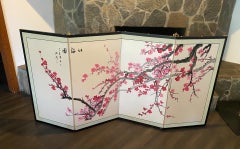
Japanese Asian Korean Chinese Signed 4-Panel Folding Byobu Cherry Blossom Screen
Located in Studio City, CA
A gorgeous four-panel hand painted Japanese Asian Byobu folding screen depicting a wildly and brilliantly colorful fully blooming Spring cherry blossom tree with a wonderful composit...
Wood, Paint, Paper
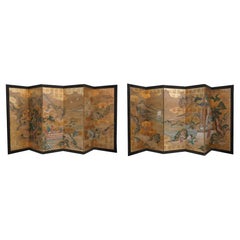
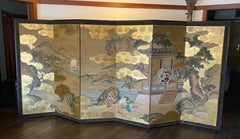
Japanese Asian Pair of Large Six-Panel Folding Byobu Screens Mythical Landscape
Located in Studio City, CA
A beautiful, alluring, wonderfully composed and engaging hand-painted large pair of six-panel Japanese/Asian Byobu folding screens depicting an almost magical/ mythical village scene...
Gold Leaf
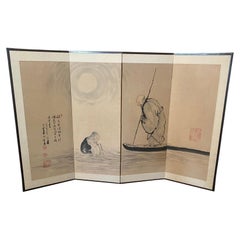
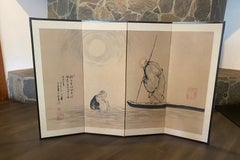
Japanese Asian Chinese Four Panel Folding Byobu Sumi Ink Screen Buddhist Monk
Located in Studio City, CA
A wonderful four-panel Japanese (or perhaps Chinese) Byobu folding screen featuring an elderly Buddhist Zen monk and young novice boy crossing a lake/river/waterway by slow skiff boa...
Paint, Paper
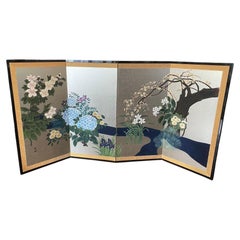
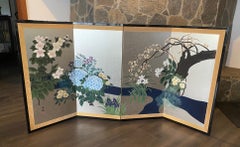
Japanese Asian Signed Four Panel Byobu Screen Cherry Blossom Tree With Flowers
Located in Studio City, CA
A gorgeous, quite riveting four-panel Japanese Byobu folding screen depicting a natural landscape with a cherry blossom tree and array of blooming flowers It is quite a wonderful co...
Silver Leaf
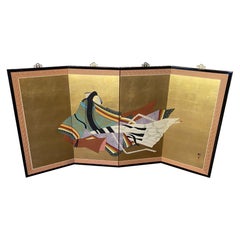
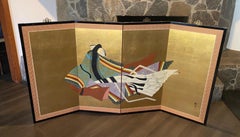
Japanese Asian Signed Four-Panel Folding Byobu Showa Genji Screen Lady Murasaki
Located in Studio City, CA
A gorgeous and quite striking four-panel Japanese Byobu folding screen featuring an elegantly clad Lady Murasaki, the Japanese novelist, (and famed author of the classic "Tale of Gen...
Gold Leaf
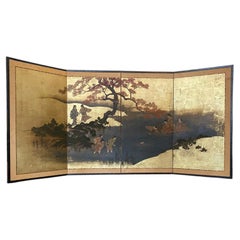
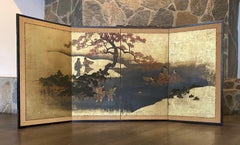
Japanese Asian Edo Meiji Four Panel Folding Byobu Screen Lakeside & Maple Tree
Located in Studio City, CA
A beautiful, quite engaging four-panel Edo Period Japanese Byobu folding screen depicting a nature landscape lakeside scene with various people fishing, boating, playing along the mi...
Gold Leaf
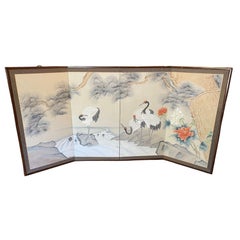
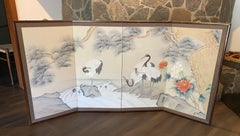
Japanese Chinese Asian 4 Panel Folding Byobu Screen Red Crowned Crane Landscape
Located in Studio City, CA
A gorgeous four-panel Japanese/Chinese/Asian Byobu folding screen depicting a landscape scene with a flock of playful red crown cranes (likely Manchurian cranes), a flowing river, an...
Wood, Paint, Paper
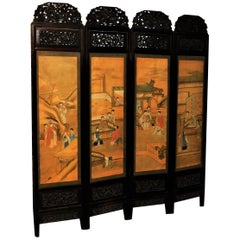
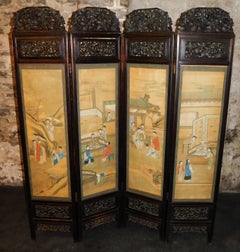
$7,600Sale Price|20% Off
Rare 19th Century Chinese Carved Asian Hardwood Four-Panel Silk Screen
Located in Hamilton, Ontario
Ebonized wood four panel Chinese screen, circa 1850. Allegorical story depicting the dream of the red chamber beautifully presented on this rare four-panel silk room divider screen. ...
Hardwood, Silk, Wood
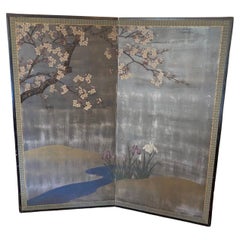
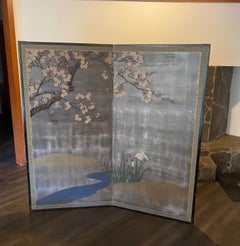
Japanese Asian Two Panel Meiji Edo Byobu Cherry Blossom Tree Folding Screen
Located in Studio City, CA
A gorgeous, large two-panel antique Japanese Byobu folding screen depicting a nature landscape scene with a venerable cherry blossom tree and a running river with blooming flowers.
Silver Leaf
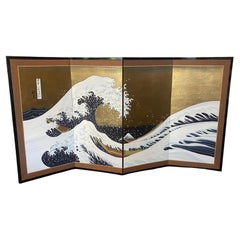
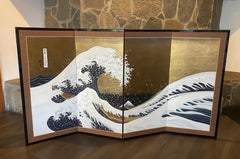
Japanese Asian Signed Four-Panel Folding Byobu Showa Screen Hokusai Great Wave
Located in Studio City, CA
A beautiful and surprisingly rare/scarce work (we have never come across another screen like it). Would be a great addition to any Japanese/Asian art or screen collection or be sure...
Gold Leaf
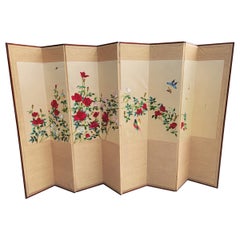
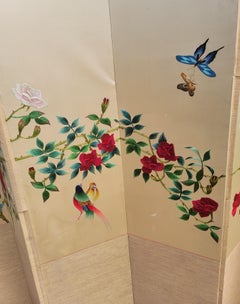
1950s Asian Eight-Panel Silk Embroidered Folding Floor Screen Room Divider
Located in Germantown, MD
A beautiful Chinese Embroidered Eight-Fold Floor Screen or room divider in good vintage condition. Stunning roses, birds butterflies embroidered. Measures 112" in width and 66" in he...
Fabric, Silk, Wood
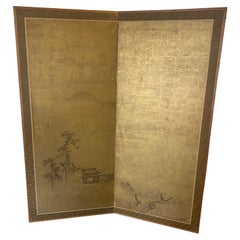
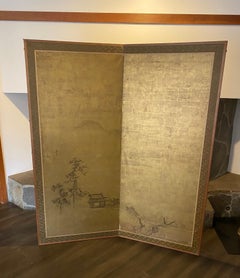
Japanese Asian Signed Two Panel Meiji Edo Folding Byobu Landscape House Screen
Located in Studio City, CA
A gorgeous, large two-panel antique Japanese Byobu folding screen depicting a nature landscape scene with a lone house, perhaps a tea house, hidden in the trees and foliage with dist...
Gold Leaf
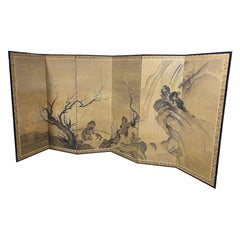
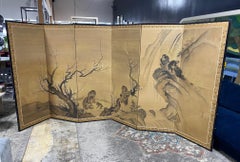
Japanese Asian Large Edo Six-Panel Folding Byobu Screen Landscape Monkeys Trees
Located in Studio City, CA
An absolutely gorgeous, wonderfully composed six-panel Japanese Byobu folding screen/room divider depicting a family of playful monkeys among the blooming trees and mountainous lands...
Gold Leaf
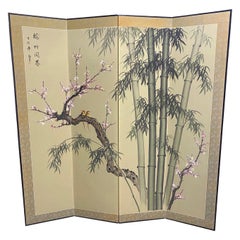
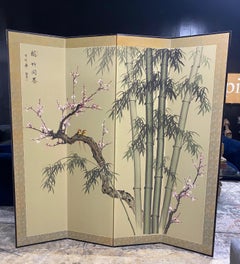
Japanese Asian Signed Large Four-Panel Byobu Screen Bamboo Cherry Blossoms Birds
Located in Studio City, CA
A gorgeous large/tall four-panel Japanese Byobu folding screen depicting a nature scene/landscape with playful yellow and orange birds frolicking in nature among the branches of a bl...
Silk
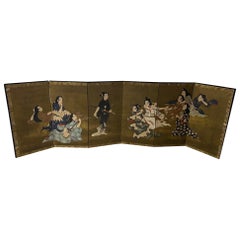
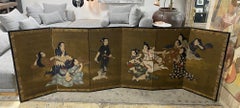
Japanese Asian Signed Six-Panel Folding Byobu Screen of Playful Court Scene
Located in Studio City, CA
A gorgeous, quite fascinating hand-painted six-panel Japanese Byobu folding screen depicting a rather engaging androgynous or erotic court scene (it has been suggested to us that thi...
Gold Leaf
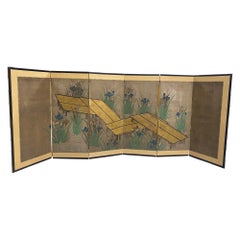
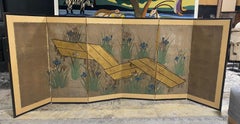
Japanese Asian Six-Panel Folding Byobu Screen Landcape Bridge with Iris Flowers
Located in Studio City, CA
A gorgeous six-panel Japanese Byobu folding screen depicting a nature lake/landscape scene with a water walkway/angular bridge and blossoming iris flowers - perhaps an homage to the ...
Gold Leaf
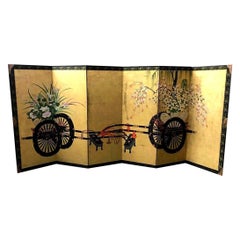
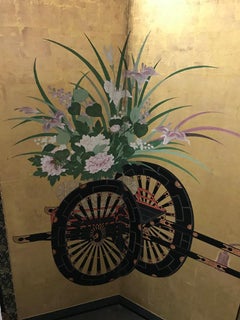
Japanese Asian Large Six-Panel Folding Byobu Flower Cart Screen, 19th Century
Located in Studio City, CA
A gorgeous six-panel Japanese Byobu folding screen. Listing as Meiji period but could very possibly Edo period. Decorated with peonies, irises and wisteria and two traditional flower...
Gold Leaf
$1,125Sale Price|55% Off
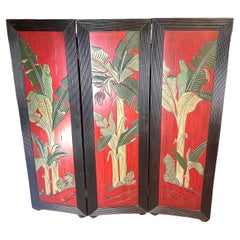
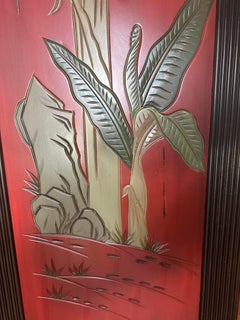
20th Century Three-Panel Asian Screen in Red with Palm Leaf Accent
Located in Waxahachie, TX
20th century Asian three-panel screen or room divider in red with palm leaf decoration.
Wood
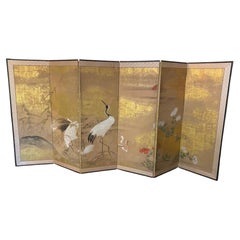
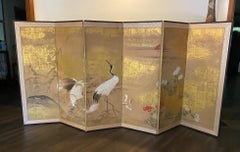
Japanese Asian Edo Meiji 6 Panel Folding Byobu Screen Red Crown Cranes Landscape
Located in Studio City, CA
A gorgeous, quite large antique six-panel Japanese Asian Byobu folding screen depicting a landscape scene with red crowned cranes, other playful birds and boldly colored blossoming S...
Gold Leaf
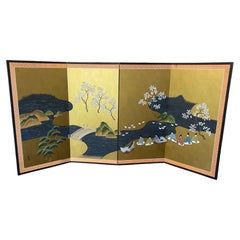
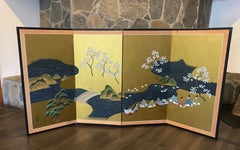
Japanese Asian Four-Panel Folding Byobu Showa Screen Tale of Genji & Cherry Tree
Located in Studio City, CA
Would be a great addition to any Japanese/Asian art or screen collection or be sure to stand out in almost any setting whether used as a room divider or hung on the wall as a work of...
Gold Leaf
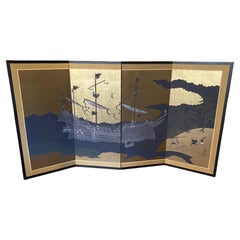
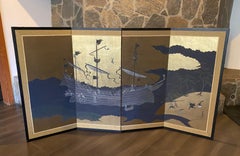
Japanese Asian Signed Four Panel Folding Byobu Nanban Ship at Sea Arrival Screen
Located in Studio City, CA
A beautiful, quite engaging four-panel Showa Period Japanese Nanban (Namban) Byobu folding screen depicting the exotic arrival by ship and activities of Southern Barbarians (Portugue...
Gold Leaf
Japanese Asian Four-Panel Folding Byobu Showa Screen Tale of Genji & Cherry Tree
Located in Studio City, CA
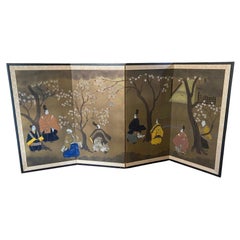
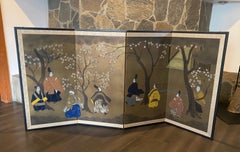
A gorgeous four-panel Japanese Byobu folding screen depicting a scene from the Classic Japanese narrative "Tale of Genji" featuring various characters in a cherry blossom tree villag...
Gold Leaf
Superb and Architectural Chinese Carved Wood and Glass Four-Panel Screen
Located in Bridgeport, CT
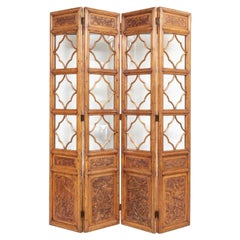
Provenance: Christie’s. The panels with carved figural vignettes- floral vines at the top, the bottom with small ones with figures at various tasks in landscapes with houses, the lar...
Wood
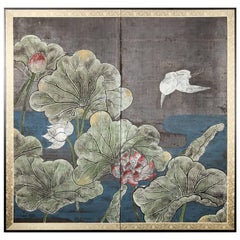
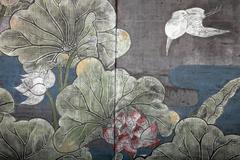
Japanese Two Panel Screen, Lotus and Heron
Located in Hudson, NY
Japanese two panel screen, lotus and heron Colored mineral pigments on silver leaf on handmade mulberry paper.
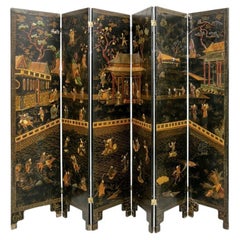
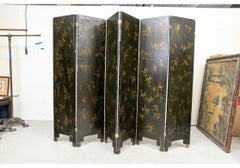
Magnificent And Fine Chinese Six-Panel Screen
Located in Bridgeport, CT
A six panel screen in black paint with overall gilt scrolled and carved and painted wood applied low relief decoration with some Mother-of-Pearl details. Scenes with pavilions and fi...
Mother-of-Pearl, Wood, Lacquer
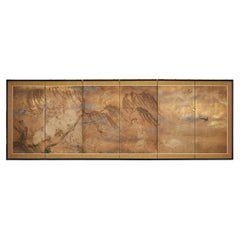
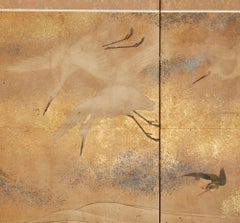
Japanese Six Panel Screen: Egrets and Willow
Located in Hudson, NY
Very early Unkoku school painting of a flock of egrets, willow, plum and other various birds alongside a rushing river. Softly painted in mineral pigments on mulberry paper with a si...
Gold
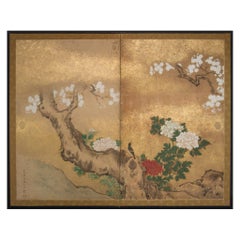
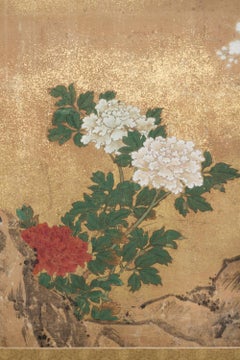
Japanese Two-Panel Screen Peony and Cherry
Located in Hudson, NY
Japanese two-panel screen: Peony and Cherry, Edo period (circa 1800) painting, formerly fusuma (Japanese sliding doors), executed in the Kano school style, featuring a cherry tree in...
Gold Leaf
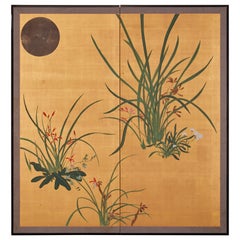
Japanese Two Panel Screen: Moon and Flowers
Located in Hudson, NY
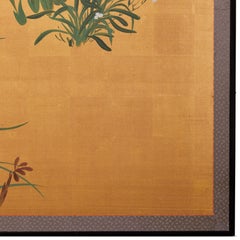
Showa period (1926 - 1989) painting with a strong design of exotic lilies and a cluster of nadeshiko (dianthus) under a silver moon on gold. This painting has a modern flair, which ...
Silver
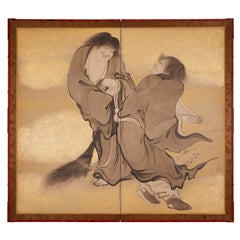
Japanese Two Panel Screen: Kanzan and Jittoku
Located in Hudson, NY
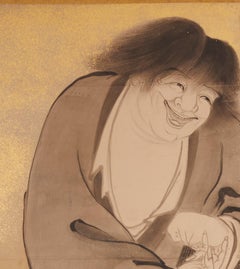
Prominent figures in Japanese folklore. The Chinese poet-sage Kanzan is depicted with his scroll, and the Daoist sage Jittoku with his broom. Painting bears two seals of Nakanuma Sho...
Gold
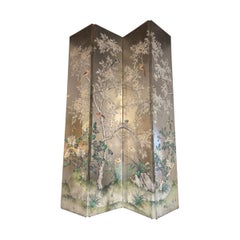
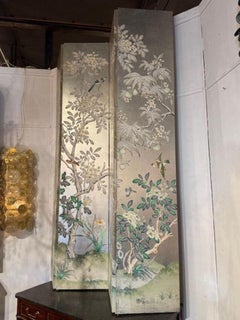
Vintage 4 Panel Gracie Screen
Located in Dallas, TX
The Vintage 4 Panel Gracie Screen is a stylish room divider with a retro aesthetic, perfect for adding a touch of old-world charm to any space. The four panel screen with floral ima...
Wood, Paper
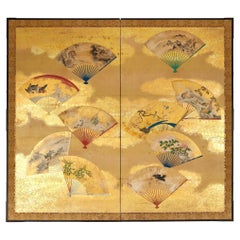

Japanese Two Panel Screen: Fans
Located in Hudson, NY
Old Fans mounted on a two panel screen of Gold Clouds. Mineral pigments and gold on mulberry paper, with silk brocade border and black lacquer trim. Signatures on fans read: Tsunenob...
Gold
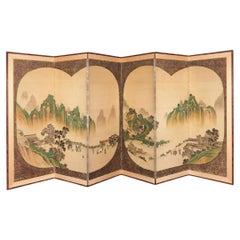
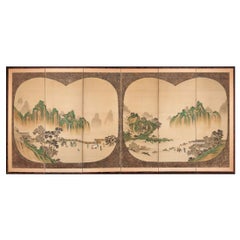
Six Panel Japanese Byobu Style Watercolor and Fabric Screen
Located in Locust Valley, NY
A Japanese six panel byobu folding screen featuring a finely detailed mountainous landscape with traditional architecture, bridges, trees, and figures set against a warm gold toned g...
Fabric, Silk, Paint
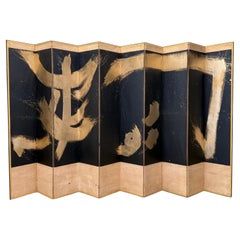
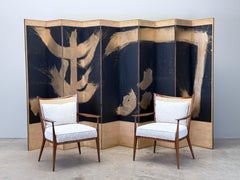
Golden 10 Panel Japanese Screen
Located in Dallas, TX
Historically, folding screens (in Japanese 'byōbu', literally 'wind wall) were used to direct air circulation and create privacy in the flexible, open floor plan common in the tradit...
Wood, Paint, Paper
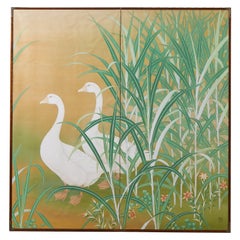
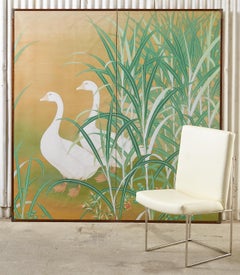
Japanese Meiji Two Panel Screen Geese and Reeds
Located in Rio Vista, CA
Fantastic Japanese late Meiji period two-panel byobu screen by Hashimoto Koshu. The large screen features two white geese amid brightly colored reeds. The symbolism of geese and reed...
Silk, Wood, Paper
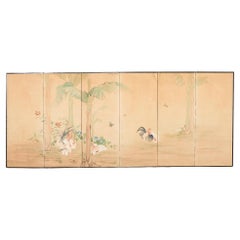
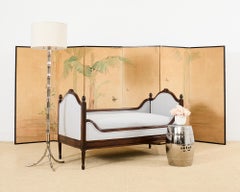
Japanese Taisho Six Panel Screen Roosters and Hens
Located in Rio Vista, CA
Captivating Japanese Taisho period six-panel byobu screen depicting roosters and hens in a tropical landscape with butterflies. The large screen is painted with ink and natural color...
Wood, Paper
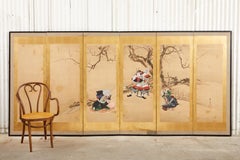
$3,400Sale Price|29% Off
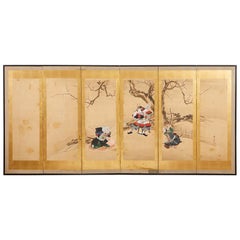
Japanese Edo Six Panel Screen Yoshitsune and Benkei
Located in Rio Vista, CA
Spectacular 19th century Japanese late Edo period six-panel byobu screen depicting Yoshitsune and Benkei, two heroes of Japanese folklore. Crafted in ink and natural color pigments o...
Brass, Gold Leaf
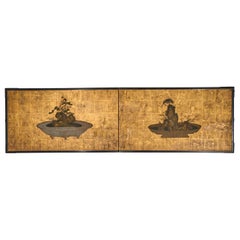
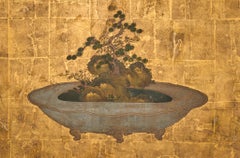
Japanese Two Panel Screen: Bonsai
Located in Hudson, NY
Very unusual 16th century furosaki byobu (screen used for tea ceremony). Painting of two Usubata (bronze containers) displaying bonsai. Mineral pigments on very heavy gold leaf with ...
Bronze, Gold Leaf
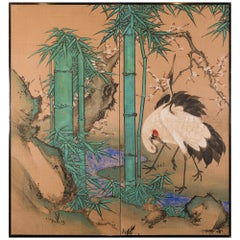
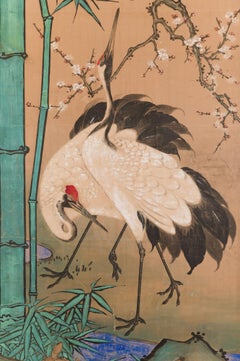
Japanese Two Panel Screen Amorous Cranes and Turtles
Located in Hudson, NY
Japanese two panel screen: Amorous Cranes and Turtles. In Japan, cranes symbolize fidelity as they mate for life and turtles symbolize longevity. Additionally, this screen also has t...
Wood, Paper
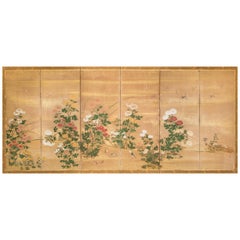

Japanese Six-Panel Screen, Chrysanthemums
Located in Hudson, NY
Japanese six-panel screen: Chrysanthemums, Edo period (circa 1800) painting of a variety of chrysanthemums in a garden landscape, with sparrows. Mineral pigments on paper with gold d...
Gold Leaf
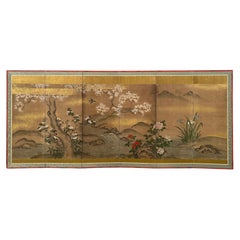
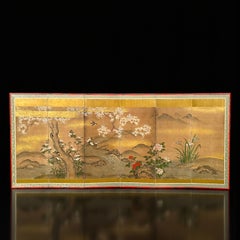
Japanese Six-Panel Folding Screen with Flowers and Landscape
Located in Fukuoka, JP
A Japanese mid-sized six-panel folding screen depicting an elegant landscape of flowering trees and plants, flowing water, rocky outcrops, distant hills, and a bird in flight. The c...
Wood, Paper
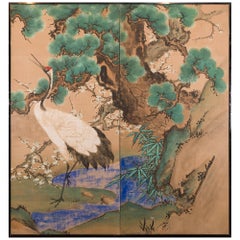
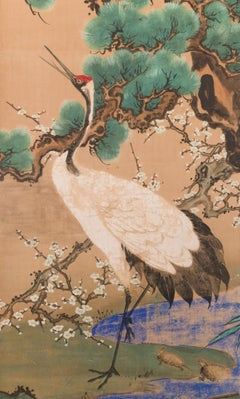
Japanese Two Panel Screen Manchurian Crane and Turtles
Located in Hudson, NY
In Japan, cranes symbolize fidelity as they mate for life and turtles symbolize longevity. Additionally, this screen also has the Japanese motif of sho-chiku-bai, or the three friend...
Paper
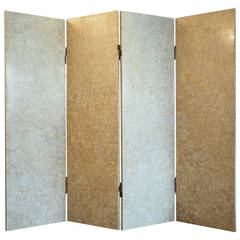
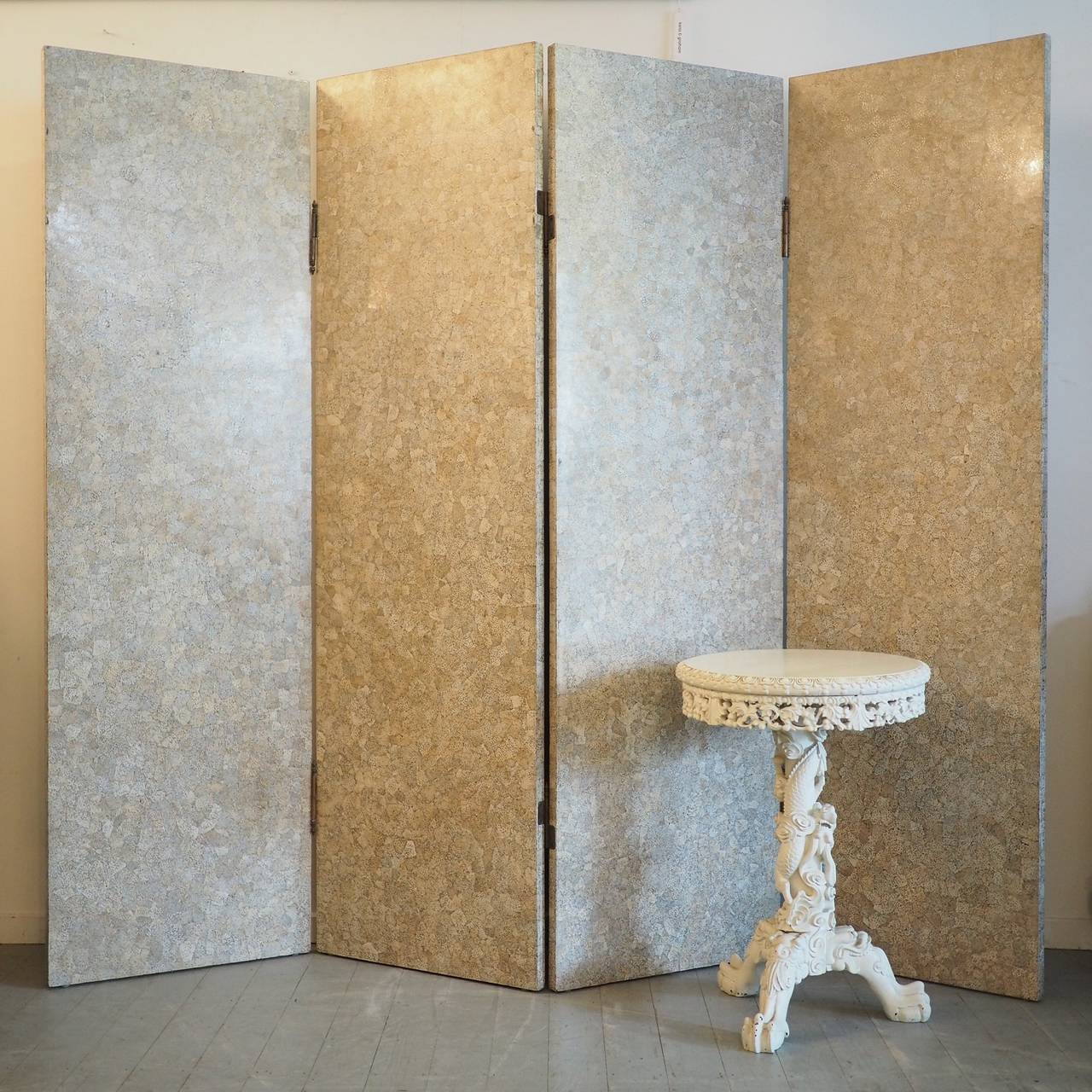
Eggshell Lacquer Four Panel Screen
Located in Fitzroy, Victoria
One side eggshell lacquer, the other speckled black lacquer, with brass hinges.
Lacquer, Wood
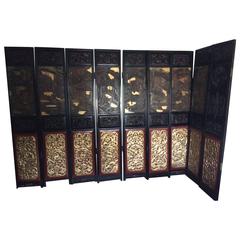
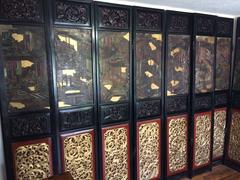
Unavailable
H 94 in W 185 in D 2 in
Antique Chinese Coromandel Screen Room Divider Ten Panel Carved Gold Asia art
Located in Carmel-by-the-sea, CA
Amazing antique Chinese Coromandel screen room divider ten panel carved wood, wold. Please see pictures for details, each panel is 18 1/2 x 94 1/2 inches. Panels are very old and hav...
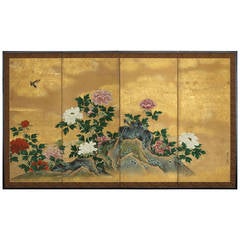

Birds and Peonies Four-Panel Folding Screen
Located in New York, NY
Four-panel folding screen with painting in ink and mineral colors on paper with gold leaf of a bird and peony flowers by rocks.
Paper
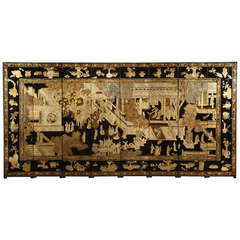
Eight-Panel Black Lacquer and Gilt Screen
Located in New York, NY
An eight panel screen displaying elaborate narrative landscape with figures surrounded by figurative border of various clay and porcelain forms with flowers.
Lacquer, Wood
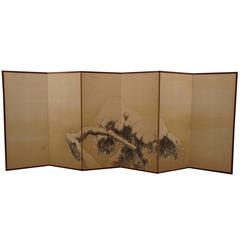
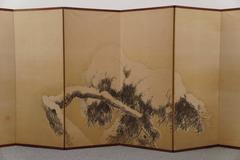
Japanese Six-Panel Screen
Located in Hudson, NY
Japanese six-panel screen. Showa period. Dimensions: 18"W closed 42.5"H 4"D closed 106"W fully extended
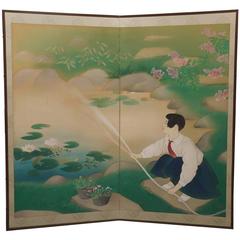

Japanese Two-Panel Screens
Located in Hudson, NY
Japanese two-panel screens. Showa period. Dimensions: 36"W closed 67"H 1.5"D closed 72"W fully extended
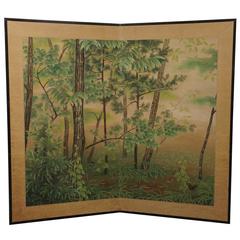
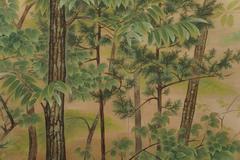
Japanese Two Panel Screen
Located in Hudson, NY
Japanese two panel screen, Showa period. Dimensions: 40.5" W closed. 1.5" D closed. 71" H. 81"W fully extended.
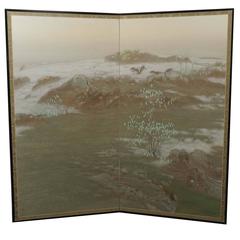
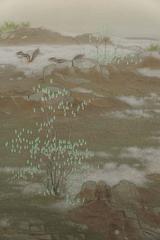
Two-Panel Japanese Screen
Located in Hudson, NY
Two-panel Japanese screen from the Showa period. Dimensions: 39.5" W closed. 74" H. 1.5" D closed. 79" W fully extended.
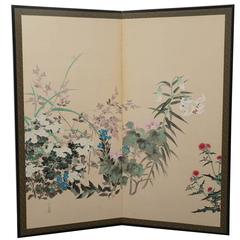

Japanese Two-Panel Screen
Located in Hudson, NY
Japanese two-panel screen from the Showa period. Dimensions: 67.5" H. 33" W closed. 1.25" D closed. 66" W fully extended.
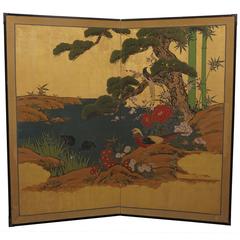

Two Panel Japanese Screen
Located in Hudson, NY
Two panel Japanese Screen from the Showa period depicting pheasant on a rock overlooking a pond bordered by pine tress, bamboo shoots and grasses. Ink and color on gold leaf paper. F...
Paper
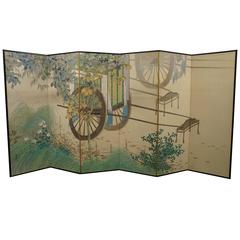
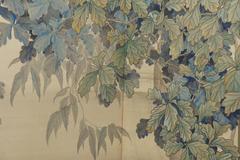
Six Panel Japanese Screen
Located in Hudson, NY
Showa period Japanese screen.
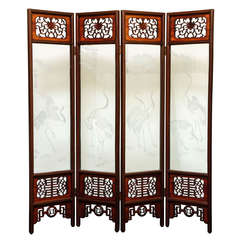
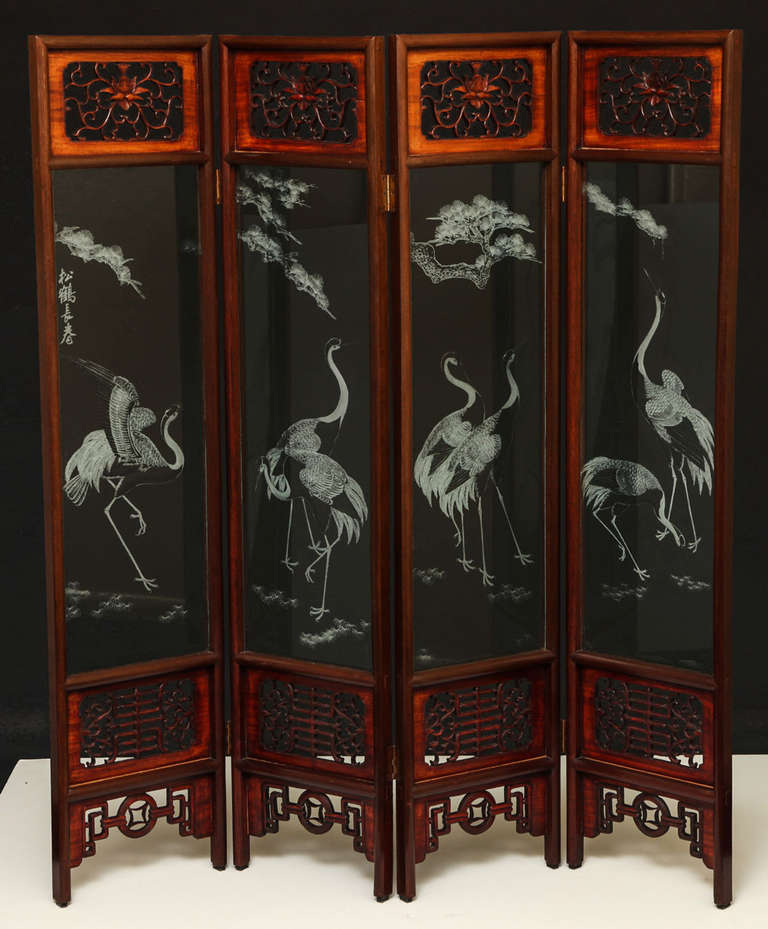
Chinoiserie Rosewood and Etched Glass Four Panel Screen
Located in New York, NY
Rosewood and etched glass four panel screen with heron and cherry blossom scenes.

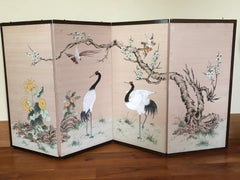
1920s Japanese 4 Panel Screen Chrysanthemum Birds Heron
Located in Sarasota, FL
Stunning 1920s 4 panel screen.
Silk

20th Century Two-Panel Screen
Located in TORINO, IT
A 20th century two-panel screen on paper and color, sakura period.
Paper
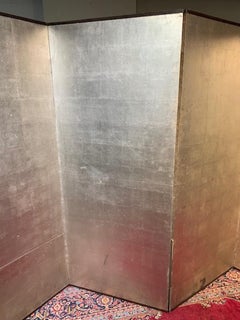
Taisho 4-Panel Silver Screen
Located in Stockbridge, MA
Taisho period (1912 - 1926) silver leaf, 4-panel screen collected in Kyoto, Japan.
Paper
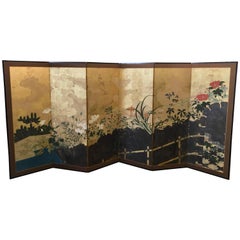

19th Century Six-Panel Screen
Located in New York, NY
A six-panel Japanese screen with raised fence in gesso. Hand-painted on gold leaf.
Gold Leaf
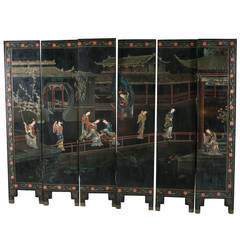
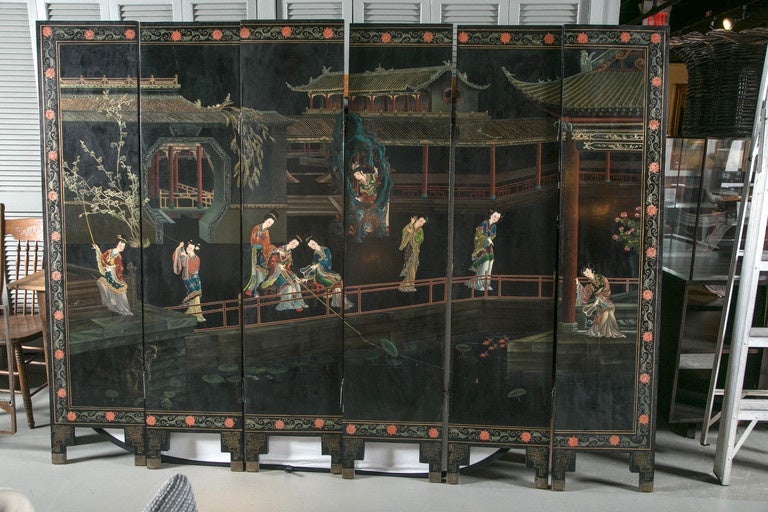
Chinese Lacquered Six-Panel Screen
Located in Stamford, CT
A circa 1930 Chinese lacquered six panel screen, with gilt and enamel details.
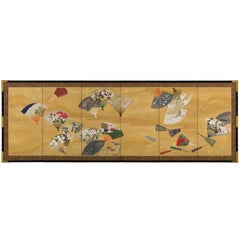

Six-Panel Screen, Scattered Fans
Located in New York, NY
Small six-panel screen; mineral colors, gold wash, and gold flakes on silk Scattered fans decorated with flowers of the different seasons.
Silk
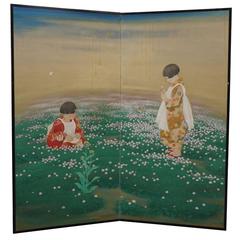
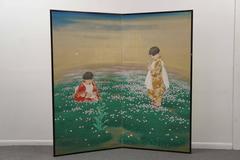
Japanese Two Panel Taisho Screen
Located in Hudson, NY
Japanese two panel Taisho screen. Ink and color on paper of two young girls in a field of daisies. Gold dust back ground.
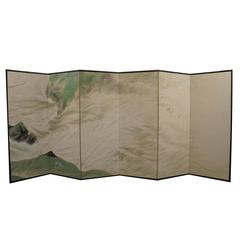
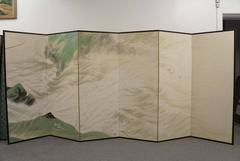
Six Panel Japanese Folding Screen
Located in Hudson, NY
Six panel Japanese folding screen. Ink and color on paper depicting raging river over rocks. One of a pair. See item# AS15887 for its mate.
Paper

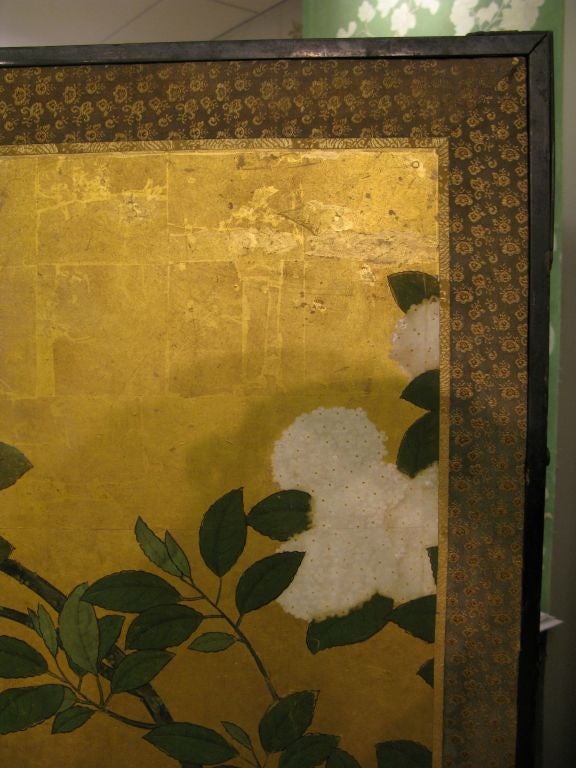
Antique Japanese Six-Panel Screen
Located in New York, NY
A beautiful full sized Japanese six-panel screen. Gold leaf background. Design of trees, rocks, lake, mountains, and flowers (in raised gofun design). Mounted with traditional...
Gold Leaf
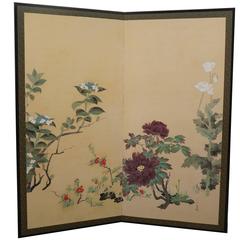
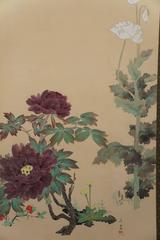
Showa Period Two-Panel Screen
Located in Hudson, NY
Showa period two-panel Japanese screen. Dimensions: 67.5"H 1.25"D closed 33"W closed 66"W fully extended
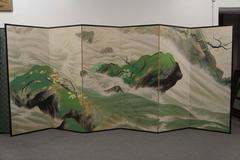
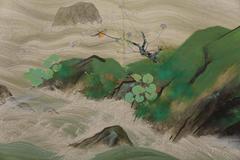
Japanese Six Panel Folding Screen
Located in Hudson, NY
Japanese Six Panel Folding Screen. Ink and color on paper depicting raging river over rocks. This is one of a pair. See item# AS15887A for its mate. Price given is for pair.
Paper
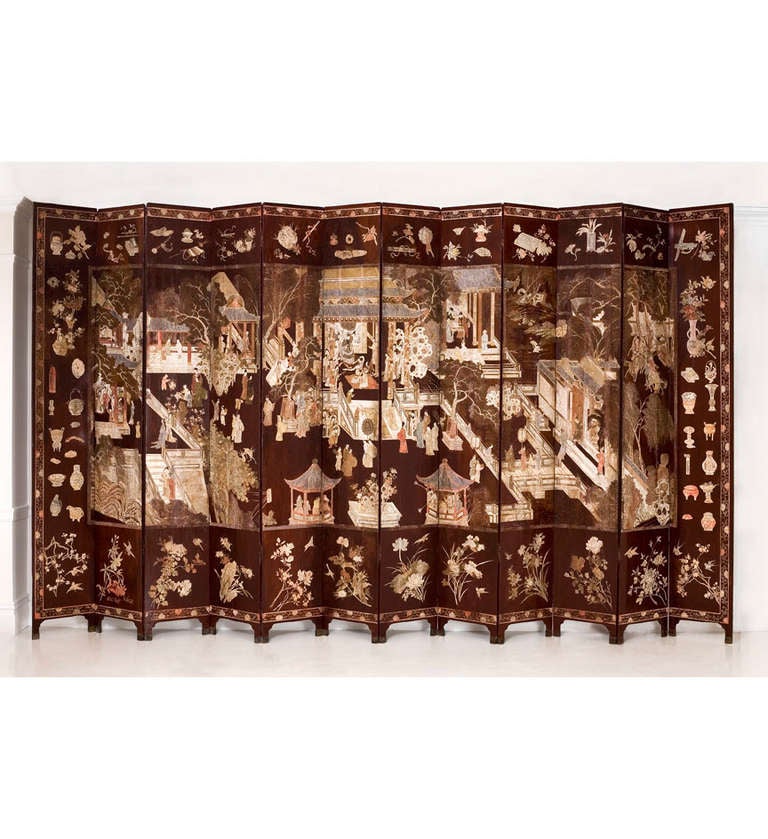
Chinese Coromandel 12-Panel Screen
Located in New York, NY
A Chinese brown-ground polychrome lacquer twelve-panel coromandel screen, depicting General Guo Ziyi, seated in the reception hall of his manor, being entertained and receiving guest...
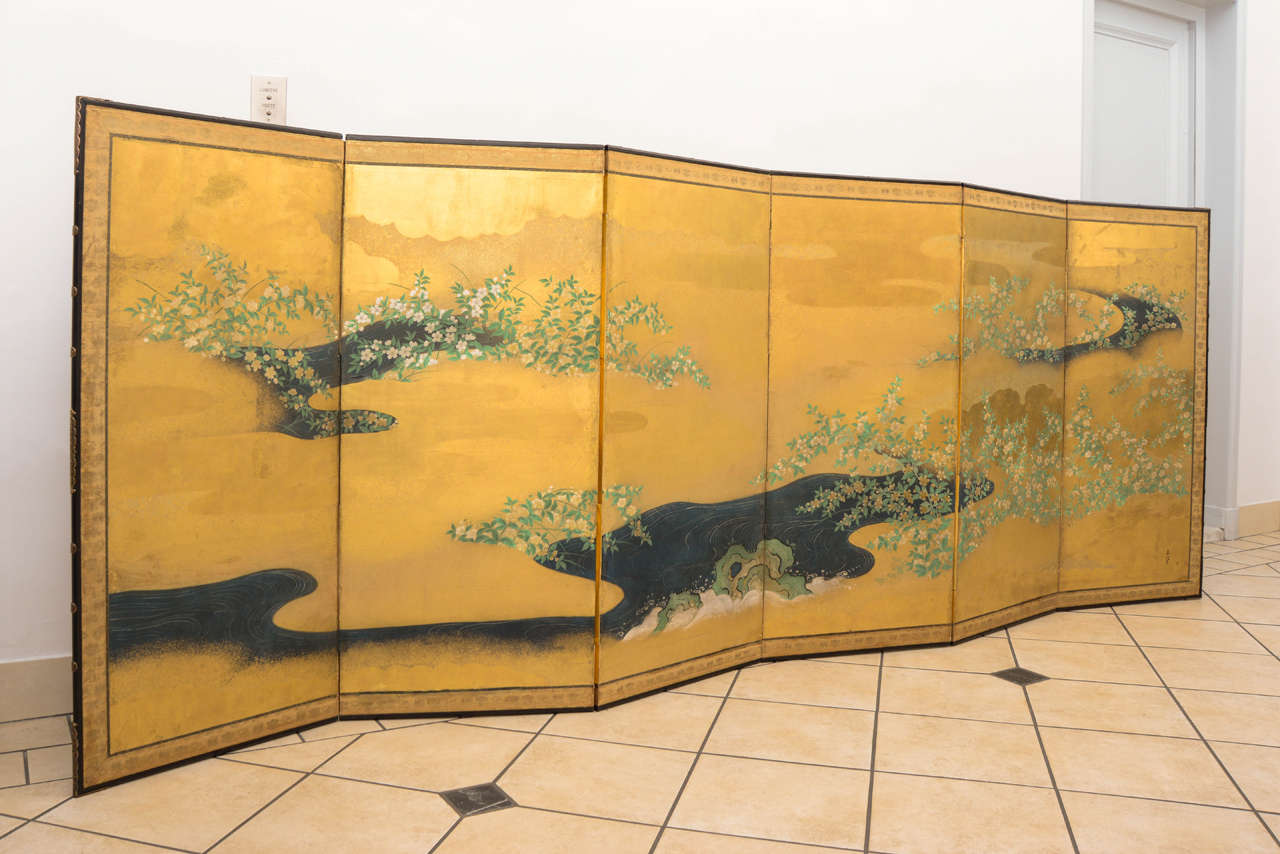
Edo Six-Panel Japanese Screen
Located in Paris, FR
Beautiful six leaves screen with a golden background decorated with flowering branches in a river running landscape. It bears the signature of Minenobu Kano (1668-1708).
Gold Leaf
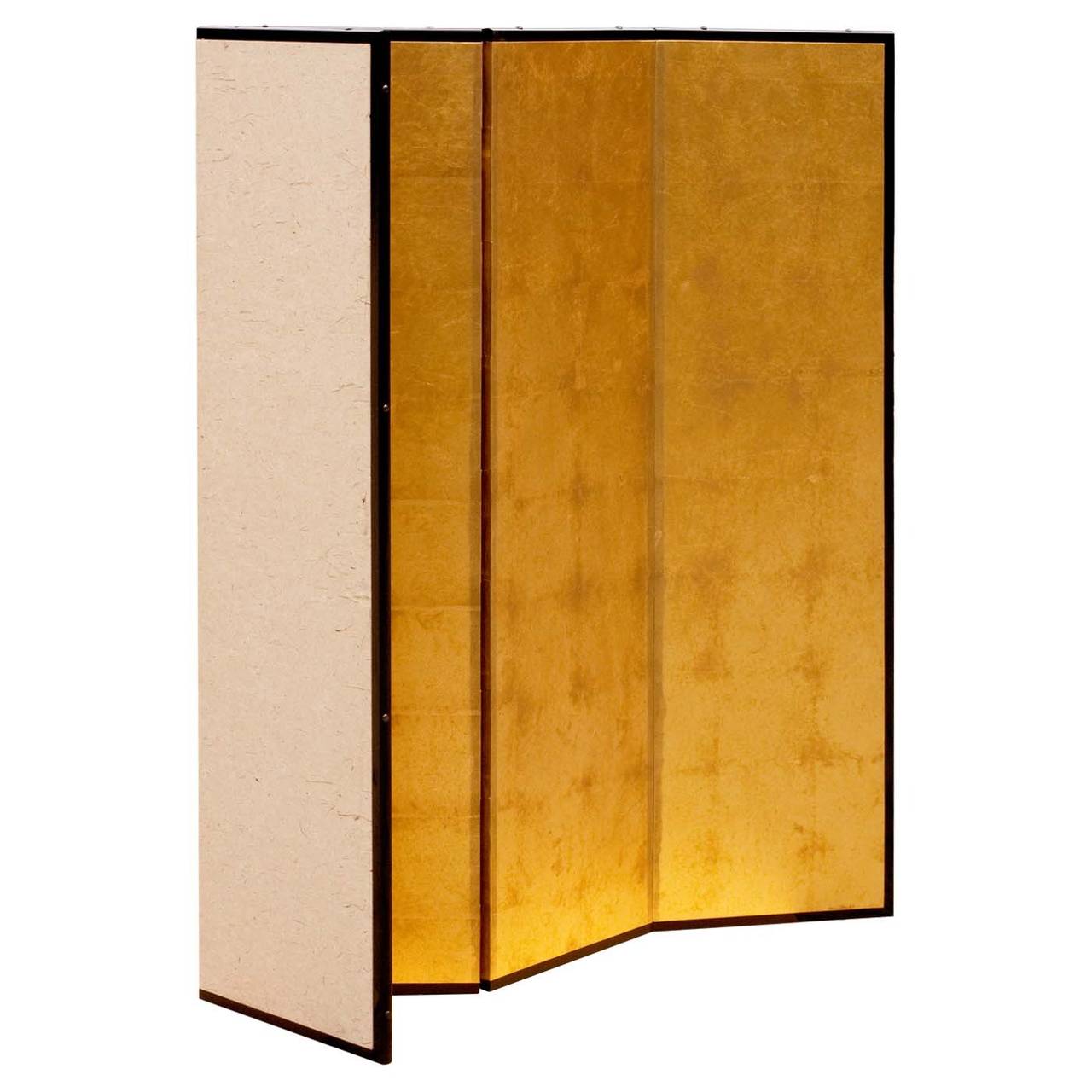
Gold Leaf Four-Panel Screen
Located in Florence, IT
Gold Leaf Screen, comes from our Art Studio, all hand made in the traditional historic craftsmanship. Perfect size to use on a console or chest. Custom Size available. Finish: Gold...
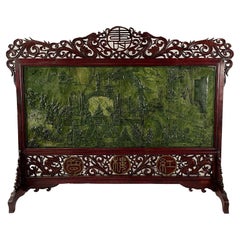
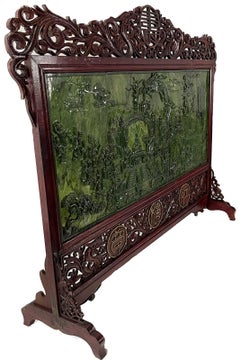
Spinach Jade Four Panel Carved Screen
Located in Salt Lake City, UT
An oriental carved spinach jade screen with four panels. Each panel measures approximately: 10" W x 15.75" H, and overall dimensions: 39.25" W x 34" H x 11" D.
Jade
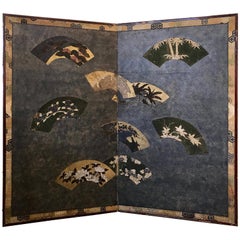
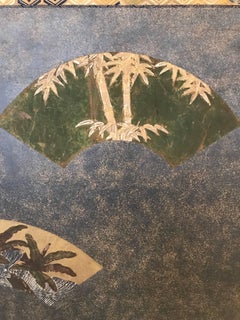
Japanese Two-Panel Screen with Fans
Located in New York, NY
A late 18th-early 19th century two panel screen with scattered fans. This screen has an interesting geometric fabric brocade border, and dark red lacquer frame.
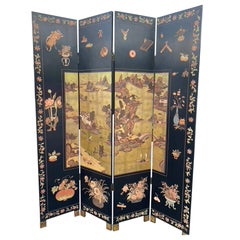
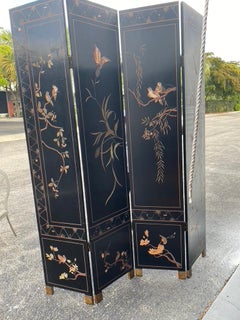
Chinese Coromandel 4 Panel Folding Screen
Located in Sarasota, FL
This vintage export Chinese SCREEN has 4 panels hand painted designs surrounding a medallion in gold lead of mountains and water. The back ground is black lacquered with pale colors ...
Hardwood
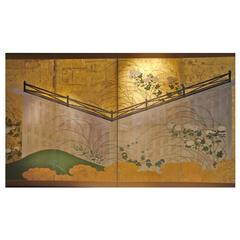
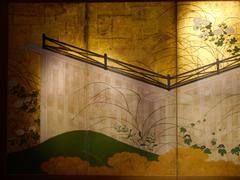
19th Century Four-Panel Japanese Screen
Located in Paris, FR
Four panels Japanese screen with wooden fence. Smooth hill covered with white chrysanthemum flowers and morning glory flowers on gold paper.
Gold Leaf
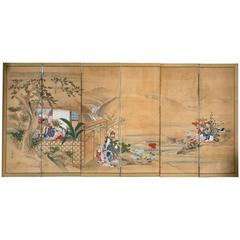
Six-Panel 18th Century Japanese Screen
Located in Stamford, CT
A beautiful six-panel 18th century Japanese hand-painted screen very large needs some restoration.
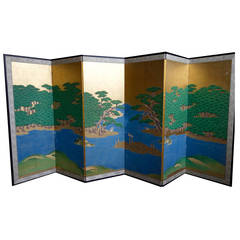
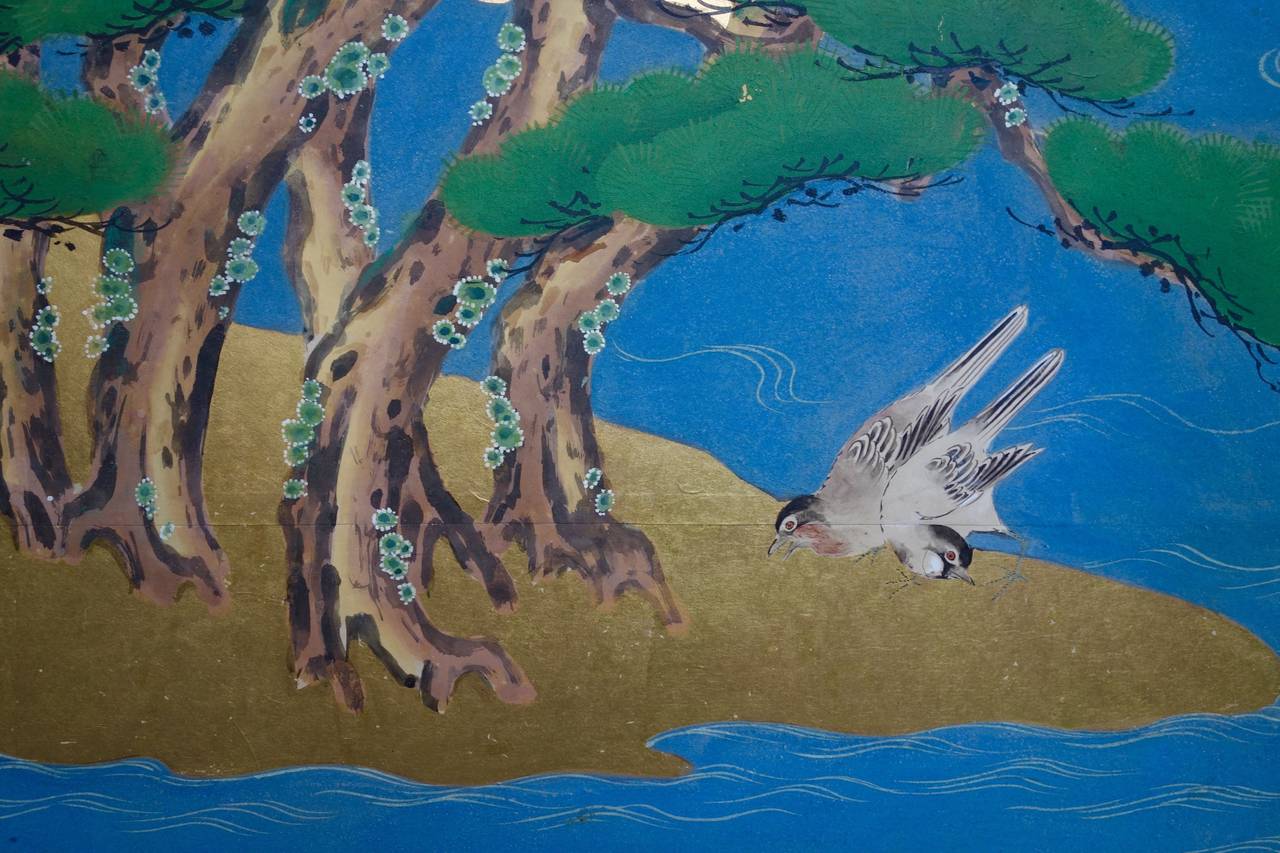
Japanese Kano School Multi Panel Screen
Located in San Francisco, CA
A magnificent six panel screen with design of pine forest islands (possibly inspired by views from Matsushima) with fishing traps and birds. Silver foil clouds with heavy pigments on...
Paper
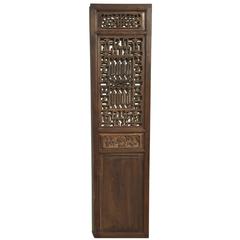
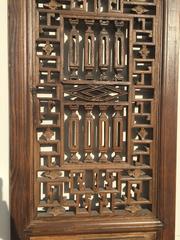
Chinese Antique Door or Screen Panel
Located in SOMIS, CA
This is a beautiful, single panel solid wood door/screen. The intricate design depicts festive lanterns separated by interlocking diamonds and surrounded by eternity scrolls. Strateg...
Wood
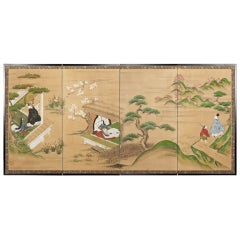
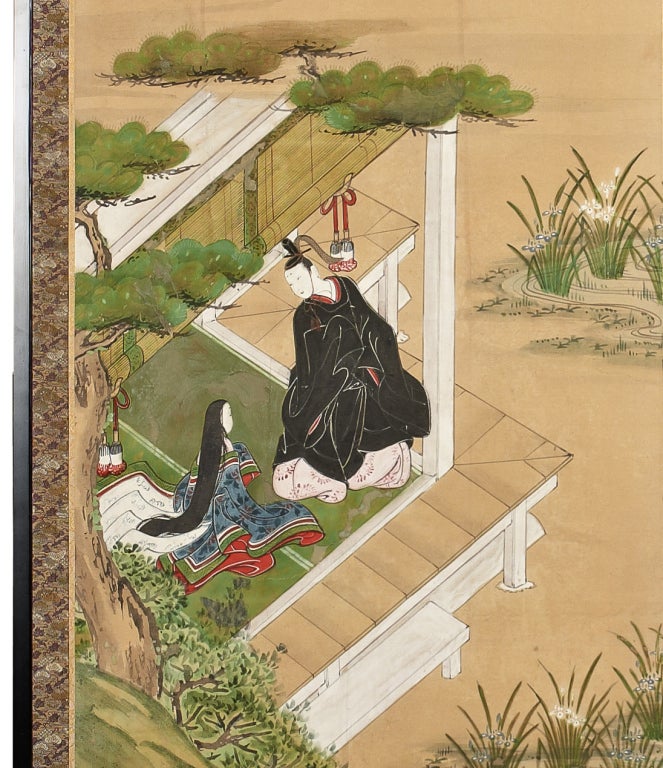
A four-panel Japanese screen (byobu)
Located in Winter Park, FL
A medium-size six panel screen decorated with scenes from the famous Japanese novel The Tale of Genji written by Lady Murasaki in the 11th century, depicting from left to right, a ma...
Brocade, Ink
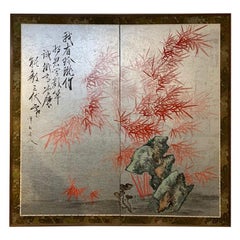
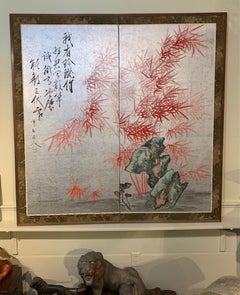
Taisho 2-Panel Red Bamboo Screen
Located in Stockbridge, MA
Taisho period (1912-1926) red bamboo screen on a silver-field. Collected in Kyoto, Japan.
Paper
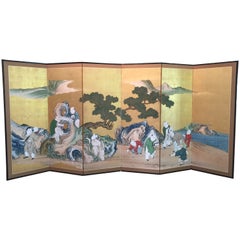
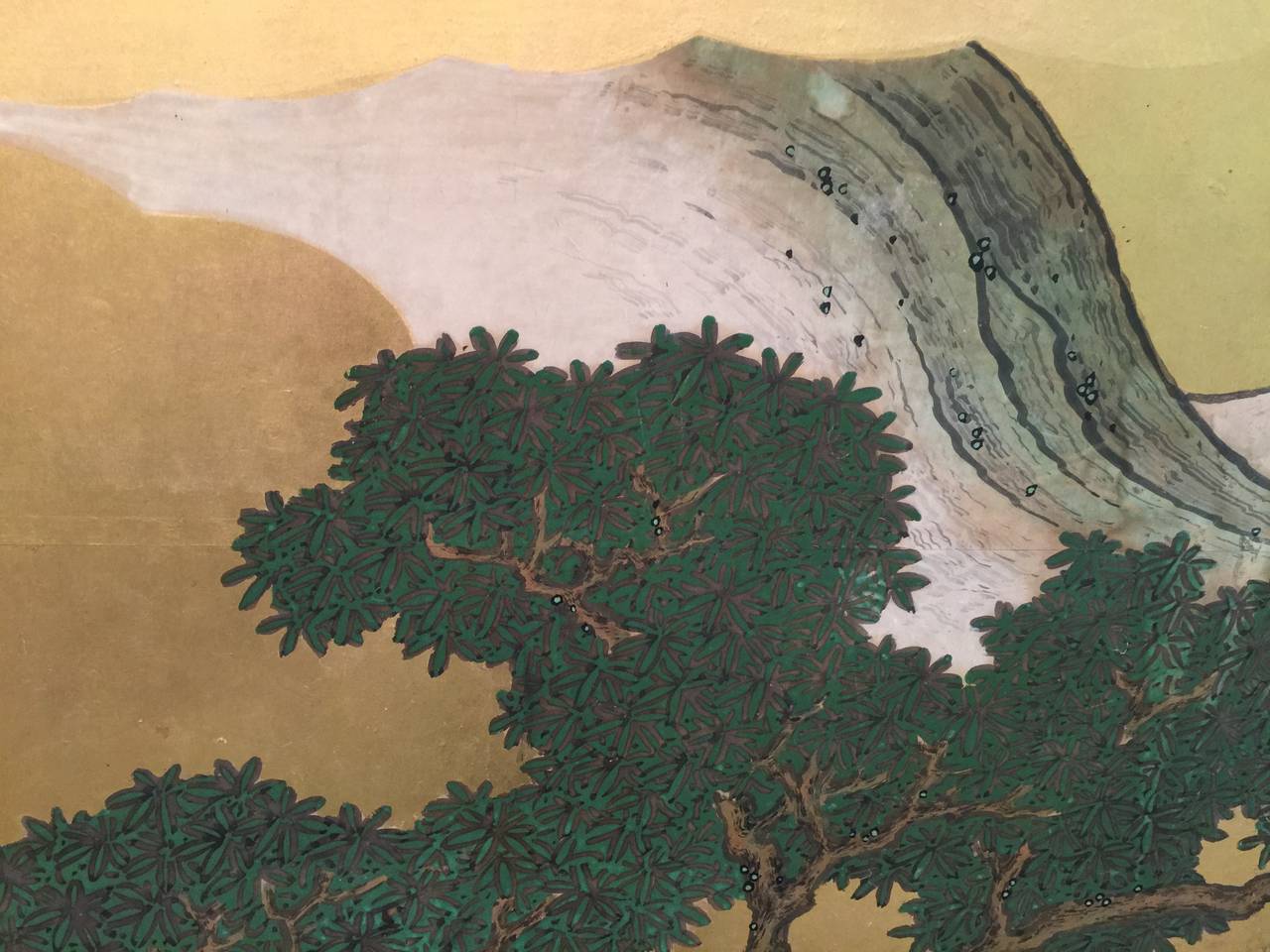
Japanese Six-Panel Screen with Children
Located in New York, NY
A beautifully painted late 18th- early 19th century 6 fold screen depicting Chinese children playing in a landscape. Featuring distant mountains, pine tree, rocks and a stream. Th...
Paper
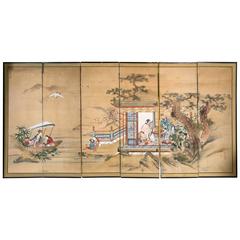
18th Century Six-Panel Japanese Screen
Located in Stamford, CT
Stunning 18th century Japanese screen hand-painted great detail. Needs some restoration.
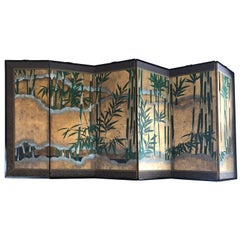
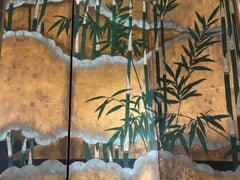
Japanese 6-Panel Painted Gilt Bamboo Leaf and Clouds Screen
Located in Sarasota, FL
A 6-panel screen in elegant green and white bamboo on gilt.
Gold Leaf
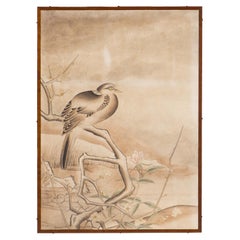
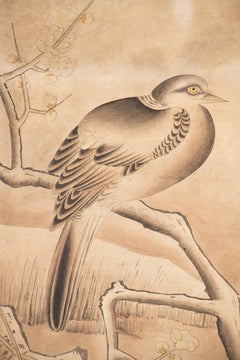
Hand-Painted Japanese Screen Panel of Pidgeon
Located in 10 Chater Road, HK
The pidgeon painting of this single-panel screen is hand-painted in watercolor, on rice paper over carefully jointed wooden lattice frames. Rails are then applied to the perimeter to...
Wood, Paper
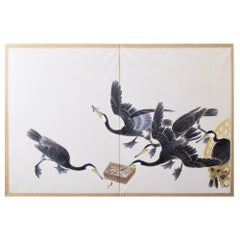
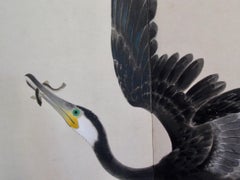
20th Century Two-Panel Screen on Paper
Located in TORINO, IT
20th century two-panel screen on paper.
Paper

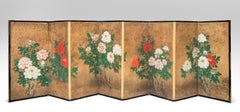
Japanese 8 Panel Screen of Flowering Peonies
Located in New York, NY
Japanese 8-panel screen of flowering peonies A remarkable and rare low screen with each panel featuring an exuberant display of glorious multicolored peonies. The gold maki-e backgr...
Gold Leaf
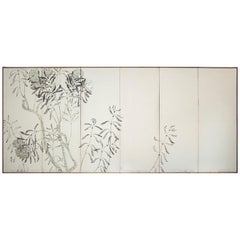

20th Century Kashiu Hiroe, Six Panel Screen
Located in TORINO, IT
20th century Kashiu Hiroe ( 1890 . .... ) six panel screen in paper and silver leaves. Kyoto artist pupil of Kaho Kawkita.
Paper
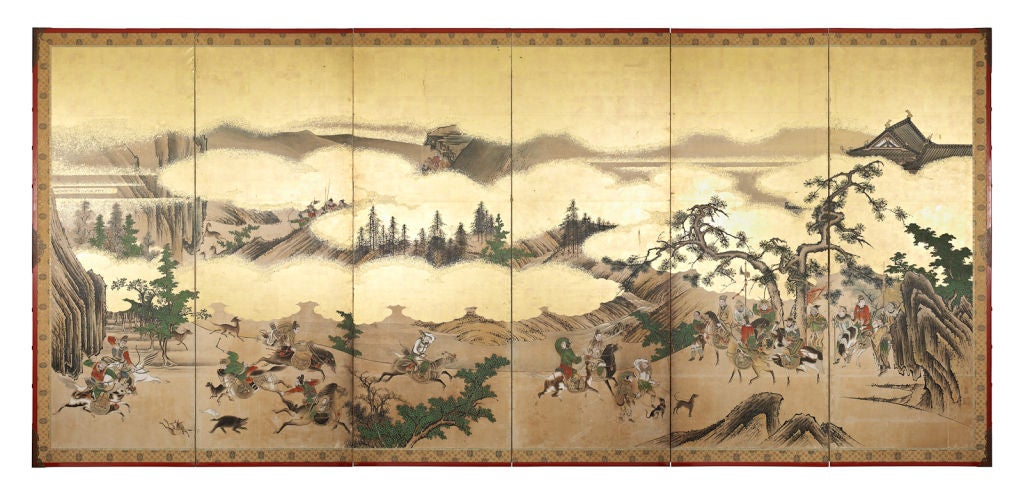
A pair of six-panel Japanese screens (byobu)
Located in Winter Park, FL
Each screen similarly decorated with a continuous scene of Tartar archers hunting, some on horseback and others on foot accompanied by dogs, charging deers and boars in a mountainous...
Ink
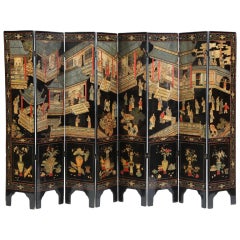
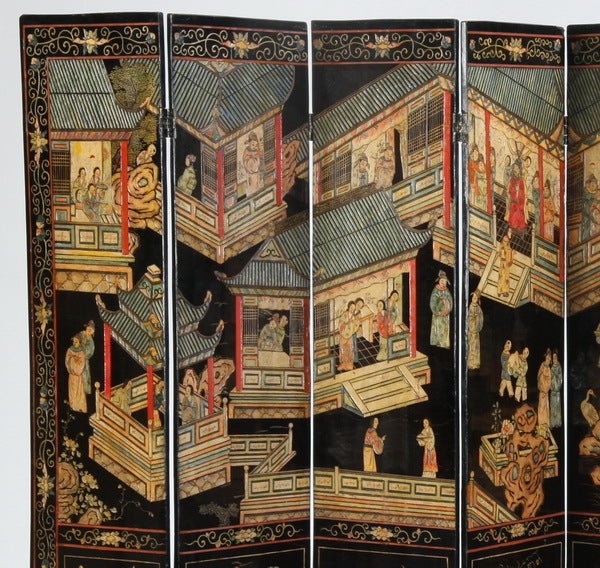
Early 20th Century 8-Panel Coromandel Screen
Located in Atlanta, GA
Early 20th century Chinese 8-panel carved and polychrome lacquered double-sided coromandel screen depicting figures in garden pavilions over a frieze of vases within a floral and scr...
Wood, Lacquer

Unavailable
H 28.55 in W 94.89 in D 0.79 in
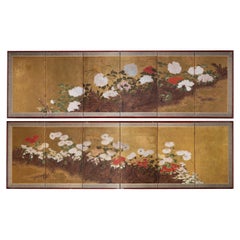
Pair of Six-Panel Folding Screens with Peonies and Other Flowers
Located in Milano, IT
A pair of six-panel folding screens with peonies and other flowers 19th century Each 72.5 by 241 cm Small and elegant screens with an ideal scene depicting peonies and othe...
Paper
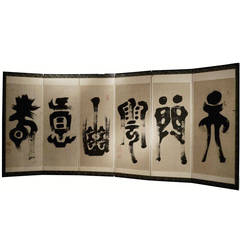
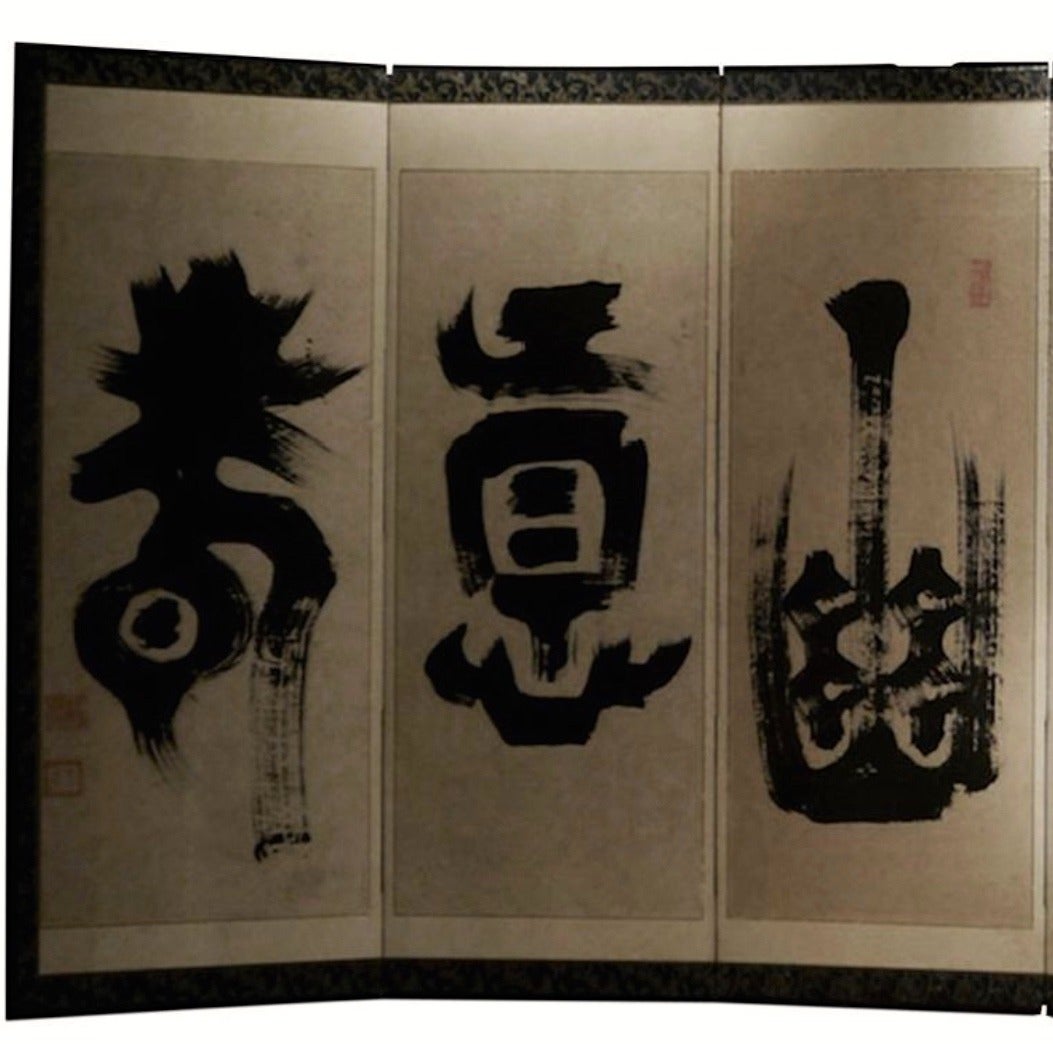
Japanese Six-Panel Folding Screen, 20th Century
Located in Paris, FR
Very contemporary ink on plain paper ground calligraphy screen. Several unknown seals. Japan, Taisho period.
Paper

Unavailable
H 66.93 in W 147.64 in D 0.79 in
18th Century Six-Panel Screen on Paper, Gold Leaves and Colors
Located in TORINO, IT
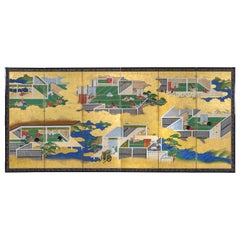
18th century six-panel screen on paper, gold leaves and colors, depicting scene from "The tale of Genji".
Paper

Unavailable
H 66.93 in W 147.64 in D 0.79 in
18th Century Six-Panel Screen on Paper, Gold Leaves and Colors
Located in TORINO, IT
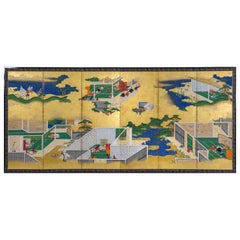
18th century six-panel screen on paper, gold leaves and colors, depicting scene from "The tale of Genji".
Paper
Unavailable
H 76.38 in W 15.75 in D 1.58 in
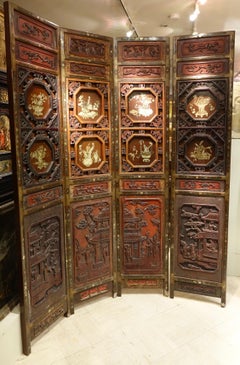
Four-Panel Carved Wood and Red Lacquered Screen, China, circa 1900
Located in Paris, FR
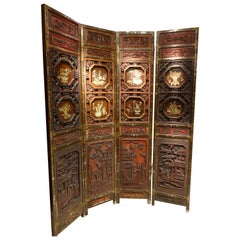
19th century Chinese screen with four panels in carved wood, red and gilt lacquer. The eight octagonal paintings of the upper part are decorated with still life scenes, The four re...
Wood, Giltwood
Screen Panel Tiger Painting Japan, 19th Century
Located in Monterey, CA
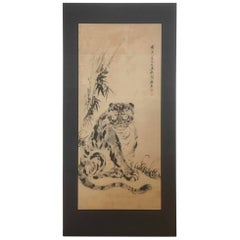
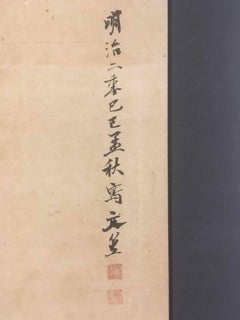
Painting of tiger and bamboo Origin: Japan Age: circa 1869 Size: 31" x 63.5" H.
Silk
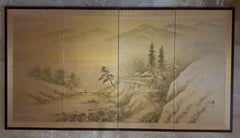
Byobu four-panel folding screen, Japan Showa era
Located in Saverne, Grand Est
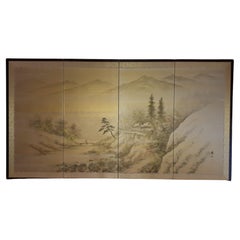
Four-panel byobu decorated with a mountain landscape, hand-painted on gilt silk and surrounded by a gilt brocade. The back is trimmed with a pretty patterned paper. The scene is pain...
Silk
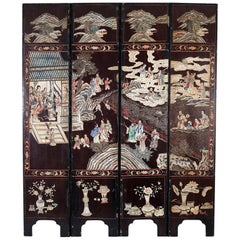
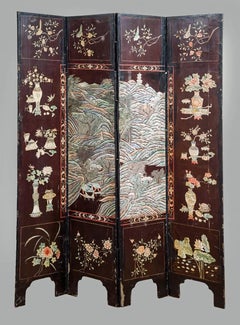
Chinese Coromandel Lacquer Four-Panel Qing Dynasty Screen
Located in Sheffield, MA
Antique Chinese four-panel Coromandel lacquered screen decorated with carved, incised and painted scenes of palace life in muted tones of blue, green and rose. The back of the screen...
Wood
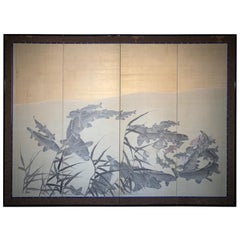
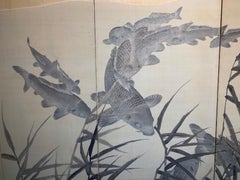
Taisho Period, '1912-1926' Four-Panel Koi Screen
Located in Stockbridge, MA
Four-panel Japanese screen depicting swimming Koi beneath the waters surface and gold sky. Brush painting on raw silk.
Silk
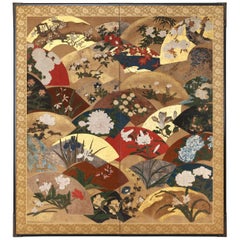
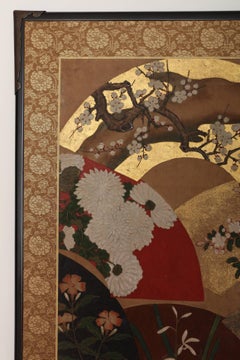
Two-Panel Screen, Scattered Fan with Seasonal Flowers
By Tosa School
Located in New York, NY
Two-panel folding screen; ink, mineral colors, go fun, gold leaf and gold sprinkle on paper. Design of scattered fans, decorated with flowers associated to the different seasons.
Paper
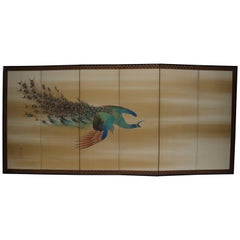
Six-Panel Peacock Folding Screen by Hirai Chokusui
By Hirai Chokusui
Located in Culver City, CA
This six-panel folding screen by Hirai Chokusui, which includes the artist's seal, depicts one of the artist's favorite subjects: the peacock. The majesty of this peacock in flight i...
Wood, Paper
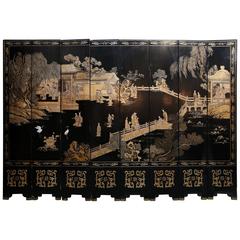
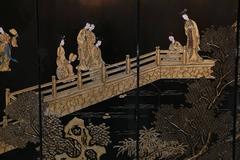
Eight-Panel Reversible Chinese Qin Dynasty Coromandel Screen
Located in Houston, TX
Coromandel screen features the story of a wealthy Chinese family. A woman in the family is shown fishing on a bridge with a servant fanning her. Another panel has the Matriarch walki...
Lacquer
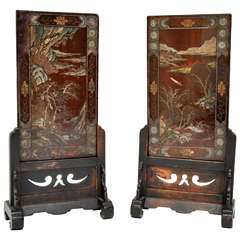
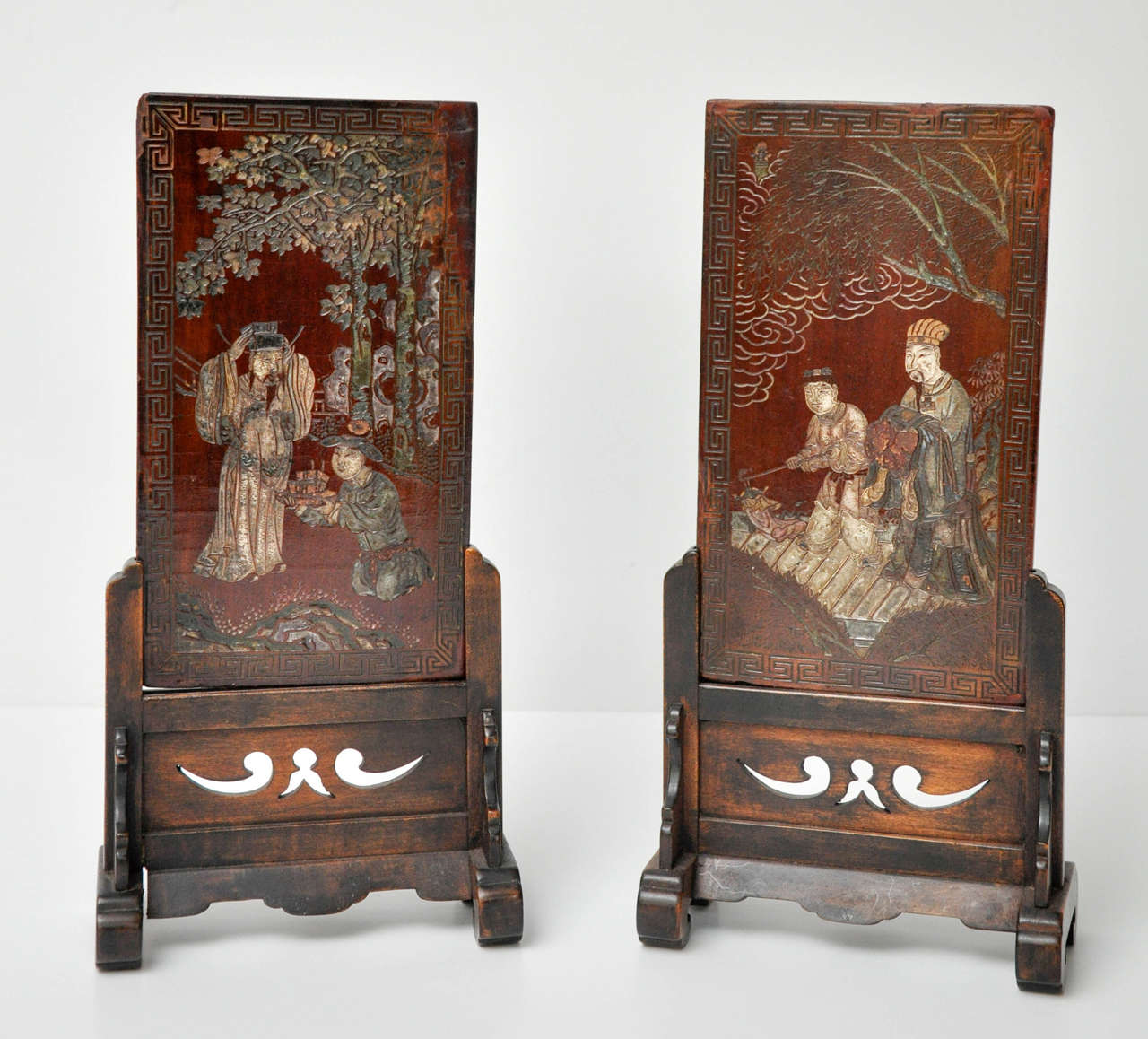
Chinese Coromandel Panels, now Table Screens, circa 1840
Located in Lake Forest, IL
Diminutive Coromandel Screens on later bespoke hardwood stands, Chinese, circa 1840
Lacquer
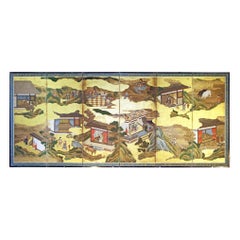
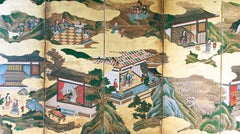
Japanese Tosa School Framed Six Panel Screen Gold Leaf
By Japanese Studio
Located in Brescia, IT
Japanese six-panel screen of the famous "Tosa school" made by an anonymous artist of the mid-18th century, work painted in the classic way with colored pigments and inks on vegetable...
Gold Leaf
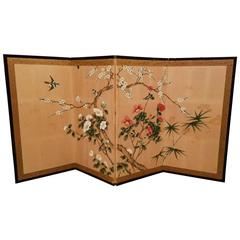
Antique Japanese Hand-Painted Four-Panel Folding Table Screen
Located in Miami, FL
Antique Japanese hand-painted four-panel folding table screen depicting birds, bamboo and flowering branches. Painted on paper with a silk border and wood framed. Height: 35" wid...
Paper, Silk, Wood
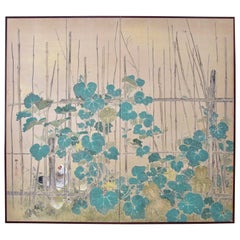

20th Century Inui Baitei Pair of Two Panel Screen
Located in TORINO, IT
20th century Inui Baitei (1933-1998) Pair of two panel screens. Inui Baitei was pupil of Imao Keinen.
Paper
$26,000 / set
H 70 in W 16 in D 1.5 in
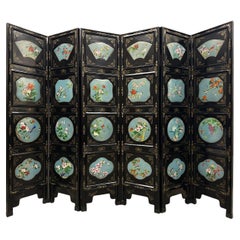
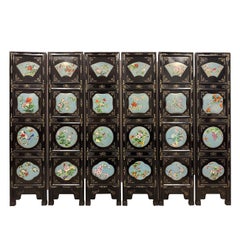
Early 20th Century Chinese Folding Screen/Room Divider with Cloisonne panels
Located in Pomona, CA
This is a set of 6 panels of Chinese vintage lacquered wooden screen which to be used as the room section panels in ancient China that are put together to make into a screen. Screens...
Hardwood
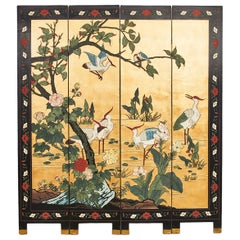
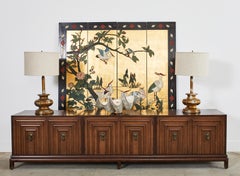
Chinese Export Four Panel Coromandel Screen Cranes on Gold Leaf
Located in Rio Vista, CA
Dazzling Chinese export lacquered four-panel coromandel screen featuring a flora and fauna waterscape with stylized cranes. The carved lacquer panels are embellished with vivid color...
Brass, Gold Leaf
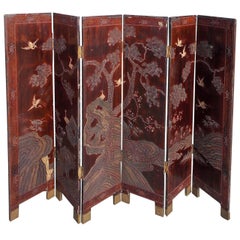
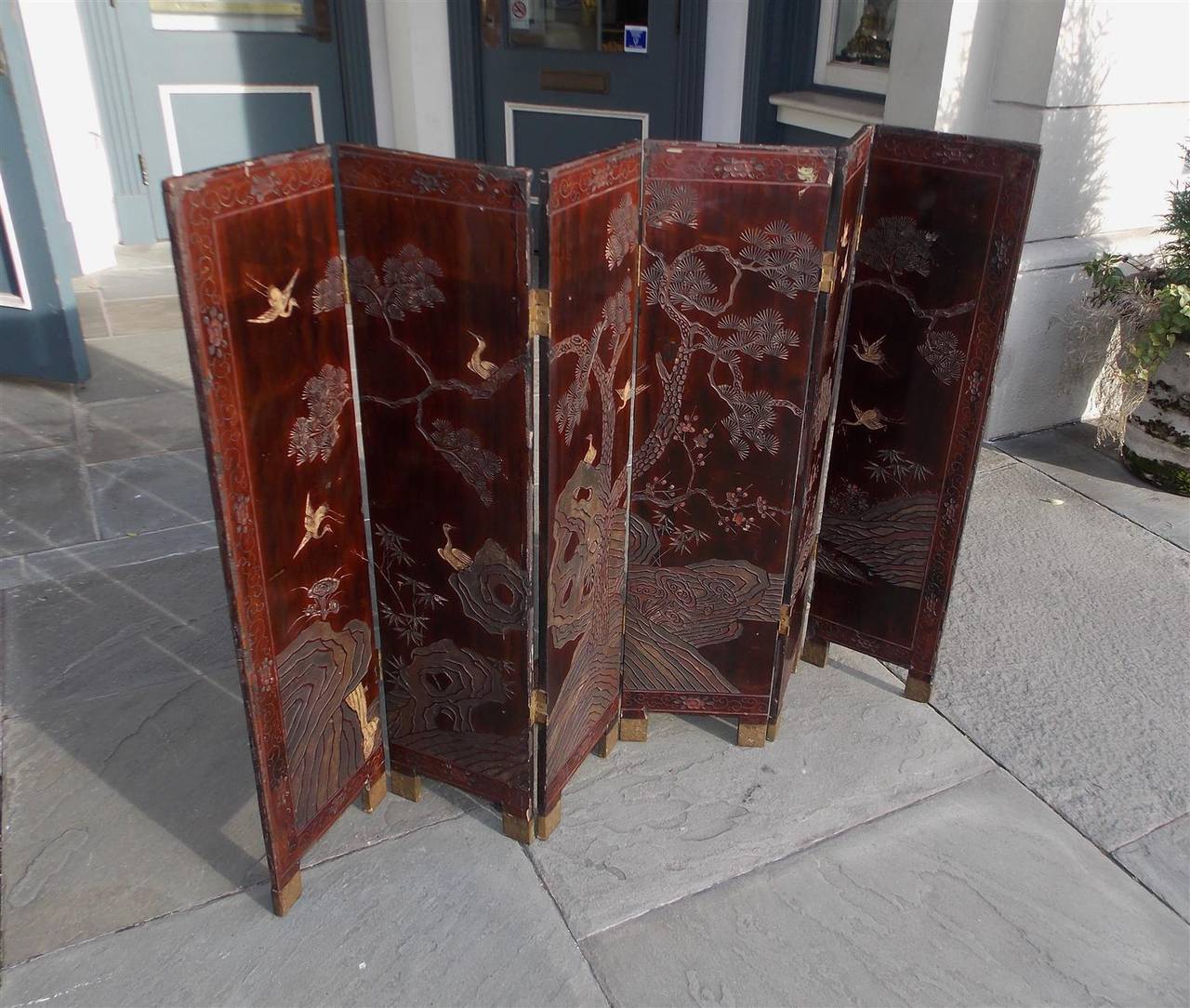
Chinese Six-Panel Decorative Folding Screen, Circa 1780
Located in Charleston, SC
Chinese six-panel folding screen with decorative carved forest with standing and flying cranes, with reverse side depicting village and figures of people, terminating on brass square...
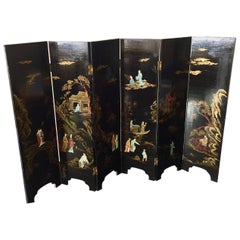
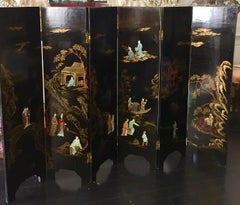
Chinese Six-Panel Lacquer Screen
Located in Montreal, Quebec
Chinese six-panel lacquer screen. This lovely and versatile screen is in the great style of Coco Chanel who loved to decorate with Coromandel screens. One front on a black backgrou...
Wood
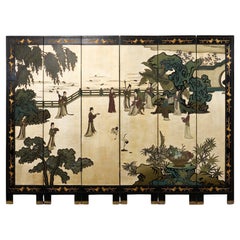
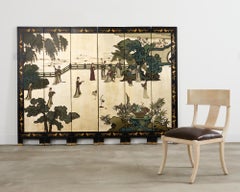
Chinese Export Six Panel Coromandel Screen Gilt Courtyard
Located in Rio Vista, CA
Stunning 20th century Chinese export lacquered six-panel coromandel screen depicting a lush courtyard over a dramatic gold leaf ground. The lacquered panels are incised and painted w...
Brass
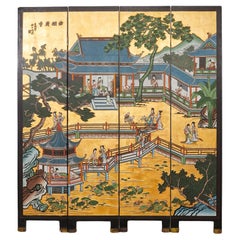
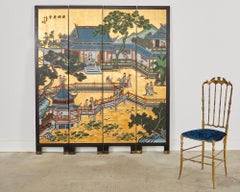
Chinese Export Four Panel Gilt Lacquered Coromandel Screen
Located in Rio Vista, CA
Extraordinary Chinese export four-panel coromandel screen featuring a pagoda pavilion landscape with a dramatic gold leaf background. The black lacquered panels are incised with vibr...
Brass, Gold Leaf
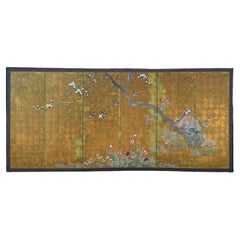
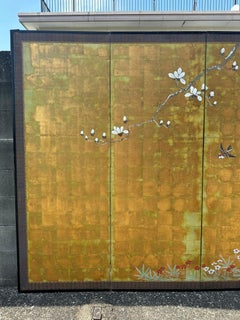
Japanese screen: Melody of Magnolia Blossoms
Located in Fukuoka, JP
Bathed in radiant gold, Melody of Magnolia Blossoms captures the fleeting harmony of nature in bloom. A graceful magnolia branch arcs across the shimmering surface, its petals unfold...
Wood, Paper
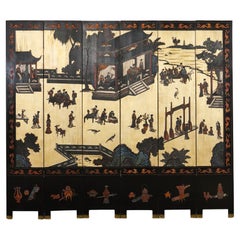
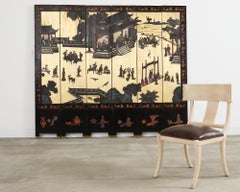
Chinese Export Six Panel Coromandel Screen Gilt Courtyard
Located in Rio Vista, CA
Exceptional 20th century Chinese export six panel coromandel screen featuring a busy idyllic courtyard scene with a dramatic gilt background. The screen has six panels lacquered and ...
Brass
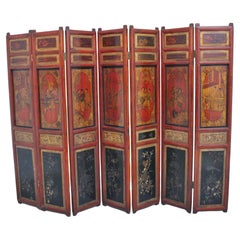
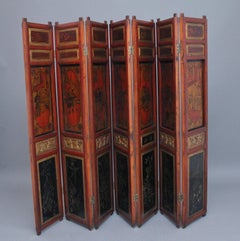
Early 20th Century Chinese folding screen
Located in Martlesham, GB
A highly decorative early 20th Century Chinese folding screen / divider consisting of seven panels, with each panel incorporating five individual panels, depicting various countrysid...
Pine
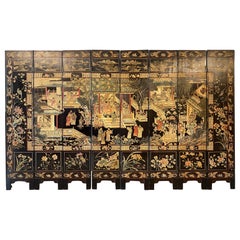
$57,550
H 74.13 in W 122 in D 0.75 in
Early 19th Century Chinese Coromandel Eight-Panel Screen with Palace Attendants
Located in Miami, FL
Early 19th Century Chinese Coromandel Eight-Panel Screen — Provenance: Perret Vibert, Paris Early 19th Century Chinese Coromandel Eight-Panel Screen with Palace Attendants and Schola...
Wood, Paint
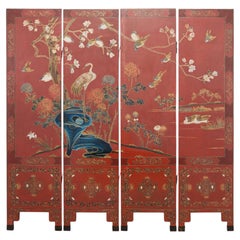
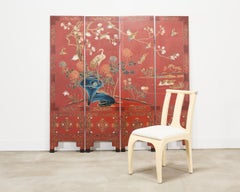
Chinese Export Four Panel Red Lacquered Chinoiserie Gilt Screen
Located in Rio Vista, CA
A highly decorative four-panel red lacquer folding Chinese Export Coromandel screen, richly decorated with a continuous flora and fauna Chinoiserie garden scene. The front features a...
Brass
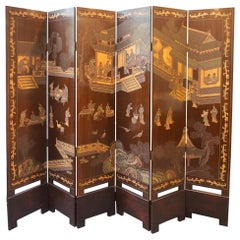
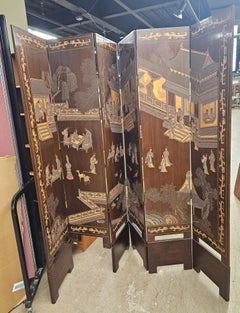
Six-Panel Double Sided Coromandel Asian Screen on Stand
Located in Germantown, MD
Six-panel double sided Coromandel Asian Screen on stand. Each panel seats in a removable custom wood stand / shoe. Brownish gold color on one side and nature on the other. The subje...
Brass
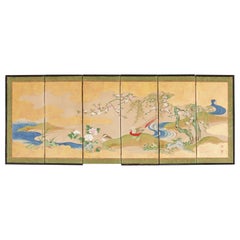
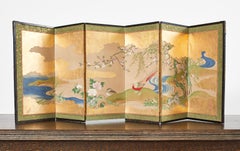
Japanese Edo Six Panel Table Screen After Maruyama Okyo
Located in Rio Vista, CA
Fantastic diminutive Japanese Edo period table top screen depicting a lively water landscape with flora and fauna. The screen is beautifully painted on gold leaf with a pair of pheas...
Brass, Gold Leaf
$4,900
H 48.43 in W 109.06 in D 1.19 in
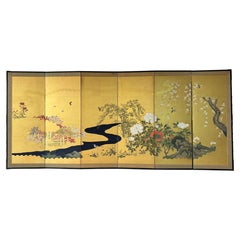
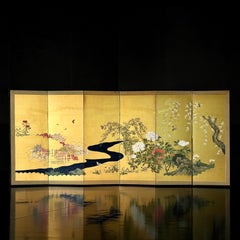
Japanese Six-Panel Gold Screen with Flowers, Birds and Flowing Stream
Located in Fukuoka, JP
A Japanese six-panel folding screen (byōbu) presenting an expansive garden landscape of flowering plants, birds and butterflies against a warm gold ground. A dark, winding stream ex...
Wood, Paper
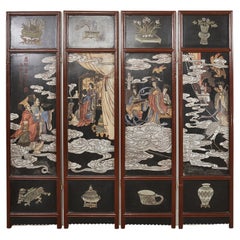
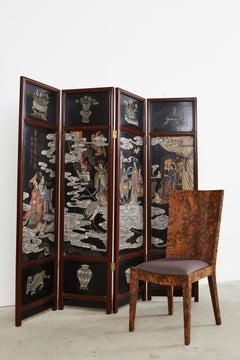
Chinese Export Four Panel Lacquered Coromandel Screen
Located in Rio Vista, CA
Celestial Chinese export coromandel four-panel screen depicting figures in colorful robes in a heavenly landscape among the white clouds. Each scene is bordered on top and bottom wit...
Brass
$4,648Sale Price|31% Off
H 79 in W 82 in D 0.75 in
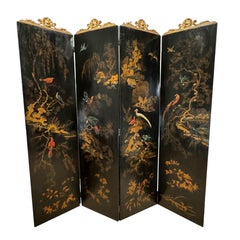
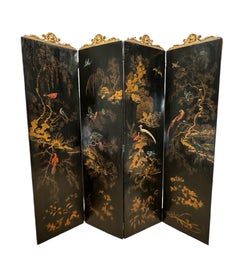
19th Century Painted & Gilt Decorated 4 Panel Screen
Located in Huntington, NY
19th Century4 Panel Painted & Gilt Decorated 4 Panel Screen
Brass
Sold|$1,595
H 35.25 in W 70 in D 0.75 in
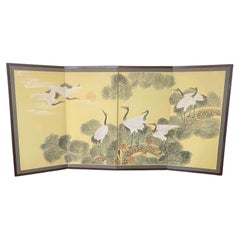
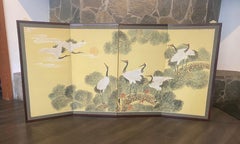
Japanese Chinese Asian 4 Panel Folding Byobu Screen Red Crowned Crane Landscape
Located in Studio City, CA
A gorgeous four-panel Japanese/Chinese/Asian Byobu folding screen depicting a landscape scene with a flock of playful red crown cranes (likely Manchurian cranes) among the branches ...
Wood, Paint, Paper
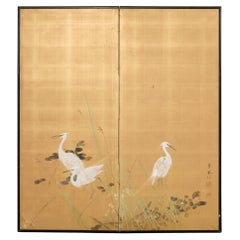
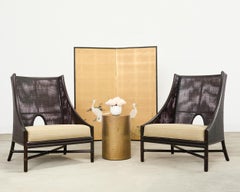
Japanese Showa Two Panel Screen Egrets in Grass
Located in Rio Vista, CA
Stunning Japanese Showa period two-panel folding byobu screen depicting three egrets in the grass at a pond. The large screen features a dramatic gold leaf square background with nat...
Wood, Paper
$1,750
H 68.12 in W 64.57 in D 0.79 in
B122 Japanese Antiques 2panels Byobu, paper, folding Screen Autumn grasses
Located in Niiza, JP
Material: paper, fabric on wooden frame One piece: W820×H1730mm×D17mm Painting seet: W550× H1290mm Unfolded size: W1640mm Folded size: W820×H1730×D35mm, 6kg Packaging (sandwiched wit...
Cedar, Paper
$1,280Sale Price / set|20% Off
H 96 in W 36 in D 0.1 in
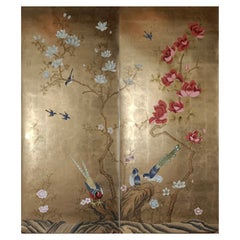
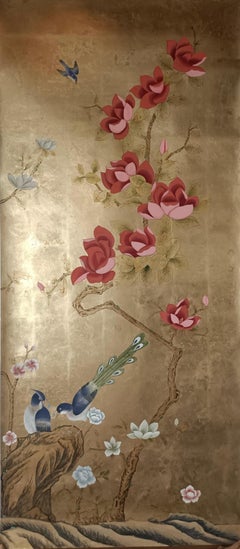
Chinoiserie Panels Hand Painted Wallpaper on Gold Metallic with Antiques
Located in Wuxi, 32
If you love the look of De Gournay wallpaper but not the price, this is for you. Measures: 3 ft x 8 ft. The colorways in this sections present our latest colorways, which can be a...
Silk
$6,325
H 72 in W 47 in D 22 in
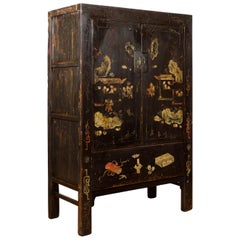
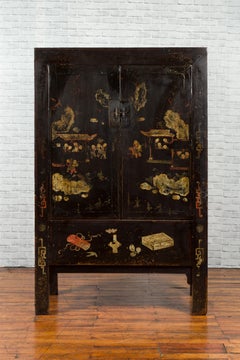
Qing Dynasty Two-Door Cabinet with Hand-Painted Décor and Original Black Lacquer
Located in Yonkers, NY
A Qing dynasty two-door elmwood cabinet from the 19th century, with original black lacquer and hand-painted decor. Created during the Qing Dynasty in the 19th century, this exquisite...
Wood, Elm
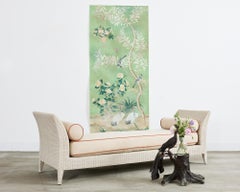
Gracie Hand Painted Wallpaper Panel Chinoiserie Gated Garden
By Gracie
Located in Rio Vista, CA
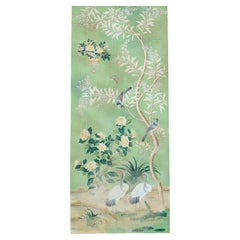
Gorgeous large 20th century hand-painted wallpaper panel featuring a chinoiserie style scene. Panel SY-217, S-14442. Gated garden depicts flowering trees, bushes, and flowers with ex...
Paper
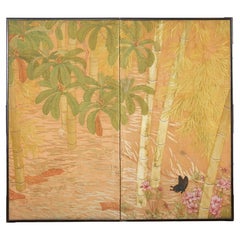
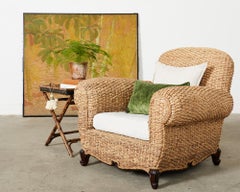
Japanese Taisho Two Panel Screen Bamboo Butterfly Landscape
Located in Rio Vista, CA
Serene Japanese late Taisho period early Showa period two-panel byobu screen featuring a colorful bamboo loquat landscape with a butterfly. Beautifully crafted in the Nihonga school ...
Brass
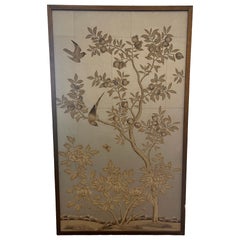
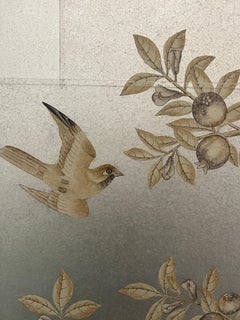
Gracie Silver Metallic Sepia Garden Wallpaper Panel, Handpainted
By Gracie
Located in New York, NY
A framed Gracie Sepia Garden panel. Gracie, founded in 1898 is known for handpainted wallpapers and antiques. Founded in 1898 in New York, Gracie was the first American company t...
Paint, Paper
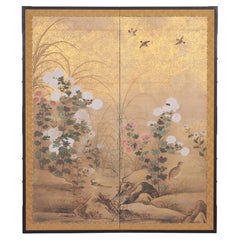
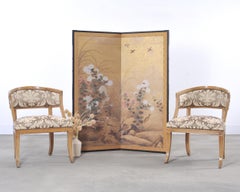
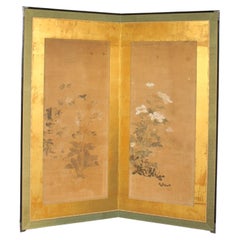
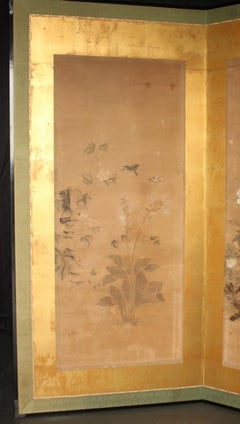
Japanese Meiji Two Panel Screen Birds Flowers in Autumn Landscape
Located in Rio Vista, CA
Exceptional 19th century Japanese two-panel late Edo Tokugawa\early Meiji period screen. The painting features clusters of flowering autumnal chrysanthemums and field grasses amid qu...
Wood, Paper, Silk
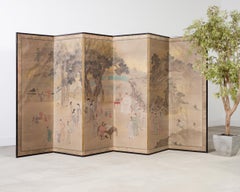
$4,800
H 68 in W 150 in D 0.75 in L 68 in
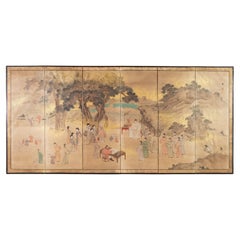
19th C. Japanese Edo Six Panel Screen Chinese Official's Gathering
Located in Rio Vista, CA
Grand Japanese Edo period six panel folding byobu screen depicting a large gathering of a Chinese official. The painting is set in a lovely garden terrace with a high-ranking Chinese...
Wood, Paper
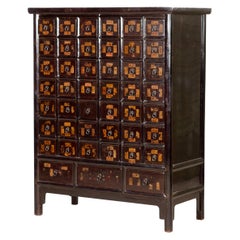
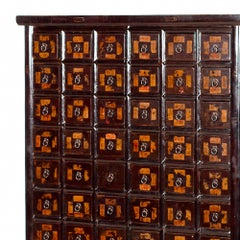
18th Century Chinese Medicine Chest
Located in Kastrup, DK
Medicine Chest in original black lacquer. Shanxi province, China. Dating back from the late 18th Century.
Metal
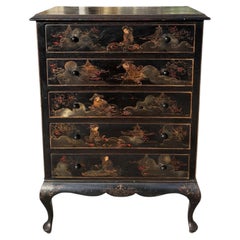
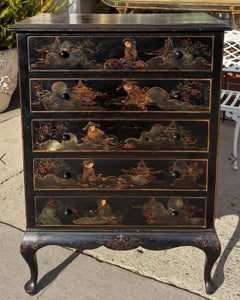
$2,344Sale Price|20% Off
H 42 in W 29.5 in D 17 in
Antique Chinoiserie Black & Gold Tall Chest of Drawers
Located in LOS ANGELES, CA
Antique Chinoiserie Black & Gold Tall Chest of Drawers.
Wood
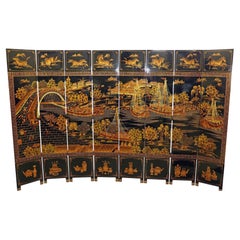
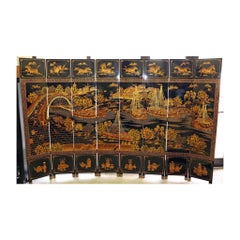
Chinoiserie Coromandel 8-Panel Floor Screen
Located in Los Angeles, CA
Large chinoiserie 8-panel Coromandel two-sided lacquered wood room divider screen. One scenic side with landscapes, buildings, and figures and boats. Other side painted black with go...
Wood
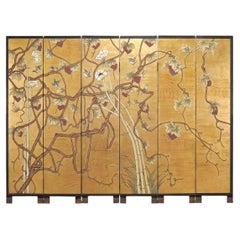
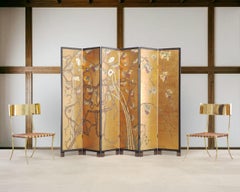
Chinese Export Flora and Fauna Gilt Coromandel Screen 8 Ft
Located in Rio Vista, CA
A rich and dramatic Chinese Export folding six-panel double-sided coromandel screen executed in radiant gilt and lacquer. The front depicts a beautiful composition of twisting brown ...
Brass, Gold Leaf
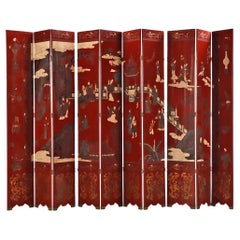
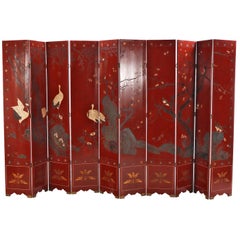
A Chinese 10-panel folding screen, C. 1940.
Located in Philadelphia, PA
Each 17.5" wide panel is decorated on both sides with traditional lacquer, carved & painted motifs (the front featuring figures in a garden landscape and the reverse with various bi...
Wood, Lacquer, Paint
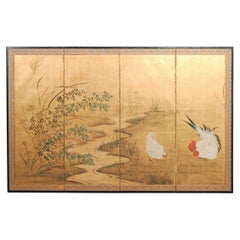
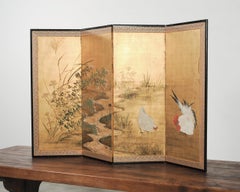
Japanese Showa Four-Panel Screen Autumn Landscape Rooster & Hen
Located in Rio Vista, CA
A beautifully rendered Japanese Showa period four-panel folding byōbu screen in the Nihonga school style. The painting depicts a quiet pastoral scene of a pair of chickens gathered a...
Gold Leaf
Traditional Asian paintings were often created on scrolls and folding screens. Artisans made screens that could be folded up or spread out by connecting several panels using hinges. Today, antique Asian folding screens and paintings are sophisticated decorative accents that can serve as makeshift partitions to ensure privacy.
The original folding screens were created by Chinese artists. The earliest record of screens comes from the 2nd century B.C., and surviving examples date back to the Ming dynasty. Chinese painting utilizes many of the same tools as calligraphy — these screens were crafted from wood with painted panels featuring striking art or calligraphy that told cultural stories or represented nature and life in the area.
The practice was introduced to Japan, where paintings for screens were made on paper and silk, in the 8th century. These paintings frequently feature subjects such as landscapes, animals, flowers and Buddhist religious themes. Along with screens for tea ceremonies and dance backgrounds, there were screens for use in Shinto and Buddhist temples.
In the 17th century, screens began to be imported to Europe where their popularity grew. Coco Chanel famously collected Coromandel folding screens.
Traditional Asian paintings can make a tasteful addition to any wall, and screens can be used as decoration or, in the case of larger iterations, as an aesthetic way to divide a large room. Browse the selection of antique Asian paintings and screens from a variety of styles and eras on 1stDibs.
Decorated with white cranes and the sought-after thousand-butterflies motif, the Meiji-period vessel offers both a celebration of traditional aesthetics and a clear reflection of the era’s appetite for exquisite export pieces.
For 25 years, gallerist Betsy Nathan has leveraged her keen eye and key connections to bring a unique selection of rare finds to the market.
Now working alongside his daughter Bianca, dealer Joel Chen has presented a most covetable array of antiques, art and contemporary creations for more than 40 years.
From cherry-blossom-adorned walls paired with glamorous lighting to wood-paneled ceilings above checkerboard-patterned chairs, these 12 spaces seamlessly blend Eastern and Western aesthetics.
The dealer and curator has spent the past 50 years amassing a collection of exceptional art, furniture and architectural elements that trace the cultural influence of the Spanish empire from Europe to the Americas and beyond.
These spaces exemplify how Eastern elements elevate a home's decor.