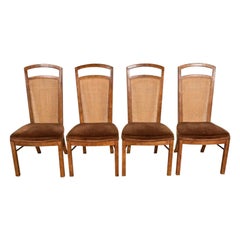
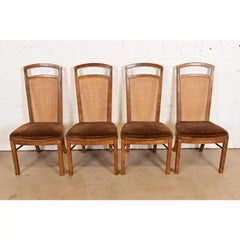
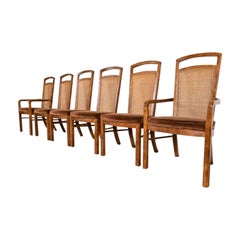
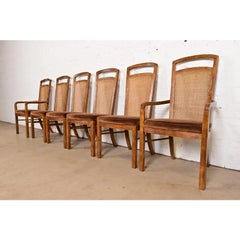
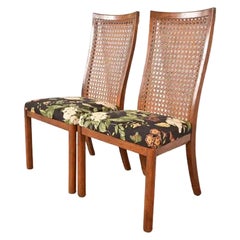
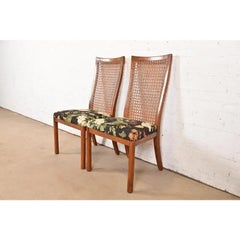
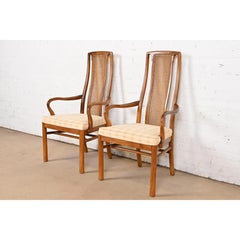
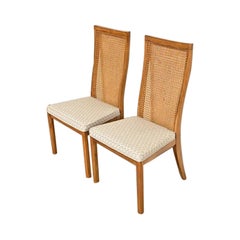
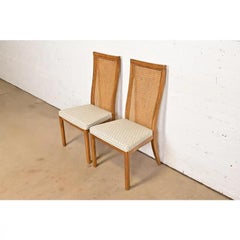
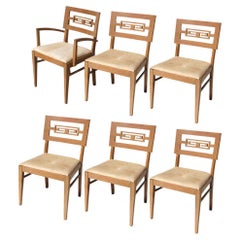
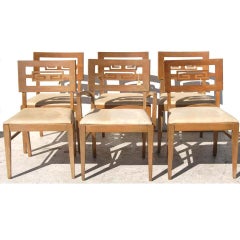
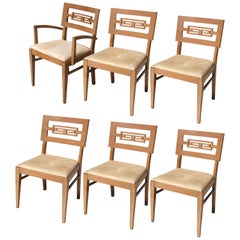
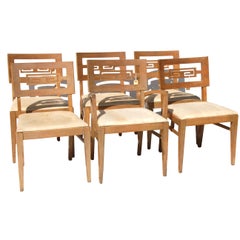
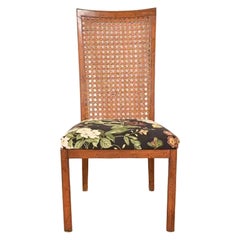
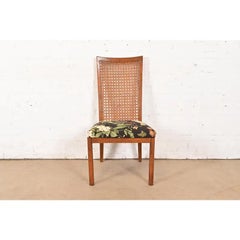
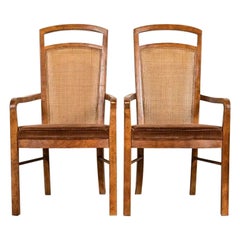
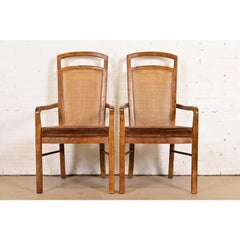
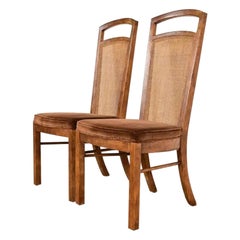
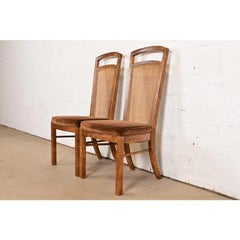
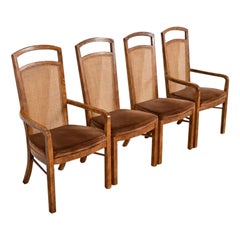
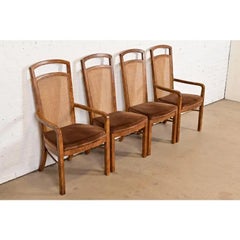
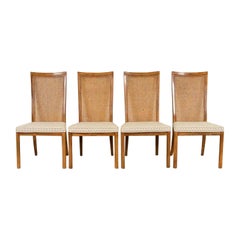
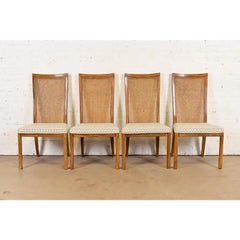
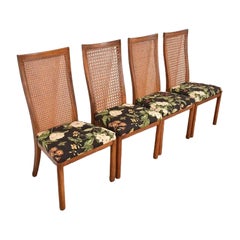
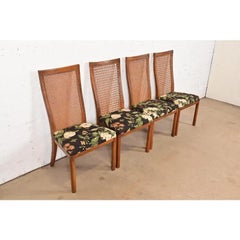
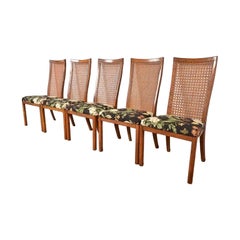
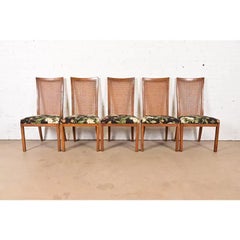
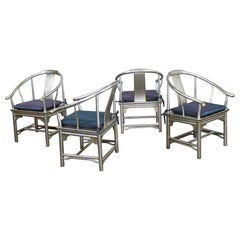
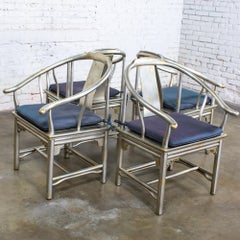
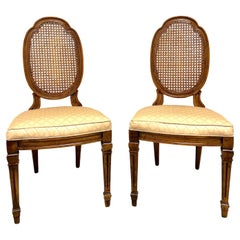
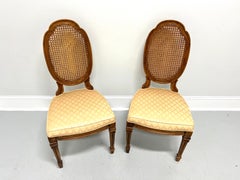
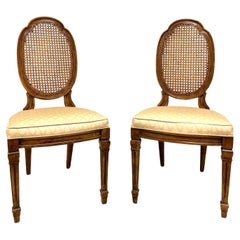
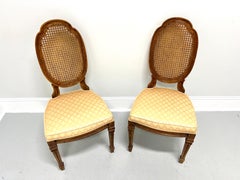
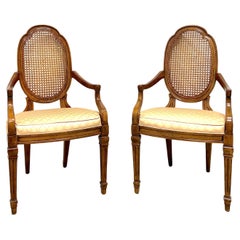
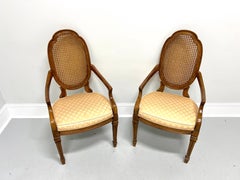
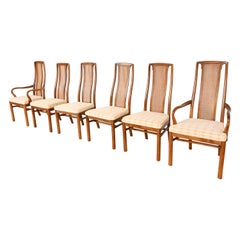
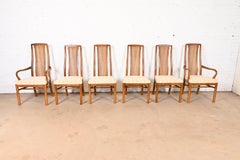
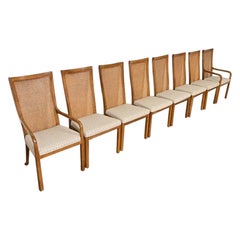
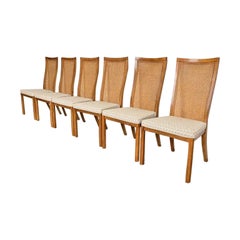
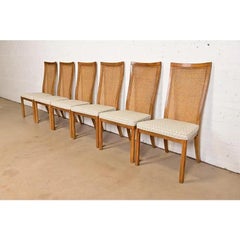
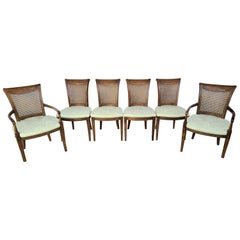
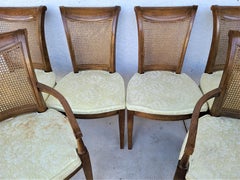
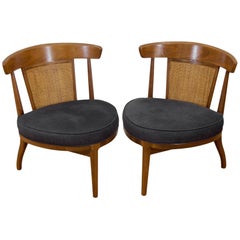
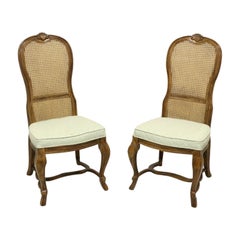
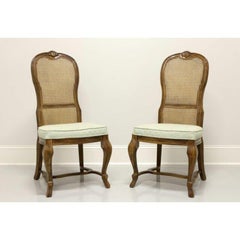
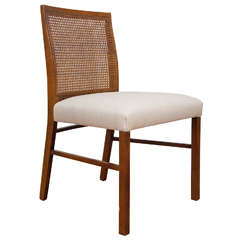
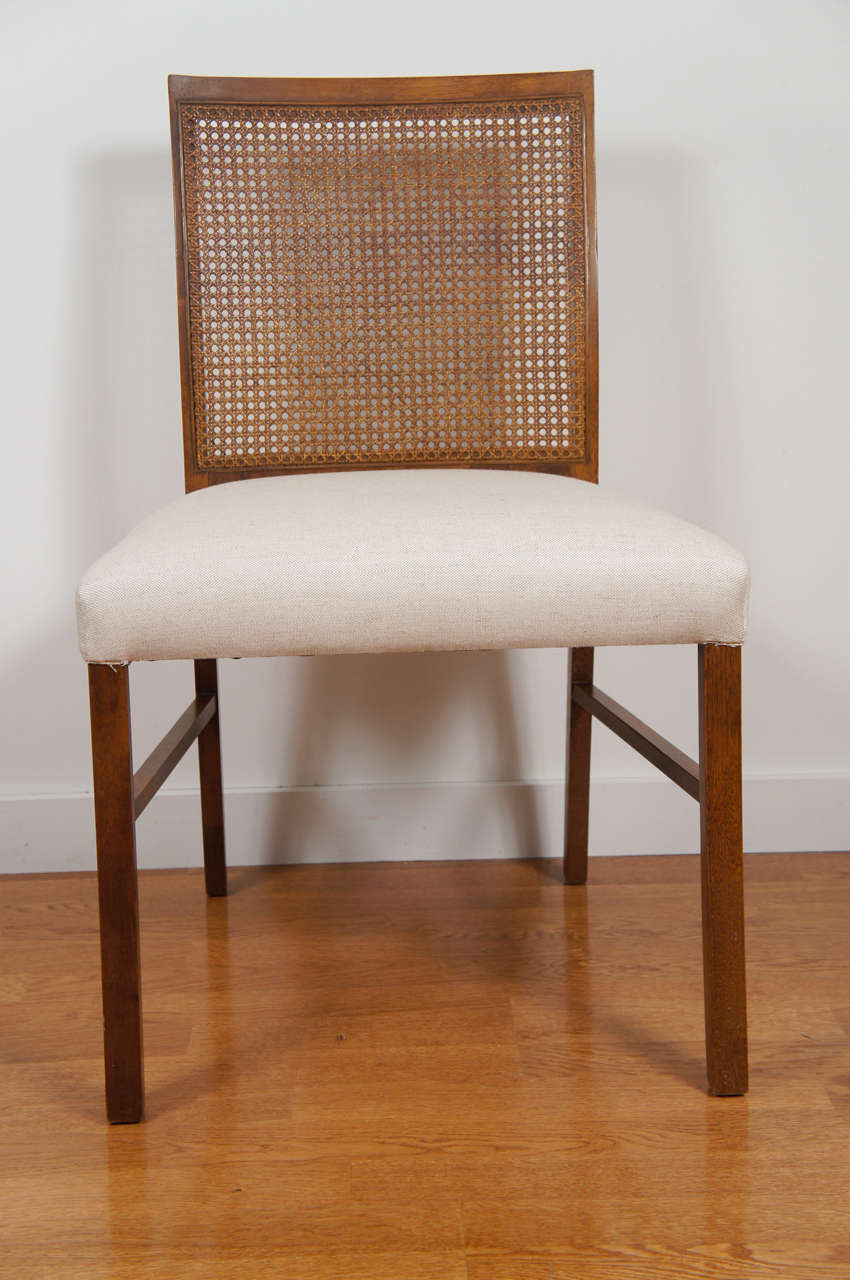
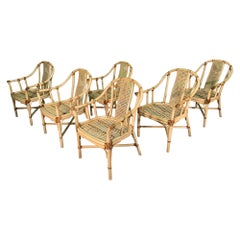
There is a range of drexel heritage cane chairs for sale on 1stDibs. The range of distinct drexel heritage cane chairs — often made from
natural fiber,
cane and
wood — can elevate any home. Drexel heritage cane chairs have been made for many years, and versions that date back to the 20th Century alongside those produced as recently as the 20th Century. Drexel heritage cane chairs are generally popular furniture pieces, but
mid-century modern,
Art Deco and
modern styles are often sought at 1stDibs.
Drexel heritage cane chairs can differ in price owing to various characteristics — the average selling price at 1stDibs is $1,498, while the lowest priced sells for $595 and the highest can go for as much as $3,200.
While vintage Drexel Furniture dining tables, dressers and other pieces remain highly desirable for enthusiasts of mid-century modern design, the manufacturer's story actually begins decades before its celebrated postwar-era Declaration line took shape.
In 1903, in the small town of Drexel in the foothills of North Carolina’s Blue Ridge Mountains, six partners came together to found a company that would become one of the country’s leading furniture producers. The first offerings from Drexel Furniture were simple: a bed, washstand and bureau all crafted from native oak wood, sold as a bedroom suite for $14.50.
One of Drexel’s early innovations was to employ staff designers, something the company initiated in the 1930s. This focus on design, which few other furniture companies were committing to at the time, allowed Drexel to respond to a variety of new and traditional tastes. This included making pieces inspired by historic European furniture, like the popular French Provincial–style Touraine bedroom and dining group that borrowed its curves from Louis XV-era furniture. Others replicated the ornate details of 18th-century chinoiserie or the embellishments of Queen Anne furniture. Always ready to adapt to new customer demands, during World War II, Drexel built a sturdy desk designed especially for General Douglas MacArthur.
In the postwar era, Drexel embraced the clean lines of mid-century modernism with the Declaration collection designed by Stewart MacDougall and Kipp Stewart that featured elegant credenzas and more made in walnut, and the Profile and Projection collections designed with sculptural shapes by John Van Koert. In the 1970s, Drexel introduced high-end furniture in a Mediterranean style.
Drexel changed hands and visions throughout the years. It was managed by one of the original partners — Samuel Huffman — until 1935, at which time his son Robert O. Huffman took over as president. It was then that the company began to expand, with several acquisitions of competitors in the 1950s, including Table Rock Furniture, the Heritage Furniture Co. and more.
With the manufacturer’s success — spurred by its embrace of advertising in home and garden magazines — it opened more factories in both North and South Carolina. By 1957, the company that had started with a factory of 50 workers had 2,300 employees and was selling its furniture nationwide.
Drexel underwent a series of name changes in its long history. Its acquisition of Southern Desk Company in 1960 bolstered its production of institutional furniture for dormitories, classrooms, churches and laboratories.
In the following decades, contracts with government agencies, hotels, schools and hospitals brought its high-quality furniture to a global audience. U.S. Plywood-Champion Papers bought Drexel Enterprises in 1968, and it became Drexel Heritage Furnishings.
In 2014, the last Drexel Heritage plant, in Morganton, North Carolina, closed its doors. The company rebranded as Drexel in 2017.
The vintage Drexel furniture for sale on 1stDibs includes end tables designed by Edward Wormley, walnut side tables designed by Kipp Stewart and lots more.
If the interiors people have been saving on Instagram lately are any indication, we’ll be seeing a lot more antique, new and vintage cane furniture in the years ahead.
Cane — the material of the moment that is inspiring a new generation of designers — has been cropping up everywhere, from sleek armchairs to lounge chairs, side tables and desks.
In case you’re wondering, cane refers to the peeled-off bark of rattan, an Old World species of climbing palm, while wicker may be used to describe natural or synthetic materials that were woven into a pattern. Raffia, another term thrown around when discussing woven furniture, refers to a palm tree native to tropical regions in Africa.
Of course, designers’ obsession with traditional artisanal techniques is nothing new. Marcel Breuer’s tubular Cesca chair, a design originally conceived in the 1920s, has drawn renewed attention in the past few years. And the popularity of materials like raffia and wicker reflects our desire for all things handmade.
Find a wide range of antique, new and vintage cane furniture on 1stDibs.
No matter what your dream dining experience looks like, there is a wide-ranging variety of vintage, new and antique dining room chairs on 1stDibs. Find upholstered dining room chairs, wood dining room chairs and more to outfit any space designated for a good meal, be it in your home or in the great outdoors.
In the early 18th century, most dining room tables and other furniture was designed to look masculine. In America, dining rooms weren’t even much of a concept until the late 1700s, when a space set aside specifically for dining became a part of the construction of homes for the wealthy. Dining room chairs of the era were likely made of walnut or oak. In Europe, neoclassical dining chairs emerged during the 1750s owing to nostalgia for classical antiquity, while the curving chair crests of Queen Anne furniture in the United States preceded the artistically bold seat backs that characterized the Chippendale chairs that followed. If there weren't enough dining chairs at suppertime in the American colonies, men were prioritized and women stood.
In the dining rooms of today, however, there is enough space for everyone to have a seat at the table. Modern styles introduce innovative design choices that play with shape and style. Icons of mid-century modern dining room chairs are plentiful: With its distinctive bentwood back, there is the DCW dining chair by Charles and Ray Eames, while Hans Wegner's timeless classic, the Wishbone chair, remains relevant and elegant decades after its debut. Stefano Giovannoni's White Rabbit dining chairs, in their lovable polyethylene biomorphism, reinvent what dining can look like.
Today's wide range of dining room chairs also means that they can now be styled in different ways, bringing functionality and fun to any sumptuous dining space. No longer do tables have to be accompanied by a matching set of seats. Skillfully mixing and matching colors and designs allows you to showcase your personality without sacrificing the cohesion of a given space.
By furnishing your dining room with cozy chairs — vintage, antique or otherwise — family time can extend far beyond mealtime. The plush upholstery of Victorian-style dining room chairs is perfect for game nights that stretch from dinner to midnight snack. Outdoor tables and dining chairs can also present an excellent opportunity for bonding and eating — what goes better with a delicious meal than fresh air, anyway?
Whether you prefer your chairs streamlined and stackable or ornate and one of a kind, the offerings on 1stDibs will elevate your mealtime and beyond.