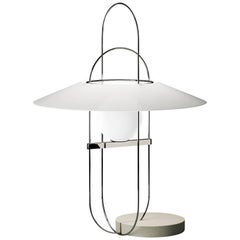
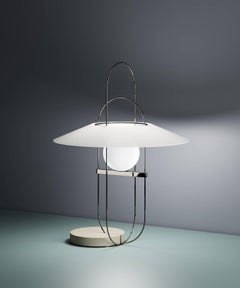
At 1stDibs, there are many versions of the ideal fontana arte setareh for your home. Frequently made of
glass,
metal and
blown glass, every fontana arte setareh was constructed with great care. A fontana arte setareh is a generally popular piece of furniture, but those created in
Modern and
Mid-Century Modern styles are sought with frequency.
Best known for its elegant and innovative vintage lighting fixtures, the Milan-based firm Fontana Arte pioneered one of the key features of 20th-century and contemporary Italian design: the union of artistry and industry wrought by partnerships between creative talents — chiefly architects — and entrepreneurial businesses. Fontana Arte is further distinguished by having had as artistic director, in succession, four of Italy’s most inventive modernist designers: Gio Ponti, Pietro Chiesa, French transplant Max Ingrand and Gae Aulenti.
The bread and butter of the glassmaking company that Luigi Fontana founded in 1881 was plate-glass panels for the construction industry. In 1930, Fontana met Ponti — then the artistic director of the Richard Ginori ceramics workshop and the editor of the influential magazine Domus — at a biannual design exhibition that became the precursor to today’s Milan Design Triennale, and the two hatched an idea for a furniture and housewares firm. Fontana Arte was incorporated in 1932 with Ponti as its chief of design. He contributed several lamps that remain among the company’s signature works, including the orb-atop-cone Bilia table lamp and the 0024 pendant — a stratified hanging sphere.
The following year, Fontana Arte partnered with the influential Milan studio glassmaker and retailer Pietro Chiesa, who took over as artistic director. Chiesa’s designs for lighting — as well as for tables and items including vases and ashtrays — express an appreciation for fluidity and simplicity of line, as seen in works such as his flute-shaped Luminator floor lamp and the 1932 Fontana table — an arched sheet of glass that is held in the permanent collection of the Museum of Modern Art.
Six years after Chiesa’s 1948 death, the École des Beaux Arts–trained Max Ingrand took over as head of design at Fontana Arte. Ingrand brought a similarly expressive formal sensibility to wares such as lamps and mirrors, but he also had a masterful eye for the manipulation of glass surfaces — whether they be cut, frosted, acid-etched or sand-blasted. His classic design is the Fontana table lamp of 1954, which has a truncated cone shade and curved body, both of which are made of pure, chic white-frosted glass.
Following Ingrand, the often-audacious Italian architect Gae Aulenti served as the company’s artistic director from 1979 to 1996, and while she generally insisted that furnishings take second place aesthetically to architecture, she made an exception for Fontana Arte pieces such as the Tavolo con Ruote series of glass coffee and dining tables on wheels, bold lighting pieces such as the Parola series and the Giova, a combination flower vase and table lamp. As a key incubator of modern design under Aulenti’s tenure, Fontana Arte remained true to its long-held commitment — creating objects that have never been less than daring.
Find vintage Fontana Arte lighting fixtures such as pendants, table lamps and more on 1stDibs.
The late 19th and early 20th centuries saw sweeping social change and major scientific advances — both of which contributed to a new aesthetic: modernism. Rejecting the rigidity of Victorian artistic conventions, modernists sought a new means of expression. References to the natural world and ornate classical embellishments gave way to the sleek simplicity of the Machine Age. Architect Philip Johnson characterized the hallmarks of modernism as “machine-like simplicity, smoothness or surface [and] avoidance of ornament.”
Early practitioners of modernist design include the De Stijl (“The Style”) group, founded in the Netherlands in 1917, and the Bauhaus School, founded two years later in Germany.
Followers of both groups produced sleek, spare designs — many of which became icons of daily life in the 20th century. The modernists rejected both natural and historical references and relied primarily on industrial materials such as metal, glass, plywood, and, later, plastics. While Bauhaus principals Marcel Breuer and Ludwig Mies van der Rohe created furniture from mass-produced, chrome-plated steel, American visionaries like Charles and Ray Eames worked in materials as novel as molded plywood and fiberglass. Today, Breuer’s Wassily chair, Mies van der Rohe’s Barcelona chair — crafted with his romantic partner, designer Lilly Reich — and the Eames lounge chair are emblems of progressive design and vintage originals are prized cornerstones of collections.
It’s difficult to overstate the influence that modernism continues to wield over designers and architects — and equally difficult to overstate how revolutionary it was when it first appeared a century ago. But because modernist furniture designs are so simple, they can blend in seamlessly with just about any type of décor. Don’t overlook them.
Antique table lamps became a category of their own once electricity moved light off the wall and onto furniture. The form split quickly: task-driven designs like the Anglepoise on one side, decorative ceramic and glass on the other.
Styles to Know
Base material shapes the light as much as the shade does: ceramic and glass diffuse a softer glow, while brass and metal read more directional. Layer the look with a mid-century modern floor lamp for ambient light, or set a pair on a mid-century modern nightstand for a bedroom.
How to Choose the Right Vintage Table Lamp
Buying individually rather than as a pair allows more flexibility when mixing eras across a room. For those shopping by name rather than by shape, the history of the Anglepoise lamp is worth a read. Each piece comes from a vetted 1stDibs seller, with era, designer and condition detailed, and the 1stDibs Promise stands behind every purchase.