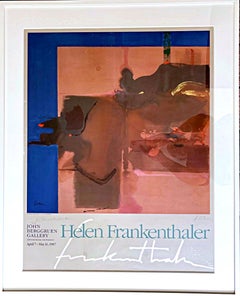
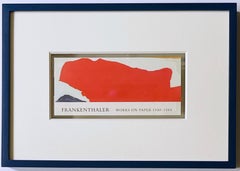
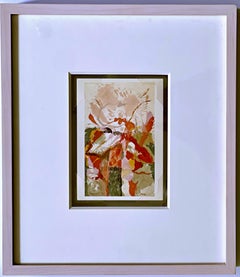
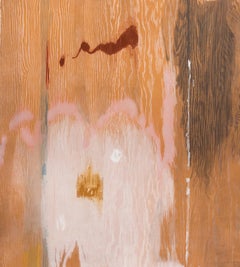
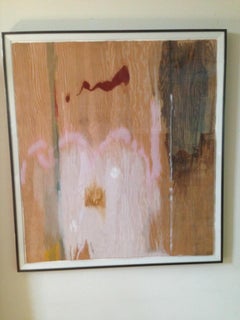
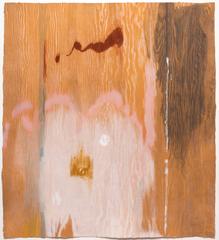
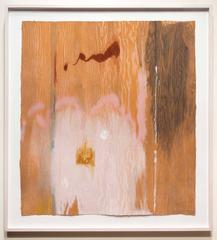
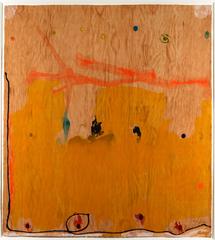
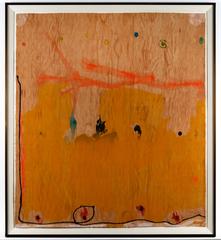
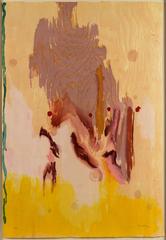
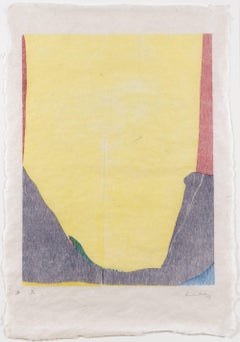
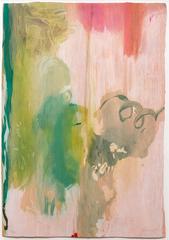
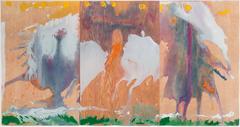
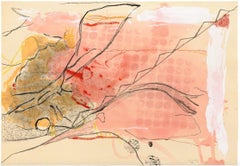
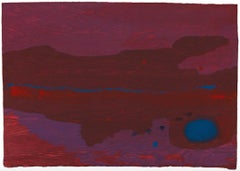
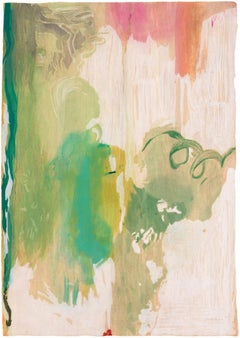
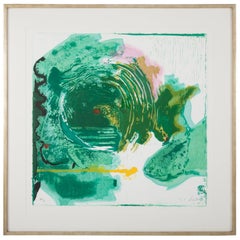
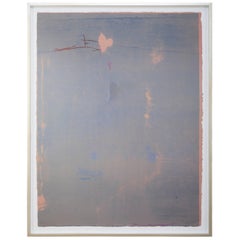
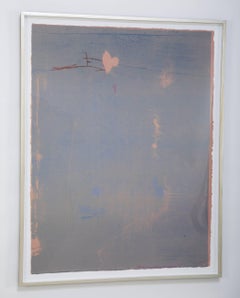
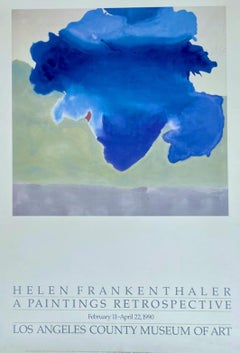
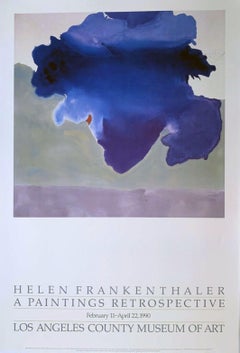
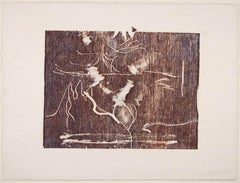
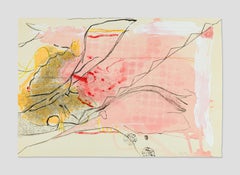
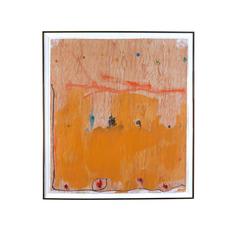
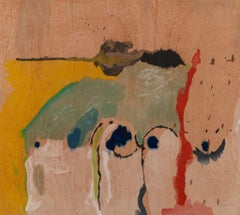
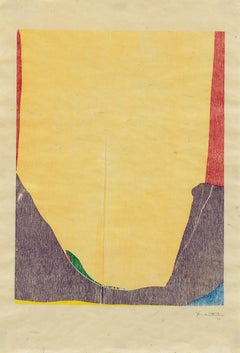
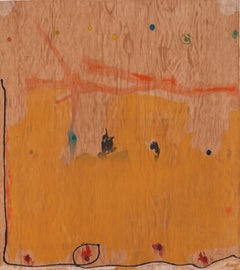
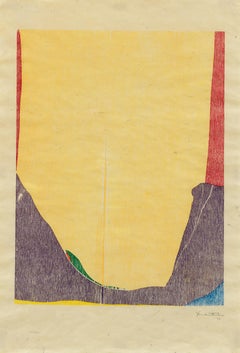
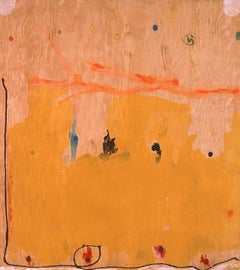
You are likely to find exactly the helen frankenthaler woodcut you’re looking for on 1stDibs, as there is a broad range for sale. Find
Modern versions now, or shop for
Modern creations for a more modern example of these cherished works. If you’re looking for a helen frankenthaler woodcut from a specific time period, our collection is diverse and broad-ranging, and you’ll find at least one that dates back to the 20th Century while another version may have been produced as recently as the 21st Century. If you’re looking to add a helen frankenthaler woodcut to create new energy in an otherwise neutral space in your home, you can find a work on 1stDibs that features elements of
beige,
orange,
blue,
gray and more. Finding an appealing helen frankenthaler woodcut — no matter the origin — is easy, but
Helen Frankenthaler each produced popular versions that are worth a look. These artworks were handmade with extraordinary care, with artists most often working in
woodcut print,
linocut and
handmade paper.
Prolific and pioneering painter Helen Frankenthaler said it was “a combination of impatience, laziness and innovation” that drove her to thin her paints with turpentine so that they would seep into the fabric of an unprimed canvas. Her breakthrough in the early 1950s led the way for a spellbinding new style of painting that would come to be known as Color Field.
Although Color Field is often considered a strain of Abstract Expressionism, Frankenthaler’s work differed from the gestural “Action Painting” that typified the paintings of artists like Willem de Kooning and Lee Krasner. Her vast and immersive expanses of color created at a fearless scale captivated art critics and greatly influenced her peers including Morris Louis and Kenneth Noland.
Frankenthaler knew from an early age that she wanted to be a painter. The youngest daughter of a New York State Supreme Court justice, she grew up on Manhattan’s Park Avenue and as a child delighted in the little ways color and form revealed themselves, whether dribbling red nail polish in a sink full of water or drawing her steps from the Metropolitan Museum of Art to her family’s apartment. As a student at Bennington College, her rare vision was enriched by the mentorship of painter Paul Feeley, who gave her lessons in Cubism. After dabbling in art history at Columbia University, she rented a studio downtown and befriended rising New York art stars like Jackson Pollock and Robert Motherwell, whom she later married.
Characterized by “direct, exuberant gestures,” the Abstract Expressionist technique was all about gusto, and Frankenthaler had it in spades. One of the few women of this era to garner widespread critical acclaim, Frankenthaler had a significant impact on the mid-20th-century art world. She exhibited in the high-profile 1951 Ninth Street Show and, in 1957, she appeared in a Life magazine spread on women artists photographed by Gordon Parks. In 1960, the Jewish Museum held her first major museum show, a retrospective of her 1950s work. A 1969 solo exhibition at the Whitney Museum of American Art further introduced Frankenthaler to the broader art world.
While Frankenthaler remains best known for bold, expressive “soak-stain” paintings such as Mountains and Sea (1952), she worked across diverse media for decades, with forays into woodcutting, drawing and printmaking that also pushed boundaries. She also taught at Harvard, Yale and Princeton, fostering generations of artists. She died in 2011.
Find original Helen Frankenthaler art on 1stDibs.
Decorating with fine art prints — whether they’re figurative prints, abstract prints or another variety — has always been a practical way of bringing a space to life as well as bringing works by an artist you love into your home.
Pursued in the 1960s and ’70s, largely by Pop artists drawn to its associations with mass production, advertising, packaging and seriality, as well as those challenging the primacy of the Abstract Expressionist brushstroke, printmaking was embraced in the 1980s by painters and conceptual artists ranging from David Salle and Elizabeth Murray to Adrian Piper and Sherrie Levine.
Printmaking is the transfer of an image from one surface to another. An artist takes a material like stone, metal, wood or wax, carves, incises, draws or otherwise marks it with an image, inks or paints it and then transfers the image to a piece of paper or other material.
Fine art prints are frequently confused with their more commercial counterparts. After all, our closest connection to the printed image is through mass-produced newspapers, magazines and books, and many people don’t realize that even though prints are editions, they start with an original image created by an artist with the intent of reproducing it in a small batch. Fine art prints are created in strictly limited editions — 20 or 30 or maybe 50 — and are always based on an image created specifically to be made into an edition.
Many people think of revered Dutch artist Rembrandt as a painter but may not know that he was a printmaker as well. His prints have been preserved in time along with the work of other celebrated printmakers such as Pablo Picasso, Salvador Dalí and Andy Warhol. These fine art prints are still highly sought after by collectors.
“It’s another tool in the artist’s toolbox, just like painting or sculpture or anything else that an artist uses in the service of mark making or expressing him- or herself,” says International Fine Print Dealers Association (IFPDA) vice president Betsy Senior, of New York’s Betsy Senior Fine Art, Inc.
Because artist’s editions tend to be more affordable and available than his or her unique works, they’re more accessible and can be a great opportunity to bring a variety of colors, textures and shapes into a space.
For tight corners, select small fine art prints as opposed to the oversized bold piece you’ll hang as a focal point in the dining area. But be careful not to choose something that is too big for your space. And feel free to lean into it if need be — not every work needs picture-hanging hooks. Leaning a larger fine art print against the wall behind a bookcase can add a stylish installation-type dynamic to your living room. (Read more about how to arrange wall art here.)
Find fine art prints for sale on 1stDibs today.