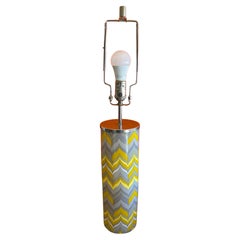
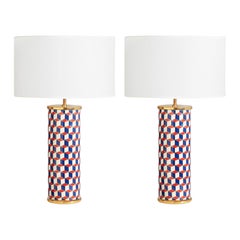
Vintage "Carnaby Table Lamp by Jonathan Adler
By Jonathan Adler
Located in San Diego, CA
A super attractive vintage "Carnaby" table lamp by Jonathan Adler, circa 1990s.
Category
Late 20th Century American Modern Table Lamps
Materials
Metal
Vintage "Carnaby Table Lamp by Jonathan Adler
By Jonathan Adler
Located in San Diego, CA
A super attractive vintage "Carnaby" table lamp by Jonathan Adler, circa 1990s.
Metal
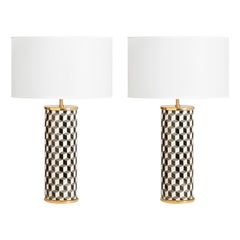
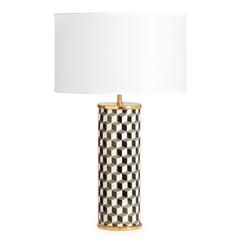
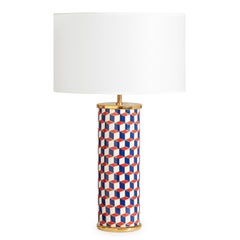
Carnaby Black and Grey Porcelain Table Lamp
By Jonathan Adler
Located in New York, NY
Graphic Pop. A classic cubes pattern in black and grey with gold accents for a spot of sparkle. Our porcelain and polished brass Carnaby Lamp combines a dash of downtown with a touch...
Brass
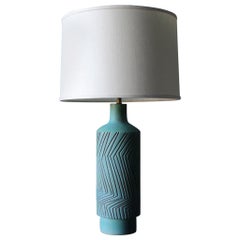
Carnaby Red and Blue Porcelain Table Lamp
By Jonathan Adler
Located in New York, NY
Graphic Pop. A Classic cubes pattern in black and grey or navy and red with gold accents for a spot of sparkle. Our porcelain and polished brass Carnaby Lamp combines a dash of Downt...
Brass
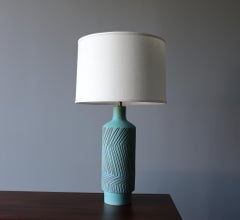
Raymor Ceramic Table Lamp, Italy, c.1960
By Raymor
Located in San Juan Capistrano, CA
Raymor Italian Ceramic Table Lamp, Italy, c.1960. Signed " R 11119 Raymor Italy " to the bottom. Measures: 24.63" to the socket 18.5" to the top of the ceramic 6.13" diameter ...
Ceramic
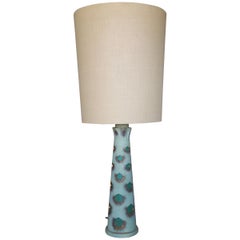
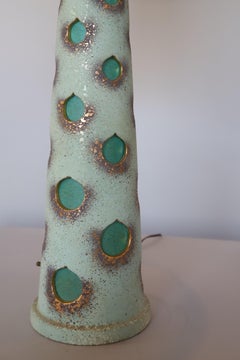
Mid Century Table Lamp by Tye of California
By TYE of California
Located in Oklahoma City, OK
Stunning ceramic table lamp with inner body light for extra glow. Sold with original finial. No shade.
Ceramic
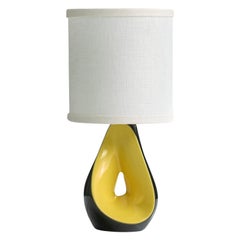
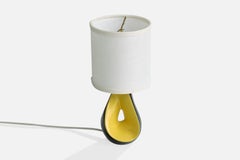
French Designer, Table Lamp, Ceramic, Fabric, France, 1960s
Located in High Point, NC
A black yellow-glazed ceramic and white fabric table lamp designed and produced in France, c. 1960s. Wear consistent with age and use. Dimensions of Lamp with Shade (inches): 10.85...
Ceramic, Fabric
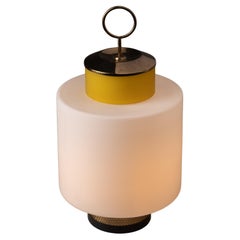
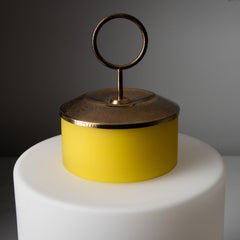
Table Lamp by Stilnovo
By Stilnovo
Located in Los Angeles, CA
table lamps by Stilnovo. Manufactured in Italy, circa 1950s. Lantern style lamps consist of opal glass main diffusers with yellow colored accent glass above. Perforated aged brass bo...
Opal, Brass, Steel
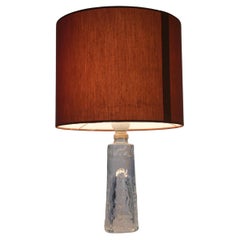
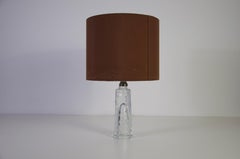
Table Lamp by Tyko Axelsson for Reijlmyre, Sweden, 1960s
Located in Hagenbach, DE
This elegant table lamp, designed by Tyko Axelsson for Reijmyre in Sweden during the 1960s, is a refined example of Scandinavian midcentury design. Combining clean lines with subtle ...
Glass, Fabric
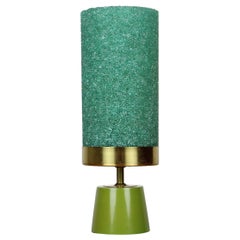
Mid-Century German Table Lamp, 1970's
Located in Praha, CZ
- Made in Germany - Made of plastic - Re-polished - Fully functional - Good, original condition.
Plastic
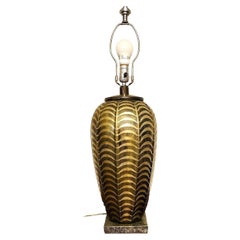
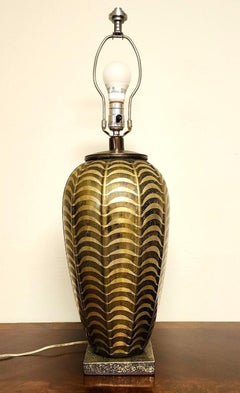
$380Sale Price|20% Off
H 29 in W 9.5 in D 9.5 in
Jay Spectre Dinanderie Table Lamp, Metal, Mid-Century Modern, 1980s
By Jay Spectre
Located in Lake Worth, FL
For FULL item description click on CONTINUE READING at the bottom of this page. Offering One Of Our Recent Palm Beach Estate Fine Lighting Acquisitions Of A 1980s JAY SPECTRE for PA...
Metal
$2,118
H 14.57 in Dm 9.26 in
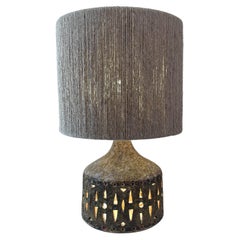
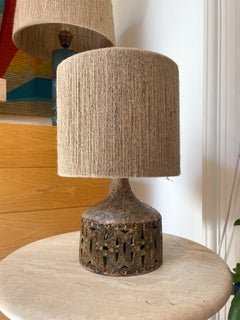
Mid-Century Modern Ceramic Table Lamp in the style of Georges Pelletier, 1960s
By Georges Pelletier
Located in Brussels, BE
Mid-Century Modern ceramic table lamp in the style of Georges Pelletier, 1960s.
Ceramic
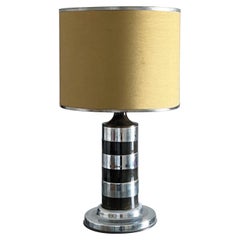
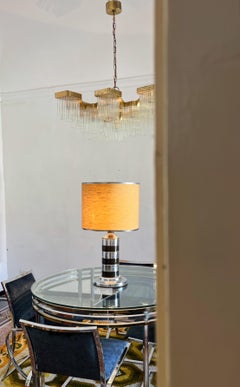
1970s table light designed by Tommaso Barbi
By Tommaso Barbi
Located in Palermo, PA
1970s stunning table lamp crafted by the renowned Italian designer, Tommaso Barbi. Its base, adorned with sleek stripes in chromium and brass. Over the years, the brass has developed...
Metal, Brass, Chrome
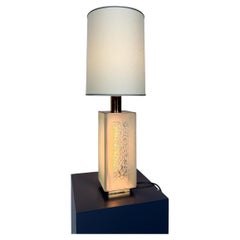
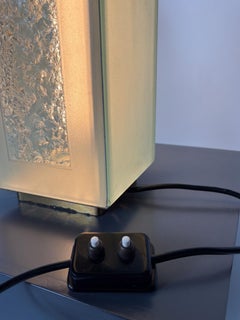
Table Lamp Mod. 2462 by Max Ingrand for Fontana Arte, 1960s
By Max Ingrand
Located in Brussels, BE
Table Lamp Mod. 2462 by Max Ingrand for Fontana Arte, 1960s
Fabric, Glass
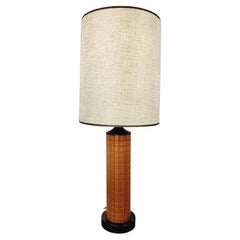
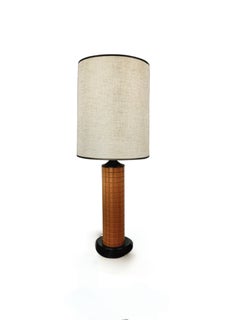
Vintage Modern Geometric Table Lamp with Cylindrical Base
Located in Trenton, NJ
This distinctive vintage table lamp exemplifies the sculptural side of Mid-Century Modern lighting, combining a tall cylindrical body with geometric surface texture and strongly cont...
Wood
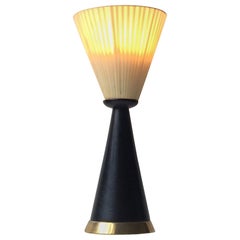
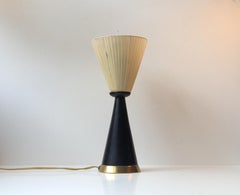
Italian Modern Up-Side-Down Table Lamp, 1960s
Located in Esbjerg, DK
Diablo table light composed of a black lacquered wooden cone, a brass base and an up-side-down fabric wrapped conical shade. It was manufactured in Italy during the 1960s in a style ...
Brass
$2,320Sale Price|48% Off
H 15 in W 7 in D 7 in
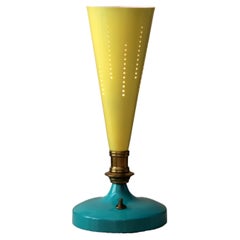
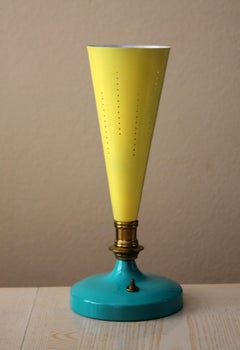
Mid Century Modern Up Light Table Lamp Atomic Italian Design Angelo Lelli 1950
By Angelo Lelii
Located in Peoria, AZ
STUNNING! ITALIAN MID CENTURY STYLE! MID CENTURY MODERN PUNCHED METAL SHADE ACCENT/UP LAMP! AFTER ANGELO LELII CIRCA 1950 (DIMENSIONS: 6.5" wide by Approximately 15" High) Here...
Metal
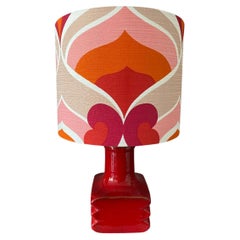
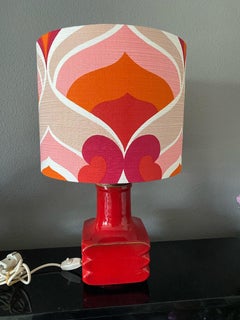
Mid-Century Steuler Table Lamp Facette Designed by Cari Zalloni
By Cari Zalloni, Steuler
Located in Waddinxveen, ZH
Beautiful Facette in glossy red table lamp by Cari Zalloni for Steuler. The lamp is 25 cm high including newly made shade 45 cm high. The lamp shade is newly made with seventies styl...
Ceramic
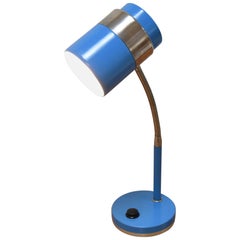
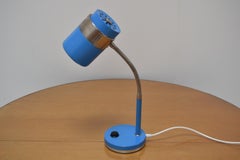
Midcentury Table Lamp, 1970s
Located in Praha, CZ
Made in Czechoslovakia Made of lacquered metal, chrome New cabling 1x E27 or E26 socket Re-polished Fully functional Original condition.
Metal, Chrome
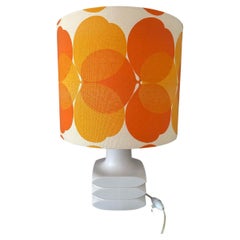
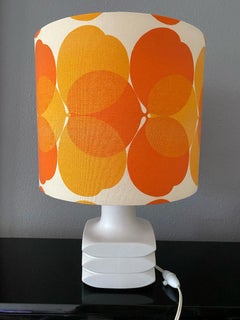
Mid-Century Steuler Table Lamp Facette Designed by Cari Zalloni
By Steuler, Cari Zalloni
Located in Waddinxveen, ZH
Beautiful Facette in white (matte) table lamp by Cari Zalloni for Steuler. The lamp is 25 cm height including newly made shade 45 cm height. The lamp shade is newly made in seventies...
Ceramic
Potter-turned-home-design guru Jonathan Adler is a man with a peripatetic mind, inspired in equal parts, it seems, by classic modern design, Surrealism and pop culture.
Although his namesake company has expanded into a mini empire touching just about every aspect of modern living — chairs and ice buckets, wallpaper and menorahs, chandeliers and rugs — made in myriad materials, Adler still creates almost every object in clay first. His guiding principle is a simple one: “I make the stuff I want to surround myself with, and I surround myself with it.”
Adler grew up in a New Jersey farm town. His grandfather became a local judge, and his father returned home after graduating from the University of Chicago. “My pop was a brilliantly talented artist. At one point, he had to decide whether to become an artist or a —,” he pauses, searching for the right word, “person.” His father became a lawyer but spent all his free time in his studio, “making art, unencumbered by the need to make money from it. It was a totally pure pursuit.” Adler’s mother, who had worked at Vogue and moved to the rural town reluctantly, was also creative, and both parents encouraged their three children’s creativity.
When he was 12, Adler went to sleepaway camp, where he threw his first pot. “And it was on,” he says. His parents bought him a pottery wheel, and he spent the remainder of his adolescence elbow-deep in clay. Even while majoring in semiotics and art history at Brown University, he hung out at the nearby Rhode Island School of Design, making pots.
Adler moved to New York City, worked briefly in entertainment, and in 1993 returned to his true love, throwing pots (in exchange for teaching classes) at a Manhattan studio called Mud Sweat & Tears. One day, at Balducci’s food market, he ran into Bill Sofield, an old friend who had recently cofounded, with Thomas O’Brien, the now-legendary Aero Studios, a design firm and shop. Sofield paid a studio visit and promptly gave him an order. Then, another friend introduced Adler to a buyer at Barneys New York, who also wrote an order.
For about three years after Adler began devoting himself to ceramics full-time. Despite the street cred of both Aero and Barneys, he also wasn’t really making enough money to live on. Then, in 1997, he teamed with Aid to Artisans, a nonprofit aimed at creating economic opportunity for skilled artisans in developing countries, and traveled to Peru to hire potters who could follow his designs, thus increasing production.
Adler’s first store opened in 1998, in the Soho shopping mecca in Manhattan. He now operates about two dozen shops, as far-flung as London and Bangkok. During Adler’s trip to Peru, he connected not only with potters but also with several talented weavers and decided to branch out into textiles. Other categories followed, leading him to travel the world in search of artisans who could execute his endless supply of ideas. In India, Adler found a man who’s expert at beadwork; he has his limed furniture made in Indonesia, his honey-colored wood pieces in Vietnam.
After a friend asked him to decorate her house, Adler expanded to interior design, taking on hotels as well as private residences — projects for which he remains “agnostic,” using pieces by other designers. “I really try to get to know my clients and then make them seem more glamorous and more eccentric than they think,” he says. “I see myself as a slimming mirror for them.”
Find Jonathan Adler seating, case pieces, decorative objects and other furniture on 1stDibs.
The late 19th and early 20th centuries saw sweeping social change and major scientific advances — both of which contributed to a new aesthetic: modernism. Rejecting the rigidity of Victorian artistic conventions, modernists sought a new means of expression. References to the natural world and ornate classical embellishments gave way to the sleek simplicity of the Machine Age. Architect Philip Johnson characterized the hallmarks of modernism as “machine-like simplicity, smoothness or surface [and] avoidance of ornament.”
Early practitioners of modernist design include the De Stijl (“The Style”) group, founded in the Netherlands in 1917, and the Bauhaus School, founded two years later in Germany.
Followers of both groups produced sleek, spare designs — many of which became icons of daily life in the 20th century. The modernists rejected both natural and historical references and relied primarily on industrial materials such as metal, glass, plywood, and, later, plastics. While Bauhaus principals Marcel Breuer and Ludwig Mies van der Rohe created furniture from mass-produced, chrome-plated steel, American visionaries like Charles and Ray Eames worked in materials as novel as molded plywood and fiberglass. Today, Breuer’s Wassily chair, Mies van der Rohe’s Barcelona chair — crafted with his romantic partner, designer Lilly Reich — and the Eames lounge chair are emblems of progressive design and vintage originals are prized cornerstones of collections.
It’s difficult to overstate the influence that modernism continues to wield over designers and architects — and equally difficult to overstate how revolutionary it was when it first appeared a century ago. But because modernist furniture designs are so simple, they can blend in seamlessly with just about any type of décor. Don’t overlook them.
Antique table lamps became a category of their own once electricity moved light off the wall and onto furniture. The form split quickly: task-driven designs like the Anglepoise on one side, decorative ceramic and glass on the other.
Styles to Know
Base material shapes the light as much as the shade does: ceramic and glass diffuse a softer glow, while brass and metal read more directional. Layer the look with a mid-century modern floor lamp for ambient light, or set a pair on a mid-century modern nightstand for a bedroom.
How to Choose the Right Vintage Table Lamp
Buying individually rather than as a pair allows more flexibility when mixing eras across a room. For those shopping by name rather than by shape, the history of the Anglepoise lamp is worth a read. Each piece comes from a vetted 1stDibs seller, with era, designer and condition detailed, and the 1stDibs Promise stands behind every purchase.