Maki E

to
3
91
40
111
56
42
34
31
21
14
11
10
8
7
6
6
5
5
5
3
3
3
2
2
2
1
1
1
1
1
1
1
1
1
1
2
1
1
1
1
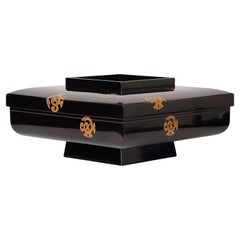
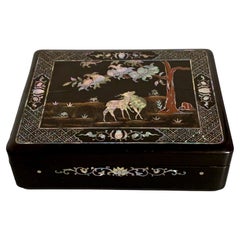
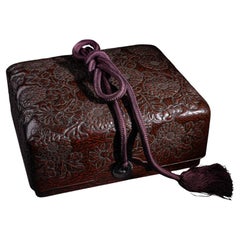
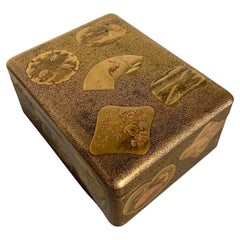
XIX Century Japanese Lacquered Wooden Box, Chinoiserie Style, 1880

XIX Century Japanese Lacquered Wooden Box, Chinoiserie Style, 1880

Located in Roma, IT

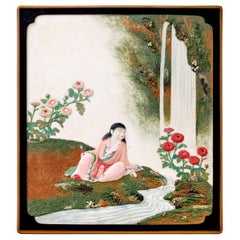
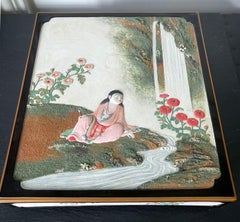
The technique is reminiscent of Japanese maki-e (‘sprinkled painting’), where metallic powders and pigments are applied to the lacquer whilst it is still wet.

Category

Antique Late 19th Century Japanese Chinoiserie Decorative Boxes

Materials

Wood

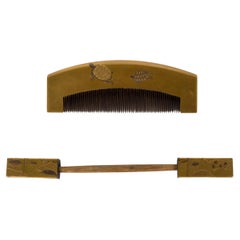
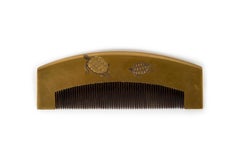
A comb and hairpin in gold lacquer decorated with two swimming turtles

A comb and hairpin in gold lacquer decorated with two swimming turtles

Located in PARIS, FR

Elegant gold-lacquered wooden comb and hairpin decorated in maki-e with landscapes and animals. The comb is decorated on one side with pavilions in a landscape and on the other side ...

Category

Antique Late 19th Century Japanese Meiji Furniture

Materials

Gold Leaf

Set of Edo Period Samurai Armor Box Covers (Yoroi Bitsu Covers) with Gold Family

Set of Edo Period Samurai Armor Box Covers (Yoroi Bitsu Covers) with Gold Family

Located in Fukuoka, JP

Set of Edo Period Samurai Armor Box Covers (Yoroi Bitsu Covers) with Gold Family Crests Japan, 18th century (Edo period) Dimensions: Approx. 40 × 40 cm, H 53 cm An extremely rare se...

Category

Antique 18th Century Japanese Edo Arms, Armor and Weapons

Materials

Leather

Uniquely Shaped Lacquer Box with Tachibana Clan Crests – 19th Century

Uniquely Shaped Lacquer Box with Tachibana Clan Crests – 19th Century

Located in Fukuoka, JP

• Origin: Japan • Period: Late Edo – Meiji period, 19th century • Material: Lacquered wood with gold maki-e clan crests • Dimensions: 31.5 × 31.5 cm (12.5 × 12.5 in); Height: 15...

Category

Antique 19th Century Japanese Edo Lacquer

Materials

Wood, Lacquer

Korean Lacquer and Mother of Pearl Inlay "Longevity" Box, 1930s, Korea

Korean Lacquer and Mother of Pearl Inlay "Longevity" Box, 1930s, Korea

Located in Austin, TX

There is a strong Japanese influence to the box, with the use of gold maki-e lacquer for the ground, and orangish red negoro lacquer for the tree.

Category

Vintage 1930s Korean Showa Lacquer

Materials

Wood, Lacquer, Abalone

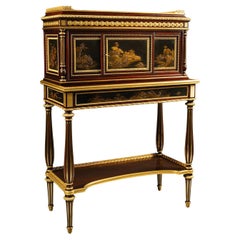
Japanese Lacquer Mounted Bonheur du Jour, By Henry Dasson

Japanese Lacquer Mounted Bonheur du Jour, By Henry Dasson

By Henry Dasson

Located in Brighton, West Sussex

The upper structure faced with three lacquer panels to the front and one to each side. The raised and gilt maki-e lacquer depicting temples and lakeside rock gardens.

Category

Antique 19th Century French Louis XVI Cabinets

Materials

Ormolu

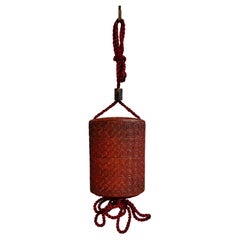
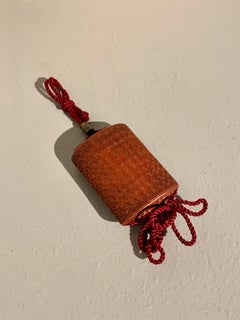
Japanese Carved Cinnabar Lacquer Inro, Meiji Period, late 19th c, Japan

Japanese Carved Cinnabar Lacquer Inro, Meiji Period, late 19th c, Japan

Located in Austin, TX

The interior compartments of the case with a maki-e lacquer nashiji ground for the risers, vermillion red lacquer for the compartment interiors, and a gold lacquer ground, fudame, fo...

Category

Antique Late 19th Century Japanese Meiji Lacquer

Materials

Silver, Copper

Meiji Natural Wood and Black Lacquer Autumn Grass Suzuribako

Meiji Natural Wood and Black Lacquer Autumn Grass Suzuribako

Located in Taichung, TW

Rather than relying on heavy, opulent gold maki-e, the artisan chose a highly understated approach, utilizing subtle black lacquer to depict delicate autumn grasses, wild chrysanthem...

Category

Antique 19th Century Japanese Lacquer

Materials

Wood, Lacquer

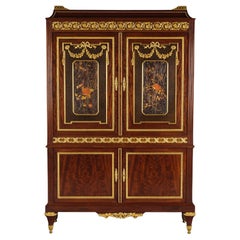
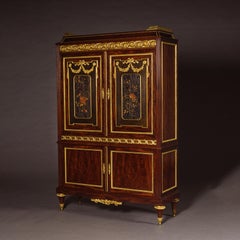
A Louis XVI Style Lacquer Mounted Mahogany Cabinet by Paul Sormani

A Louis XVI Style Lacquer Mounted Mahogany Cabinet by Paul Sormani

By Paul Sormani

Located in Brighton, West Sussex

The rectangular top with three-quarter gallery above a cavetto pediment and foliate entrelac frieze, with a pair of panelled cupboard doors below hung with ribbon tied floral swags, ...

Category

Antique 19th Century French Louis XVI Cabinets

Materials

Bronze

Rare Japanese Lacquer Writing Box Suzuribako Meiji Period

Rare Japanese Lacquer Writing Box Suzuribako Meiji Period

Located in Atlanta, GA

It is a rather non-conventional material to be used with Maki-e on lacquer box. Under the lid, one finds bundles of peonies and oxalis, fully blooming in red, pinks and white, anchor...

Category

Antique 19th Century Japanese Japonisme Lacquer

Materials

Lacquer

Showa Tsuishu Carved Red Lacquer Suzuribako by Okabe Keisho

Showa Tsuishu Carved Red Lacquer Suzuribako by Okabe Keisho

Located in Taichung, TW

Unlike the flat, sprinkled gold techniques of maki-e, this carved lacquerware emphasizes the sheer physical thickness of the material and the sculptural prowess of the artisan, resul...

Category

20th Century Japanese Lacquer

Materials

Wood, Lacquer

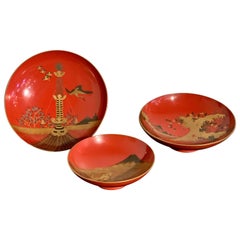
Japanese writting set in waqasa lacquer including bundai ryoshibako and fudebako

Japanese writting set in waqasa lacquer including bundai ryoshibako and fudebako

Located in PARIS, FR

This technique derives from togidashi maki-e and is characterized by the creation of patterns in eggshells, seashells or pine needles.
Category

Early 20th Century Japanese Taisho Lacquer

Materials

Lacquer

Pair of Bonheur Du Jours With Lacquer Panels, by Henry Dasson

Pair of Bonheur Du Jours With Lacquer Panels, by Henry Dasson

By Henry Dasson

Located in Brighton, West Sussex

Aventurine lacquer work or Nashi-ji is a form of Japanese maki-e that is frequently employed as a background to gold or black Japanned decorative elements.
Category

Antique 19th Century French Louis XVI Cabinets

Materials

Marble, Ormolu

Japanese Lacquered and Gilt Wood Buddhism Statue from Edo Period

Japanese Lacquered and Gilt Wood Buddhism Statue from Edo Period

Located in Atlanta, GA

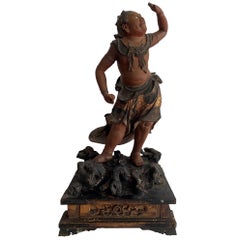
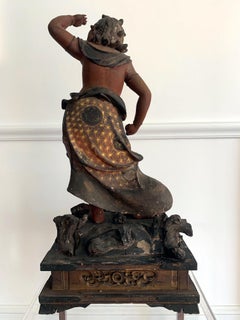
He wear five knots of hairdo on his head and a bellowing robe (kesa) with splendid designs in Maki-e lacquer. The tributes in his hands are now missing.
Category

Antique 17th Century Japanese Japonisme Sculptures and Carvings

Materials

Metal

Antique Edo Shibayama Inlay Crest Suzuribako

Antique Edo Shibayama Inlay Crest Suzuribako

Located in Taichung, TW

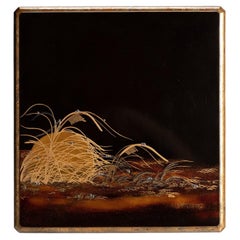
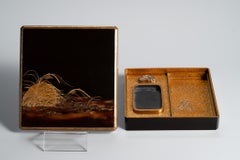
The exterior presents a serene, minimalist composition of autumn reeds in the evening glow, rendered in delicate gold maki-e against a profound black lacquer ground to evoke a quiet ...

Category

Antique 19th Century Japanese Lacquer

Materials

Wood, Urushi lacquer

Large Edo Period Kamakura-bori Lacquer Box with Chrysanthemum by Chen Wu

Large Edo Period Kamakura-bori Lacquer Box with Chrysanthemum by Chen Wu

Located in Taichung, TW

Designer's Note: Masculine Elegance: Unlike the delicate, smooth surface of Maki-e, Kamakura-bori is characterized by its bold, tactile wood-carving marks.

Category

Antique 19th Century Japanese Lacquer

Materials

Wood, Lacquer

Wakasa-Nuri Lacquer Bundai, Ryoshobako, Fubako Set

Wakasa-Nuri Lacquer Bundai, Ryoshobako, Fubako Set

Located in PARIS, FR

This technique derives from togidashi maki-e and is characterized by the creation of patterns in eggshells, seashells or pine needles.

Category

Early 20th Century Japanese Lacquer

Materials

Lacquer

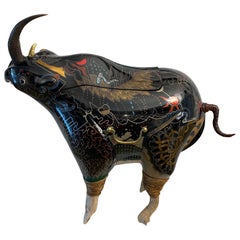
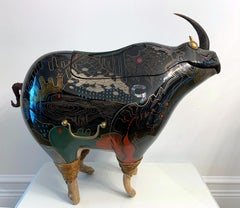
Rhino Contemporary Japanese Lacquer Art by Someya Satoshi

Rhino Contemporary Japanese Lacquer Art by Someya Satoshi

Located in Atlanta, GA

Found objects were equally treated as part of the meticulous designs as the elaborate Maki-e and shell inlays. According to the press of Honolulu Museum of Art: "Someya Satoshi has ...

Category

Early 2000s Japanese Japonisme Lacquer

Materials

Rope, Wood, Lacquer

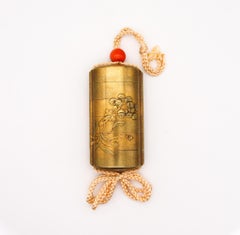
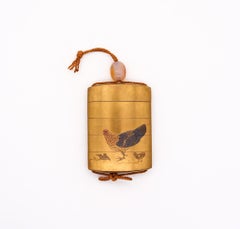
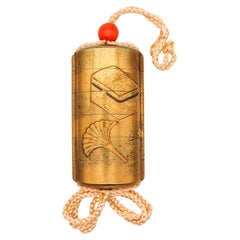
Japan 1800 Edo Period Six Drawer Inro In Lacquered Gilt Wood With Utensils

Japan 1800 Edo Period Six Drawer Inro In Lacquered Gilt Wood With Utensils

Located in Miami, FL

It was carefully crafted in carved precious wood with applications of gilding maki-e and decorated with Japonism patterns. All dan trays are attached together with a himo cord.

Category

Antique Early 1800s Japanese Edo Lacquer

Materials

Coral

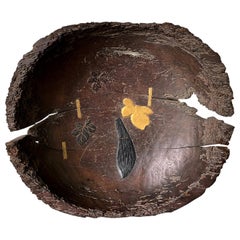
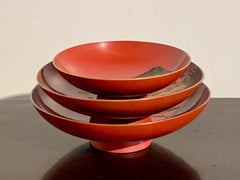
Antique Japanese Lacquered Wood Wabi-Sabi Bowl

Antique Japanese Lacquered Wood Wabi-Sabi Bowl

Located in Atlanta, GA

In contrast to the organic essence of the material, the artist painstakingly put his human touch by creating a poetic inlaid image of an eggplant vine decorated with lacquer, gold Ma...

Category

Antique 19th Century Japanese Japonisme Lacquer

Materials

Wood

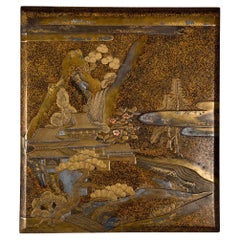
Suzuribako or writing box made of nashiji lacquer and adorned with a landscape

Suzuribako or writing box made of nashiji lacquer and adorned with a landscape

Located in PARIS, FR

Suzuribako, or writing box, of rectangular shape, decorated with an imposing architecture realized in hira maki-e lacquer, probably a palatial structure, situated beside a waterfall...

Category

Antique Late 18th Century Japanese Edo Lacquer

Materials

Gold Leaf

Large Japanese Lacquer Document Box, Ryoshibako, Edo/Meiji period, Japan

Large Japanese Lacquer Document Box, Ryoshibako, Edo/Meiji period, Japan

Located in Austin, TX

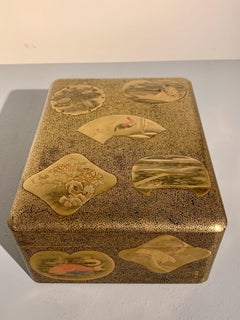
The uchiwa shaped reserves all of takamaki-e, and exquisitely painted with designs of animals, flowers, and landscapes in silver, gold, maki-e, hiramaki-e, and takamaki-e, with kirik...

Category

Antique 1860s Japanese Meiji Lacquer

Materials

Softwood, Lacquer

A Wooden Carved and Lacquered Nestuke in the form of traditionnal drum

A Wooden Carved and Lacquered Nestuke in the form of traditionnal drum

Located in PARIS, FR

Manju netsuke in lacquer and maki-e on a grey-blue ground, shaped as a traditional taiko drum and decorated with foliage.

Category

Antique Early 19th Century Japanese Edo Sculptures and Carvings

Materials

Boxwood

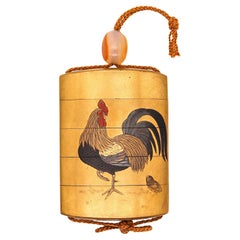
Japan 1810 Kajikawa Edo Period Five Drawer Inro Lacquered Gilt Wood With Rooster

Japan 1810 Kajikawa Edo Period Five Drawer Inro Lacquered Gilt Wood With Rooster

Located in Miami, FL

Has been carefully crafted in carved precious wood with applications of gilding maki-e and decorated with Japonism patterns. All dan trays are attached together with a himo cord.

Category

Antique 1810s Japanese Edo Lacquer

Materials

Agate, Gold

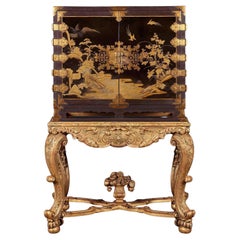
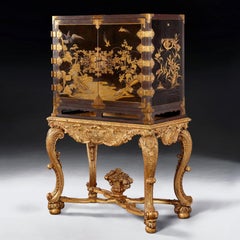
17th Century Japanese Lacquer Cabinet On French Giltwood Regence Stand

17th Century Japanese Lacquer Cabinet On French Giltwood Regence Stand

Located in Benington, Herts

The lacquer work on the cabinet, executed in a variety of techniques including Maki-e, is exquisite and survives in amazing condition.

Category

Antique 17th Century Japanese Edo Cabinets

Materials

Giltwood, Lacquer

Suzuribako or writting box circular shape in nashiji and gold lacquer

Suzuribako or writting box circular shape in nashiji and gold lacquer

Located in PARIS, FR

Suzuribako (writing box) in black lacquer, rectangular in shape, with a gold lacquer (maki-e) decoration of a pavilion by the edge of a waterfall and a mountain river surrounded by v...

Category

Antique Late 18th Century Japanese Edo Lacquer

Materials

Gold Leaf

  • 1
Get Updated with New Arrivals
Save "Maki E", and we’ll notify you when there are new listings in this category.

Maki E For Sale on 1stDibs

With a vast inventory of beautiful furniture at 1stDibs, we’ve got just the maki e you’re looking for. Each maki e for sale was constructed with extraordinary care, often using lacquer, wood and fabric. If you’re shopping for a maki e, we have 48 options in-stock, while there are 16 modern editions to choose from as well. Whether you’re looking for an older or newer maki e, there are earlier versions available from the 18th Century and newer variations made as recently as the 21st Century. A maki e made by Modern designers — as well as those associated with Mid-Century Modern — is very popular. You’ll likely find more than one maki e that is appealing in its simplicity, but Haku Maki, Maki Yamamoto and Foscarini produced versions that are worth a look.

How Much is a Maki E?

Prices for a maki e can differ depending upon size, time period and other attributes — at 1stDibs, they begin at $85 and can go as high as $169,877, while the average can fetch as much as $2,350.

Finding the Right Asian-art-furniture for You

From Japanese handmade earthenware pottery, originating circa 14,500 B.C. and adorned with elaborate corded patterns known as jōmon, to natural elm case pieces and storage cabinets built in Qing dynasty–era China to mid-century Thai rice-paper charcoal rubbings, antique and vintage Asian art and furniture make for wonderful additions to all kinds of contemporary interiors.

Eastern elements elevate any home’s decor. Introduce zen sensibility to your living room, dining room and bedroom with the neutral color palettes and the natural materials such as rattan, bamboo and elm that we typically associate with traditional Asian furniture. Decorative handwoven embroideries and textiles originating from India and elsewhere on the continent, which can be draped over a bed or sofa or used as a wall hanging, can be as practical as they are functional, just as you wouldn’t seek out Japanese room-divider screens — often decorated with paintings but constructed to be lightweight and mobile — merely for privacy.

With everything from blanket chests to lighting fixtures to sculptures and carvings, it’s easy to tastefully bring serenity to your living space by looking to the treasures for which the East has long been known.

For British-born furniture designer Andrianna Shamaris, the Japanese concept of beauty in imperfection isn’t limited to her Wabi Sabi collection. She embraces it in her New York City apartment as well. In the living area, for instance, she retained the fireplace’s original black marble while swathing its frame and the rest of the room in bright white.

“We left the fireplace very clean and wabi-sabi, so that it blended into the wall,” says Shamaris, who further appointed the space with a hand-carved antique daybed whose plush pillows are upholstered in antique textiles from the Indonesian island of Sumba.

In the growing antique and vintage Asian art and furniture collection on 1stDibs, find ceramics from China, antiquities from Cambodia and a vast range of tables, seating, dining chairs and other items from Japan, India and other countries.