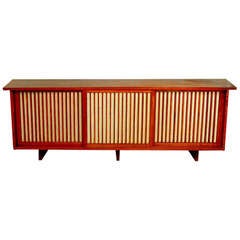
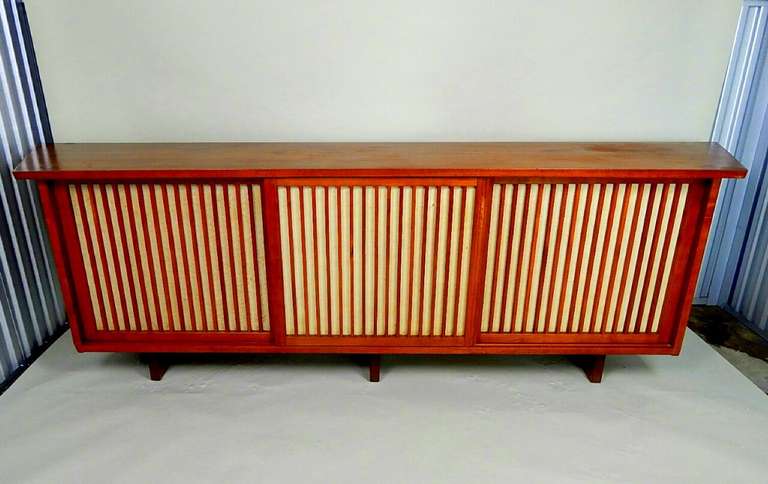
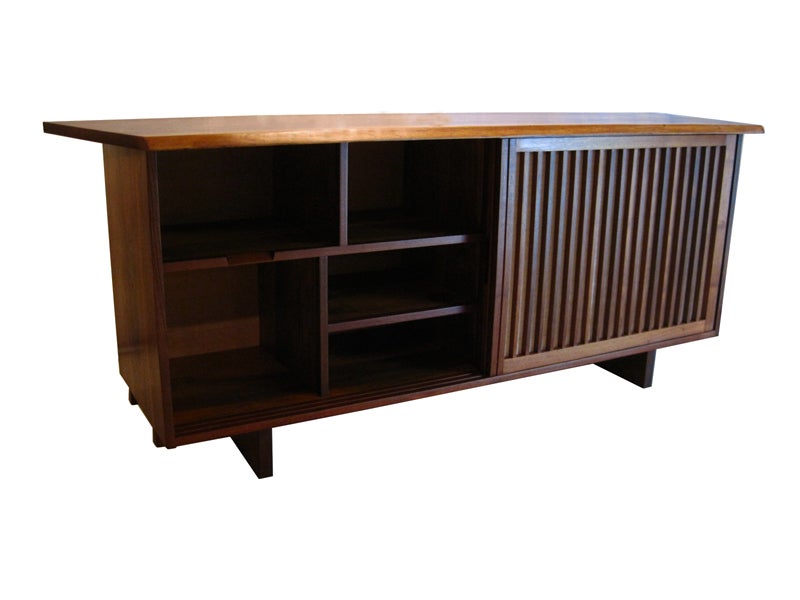
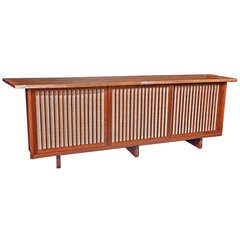
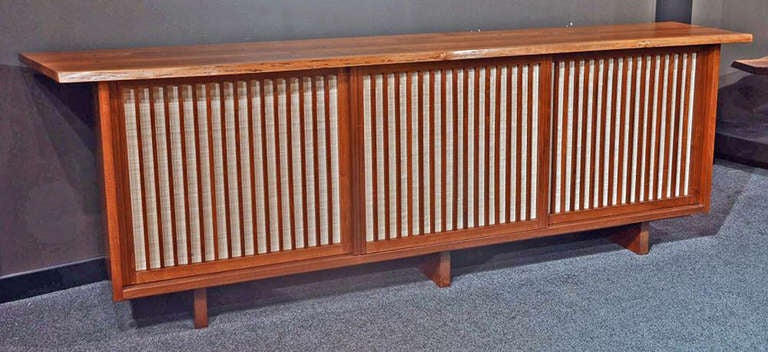
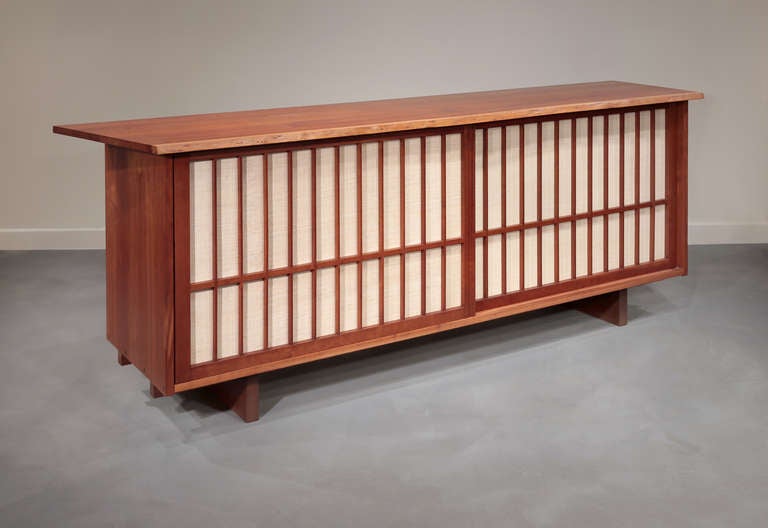
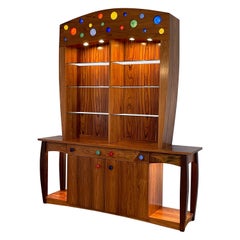
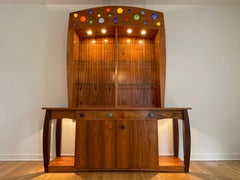
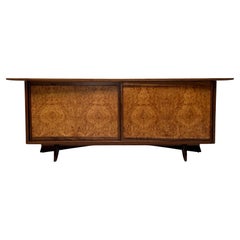
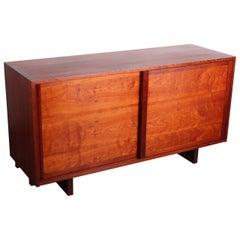
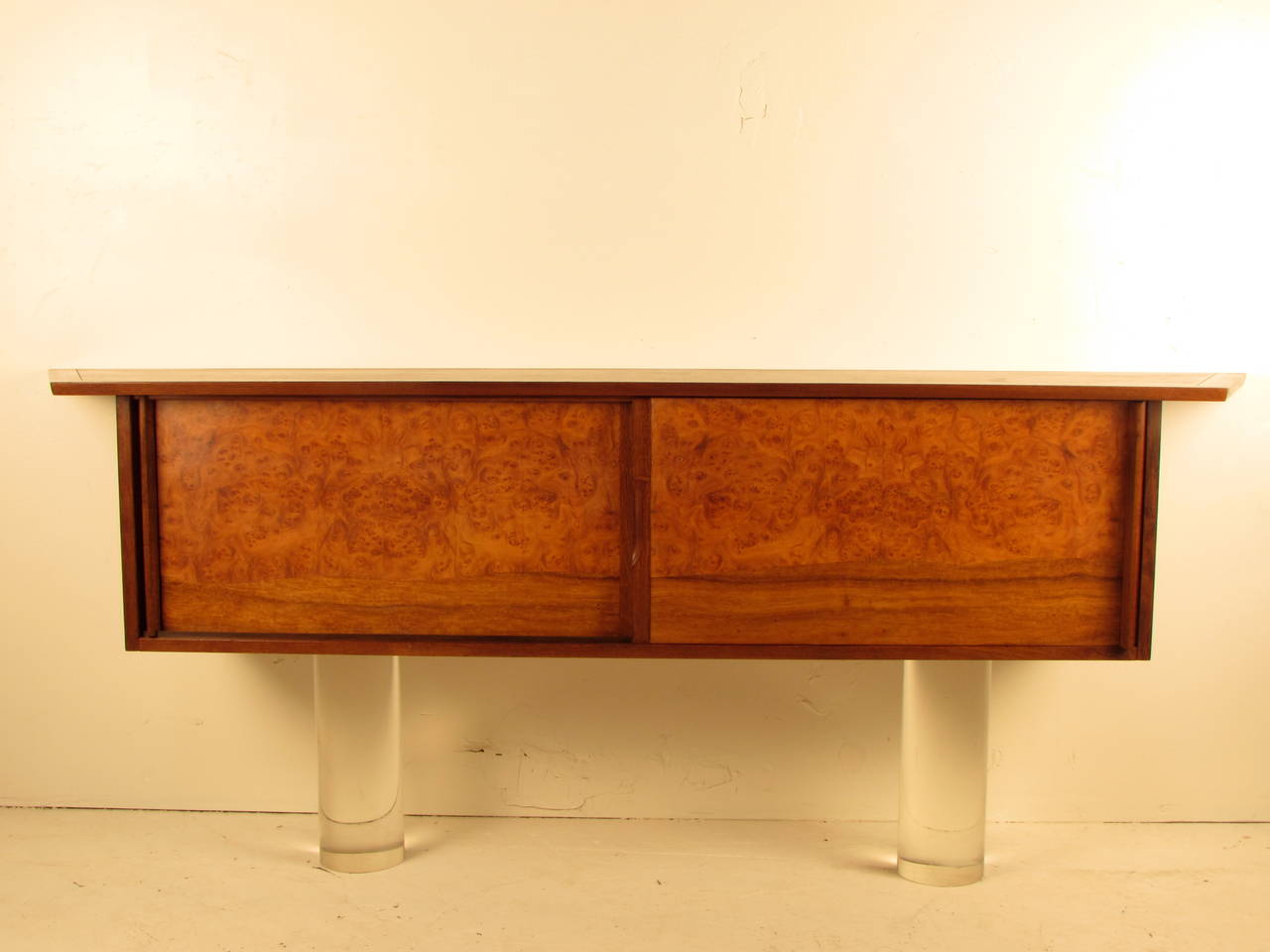
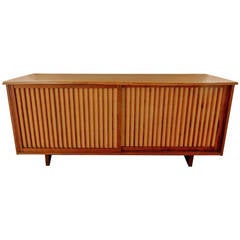
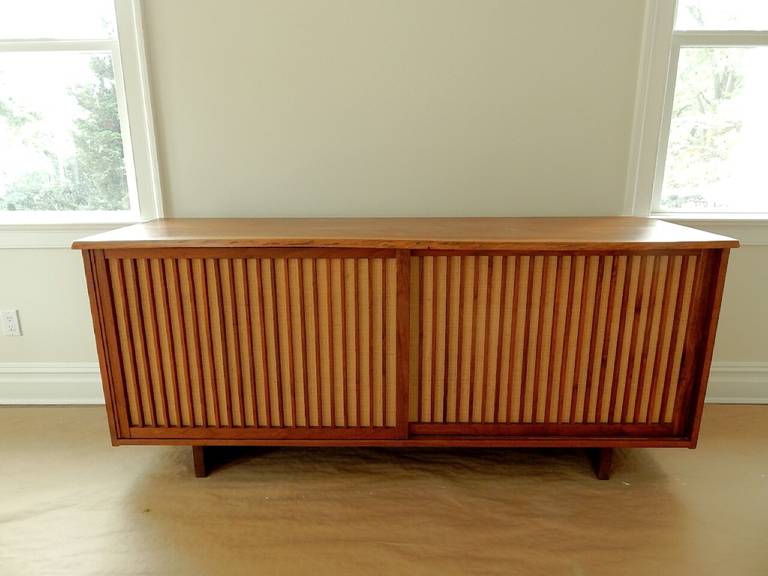
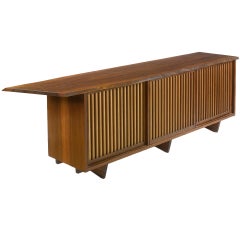
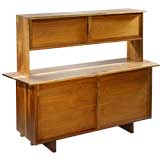
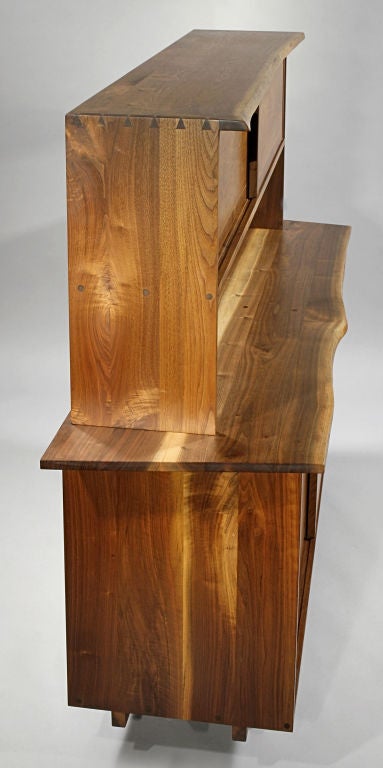
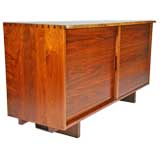
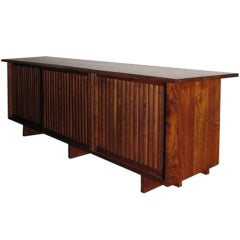
A master woodworker and M.I.T.-trained architect, George Nakashima was the leading light of the American Studio furniture movement. Along with Wharton Esherick, Sam Maloof and Wendell Castle, Nakashima was an artisan who disdained industrial methods and materials in favor of a personal, craft-based approach to the design of chairs, coffee tables and other pieces. What sets Nakashima apart is the poetic style of his work, his reverence for wood and the belief that his furniture could evince — as he put it in the title of his 1981 memoir — The Soul of a Tree.
Born in Spokane, Washington, to Japanese immigrants, Nakashima traveled widely after college, working and studying in Paris, Japan and India, and at every stop he absorbed both modernist and traditional design influences.
The turning point in Nakashima’s career development came in the United States in 1942, when he was placed in an internment camp for Asian-Americans in Idaho. There, Nakashima met a master woodcarver who tutored him in Japanese crafting techniques. A former employer won Nakashima’s release and brought him to bucolic New Hope, Pennsylvania, where Nakashima set up a studio and worked for the rest of his life. (Master craftsperson Mira Nakashima keeps her father’s legacy alive at the George Nakashima Studio in New Hope today. She has been the artistic director of George Nakashima Woodworkers since her father's death, in 1990.)
Nakashima’s singular aesthetic is best captured in his custom-made tables and benches — pieces that show off the grain, burls and whorls in a plank of wood. He left the “free edge,” or natural contour, of the slab un-planed, and reinforced fissures in the wood with “butterfly” joints.
Almost all Nakashima seating pieces have smooth, milled edges. Nakashima also contracted with large-scale manufacturers to produce carefully supervised editions of his designs. Knoll has offered his Straight chair — a modern take on the spindle-backed Windsor chair — since 1946; the now-defunct firm Widdicomb-Mueller, the result of a merger between Widdicomb and Mueller Furniture, issued the Shaker-inspired Origins collection in the 1950s.
Nelson Rockefeller in 1973 gave Nakashima his single largest commission: a 200-piece suite for his suburban New York estate. Today, Nakashima furniture is collected by both the staid and the fashionable: his work sits in the collections of the Philadelphia Museum of Art, New York’s Metropolitan Museum of Art and the Smithsonian Institution, as well as in the homes of Steven Spielberg, Brad Pitt, Diane von Furstenberg and the late Steve Jobs.
Find vintage George Nakashima furniture for sale on 1stDibs.
For get-togethers or large celebratory meals in your already sumptuous dining area, a charming and durable vintage, new or antique buffet, with its decorative and practical features, can truly elevate the experience.
Although often used as a synonym for “sideboard,” a buffet technically possesses a tiered or shelved superstructure for displaying decorative kitchenware. The term derives from buffet à deux corps, a piece that is seen mostly in French Provincial furniture. And while the terms “case pieces” and “case goods” may cause even the most decor-obsessed to stumble, these furnishings — which include buffets, credenzas, cupboards and other must-have items — have been a vital part of the home for centuries.
Buffets are the ideal place to keep serveware and larger serving pieces that you’d rather have tucked away when not in use. They’re typically long and low and can be the perfect option for serving food as well as storing your porcelain and making your space tidy and organized. Feel free to dress up your buffet between meals with decorative objects or stacks of art books.
A buffet can be positioned in your living room, entryway or hall if space allows. But if you intend to permanently pair your case piece with your dining room table, when shopping for your vintage buffet you’ll definitely want to think about your dining room’s space restrictions. Allow for at least two feet of space between your buffet and your table so that guests can easily move to and fro as needed, and a buffet that is convenient for serving food should be as high as a kitchen counter if possible.
If you’re looking for inspiration for your home bar or dining area, find Art Deco buffets, mid-century modern buffets, Hollywood Regency buffets and other varieties on 1stDibs today.