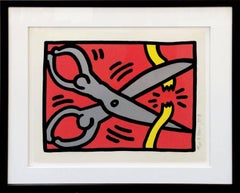
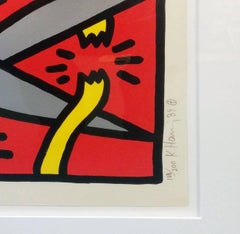
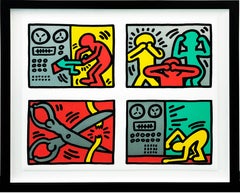
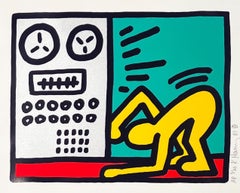
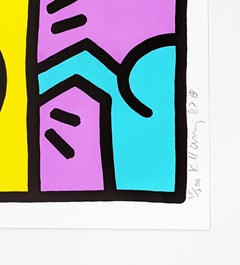
Surely you’ll find the exact pop shop iii you’re seeking on 1stDibs — we’ve got a vast assortment for sale. You can easily find an example made in the
contemporary style, while we also have 3
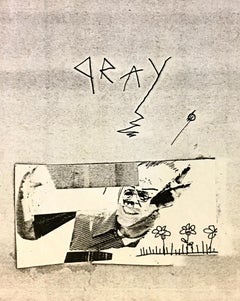
contemporary versions to choose from as well. Making the right choice when shopping for a pop shop iii may mean carefully reviewing examples of this item dating from different eras — you can find an early iteration of this piece from the 20th Century and a newer version made as recently as the 21st Century. If you’re looking to add a pop shop iii to create new energy in an otherwise neutral space in your home, you can find a work on 1stDibs that features elements of
gray,
black,
beige,
brown and more. Creating a pop shop iii has been a part of the legacy of many artists, but those crafted by
Irena Orlov and
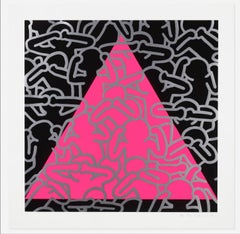
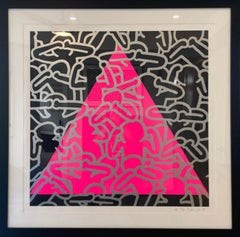
Keith Haring are consistently popular. Frequently made by artists working in
paint,
acrylic paint and
paper, these artworks are unique and have attracted attention over the years. A large pop shop iii can be an attractive addition to some spaces, while smaller examples are available — approximately spanning 13.5 high and 11 wide — and may be better suited to a more modest living area.
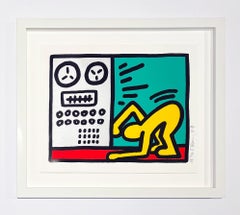
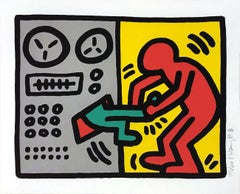
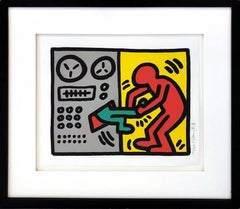
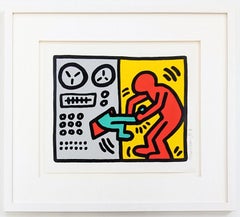
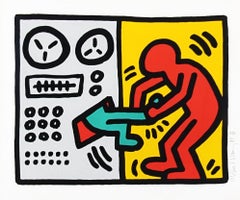
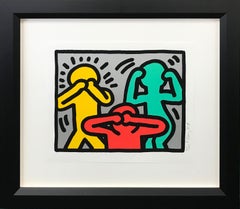
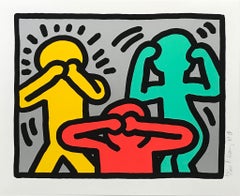
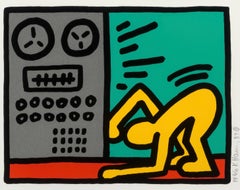
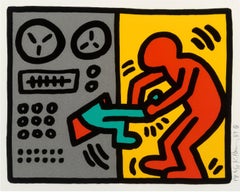
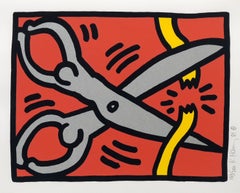
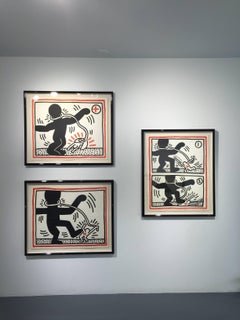
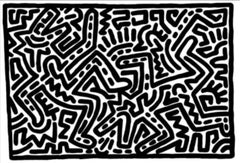
Keith Haring began experimenting with his bold, graphic lines and cartoon-inspired figures on the walls of New York City subway stations in the early 1980s. He called them his “laboratory,” places to develop a radical new aesthetic based on an ideology of creating truly democratic public art.
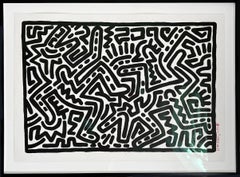
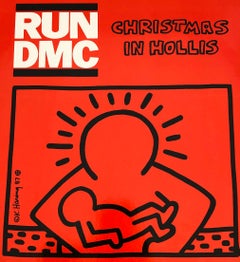
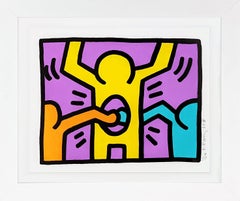
Haring’s paintings, prints and murals address the universal themes of death, love and sex, as well as contemporary issues he experienced personally, like the crack-cocaine and AIDS epidemics. They derive much of their impact from the powerful contrast between these serious subjects and the joyful, vibrant pictographic language he uses to express them, full of dancing figures, babies, barking dogs, hearts and rhythmic lines, as well as references to pop culture.
To make his art even more accessible, in 1986, Haring opened the Pop Shop in Soho. In a foreshadowing of today’s intermingling of art and fashion, the shop sold merchandise and novelty items featuring imagery by Haring and contemporaries like Kenny Scharf and Jean-Michel Basquiat. While his works sometimes included text, for the most part, he chose to communicate through drawing.
“Drawing is still basically the same as it has been since prehistoric times,” Haring once declared. “It lives through magic.”
Find Keith Haring art on 1stDibs today.
Perhaps one of the most influential contemporary art movements, Pop art emerged in the 1950s. In stark contrast to traditional artistic practice, its practitioners drew on imagery from popular culture — comic books, advertising, product packaging and other commercial media — to create original Pop art paintings, prints and sculptures that celebrated ordinary life in the most literal way.
ORIGINS OF POP ART
CHARACTERISTICS OF POP ART
- Bold imagery
- Bright, vivid colors
- Straightforward concepts
- Engagement with popular culture
- Incorporation of everyday objects from advertisements, cartoons, comic books and other popular mass media
POP ARTISTS TO KNOW
ORIGINAL POP ART ON 1STDIBS
The Pop art movement started in the United Kingdom as a reaction, both positive and critical, to the period’s consumerism. Its goal was to put popular culture on the same level as so-called high culture.
Richard Hamilton’s 1956 collage Just what is it that makes today’s homes so different, so appealing? is widely believed to have kickstarted this unconventional new style.
Pop art works are distinguished by their bold imagery, bright colors and seemingly commonplace subject matter. Practitioners sought to challenge the status quo, breaking with the perceived elitism of the previously dominant Abstract Expressionism and making statements about current events. Other key characteristics of Pop art include appropriation of imagery and techniques from popular and commercial culture; use of different media and formats; repetition in imagery and iconography; incorporation of mundane objects from advertisements, cartoons and other popular media; hard edges; and ironic and witty treatment of subject matter.
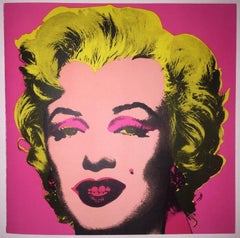
Although British artists launched the movement, they were soon overshadowed by their American counterparts. Pop art is perhaps most closely identified with American Pop artist Andy Warhol, whose clever appropriation of motifs and images helped to transform the artistic style into a lifestyle. Most of the best-known American artists associated with Pop art started in commercial art (Warhol made whimsical drawings as a hobby during his early years as a commercial illustrator), a background that helped them in merging high and popular culture.
Roy Lichtenstein was another prominent Pop artist that was active in the United States. Much like Warhol, Lichtenstein drew his subjects from print media, particularly comic strips, producing paintings and sculptures characterized by primary colors, bold outlines and halftone dots, elements appropriated from commercial printing. Recontextualizing a lowbrow image by importing it into a fine-art context was a trademark of his style. Neo-Pop artists like Jeff Koons and Takashi Murakami further blurred the line between art and popular culture.
Pop art rose to prominence largely through the work of a handful of men creating works that were unemotional and distanced — in other words, stereotypically masculine. However, there were many important female Pop artists, such as Rosalyn Drexler, whose significant contributions to the movement are recognized today. Best known for her work as a playwright and novelist, Drexler also created paintings and collages embodying Pop art themes and stylistic features.
Read more about the history of Pop art and the style’s famous artists, and browse the collection of original Pop art paintings, prints, photography and other works for sale on 1stDibs.
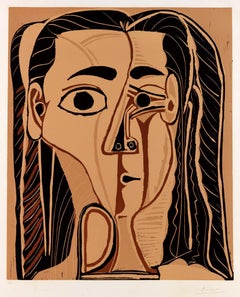
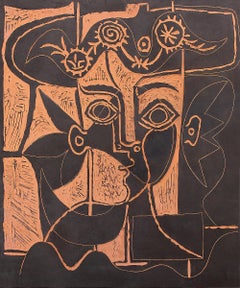
Bring energy and an array of welcome colors and textures into your space by decorating with figurative fine-art prints and works on paper.
Figurative art stands in contrast to abstract art, which is more expressive than representational. The oldest-known work of figurative art is a figurative painting — specifically, a rock painting of an animal made over 40,000 years ago in Borneo. This remnant of a remote past has long faded, but its depiction of a cattle-like creature in elegant ocher markings endures.
Since then, figurative art has evolved significantly as it continues to represent the world, including a breadth of works on paper, including printmaking. This includes woodcuts, which are a type of relief print with perennial popularity among collectors. The artist carves into a block and applies ink to the raised surface, which is then pressed onto paper. There are also planographic prints, which use metal plates, stones or other flat surfaces as their base. The artist will often draw on the surface with grease crayon and then apply ink to those markings. Lithographs are a common version of planographic prints.
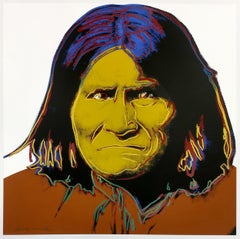
Figurative art printmaking was especially popular during the height of the Pop art movement, and this kind of work can be seen in artist Andy Warhol’s extensive use of photographic silkscreen printing. Everyday objects, logos and scenes were given a unique twist, whether in the style of a comic strip or in the use of neon colors.
Explore an impressive collection of figurative art prints for sale on 1stDibs and read about how to arrange your wall art.