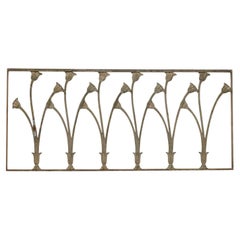
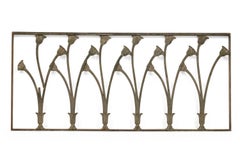
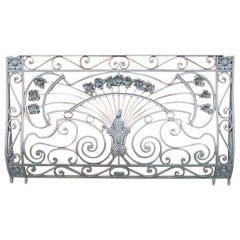
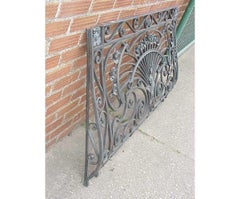
French Art Nouveau Iron Railing with Lily Design
Located in Queens, NY
French Art Nouveau rectangular painted iron railing with lily design.
Category
Antique Late 19th Century French Art Nouveau Architectural Elements
Materials
Iron
French Art Nouveau Iron Railing with Lily Design
Located in Queens, NY
French Art Nouveau rectangular painted iron railing with lily design.
Iron
$4,753 / item
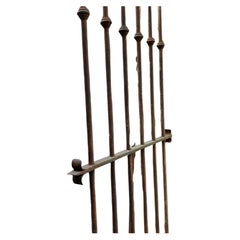
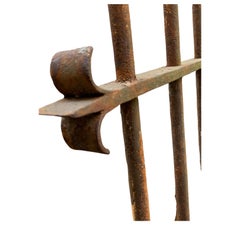
C1880 Four French iron railings from a Chateau fence
Located in London, GB
Four handsome French iron c1880/1900s grilles/railings with spear detail at the top. Currently in exterior use but could be used in an internal interior as a room divider. Some wear...
Iron
$9,450Sale Price|24% Off
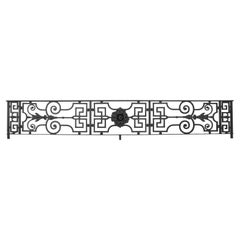
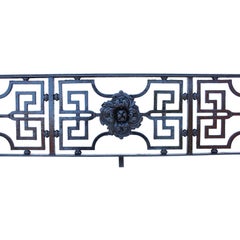
French 19th-20th Century Belle Époque Wrought Iron Balcony Railing Panel - Gate
Located in Los Angeles, CA
The design masterfully blends neoclassical geometry with organic Art Nouveau vitality, featuring a commanding central floral rosette reminiscent of a chrysanthemum or peony, its laye...
Wrought Iron
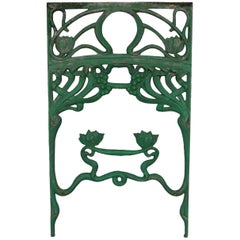
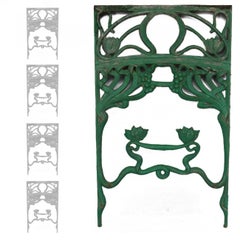
Series 4 Window Railing Art Nouveau Cast, circa 1900
By Antoni Gaudí
Located in Marseille, FR
Series 4 window railing Art Nouveau cast (+2 to restore), circa 1900.
Iron
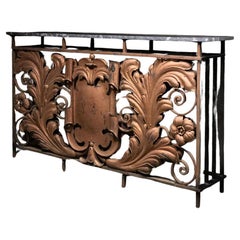
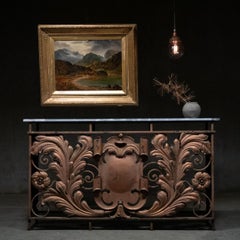
1900 Art nouveau iron console table panel
Located in Surrey, BC
A pair of very unique art nouveau balcony railings salvaged from a building in France yers.
Iron
Sold
H 61 in W 35 in D 4 in
Victor Horta Style of an Art Nouveau Hand Wrought Iron Floral Balcony Railing
By Victor Horta
Located in London, GB
A super quality sensual Art Nouveau hand wrought iron balcony railing with stylised sinus forms and floral details, the lower section with a subtle bow.
Iron, Wrought Iron
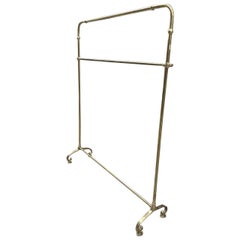
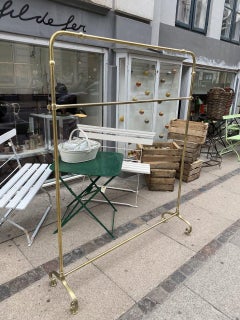
Brass Clothes Rail 1900s France
Located in Copenhagen K, DK
Elegant and simple French clothes rack / railing, circa 1900s. Art Nouveau style. Solid quality brass, with adjustable horizontal railing.
Brass
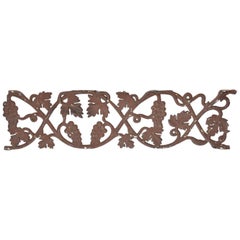
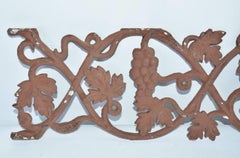
Decorative Metal Railing Piece
Located in Sheffield, MA
Decorative metal railing piece with grape motif makes a wonderful wall decoration piece. Can be hung vertical or horizontal.
Iron

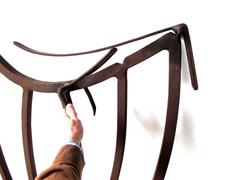
$4,800
H 86 in W 39 in D 9.5 in
Custom-Crafted Art Nouveau Style Wrought Iron Gate with Stylized Flower
By Ron Moore
Located in San Francisco, CA
A custom-crafted Art Nouveau style wrought iron gate with stylized flower; of assymetrical form with a lively floral head emanating from one corner; with artist's initials 'RSM'.
Tall Victorian Style Wrought Iron Garden Side Gates
Located in Wormelow, Herefordshire
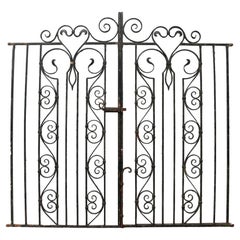
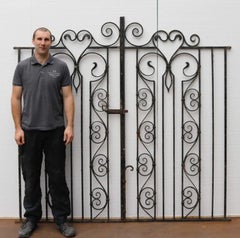
This set of tall reclaimed garden gates make a beautiful feature as pedestrian gates, bringing style to a garden or yard with their ornate design as well as security with their tight...
Metal, Iron, Wrought Iron
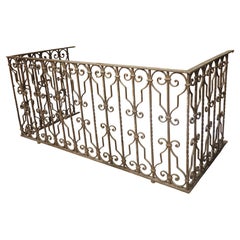
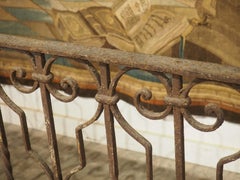
$4,900
H 34 in W 73.75 in D 36 in
Antique Italian Wrought Iron Balcony Railing as Console Table Base, 19th Century
Located in Dallas, TX
More information coming soon… Originally, a balcony railing from an Italian villa, this wrought iron could be repurposed as a console base. The railing dates to the 1800s and has d...
Metal, Iron, Wrought Iron
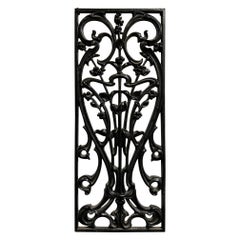
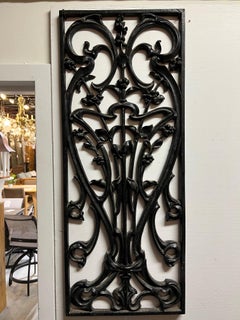
$1,200Sale Price|20% Off
H 34.75 in W 14 in D 0.75 in
Early 20th Century Antique French Art Nouveau Iron Panel from Paris France
Located in Stamford, CT
Beautiful early 20th century antique French Art Nouveau iron panel purchased from the markets in Paris France. This is a wonderful iron panel in great condition brought over from Par...
Iron
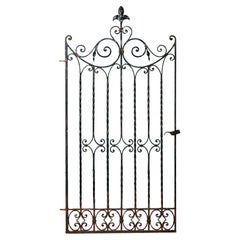

Tall Antique Edwardian Style Wrought Iron Side Gate
Located in Wormelow, Herefordshire
A tall, antique Edwardian style wrought iron side gate, ideal for placement along the side of a house or within an old walled garden. This beautiful reclaimed garden gate is handcr...
Wrought Iron
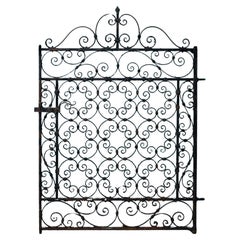

Antique Victorian Wrought Iron Garden Gate
Located in Wormelow, Herefordshire
An antique Victorian style wrought iron garden gate, decorated with an elaborate repeating, timeless scrollwork design. This beautiful traditionally-made side gate will work in sett...
Metal, Iron, Wrought Iron
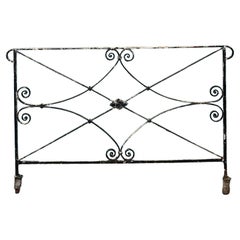
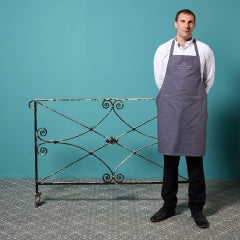
Antique Regency Style Wrought Iron Railing
Located in Wormelow, Herefordshire
An antique Regency style wrought iron railing, reclaimed from a Cheltenham townhouse; one of two we have for sale. Finished with old, flaking paint, this handcrafted metal railing ha...
Metal, Wrought Iron
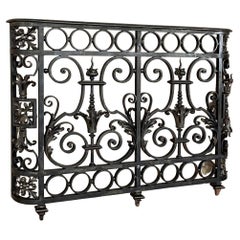
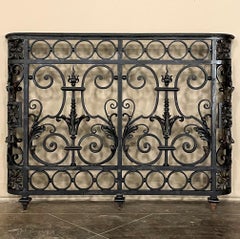
$6,980
H 35 in W 47 in D 5.5 in
19th Century French Napoleon III Period Wrought Iron Balustrade, Window Guard
Located in Dallas, TX
19th Century French Napoleon III Period wrought iron Balustrade ~ Window Guard is a stunning work of the metalsmith's art! Hand-crafted during the middle of the 19th century, it feat...
Wrought Iron
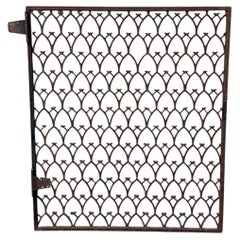
$1,650
H 55.5 in W 48 in D 1 in
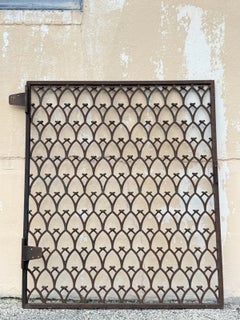
Antique French Art Nouveau Wrought Iron "Repeating Arch" 55x48 Garden Entry Gate
Located in Philadelphia, PA
Please message us with your zip code to request a more reasonable domestic U.S. shipping quote. Antique French Art Nouveau Wrought Iron "Repeating Arches" 55x48 Garden Entry Gate. A...
Wrought Iron
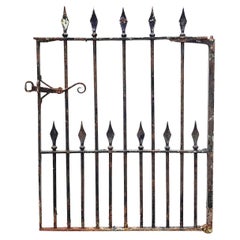
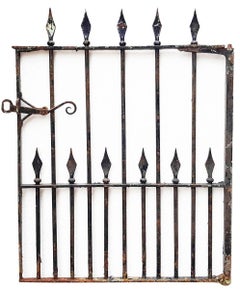
Antique Wrought Iron Pedestrian Gate
Located in Wormelow, Herefordshire
A blacksmith made wrought iron pedestrian gate. One of three matching gates reclaimed from a property near Cardiff. Additional Dimensions Width of gate 85 cm (for an opening of...
Wrought Iron, Metal
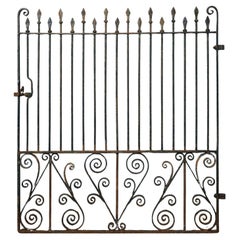

Original Victorian Wrought Iron Garden Gate
Located in Wormelow, Herefordshire
A strong and sturdy original Victorian wrought iron garden gate, circa 1850. Ornately hand crafted with scroll decoration the lower third below vertical bars and arrowhead finials, t...
Metal, Iron, Wrought Iron
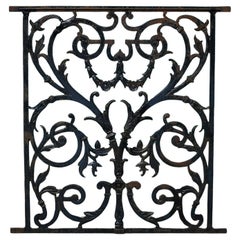

Antique Cast Iron Decorative Railing Panel
Located in Wormelow, Herefordshire
A decorative Victorian cast iron decorative railing panel by George Wright & Co, Rotherham (stamped). This is one of various similar pieces we have available for sale, each usable as...
Metal, Iron, Wrought Iron
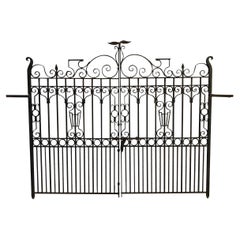
$12,250
H 80 in W 91.5 in D 1.5 in
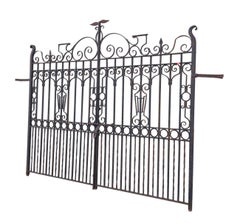
19th Century French Antique Wrought Iron Entrance Gate, Ornate Design
Located in West Palm Beach, FL
An early 19th-century heavy double-sided wrought iron entrance gate executed in the classic French decorative tradition. Substantial in scale and well preserved structurally, the gat...
Iron
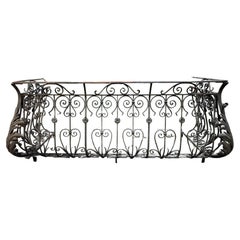
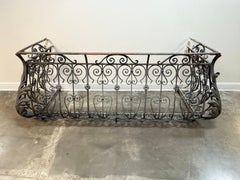
19th Century French Louis XIV Wrought Iron Balcony Railing, Circa 1890
Located in Houston, US
19th C. French Louis XIV wrought iron bombe balcony railing. It is characterized by its hand-forged, ornate scrollwork and a bombe form that curves outward. These types of railings w...
Wrought Iron
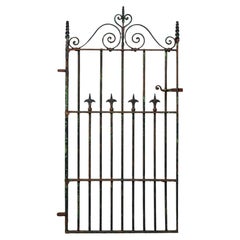
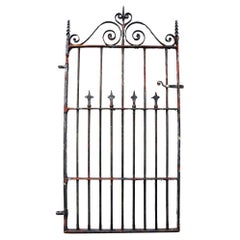
Antique Victorian Wrought Iron Pedestrian Gate
Located in Wormelow, Herefordshire
Elegant antique Victorian wrought iron pedestrian gate originating from circa 1860. With its generous height and scrolling, twisting design this lovely gate is smartly designed to gi...
Wrought Iron
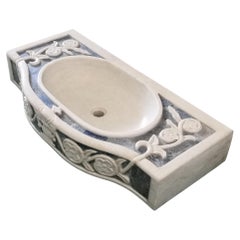
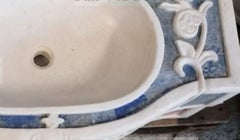
Classical Carved Marble Stone Sink Basin
Located in Cranbrook, Kent
Italian Classical Carved Sink Basin This timeless beautiful Italian classical sink is cut from one single block of white marble with added carved relief detail, these designs have no...
Marble
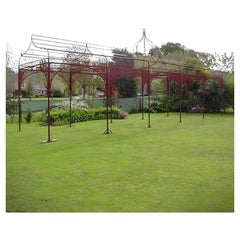
$115,448
H 240 in W 552 in D 120 in
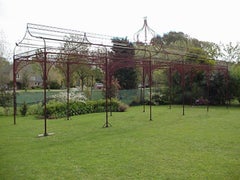
Mid-Victorian Moorish wrought & cast iron pergola or decorative garden structure
Located in London, GB
A monumental Moorish mid-Victorian wrought iron Pergola or Decorative Garden Structure, a unique masterpiece in High Victorian Ironwork design. Our research confirms it is French, da...
Wrought Iron
$34,384
H 96.86 in W 45.28 in D 2.37 in
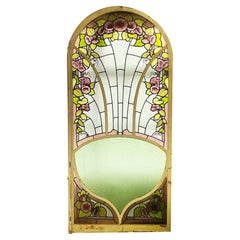
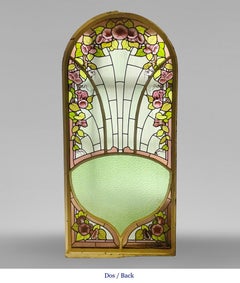
KOENIG & LAFITTE - Art Nouveau stained glass window with bindweed
By Edward L. Koenig
Located in SAINT-OUEN-SUR-SEINE, FR
This stained glass window was created by Paul Koenig and Lafitte in the early years of the 20th century, during the flowering of Art Nouveau. This draughtsman and engraver, born in É...
Glass, Art Glass, Wood
In its sinuous lines and flamboyant curves inspired by the natural world, antique Art Nouveau furniture reflects a desire for freedom from the stuffy social and artistic strictures of the Victorian era. The Art Nouveau movement developed in the decorative arts in France and Britain in the early 1880s and quickly became a dominant aesthetic style in Western Europe and the United States.
ORIGINS OF ART NOUVEAU FURNITURE DESIGN
CHARACTERISTICS OF ART NOUVEAU FURNITURE DESIGN
ART NOUVEAU FURNITURE DESIGNERS TO KNOW
ANTIQUE ART NOUVEAU FURNITURE ON 1STDIBS
Art Nouveau — which spanned furniture, architecture, jewelry and graphic design — can be easily identified by its lush, flowing forms suggested by flowers and plants, as well as the lissome tendrils of sea life. Although Art Deco and Art Nouveau were both in the forefront of turn-of-the-20th-century design, they are very different styles — Art Deco is marked by bold, geometric shapes while Art Nouveau incorporates dreamlike, floral motifs. The latter’s signature motif is the "whiplash" curve — a deep, narrow, dynamic parabola that appears as an element in everything from chair arms to cabinetry and mirror frames.
The visual vocabulary of Art Nouveau was particularly influenced by the soft colors and abstract images of nature seen in Japanese art prints, which arrived in large numbers in the West after open trade was forced upon Japan in the 1860s. Impressionist artists were moved by the artistic tradition of Japanese woodblock printmaking, and Japonisme — a term used to describe the appetite for Japanese art and culture in Europe at the time — greatly informed Art Nouveau.
The Art Nouveau style quickly reached a wide audience in Europe via advertising posters, book covers, illustrations and other work by such artists as Aubrey Beardsley, Henri de Toulouse-Lautrec and Alphonse Mucha. While all Art Nouveau designs share common formal elements, different countries and regions produced their own variants.
In Scotland, the architect Charles Rennie Mackintosh developed a singular, restrained look based on scale rather than ornament; a style best known from his narrow chairs with exceedingly tall backs, designed for Glasgow tea rooms. Meanwhile in France, Hector Guimard — whose iconic 1896 entry arches for the Paris Metro are still in use — and Louis Majorelle produced chairs, desks, bed frames and cabinets with sweeping lines and rich veneers.
The Art Nouveau movement was known as Jugendstil ("Youth Style") in Germany, and in Austria the designers of the Vienna Secession group — notably Koloman Moser, Josef Hoffmann and Joseph Maria Olbrich — produced a relatively austere iteration of the Art Nouveau style, which mixed curving and geometric elements.
Art Nouveau revitalized all of the applied arts. Ceramists such as Ernest Chaplet and Edmond Lachenal created new forms covered in novel and rediscovered glazes that produced thick, foam-like finishes. Bold vases, bowls and lighting designs in acid-etched and marquetry cameo glass by Émile Gallé and the Daum Freres appeared in France, while in New York the glass workshop-cum-laboratory of Louis Comfort Tiffany — the core of what eventually became a multimedia decorative-arts manufactory called Tiffany Studios — brought out buoyant pieces in opalescent favrile glass.
Jewelry design was revolutionized, as settings, for the first time, were emphasized as much as, or more than, gemstones. A favorite Art Nouveau jewelry motif was insects (think of Tiffany, in his famed Dragonflies glass lampshade).
Like a mayfly, Art Nouveau was short-lived. The sensuous, languorous style fell out of favor early in the 20th century, deemed perhaps too light and insubstantial for European tastes in the aftermath of World War I. But as the designs on 1stDibs demonstrate, Art Nouveau retains its power to fascinate and seduce.
There are ways to tastefully integrate a touch of Art Nouveau into even the most modern interior — browse an extraordinary collection of original antique Art Nouveau furniture on 1stDibs, which includes decorative objects, seating, tables, garden elements and more.