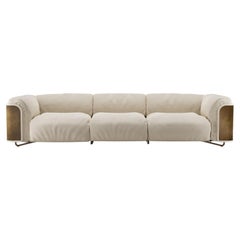
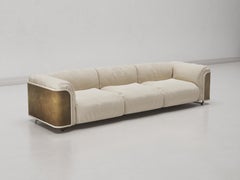
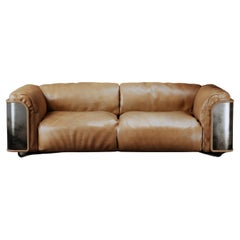
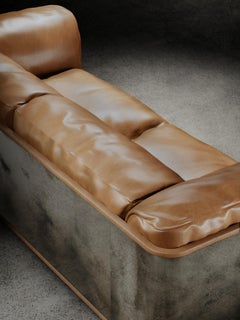
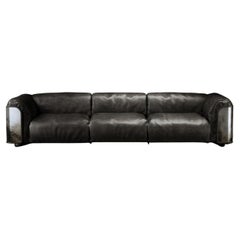
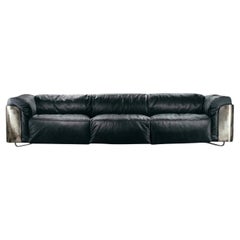
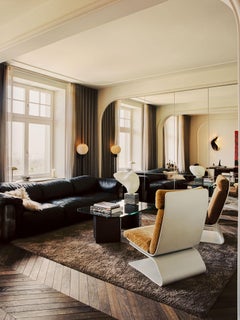
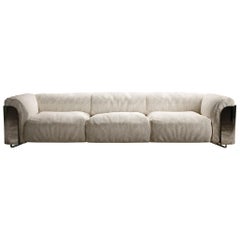
At 1stDibs, there are many versions of the ideal saint germain sofa for your home. Each saint germain sofa for sale was constructed with extraordinary care, often using
metal,
animal skin and
leather. There are 2 variations of the antique or vintage saint germain sofa you’re looking for, while we also have 6 modern editions of this piece to choose from as well. You’ve searched high and low for the perfect saint germain sofa — we have versions that date back to the 20th Century alongside those produced as recently as the 21st Century are available. A saint germain sofa made by
modern designers — as well as those associated with
mid-century modern — is very popular. You’ll likely find more than one saint germain sofa that is appealing in its simplicity, but
Gio Pagani,
Dunbar and
Willy Rizzo produced versions that are worth a look.
Transcending classification, Gio Pagani’s furniture designs span several styles in an eclectic expression of ongoing artistry. Forever evolving, Pagani draws inspiration from history, fashion and social movements to imbue his furniture with symbolism unique to each collection.
Maison GIOPAGANI, GIOPAGANI Couture and GIOPAGANI Atelier are the three main branches that make up Pagani’s namesake brand. While Maison is the creative hub for all things architectural and interior design, Couture focuses on furniture design, with Atelier serving as the physical space in which to display Pagani’s designs.
GIOPAGANI Couture previewed at the 2015 edition of Milan Design Week before fully showcasing its furniture the following year at the Atelier. Categorized into Capsule Collections, each of Pagani’s design series embodies a different style and theme.
One Capsule Collection, Senza Fine, is an ode to Italian design culture, emphasizing bold color and patterns, while another, Sartoria, draws from the fashion world as a sort of “haute couture” furniture collection centered on specific material choices. A third, Chat Noir, meets Paris in a very Art Nouveau–inspired collection, while Éclat D’eau introduces Art Deco elements into its lighting designs. Illogica Allegria is a second lighting collection — this time, featuring Murano glass and metal in modern designs.
“I often see myself as a tailor, a figure who, entering deeply into the customer’s culture, tries to better interpret his story . . . in an excellent way,” Pagani has said of his bespoke interiors and custom furnishings.
He designed interiors for both of the Rock restaurants on the island of Sardinia and led the redesign of Drogheria Parini on Via della Spiga in Milan. A collaboration with innovative wallpaper company Wall&decò introduced new energy and perspective to the use of contemporary wallpaper, tactfully bringing it back into the fold of interior design.
On 1stDibs, find a collection of GIOPAGANI seating, tables and lighting.
The late 19th and early 20th centuries saw sweeping social change and major scientific advances — both of which contributed to a new aesthetic: modernism. Rejecting the rigidity of Victorian artistic conventions, modernists sought a new means of expression. References to the natural world and ornate classical embellishments gave way to the sleek simplicity of the Machine Age. Architect Philip Johnson characterized the hallmarks of modernism as “machine-like simplicity, smoothness or surface [and] avoidance of ornament.”
Early practitioners of modernist design include the De Stijl (“The Style”) group, founded in the Netherlands in 1917, and the Bauhaus School, founded two years later in Germany.
Followers of both groups produced sleek, spare designs — many of which became icons of daily life in the 20th century. The modernists rejected both natural and historical references and relied primarily on industrial materials such as metal, glass, plywood, and, later, plastics. While Bauhaus principals Marcel Breuer and Ludwig Mies van der Rohe created furniture from mass-produced, chrome-plated steel, American visionaries like Charles and Ray Eames worked in materials as novel as molded plywood and fiberglass. Today, Breuer’s Wassily chair, Mies van der Rohe’s Barcelona chair — crafted with his romantic partner, designer Lilly Reich — and the Eames lounge chair are emblems of progressive design and vintage originals are prized cornerstones of collections.
It’s difficult to overstate the influence that modernism continues to wield over designers and architects — and equally difficult to overstate how revolutionary it was when it first appeared a century ago. But because modernist furniture designs are so simple, they can blend in seamlessly with just about any type of décor. Don’t overlook them.
Vintage couches and antique sofas have anchored living rooms for generations. The pieces most sought after today carry the deep-buttoned tufting of a Chesterfield or the low, sculptural ease of mid-century modern and Hollywood Regency design.
Styles to Know
Rolled arms and tufted backs point to Mid-Century Modern or Hollywood Regency pieces, while tight backs and turned legs skew more traditional. Velvet is enjoying a renewed moment across most of these silhouettes; see our velvet chesterfield sofa trend report for examples. A mid-century modern coffee table within reach and a vintage mirror nearby round out the seating area.
How to Choose the Right Vintage Sofa
A sofa's frame and upholstery history can be difficult to judge from photographs alone. Ask a seller for more information when a listing doesn't show the fabric or joinery clearly, and confirm whether the upholstery is original or has been redone. Each piece comes from a vetted 1stDibs seller, with era, designer and condition detailed, and the 1stDibs Promise stands behind every purchase.