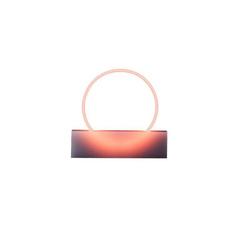
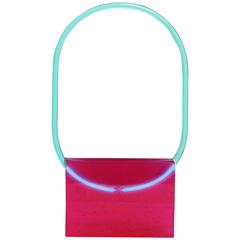
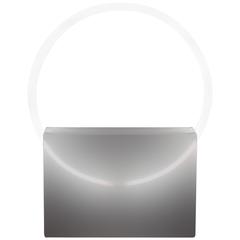
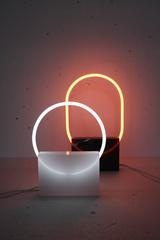
Choose from an assortment of styles, material and more with respect to the voie light you’re looking for at 1stDibs. Each voie light for sale was constructed with extraordinary care, often using
organic material,
resin and
glass. When you’re browsing for the right voie light, those designed in
modern styles are of considerable interest.
Dutch-Kiwi designer Sabine Marcelis’s work is at the forefront of contemporary material innovation in product and installation design. She works with glass manufacturers and more, forging partnerships across her industry to bring her ambitiously experimental projects to fruition.
Marcelis’s focus is on allowing happenstance sensory experiences to emerge by juxtaposing combinations of unlikely materials and colors. She was educated at the Design Academy Eindhoven and since founding her eponymous studio in 2011 in Rotterdam in the Netherlands, she has built a remarkable roster of clients in fashion, architecture and art.
Marcelis has created signature pieces for the likes of Rem Koolhaas’s architecture firm OMA, high-fashion labels Fendi and Isabel Marant and luxury beauty brand Aēsop. She has also exhibited at the Salone del Mobile in Milan and won Wallpaper* magazine’s Designer of the Year award for 2020.
Marcelis was invited to create a sculptural intervention for the interiors of Ludwig Mies van der Rohe and Lilly Reich’s iconic Barcelona Pavilion, which saw the debut of the pair’s timeless Barcelona chair in 1929. For her “No Fear of Glass” exhibition, the designer subverted the original request made to van der Rohe to “not use too much glass” by designing chaise longues, pillar lights and a fountain that feature glass as the main material. The rest of her work is informed by a similarly sophisticated playfulness, as evident in the charming forms she creates — she has designed doughnut-shaped rugs, the multifunctional resin Candy Cube side tables and colorful asymmetrical glass mirrors.
Marcelis has the rare ability to create dynamic and fluid experiences by pushing the limits of craftsmanship. While her enchanting seating, lighting and other furnishings may appear effortless due to their fluid and simple forms, they are the result of relentless attention to detail and venturesome experiments with materiality.
Shop a variety of Sabine Marcelis's designs on 1stDibs.
The late 19th and early 20th centuries saw sweeping social change and major scientific advances — both of which contributed to a new aesthetic: modernism. Rejecting the rigidity of Victorian artistic conventions, modernists sought a new means of expression. References to the natural world and ornate classical embellishments gave way to the sleek simplicity of the Machine Age. Architect Philip Johnson characterized the hallmarks of modernism as “machine-like simplicity, smoothness or surface [and] avoidance of ornament.”
Early practitioners of modernist design include the De Stijl (“The Style”) group, founded in the Netherlands in 1917, and the Bauhaus School, founded two years later in Germany.
Followers of both groups produced sleek, spare designs — many of which became icons of daily life in the 20th century. The modernists rejected both natural and historical references and relied primarily on industrial materials such as metal, glass, plywood, and, later, plastics. While Bauhaus principals Marcel Breuer and Ludwig Mies van der Rohe created furniture from mass-produced, chrome-plated steel, American visionaries like Charles and Ray Eames worked in materials as novel as molded plywood and fiberglass. Today, Breuer’s Wassily chair, Mies van der Rohe’s Barcelona chair — crafted with his romantic partner, designer Lilly Reich — and the Eames lounge chair are emblems of progressive design and vintage originals are prized cornerstones of collections.
It’s difficult to overstate the influence that modernism continues to wield over designers and architects — and equally difficult to overstate how revolutionary it was when it first appeared a century ago. But because modernist furniture designs are so simple, they can blend in seamlessly with just about any type of décor. Don’t overlook them.
Antique table lamps became a category of their own once electricity moved light off the wall and onto furniture. The form split quickly: task-driven designs like the Anglepoise on one side, decorative ceramic and glass on the other.
Styles to Know
Base material shapes the light as much as the shade does: ceramic and glass diffuse a softer glow, while brass and metal read more directional. Layer the look with a mid-century modern floor lamp for ambient light, or set a pair on a mid-century modern nightstand for a bedroom.
How to Choose the Right Vintage Table Lamp
Buying individually rather than as a pair allows more flexibility when mixing eras across a room. For those shopping by name rather than by shape, the history of the Anglepoise lamp is worth a read. Each piece comes from a vetted 1stDibs seller, with era, designer and condition detailed, and the 1stDibs Promise stands behind every purchase.