1930s Art

5,925 Results
to
715
3,360
1,265
922
530
348
Overall Width
to
Overall Height
to
7,846
22,091
168,030
238,052
2,166
2,357
4,751
6,468
5,983
16,037
21,475
26,976
19,475
14,240
5,628
2,454
460
404
255
111
109
108
73
9
9
5
2
2
3,950
1,793
1,639
1,169
1,122
712
467
454
429
336
335
296
294
291
286
236
227
220
208
184
3,397
2,994

Use search to find more

261
155
139
88
59

Use search to find more

Period: 1930s
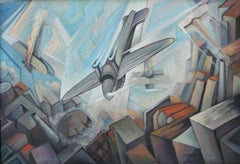
"Airplanes Dive Over Enemy Skies" Italian Futurism Futurist Transportation Plane

"Airplanes Dive Over Enemy Skies" Italian Futurism Futurist Transportation Plane

Located in New York, NY

"Airplanes Dive Over Enemy Skies" Italian Futurism Futurist Transportation Plane Guglielmo “Tato” Sansoni (Italian, 1896 – 1974) "Airplanes Dive Over Enemy Skies (Aerei in Picchiata su Stabilimenti Nemici)," 20 x 28 inches. Oil on canvas. Circa 1930s. Signed lower right. Titled and signed verso. Guglielmo Sansoni...

Category

Futurist 1930s Art

Materials

Canvas, Oil

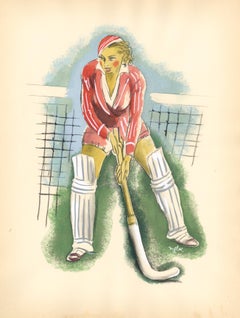
"Le Hockey" pochoir for Les Joies du Sport

"Le Hockey" pochoir for Les Joies du Sport

By Milivoy Uzelac

Located in Henderson, NV

Medium: pochoir. Printed in Paris in 1932 on Velin du Marais paper at the atelier of Daniel Jacomet for the Les Joies du Sport portfolio and issued in an edition of 750. This was pub...

Category

1930s Art

Materials

Lithograph, Stencil

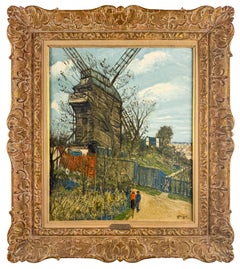
Post-Impressionist Montmartre, le moulin de la Galette

Post-Impressionist Montmartre, le moulin de la Galette

Located in New York, NY

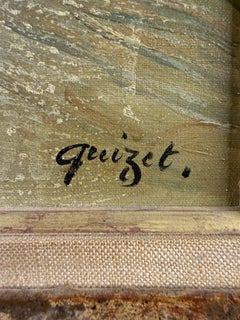
This mid-century oil on canvas by Alphonse Léon Quizet (1885–1955) depicts the historic Moulin de la Galette windmill in Montmartre, Paris. Quizet spent his career painting this dist...

Category

Post-Impressionist 1930s Art

Materials

Oil, Canvas

Cat and Busybody

Cat and Busybody

By Benton Murdoch Spruance

Located in Middletown, NY

A 1933 lithograph on cream wove paper 14 x 18 inches (354 x 452mm), full margins. Signed, titled, and numbered 17/33 in pencil, lower margin. Minor mat tone around the perimeter of t...

Category

American Modern 1930s Art

Materials

Lithograph

Louis SCHANKER “Jai Alai”

Louis SCHANKER “Jai Alai”

By Louis Schanker

Located in San Francisco, CA

Louis Schanker : 1903-1981. Well, listed American abstract artist. He was well exhibited and is in the permanent collections of many important museums. This fabulous piece is a color...

Category

Abstract 1930s Art

Materials

Woodcut

The woman by the window, the menorah: large poignant mysterious Jewish interior

The woman by the window, the menorah: large poignant mysterious Jewish interior

Located in Norwich, GB

A mysterious blond young woman is standing by the window in a plush drawing room which has a velvety feel. With her back turned to us, she is looking out over the spires and roofs of...

Category

Modern 1930s Art

Materials

Oil, Board

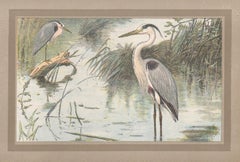
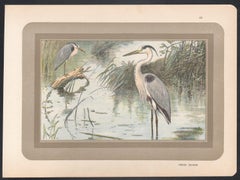
Grey Heron, French antique natural history water bird art illustration print

Grey Heron, French antique natural history water bird art illustration print

Located in Melbourne, Victoria

French chromolithograph, published in 1931. Printed title lower right of sheet. Plate number top right. From a French series of illustrations of birds. 195mm by 265mm (sheet)

Category

Art Deco 1930s Art

Materials

Lithograph

Original Poster by Mory Liqueur Izarra Basque country

Original Poster by Mory Liqueur Izarra Basque country

Located in PARIS, FR

Original Poster by Mory, showing the Basque dancer with tambourine and his bottle of liqueur Izarra. Izarra means "star" in Basque, it is a brand of liqueur which was created in 1906 in Hendaye, in the Basque Country, by the botanist and pharmacist Joseph Grattau. Izarra is a liqueur made from a distillate of plants, spices and 2 macerations, prunes and walnut brou. After being heated in a copper still...

Category

1930s Art

Materials

Paper, Lithograph

Skating Waiter by Horace Abrahams

Skating Waiter by Horace Abrahams

Located in London, GB

"Skating Waiter" by Horace Abrahams 8th January 1938: A waiter skates across the ice at St. Moritz carrying a tray of drinks for his customers. Unframed Paper Size: 60" x 40'' (in...

Category

Modern 1930s Art

Materials

Black and White

"Maria" Portrait of a Girl New Hope Pennsylvania Artist Edna Gass

"Maria" Portrait of a Girl New Hope Pennsylvania Artist Edna Gass

By Edna Gass

Located in Soquel, CA

"Maria" Portrait of a Girl New Hope Pennsylvania Artist Edna Gass "Enfant" portrait of a child by New Hope Artist Edna Gass (American, 1904–1993). This portrait is one of rare Monoty...

Category

French School 1930s Art

Materials

Oil, Illustration Board, Monotype

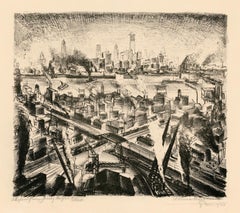
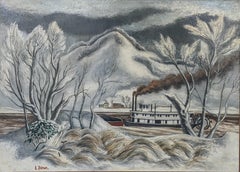
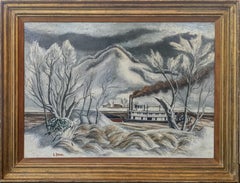
"Along the Kanahawa River, West Virginia, " Ernest Fiene, WPA Coal Steamboat

"Along the Kanahawa River, West Virginia, " Ernest Fiene, WPA Coal Steamboat

By Ernest Fiene

Located in New York, NY

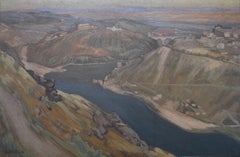
Ernest Fiene Along the Kanahawa River, West Virginia, 1936 Signed lower right Oil on canvas 26 x 36 inches Fiene made a series of paintings, drawings and lithographs which are based on his travels through Pennsylvania and West Virginia during the winter of 1935-36. The industrial areas of Pennsylvania and West Virginia are represented in numerous oils, among which are some of his most well-known. Fiene wrote of the trip, "The increasing snow and atmospheric conditions [in the Kanawha River valley} enhanced this mountainous coal mining country with a majestic beauty." Winter on the River is Fiene's only American Artists Group print and there were only two lithographs produced from the West Virginia trip. The American Artists Group (AAG), under the direction of Carl Zigrosser, who was then working at New York's famed Weyhe Gallery, published ninety-three prints by over fifty artists in 1936 and 1937. Zigrosser's goal was to popularize contemporary American art through original prints offered at the low price of $2.75. The project was also a means to provide income for impoverished artists during the Depression. The prints were featured in many of the leading print exhibitions and publications of the period. The lithograph produced from this image is now in the collection of the Amon Carter Museum, Baltimore Museum of Art, Cleveland Museum of Art, Philadelphia Museum of Art, Pensacola Museum of Art, San Francisco Fine Arts Museum, Syracuse Museum, Yale University Art Museum. Ernest Fiene was born in Elberfeld, Germany in 1894. As a teenager, Fiene immigrated to the United States in 1912. He studied art at the National Academy of Design in New York City from 1914 to 1918, taking day classes with Thomas Maynard and evening classes with Leon Kroll. Fiene continued his studies at the Beaux-Arts Institute of Design in New York from 1916 to 1918, adding classes in printmaking at the Art Students League in 1923. Fiene began his career as an artist in 1919 with his first exhibition of watercolors at the MacDowell Club arranged by his mentor Robert Henri. In 1923 the Whitney Studio Club mounted a large exhibition of his works. The following year he had an exhibition at the New Gallery in New York, which completely sold out all fifty-two works, including paintings, watercolors, drawings, and etchings. With the proceeds of sales from the New Gallery exhibition, Ernest Fiene and his younger brother Paul, a sculptor, built studios in Woodstock, New York in 1925. In the early Twenties Ernest Fiene painted mostly landscapes of Woodstock and both the Ramapo and Hudson River Valleys. The first monograph from the Younger Artists Series was published on Fiene in 1922. Published in Woodstock, the series went on to include Alexander Brook, Peggy Bacon, and Yasuo Kuniyoshi. The book reproduced 1 illustration in color and another 27 reproductions in black and white. Around 1925 Fiene became fascinated with the intensity, excitement, and opportunities for color harmonies New York City offered as a subject. His paintings shifted to urban and industrial themes with architecture, industry, and transportation becoming his subjects. By 1926 Fiene had attracted the dealer Frank K.M. Rehn, who gave him a one-man exhibition that year, which travelled to the Boston Arts Club. C.W. Kraushaar Galleries gave Fiene a one-man exhibition of urban, landscape, portrait, and still life paintings in 1927. Julianna Force, the director of the Whitney Studio Club and first director of the Whitney Museum of American Art, included two of Fiene’s paintings in a fall exhibition in 1928. The Whitney Studio Club showed Fiene’s paintings in a two-man exhibition with Glenn O. Coleman that year and acquired three of Fiene’s paintings. Also in 1928 Fiene became affiliated with Edith Halpert’s Downtown Gallery where he had an exhibition of 20 lithographs in the spring. Fiene sold his house in Woodstock in 1928 to spend more of his time in New York City. With so many successful exhibitions, Fiene returned to Paris in 1928-29 where he rented Jules Pascin's studio and studied at the Académie de la Grande Chaumière. In France, Fiene painted both landscape and urban subjects developed from ideas influenced by Cubist geometry and the use of flat areas of broad color. Upon returning to New York in 1930, Fiene used this new approach to continue to paint New York skyscraper and waterfront subjects, as well as to begin a series of paintings on changing old New York based on the excavations for Radio City Music Hall and the construction of the Empire State Building. Frank K.M. Rehn Galleries exhibited this series, titled “Changing Old New York,” in 1931. Fiene also has solo exhibitions at Rehn Galleries in 1930 and 1932. Fiene’s oil paintings are exhibited at the Chicago Arts Club in 1930 as well. Fiene was included in the Museum of Modern Art’s exhibition Painting and Sculpture by Living Americans in December of 1931. Visiting New York, Henri Matisse saw the exhibition and called Fiene’s Razing Buildings, West 49th Street the finest painting he had seen in New York. Fiene had two mural studies from his Mechanical Progress series exhibited at the Museum of Modern Art’s exhibition Murals by American Painters and Photographers in 1932. Fiene sent View from my Window which depicts Fiene working on a lithograph stone while looking out his window to the newly completed Empire State Building to the Carnegie International in 1931. In 1932 Fiene participated in the first Biennial of American Painting at the Whitney Museum and his prints were included in exhibitions at the Downtown Gallery and the Wehye Gallery. In the same year, Fiene was awarded a Guggenheim fellowship to further study mural painting in Florence, Italy. On his return from Italy in 1933 Fiene re-engaged himself in New York City life and won several public and private mural projects. Fiene resumed his active exhibition schedule, participating in two group exhibitions at the Whitney Museum and a one-man exhibition of recent paintings at the Downtown Gallery in January 1934. In 1933 he purchased a farm in Southbury, Connecticut, which added Connecticut scenes to his landscape subjects. This was also the year Fiene began to spend summers on Monhegan Island, Maine, where he painted seascapes, harbor scenes, and still lifes. Fiene’s landscape paintings attracted numerous commissions as part of the American Scene movement. Through the fall and winter of 1935-36, Fiene took an extended sketching trip through the urban, industrial, and farming areas of Pennsylvania and West Virginia. Most of the twenty-four Pennsylvania urban and rural paintings from this trip were featured in an exhibition held at the First National Bank in Pittsburgh in October of 1937 by the Pittsburgh Commission for Industrial Expansion. Fiene said of these works that he formed rhythm, opportunity for space and color, and integrity in the Pennsylvania mill and furnace paintings. Fiene received the silver medal for one of the Pittsburgh paintings...

Category

American Realist 1930s Art
Materials

Canvas, Oil

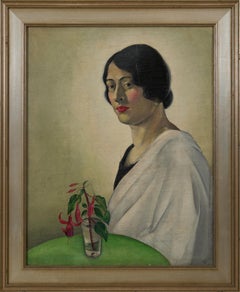
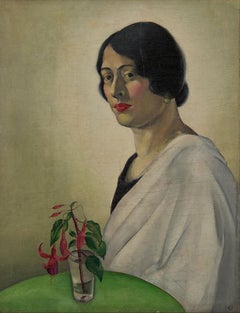
Portrait of a Seated Woman

Portrait of a Seated Woman

By Paul H. Winchell

Located in Fairlawn, OH

Portrait of a Seated Woman Oil on canvas, c. 1930 Unsigned Provenance: estate of the Artist by Descent to the Heirs Signed in oil with the artist’s initials “PH...

Category

American Impressionist 1930s Art

Materials

Oil

'Wild Pilgrimage' (Contemplation) — 'Story Without Words' Graphic Modernism

'Wild Pilgrimage' (Contemplation) — 'Story Without Words' Graphic Modernism

By Lynd Ward

Located in Myrtle Beach, SC

Lynd Ward, 'Wild Pilgrimage', No. 26, wood engraving, 1932, edition not stated but very small. Signed in pencil. A fine, black impression, with full margins (1 1/16 to 3 3/16 inches), on tissue-thin cream Japan paper, in very good condition. A scarce, artist-printed, hand-signed proof impression before the published edition. Matted to museum standards, unframed. Created by Lynd Ward for his narrative book of illustrations without words, 'Wild Pilgrimage', published by Harrison Smith...

Category

American Modern 1930s Art

Materials

Woodcut

Vintage Symbolist Seascape Sailboat Framed Modernist Boat Portrait Oil Painting

Vintage Symbolist Seascape Sailboat Framed Modernist Boat Portrait Oil Painting

Located in Buffalo, NY

Very interesting and finely painted oil on board. Framed. Measuring: 37 by 27 inches overall, and 21 by 11.75 painting alone. Unsigned. Excellent condition, ready to hang and enjoy.

Category

Modern 1930s Art

Materials

Oil

'Church with House and Tree' – Artist's Personal Letterhead, 1940s Modernism

'Church with House and Tree' – Artist's Personal Letterhead, 1940s Modernism

By Lyonel Feininger

Located in Myrtle Beach, SC

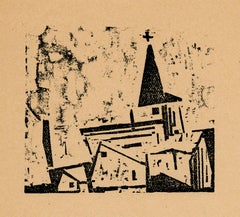
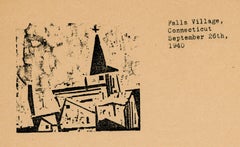
Lyonel Feininger, 'Church with House and Tree (Kirche mit Haus und Baum)', woodcut, 1936, one of a small but unknown number of letterhead proofs; Prasse W290 IV. Annotated 'PW 290 state IV / IV 3669', in pencil, in the bottom right sheet corner. With the artist's typed address and date adjacent to the letterhead image: 'Falls Village, Connecticut September 26th, 1940'. A fine impression, on buff, wove letterhead stock; several small losses, and tears, in the sheet edges (not affecting the image area); a crease in the bottom right sheet edge, otherwise in good condition. Very scarce. Image size: 2 3/8 x 2 3/4 inches; sheet size 11 x 8 5/8 inches. Archivally sleeved, unmatted. Feininger moved from Germany to New York City in 1938 and began spending his summers in Falls Village in 1940. Exhibited: 'Lyonel Feininer, Woodcuts Used As Letterheads'; Associated American Artists; Feb 4 - March 2, 1974; New York, NY. ABOUT THE ARTIST Lyonel Feininger (1871-1956) was born in New York City into a musical family—his father was a violinist and composer, his mother was a singer and pianist. He studied violin with his father, and by the age of 12, he was performing in public, but he also drew incessantly, most notably the steamboats and sailing ships on the Hudson and East Rivers, and the landscape around Sharon, Conn., where he spent time on a farm owned by a family friend. At the age of 16 he left New York to study music and art in Germany, from where his parents emigrated. Drawn more to the visual arts, he attended schools in Hamburg, Berlin, and Paris from 1887 to 1892. After completing his studies, Feininger began his artistic career as a cartoonist and illustrator, his originality leading him to great success. In 1906, after working for a dozen years in Germany, he was offered a job as a cartoonist at the Chicago Tribune, the largest circulation newspaper in the Midwest. He worked there for a year, inventing what became the standard design for the comic strip: in the words of John Carlin, “an overall pattern. . . that allowed the page to be read both as a series of elements one after the other, like language and as a group of juxtaposed images, like visual art.” His originality did not end there: he went on to become one of the great abstract painters. Like Kandinsky, music was his model, but Kandinsky only knew music from the outside—as a listener (inspired initially by Wagner, then by Schoenberg)—while Feininger knew it from the inside. He lived in Paris from 1906 to 1908, during which time he met and was influenced by the work of progressive painters Robert Delaunay and Jules Pascin, as well as that of Paul Cezanne and Vincent van Gogh. He began painting full-time, developing his distinctive Iyrical style based on Cubist and Expressionist idioms and a concern for the emotive qualities of light and color. He exhibited with the Der Blaue Reiter group in 1913, and in 1917, he had his first solo exhibition at Galerie Der Sturm in Berlin. One year after his solo exhibition, in 1918, Feininger began making woodcuts. He became enamored with the medium, producing an impressive 117 in his first year of exploring the printmaking medium. In 1919 at the invitation of the architect Walter Gropius, he was appointed the first master at the newly formed Staatliches Bauhaus in Weimar. His woodcut of a cathedral crowned...

Category

Bauhaus 1930s Art

Materials

Woodcut

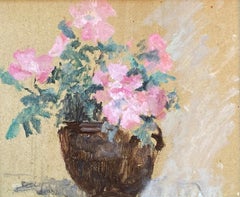
“Spring Bouquet”
“Spring Bouquet”

“Spring Bouquet”

Located in Southampton, NY

Original oil paint on heavy card stock of a lovely spring bouquet of pink flowers by the American impressionist artist, Bird Lefever. Signed lower left...

Category

Post-Impressionist 1930s Art

Materials

Oil, Cardboard

20th Century Oil on Canvas Italian Religious Painting Saint Roch with Dog, 1930

20th Century Oil on Canvas Italian Religious Painting Saint Roch with Dog, 1930

Located in Vicoforte, IT

Great Italian painting from the first half of the 20th century. Artwork oil on canvas, on the first canvas, depicting a religious subject Saint Roch with dog and stick of good pictor...

Category

1930s Art

Materials

Canvas, Oil

Still life  -  Lithograph by George Braque - 1930s

Still life - Lithograph by George Braque - 1930s

By Georges Braque

Located in Roma, IT

Still life is original print realized after George Braque in 1931, with watermark of editor on the lower-left embossed stamp, J.B, Jenne Boucher Paris, From the edition of 1000 prints performed in 1933, the description notes on the rear. Titled in the French" Nature morte (toile), Editions J. Boucher and J. Becker, Paris and New York. Good conditions. Georges Braque (1882-1963) was a French Fauve painter who began to rethink his own painting style after admiring Picasso’s Les Demoiselles...

Category

Cubist 1930s Art

Materials

Lithograph

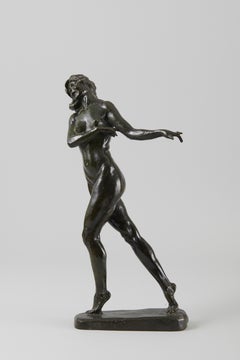
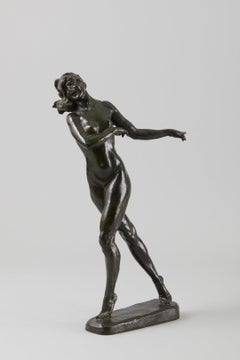
Nude Walking, Early 20th Century Bronze Sculpture, Cleveland School Artist

Nude Walking, Early 20th Century Bronze Sculpture, Cleveland School Artist

By Max Kalish

Located in Beachwood, OH

Max Kalish (American, 1891-1945) Nude Walking, 1930 Bronze Signed and dated on base 17 x 9 x 4 inches Born in Poland March 1, 1891, figurative sculptor Max Kalish came to the United States in 1894, his family settling in Ohio. A talented youth, Kalish enrolled at the Cleveland Institute of Art as a fifteen-year-old, receiving a first-place award for modeling the figure during studies with Herman Matzen. Kalish went to New York City following graduation, studying with Isidore Konti and Herbert Adams...

Category

American Modern 1930s Art

Materials

Bronze

SUBWAY - THREE PEOPLE

SUBWAY - THREE PEOPLE

By Reginald Marsh

Located in Portland, ME

Marsh, Reginald. SUBWAY - THREE PEOPLE. S. 149. Etching, 1934. 9 x 7 inches; 228 x 178 mm. Numbered "10b," and signed in pencil "Reginald Marsh (F.M.)" b...

Category

1930s Art

Materials

Etching

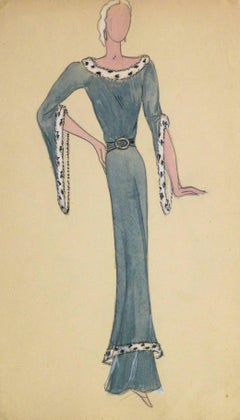
French Fashion Sketch - Fur Trimmed Evening Dress

French Fashion Sketch - Fur Trimmed Evening Dress

Located in Houston, TX

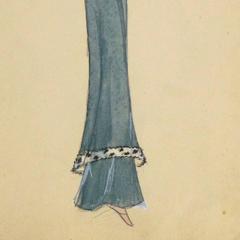
Unique pencil and gouache fashion sketch of a slim and flowing blue evening dress trimmed in white fur, circa 1930. Original artwork on paper displayed on a white mat with a gold bo...

Category

1930s Art

Materials

Gouache, Paper, Pencil

"Fox Hunting"
"Fox Hunting"

"Fox Hunting"

By Benton Clark

Located in Saratoga Springs, NY

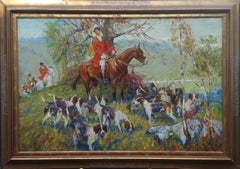
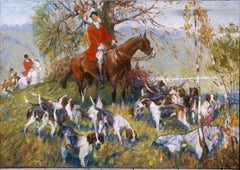
Benton Clark (American, (1895 - 1964) “Fox Hunting” Signed and dated 1931 Oil on canvas, 46” x 30”, signed, 54 x 38 framed, American sporting painting, hunting scene No conservation ...

Category

American Impressionist 1930s Art

Materials

Canvas, Oil

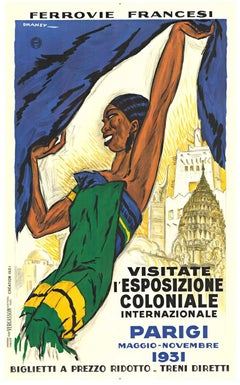
Circa 1930 original vintage advertising poster for Cognac Quevedo

Circa 1930 original vintage advertising poster for Cognac Quevedo

Located in PARIS, FR

This original vintage advertising poster for Cognac Quevedo is a stunning example of early 20th-century commercial art, blending humor, elegance, and striking visuals to promote the ...

Category

1930s Art

Materials

Paper, Lithograph

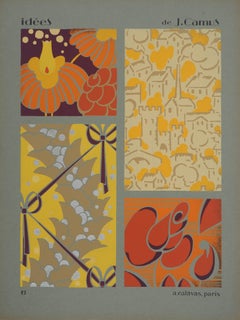
The Yellow Castle, 1933 - Original Lithograph

The Yellow Castle, 1933 - Original Lithograph

By Jacques Camus

Located in Paris, IDF

Jacques Camus The Yellow Castle, 1933 Original lithograph and stencil Unsigned On paper 39 x 29 cm (c. 15.3 x 11.4 inch) INFORMATION : This lithograph is part of the "Idées" portfo...

Category

Art Deco 1930s Art

Materials

Lithograph, Stencil

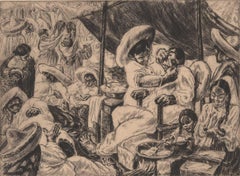
Mexican Barber Shop (Getting a shave amidst revelry of community)

Mexican Barber Shop (Getting a shave amidst revelry of community)

By Irwin D. Hoffman

Located in New Orleans, LA

Irwin Hoffman created a lively scene of a Mexican barber shop that serves as a focal point of the community's life. A man is being shaved as people cook, eat and revel in the camaraderie of the scene. This print was issued by Associated American Artists and is in the permanent collection of the San Francisco Museum of Art. Born in East Boston...

Category

American Modern 1930s Art

Materials

Etching

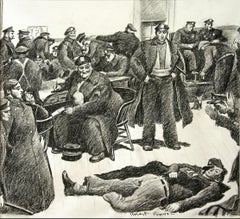
New York City Police Fortune Magazine Illustration

New York City Police Fortune Magazine Illustration

By Robert Riggs

Located in Miami, FL

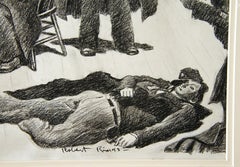
This original illustration, titled "Cops at Ease in the Muster Room of a Station," is packed with character and detail and shows an unexpected and rare vision of the police in an off moment. Riggs unveils the real-life behind-the-scenes in this narrative work, which stylistically flaunts Riggs ' prodigious drawing skills. It accompanied the article Nineteen Thousand Cops published in the July 1939 issue of Fortune Magazine. This issue was dedicated to the city of New York and included a total of ten paintings by Riggs for this article on New York City's police department. Robert Riggs was a gay artist...

Category

Realist 1930s Art

Materials

Charcoal, Archival Paper

“The Lobstermen”
“The Lobstermen”

“The Lobstermen”

By Gordon Grant

Located in Southampton, NY

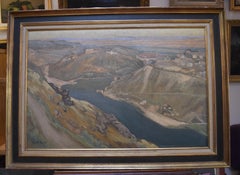
Beautiful original watercolor and gouache on archival paper by the famous American marine artist, Gordon Grant. The artwork depicts two rugged lobstermen bringing their catch ashore...

Category

American Realist 1930s Art
Materials

Watercolor, Gouache, Archival Paper

WPA, lithograph, California, small edition, Arthur George Murphy 1906-1991

WPA, lithograph, California, small edition, Arthur George Murphy 1906-1991

Located in Fairlawn, OH

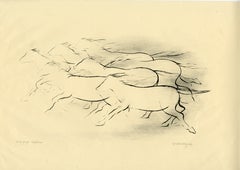
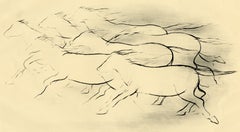
Arthur George Murphy (1906-1991) Horse Group California Lithograph on Warren's Oldestyle wove paper, 1936 Signed in pencil lower right Ttitled in pencil lower left (see photo) Signed and annotated upper left verso (see photo) Published and printed by: Works Progress Administration (WPA), Federal Art Project, San Francisco Note: This impression does NOT have the usual WPA Federal Art Project stamp on it. It is a unstamped proof that we believe was given to a family member in Ohio where Murphy was born. Edition: Probably fewer than 25 impressions; the exact number printed for this lithograph has not been documented. Published by the WPA Museums: MMA Newark Art Museum Porland Public Schools, OR Saint Louis Art Museum Weisman Art Museum Fine Arts Museums of San Francisco Fine Arts Museums of San Francisco MMA has Horse Group #18 and #19 and #8 Condition: Very slight wrinkles, two very minor tears upper edge Reference: General Services Administration (GSA) No. 500 452, 453, 495, 496, 497, 498, 499 Arthur George Murphy (1906–1991) Arthur George Murphy was an American painter, teacher, and especially prolific lithographer. Born in Tiffin, Ohio, he studied at the Cleveland School of Art and the Art Students League in New York before moving to San Francisco in 1930. His strongest body of prints grew out of the San Francisco Federal Art Project in the later 1930s. He subsequently served as a war artist in the South Pacific and settled in Connecticut after World War II. The documented WPA publication and printing credits on his lithographs confirm his participation in the project. Analysis Murphy’s lithographs range from Bay Bridge construction workers to horses, rodeo riders, dancers, and New Mexico landscapes. The bridge prints give muscular figures and steel structures comparable visual weight: workers appear embedded in the machinery they operate. In the horse and rodeo subjects, he pares forms down to quick, sweeping contours that convey movement with remarkably little detail. His Taos Plains takes a quieter approach, using broad open space and a low band of distant activity to convey scale. These are observations about the prints’ compositions, rather than claims that every impression was drawn directly from life. Murphy is significant within New Deal printmaking for that breadth. His industrial subjects celebrate skilled labor, while his animal and landscape prints show a sustained interest in motion, contour, and the American West. MoMA identifies the San Francisco WPA Federal Art Project as both publisher and printer of its impressions of Pueblo – New Mexico #2 and Citizen Dancing; it describes their editions as “probably fewer than 25.” That estimate should be applied to those catalogued works, not assumed for every Murphy lithograph. Documented museum holdings: Institution Examples in its collection record National Gallery of Art, Washington Twelve listed lithographs, including Steel Riggers – No. 3 – Bay Bridge (1936), Taos Plains (1937), Bullrider No. 1 (1937), and Bulldoggers (c. 1940). Metropolitan Museum of Art, New York Bridge Worker No. 7 (1936), Seagulls, Horse Group #19, Citizen Perplexed, and other WPA lithographs...

Category

American Modern 1930s Art
Materials

Lithograph

Japanese Print, Horse Turning Around - Signed Woodcut

Japanese Print, Horse Turning Around - Signed Woodcut

By Mokuchu URUSHIBARA

Located in Paris, IDF

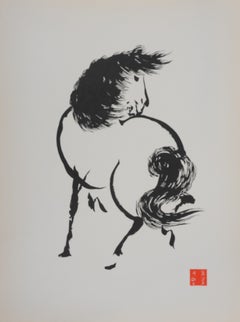
Mokuchu URUSHIBARA Horse Turning Around, c. 1930 Woodcut after on an ink drawing Signed with the artist's stamp On paper 37 x 27 cm (c. 14,5 x 10,6 in) INFORMATION : Engraving publ...

Category

Modern 1930s Art
Materials

Woodcut