1940s Art

to
1,291
2,965
1,168
1,045
412
264
Overall Width
to
Overall Height
to
7,755
21,939
164,626
231,455
2,033
2,304
4,982
6,545
5,878
15,039
20,682
25,997
18,747
14,126
5,536
2,192
430
325
225
155
117
84
78
46
20
9
2
2
3,384
2,236
155
3,030
1,466
1,173
925
900
573
397
364
360
359
278
266
265
254
223
194
164
159
146
146
2,068
1,461
1,298
1,055
716
114
111
109
57
45
1,616
956
3,767
1,918
Period: 1940s
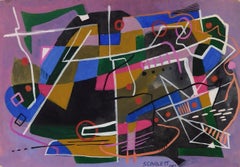
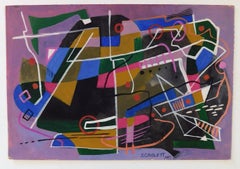
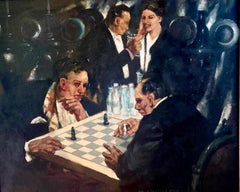
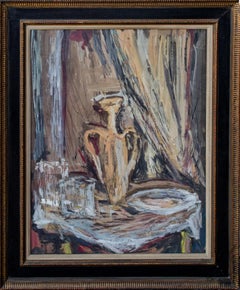
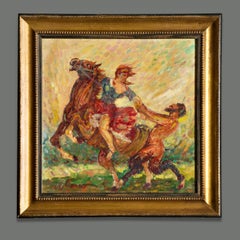
At the Winery - Hungarian Art

At the Winery - Hungarian Art

By Hugó Scheiber

Located in London, GB

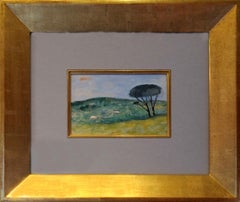
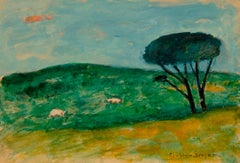
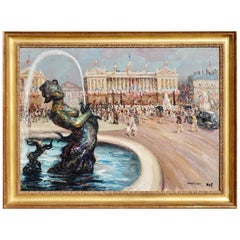
This original painting is hand signed by the artist "Scheiber H" in the lower left corner, and dated "1940" below the signature. Exhibited: Hugo Scheiber - Bela Kadar, Galerie Le Mi...

Category

1940s Art

Materials

Tempera, Gouache

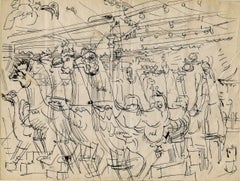
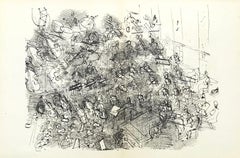
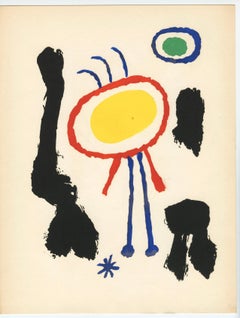
"Une Symphonie" lithograph

"Une Symphonie" lithograph

By (after) Raoul Dufy

Located in Henderson, NV

Medium: lithograph (after the drawing). Printed in France in 1943 for the rare art revue "Hommage" and published in a limited edition of 1000 on Montgolfier Annonay laid paper. Size:...

Category

1940s Art

Materials

Lithograph

"La Cuisiniere" lithograph

"La Cuisiniere" lithograph

Located in Henderson, NV

Medium: lithograph (after the original Edouard Vuillard lithograph). Printed on Renage wove paper in 1948 by the atelier Mourlot and published in an edition of 2500. Size: 12 3/8 x 9...

Category

1940s Art

Materials

Lithograph

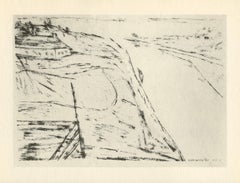
Fred Zeller, Tree in winter, 1948, Indian ink and wash on paper

Fred Zeller, Tree in winter, 1948, Indian ink and wash on paper

Located in PARIS, FR

Frederic ZELLER (1912-2003) Tree in Winter, 1948 Indian ink and wash on paper Signed “Fred Zeller-K.” and dated “1948” lower left 35 x 45 cm Provenance: artist's family Frame : 45 x...

Category

1940s Art

Materials

India Ink, Watercolor

'Landscape', Paris, Salon des Artistes Français, Académie Julian

'Landscape', Paris, Salon des Artistes Français, Académie Julian

By Lucien Henri Grandgerard

Located in Santa Cruz, CA

Signed lower right, 'L. Grandgerard' for Lucien Henri Grandgerard (French, 1880-1970) and painted circa 1945. Framed dimensions: 17.75 H x 1.75 D x 22 W inches Born in Nancy, Lucien...

Category

1940s Art

Materials

Oil, Board, Canvas

Two Bunches of Grapes

Two Bunches of Grapes

By Luigi Rist

Located in Santa Monica, CA

LUIGI RIST (1888 – 1959) TWO BUNCHES OF GRAPES c. 1942 (Williams 12) Color woodcut, 1943. Signed in ink, lower right. Titled, numbered 97/100 and dated in pencil, lower left margin....

Category

American Realist 1940s Art

Materials

Color Pencil, Woodcut

Kathe Kollwitz, Death Seizes the Children, from Ten Lithographs, 1941 (after)

Kathe Kollwitz, Death Seizes the Children, from Ten Lithographs, 1941 (after)

By Käthe Kollwitz

Located in Southampton, NY

This exquisite lithograph after Kathe Kollwitz (1867–1945), titled Tod greift nach den Kindern (Death Seizes the Children), from the folio Kathe Kollwitz, Ten Lithographs, originates from the 1941 edition published by Henry C. Kleemann, New York, and Curt Valentin, New York; printed by Duenewald Printing Corporation, New York. The composition reflects Kollwitz’s profound engagement with themes of mortality, vulnerability, and human suffering, rendered with stark emotional intensity and a powerful graphic economy that underscores her enduring social message. Executed as a lithograph on velin paper, this work measures 19 x 16 inches (48.26 x 40.64 cm), overall; 15.5 x 13 inches (39.37 x 33.02 cm), image. Unsigned and unnumbered as issued. Artwork Details: Artist: After Kathe Kollwitz (1867–1945) Title: Tod greift nach den Kindern (Death Seizes the Children), from Kathe Kollwitz, Ten Lithographs Medium: Lithograph on velin paper Dimensions: 19 x 16 inches (48.26 x 40.64 cm), overall; 15.5 x 13 inches (39.37 x 33.02 cm), image Inscription: Unsigned and unnumbered as issued Date: 1941 Publisher: Henry C. Kleemann, New York, and Curt Valentin, New York Printer: Duenewald Printing Corporation, New York Condition: Well preserved, consistent with age and medium Provenance: From the folio Kathe Kollwitz, Ten Lithographs, 1941 About the Publication: Kathe Kollwitz, Ten Lithographs, published in New York in 1941 by Henry C. Kleemann in collaboration with Curt Valentin, represents an important early American presentation of Kollwitz’s graphic work at a time when her reputation was expanding internationally. Issued during the turbulence of the Second World War and following the suppression of her work in Germany under the Nazi regime, the folio played a crucial role in introducing her imagery to a broader audience outside Europe. The publication gathers a selection of her most powerful lithographic compositions, emphasizing her mastery of tonal contrast, expressive line, and psychological depth. Produced with careful attention to print quality by Duenewald Printing Corporation, the edition reflects the continued transmission of European modernist printmaking traditions into the American context, serving both as a document of artistic excellence and as a vehicle for the preservation and dissemination of Kollwitz’s humanistic vision. About the Artist: Kathe Kollwitz (1867–1945) was a German draughtsman, printmaker, and sculptor whose profoundly moving imagery, exceptional technical mastery, and unwavering social conscience established her as one of the most important and influential artists of the twentieth century, widely recognized as a master of modern printmaking and one of the most powerful visual chroniclers of human suffering, war, and social injustice. Born in Konigsberg, East Prussia, into a progressive and intellectually engaged family, Kollwitz was encouraged from an early age to pursue art and developed a deep awareness of social inequality that would shape her entire career, studying in Berlin and Munich at a time when women were largely excluded from formal academies while mastering drawing and graphic techniques with extraordinary discipline. Her breakthrough came with the monumental graphic cycle A Weavers’ Revolt (1893–1897), followed by The Peasants’ War (1901–1908), works that combined complex narrative structure with extraordinary technical command in etching, aquatint, and lithography, establishing her reputation as one of Europe’s leading graphic artists. Throughout her career, Kollwitz remained committed to portraying the lives of workers, mothers, and victims of poverty and conflict with unflinching honesty, creating compositions defined by bold, sculptural line, dense shadow, and unparalleled psychological depth that conveyed grief, resilience, and dignity. Working during a period transformed by the radical innovations of Pablo Picasso, Alexander Calder, Alberto Giacometti, Salvador Dali, Joan Miro, Wassily Kandinsky, Marcel Duchamp, and Man Ray, Kollwitz maintained a resolutely figurative and human-centered approach, aligning more closely with German Expressionism and artists such as Ernst Barlach, Max Liebermann, and Edvard Munch, whose emotional intensity and symbolic treatment of the human figure profoundly shaped her artistic language. Her later work, particularly the woodcut cycle War (1922–1923), stands among the most powerful anti-war statements in the history of art, reflecting both personal tragedy, including the death of her son in World War I, and a universal condemnation of violence and loss. In addition to her prints, Kollwitz created deeply moving sculptures that extended her exploration of grief and maternal protection into three dimensions, reinforcing her status as a multidisciplinary artist of exceptional range. She achieved significant recognition during her lifetime, becoming the first woman elected to the Prussian Academy of Arts, though her work was later condemned by the Nazi regime as degenerate, leading to her forced resignation and the removal of her works from public collections, yet her reputation expanded internationally after World War II and she is now regarded as a central figure in modern art. Her influence has been profound and far-reaching, shaping later artists including Francis Bacon, Anselm Kiefer, Leon Golub, Kiki Smith, and numerous contemporary figurative and socially engaged artists who continue to explore themes of trauma, memory, and human vulnerability. Today her works are held in major museum collections worldwide, including the Kathe Kollwitz Museum in Berlin, the Museum of Modern Art in New York, the British Museum in London, and the Art Institute of Chicago, and remain highly sought after by collectors for their emotional intensity and historical significance. The highest auction record for a work by Kathe Kollwitz is held by her sculpture Mutter mit totem Sohn (Mother with Dead Son), which achieved approximately 1.2 million EUR at auction, confirming her enduring importance. Kathe Kollwitz Tod greift nach den Kindern 1941 lithograph German Expressionism social realism print.

Category

Expressionist 1940s Art

Materials

Lithograph

Kathe Kollwitz, Two Prisoners Listening to Music, 1941 (after)

Kathe Kollwitz, Two Prisoners Listening to Music, 1941 (after)

By Käthe Kollwitz

Located in Southampton, NY

This exquisite lithograph after Kathe Kollwitz (1867–1945), titled Zwei Gefangene, Musik horend (Two Prisoners Listening to Music), from the folio Kathe Kollwitz, Ten Lithographs, originates from the 1941 edition published by Henry C. Kleemann, New York, and Curt Valentin, New York; printed by Duenewald Printing Corporation, New York. The composition reflects Kollwitz’s profound engagement with themes of confinement, empathy, and human suffering, rendered with stark emotional intensity and a powerful graphic economy that underscores her enduring social message. Executed as a lithograph on velin paper, this work measures 19 x 16 inches (48.26 x 40.64 cm), overall; 13 x 11 inches (33.02 x 27.94 cm), image. Unsigned and unnumbered as issued. Artwork Details: Artist: After Kathe Kollwitz (1867–1945) Title: Zwei Gefangene, Musik horend (Two Prisoners Listening to Music), from Kathe Kollwitz, Ten Lithographs Medium: Lithograph on velin paper Dimensions: 19 x 16 inches (48.26 x 40.64 cm), overall; 13 x 11 inches (33.02 x 27.94 cm), image Inscription: Unsigned and unnumbered as issued Date: 1941 Publisher: Henry C. Kleemann, New York, and Curt Valentin, New York Printer: Duenewald Printing Corporation, New York Condition: Well preserved, consistent with age and medium Provenance: From the folio Kathe Kollwitz, Ten Lithographs, 1941 About the Publication: Kathe Kollwitz, Ten Lithographs, published in New York in 1941 by Henry C. Kleemann in collaboration with Curt Valentin, represents an important early American presentation of Kollwitz’s graphic work at a time when her reputation was expanding internationally. Issued during the turbulence of the Second World War and following the suppression of her work in Germany under the Nazi regime, the folio played a crucial role in introducing her imagery to a broader audience outside Europe. The publication gathers a selection of her most powerful lithographic compositions, emphasizing her mastery of tonal contrast, expressive line, and psychological depth. Produced with careful attention to print quality by Duenewald Printing Corporation, the edition reflects the continued transmission of European modernist printmaking traditions into the American context, serving both as a document of artistic excellence and as a vehicle for the preservation and dissemination of Kollwitz’s humanistic vision. About the Artist: Kathe Kollwitz (1867–1945) was a German draughtsman, printmaker, and sculptor whose profoundly moving imagery, exceptional technical mastery, and unwavering social conscience established her as one of the most important and influential artists of the twentieth century, widely recognized as a master of modern printmaking and one of the most powerful visual chroniclers of human suffering, war, and social injustice. Born in Konigsberg, East Prussia, into a progressive and intellectually engaged family, Kollwitz was encouraged from an early age to pursue art and developed a deep awareness of social inequality that would shape her entire career, studying in Berlin and Munich at a time when women were largely excluded from formal academies while mastering drawing and graphic techniques with extraordinary discipline. Her breakthrough came with the monumental graphic cycle A Weavers’ Revolt (1893–1897), followed by The Peasants’ War (1901–1908), works that combined complex narrative structure with extraordinary technical command in etching, aquatint, and lithography, establishing her reputation as one of Europe’s leading graphic artists. Throughout her career, Kollwitz remained committed to portraying the lives of workers, mothers, and victims of poverty and conflict with unflinching honesty, creating compositions defined by bold, sculptural line, dense shadow, and unparalleled psychological depth that conveyed grief, resilience, and dignity. Working during a period transformed by the radical innovations of Pablo Picasso, Alexander Calder, Alberto Giacometti, Salvador Dali, Joan Miro, Wassily Kandinsky, Marcel Duchamp, and Man Ray, Kollwitz maintained a resolutely figurative and human-centered approach, aligning more closely with German Expressionism and artists such as Ernst Barlach, Max Liebermann, and Edvard Munch, whose emotional intensity and symbolic treatment of the human figure profoundly shaped her artistic language. Her later work, particularly the woodcut cycle War (1922–1923), stands among the most powerful anti-war statements in the history of art, reflecting both personal tragedy, including the death of her son in World War I, and a universal condemnation of violence and loss. In addition to her prints, Kollwitz created deeply moving sculptures that extended her exploration of grief and maternal protection into three dimensions, reinforcing her status as a multidisciplinary artist of exceptional range. She achieved significant recognition during her lifetime, becoming the first woman elected to the Prussian Academy of Arts, though her work was later condemned by the Nazi regime as degenerate, leading to her forced resignation and the removal of her works from public collections, yet her reputation expanded internationally after World War II and she is now regarded as a central figure in modern art. Her influence has been profound and far-reaching, shaping later artists including Francis Bacon, Anselm Kiefer, Leon Golub, Kiki Smith, and numerous contemporary figurative and socially engaged artists who continue to explore themes of trauma, memory, and human vulnerability. Today her works are held in major museum collections worldwide, including the Kathe Kollwitz Museum in Berlin, the Museum of Modern Art in New York, the British Museum in London, and the Art Institute of Chicago, and remain highly sought after by collectors for their emotional intensity and historical significance. The highest auction record for a work by Kathe Kollwitz is held by her sculpture Mutter mit totem Sohn (Mother with Dead Son), which achieved approximately 1.2 million EUR at auction, confirming her enduring importance. Kathe Kollwitz Zwei Gefangene Musik horend 1941 lithograph German Expressionism social realism print.

Category

Expressionist 1940s Art

Materials

Lithograph

Study for « Paysage de Fribourg » - 1943 a drawing by Balthus (1908 - 2001)

Study for « Paysage de Fribourg » - 1943 a drawing by Balthus (1908 - 2001)

Provenance: Frédérique Tison, Château de Chassy (Burgundy-Franche Comté - France) Bibliography: J. Clair, V. Monnier Balthus, catalogue raisonné of the complete works, Gallimard, Pa...

Category

Modern 1940s Art

Materials

Paper, Pencil

Dramatic Storm over Sandhamn, Sweden, 1943

Dramatic Storm over Sandhamn, Sweden, 1943

Located in Stockholm, SE

This striking seascape, painted in 1943 by Jacob Löfgren, most likely depicts a view from Sandhamn, a location he frequently captured in his works. Four years earlier, he created ano...

Category

Symbolist 1940s Art

Materials

Oil, Board

"Margot" lithograph

"Margot" lithograph

By (after) Georges Rouault

Located in Henderson, NV

Medium: lithograph (after the gouache) for Georges Rouault's "Divertissement" portfolio, created by the artist for this project. Published in Paris in 1943 by Teriade in an edition o...

Category

1940s Art

Materials

Lithograph

Original "This Time For Keeps" , 1947 US 1- sheet vintage movie poster.  47/486

Original "This Time For Keeps" , 1947 US 1- sheet vintage movie poster. 47/486

Located in Spokane, WA

Original 1947 “This Time For Keeps” vintage American movie poster. NSS: 47/486. Archival linen backed in very good condition, ready to frame. The original theater issued fold ...

Category

American Realist 1940s Art

Materials

Offset

Chepstow Castle ( on a limestone cliff above the River Wye in Wales)

Chepstow Castle ( on a limestone cliff above the River Wye in Wales)

By Percival Gaskell

Located in New Orleans, LA

The magnificent printed works of the Yorkshire artist, Percival Gaskell have only been fully rediscovered in recent years. Percival Gaskell rose to prominence whilst working together with Sir Frank Short in the engraving school at the Royal College of Art in London during the first two decades of the 20th century. A true painter-printmaker, Percival Gaskell developed a sensitivity to atmospheric tone which is displayed in an air of timeless beauty throughout his printed works. (sheet 24 x 20 1/2). A fine impression with tone printed in warm brown/black ink on chine appliqué mounted on white wove paper, and a backing board. Signed in pencil. Superb signed proof impression printed in warm-brownish-black ink. One of Gaskell's best large scale mezzotints. The speed with which William the Conqueror committed to the creation of a castle at Chepstow is testament to its strategic importance. There is no evidence for a settlement there of any size before the Norman invasion of Wales, although it is possible that the castle site itself may have previously been a prehistoric or early...

Category

English School 1940s Art

Materials

Mezzotint, Etching

"Country Haircut"
"Country Haircut"

"Country Haircut"

By Milton Avery

Located in Lambertville, NJ

Jim’s of Lambertville Fine Art Gallery is proud to offer this piece by Milton Avery (1885 – 1965). Milton Avery was a prominent Modernist painter whose work combined abstraction and...

Category

American Modern 1940s Art

Materials

Watercolor, Gouache, Paper

'Eyes for the Night' — Mid-Century American Surrealism

'Eyes for the Night' — Mid-Century American Surrealism

By Benton Murdoch Spruance

Located in Myrtle Beach, SC

Benton Spruance, 'Eyes for the Night', color lithograph, 1948, edition 35, Fine and Looney 261. Signed, dated, and titled, and annotated 'Ed 35' in pencil. A fine impression with fresh colors, on cream wove paper; the full sheet with margins (1 to 1 3/8 inches), in excellent condition. Printed by master lithographer Theodore Cuno. Archivally matted to museum standards, unframed. Image size 19 x 13 inches; sheet size 21 1/8 x 15 1/4 inches. Selected by the artist for his retrospective exhibition 'Benton Spruance: Lithographs...

Category

American Modern 1940s Art

Materials

Lithograph

Pablo Picasso, Faces, from The Honeysuckle, 1943

Pablo Picasso, Faces, from The Honeysuckle, 1943

By Pablo Picasso

Located in Southampton, NY

This exquisite zincograph by Pablo Picasso (1881–1973), titled Visages (Faces), from the album Le Chevre-Feuille (The Honeysuckle), originates from the 1943 edition published by Robe...

Category

Cubist 1940s Art

Materials

Lithograph

The Princeton Tiger
The Princeton Tiger

The Princeton Tiger

Located in New York, NY

Provenance: The artist; thence by descent to his granddaughter: Rhoda Knight Kalt; from whom acquired by: Private Collection, Pennsylvania, 1995–2025. Literature: Richard Milner, Ch...

Category

1940s Art

Materials

Plaster

Tauromaquia - Plate 23

Tauromaquia - Plate 23

Located in Henderson, NV

Medium: heliogravure (after the etching from Goya's Tauromaquia series). Printed in 1947 in a limited edition of 500 on Guarro laid paper, and published in Barcelona by Ediciones Ome...

Category

1940s Art

Materials

Photogravure

Jean-Michel Atlan - Kafka - Original Lithograph

Jean-Michel Atlan - Kafka - Original Lithograph

Located in Collonge Bellerive, Geneve, CH

Original lithograph by Jean-Michel Atlan For Description of a Struggle by Franz Kafka Paris, Maeght Publisher, 1946. Dimensions: 30.5 x 24.5 Edition: 300 on vellum Mourlot JEAN-MI...

Category

Abstract Expressionist 1940s Art

Materials

Lithograph

Pablo Picasso, Untitled, from Carmen, 1949

Pablo Picasso, Untitled, from Carmen, 1949

By Pablo Picasso

Located in Southampton, NY

This exquisite engraving by Pablo Picasso (1881–1973), titled Sans titre (Untitled), from the folio Picasso, Carmen (Picasso, Carmen), originates from the 1949 edition published by L...

Category

Cubist 1940s Art

Materials

Engraving

Pablo Picasso, Untitled, from Carmen, 1949

Pablo Picasso, Untitled, from Carmen, 1949

By Pablo Picasso

Located in Southampton, NY

This exquisite engraving by Pablo Picasso (1881–1973), titled Sans titre (Untitled), from the folio Picasso, Carmen (Picasso, Carmen), originates from the 1949 edition published by L...

Category

Cubist 1940s Art

Materials

Engraving

Pablo Picasso, Untitled, from Carmen, 1949

Pablo Picasso, Untitled, from Carmen, 1949

By Pablo Picasso

Located in Southampton, NY

This exquisite engraving by Pablo Picasso (1881–1973), titled Sans titre (Untitled), from the folio Picasso, Carmen (Picasso, Carmen), originates from the 1949 edition published by L...

Category

Cubist 1940s Art

Materials

Engraving

Pablo Picasso, Untitled, from Carmen, 1949

Pablo Picasso, Untitled, from Carmen, 1949

By Pablo Picasso

Located in Southampton, NY

This exquisite engraving by Pablo Picasso (1881–1973), titled Sans titre (Untitled), from the folio Picasso, Carmen (Picasso, Carmen), originates from the 1949 edition published by L...

Category

Cubist 1940s Art

Materials

Engraving

Pablo Picasso, Untitled, from Carmen, 1949

Pablo Picasso, Untitled, from Carmen, 1949

By Pablo Picasso

Located in Southampton, NY

This exquisite engraving by Pablo Picasso (1881–1973), titled Sans titre (Untitled), from the folio Picasso, Carmen (Picasso, Carmen), originates from the 1949 edition published by L...

Category

Cubist 1940s Art

Materials

Engraving

Pablo Picasso, Untitled, from Carmen, 1949

Pablo Picasso, Untitled, from Carmen, 1949

By Pablo Picasso

Located in Southampton, NY

This exquisite engraving by Pablo Picasso (1881–1973), titled Sans titre (Untitled), from the folio Picasso, Carmen (Picasso, Carmen), originates from the 1949 edition published by L...

Category

Cubist 1940s Art

Materials

Engraving

Beer Advertisement
Beer Advertisement

Beer Advertisement

By Gil Elvgren

Located in Fort Washington, PA

This Gil Elvgren gouache painting on board was probably intended to be used as an ad for beer. The husband is returning from work with a bouquet of flowers behind his back, while his wife is waiting at the door with a bottle of beer for her husband. This painting was probably done in the late 1940's. The model in this image has the typical Elvgren look, which is very similar to Elvgren's models that he used for his pin up calendar...

Category

1940s Art

Materials

Gouache, Board

"Le jardin devant l'atelier" lithograph

"Le jardin devant l'atelier" lithograph

Located in Henderson, NV

Medium: lithograph (after the original Edouard Vuillard lithograph). Printed on Renage wove paper in 1948 by the atelier Mourlot and published in an edition of 2500. The image size i...

Category

1940s Art

Materials

Lithograph

"La Patisserie" lithograph

"La Patisserie" lithograph

Located in Henderson, NV

Medium: lithograph (after the original Edouard Vuillard lithograph). Printed on Renage wove paper in 1948 by the atelier Mourlot and published in an edition of 2500. Size: 12 3/8 x 9...

Category

1940s Art

Materials

Lithograph

Foreground of a Lion - Original Pencil Drawing by Willy Lorenz - 1940s

Foreground of a Lion - Original Pencil Drawing by Willy Lorenz - 1940s

By Wilhelm Lorenz

Located in Roma, IT

Foreground of a Lion is a beautiful charcoal original drawing on paper, realized by the German artist Wilhelm Lorenz, best know as Willi Lorenz (German, 1901–1981), in 1940s. This wonderful study for a foreground of profile of a lion is accompanied by two rapid sketches of the silhouette and of the muzzle of the feline, is realized with incredible draftsmanship and realism. This modern artwork, in excellent conditions except for the usual stain of the charcoal, is a really perfect decor for your home able to give your furniture a touch of wildness and exotism. Wilhelm (Willi) Lorenz (German, 1901–1981) Wilhelm Lorenz that signed Willi Lorenz, was a German painter specialized in paintings of animals typically hunted as game. His highly detailed oil paintings evoke the texture and movement of animals like boars, foxes, bisons or lions depicted in their natural habitats and attitudes. His artworks...

Category

1940s Art

Materials

Pencil

Jean-Edouard Vuillard, The Cook, 1948 (after)

Jean-Edouard Vuillard, The Cook, 1948 (after)

By Edouard Vuillard

Located in Southampton, NY

This exquisite lithograph after Jean-Edouard Vuillard (1868-1940), titled La cuisiniere (The Cook), from L'oeuvre grave de Vuillard (The Graphic Work of Vuillard), originates from th...

Category

Post-Impressionist 1940s Art
Materials

Lithograph

"Woman with Flowers"

"Woman with Flowers"

By Nahum Tschacbasov

Located in Southampton, NY

Oil on masonite painting by the well known Russian/American artist, Nahum Tschacbasov. Signed lower right and dated 1946. In good condition. The painting is framed in a contemporary...

Category

Modern 1940s Art

Materials

Masonite, Oil

Agony, Motif - Drawing by Arshile Gorky - 1946

Agony, Motif - Drawing by Arshile Gorky - 1946

By Arshile Gorky

Located in Roma, IT

Agony, Motif is a contemporary artwork realized by Arshile Gorky in 1946. Ink, pen and wax crayon on paper. Incudes frame: 41.5 x 38.5 Good conditions (little tears and shading of...

Category

Modern 1940s Art

Materials

Wax Crayon, Ink, Pen

Deer battle
Deer battle

Deer battle

By Thomas Francois-Cartier

Located in Riga, LV

Deer battle France, bronze, marble, h 29.5 x 66.5 x 18 cm base size 64x20 cm

Category

Realist 1940s Art
Materials

Marble, Bronze