1960s Art
to
94
400
92
51
13
2
Overall Width
to
Overall Height
to
2
1,246
3
63
35
18
358
558
93
31
220
149
37
27
5
4
2
1
1
515
41
2
348
275
168
149
144
138
70
30
24
18
12
10
10
9
7
6
6
5
5
5
435
82
82
25
12
8
3,216
552
344
294
88
246
241
189
Period: 1960s
Artist: Marc Chagall
Artist: Frank Roth
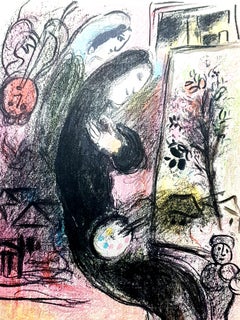
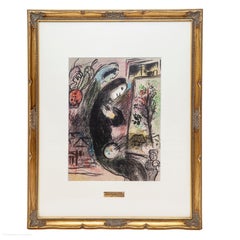
Marc Chagall - Inspiration - Original Lithograph from "Chagall Lithographe" v. 2
By Marc Chagall
Located in Collonge Bellerive, Geneve, CH
Marc Chagall
Original Lithograph from Chagall Lithographe 1957-1962. VOLUME II.
1963
Dimensions: 32 x 24 cm
From the unsigned edition of 10000 copies without margins
Reference: Mourlot 398
Condition : Excellent
Marc Chagall (born in 1887)
Marc Chagall was born in Belarus in 1887 and developed an early interest in art. After studying painting, in 1907 he left Russia for Paris, where he lived in an artist colony on the city’s outskirts. Fusing his own personal, dreamlike imagery with hints of the fauvism and cubism popular in France at the time, Chagall created his most lasting work—including I and the Village (1911)—some of which would be featured in the Salon des Indépendants exhibitions. After returning to Vitebsk for a visit in 1914, the outbreak of WWI trapped Chagall in Russia. He returned to France in 1923 but was forced to flee the country and Nazi persecution during WWII. Finding asylum in the U.S., Chagall became involved in set and costume design before returning to France in 1948. In his later years, he experimented with new art forms and was commissioned to produce numerous large-scale works. Chagall died in St.-Paul-de-Vence in 1985.
The Village
Marc Chagall was born in a small Hassidic community on the outskirts of Vitebsk, Belarus, on July 7, 1887. His father was a fishmonger, and his mother ran a small sundries shop in the village. As a child, Chagall attended the Jewish elementary school, where he studied Hebrew and the Bible, before later attending the Russian public school. He began to learn the fundamentals of drawing during this time, but perhaps more importantly, he absorbed the world around him, storing away the imagery and themes that would feature largely in most of his later work.
At age 19 Chagall enrolled at a private, all-Jewish art school and began his formal education in painting, studying briefly with portrait artist Yehuda Pen. However, he left the school after several months, moving to St. Petersburg in 1907 to study at the Imperial Society for the Protection of Fine Arts. The following year, he enrolled at the Svanseva School, studying with set designer Léon Bakst, whose work had been featured in Sergei Diaghilev's Ballets Russes. This early experience would prove important to Chagall’s later career as well.
Despite this formal instruction, and the widespread popularity of realism in Russia at the time, Chagall was already establishing his own personal style, which featured a more dreamlike unreality and the people, places and imagery that were close to his heart. Some examples from this period are his Window Vitebsk (1908) and My Fianceé with Black Gloves (1909), which pictured Bella Rosenfeld, to whom he had recently become engaged.
The Beehive
Despite his romance with Bella, in 1911 an allowance from Russian parliament member and art patron Maxim Binaver enabled Chagall to move to Paris, France. After settling briefly in the Montparnasse neighborhood, Chagall moved further afield to an artist colony known as La Ruche (“The Beehive”), where he began to work side by side with abstract painters such as Amedeo Modigliani and Fernand Léger as well as the avant-garde poet Guillaume Apollinaire. At their urging, and under the influence of the wildly popular fauvism and cubism, Chagall lightened his palette and pushed his style ever further from reality. I and the Village (1911) and Homage to Apollinaire (1912) are among his early Parisian works, widely considered to be his most successful and representative period.
Though his work stood stylistically apart from his cubist contemporaries, from 1912 to 1914 Chagall exhibited several paintings at the annual Salon des Indépendants exhibition, where works by the likes of Juan Gris, Marcel Duchamp and Robert Delaunay were causing a stir in the Paris art world. Chagall’s popularity began to spread beyond La Ruche, and in May 1914 he traveled to Berlin to help organize his first solo exhibition, at Der Sturm Gallery. Chagall remained in the city until the highly acclaimed show opened that June. He then returned to Vitebsk, unaware of the fateful events to come.
War, Peace and Revolution
In August 1914 the outbreak of World War I precluded Chagall’s plans to return to Paris. The conflict did little to stem the flow of his creative output, however, instead merely giving him direct access to the childhood scenes so essential to his work, as seen in paintings such as Jew in Green (1914) and Over Vitebsk (1914). His paintings from this period also occasionally featured images of the war’s impact on the region, as with Wounded Soldier (1914) and Marching (1915). But despite the hardships of life during wartime, this would also prove to be a joyful period for Chagall. In July 1915 he married Bella, and she gave birth to a daughter, Ida, the following year. Their appearance in works such as Birthday (1915), Bella and Ida by the Window (1917) and several of his “Lovers” paintings give a glimpse of the island of domestic bliss that was Chagall’s amidst the chaos.
To avoid military service and stay with his new family, Chagall took a position as a clerk in the Ministry of War Economy in St. Petersburg. While there he began work on his autobiography and also immersed himself in the local art scene, befriending novelist Boris Pasternak, among others. He also exhibited his work in the city and soon gained considerable recognition. That notoriety would prove important in the aftermath of the 1917 Russian Revolution when he was appointed as the Commissar of Fine Arts in Vitebsk. In his new post, Chagall undertook various projects in the region, including the 1919 founding of the Academy of the Arts. Despite these endeavors, differences among his colleagues eventually disillusioned Chagall. In 1920 he relinquished his position and moved his family to Moscow, the post-revolution capital of Russia.
In Moscow, Chagall was soon commissioned to create sets and costumes for various productions at the Moscow State Yiddish Theater...
Category
Surrealist 1960s Art
Materials
Lithograph
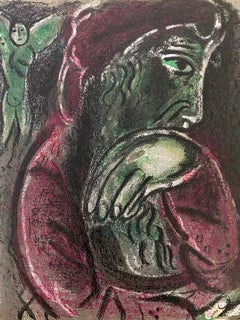
Job désespéré
By Marc Chagall
Located in Paris, FR
Original lithograph by Marc Chagall from The Bible of 1960
Job désespéré
Unsigned
35 x 26 cm
Excellent condition
Category
Surrealist 1960s Art
Materials
Lithograph
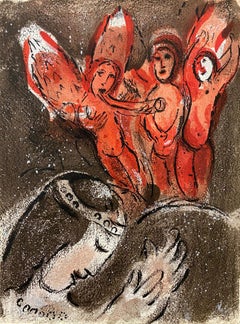
Sara et les Anges
By Marc Chagall
Located in Paris, FR
Original lithograph by Marc Chagall from The Bible of 1960
Sara et les Anges
Unsigned
35 x 26 cm
Excellent condition
Category
Surrealist 1960s Art
Materials
Lithograph
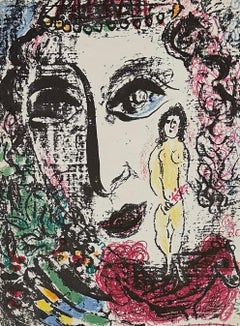
Apparition at the Circus, from 1963 Mourlot Lithographe II
By Marc Chagall
Located in Washington, DC
Artist: Marc Chagall
Title: Apparition at the Circus
Portfolio: Mourlot Lithographe II
Medium: Lithograph
Date: 1963
Edition: Unnumbered
Frame Size: 20 3/4" x 17 1/2"
Sheet Size: 12 ...
Category
Modern 1960s Art
Materials
Lithograph
"Eve Incurs God's Displeasure (M. 236), " Original Lithograph by Marc Chagall
By Marc Chagall
Located in Milwaukee, WI
"Eve Incurs God's Displeasure" is an original double sided lithograph by Marc Chagall. On recto the print features the biblical story of Eve being scolded by God for her sin in the G...
Category
Expressionist 1960s Art
Materials
Lithograph
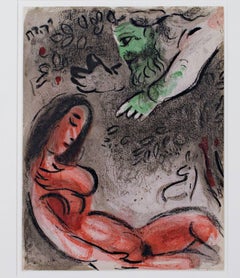
Eve Incurs God's Displeasure, from Drawings for the Bible
By Marc Chagall
Located in Washington, DC
Artist: Marc Chagall
Title: Eve Incurs God's Displeasure
Portfolio: Drawings for the Bible
Medium: Lithograph
Year: 1960
Edition: Unnumbered
Sheet Size: 14 3/8" x 10 1/4"
Image Size:...
Category
1960s Art
Materials
Lithograph
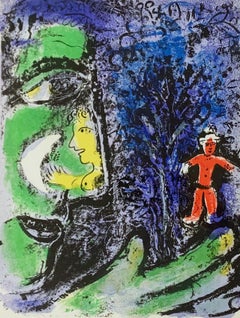
Profile and Red Child, from Mourlot Lithographe I
By Marc Chagall
Located in Washington, DC
Artist: Marc Chagall
Title: Profile and Red Child
Portfolio: Mourlot Lithographe I
Medium: Lithograph
Year: 1960
Edition: Unnumbered
Framed Size: 18 1/2" x 15 1/2"
Image Size: 12 1/2...
Category
Modern 1960s Art
Materials
Lithograph
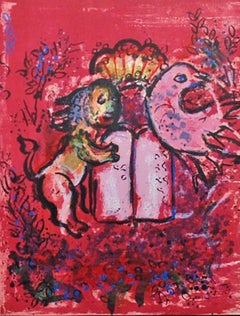
Frontispiece from the Jerusalem Windows series
By Marc Chagall
Located in Washington, DC
Artist: Marc Chagall
Medium: Original lithograph
Title: Frontispiece from the Jerusalem Windows series
Year: 1962
Edition: Unnumbered
Framed Size: 20...
Category
1960s Art
Materials
Lithograph
L'inspiré Self Portrait Marc Chagall Valentina Vava Lithograph 1963 Mourlot 398
By Marc Chagall
Located in Eversholt, Bedfordshire
Inspiration or L'inspiré - The artist and his wife, self-portrait.
This is a self-portrait of the great artist, depicting him as lost in thought before one of his paintings, which is apparently related to his home country Russia, as suggested by the small figure in the lower right of the work. Chagall’s wife Valentina (“Vava”), who was also from Russia, is looking over his shoulder, full of longing. The small surreal elements that are characteristic of Chagall’s paintings are also present here: the silhouettes of the houses that seems to stick out of the painting and a figure with a flute or trombone standing on its head.
Chagall Lithographe, Volume II of the catalogue raisonné of Chagall's lithographic work, see Mourlot 398, 1957-1962, Paris 1963, imprinted by Imprimerie Mourlot for the publisher André Sauret. A lithographic plate from the catalog that was published in 10,000 copies.
Condition : Excellent
Set inside a cream mount bearing brass cartellino
Visible sheet size length 23cm, Height 31.50cm
In a carved and gilded frame
Frame size Length 44cm, Height 55.5cm
The reverse with a paper label in Japanese
Provenance : Private Collection, purchased with Lovers in Grey
Category
Modern 1960s Art
Materials
Lithograph
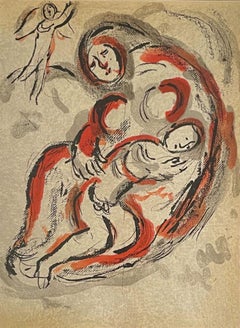
Hagar in the Desert
By Marc Chagall
Located in Washington, DC
Artist: Marc Chagall
Medium: Original lithograph
Title: Hagar in the Desert
Portfolio: Drawings for the Bible
From VERVE, Vol. X, Nos. 37 and 38.
...
Category
1960s Art
Materials
Lithograph
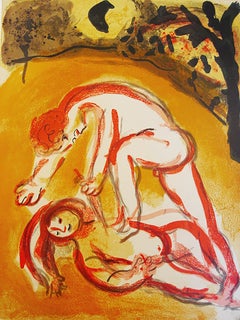
Cain and Abel
By Marc Chagall
Located in Washington, DC
Artist: Marc Chagall
Title: Cain and Abel
Portfolio: Drawings for the Bible
Medium: Lithograph
Year: 1960
Edition: Unnumbered
Sheet Size: 14 3/8" x 10 1/...
Category
1960s Art
Materials
Lithograph
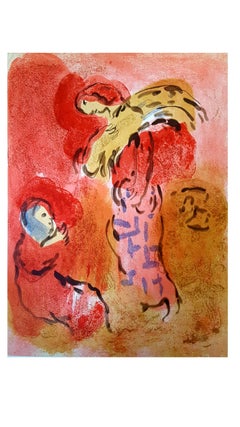
Marc Chagall - The Bible - Ruth Gleaning - Original Lithograph
By Marc Chagall
Located in Collonge Bellerive, Geneve, CH
Marc Chagall, Original Lithograh depicting an instant of the Bible.
Technique: Original lithograph in colours (Mourlot no. 234)
On the reverse: another black and white original litho...
Category
Modern 1960s Art
Materials
Lithograph
The Mountebanks
By Marc Chagall
Located in Washington, DC
Marc Chagall The Mountebanks
Artist: Marc Chagall
Medium: Original lithograph
Title: The Mountebanks
Signed: Unsigned
Portfolio: 1963 Mourlot Lithographe II
Year: 1963
Edition: Unnum...
Category
Expressionist 1960s Art
Materials
Lithograph
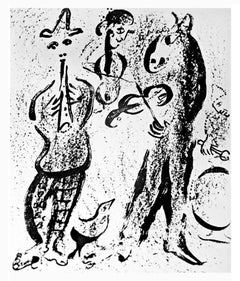
Marc Chagall - Green River - Original Lithograph
By Marc Chagall
Located in Collonge Bellerive, Geneve, CH
Marc Chagall
Original Lithograph
Double-page spread from the 1974 book "Chagall" by André Pieyre de Mandiargues.
Unsigned, edition of approximately 10,000
Published by Maeght
1974
D...
Category
Surrealist 1960s Art
Materials
Lithograph
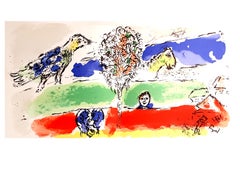
Marc Chagall - Revolution - Original 1960s Poster for Galiera Museum
By Marc Chagall
Located in Collonge Bellerive, Geneve, CH
after Marc CHAGALL (1887 - 1985)
Poster for "Les peintres témoins de leur temps Musée Galiera" 1963
Created by Charles Sorlier after Chagall's 1937 painting...
Category
Modern 1960s Art
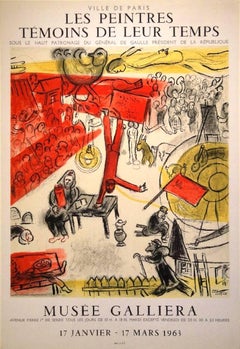
Adam and Eve are Banished from Paradise
By Marc Chagall
Located in Washington, DC
Artist: Marc Chagall
Title: Adam and Eve are Banished from Paradise
Portfolio: Drawings for the Bible
Medium: Lithograph
Year: 1960
Edition: Unnumbered
Sheet Size: 14 3/8" x 10 1/4"
...
Category
1960s Art
Materials
Lithograph
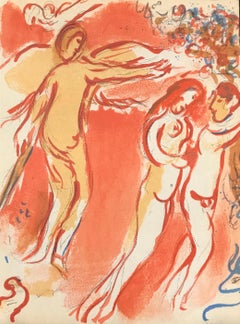
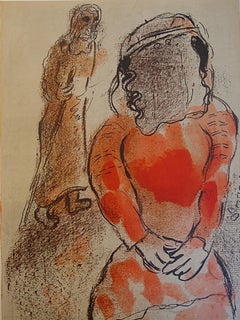
Tamar, Daughter-in-Law of Judah
By Marc Chagall
Located in Washington, DC
Artist: Marc Chagall
Title: Tamar, Daughter-in-Law of Judah
Portfolio: Drawings for the Bible
Medium: Lithograph
Date: 1960
Edition: Unnumbered
Sheet Size: 14 3/8" x 10 1/4"
Image Si...
Category
1960s Art
Materials
Lithograph
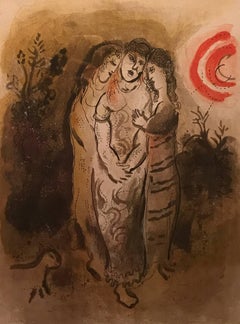
Naomi and Her Daughters-in-Law, from Drawings for the Bible
By Marc Chagall
Located in Washington, DC
Artist: Marc Chagall
Title: Naomi and Her Daughters-in-Law
Portfolio: Drawings for the Bible
Medium: Lithograph
Date: 1960
Edition: Unnumbered
...
Category
1960s Art
Materials
Lithograph
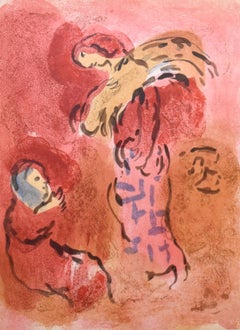
Ruth Gleaning
By Marc Chagall
Located in Washington, DC
Artist: Marc Chagall
Title: Ruth Gleaning
Portfolio: Drawings for the Bible
Medium: Lithograph
Year: 1960
Edition: Unnumbered
Sheet Size: 14 3/8" x 10 1/...
Category
1960s Art
Materials
Lithograph
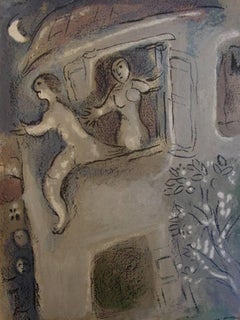
David Saved by Michal
By Marc Chagall
Located in Washington, DC
Artist: Marc Chagall
Title: David Saved by Michal
Portfolio: Drawings for the Bible
Medium: Lithograph
Date: 1960
Edition: Unnumbered
Sheet Size:...
Category
1960s Art
Materials
Lithograph
The Spies and the Woman - Héliogravure by Marc Chagall - 1960
By Marc Chagall
Located in Roma, IT
Héliogravure on brown-toned paper, no signature.
Héliogravure on bot sheets, recto and verso.
Edition of 6500 unsigned copies. Printed by Mourlot and published by Tériade on the A...
Category
Surrealist 1960s Art
Materials
Photogravure
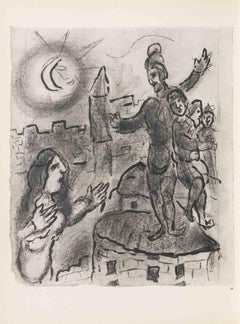
Nehemiah's Building of the Walls of Jerusale - Héliogravure by M. Chagall - 1960
By Marc Chagall
Located in Roma, IT
Héliogravure on brown-toned paper, no signature.
Héliogravure on bot sheets, recto and verso.
Edition of 6500 unsigned copies. Printed by Mourlot and published by Tériade on the A...
Category
Surrealist 1960s Art
Materials
Photogravure
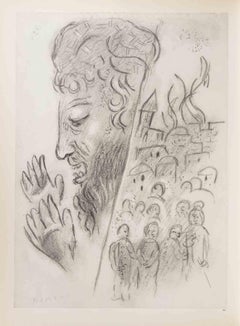
Joel's Prophecy - Héliogravure by Marc Chagall - 1960
By Marc Chagall
Located in Roma, IT
Héliogravure on brown-toned paper, so signature.
On bot sheets, recto and verso.
Edition of 6500 unsigned copies. Printed by Mourlot and published by Tériade, Paris.
Ref. Mourlot,...
Category
Surrealist 1960s Art
Materials
Photogravure
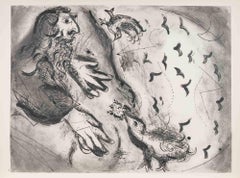
Balthasar and the Mystery of the Writing - Héliogravure by Marc Chagall - 1960
By Marc Chagall
Located in Roma, IT
Héliogravure on brown-toned paper, so signature.
On bot sheets, recto and verso.
Edition of 6500 unsigned copies. Printed by Mourlot and published by Tériade, Paris.
Ref. Mourlot,...
Category
Surrealist 1960s Art
Materials
Photogravure
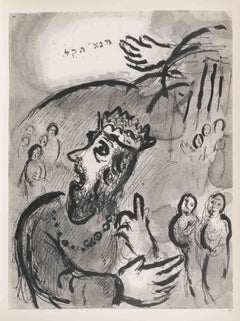
The Face of Israel - Lithograph by Marc Chagall - 1960
By Marc Chagall
Located in Roma, IT
Color lithograph realized by Marc Chagall in 1960 to illustrate "The Bible".
Edition of 6500, published by Tériade in no. 33 and 34 of the Art Magazine Verve.
Printed by Mourlot a...
Category
Surrealist 1960s Art
Materials
Lithograph
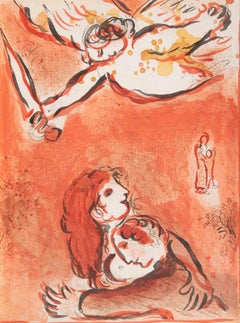
The Flood - Héliogravure by Marc Chagall - 1960
By Marc Chagall
Located in Roma, IT
Héliogravure on brown-toned paper, so signature.
On bot sheets, recto and verso.
Edition of 6500 unsigned copies. Printed by Mourlot and published by Tériade, Paris.
Ref. Mourlot,...
Category
Surrealist 1960s Art
Materials
Photogravure
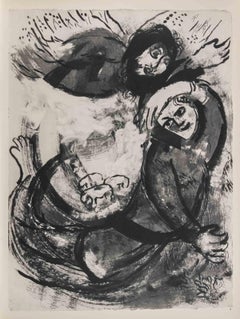
Sarah and Moses - Héliogravure by Marc Chagall - 1960
By Marc Chagall
Located in Roma, IT
Héliogravure on brown-toned paper, so signature.
On bot sheets, recto and verso.
Edition of 6500 unsigned copies. Printed by Mourlot and published by Tériade, Paris.
Ref. Mourlot,...
Category
Surrealist 1960s Art
Materials
Photogravure
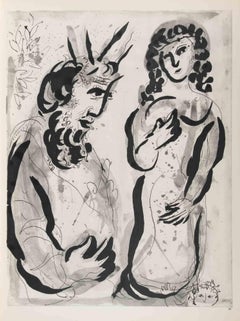
Hagaer in the Desert - Lithograph by Marc Chagall - 1960
By Marc Chagall
Located in Roma, IT
Color lithograph realized by Marc Chagall in 1960 to illustrate "The Bible".
Edition of 6500, published by Tériade in no. 33 and 34 of the Art Magazine Verve.
Printed by Mourlot a...
Category
Surrealist 1960s Art
Materials
Lithograph
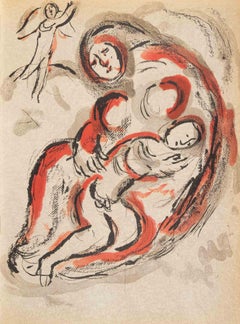
Ruth and Booz Sleeping - Lithograph by Marc Chagall - 1960
By Marc Chagall
Located in Roma, IT
Color lithograph realized by Marc Chagall in 1960 to illustrate "The Bible".
Edition of 6500, published by Tériade in no. 33 and 34 of the Art Magazine Verve.
Printed by Mourlot a...
Category
Surrealist 1960s Art
Materials
Lithograph
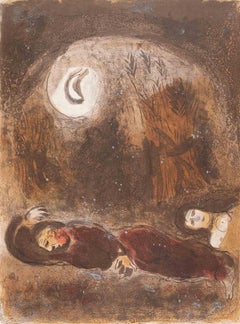
Job in Despair - Lithograph by Marc Chagall - 1960
By Marc Chagall
Located in Roma, IT
Color lithograph realized by Marc Chagall in 1960 to illustrate "The Bible".
Edition of 6500, published by Tériade in no. 33 and 34 of the Art Magazine Verve.
Printed by Mourlot a...
Category
Surrealist 1960s Art
Materials
Lithograph
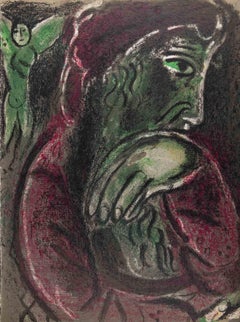
Meeting of Ruth and Boaz - Lithograph by Marc Chagall - 1960
By Marc Chagall
Located in Roma, IT
Color lithograph realized by Marc Chagall in 1960 to illustrate "The Bible".
Edition of 6500, published by Tériade in no. 33 and 34 of the Art Magazine Verve.
Printed by Mourlot a...
Category
Surrealist 1960s Art
Materials
Lithograph
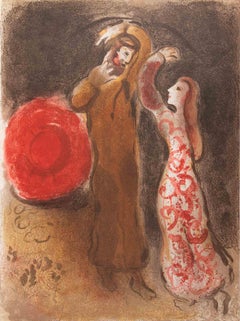
Rahab and the Spies in Jericho - Lithograph by Marc Chagall - 1960
By Marc Chagall
Located in Roma, IT
Color lithograph realized by Marc Chagall in 1960 to illustrate "The Bible".
Edition of 6500, published by Tériade in no. 33 and 34 of the Art Magazine Verve.
Printed by Mourlot a...
Category
Surrealist 1960s Art
Materials
Lithograph
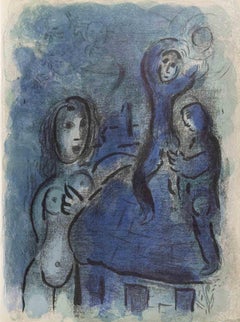
Job in Despair
By Marc Chagall
Located in Washington, DC
Artist: Marc Chagall
Title: Job in Despair
Portfolio: Drawings for the Bible
Medium: Lithograph
Date: 1960
Edition: Unnumbered
Sheet Size: 14 3/8" x 10 1/4"
Image Size: 14 3/8" x 10 ...
Category
1960s Art
Materials
Lithograph
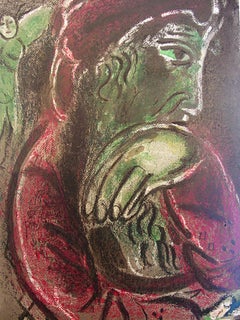
Balthassar and the Mystery of the Writing.. - Héliogravure by M. Chagall - 1960
By Marc Chagall
Located in Roma, IT
Héliogravure on brown-toned paper, no signature.
Héliogravure on bot sheets, recto and verso.
Edition of 6500 unsigned copies. Printed by Mourlot and published by Tériade on the A...
Category
Surrealist 1960s Art
Materials
Photogravure
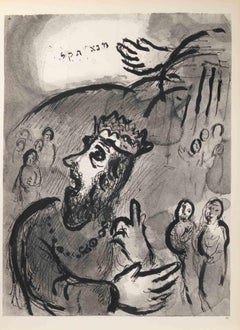
Joel, the Man with the Book- Héliogravure by Marc Chagall - 1960
By Marc Chagall
Located in Roma, IT
Héliogravure on brown-toned paper, no signature.
Héliogravure on bot sheets, recto and verso.
Edition of 6500 unsigned copies. Printed by Mourlot and published by Tériade on the A...
Category
Surrealist 1960s Art
Materials
Photogravure
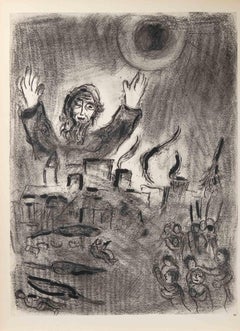
The Women's Offerings at the Tabernacle - Héliogravure by Marc Chagall - 1960
By Marc Chagall
Located in Roma, IT
Héliogravure on brown-toned paper, no signature.
Héliogravure on bot sheets, recto and verso.
Edition of 6500 unsigned copies. Printed by Mourlot and published by Tériade on the A...
Category
Surrealist 1960s Art
Materials
Photogravure
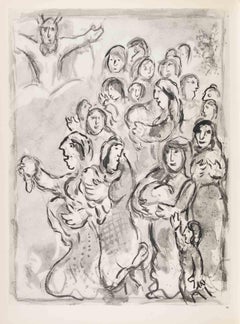
The King and the Woman - Héliogravure by Marc Chagall - 1960
By Marc Chagall
Located in Roma, IT
Héliogravure on brown-toned paper, no signature.
Héliogravure on bot sheets, recto and verso.
Edition of 6500 unsigned copies. Printed by Mourlot and published by Tériade on the A...
Category
Surrealist 1960s Art
Materials
Photogravure
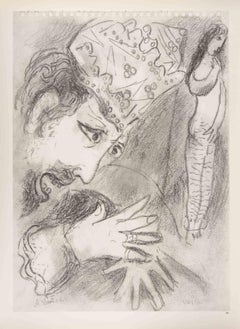
The King and the Queen - Héliogravure by Marc Chagall - 1960
By Marc Chagall
Located in Roma, IT
Héliogravure on brown-toned paper, so signature.
Héliogravure on bot sheets, recto and verso.
Edition of 6500 unsigned copies. Printed by Mourlot and published by Tériade, Paris.
...
Category
Surrealist 1960s Art
Materials
Photogravure
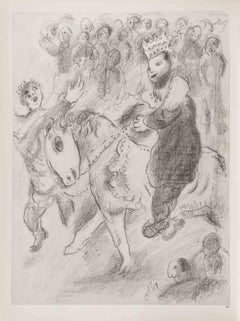
Satan Tests Job's Faith - Héliogravure by Marc Chagall - 1960
By Marc Chagall
Located in Roma, IT
Héliogravure on brown-toned paper, no signature.
Héliogravure on bot sheets, recto and verso.
Edition of 6500 unsigned copies. Printed by Mourlot and published by Tériade on the A...
Category
Surrealist 1960s Art
Materials
Photogravure
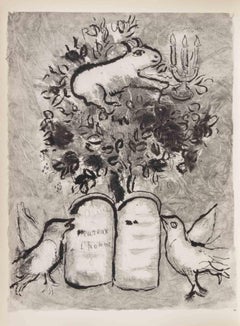
Itinerant Players from Chagall Lithographs I
By Marc Chagall
Located in Fort Lauderdale, FL
Marc Chagall (1887 - 1985)
Itinerant Players from Chagall Lithographs I, 1960
Lithograph
12.50 x 9.50 in
Category
Modern 1960s Art
Materials
Lithograph
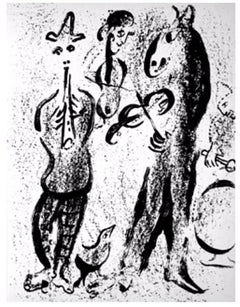
Marc Chagall - Meeting of Ruth and Boaz - Original Lithograph
By Marc Chagall
Located in Collonge Bellerive, Geneve, CH
Marc Chagall, Original Lithograh depicting an instant of the Bible.
Technique: Original lithograph in colours (Mourlot no. 234)
On the reverse: another black and white original litho...
Category
Modern 1960s Art
Materials
Lithograph
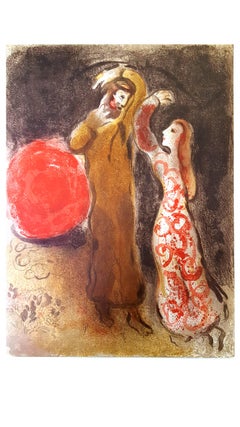
Marc Chagall - The Bible - Adam and Eve - Original Lithograph
By Marc Chagall
Located in Collonge Bellerive, Geneve, CH
Marc Chagall, Original Lithograh depicting an instant of the Bible.
Technique: Original lithograph in colours (Mourlot no. 234)
On the reverse: another black and white original litho...
Category
Modern 1960s Art
Materials
Lithograph
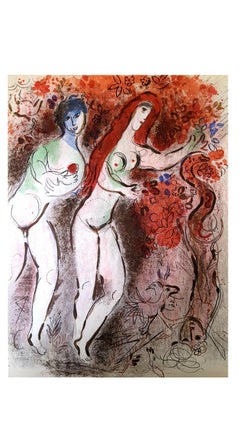
Marc Chagall - Flowered Clown - Original Lithograph
By Marc Chagall
Located in Collonge Bellerive, Geneve, CH
Marc Chagall
Original Lithograph
1963
Dimensions: 32 x 24 cm
From Chagall Lithograph II
Reference: Mourlot 399
Condition : Excellent
Unsigned and unumbered as issued
Category
Surrealist 1960s Art
Materials
Lithograph
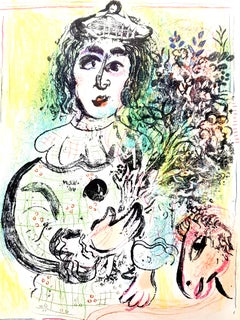
Marc Chagall - The Bible - Job - Original Lithograph
By Marc Chagall
Located in Collonge Bellerive, Geneve, CH
Marc Chagall, Original Lithograh depicting an instant of the Bible.
Technique: Original lithograph in colours (Mourlot no. 234)
On the reverse: another black and white original litho...
Category
Modern 1960s Art
Materials
Lithograph
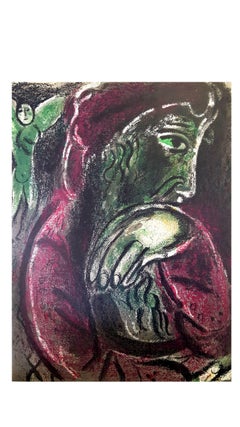
Ezra Teaches the People - Lithograph by Marc Chagall - 1960s
By Marc Chagall
Located in Roma, IT
Ezra Teaches the People is an artwork realized by March Chagall, 1960s.
Lithograph on brown-toned paper, no signature.
Lithograph on both sheets.
Edition of 6500 unsigned lithogra...
Category
Surrealist 1960s Art
Materials
Lithograph
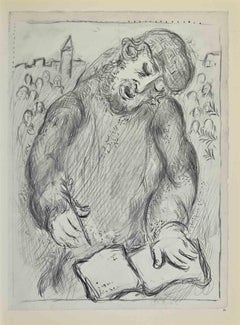
Birth of Samuel - Lithograph by Marc Chagall - 1960s
By Marc Chagall
Located in Roma, IT
Birth of Samuel is an artwork realized by March Chagall, 1960s.
Lithograph on brown-toned paper, no signature.
Lithograph on both sheets.
Edition of 6500 unsigned lithographs. Pri...
Category
Surrealist 1960s Art
Materials
Lithograph
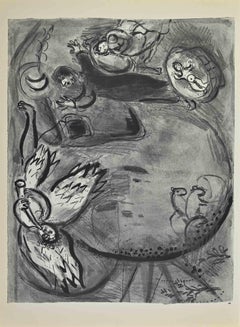
Esther Accuses Haman- Lithograph by Marc Chagall - 1960s
By Marc Chagall
Located in Roma, IT
Esther Accuses Haman is an artwork realized by March Chagall, 1960s.
Lithograph on brown-toned paper, no signature.
Lithograph on both sheets.
Edition of 6500 unsigned lithographs...
Category
Surrealist 1960s Art
Materials
Lithograph
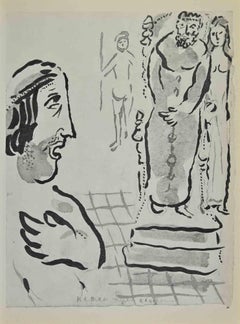
Sichem Removed Dina- Lithograph by Marc Chagall - 1960
By Marc Chagall
Located in Roma, IT
Sichem Removed Dina is an artwork realized by March Chagall, 1960s.
Lithograph on brown-toned paper, no signature.
Lithograph on both sheets.
Edition of 6500 unsigned lithographs...
Category
Surrealist 1960s Art
Materials
Lithograph
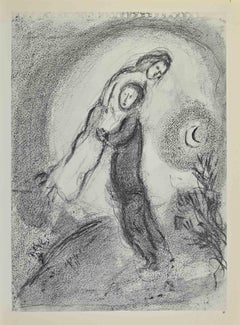
Marc Chagall - The Tables of the Law - Original Lithograph
By Marc Chagall
Located in Collonge Bellerive, Geneve, CH
Marc Chagall
The Tables of the Law
Lithograph from Vitraux pour Jerusalem
1962
Printed by Mourlot
Dimensions: 32.5 x 24.5 cm
Publisher: André Sauret, Monte-Carlo
Reference: Mourlo...
Category
Surrealist 1960s Art
Materials
Lithograph
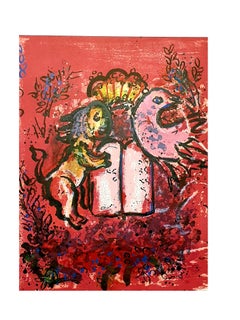
Bathsheba at David's Feet
By Marc Chagall
Located in Washington, DC
Artist: Marc Chagall
Medium: Color etching on Arches wove paper
Title: Moses Calls Darkness Down on Egypt, from Bible
Portfolio: Signed Bible Etchings with Watercolor
Year: 1958
Edit...
Category
1960s Art
Materials
Etching
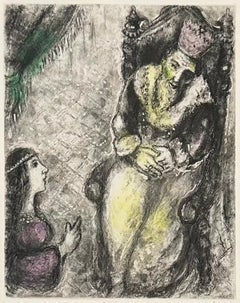
Marc Chagall - Original Lithograph
By Marc Chagall
Located in Collonge Bellerive, Geneve, CH
Marc Chagall
Original Lithograph
1963
Dimensions: 32 x 24 cm
Reference: Chagall Lithographe 1957-1962. VOLUME II.
Unsigned edition of over 5,000
Condition : Excellent
Marc Chagall (born in 1887)
Marc Chagall was born in Belarus in 1887 and developed an early interest in art. After studying painting, in 1907 he left Russia for Paris, where he lived in an artist colony on the city’s outskirts. Fusing his own personal, dreamlike imagery with hints of the fauvism and cubism popular in France at the time, Chagall created his most lasting work—including I and the Village (1911)—some of which would be featured in the Salon des Indépendants exhibitions. After returning to Vitebsk for a visit in 1914, the outbreak of WWI trapped Chagall in Russia. He returned to France in 1923 but was forced to flee the country and Nazi persecution during WWII. Finding asylum in the U.S., Chagall became involved in set and costume design before returning to France in 1948. In his later years, he experimented with new art forms and was commissioned to produce numerous large-scale works. Chagall died in St.-Paul-de-Vence in 1985.
The Village
Marc Chagall was born in a small Hassidic community on the outskirts of Vitebsk, Belarus, on July 7, 1887. His father was a fishmonger, and his mother ran a small sundries shop in the village. As a child, Chagall attended the Jewish elementary school, where he studied Hebrew and the Bible, before later attending the Russian public school. He began to learn the fundamentals of drawing during this time, but perhaps more importantly, he absorbed the world around him, storing away the imagery and themes that would feature largely in most of his later work.
At age 19 Chagall enrolled at a private, all-Jewish art school and began his formal education in painting, studying briefly with portrait artist Yehuda Pen. However, he left the school after several months, moving to St. Petersburg in 1907 to study at the Imperial Society for the Protection of Fine Arts. The following year, he enrolled at the Svanseva School, studying with set designer Léon Bakst, whose work had been featured in Sergei Diaghilev's Ballets Russes. This early experience would prove important to Chagall’s later career as well.
Despite this formal instruction, and the widespread popularity of realism in Russia at the time, Chagall was already establishing his own personal style, which featured a more dreamlike unreality and the people, places and imagery that were close to his heart. Some examples from this period are his Window Vitebsk (1908) and My Fianceé with Black Gloves (1909), which pictured Bella Rosenfeld, to whom he had recently become engaged.
The Beehive
Despite his romance with Bella, in 1911 an allowance from Russian parliament member and art patron Maxim Binaver enabled Chagall to move to Paris, France. After settling briefly in the Montparnasse neighborhood, Chagall moved further afield to an artist colony known as La Ruche (“The Beehive”), where he began to work side by side with abstract painters such as Amedeo Modigliani and Fernand Léger as well as the avant-garde poet Guillaume Apollinaire. At their urging, and under the influence of the wildly popular fauvism and cubism, Chagall lightened his palette and pushed his style ever further from reality. I and the Village (1911) and Homage to Apollinaire (1912) are among his early Parisian works, widely considered to be his most successful and representative period.
Though his work stood stylistically apart from his cubist contemporaries, from 1912 to 1914 Chagall exhibited several paintings at the annual Salon des Indépendants exhibition, where works by the likes of Juan Gris, Marcel Duchamp and Robert Delaunay were causing a stir in the Paris art world. Chagall’s popularity began to spread beyond La Ruche, and in May 1914 he traveled to Berlin to help organize his first solo exhibition, at Der Sturm Gallery. Chagall remained in the city until the highly acclaimed show opened that June. He then returned to Vitebsk, unaware of the fateful events to come.
War, Peace and Revolution
In August 1914 the outbreak of World War I precluded Chagall’s plans to return to Paris. The conflict did little to stem the flow of his creative output, however, instead merely giving him direct access to the childhood scenes so essential to his work, as seen in paintings such as Jew in Green (1914) and Over Vitebsk (1914). His paintings from this period also occasionally featured images of the war’s impact on the region, as with Wounded Soldier (1914) and Marching (1915). But despite the hardships of life during wartime, this would also prove to be a joyful period for Chagall. In July 1915 he married Bella, and she gave birth to a daughter, Ida, the following year. Their appearance in works such as Birthday (1915), Bella and Ida by the Window (1917) and several of his “Lovers” paintings give a glimpse of the island of domestic bliss that was Chagall’s amidst the chaos.
To avoid military service and stay with his new family, Chagall took a position as a clerk in the Ministry of War Economy in St. Petersburg. While there he began work on his autobiography and also immersed himself in the local art scene, befriending novelist Boris Pasternak, among others. He also exhibited his work in the city and soon gained considerable recognition. That notoriety would prove important in the aftermath of the 1917 Russian Revolution when he was appointed as the Commissar of Fine Arts in Vitebsk. In his new post, Chagall undertook various projects in the region, including the 1919 founding of the Academy of the Arts. Despite these endeavors, differences among his colleagues eventually disillusioned Chagall. In 1920 he relinquished his position and moved his family to Moscow, the post-revolution capital of Russia.
In Moscow, Chagall was soon commissioned to create sets and costumes for various productions at the Moscow State Yiddish...
Category
Surrealist 1960s Art
Materials
Lithograph
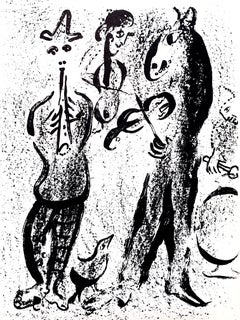
End of Absalom
By Marc Chagall
Located in OPOLE, PL
Marc Chagall (1887-1985) - End of Absalom
Etching and watercolour from 1958.
The edition of 100 on Arches paper.
Dimensions of work: 52 x 37.5 cm.
Hand signed.
Publisher: Tériad...
Category
Modern 1960s Art
Materials
Etching, Aquatint

$4,599 Sale Price
30% Off
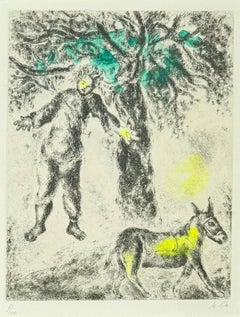
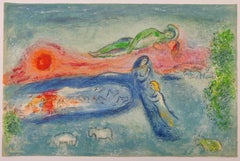
Marc Chagall -- Death of Dorcon
By Marc Chagall
Located in BRUCE, ACT
Marc Chagall
The Death of Dorcon, from Chagall's Daphnis and Chloé suite, 1961
Sheet size: 42 x 64 cm
Unsigned
From the book edition of 250 (there is also a signed and numbered edit...
Category
1960s Art
Materials
Lithograph
$4,696 Sale Price
20% Off
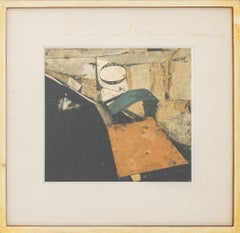
Abstract Composition
By Frank Roth
Located in Astoria, NY
Frank Roth (American, 1936-2019), Untitled, Oil and Wax Medium on Paper with Collage Elements, 1962, signed and dated upper right, painted wood frame. Image: 10" H x 11" W; frame: 17...
Category
Post-War 1960s Art
Materials
Paper, Mixed Media, Wax, Oil
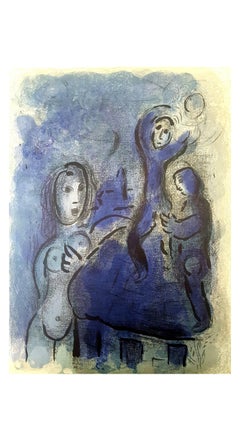
Marc Chagall - The Bible - Rahab and the Spies of Jericho - Original Lithograph
By Marc Chagall
Located in Collonge Bellerive, Geneve, CH
Marc Chagall, Original Lithograh depicting an instant of the Bible.
Technique: Original lithograph in colours (Mourlot no. 234)
On the reverse: another black and white original litho...
Category
Modern 1960s Art
Materials
Lithograph
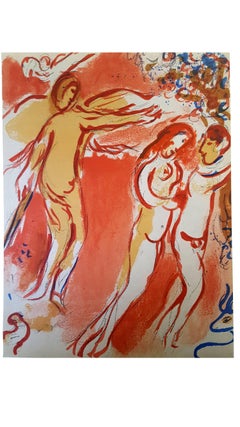
Marc Chagall - The Bible - Paradise - Original Lithograph
By Marc Chagall
Located in Collonge Bellerive, Geneve, CH
Marc Chagall, Original Lithograh depicting an instant of the Bible.
Technique: Original lithograph in colours (Mourlot no. 234)
On the reverse: another black and white original litho...
Category
Modern 1960s Art
Materials
Lithograph
Marc Chagall - The Bible - Rachel - Original Lithograph
By Marc Chagall
Located in Collonge Bellerive, Geneve, CH
Marc Chagall, Original Lithograh depicting an instant of the Bible.
Technique: Original lithograph in colours (Mourlot no. 234)
On the reverse: another black and white original litho...
Category
Modern 1960s Art
Materials
Lithograph
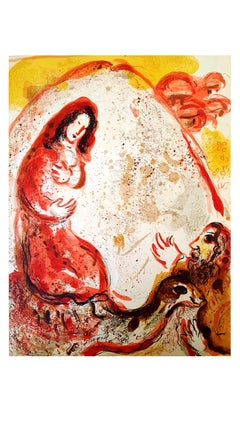
Le Jeu des Acrobates, original lithograph from "Chagall Lithographe II"
By Marc Chagall
Located in Collonge Bellerive, Geneve, CH
Marc Chagall
Original Lithograph
1963
Dimensions: 32 x 24 cm
As published in Chagall Lithographe 1957-1962. VOLUME II.
Unsigned, as issued, from the edition of several thousand
Condition : Excellent
Reference: Mourlot/Gauss 401
Marc Chagall (born in 1887)
Marc Chagall was born in Belarus in 1887 and developed an early interest in art. After studying painting, in 1907 he left Russia for Paris, where he lived in an artist colony on the city’s outskirts. Fusing his own personal, dreamlike imagery with hints of the fauvism and cubism popular in France at the time, Chagall created his most lasting work—including I and the Village (1911)—some of which would be featured in the Salon des Indépendants exhibitions. After returning to Vitebsk for a visit in 1914, the outbreak of WWI trapped Chagall in Russia. He returned to France in 1923 but was forced to flee the country and Nazi persecution during WWII. Finding asylum in the U.S., Chagall became involved in set and costume design before returning to France in 1948. In his later years, he experimented with new art forms and was commissioned to produce numerous large-scale works. Chagall died in St.-Paul-de-Vence in 1985.
The Village
Marc Chagall was born in a small Hassidic community on the outskirts of Vitebsk, Belarus, on July 7, 1887. His father was a fishmonger, and his mother ran a small sundries shop in the village. As a child, Chagall attended the Jewish elementary school, where he studied Hebrew and the Bible, before later attending the Russian public school. He began to learn the fundamentals of drawing during this time, but perhaps more importantly, he absorbed the world around him, storing away the imagery and themes that would feature largely in most of his later work.
At age 19 Chagall enrolled at a private, all-Jewish art school and began his formal education in painting, studying briefly with portrait artist Yehuda Pen. However, he left the school after several months, moving to St. Petersburg in 1907 to study at the Imperial Society for the Protection of Fine Arts. The following year, he enrolled at the Svanseva School, studying with set designer Léon Bakst, whose work had been featured in Sergei Diaghilev's Ballets Russes. This early experience would prove important to Chagall’s later career as well.
Despite this formal instruction, and the widespread popularity of realism in Russia at the time, Chagall was already establishing his own personal style, which featured a more dreamlike unreality and the people, places and imagery that were close to his heart. Some examples from this period are his Window Vitebsk (1908) and My Fianceé with Black Gloves (1909), which pictured Bella Rosenfeld, to whom he had recently become engaged.
The Beehive
Despite his romance with Bella, in 1911 an allowance from Russian parliament member and art patron Maxim Binaver enabled Chagall to move to Paris, France. After settling briefly in the Montparnasse neighborhood, Chagall moved further afield to an artist colony known as La Ruche (“The Beehive”), where he began to work side by side with abstract painters such as Amedeo Modigliani and Fernand Léger as well as the avant-garde poet Guillaume Apollinaire. At their urging, and under the influence of the wildly popular fauvism and cubism, Chagall lightened his palette and pushed his style ever further from reality. I and the Village (1911) and Homage to Apollinaire (1912) are among his early Parisian works, widely considered to be his most successful and representative period.
Though his work stood stylistically apart from his cubist contemporaries, from 1912 to 1914 Chagall exhibited several paintings at the annual Salon des Indépendants exhibition, where works by the likes of Juan Gris, Marcel Duchamp and Robert Delaunay were causing a stir in the Paris art world. Chagall’s popularity began to spread beyond La Ruche, and in May 1914 he traveled to Berlin to help organize his first solo exhibition, at Der Sturm Gallery. Chagall remained in the city until the highly acclaimed show opened that June. He then returned to Vitebsk, unaware of the fateful events to come.
War, Peace and Revolution
In August 1914 the outbreak of World War I precluded Chagall’s plans to return to Paris. The conflict did little to stem the flow of his creative output, however, instead merely giving him direct access to the childhood scenes so essential to his work, as seen in paintings such as Jew in Green (1914) and Over Vitebsk (1914). His paintings from this period also occasionally featured images of the war’s impact on the region, as with Wounded Soldier (1914) and Marching (1915). But despite the hardships of life during wartime, this would also prove to be a joyful period for Chagall. In July 1915 he married Bella, and she gave birth to a daughter, Ida, the following year. Their appearance in works such as Birthday (1915), Bella and Ida by the Window (1917) and several of his “Lovers” paintings give a glimpse of the island of domestic bliss that was Chagall’s amidst the chaos.
To avoid military service and stay with his new family, Chagall took a position as a clerk in the Ministry of War Economy in St. Petersburg. While there he began work on his autobiography and also immersed himself in the local art scene, befriending novelist Boris Pasternak, among others. He also exhibited his work in the city and soon gained considerable recognition. That notoriety would prove important in the aftermath of the 1917 Russian Revolution when he was appointed as the Commissar of Fine Arts in Vitebsk. In his new post, Chagall undertook various projects in the region, including the 1919 founding of the Academy of the Arts. Despite these endeavors, differences among his colleagues eventually disillusioned Chagall. In 1920 he relinquished his position and moved his family to Moscow, the post-revolution capital of Russia.
In Moscow, Chagall was soon commissioned to create sets and costumes for various productions at the Moscow State Yiddish Theater, where he would paint a series of murals titled Introduction to the Jewish Theater as well. In 1921, Chagall also found work as a teacher at a school for war orphans. By 1922, however, Chagall found that his art had fallen out of favor, and seeking new horizons he left Russia for good.
Flight
After a brief stay in Berlin, where he unsuccessfully sought to recover the work exhibited at Der Sturm before the war, Chagall moved his family to Paris in September 1923. Shortly after their arrival, he was commissioned by art dealer and publisher Ambroise Vollard to produce a series of etchings for a new edition of Nikolai Gogol's 1842 novel Dead Souls. Two years later Chagall began work on an illustrated edition of Jean de la Fontaine’s Fables, and in 1930 he created etchings for an illustrated edition of the Old Testament, for which he traveled to Palestine to conduct research.
Chagall’s work during this period brought him new success as an artist and enabled him to travel throughout Europe in the 1930s. He also published his autobiography, My Life (1931), and in 1933 received a retrospective at the Kunsthalle in Basel, Switzerland. But at the same time that Chagall’s popularity was spreading, so, too, was the threat of Fascism and Nazism. Singled out during the cultural "cleansing" undertaken by the Nazis in Germany, Chagall’s work was ordered removed from museums throughout the country. Several pieces were subsequently burned, and others were featured in a 1937 exhibition of “degenerate art” held in Munich. Chagall’s angst regarding these troubling events and the persecution of Jews in general can be seen in his 1938 painting White Crucifixion...
Category
Surrealist 1960s Art
Materials
Lithograph
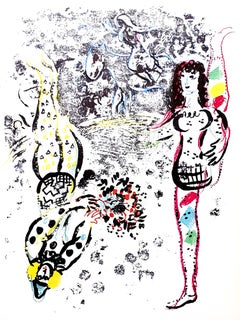
Claude Bourdet, Etching by Marc Chagall
By Marc Chagall
Located in Long Island City, NY
Marc Chagall, Russian (1887 - 1985) - Claude Bourdet, Medium: Etching on Japon, Image Size: 3.25 x 3 inches, Size: 4.75 x 4 in. (12.07 x 10.16 cm), Provenance: From the collection o...
Category
Modern 1960s Art
Materials
Etching
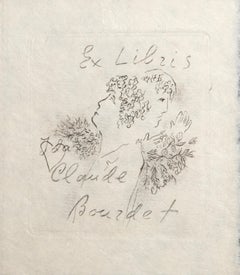
Moreover they made garments of ministration to minister... - The Exodus
By Marc Chagall
Located in OPOLE, PL
This work will be exhibited at Art on Paper NYC, September 4–7, 2025.
–
Marc Chagall (1887-1985) - Moreover they made garments of ministration to minister in the Sanctuarie; they m...
Category
Symbolist 1960s Art
Materials
Lithograph
$2,257 Sale Price
30% Off