Want more images or videos?
Request additional images or videos from the seller
1 of 5
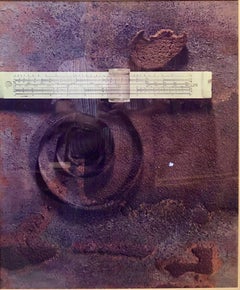
Earl ChildressFrank Stella's Assistant Large Scale Print on Plexiglass1990
1990
Price:$2,500
$3,600List Price
About the Item
- Creator:Earl Childress (1956, American)
- Creation Year:1990
- Dimensions:Height: 41.75 in (106.05 cm)Width: 41.75 in (106.05 cm)
- Medium:
- Movement & Style:
- Period:
- Condition:
- Gallery Location:Surfside, FL
- Reference Number:1stDibs: LU3821988283
About the Seller
4.9
Platinum Seller
Premium sellers with a 4.7+ rating and 24-hour response times
Established in 1995
1stDibs seller since 2014
1,846 sales on 1stDibs
Authenticity Guarantee
In the unlikely event there’s an issue with an item’s authenticity, contact us within 1 year for a full refund. DetailsMoney-Back Guarantee
If your item is not as described, is damaged in transit, or does not arrive, contact us within 7 days for a full refund. Details24-Hour Cancellation
You have a 24-hour grace period in which to reconsider your purchase, with no questions asked.Vetted Professional Sellers
Our world-class sellers must adhere to strict standards for service and quality, maintaining the integrity of our listings.Price-Match Guarantee
If you find that a seller listed the same item for a lower price elsewhere, we’ll match it.Trusted Global Delivery
Our best-in-class carrier network provides specialized shipping options worldwide, including custom delivery.You May Also Like
Clouded View
By Henri Venne
Located in Montreal, Quebec
My work emerges from research on memory and the remembrance of landscape, where vaporous atmospheres of evanescent recollections are illustrated. My work thus, contains ghostly and e...
Category
21st Century and Contemporary Post-Modern Abstract Photography
Materials
Plexiglass, Photographic Paper
Pastiche
By Henri Venne
Located in Montreal, Quebec
My work emerges from research on memory and the remembrance of landscape, where vaporous atmospheres of evanescent recollections are illustrated. My work thus, contains ghostly and e...
Category
21st Century and Contemporary Post-Modern Abstract Photography
Materials
Plexiglass, Photographic Paper
La Cortina Del Rey
Located in Brooklyn, NY
In this striking image, from Fidel Santos' Curtain Series, a dramatic and deeply aged carved curtain with elaborate folds, drapery, and detailed tassels is highlighted against a sta...
Category
21st Century and Contemporary Baroque Abstract Photography
Materials
Plexiglass, Archival Ink, Mixed Media
Curtain Etching
Located in Brooklyn, NY
This photograph by Fidel Santos depicts an 18th-century etching on parchment paper, meticulously depicting a curtain with beautifully rendered folds and shadows that seem to breathe ...
Category
21st Century and Contemporary Baroque Abstract Photography
Materials
Plexiglass, Archival Ink, Mixed Media
Past, Present and Future
Located in New York, NY
Born of an auditory-verbal impairment in Busan, South Korea, Young Sam Kim grew to become exceptionally perceptive to visual stimuli. Kim’s inclination for painstaking observation co...
Category
2010s Contemporary Abstract Photography
Materials
Plexiglass, Photographic Film, Photographic Paper, Photogram
Rush
Located in New York, NY
Born of an auditory-verbal impairment in Busan, South Korea, Young Sam Kim grew to become exceptionally perceptive to visual stimuli. Kim’s inclination for painstaking observation co...
Category
2010s Contemporary Color Photography
Materials
Plexiglass, Photographic Film, Photographic Paper, Photogram
Through the Ages
Located in New York, NY
Born of an auditory-verbal impairment in Busan, South Korea, Young Sam Kim grew to become exceptionally perceptive to visual stimuli. Kim’s inclination for painstaking observation co...
Category
2010s Contemporary Color Photography
Materials
Plexiglass, Photographic Film, Photographic Paper, Photogram
Leave
Located in New York, NY
Born of an auditory-verbal impairment in Busan, South Korea, Young Sam Kim grew to become exceptionally perceptive to visual stimuli. Kim’s inclination for painstaking observation co...
Category
2010s Contemporary Color Photography
Materials
Plexiglass, Photographic Film, Photographic Paper, Photogram
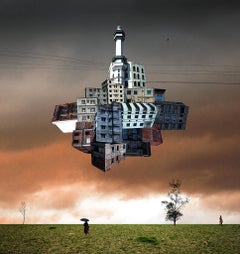
Fortress
Located in New York, NY
Born of an auditory-verbal impairment in Busan, South Korea, Young Sam Kim grew to become exceptionally perceptive to visual stimuli. Kim’s inclination for painstaking observation co...
Category
2010s Contemporary Color Photography
Materials
Plexiglass, Photographic Film, Photographic Paper, Photogram
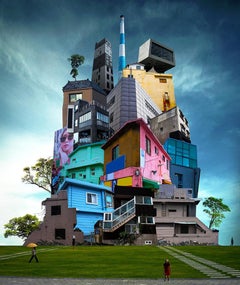
Mixed-use 02
Located in New York, NY
Born of an auditory-verbal impairment in Busan, South Korea, Young Sam Kim grew to become exceptionally perceptive to visual stimuli. Kim’s inclination for painstaking observation co...
Category
2010s Contemporary Color Photography
Materials
Plexiglass, Photographic Film, Photographic Paper, Photogram
More From This Seller
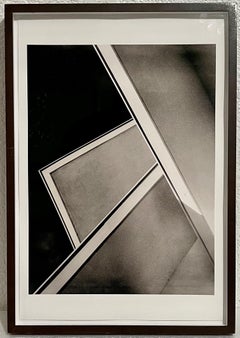
View AllBrazilian Conceptual Modernist Photograph Jose Yalenti Architectural Abstract
Located in Surfside, FL
José Yalenti, (1895-1967) Brazilian Photographer
"Beiras" (Sides)
Photo, numbered 5/15, circa 1950, (printed later) on premium luster photo paper with ultrachrome ink.
Art: 15" H x 11" W; Frame: 20 1/4" H x 14 1/4" W.
Provenance: Dickinson Roundell Gallery
José Yalenti’s Architecture photos seem at first disorienting, abstract black & white and grey surfaces, cut through by startlingly straight lines and a variety of surface textures. Much of his work is of mid-century Latin American architecture, by the likes of Oscar Niemeyer and Roberto Burle Marx.
José Yalenti was born in São Paulo, Brazil in 1895. On April 28, 1939, a group of photography aficionados, including Yalenti, formed the Foto Clube Bandeirante, later changed to Foto Cine Clube Bandeirante, or FCCB.
Starting in the late 1940s, a contingent of FCCB photographers began creating photographs of abstracted architectural motifs (as in Architecture or Twilight), and eventually became known as the Escola Paulista, or “Paulista School.” Yalenti was among the members of the unofficial Paulista School. Between 1945 and 1960, the Paulista School photographers explored the rapidly changing formal qualities of São Paulo. By photographing skyscrapers and stairways at steep angles, creating closely cropped compositions from found geometric motifs, and capturing the flattening effects of shadows, Paulista School photographers investigated the new physical perspectives emerging in the urban environment. They created a distinctively Modern aesthetic that used strong contrasts of light and dark, geometric forms, linear compositions, and collapsed space to assert photography’s status as an artistic medium.
As part of their pursuit of photographic Modernism, Yalenti and his fellow Brazilians adapted the stylistic innovations of U.S. and European photographers such as f.64, New Objectivity, Dada, Surrealism, and the Bauhaus, to the Brazilian context. Along with his FCCB compatriots—Thomaz Farkas, Geraldo de Barros, and German Lorca, among others—Yalenti explored the formal properties of black-and-white image-making.
Yalenti and the Paulista’s School’s abstract photographs responded to the new trends in Brazilian Modernist architecture being developed by young architects in São Paulo and Rio de Janeiro. In 1939, Lúcio Costa, Oscar Niemeyer, and Affonso Reidy broke ground on the Ministry of Education and Health Building (MES), the building that would define Brazilian architectural modernism. The Rio-based team combined elements of Le Corbusier’s undecorated structural purity with Brazilian regional design to produce a more organic and “tropical” Modernism that responded to the local culture and climate.
The sinuous and sensuous curves of Yalenti’s photograph are directly influenced by stylistic developments in architecture at the MES, including the building’s covered entry and its organically abstract contours. By 1957, when Yalenti created Architecture or Twilight, Brazil was globally recognized as an architectural leader. MoMA in New York City organized a popular exhibition of Brazilian architecture in 1943 (“Brazil Builds”), and highlighted the country again in its survey show "Latin American Architecture since 1945," that ran from 1955–56. Brazilian photography...
Category
20th Century Modern Black and White Photography
Materials
Photographic Paper
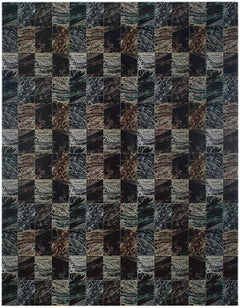
Untitled DYSMORPHOLOGIES SERIES (hair magnification in grid) Mounted to Aluminum
By Ken Gonzales-Day
Located in Surfside, FL
Genre: Contemporary
Subject: People
Medium: Digital, Print
Surface: Metal
Country: United States
Dimensions: 49 3/4" x 38 3/4"
This extra large montage of photographs is mounted onto aluminum from Ken Gonzales-Day's dysmorphologies series.
Ken Gonzales-Day's interdisciplinary and conceptually grounded projects consider the history of photography, the construction of race, and the limits of representational systems ranging from the lynching photograph to museum display. The Searching for California Hang Trees series offered a critical look at the legacies of landscape photography in the West while his most recent project considers the sculptural depiction of race. Profiled began as an exploration of the influence of eighteenth century "scientific" thought on twenty-first century institutions ranging from the museum to the prison and extended to the sculpture and portrait bust collections of several major museums including: The J. Paul Getty Museum; The Field Museum, Chicago; The Museum of Man, San Diego; L'École des beaux-arts,Paris. The Bode Museum, Berlin, Park Sanssouci, Potsdam; The National Museum of Natural History, Paris; The Yale Center for British Art, New Haven; among others. Gonzales-Day lives in Los Angeles and is Chair of the Art Department at Scripps College.
Fellowships and Grants
Chercheur Accueilli, Institut National d'Histoire de l'Art (INHA); COLA Individual Artist Award; Art Mattes Grant; Mid-Career Award, California Communtiy Foundation; Durfee Fondation ACG; Graves Award for the Humanities; Visiting Scholar/Artist-in-Residence, Getty Research Institute; Senior Fellow, American Art Museum and National Portrait Gallery of the Smithsonian Institution; Fellow, Rockefeller Foundation Study and Conference Center, Bellagio, Italy; Van Lier Fellow, ISP, Whitney Museum of American Art; Rotary International.
Select Solo Exhibitions
Luis De Jesus Los Angeles; Galerie Steph, Singapore; The Vincent Price Museum, LA; Fred Torres Collaborations, NYC; Tufts University, Medford, MA; Las Cienegas Projects, L.A.; UCSD Art Gallery, La Jolla, CA; Steve Turner Contemporary, L.A.; LAXART, L.A.; CUE Art Foundation, NY, NY; Pomona College Museum of Art, Claremont, CA; Susanne Vielmetter Projects, L. A.; Cristinerose Gallery, NY, NY; White Columns, NY, NY, among others.
Select Group Exhibitions
Our America: The Latino presence in American Art, Smithsonian Institution; MDE11, Medellin, Colombia; COLA 2011, at LAMAG, Los Angeles; Spy Numbers, Palais de Tokyo, Paris;How Many Billboards, MAK Center, W.H.; State of Mind, MoPA, San Diego; Phantom Sightings, LACMA, L.A.(traveled); Encuentro Hemispherico, Bogota; Under Erasure, Temple Bar Gallery and Studios, Dublin; Under Pain of Death, Austrian Cultural Forum, NYC;ArtMediaPolitique, DIX291, Paris; Viva Mexico, Zacheta National Gallery, Warsaw (traveled); Past Over, Steve Turner Contemporary, L.A.; Crimes of Omission, ICA Philadelphia; Exile of the Imaginary, Generali Foundation, Vienna; Civil Restitutions, Thomas Dane Gallery...
Category
1990s Abstract Geometric Abstract Photography
Materials
Digital
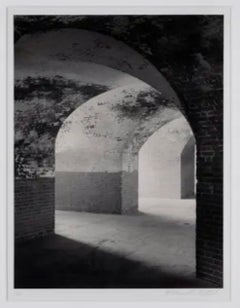
Architectural Gelatin SIlver Print Vellum Photograph Mark Citret Vintage Photo
By Mark Citret
Located in Surfside, FL
Mark Citret, American, b. 1949.
"Third Story Arches", Fort Point, 1998
Silver gelatin print hand signed and editioned 1/45 in pencil along lower edge.
Published: "Along the Way" Mark Citret, Published Custom & Limited Editions, San Francisco, 1999. Plate #23.
Dimensions: Image area measures 8.25"h x 6.25"w., Frame measures 17.5 x 14.5
Mark Citret was born in 1949 in Buffalo, New York, and grew up in San Francisco. He began photographing seriously in 1968 and received both his BA and MA in Art from San Francisco State University.
He has worked on many photographic projects over the course of his career and continues to do so. From 1973 to 1975 he lived in and photographed Halcott Center, a farming valley in New York's Catskill Mountains. In the mid to late 1980s, he produced a large body of work with the working title of "Unnatural Wonders", which is his personal survey of architecture in the national parks. He spent four years, 1990 to 1993, photographing "Coastside Plant", a massive construction site in the southwest corner of San Francisco. Since he moved to his current home in 1986, he has been photographing the ever-changing play of ocean and sky from the cliff behind his house. Currently, he is in the midst of a multi-year commission from the University of California San Francisco, photographing the construction of their 43 acre Mission Bay life-sciences campus. He has taught photography at the University of California Berkeley Extension since 1982 and the University of California Santa Cruz Extension since 1988, and for organizations such as the Center for Photography at Woodstock, the Ansel Adams Gallery, and Santa Fe Workshops.He was included in the Weston Gallery exhibition NIGHT VISION: PHOTOGRAPHING IN THE DARK works by: Berenice Abbott, Wynn Bullock, Mark Citret, Harold Davis, Robert Frank, Ernst Haas, Chip Hooper, Rolfe Horn, Dale Johnson, Robb Johnson, Michael Kenna, André Kertész, Bob Kolbrener, Paul Kozal, Sally Mann and Jerry Uelsmann and PATTERNS IN ARCHITECTURE works by Ansel Adams, Brett Weston, Edward Weston, Oliver Gagliani, Pirkle Jones...
Category
1990s American Modern Black and White Photography
Materials
Vellum, Silver Gelatin
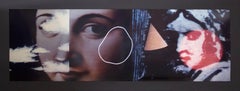
Abstract Portrait Chromogenic Color Print
By Sandra Haber
Located in Surfside, FL
American artist and photographer, Sandra Haber, born 1956
Exhibited at MoMA, 1984
Category
1980s Contemporary Abstract Photography
Materials
Photographic Paper, Color
1991 "Gate" Large Scale Signed Vintage Silver gelatin Print Photograph
By Zeke Berman
Located in Surfside, FL
Gate Taught Version 1991. Large format silver gelatin photo. signed and dated.
Zeke Berman’s still lifes are fabrications derived from the material of ordinary and intimate experience, reconstituted to satisfy the demands of improvised play, monocular vision, and the special characteristics of photographic description. They are concerned with the pictorial aspect of sculpture and the provisional nature of realistic indication. In the central tradition of still-life art, they aim to establish an unsuspected order in the congregation of unremarkable things.
Since the late 1970's Zeke Berman has been making singular, studio-based photographs. These works reflect his long standing interest in visual cognition, optics and
the intersection between sculpture, photography and drawing. The formal range of his work and his sculptural use of materials is varied, original and idiosyncratic. Berman’s work has been collected and exhibited in museums such as The Museum of Modern Art, The Metropolitan, Whitney, Art Institute of Chicago and LA
County Museum. His work was featured in the first New
Photography Exhibition, 1984, at MoMA. Awards include Guggenheim, NEA and NYFA Arts Fellowships. Berman lives and works in New York City.
from MOMA A World of Its Own: Photographic Practices in the Studio examines the ways in which photographers and other artists using photography have worked and experimented within their studios, from photography’s inception to the present. Featuring both new acquisitions and works from the Museum’s collection that have not been on view in recent years, A World of Its Own brings together photographs, films, and videos by artists such as Berenice Abbott, Uta Barth, Zeke Berman, Karl Blossfeldt, Constantin Brancusi, Geta Brătescu, Harry Callahan, Robert Frank, Jan Groover, Barbara Kasten, Man Ray, Bruce Nauman, Paul Outerbridge, Irving Penn, Adrian Piper...
Category
1990s Abstract Geometric Black and White Photography
Materials
Silver Gelatin
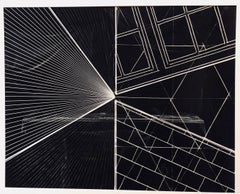
Vintage Large Format Avant Garde Polaroid 20X24 Photograph
By György Kepes
Located in Surfside, FL
Sorry for the reflection on the plexi. In the early 1980s, the Polaroid Foundation invited Hungarian-born painter and photographer György Kepes (1906-2001) to use the 20x24 Polaroid camera. The resulting carefully staged compositions summarize many of his artistic concerns, employing such objects as prisms, flowers, and graphic papers to manipulate the effects of light and form.
György Kepes 1906-2001 was a Hungarian-born painter, photographer, designer, educator, and art theorist. After emigrating to the U.S. in 1937, he taught design at the New Bauhaus (later the School of Design, then Institute of Design, then Illinois Institute of Design or IIT) in Chicago. In 1967 He founded the Center for Advanced Visual Studies at the Massachusetts Institute of Technology (MIT) where he taught until his retirement in 1974. Kepes was born in Selyp, Hungary. His younger brother was Imre Kepes, ambassador in Argentina, father of András Kepes journalist, documentary filmmaker and author. At age 18, he enrolled at the Royal Academy of Fine Arts in Budapest, where he studied for four years with Istvan Csok, a Hungarian impressionist painter. In the same period, he was also influenced by the socialist avant-garde poet and painter Lajos Kassak.
Kepes gave up painting temporarily and turned instead to filmmaking. In 1930, he settled in Berlin, where he worked as a publication, exhibition and stage designer. Around this time, he designed the dust jacket for Gestalt psychologist Rudolf Arnheim's famous book, Film als Kunst (Film as Art), one of the first published books on film theory. In Berlin, he was also invited to join the design studio of Laszlo Moholy-Nagy, the Hungarian photographer who had taught at the Dessau Bauhaus. When, in 1936, Moholy relocated his design studio to London, Kepes joined him there as well.
Kepes was lured to Brooklyn College by Russian-born architect Serge Chermayeff, who had been appointed chair of the Art Department in 1942. There he taught graphic artists such as Saul Bass.
In 1944, he published Language of Vision, an influential book about design and design education. In part, the book was important because it predated three other influential texts on the same subject: Paul Rand, Thoughts on Design (1946), László Moholy-Nagy, Vision in Motion (1947), and Rudolf Arnheim, Art and Visual Perception (1954).
In 1947, Kepes accepted an invitation from the School of Architecture and Planning at MIT to initiate a program there in visual design, a division that later became the Center for Advanced Visual Studies (c1968). Some of the Center's early fellows included artists Otto Piene, Vassilakis Takis, Jack Burnham, Wen-Ying Tsai, Stan Vanderbeek, Maryanne Amacher, Joan Brigham, Lowry Burgess, Peter Campus, Muriel Cooper, Douglas Davis, Susan Gamble, Dieter Jung, Piotr Kowalski, Charlotte Moorman, Antoni Muntadas, Yvonne Rainer, Keiko Prince, Alan Sonfist, Aldo Tambellini, Joe Davis, Bill Seaman, Tamiko Thiel, Alejandro Sina, Don Ritter, Luc Courchesne, and Bill Parker...
Category
1980s Conceptual Abstract Photography
Materials
Polaroid